


As we age, it becomes increasingly important to prioritize fitness activities in order to maintain a healthy and active lifestyle. In fact, according to a large-scale study conducted by the American Medical Association, participants who performed two to four times above the recommended amount of moderate physical activity had a 26% to 31% lower all-cause mortality risk and a 28% to 38% lower risk of cardiovascular disease mortality. This highlights the significant benefits that regular exercise can have on our overall health, particularly as we grow older.
When it comes to maintaining our fitness as we age, there are three key activities that we should focus on: balance training, strength training, and cardio training. These activities work together to improve our overall fitness levels, enhance our balance and stability, strengthen our muscles, and reduce the risk of age-related health issues.
Key Takeaways:
- Regular exercise can reduce the risk of mortality and cardiovascular disease in older adults.
- Balance training, strength training, and cardio training are essential for maintaining overall fitness.
- Engaging in these activities can improve balance, stability, muscle strength, and cardiovascular health.
- Seniors should aim to incorporate a mix of balance, strength, and cardio exercises into their weekly routines.
- Starting and maintaining an exercise routine is key to aging gracefully and enjoying an active lifestyle.
The Importance of Balance Training

As we age, balance training becomes increasingly important in maintaining our overall health and well-being. Aging gracefully involves prioritizing fitness activities that address our changing needs, and balance training plays a crucial role in reducing the risk of falls and serious injuries that can occur due to a decline in balance.
Balance exercises, such as standing on one leg or incorporating specific balance-focused movements, help strengthen our balance and stability. By consistently performing these exercises, we enhance our body’s ability to maintain equilibrium, resulting in improved coordination and reduced chances of experiencing falls or accidents.
Balance training should be an integral part of our daily exercise routine, alongside cardio and strength exercises, to optimize our fitness level as we age. While cardio exercises keep our heart and lungs healthy and strength training preserves muscle mass and bone density, balance training ensures that we can navigate our environment confidently and safely.
To further emphasize the importance of balance training, a recent study conducted by the National Institute on Aging found that incorporating balance exercises into our routine significantly reduces the risk of falls among seniors. By giving attention to this essential aspect of fitness, we can participate in daily activities with greater ease and enjoy a higher quality of life as we age.
With the right balance training exercises tailored to our individual needs, we can enhance our physical capabilities and maintain an active and fulfilling lifestyle. So let’s prioritize balance training in our fitness routine and age gracefully with confidence and stability!
The Benefits of Strength Training

Strength training is crucial for seniors looking to maintain muscle mass and bone density as they age. Engaging in regular strength exercises can help improve overall strength, joint mobility, and stability, allowing you to continue enjoying an active and independent lifestyle. By incorporating movements such as squats, hip hinges, carrying objects, and upper-body pushing and pulling exercises into your workouts, you can reap the numerous benefits that strength training has to offer.
One of the key advantages of strength training is its ability to promote longevity and prevent age-related health issues. Studies have shown that seniors who engage in regular strength exercises have a lower risk of developing chronic conditions such as osteoporosis, arthritis, and heart disease. By keeping your muscles strong and your bones healthy, you can minimize the risk of falls and fractures, improve posture, and enhance overall physical function.
Strength training also plays a crucial role in maintaining a healthy weight and managing body composition. As we age, our metabolism naturally slows down, making it easier to gain weight. However, by incorporating strength exercises into your routine, you can increase your lean muscle mass and boost your metabolism, helping you burn more calories throughout the day and maintain a healthy body composition.
Strength training is not just about physical benefits; it also has numerous mental health benefits. Regular strength exercises have been shown to reduce symptoms of depression and anxiety, improve cognitive function, and boost overall mood and well-being. It can also enhance your confidence and self-esteem, allowing you to age gracefully and remain independent for years to come.
Remember, it’s never too late to start strength training. Even if you haven’t engaged in regular exercise before, incorporating strength exercises into your routine can make a significant difference in your overall fitness and quality of life. Start with lighter weights or resistance bands and gradually increase the intensity and duration of your workouts as you become more comfortable and confident.
Don’t forget to consult with your healthcare provider before starting any new exercise program, especially if you have any underlying health conditions or concerns. They can provide personalized recommendations and ensure that you are exercising safely and effectively.
The Power of Cardio Training

Incorporating cardio training into your fitness routine is essential for maintaining a healthy heart and lungs, promoting healthy aging, and aging gracefully. Engaging in regular cardio exercises such as walking, swimming, biking, or using cardio machines can have numerous health benefits.
Even low-impact activities like walking can provide significant cardiovascular benefits. It improves circulation, strengthens the heart, and can help lower blood pressure and cholesterol levels. Cardio exercises also increase your lung capacity, allowing your body to take in more oxygen and improve overall respiratory function.
One option for incorporating cardio training is walking. It is a simple and accessible activity that can be done at your own pace, anytime and anywhere. Walking helps to strengthen your heart, improve muscle tone, and burn calories, all while reducing stress and boosting your mood.
If walking is not an option for you, there are other activities that can provide the same cardiovascular benefits. Biking is a low-impact exercise that is gentle on the joints and can be enjoyed outdoors or using a stationary bike. Swimming is another excellent option as it is a full-body workout that is gentle on the joints and great for building endurance. If you prefer exercising indoors, using cardio machines such as treadmills, elliptical trainers, or rowing machines can provide an effective cardiovascular workout.
Regular participation in aerobic exercise has been shown to reduce the risk of serious illnesses such as cardiovascular disease, diabetes, and certain types of cancer. It also helps to maintain a healthy weight, improve mood and mental health, and boost overall energy levels.
Remember, it’s never too late to start incorporating cardio training into your fitness routine. As always, consult with your healthcare provider before starting any new exercise program, especially if you have pre-existing medical conditions or concerns.
So lace up your sneakers or hop on your bike, and get ready to boost your cardiovascular health with regular cardio training!
Keep in mind, balancing your fitness activities with other types of exercises, such as strength training and balance training, is important for overall health and aging gracefully. The key is to find a well-rounded fitness routine that works for you and keeps you motivated.
Finding the Right Intensity

When it comes to aerobic activity, finding the right intensity is key to maximizing the benefits for your health and fitness. Whether you’re new to exercise or a seasoned fitness enthusiast, understanding the different levels of intensity can help you tailor your workouts to meet your goals.
There are two main levels of intensity to consider: moderate-intensity and vigorous-intensity.
Moderate-Intensity
For moderate-intensity aerobic activity, the goal is to get your heart rate up and start breathing harder, but still be able to hold a conversation. This level of intensity is often described as a “brisk” pace, where you can feel your heart beating faster, but you’re not completely out of breath.
Examples of moderate-intensity aerobic activities include:
- Brisk walking
- Cycling at a moderate pace
- Water aerobics
- Dancing
Remember, the intensity should be challenging enough to make you work, but not so intense that you can’t maintain a conversation.
Vigorous-Intensity
Vigorous-intensity aerobic activity takes things up a notch and pushes your body to work harder. At this level of intensity, it becomes difficult to say more than a few words without catching your breath. You should feel your heart rate increase significantly and notice a significant increase in your breathing rate.
Examples of vigorous-intensity aerobic activities include:
- Running or jogging
- Swimming laps
- High-intensity interval training (HIIT)
- Aerobic dancing
Engaging in a mix of both moderate and vigorous-intensity aerobic activity each week is recommended for optimal health benefits. The American Heart Association suggests that 150 minutes of moderate-intensity aerobic activity or 75 minutes of vigorous-intensity aerobic activity per week, or a combination of both, can contribute to improved cardiovascular health.
Finding the right intensity for aerobic activity is important to make the most out of your workouts and achieve your fitness goals. Remember to listen to your body and gradually increase the intensity as you become more comfortable and fit. By incorporating moderate and vigorous-intensity aerobic activity into your weekly routine, you can boost your stamina, improve your cardiovascular health, and enhance your overall fitness level.
Creating a Weekly Exercise Routine

When it comes to staying active and maintaining a healthy lifestyle, consistency is key. As a senior, it’s important to establish an exercise routine that incorporates various types of physical activities. By dedicating time each week to exercise, you can improve your strength, flexibility, balance, and overall physical well-being.
The Centers for Disease Control and Prevention recommend that seniors aim for at least 150 minutes of moderate endurance activity per week. This can easily be achieved by breaking it down into shorter sessions throughout the week.
Include a variety of activities in your exercise routine to keep it interesting and target different aspects of your fitness. Walking, swimming, and cycling are excellent choices for cardiovascular exercise. These activities not only get your heart pumping but also help to improve endurance and stamina.
Strength exercises are equally important for seniors. They help maintain muscle mass, improve bone density, and increase overall strength. Incorporate exercises like bodyweight squats, chair dips, and resistance band exercises into your routine to promote muscle growth and maintain joint health.
To improve flexibility, include regular stretching exercises in your routine. This will help increase your range of motion, prevent muscle imbalances, and reduce the risk of injury. Focus on stretches that target major muscle groups, such as the neck, upper back, shoulders, lower legs, and hips.
Finally, don’t forget to prioritize balance exercises in your routine. These exercises are essential for seniors to reduce the risk of falls and maintain stability. Single-leg stands, heel-to-toe walks, and yoga poses are excellent options to enhance your balance and proprioception.
By incorporating a variety of physical activities into your weekly exercise routine, you’ll be able to target different aspects of your fitness–strength, flexibility, balance, and cardiovascular health. Remember to start at a comfortable pace and gradually increase the intensity of your workouts. Listen to your body, and if you have any concerns, consult with a healthcare professional before starting any new exercise program.
So, get started today and take control of your health and well-being. Begin by creating a weekly exercise routine that includes activities you enjoy, and you’ll soon experience the physical and mental benefits of regular physical activity.
Building Strength with Simple Exercises

Building strength doesn’t require a gym membership or complex equipment. With a few simple exercises, seniors can maintain and improve their muscle strength, leading to increased mobility and overall wellness. Incorporating these strength exercises into your daily routine can make a significant difference in your physical health and longevity.
One exercise that targets the abdominal muscles is abdominal contractions. Lie on your back with your knees bent and feet flat on the floor. Place your hands on your abdomen and contract your abdominal muscles, pulling your belly button in towards your spine. Hold for a few seconds and then release. Repeat for a set of 10 repetitions.
Another effective exercise is wall pushups. Stand facing a wall with your feet shoulder-width apart. Extend your arms and place your hands against the wall at chest height. Lean towards the wall, bending your elbows as you lower your body towards the wall. Push back to the starting position and repeat for a set of 10 repetitions. Wall pushups engage the upper body muscles, including the chest, shoulders, and triceps.
To target the pelvic muscles and improve core strength, try pelvic tilts. Lie on your back with your knees bent and feet flat on the floor. Place your hands on your hips. Gently tilt your pelvis upward, pressing your lower back into the floor. Hold for a few seconds and then release. Repeat for a set of 10 repetitions.
Carrying objects is another great way to increase strength. Whether it’s groceries, laundry baskets, or bags of books, carrying weight requires your muscles to work against resistance. Remember to always practice proper lifting techniques to avoid injury.
Finally, incorporate upper-body pushing and pulling exercises into your routine. This can include movements like arm circles, shoulder presses, and seated rows. These exercises target multiple muscle groups in the arms, shoulders, and back, improving strength and stability.
By consistently performing these simple calisthenic exercises, seniors can maintain and improve their muscle strength, leading to increased mobility, independence, and overall well-being.
Improving Flexibility with Stretching
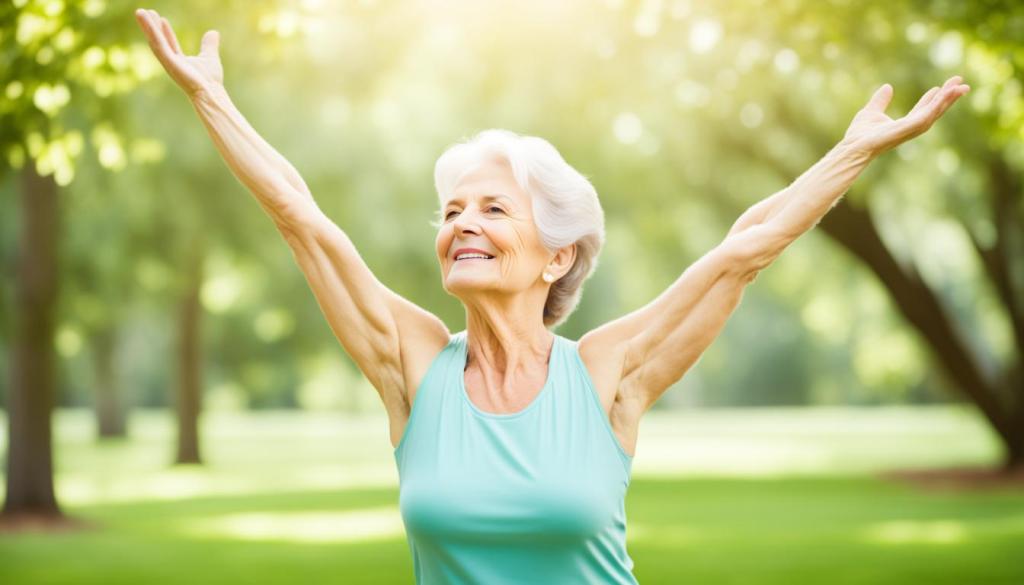
Flexibility plays a vital role in maintaining mobility and comfort as you age. By incorporating daily stretching exercises into your routine, you can enhance your range of motion and make everyday activities more enjoyable. Stretching not only helps relieve tension in your muscles but also improves flexibility throughout your body.
Basic stretches for the neck, upper back, and shoulders can work wonders in releasing built-up stress and promoting relaxation. These simple movements target the key areas where we tend to hold tension, helping to alleviate discomfort and improve flexibility.
“Stretching is a powerful tool for seniors to maintain their quality of life and keep their bodies moving with ease. By dedicating a few minutes each day to stretching exercises, you can enhance your range of motion and maintain the flexibility necessary for performing daily activities comfortably.”
In addition to upper body stretches, it’s essential to pay attention to your lower body as well. Ankle rotations, toe taps, and heel raises are excellent exercises to target the lower legs, improving flexibility and strengthening the muscles that support your everyday movements.
Moreover, incorporating knee lifts and shoulder and upper back stretches in your routine can provide targeted benefits to specific muscle groups. These stretches help strengthen and stretch the muscles that are crucial for maintaining proper posture and range of motion, supporting your overall mobility.
To maximize the benefits of stretching, it’s important to perform each movement with proper form and technique. Focus on smooth and controlled movements, avoiding any sudden or jerky motions that may lead to injury. Remember to breathe deeply and relax into each stretch, allowing your muscles to gradually release and lengthen.
Enhancing Balance with Simple Exercises
As we age, maintaining good balance becomes increasingly important, especially for seniors. Falls can have serious consequences, leading to injuries and a decline in overall mobility. Incorporating balance exercises into your daily routine is a crucial step in enhancing stability and reducing the risk of falls.
There are simple exercises you can do anywhere, whether you’re waiting in line or at home. These exercises focus on improving stability and strengthening your core muscles. By regularly practicing these balance boosters, you can take proactive steps towards maintaining your independence and living an active lifestyle.
Shifting Weight
One effective balance exercise is shifting weight from one foot to the other. Stand with your feet hip-width apart and slowly transfer your weight onto one foot while raising the other slightly off the ground. Hold this position for a few seconds, then switch to the other foot. Repeat this exercise for several repetitions, gradually increasing the duration of each hold.
Single Leg Balance
Another beneficial exercise is single leg balance. Start by standing straight with your feet together and arms relaxed by your sides. Lift one leg off the ground and hold the position for as long as you can maintain your balance. If needed, use a wall or chair for support. As you progress, try closing your eyes to challenge your balance even further.
Standing on Toes
Standing on your toes not only helps strengthen your calf muscles but also improves your ankle stability. Stand near a stable surface for support, then slowly rise onto the balls of your feet, lifting your heels as high as possible. Hold this position for a few seconds before lowering your heels back to the ground. Repeat this exercise for several repetitions.
By incorporating these simple balance exercises into your daily routine, you can greatly enhance your stability and reduce the risk of falls as a senior. Remember, consistency is key, so aim to practice these exercises regularly to maintain and improve your balance.
The Importance of Regular Physical Activity for Overall Health
Engaging in regular physical activity is vital for seniors to maintain overall health and longevity. As we age, our bodies undergo various changes that can impact our physical well-being. However, incorporating physical activity into our daily routines can help counteract these effects and improve our quality of life.
Physical activity has numerous benefits for seniors, ranging from improving cardiovascular health to enhancing muscle strength and joint mobility. It plays a crucial role in maintaining overall health and well-being, allowing seniors to stay independent and active for longer.
“Physical fitness is not only one of the most important keys to a healthy body, but it is also the basis of dynamic and creative intellectual activity.” – John F. Kennedy
By engaging in moderate endurance activities, such as brisk walking, swimming, or cycling, seniors can improve their cardiovascular health. These activities help to strengthen the heart and lungs, enhancing blood circulation and reducing the risk of developing cardiovascular diseases.
Strength, flexibility, and balance exercises are equally important for seniors. These activities help to maintain and build muscle strength, improve joint flexibility, and enhance overall stability. Incorporating exercises such as resistance training, stretching, and balance drills into daily routines can have significant benefits for physical health and well-being.
“Physical fitness is the first requisite of happiness.” – Joseph Pilates
Regular physical activity not only supports physical health but also has a positive impact on mental well-being. Engaging in physical activity stimulates the release of endorphins, which are known as “feel-good” hormones. This can help improve mood, reduce stress and anxiety, and enhance overall mental well-being.
Furthermore, physical activity promotes cognitive function and can help prevent age-related cognitive decline. It improves blood flow to the brain, which supports the growth of new brain cells and enhances cognitive abilities such as memory and attention.
Additionally, physical activity has been linked to increased longevity. Studies have shown that seniors who engage in regular physical activity tend to live longer and have a reduced risk of developing chronic diseases. It is never too late to start incorporating physical activity into your daily routine and reap the benefits.
In conclusion, regular physical activity is essential for seniors to maintain overall health and longevity. By incorporating moderate endurance activities, strength exercises, flexibility exercises, and balance exercises into daily routines, seniors can improve their cardiovascular health, muscle strength, joint mobility, and stability. Remember, it’s never too late to start and experience the positive impact of physical activity on your well-being.
Tips for Starting and Maintaining an Exercise Routine
Starting and maintaining an exercise routine can be challenging, especially for seniors. However, there are several tips that can help you get started and stay motivated on your fitness journey. Whether you’re a beginner or looking to restart your exercise routine, these strategies can help you achieve your fitness goals and maintain a healthy lifestyle:
1. Start with Small Goals
When starting an exercise routine, it’s important to set achievable goals. Begin by incorporating short workout sessions into your daily routine. Gradually increase the duration and intensity of your exercises as your fitness level improves. By starting small and gradually progressing, you’ll build confidence and avoid overwhelming yourself.
2. Find Enjoyable Activities
Choosing activities that you enjoy is key to maintaining a long-term exercise routine. Whether it’s dancing, swimming, walking in nature, or practicing yoga, finding an activity that brings you joy will make it easier to stay motivated and committed to your workouts. Remember, exercise doesn’t have to be boring or feel like a chore.
3. Seek Support from Friends or Fitness Professionals
Having a support system can greatly enhance your exercise routine. Consider finding a workout buddy or joining a fitness class where you can meet like-minded individuals. Additionally, seeking guidance from fitness professionals, such as personal trainers or exercise instructors, can provide you with the expertise and encouragement you need to stay motivated and safely progress in your fitness journey.
4. Listen to Your Body and Modify Exercises As Needed
As a senior, it’s important to pay attention to your body and modify exercises as needed. If a particular movement feels uncomfortable or causes pain, don’t push through it. Instead, consult with a healthcare professional or fitness expert to find suitable alternatives. Remember that exercise should challenge you, but it should never cause harm. Prioritize your safety and well-being above all else.
By following these tips, you can overcome the challenges of starting and maintaining an exercise routine. Remember, consistency is key, and even small steps can lead to significant improvements in your fitness and overall well-being. Embrace the journey and celebrate your accomplishments along the way.
Conclusion
As you age, it is crucial to prioritize fitness activities for healthy aging and to age gracefully. Incorporating balance training, strength training, and cardio training into your routine can greatly improve your overall health and wellness.
Balance training is essential to prevent falls and enhance stability. By practicing balance exercises daily, you can strengthen your balance and reduce the risk of serious injuries. Strength training helps maintain muscle mass and bone density, improving overall strength, joint mobility, and stability. Cardio training, such as walking or swimming, maintains a healthy heart and reduces the risk of cardiovascular diseases.
By combining these activities, you can pave the way to a fulfilling and active life as you embrace the aging process. Prioritizing fitness in your daily routine will ensure you maintain balance, strength, cardiovascular health, and overall mobility. Take charge of your well-being and commit to a lifestyle that promotes healthy aging. Embrace the journey and enjoy the rewards of aging gracefully.
FAQ
What are the three fitness activities we need to keep doing (or add to our routine) as we age?
The three fitness activities that are important to prioritize as we age are balance training, strength training, and cardio training.
Why is balance training important as we age?
Balance training is crucial as we age because it helps prevent falls and serious injuries that can result from a decline in balance.
What are some examples of balance exercises for seniors?
Some examples of balance exercises for seniors include standing on one leg, shifting weight, single leg balance, and standing on toes.
What are the benefits of strength training for seniors?
Strength training is essential for seniors to maintain muscle mass and bone density. It can also improve overall strength, joint mobility, and stability.
What are some examples of strength exercises for seniors?
Some examples of strength exercises for seniors include squats, hip hinges, carrying objects, and upper-body pushing and pulling exercises.
Why is cardio training important for seniors?
Cardio training is important for seniors to maintain a healthy heart and lungs. It can also reduce the risk of serious illness and death.
What are some examples of cardio exercises for seniors?
Some examples of cardio exercises for seniors include walking, swimming, biking, and using cardio machines like elliptical trainers.
How can seniors find the right intensity for aerobic activity?
Seniors can find the right intensity for aerobic activity by aiming for moderate-intensity activity that makes them breathe harder and their heart beat faster, while still allowing them to talk.
How much moderate endurance activity should seniors aim for per week?
Seniors should aim for 150 minutes of moderate endurance activity per week, which can be broken down into shorter sessions.
How can seniors build strength without a gym membership or complex equipment?
Seniors can build strength without a gym membership or complex equipment by doing simple exercises like abdominal contractions, wall pushups, pelvic tilts, and carrying objects.
How can seniors improve flexibility with stretching?
Seniors can improve flexibility with stretching by doing basic stretches for the neck, upper back, shoulders, lower legs, and specific muscle groups like the knees and shoulders.
Why is enhancing balance with simple exercises important for seniors?
Enhancing balance with simple exercises is important for seniors because it can improve stability and reduce the risk of falls.
Why is regular physical activity important for seniors?
Regular physical activity is vital for seniors to maintain overall health and longevity. It can improve cardiovascular health, muscle strength, joint mobility, and stability.
What are some tips for starting and maintaining an exercise routine for seniors?
Some tips for starting and maintaining an exercise routine for seniors include starting with small goals, finding enjoyable activities, and seeking support from friends or fitness professionals.
Why is it important to prioritize fitness as we age?
It is important to prioritize fitness as we age because it can help us age gracefully and enjoy a healthier and more active lifestyle.



 trim down and shape up
Leave a comment