


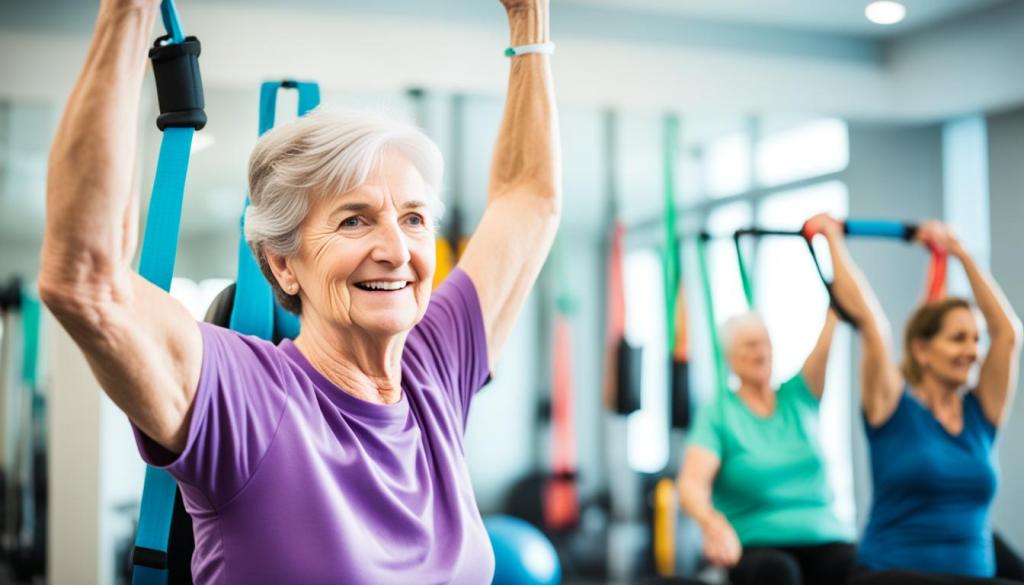
Parkinson’s disease is a condition that affects many around the world. It leads to symptoms like shaking, stiffness, and problems moving. Despite these challenges, there is hope.
Jodi Brown, the CEO of Parkinson Association of the Rockies, says exercise is key. It can slow the disease’s progress. Regular exercise makes life better for those with Parkinson’s.
Key Takeaways:
- Exercise is proven to slow the progression of Parkinson’s disease.
- Tremors, stiffness, and impaired mobility are common symptoms of Parkinson’s disease.
- Engaging in regular physical activity can improve overall well-being.
- Emotional support is crucial for managing the challenges of Parkinson’s disease.
- Combining exercise and emotional support can help individuals better manage their symptoms and maintain their overall well-being.
The Role of Diet in Managing Parkinson’s Disease

Eating a balanced diet is key for those with Parkinson’s disease. A diet full of fruits, vegetables, lean protein, beans, and legumes helps improve health. It’s also vital to drink lots of water to stay hydrated.
Dr. Sarah Mitchell, an expert in diet and neurodegenerative disorders, states, “A balanced diet can really help manage Parkinson’s disease. Adding foods full of nutrients to your meals supports your body and eases symptoms.”
Constipation is a big problem for Parkinson’s patients. Eating fiber-rich foods like whole grains, fruits, and vegetables helps. These foods support a healthy digestion system.
Being well-hydrated is essential for people with Parkinson’s. If you don’t drink enough, symptoms could get worse. It’s important to drink water, herbal teas, and fresh juices throughout the day.
Dr. Mitchell emphasizes, “Staying hydrated is crucial. It plays a big role in managing Parkinson’s. Make sure to drink 8-10 cups of water daily. Don’t wait to feel thirsty to drink.”
Another issue is how diet affects medication for Parkinson’s. Foods high in protein can affect how well medications work, like carbidopa-levodopa.
If you’re on carbidopa-levodopa, watch when you eat high-protein meals. It’s best to time these meals and your medication to work well together. Talk to a healthcare provider for advice tailored to you.
Recommended Diet Modifications for Parkinson’s Disease
Here are some diet tips for those with Parkinson’s disease:
- Add a wide range of whole foods, including fruits, vegetables, lean protein, beans, and legumes to your diet.
- Choose foods rich in fiber like whole grains and vegetables to prevent constipation.
- Avoid too much salt and processed foods to stay hydrated.
- Make sure to drink plenty of fluids every day.
- Know how your medication, especially carbidopa-levodopa, interacts with food. Adjust the timing of high-protein meals and medication for better results.
| Diet Modifications for Parkinson’s Disease | Benefits |
|---|---|
| Incorporating whole foods | Provides essential nutrients and supports overall health |
| Consuming high-fiber foods | Alleviates constipation and promotes healthy digestion |
| Staying hydrated | Prevents dehydration and improves symptom management |
| Avoiding excessive salt and processed foods | Reduces the risk of dehydration and supports a healthy diet |
The Role of Exercise in Managing Parkinson’s Disease
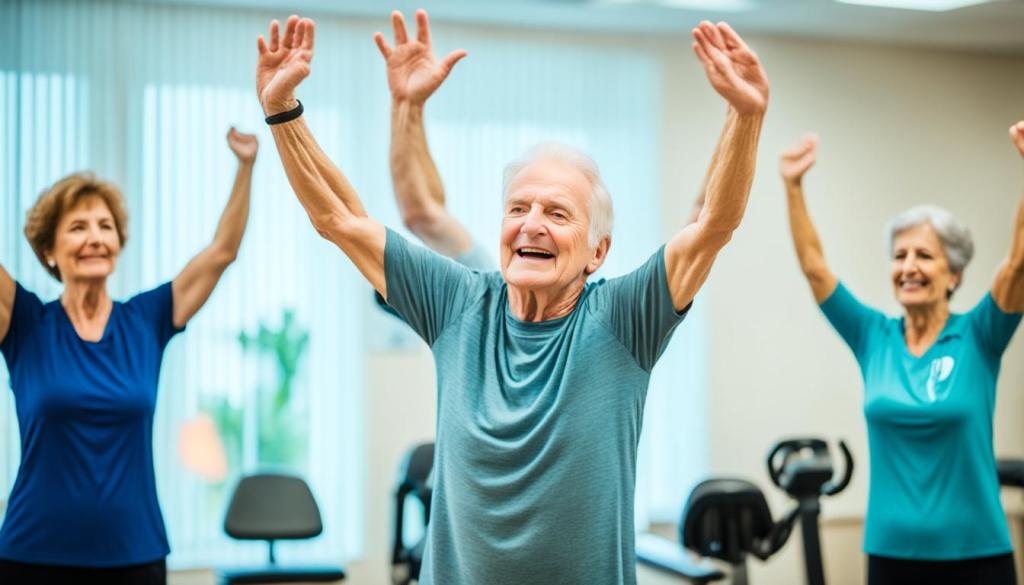
Exercise is key for managing Parkinson’s disease. It boosts overall health and helps control Parkinson’s symptoms. Adding physical activity to your day can slow the disease’s progress and make movement easier.
Moving more, like walking, biking, or swimming, is good for people with Parkinson’s. These activities keep you mobile and improve your heart health. Heart health matters for your overall well-being.
Having good balance is also crucial. Parkinson’s can make you less steady, leading to falls. Practices like yoga or Tai Chi can make you more stable.
Without exercise, Parkinson’s may worsen your ability to move. Doing everyday tasks keeps your muscles working and your movement skills sharp.
Exercise also helps your brain adapt and make new connections. This ability is known as neuroplasticity. For those with Parkinson’s, it counters brain cell damage. Pushing your brain with physical activities enhances its connection-making power.
In sum, making exercise a part of your life is essential when you have Parkinson’s. It includes activities that improve movement, balance, and brain health. Working out can fend off the harsh effects of Parkinson’s. Always talk to a doctor to tailor an exercise plan that’s right for you.
Benefits of Exercise for Parkinson’s Disease:
- Slows the progression of the disease
- Improves motor symptoms
- Enhances cardiovascular health
- Improves balance and coordination
- Delays the degeneration of motor skills
- Promotes neuroplasticity
The Importance of Emotional Support in Parkinson’s Disease

Living with Parkinson’s disease can be tough due to emotional and cognitive challenges. A strong support system is key to handle these obstacles and enhance life quality.
Support groups for Parkinson’s patients are crucial. They offer a safe space to share stories, find coping tactics, and meet others in the same situation. Joining can make you feel less alone in your journey.
Getting emotional support from those close to you is vital too. Talk about your feelings and achievements with them. Strong connections with family and friends can create stability and help manage the disease’s emotional effects.
Caregivers and family members also need to give and get support. They can join caregiver groups or seek counseling. This helps them care for their loved ones better.
Emotional support is key in dealing with Parkinson’s disease’s changes. It can lessen feelings of isolation, anxiety, and depression. With it, you can find strength, resilience, and hope.
“A strong support system can make all the difference when facing the emotional and cognitive challenges of Parkinson’s disease. Whether through support groups or loved ones, finding the understanding and encouragement you need is essential for your well-being.”
Benefits of Emotional Support in Parkinson’s Disease:
- Reduced feelings of isolation and loneliness
- Inspiration from others’ experiences and coping strategies
- Increased resilience and mental well-being
- Validation of emotions and challenges faced
- Improved communication and relationship building
- Enhanced ability to navigate the grieving process
- Heightened sense of hope and optimism
Putting emotional support first can help Parkinson’s patients manage better. A solid support network enhances well-being and fosters a more positive view on the disease.
Don’t tackle Parkinson’s disease alone. Seek support, join with those who get it, and lean on emotional support to navigate Parkinson’s.
Parkinson’s Disease in the Community: Steamboat Springs Perspective

In Steamboat Springs, Colorado, Parkinson’s disease greatly impacts the community. This brain disorder causes problems like poor balance, tremors, and stiffness. It affects around 25,000 people in Colorado. Steamboat Springs sees more cases due to its many retirees. The community fights back by offering special exercise classes for those affected.
Steamboat Springs’ exercise programs help people with Parkinson’s disease. They aim to improve life quality through activities like yoga and skiing. These programs are not just for fitness. They also build a strong social network among participants.
“The exercise programs in Steamboat Springs are specifically tailored to address the challenges faced by individuals with Parkinson’s disease. We aim to improve their mobility, enhance their overall well-being, and offer a supportive environment,” says Dr. Emily Johnson, a neurologist specializing in movement disorders.
Steamboat Springs is a supportive community for those with Parkinson’s disease. It offers unique exercise programs that help manage symptoms. More than that, these programs create a sense of friendship and emotional support. They give people a space to connect and support each other.
Parkinson’s Disease Exercise Programs in Steamboat Springs
Steamboat Springs focuses on holistic management of Parkinson’s disease. It offers programs that enhance mobility and overall health. Below are some of these programs:
| Exercise Program | Description |
|---|---|
| Yoga | Yoga classes tailored to individuals with Parkinson’s, incorporating gentle movements, stretching, and breathing exercises. |
| Snowshoeing | Guided snowshoeing excursions that provide exercise and a chance to enjoy the picturesque surroundings. |
| Skiing | Skiing programs designed specifically for individuals with Parkinson’s, focusing on balance, coordination, and strength. |
| Boxing | Non-contact boxing classes that incorporate elements of agility, balance, and total-body movements to improve motor skills. |
| Aquatics | Exercises conducted in a pool environment, utilizing the water’s buoyancy to reduce impact on joints and increase range of motion. |
Steamboat Springs offers diverse exercise options for those with Parkinson’s. By participating, they can get stronger and feel better. These programs match their needs and preferences, truly enhancing their life quality.
Deep Brain Stimulation as an Intervention for Parkinson’s Disease

When meds don’t work well for Parkinson’s disease, Deep Brain Stimulation (DBS) surgery may help. DBS puts electrodes in the brain to stimulate dopamine production, which helps with movement. Many patients choose DBS, especially if meds need frequent adjustment or don’t work as well.
DBS can reduce symptoms and cut down on medication needs. But, it’s not a cure for Parkinson’s.
Benefits of Deep Brain Stimulation
“Deep Brain Stimulation is great for some Parkinson’s patients not helped much by meds. It can ease motor symptoms like tremors and stiffness, making life better.” – Dr. Michael J. Fox, Neurosurgeon
Deep Brain Stimulation can improve life for people with Parkinson’s:
- It helps with tremors and stiffness, making movement easier.
- Patients might need less medication, which means fewer side effects.
- DBS offers long-term relief, improving daily life.
- The stimulation can be adjusted for better symptom control.
- It’s an alternative to other surgeries for managing symptoms.
DBS is often suggested for those who’ve had Parkinson’s for years. It’s for those who initially did well on levodopa but are now having issues.
Risks and Considerations
But, DBS has risks and limits to consider:
- Surgery comes with risks like infection or bleeding, but they’re low.
- The device might need fixing or replacing over time.
- Finding the right settings takes time and visits to the neurologist.
- DBS mainly helps with movement and may not help other symptoms much.
Summary
DBS surgery can be a big help for those with Parkinson’s not helped by meds alone. It can make a big difference in controlling motor symptoms and improving life quality. Yet, weighing the benefits against the risks is smart. Talk to a neuro expert to see if DBS is right for you.
Exercise Recommendations for Parkinson’s Disease

Exercise is key in managing Parkinson’s disease. The Parkinson’s Foundation and the American College of Sports Medicine created special exercise guidelines. These guidelines can help manage symptoms and boost well-being when added to your program.
Key Components of an Exercise Program
1. Aerobic Activity: Aerobic exercises improve your heart health and stamina. Enjoy biking, running, swimming, or classes to get your heart going. People are encouraged to get 150 minutes of exercise like this weekly.
2. Strength Training: Strength training keeps muscles strong, builds muscle, and boosts function. You can use resistance bands, weights, or your bodyweight. Aim for these exercises twice a week at least.
3. Balance and Agility Exercises: Parkinson’s impacts balance and coordination. Balance exercises, like standing on one leg or Tai Chi, make you more stable and prevent falls. Add these to your regimen twice a week.
4. Flexibility Exercises: Stretching can make you more flexible and decrease stiffness. Yoga or Pilates are great for flexibility and joints. Stretch your major muscles 2-3 times every week.
Sample Exercise Activities
Many exercises help with Parkinson’s symptoms. Pick activities you like that match your fitness level. Examples include:
- Biking
- Running or jogging
- Yoga or Pilates
- Dancing
- Weight training
- Non-contact boxing
A mix of these activities can improve your Parkinson’s symptoms in unique ways.
Regular exercise with varied activities maximizes the benefits for Parkinson’s management. Talk to a healthcare provider or a Parkinson’s-specialized therapist for a personalized plan. Always listen to your body, start slow, and gradually up your exercise level.
Getting Started with Exercise for Parkinson’s Disease

Before starting an exercise program for Parkinson’s disease, you should talk to a specialized physical therapist. They can offer expert advice that’s just right for you. After evaluating you, they’ll create an exercise plan focusing on balance, coordination, or movement. This plan will be your roadmap to better health.
Using a pedometer can be a great way to watch your progress. It helps you set goals and see how far you’ve come. Aim for small steps to a more active life.
Mixing up your workout routine is important. Try different activities to stay interested and driven. Look into classes for Parkinson’s patients or find a workout buddy. They can boost your motivation as you work on getting fit together.
When planning your workouts, think about staying safe, being regular, and having fun. Begin slowly and don’t overdo it. Workout regularly to make it a daily habit. Enjoying your exercises will help you keep going and succeed.
Exercise Tips for Parkinson’s Disease
- Engage in a variety of aerobic activities such as walking, swimming, or cycling to improve cardiovascular health and overall fitness.
- Incorporate strength training exercises to build muscle strength and improve functional movements.
- Focus on exercises that promote balance and coordination, like yoga or tai chi, to enhance stability and reduce the risk of falls.
- Don’t forget to include flexibility exercises to maintain joint mobility and prevent stiffness.
- Always warm up before exercising and cool down afterwards to prevent injuries and promote recovery.
- Stay hydrated and listen to your body’s signals. If you experience pain or discomfort, stop and consult with your healthcare provider.
| Exercise Recommendation | Key Benefits |
|---|---|
| Aerobic activities | Improves cardiovascular health, enhances mood, and increases overall fitness levels. |
| Strength training | Increases muscle strength, improves functional movements, and helps maintain independence. |
| Balance and coordination exercises | Enhances stability, reduces the risk of falls, and promotes better posture. |
| Flexibility exercises | Maintains joint mobility, reduces muscle stiffness, and improves range of motion. |
“The journey of a thousand miles begins with a single step.” – Lao Tzu
Conclusion
Parkinson’s disease is a condition that slowly affects movement. It can really impact the physical and emotional lives of those who have it. But, with the right approach, people with Parkinson’s can control their symptoms and live better.
Exercise is key in handling Parkinson’s disease. Cardio workouts and exercises that improve balance are most helpful. Studies show exercise can slow down Parkinson’s and help with movement issues. By exercising regularly, people with Parkinson’s can better manage their symptoms and maintain their health.
Along with exercise, getting emotional support is very important. This support might come from groups or loved ones. It offers a place to share stories and get advice from others who understand what you’re going through. Using both exercise and emotional support helps in dealing with Parkinson’s better.
To wrap up, focusing on exercise and emotional support helps manage Parkinson’s symptoms well. It can slow the disease and make life better. With the right plans and support, those with Parkinson’s can face their challenges with strength and hope.
FAQ
What is Parkinson’s disease?
Parkinson’s disease is a disorder that affects movement. It leads to symptoms like shaking, stiffness, and difficulty walking.
How can lifestyle modifications help manage Parkinson’s disease?
Changing your lifestyle can help manage symptoms. This includes exercising regularly and getting emotional support to slow down the disease.
What role does diet play in managing Parkinson’s disease?
Eating a diet rich in fiber and drinking plenty of water helps. It improves well-being and helps with symptoms like constipation.
What types of exercise are beneficial for Parkinson’s disease?
Exercises that help with balance and coordination are good. Cardiovascular exercises can also slow the disease and help with symptoms.
How important is emotional support for individuals with Parkinson’s disease?
Getting support from groups or loved ones is very important. It helps with the emotional and mental challenges of the disease.
How does the community of Steamboat Springs, Colorado support individuals with Parkinson’s disease?
In Steamboat Springs, there are special exercise programs. They are designed to help people with Parkinson’s and provide social support too.
What is Deep Brain Stimulation surgery, and when is it considered?
Deep Brain Stimulation involves putting electrodes in the brain. It helps increase dopamine and is used when medications don’t work well anymore.
Are there specific exercise recommendations for individuals with Parkinson’s disease?
Yes, there are recommended exercises. They include aerobic activities, strength training, and exercises for balance, agility, and flexibility.
How should individuals with Parkinson’s disease get started with an exercise program?
Start by talking to a physical therapist who knows about Parkinson’s. Using a pedometer and mixing up exercises are good ideas. Finding exercise buddies or classes for Parkinson’s can also help begin a routine.
Source Links
- https://www.steamboatpilot.com/news/steamboat-residents-battle-parkinsons-disease-with-exercise-support/
- https://www.parkinson.org/living-with-parkinsons/treatment/exercise
- https://www.hopkinsmedicine.org/health/conditions-and-diseases/parkinsons-disease/fighting-parkinson-disease-with-exercise-and-diet


 trim down and shape up
Leave a comment