


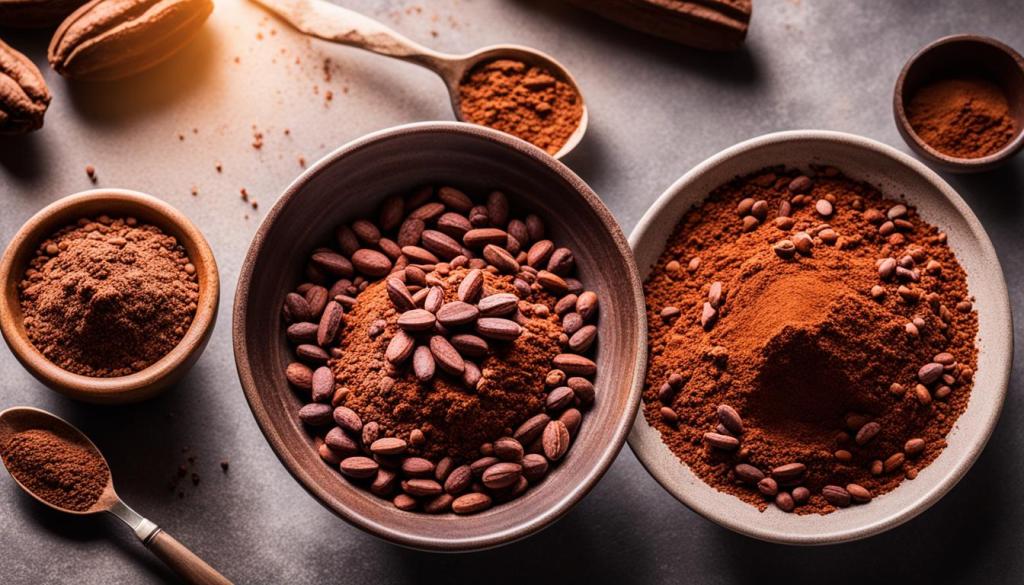
Cacao and cocoa sound the same, but they aren’t. They differ in how they are made and what they offer nutritionally.
Cocoa comes from the seeds inside pod fruits. These seeds make products like chocolate. Cocoa powder, though, is made by grinding these seeds without most of their fat. Because of this, cacao and cocoa provide varied health perks and tastes.
Key Takeaways:
- Cacao and cocoa differ because of how they’re processed.
- Cacao has more good-for-you stuff because it’s less processed than cocoa.
- Cocoa is sweeter, which makes it great for desserts.
- Cacao has lots of magnesium and boosts your health overall.
- Use cacao as a cocoa substitute, but be ready for its slight bitterness.
The Journey from Cacao to Cocoa: A Processing Overview

Cacao and cocoa come from the same tree but turn into different products through special handling. Knowing how they change helps us understand their unique tastes.
Harvesting and Extraction
Cacao pods are picked when perfectly ripe. They’re then opened to get the seeds, which are covered in a juicy pulp.
Fermentation
The seeds and pulp go into a fermenting vessel. Here, they mingle with natural yeasts and bacteria. This starts the process for their chocolate flavor to grow.
Drying and Roasting
Then, these beans are dried either under the sun or in drying buildings. Drying lessens their moisture and improves their flavor. After drying, roasting the beans deeply enhances their flavor’s richness.
Nib Separation and Grinding
Roasted beans are crushed to take the nibs from the shells. The nibs are then finely ground to make chocolate liquor.
Cocoa Butter Extraction
From chocolate liquor, we can get cocoa butter. By pressing the liquor, we separate the cocoa butter from the remaining solids, making cocoa powder.
Creating Delicious Chocolate
Cocoa powder mixes with sugar and milk to make chocolates. The amounts of each ingredient used affects the chocolate’s taste and texture.
To turn cacao into cocoa involves many steps. Yet, each part is important in making the chocolates we savor. From picking cacao pods by hand to processing cocoa powder, every phase adds to our chocolate experiences.
Nutritional Comparison: Cacao Versus Cocoa
Cacao and cocoa have different nutritional values. Knowing these differences helps you pick what’s best for your health. It’s important to choose wisely for your well-being.
Cacao Products
Unsweetened cocoa and dark chocolate are loaded with minerals. They have selenium for fighting off free radicals, and magnesium for keeping your body’s systems in check. Chromium helps manage your blood sugar, and manganese is key for bones and metabolism.
Also, cacao is rich in flavanols, powerful antioxidants. These help your heart, might fight cancer, and improve blood health. They’re great for lowering inflammation and controlling blood pressure too.
Cocoa Products
Milk chocolate and sweetened cocoa have more calories and fat, often because of added sugars. Cocoa’s nutrition depends on how it’s made. Dark chocolate is better, as it usually has less sugar and more minerals.
The more cocoa in the chocolate, the healthier it is. This means less sugar and more minerals like selenium and magnesium. Choose dark chocolate for better health benefits.
Nutritional Comparison
Here’s a table showing how cacao and cocoa products compare:
| Nutrient | Cacao Products | Cocoa Products |
|---|---|---|
| Selenium | Yes | Varies |
| Magnesium | Yes | Varies |
| Chromium | Yes | Varies |
| Manganese | Yes | Varies |
| Flavanols | Yes | Varies |
| Added Sugars | No/Low | Yes |
| Calories | Varies | Varies |
| Fat | Varies | Varies |
Processing also affects the nutrition. Raw cacao powder can have more antioxidants than processed cocoa. It’s best to choose less processed options with high cacao content.
When eating cacao or cocoa, go for moderation. High-cocoa dark chocolate or unsweetened cacao powder are better choices. They give you health benefits without the downsides of too much sugar or fat.
Health Benefits of Cacao and Cocoa
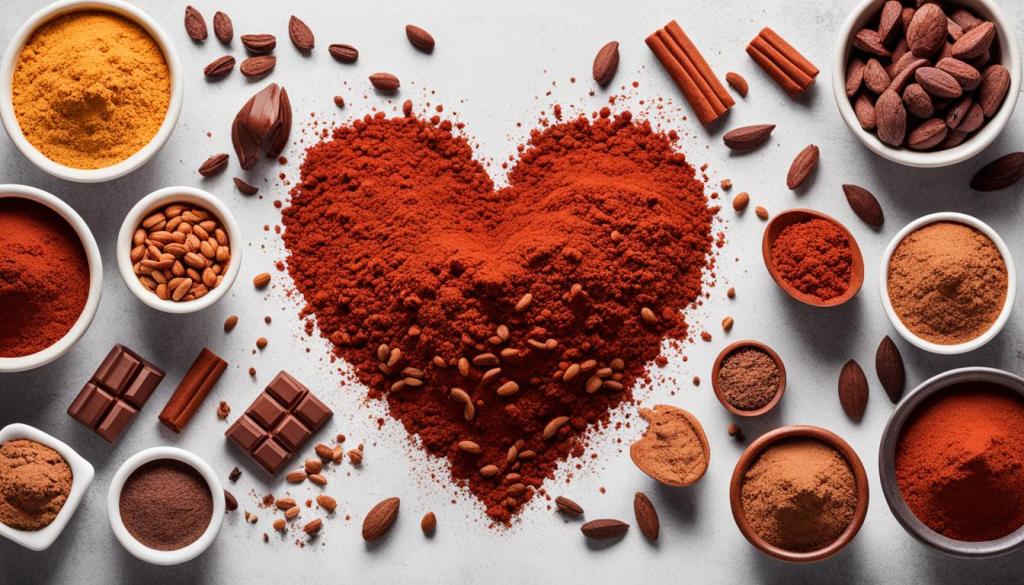
Cacao and cocoa are packed with health benefits. They are full of flavanols, which are great for your body. Flavanols act as antioxidants, and studies show they could help your heart and even fight cancer.
Cacao has a lot of magnesium, which is important for your brain and helps you relax. It also acts as an adaptogen. This means it can help your body manage stress better and boost your overall health.
Choose cocoa products that have a lot of cacao and are not heavily processed. This way, you can get the most health benefits from them.
To learn more about the nutritional differences between cacao and cocoa, continue reading Section 3: Nutritional Comparison: Cacao Versus Cocoa.
Health benefits at a glance:
| Benefit | Cacao | Cocoa |
|---|---|---|
| Rich in flavanols with antioxidant properties | ✓ | ✓ |
| Cardiovascular protection | ✓ | ✓ |
| Potential anti-cancer properties | ✓ | ✓ |
| Rich in magnesium | ✓ | – |
| Adaptogenic properties | ✓ | – |
Flavor Profile and Best Uses of Cacao Products
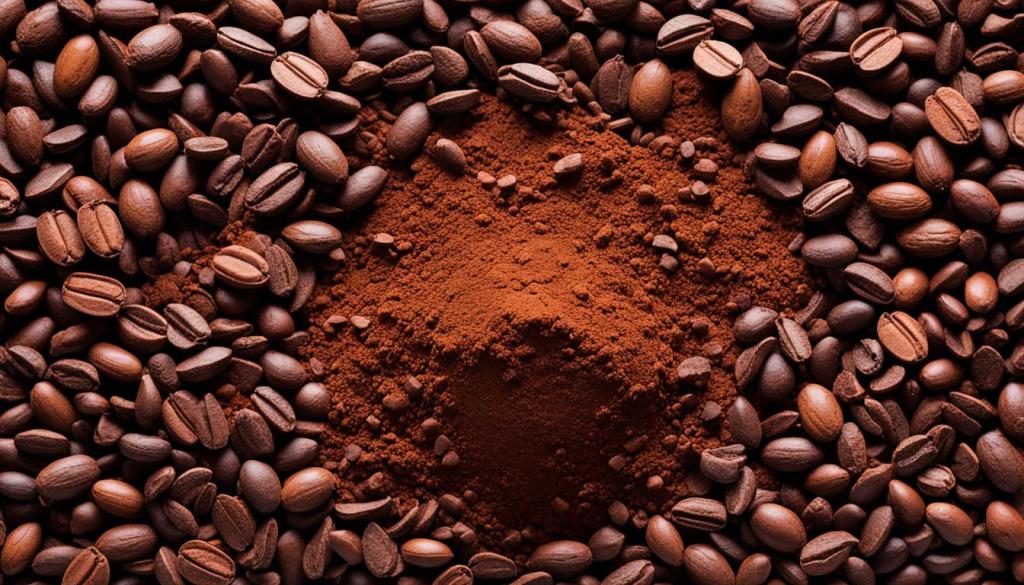
Cacao and cocoa are not the same in taste, leading to different uses in cooking. Cacao has a strong and bitter flavor. It’s also known for its health benefits, like helping the liver detoxify. This makes it a top pick for those who care about their health.
Cocoa, on the other hand, tastes milder and a bit sweeter. This comes from the way it’s processed, often with milk and sugar. It suits people looking for a less bold taste.
Rethinking how we use cacao and cocoa can be fun and tasty. Put raw cacao powder in smoothies or raw sweets for a deep chocolate taste. It opens up new flavors for the health-focused.
Crushed cacao beans, known as cacao nibs, bring a fun crunch and a hint of bitterness. They’re great in trail mix or recipes that don’t need cooking. Adding cacao nibs makes the dish more exciting.
When choosing cacao products, think about what you like and what the recipe needs. Cacao and cocoa both bring something special to cooking, from a bold bitter flavor to a softer, sweeter one.
Best Uses of Cacao Products:
- Mix raw cacao powder into smoothies for a rich chocolate flavor.
- Try it in raw treats like energy bars or bliss balls for a healthier dessert.
- Cacao nibs in trail mix are perfect for a fun crunch and a touch of bitterness.
- Make granola or cereal better with a sprinkle of cacao nibs.
- Use cacao powder to top drinks like cappuccinos or hot chocolates for more taste.
Enjoy the different tastes of cacao and cocoa in your dishes. Find new ways to use them and have fun with your cooking.
The Interchangeability of Cacao and Cocoa in Recipes
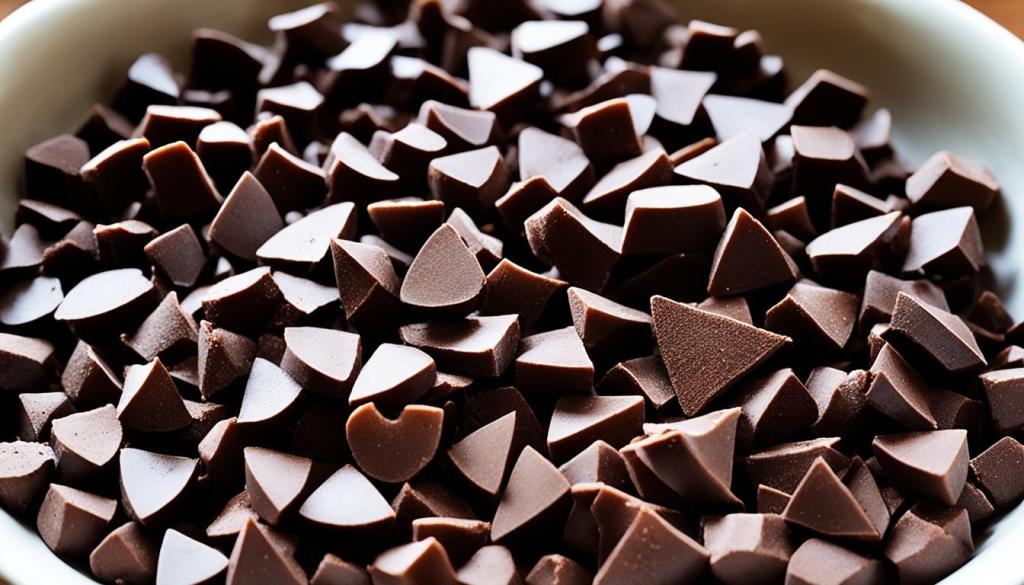
Wondering if cacao and cocoa are the same in recipes? In most cases, you’re good to go! You can swap cocoa powder with organic cacao powder. Your dish will taste and feel the same.
But, make sure you match the right form in the recipe. For instance, if it asks for cacao nibs, don’t use cocoa powder instead. Always use what the recipe suggests for the best outcome.
Cacao tastes stronger and more bitter than cocoa. So, if you’re using it instead of cocoa, you might want to add extra sweeteners or flavors. Trying out different adjustments can help you get the flavor just right.
“Cacao and cocoa can be used interchangeably in recipes, but be mindful of the medium required in the recipe. Adjust sweetness or flavorings when substituting cacao for cocoa to achieve the desired taste.”
Recipes to Try:
Looking to add cacao or cocoa to your cooking? Here are some tasty options:
- Try cacao powder in chocolate smoothies for a decadent taste.
- Swap cocoa powder with cacao in brownies, cakes, or cookies for a stronger chocolate flavor.
- Use cacao powder on energy balls for an extra bitter kick in your snacks.
| Cacao | Cocoa |
|---|---|
| Minimally processed | High-temperature roasted |
| Retains more nutrients | Some nutrients lost during processing |
| Bitter flavor | Milder, sweeter taste |
| Higher magnesium content | Lower magnesium content |
The Difference in Terminology: Cacao Versus Cocoa

The words “cacao” and “cocoa” are often mixed up. This can make it hard for people to know what they’re getting. But, in the chocolate world, they mean different things.
Cacao talks about the pods, beans, and the inside of the cacao tree. It’s what you find before much processing happens. Cacao is praised for being natural and is linked with being good for you and top-quality chocolate.
Cocoa means the powder left after taking out the cocoa butter from the beans. Cocoa powder goes through more steps, like roasting and squeezing, to get rid of the fat. What’s left is cocoa powder.
Craft chocolate makers often talk about cacao beans and cocoa beans. Cacao beans are from the tree but haven’t been processed much. Cocoa beans are fermented, showing they’ve been through more steps. This difference helps shoppers understand the chocolate-making process better.
Knowing the difference between cacao and cocoa can tell you a lot about how chocolate is made and its quality.
Cacao Terminology:
- Cacao pods
- Cacao beans
- Cacao powder
- Raw cacao
- Cacao nibs
Cocoa Terminology:
- Cocoa powder
- Cocoa butter
- Fermented cocoa beans
- Dutch-processed cocoa
- Cocoa solids
Both cacao and cocoa have their place in our food. Knowing the terms helps us choose better quality chocolate that’s also better for us.
Choosing Between Cacao and Cocoa for Healthier Options

Choosing between cacao and cocoa can be hard when aiming for healthier choices. It’s important to look at how they’re processed and their nutrients. This ensures you pick the best option for your health.
Cacao is made from cacao trees and goes through less processing. This keeps more nutrients like magnesium. It also has adaptogenic properties, which can boost your well-being.
Cocoa is processed more and might have sugars added. This can take away good fats and minerals found in cacao. Still, choosing cocoa with less processing and more cacao is healthier.
Pick products rich in cacao for more nutrition. Here’s a simple comparison of the nutrients in cacao and cocoa:
| Cacao | Cocoa | |
|---|---|---|
| Minerals | Rich source of magnesium, selenium, chromium, and manganese | May have reduced mineral content due to processing |
| Flavanols | High levels of antioxidants that support heart health and offer anti-cancer properties | May have reduced flavanol content due to processing |
| Added Sugars | No added sugars | May contain added sugars |
| Processing Degree | Less processed | Higher processing |
Looking at the table, cacao has more minerals and antioxidants than cocoa. Darker chocolate means more minerals, no matter if it’s cacao or cocoa.
When picking between cacao and cocoa, check the labels. Go for ones with lots of cacao and little processing. This way, you get more benefits from them for your health.
Choosing Between Cacao and Cocoa in Recipes
Cacao and cocoa are similar in recipes, but they taste different. Cacao is strong and bitter, while cocoa is milder and a bit sweet.
Try cacao and cocoa to balance bitterness and sweetness in recipes. Always adjust sweetness and flavors for the best taste.
Whether you pick cacao or cocoa, they can make your recipes better and healthier.
Using Cacao and Cocoa in Moderation
Eating cacao and cocoa in the right amount is crucial for your health. They can be rich in calories, sugar, and bad fats. Consuming too much can harm your health. Here’s how you can enjoy chocolate wisely:
- Choose dark chocolate with high cacao content: Aim for dark chocolate with over 70% cacao. It has less sugar and more antioxidants. This means it’s healthier for you.
- Opt for unsweetened cacao products: Try cacao powder and nibs without added sugar. They taste like chocolate but don’t have the unhealthy sweeteners.
- Go for minimally processed cocoa: Pick cocoa products that are less processed. This way, you get more of the natural benefits of cacao.
Managing how much cacao and cocoa you eat is key to staying healthy. A bit of chocolate is okay in a balanced diet. But always remember to eat it in moderation. This helps avoid too many calories, sugar, and bad fats.
“Moderation in all things, health in every bite.” – Unknown
Be mindful of how much cacao and cocoa you consume. Enjoy the amazing tastes and good things they bring. Let’s also look into where cacao and cocoa come from and why they are important worldwide.
| Cacao | Cocoa |
|---|---|
| Rich in minerals and antioxidants | Potential nutrient loss due to processing |
| Strong, bitter flavor | Milder, sweeter taste |
| Can be used in various recipes | An essential ingredient in chocolate |
The Origin of Cacao and Cocoa: A Worldwide Delicacy

Cacao and cocoa start their story in South America’s Amazon jungle. Here, cacao trees, known as Theobroma cacao, grew naturally. People of the Olmec and Mayan culture saw the cacao plant as sacred. As time passed, it became vital in Central America and the Caribbean too.
In the 16th century, Spanish and Portuguese explorers took cacao to West Africa. The perfect weather and soil in places like Ghana and Ivory Coast were excellent for cacao. Now, this region is the world’s top cacao producer, supplying over half of it.
Asia also plays a role, with cacao trees growing well in Indonesia and Malaysia. Even though they’re not as big in the cacao world as other places, they do contribute a lot.
“The cacao tree is a fascinating plant with a rich cultural history. Its origin can be traced back to the rainforests of South America, where it was cherished for its magical properties.”
Making cacao and cocoa involves millions of farmers from around the globe. They look after the cacao trees and pick the pods that hold the beans. These beans are then processed to make the cacao and cocoa we enjoy.
This hard work makes cacao and cocoa a favorite treat worldwide. It joins people from different places in the simple pleasure of chocolate.
| Region | Contribution to Cacao Production |
|---|---|
| South America | Historical origin, diverse cacao varieties |
| West Africa | Over half of the world’s cacao production |
| Asia | Emerging cacao production regions |
| Central America & Caribbean | Historical significance, unique flavor profiles |
Next time you bite into chocolate, think about its rich history. From the Amazon to your hands, every cacao bean has a story. It has become more than a treat, connecting us to each other’s cultures.
The Cultural Significance of Cacao and Cocoa
For ages, cacao has been special to many people. The Mayans and Aztecs used it in ceremonies and as money. Today, it stands for happiness and luxury, beloved by many cultures.
Sustainability and Fair Trade in the Cacao and Cocoa Industry

The cacao and cocoa industry is working to be more sustainable and fair. It faces issues like deforestation, child labor, and low pay for farmers. People are trying to improve this by supporting ethical practices all the way from farming to selling.
There are certifications that make sure cacao and cocoa are produced fairly and in a way that helps the environment. Certificates like Fairtrade, Rainforest Alliance, and UTZ check that workers get fair wages, work in good conditions, and that the environment is protected.
When you pick products with these certifications, you help farmers and workers. It makes sure they are treated well and that the way the products are made doesn’t harm the environment. This supports good practices and makes the industry better for everyone.
“Certification programs have been established to ensure that cacao and cocoa products are produced in a sustainable and fair manner.”
Benefits of Supporting Sustainable and Fair Trade Practices
- Promotes social and economic equity for farmers
- Ensures fair wages and better working conditions for workers
- Protects against deforestation and biodiversity loss
- Preserves soil quality and prevents erosion
- Reduces the use of harmful chemicals and pesticides
- Supports local communities and promotes cultural preservation
Choosing sustainable and fair trade products is good for the planet and the people who make them. Your choices can positively change the way these products are made, supporting farmers, workers, and the Earth.
| Sustainability Initiatives | Benefits |
|---|---|
| Fairtrade | – Ensures fair prices for farmers – Promotes sustainable farming practices |
| Rainforest Alliance | – Protects biodiversity and ecosystems – Improves livelihoods of farmers and communities |
| UTZ | – Promotes responsible sourcing – Supports sustainable agriculture |
Conclusion
After digging into cacao and cocoa, we see they’re not the same. Cacao is less processed, keeping more nutrients but tasting bitter. Cocoa is processed more, adding sweetness through sugar. It gives us a more mild flavor. Cacao and cocoa are rich in antioxidants and minerals. So, it’s good for you. But, go for less processed with more cacao for the best benefits.
Both can be used in cooking. This makes it easy to fit them into meals you love. Remember, too much of any food isn’t good. So, enjoy them in moderation.
Sustainability matters too. Choosing fair trade helps the environment. It also supports people in the industry. Think about what you’re eating. Make choices that are good for you and others.
FAQ
What is the difference between cacao and cocoa powder?
Cacao and cocoa come from the same place, the cacao tree. Cacao is less processed, keeping more of its good nutrients. On the other hand, cocoa is heated more, losing some minerals and antioxidants.
How are cacao and cocoa processed?
The making of cacao and cocoa includes many steps. These steps are harvesting, opening the pods, fermenting, drying, roasting, and grinding. After grinding, we get cocoa powder for making various treats.
What is the nutritional difference between cacao and cocoa?
Foods like dark chocolate and cocoa powder are full of minerals and antioxidants. These include selenium, magnesium, chromium, and manganese. They are good for heart health and help fight cancer. Cocoa products might have more calories and sugar.
What are the health benefits of cacao and cocoa?
Cacao and cocoa have many good points for your health. They both have antioxidants and can help your heart. Cacao is also a great source of magnesium, which is good for your brain and helps you relax.
How can cacao products be used in recipes?
You can use raw cacao powder or nibs in cooking. The powder is good for smoothies or raw desserts. Nibs are great in trail mixes or no-bake dishes. It all depends on what you like and need for your recipe.
Can cacao be substituted for cocoa in recipes?
Yes, you can use cacao instead of cocoa in recipes. Use organic cacao powder as a cocoa powder substitute. Just know that cacao is more bitter, so you might need to adjust your recipe’s sweetness or add flavor.
Why is there a difference in terminology between cacao and cocoa?
Different people use the words “cacao” and “cocoa” in different ways. “Cacao” can mean the beans and their ground-up state, while “cocoa” is usually just the powder. This shows where in the processing the product is. It can be confusing to some.
How should I choose between cacao and cocoa for healthier options?
For a healthier choice, pick cacao or minimally processed cocoa. These options have more of the good stuff in them. Always look to have high cacao content or go for the purest forms for the best health benefits.
Can I consume cacao and cocoa in moderation?
Yes, you can enjoy cacao and cocoa in moderation. Just watch how much you eat. Go for dark chocolate with high cacao content or unsweetened cocoa for the most nutritional value.
Where do cacao and cocoa come from?
Cacao trees grow in South America, West Africa, and parts of Asia. Major cacao comes from places like Ghana and the Ivory Coast. These areas make more than half of the world’s cacao.
How can I support sustainability and fair trade in the cacao and cocoa industry?
The cacao industry needs our help to be more sustainable and fair. You can make a difference by buying products with Fairtrade, Rainforest Alliance, or UTZ labels. This shows the product was made with care for people and the planet.
What is the conclusion about cacao versus cocoa?
Cacao and cocoa are different mainly in how they are processed. Cacao keeps more nutrients because it is less processed. Cocoa has more sugars but is still enjoyed by many. If you want the healthiest choice, go for less processed, high cacao content products.



 trim down and shape up
Leave a comment