


Nuts are known for their health benefits, except for those who are allergic. If you’re not allergic, eating nuts can be fantastic. If you are allergic, then ignore this. The first rule of a healthy lifestyle is DON’T GET DEAD. Any way, nuts are full of good stuff that fights hunger and boosts your health.
Nuts taste great and are full of healthy fats, fiber, and protein. They’re very satisfying, so they’re perfect for when you’re hungry. You can pick from lots of kinds like walnuts, pistachios, and almonds to match what you like and need.
Some nuts have special health perks, too. For instance, walnuts are rich in omega-3s, great for the brain and reducing inflammation. Almonds have a lot of calcium, which is good for bones.
Every type of nut is different when it comes to nutrition. Mixing nuts in your meals gets you a broad mix of vitamins, minerals, and antioxidants.
Key Takeaways:
- Walnuts, pistachios, pecans, almonds, peanuts, cashews, and brazil nuts are all packed with nutrients that can benefit your health.
- Nuts contain healthy fats, fiber, and protein, making them great for battling hunger and promoting satiety.
- Some nuts, like walnuts and almonds, offer additional health benefits such as brain support and improved bone health, respectively.
- Including a variety of nuts in your diet ensures you get a wide range of essential vitamins, minerals, and antioxidants.
- Choose your favorite nuts and enjoy their delicious taste while reaping the benefits they have to offer!
Walnuts: Protection for Your Brain

Walnuts are great for your brain’s health. They look like little brains and pack big benefits. Keep your mind sharp by adding these nuts to your diet.
The high omega-3 content in walnuts is key. Omega-3s are vital for brain health. They help with brain cell structure and function.
Walnuts also have beneficial fats that fight inflammation. This protects your brain from damage and supports good function.
They’re full of antioxidants too. These fight oxidative stress, keeping your brain cells healthy. The fiber and protein in walnuts add to their brain-boosting power.
Eat walnuts to boost your brain. Have them as snacks or in meals. Add them to salads, yogurt, or baked goods for a tasty and healthy addition.
“Walnuts are like little powerhouses for the brain – they provide omega-3 fatty acids, good fats, antioxidants, fiber, and protein, making them a complete and nourishing snack.” – Dr. Emily Thompson, Neurologist
Choose walnuts for a snack that tastes good and helps your brain. It’s a smart choice that your brain will appreciate!
Further Reading:
- The 10 Health and Nutrition Benefits of Walnuts
- Mindful Eating: The Benefits of Being Present with Your Food
- Healthy Nuts: The Latest Research
Comparison of Omega-3 Fatty Acid Content in Nuts
| Nut Variety | Omega-3 Fatty Acid Content (per 1 oz serving) |
|---|---|
| Walnuts | 2.5 grams |
| Almonds | 0.15 grams |
| Hazelnuts | 0.05 grams |
Pistachios: A Lean and Green Option

Pistachios are a smart pick if you’re watching your weight. They’re low in calories but full of fiber and good fats. This combo keeps you full and helps control your appetite. Plus, they have a good amount of protein for staying trim.
The Power of Pistachios for Weight Management
Pistachios shine when it comes to your health. They help with weight management in several ways:
- Fiber-Rich: They’re loaded with fiber, making you feel full longer. This lowers the urge to overeat or snack on junk food.
- Healthy Fats: While pistachios are fatty, it’s the good kind of fat. These fats help kill hunger and curb unhealthy cravings.
- Protein-Packed: Pistachios offer plant-based protein. This helps with muscle growth and keeps you looking lean.
| Nutrient | Amount (per 1 ounce / 28 grams) |
|---|---|
| Calories | 156 |
| Fiber | 3 grams |
| Total Fat | 12.5 grams |
| Protein | 6 grams |
If you’re aiming for a healthier lifestyle, pistachios are great. They’re a fulfilling snack and can help you reach your weight goals.
“Pistachios are a nutrient-rich snack that can help with weight management. Their mix of fiber, good fats, and protein makes them perfect for staying lean.”
Pecans: Nutrient-Dense and Low in Carbs
Pecans are both delicious and nutritious, making them a top pick for snacks. They are full of flavor, versatile, and rich in nutrients. This makes them great for those into healthy living.
These nuts offer essential vitamins, minerals, and antioxidants for your health. They are especially high in vitamin E and manganese. These help protect your cells and keep your metabolism and bones strong.
Pecans stand out for being low in carbs. They have fewer carbs than other nuts, making them ideal for low-carb or keto diets. You can enjoy pecans without worrying about your carb count.
Moreover, pecans are a good source of fiber. This is good for digestion and staying full longer. It’s perfect if you’re managing weight or trying to control hunger. Plus, fiber helps keep your gut and blood sugar healthy.
Pecans have heart-healthy fats too. These fats can help reduce bad cholesterol and heart disease risk with a balanced diet.
Let’s look at the nutrients in pecans:
| Nutrient | Amount per 100g |
|---|---|
| Protein | 9.2g |
| Carbohydrates | 13.9g |
| Fiber | 9.6g |
| Fat | 71.9g |
| Vitamin E | 3.5mg |
| Manganese | 4.5mg |
Pecans are full of essential nutrients, making them a great snack. You can eat them alone, in cooking, or on salads. They add crunch and goodness to your diet.
Enjoy pecans for their taste and health benefits. They are a great way to care for your body. Your health and taste buds will love them!
Almonds: The Calcium Powerhouse

Almonds have a nutty crunch and a great flavor. But they’re not just tasty. They’re full of calcium, more than any other tree nut. This makes them perfect if you want to up your calcium levels. Calcium is key for strong bones, teeth, muscle use, and how nerves work.
Almonds offer more than just calcium. They’re rich in healthy fats, like those found in avocados. These fats can lower bad cholesterol and keep your heart healthy. Almonds are also a good source of fiber, which helps with digestion and keeps you full. Plus, they’re high in plant-based protein, a big win for vegans and vegetarians.
Enjoy almonds as a snack or in your meals for a nutritious boost. Try them on yogurt or in salads for extra crunch. They also make a smooth and tasty almond butter. And they work well in baking for a gluten-free option.
Choosing almonds as your go-to snack is smart. You’ll curb your hunger and get a dose of good nutrition. Making almonds part of your daily diet is a tasty way to take care of your health.
The Goodness of Almonds at a Glance:
| Nutrient | Amount per Serving (1 ounce/28 grams) |
|---|---|
| Calcium | 76 mg |
| Good Fats (Monounsaturated fats) | 14 grams |
| Fiber | 3.5 grams |
| Protein | 6 grams |
| Vitamin E | 7.27 mg |
| Magnesium | 76 mg |
The exact nutrient amounts can change depending on the almond type and brand. In general, almonds are a nutritious choice when eaten in moderation.
Peanuts: A Legume Packed with Benefits

Peanuts, even though they are legumes, share many health perks with tree nuts. They provide loads of protein, fiber, and good fats. This makes them a valuable part of any diet. Besides being tasty, they also boost your health in many ways.
Adding peanuts to your meals can help keep your blood sugar stable. They fall low on the glycemic index, which means they won’t cause big spikes in your blood sugar. This makes them a smart choice for those watching their sugar intake.
And that’s not all. Peanuts also bring lots of protein, fiber, and healthy fats to the table. The protein in them makes you feel full longer, potentially helping with weight control. The fiber aids your digestion and keeps your stomach happy.
Other Health Benefits of Peanuts
Peanuts are a treasure trove of vitamins and minerals that boost your health. They’re packed with:
- Vitamin E: A powerful antioxidant that helps protect your cells from damage.
- Magnesium: Essential for nerve and muscle function.
- Niacin: Boosts energy and keeps your nervous system working well.
Make peanuts a part of your daily eating for these great health benefits. You can munch on them solo, toss them in salads, or use them in recipes. Peanuts are a versatile and tasty choice for any meal.
Comparison of Nut Nutritional Values
| Nut Variety | Protein | Fiber | Healthy Fats |
|---|---|---|---|
| Walnuts | 4g | 2g | 15g |
| Pistachios | 6g | 3g | 13g |
| Pecans | 3g | 3g | 20g |
| Almonds | 6g | 4g | 14g |
| Peanuts | 7g | 3g | 16g |
| Cashews | 5g | 1g | 13g |
| Brazil Nuts | 4g | 2g | 19g |
The table shows that peanuts are top for protein. They also have a fair amount of fiber and good fats. This makes them a smart choice for better health.
Cashews: Promoting Insulin Sensitivity and Heart Health

Cashews are special for your health. Studies show they lower insulin levels and boost how well your body uses insulin. This is key for people with diabetes or those that might get it. They can help keep your blood sugar in check and improve overall health. Cashews are good for your heart too, thanks to their healthy fats. They lower bad cholesterol and cut the risk of heart disease. Adding cashews to your meals makes them tastier and better for your heart. They’re also a nice protein source. This helps with repairing your body, making important chemicals, and keeping your immune system strong. It also makes you feel full, aiding in managing your weight. To get the most from cashews, toss them in salads, stir-fries, or granola. They’re great as a snack too. Just don’t overdo it since they’re high in calories.
Cashews’ Nutritional Profile
| Nutrient | Amount per 1 ounce (28 grams) |
|---|---|
| Calories | 157 |
| Total Fat | 12 grams |
| Protein | 5 grams |
| Carbohydrates | 9 grams |
| Fiber | 1 gram |
| Monounsaturated Fat | 8 grams |
| Polyunsaturated Fat | 2 grams |
| Vitamin E | 0.3 milligrams |
| Magnesium | 82 milligrams |
| Phosphorus | 168 milligrams |
| Zinc | 1.6 milligrams |
Choosing cashews for meals means good things for your insulin and heart. Plus, they’re tasty and versatile. So, mix some cashews into your food for extra flavor and health benefits!
Brazil Nuts: High in Heart-Healthy Fats and Protein

Looking for a good snack to help your heart? Brazil nuts are a top choice. They’re not just tasty but loaded with good fats and protein.
Brazil nuts are rich in selenium, a key mineral. Selenium helps your thyroid work well and fights off harmful effects of stress.
Eating Brazil nuts is a tasty, healthy choice for your heart and well-being.
Delicious and Nutrient-Packed
Brazil nuts are a great source of heart-healthy fats and protein. They also provide many key nutrients for your body.
Here’s a glimpse of Brazil nuts’ nutrient content:
| Nutrition per 1 oz (28g) serving | Amount |
|---|---|
| Calories | 186 |
| Protein | 4.1g |
| Total Fat | 18.8g |
| Saturated Fat | 4.3g |
| Monounsaturated Fat | 6.9g |
| Polyunsaturated Fat | 6.3g |
| Dietary Fiber | 2.1g |
| Carbohydrates | 3.4g |
| Selenium | 544 mcg (daily recommended intake: 55 mcg) |
As shown, Brazil nuts are a rich source of important fats, protein, and fiber. They’re also packed with vital nutrients.
The Nutritional Value of Different Nut Varieties
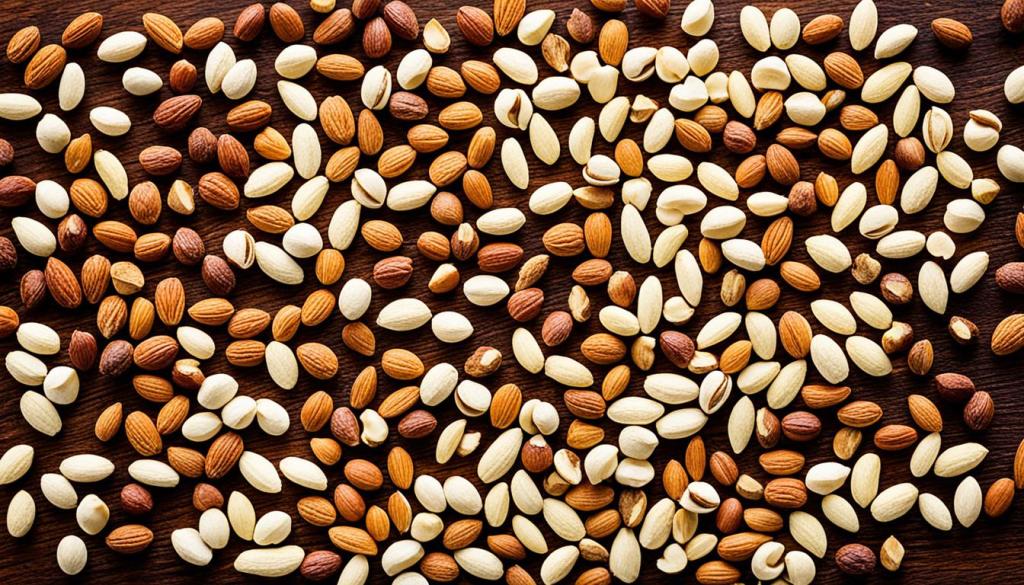
Eating various nuts can be tasty and full of nutrients. Nuts are rich in fats that are good for you, fiber, and protein. Each nut type brings something special to the table. By mixing them into your meals and snacks, you get a good mix of vitamins, minerals, and antioxidants.
Walnuts: A Rich Source of Omega-3 Fatty Acids
Walnuts stand out because they’re full of omega-3s. These healthy fats are great for your brain and reduce body inflammation. Walnuts also have fiber and protein, so they’re a top pick for your health.
Almonds: Packed with Calcium
Almonds are a powerhouse when it comes to health. They have the most calcium of all nuts, which is vital for strong bones and teeth. Almonds also give you a healthy serving of good fats, fiber, and protein for your body’s needs.
Brazil Nuts: High in Selenium
Brazil nuts are known for their selenium. This mineral acts as an antioxidant and supports your thyroid. With Brazil nuts, you easily add selenium to your daily meals.
Pistachios: Nutrient-Packed and Heart-Healthy
Looking for nutrients that are also good for your heart? Pistachios fit the bill. They are low in calories and high in fiber, helping with weight maintenance. Plus, they offer healthy fats and protein, making them a great dietary choice.
Pecans: Nutrient-Dense and Delicious
Pecans are among the most nutrient-rich nuts. They’re packed with vitamins, minerals, and antioxidants. Their low carb content also makes them a smart choice for low-carb or keto diets.
Peanuts: A Plant-Based Protein Source
Although technically legumes, peanuts offer benefits much like real nuts. They’re rich in plant-based protein, good fats, and fiber. And, they’re low on the glycemic index, helping keep your blood sugar steady.
Cashews: Promote Heart Health and Insulin Sensitivity
Cashews are special in what they offer. Studies show they might help with insulin sensitivity and lower diabetes risk. They’re full of healthy fats and protein, perfect for a balanced diet.
“Each nut variety offers its unique nutritional profile, providing a wide range of essential vitamins, minerals, and antioxidants.”
By adding a variety of nuts to your diet, you not only enjoy delicious flavors but also get many health benefits. Whether you add them to salads, smoothies, or eat them alone, they are a great, nutritious choice.
Try out different nut types in your meals daily. This way, you gain a lot of nutrients and support your health overall.
| Nut Variety | Main Nutritional Highlights |
|---|---|
| Walnuts | Rich in omega-3 fatty acids, fiber, and protein |
| Almonds | High in calcium, good fats, fiber, and protein |
| Brazil Nuts | High in selenium, a potent antioxidant |
| Pistachios | Loaded with nutrients, heart-healthy, and fiber-rich |
| Pecans | Nutrient-dense with low carbs |
| Peanuts | A great source of plant-based protein and fiber |
| Cashews | Promote heart health and insulin sensitivity |
The Role of Nuts in a Heart-Healthy Diet
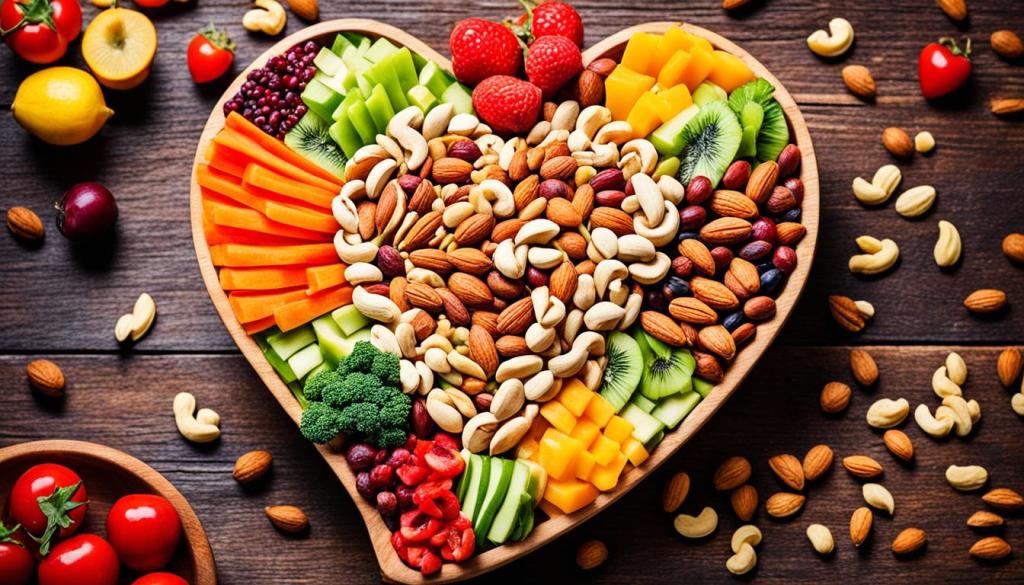
Nuts have long been known for their heart-healthy benefits. They are packed with the right kind of good fats, fiber, and protein. This makes them an ideal part of a heart-friendly diet. Eating nuts regularly can lower the risk of heart disease and boost your heart’s health.
Adding various nuts to what you eat brings many benefits. These snacks are filled with fats that are good for your heart. They lower bad cholesterol and the heart disease risk. Nuts also contain fiber which is good for digestion and helps you stay full, aiding in weight management.
“Including nuts in a heart-healthy diet is wise. The mix of fats, fiber, and protein in nuts supports heart health. It cuts the risk of heart disease too.”
Nuts give us many essential vitamins and minerals like vitamin E and magnesium. They also have antioxidants. These nutrients are key for keeping us healthy and fighting inflammation.
Nuts with their beneficial fats can improve your cholesterol and keep your blood vessels healthy. They can even help balance blood sugar. This makes nuts great for people with diabetes and those watching their blood sugar levels.
You can enjoy nuts in many ways while eating for your heart. Snack on a small handful of mixed nuts. Add chopped nuts to salads, yogurt, or oatmeal. Use nut butter on whole grain toast or fruit. Remember, nuts are high in calories. So, eat them in moderation.
Summary:
Nuts are a powerhouse of heart-friendly fats, fiber, and protein. Adding them to your diet can reduce heart disease risks and boost your heart health. Dive into the tasty and nutritious world of nuts in your daily meals and snacks.
Incorporating Nuts into Your Daily Routine
Adding healthy nuts to your daily routine is simple and tasty. Nuts are a great snack choice. They also mix well with meals. Here’s how to enjoy various nut varieties:
1. Sprinkle on Salads or Yogurt
Add chopped walnuts or almonds to salads or yogurt. They give meals a healthy crunch. Plus, they’re good for you.
2. Enjoy as a Midday Snack
For a quick snack, grab a handful of cashews or pecans. They’re crunchy and keep you going all day.
3. Use as Toppings for Desserts
Top desserts with pistachios for a special touch. Their green color looks nice, and they taste great on sweets.
“Try different nut varieties to see which you like best.”
There are many ways to include nuts in your meals. Whether as a snack or in dishes, nuts bring flavor and nutrition. They can make your diet better in many ways.
| Nut Variety | Nutrition | Benefits |
|---|---|---|
| Walnuts | Rich in omega-3 fatty acids | Support brain health and reduce inflammation. |
| Pistachios | Low in calories and high in fiber | Help manage weight and improve appetite control. |
| Pecans | Nutrient-rich and low in carbs | Give vitamins, minerals, and antioxidants. Fit for low-carb and keto diets. |
| Almonds | Have the most calcium among nuts | Good for bones and a source of healthy fats. |
| Peanuts | Rich in protein and fiber | Help control blood sugar and are a tasty snack. |
| Cashews | Help with insulin sensitivity and heart health | Good for glucose control and contain heart-healthy fats. |
| Brazil Nuts | High in good fats and selenium | Support thyroid health and fight oxidative stress. |
Conclusion
Eating a mix of nuts is great for your health. Nuts like walnuts, pistachios, and almonds are full of good-for-you stuff. This includes healthy fats, fiber, and protein. By having nuts often, you help your heart and get lots of nutrients.
Nuts are more than just healthy. They taste great and add a nice crunch to meals. You can put walnuts in your yogurt, almonds on salads, or eat cashews for a snack. It’s simple to make nuts a part of what you eat every day.
Choosing nuts means picking health. They are good for your heart and bring key nutrients to your diet. Make a change today by choosing walnuts, pistachios, or any other nut you like. Your heart and body will thank you.
FAQ
How can walnuts protect my brain?
Walnuts are full of omega-3 fatty acids, which help your brain stay healthy. Their good fats lower body inflammation. Plus, they boost how well your brain works.
How can pistachios help with weight management?
Pistachios don’t have many calories but are high in fiber and good fats. They make you feel full and help control your hunger. This makes them great for managing your weight.
Are pecans suitable for a low-carb diet?
Yes, pecans have the least carbs among nuts. This makes them good for a low-carb or keto diet.
What makes almonds a calcium powerhouse?
Almonds have the most calcium out of all tree nuts. They are perfect for increasing your calcium intake.
Are peanuts considered a tree nut?
Though peanuts grow underground, they’re part of the legume family. They offer similar health benefits to tree nuts. This includes being a rich source of protein, fiber, and good fats.
How can cashews promote insulin sensitivity and heart health?
Eating cashews daily might lower insulin and improve how it works. They’re packed with heart-healthy fats and protein. This is great for your heart and overall health.
What are the heart-healthy benefits of brazil nuts?
Brazil nuts are loaded with heart-friendly fats and protein. They’re also very high in selenium. Selenium is good for your thyroid and helps fight off stress.
What are the nutritional differences between different nut varieties?
Every type of nut is special nutritionally. Walnuts have omega-3s, almonds boast calcium, and brazil nuts are packed with selenium.
How do nuts support a heart-healthy diet?
Nuts are full of nutrients, like good fats, fiber, and protein. Eating them regularly can lower your heart disease risk. They’re also great for your heart.
How can I incorporate nuts into my daily routine?
Nuts are a handy, healthy snack. You can also mix them into meals or have them midday. Try different nuts to see which ones you like best.
Are there any specific health benefits of including nuts in my diet?
Adding nuts to your diet brings lots of good health outcomes. They help your brain, weight, heart, and provide key nutrition. These small snacks offer big benefits.



 trim down and shape up
Leave a comment