


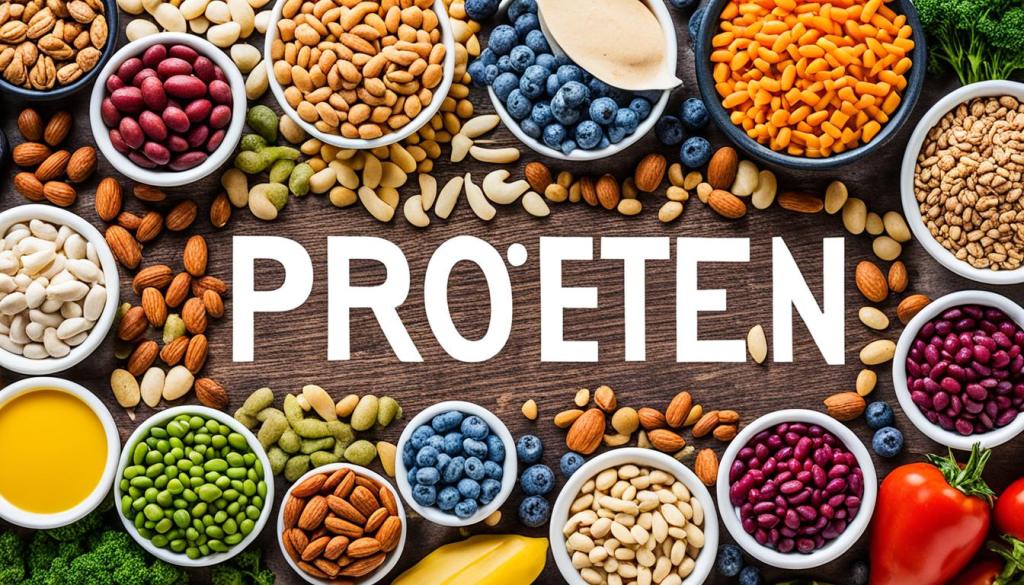
Lately, talks about protein have been everywhere. You might have started using protein powders or eating high-protein meals. These help you stay fit, build muscle, and maybe even live longer. Some specialists believe that having more muscle than fat is the secret to a long life.
Proteins are crucial for our body’s health because they are found in every cell and fluid. They are made of amino acids, which are like proteins’ building blocks. Our body can make some of these amino acids. But there are nine essential amino acids that we must get from food.
Foods with all the essential amino acids are called complete proteins. On the other hand, some foods lack a few essential amino acids and are known as incomplete proteins. Yet, by eating different incomplete proteins together, like rice with beans, you can still get all the amino acids your body needs.
Key Takeaways:
- Proteins are essential for our health and are made up of amino acids.
- Complete protein foods contain all the essential amino acids, while incomplete protein sources may lack some essential amino acids.
- Complementary proteins can be formed by combining incomplete protein foods to provide all the essential amino acids.
- Ensuring a sufficient intake of complete proteins and complementary proteins is important for overall health and wellbeing.
- Consulting a registered dietitian nutritionist can help determine the appropriate amount of protein for individual needs.
Understanding Amino Acids and Protein Structure
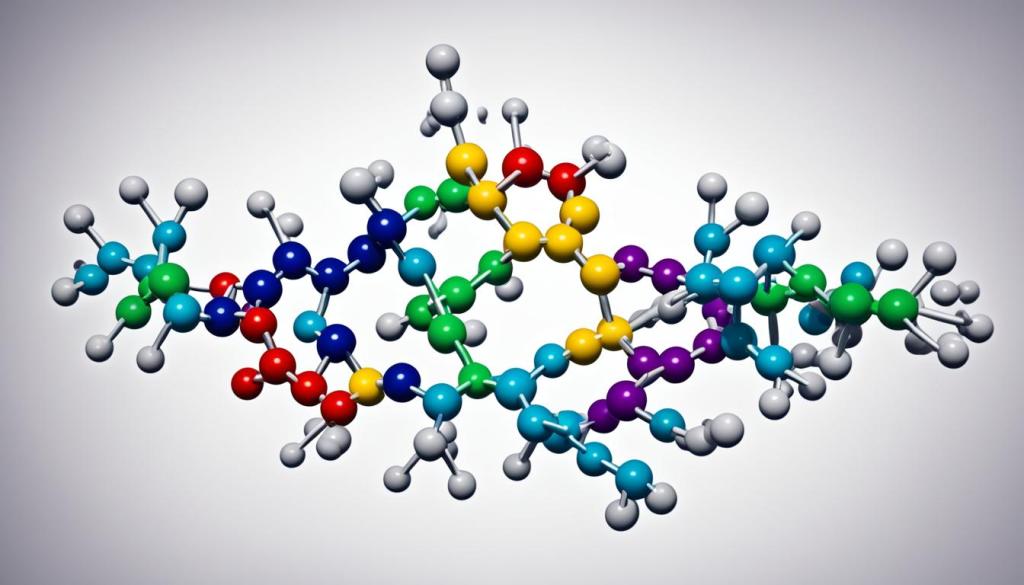
Amino acids are like building blocks for protein. There are 20 different amino acids. Each one has a special job and is important. The body makes 11 of these on its own. But, you have to get the other nine from food.
The nine we need from food are histidine, isoleucine, leucine, lysine, methionine, phenylalanine, threonine, tryptophan, and valine. These amino acids do a lot. They help with muscle repair and growth. They also make hormones, help the immune system, and create some brain chemicals.
Proteins have amino acids linked together. The order of these amino acids makes each protein unique. Changing the sequence or adding new ones changes what the protein does.
| Amino Acid | Function |
|---|---|
| Histidine | Aids in tissue growth and repair, supports red and white blood cell production |
| Isoleucine | Assists with energy production, promotes muscle endurance and recovery |
| Leucine | Stimulates muscle protein synthesis, supports muscle growth and repair |
| Lysine | Plays a role in collagen formation, supports immune function |
| Methionine | Facilitates the production of other molecules, acts as an antioxidant |
| Phenylalanine | Involved in the production of neurotransmitters, such as dopamine and norepinephrine |
| Threonine | Aids in the formation of proteins and various compounds in the body |
| Tryptophan | Precursor for serotonin, supports mood regulation and sleep |
| Valine | Assists with energy production, promotes muscle growth and tissue repair |
It’s important to know about amino acids for good nutrition and health. Eating foods rich in essential amino acids helps your body a lot. It keeps your tissues healthy, helps your immune system, and boosts your overall health.
Sources of Complete Protein
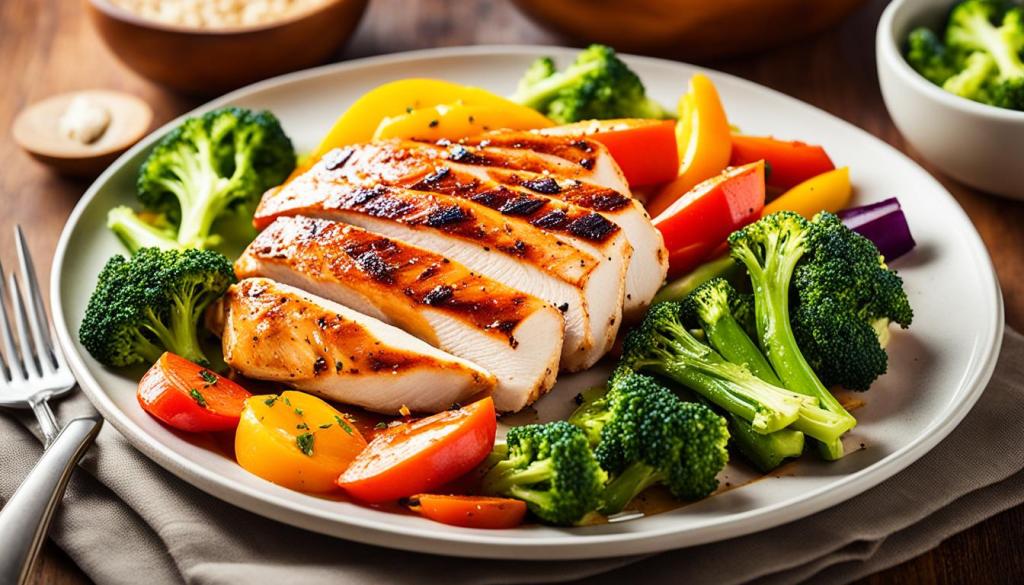
You have many options to get your protein. Foods like eggs, lean chicken, Greek yogurt, salmon, and lean beef are top choices. They have all the amino acids your body needs.
Such foods give you quality protein. They help build and repair your muscles. If you’re into fitness or need more protein daily, these are great for you.
Lean chicken is favored for its low fat and many cooking options. You can have it grilled, roasted, or in salads. It adds taste and nutrition.
Eggs are not just cheap but also super easy to cook. Boiled, scrambled, or poached, they are a great source of protein.
Greek yogurt is creamy and full of probiotics for your gut. You can eat it alone, or in smoothies and dressings. It’s a tasty way to get essential amino acids.
Seafood lovers might choose salmon. It’s high in protein and omega-3s. Cook it any way you like for a healthy and tasty meal.
Lean beef is great for protein but also i. It has iron, zinc, and B-vitamins. Enjoy a steak or use ground beef in your dishes for all its benefits.
Adding these protein sources to your diet will keep your health in check. They are the key building blocks for a strong and healthy body.
Plant-Based Complete Protein Options
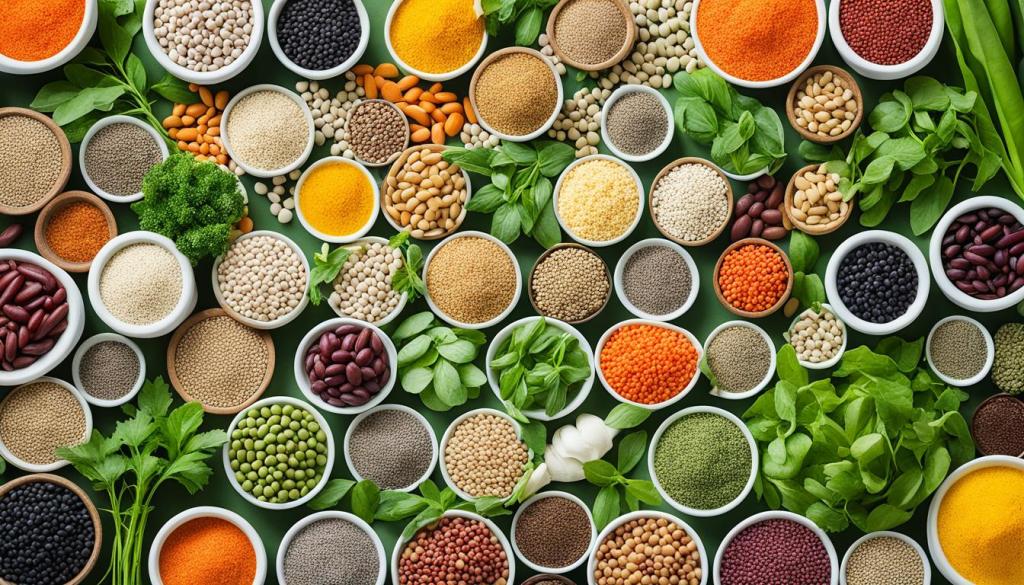
If you’re vegetarian or vegan, you might worry about getting enough protein. But there’s good news. Many plant foods offer complete proteins with all the essential amino acids. Here’s a list of some top options:
- Lentils: These legumes are not only full of protein but also have fiber, folate, and iron. Enjoy them in soups, salads, or casseroles.
- Quinoa: This seed-like grain is rich in all essential amino acids. It’s also a good source of fiber, iron, and magnesium. Make it into salads, stir-fries, or use it as a side dish.
- Chickpeas: Also called garbanzo beans, these are loved worldwide. They’re high in protein, fiber, and nutrients. Use in hummus, salads, or roast for a tasty snack.
- Tofu: Made from soybeans, tofu is a top pick for vegetarians. It’s great in stir-fries, curries, and can even replace eggs in baking.
Adding these plant proteins to your meals ensures you get all the essential amino acids. Mix them to make tasty, wholesome dishes. Try different recipes to see what you like best.
Here’s a helpful chart showing how these plant proteins stack up on protein per 100g:
| Plant-Based Protein Source | Protein Content per 100g |
|---|---|
| Lentils | 9g |
| Quinoa | 4.4g |
| Chickpeas | 8.9g |
| Tofu | 8g |
This chart shows plant sources have plenty of protein. They’re not only nutritious but also delicious. Don’t shy away from trying new recipes to keep your meals balanced and rich in protein.
Protein Pairings for Complementary Proteins
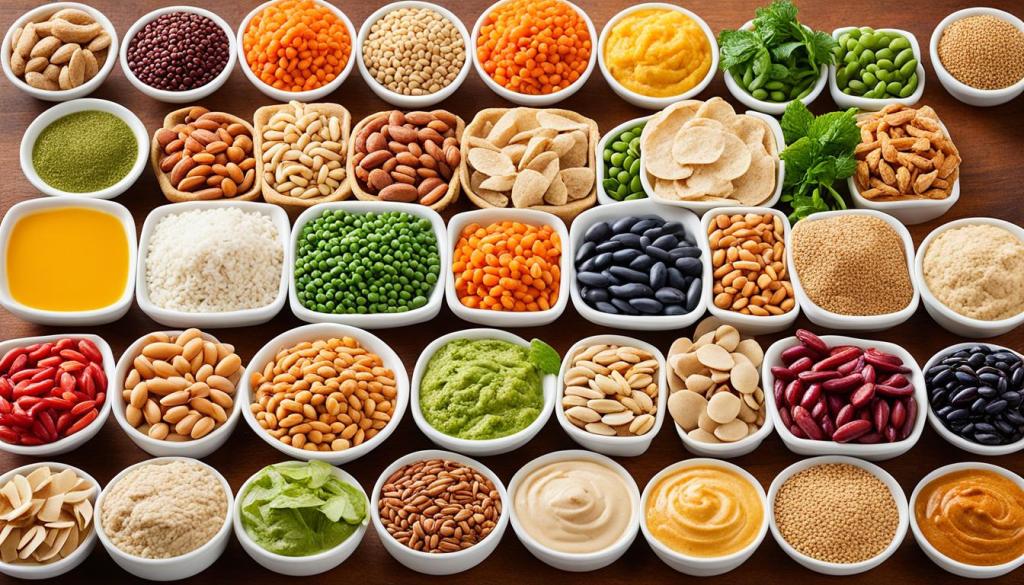
By mixing different kinds of protein, you can create full proteins that have all the amino acids you need. This way, your meals will have a mix of amino acids and complete proteins.
Consider these protein pairs for best nutrition:
- Legumes with Grains, Nuts, Seeds, or Dairy: Mix legumes like lentils or chickpeas with grains like quinoa or brown rice. Or, try legumes with nuts, seeds, or dairy, such as Greek yogurt. These combos boost the nutrition of your meal.
- Grains with Dairy: Pair grains such as oatmeal or whole wheat bread with dairy like milk or cheese. This mix ensures you get all the amino acids your body needs.
- Dairy with Nuts, Seeds, and Legumes: Join dairy items like cottage cheese or Greek yogurt with nuts, seeds, or legumes. Options include almonds, chia seeds, or tofu. This mix gives you a full set of amino acids and diversifies your food.
Adding these combos to your meals bumps up the nutrition. Plus, they make your food taste and feel good. Playing around with different mixes lets you make meals that are both satisfying and nutritious.
To get the best nutrition, pick high-quality proteins. Think about choosing organic legumes, whole grains, and dairy that’s grass-fed. Also, go for nuts and seeds that are sourced sustainably. If you’re into it, you can check out top-notch protein powders or supplements.
Now you can make meals that give you all the essential amino acids. This is key for your health.
Debunking the Myth of Protein Combining
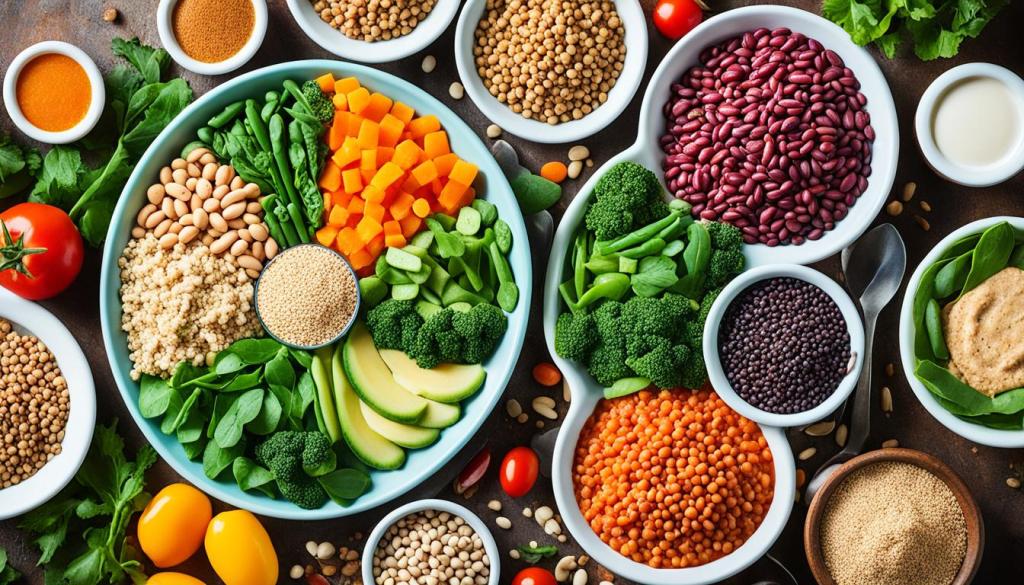
People once believed those who eat plant-based foods must match protein sources carefully at every meal. They thought this was the only way to get all the needed proteins. But, the Academy of Nutrition and Dietetics has shown this isn’t true. Eating protein from various plants over a day gives your body all the essential amino acids.
Complementary proteins can help get all the essential amino acids in one meal. But, constantly watching the amino acid count isn’t necessary for most people.
When you add many plant-based proteins to your meals, you get all the essential amino acids easily. You won’t need to stress about perfect combinations for every meal. This gives you the freedom to enjoy a variety of plant foods without the fear of missing out on proteins.
“Consuming protein from a variety of plant foods throughout the day is enough to supply all the essential amino acids.”
Remember, it’s more critical to focus on getting enough protein and a varied diet. With foods like legumes, grains, nuts, seeds, and vegetables, you can cover all your amino acid needs throughout the day.
The Benefits of Including Incomplete Protein Foods:
- Incomplete protein foods are generally high in fiber, which can help promote healthy digestion and support overall gut health.
- Plant-based protein sources tend to be lower in saturated fats, making them heart-healthy choices.
- Diverse plant-based protein options offer a wide range of vitamins, minerals, and antioxidants that contribute to overall health and well-being.
In summary, you don’t have to worry about carefully pairing proteins anymore. Instead, ensure you eat a wide range of plant-based proteins throughout the day. This will give you all essential amino acids your body needs.
Protein Needs and Recommended Intake

It’s key to know your protein needs for good health. The recommended dietary allowance (RDA) guides us on the necessary protein intake.
The RDA suggests 0.8 grams per kilogram of weight. For example, a 140-pound person should aim for 51 grams daily. Yet, protein needs can change with illness, pregnancy, age, and activity levels.
Seeing a dietitian can offer a plan just for you. They will factor in your unique life to map out a diet that meets your health goals.
| Factors Affecting Protein Needs: | Recommended Dietary Allowance (RDA) |
|---|---|
| Illness or injury | Higher protein intake may be required for tissue repair and recovery. |
| Pregnancy or lactation | Additional protein is needed to support the growth and development of the fetus or breast milk production. |
| Age | Older adults may require more protein to prevent age-related muscle loss. |
| Level of physical activity | Athletes and those engaging in intense exercise may need higher protein intake to support muscle repair and growth. |
Getting enough protein is crucial for strong muscles and a healthy immune system. Knowing the right intake and working with a pro will keep you energized and healthy.
Choosing High-Quality Protein Sources
Choosing the best protein sources is vital to meeting your health goals. It doesn’t matter if you eat plants or animals, picking top-notch protein matters. This choice can really boost your health.
For animal eaters, think about adding grass-fed beef or organic eggs to your diet. They offer great protein quality. You’ll get the amino acids your body must have.
Do you eat plants or not? No problem. Foods like quinoa and lentils are full of protein. Plus, they have all the amino acids you need. This makes them great for any meal.
“Choosing high-quality protein sources is essential for optimizing your nutritional intake and supporting your health goals.”
Looking for easy protein? Try top protein powders. These are perfect for people on-the-go or who work out. Many athletes use them.
When you choose a protein powder, go for natural ingredients. Make sure it has good reviews. This can help you pick one that really works. Protein powder is an easy way to get more protein.
By choosing the best protein, you can be sure you’re on the right track. Then, you’re ready to tackle your health and fitness goals.
So, it’s pretty clear that in order to be healthy you need to consume enough protein. Let’s think for a moment about whether you’re better off getting protein from your food or a protein powder supplement.
Getting protein from food is generally considered healthier than relying on protein powder supplements, although both have their place depending on individual circumstances and needs. Here are some key points to consider:
Whole Foods
- Nutrient-Rich:
- Whole foods provide not just protein but also a range of other essential nutrients, including vitamins, minerals, fiber, and healthy fats.
- Examples: lean meats, fish, eggs, dairy products, legumes, nuts, seeds, and whole grains.
- Digestive Health:
- Whole foods, especially those rich in fiber like legumes and whole grains, support digestive health.
- Fiber aids in digestion and helps maintain a healthy gut microbiome.
- Satiety and Appetite Control:
- Whole foods can promote feelings of fullness and satisfaction, which can help with appetite control and weight management.
- The combination of protein, fiber, and healthy fats in whole foods can contribute to longer-lasting energy.
- Lower Risk of Contaminants:
- Whole foods are less likely to be contaminated with additives, preservatives, or contaminants that can sometimes be found in supplements.
Protein Powders
- Convenience:
- Protein powders are convenient and can be quickly prepared, making them a good option for people with busy lifestyles.
- They are useful for post-workout recovery or when a quick protein boost is needed.
- Targeted Protein Intake:
- Protein powders can help ensure adequate protein intake, especially for athletes, bodybuilders, or those with increased protein needs.
- They allow for precise control over the amount of protein consumed.
- Special Dietary Needs:
- Protein powders can be beneficial for individuals with specific dietary restrictions or medical conditions that make it challenging to consume enough protein from whole foods.
- Options like plant-based protein powders are available for vegetarians and vegans.
- Quality Control:
- It’s important to choose high-quality protein powders that are free from harmful additives and contaminants.
- Look for third-party tested products to ensure quality and safety.
While both whole foods and protein supplements have their advantages, whole foods generally provide a more comprehensive nutritional profile and support overall health better than supplements alone. However, protein powders can be a useful addition to a diet when used appropriately and chosen carefully.
For most people, focusing on getting the majority of protein from whole foods while using protein powders to fill in gaps as needed is a balanced approach. Always consider individual health needs, dietary preferences, and lifestyle factors when making this decision. If in doubt, consulting with a healthcare professional or a registered dietitian can provide personalized guidance.
Conclusion
Adding protein to your daily meals is crucial for a good diet. You can choose proteins from animals or plants. It’s important to eat different types to get all the amino acids your body needs.
When you mix different protein sources, you get all the amino acids you need. This means your body has a complete set of proteins to work with. Remember, how much protein you need depends on things like how active you are and your age.
For an extra boost, think about using protein supplements. Protein powders are a great and easy way to get more protein. Always go for the best ones, made from natural stuff and well-liked by users. Making smart decisions helps you reach your health goals and feel better.
FAQ
What is a Perfect Protein?
A perfect protein is a source that has all needed amino acids. These essential amino acids are also called the nine essential amino acids. Foods like eggs, lean chicken, and Greek yogurt are top protein sources.
How are amino acids essential building blocks for protein?
Amino acids build up proteins. They are vital for many body functions. Mixing different amino acids creates proteins needed for the body.
What are the nine essential amino acids?
The nine essential amino acids are histidine, isoleucine, leucine, lysine, methionine, phenylalanine, threonine, tryptophan, and valine. The body must get these amino acids from food.
What are some sources of complete protein?
Complete proteins can be found in eggs, lean chicken, and more. These foods provide all necessary amino acids.
Are there plant-based options for complete protein?
Yes, plants can also provide all essential amino acids. For example, lentils, quinoa, and tofu are good sources. They have plenty of protein for your body.
How can complementary proteins be formed?
Combining certain foods can create complementary proteins. Mix legumes with grains or dairy. This ensures you get all your essential amino acids.
Is protein combining necessary at every meal?
Recent studies say you don’t need to mix proteins every meal. Eating a variety of plant-based proteins all day meets your needs. But, combining proteins sometimes can be good for one meal.
What is the recommended intake of protein?
The recommended protein intake is 0.8 grams per kilogram of weight. However, your needs might change due to health or activity level. A dietitian can help you figure out your exact protein needs.
How can I choose high-quality protein sources?
Choose high-quality sources like grass-fed beef. For plants, pick quinoa or lentils. Also, top-quality protein powders are a good choice. Look for those with natural ingredients and good reviews.
Why is it important to include high-quality protein sources in my diet?
High-quality proteins offer all essential amino acids. They help with muscle health and many body functions. Including these in your diet supports your health goals.



 trim down and shape up
Leave a comment