


Tired of hard gym workouts? Feeling like weight loss is endless hard work? You’re in luck. There are ways to lose weight without the gym grind. Yes, you heard it right.
These are simple, easy tips. They fit right into your day and show real changes. No need to be at the gym all the time. By changing some habits, you can lose weight and feel amazing.
We’ll look at 15 proven ways to lose weight without working out. You can adjust your diet a little or start new habits. No more tiresome workouts needed. You’re on your way to a better, happier life!
Key Takeaways:
- Exercise isn’t the only way to lose weight. Simple life changes really help.
- It’s important to watch your portions and eat mindfully for a balanced diet.
- More fibers can boost digestion and help you lose weight.
- Choosing lean proteins keeps you full and content.
- Good fats are your friends. They can help with weight loss.
Review Your Portions
Portion control is key for losing weight. By knowing how much food you eat, you cut calories. And, this helps with long-term weight loss.
Using small plates and bowls tricks your mind into eating less. Studies show you feel full with smaller servings on tiny dishes.
For a balanced meal, aim for moderate sizes of each food group. Try a fist-sized portion of carbs like whole grains, and a palm of protein like chicken. Add 2 tablespoons of healthy fats and load up your plate with colorful veggies.
When eating out, plan ahead for smaller portions. Choose places with lighter dishes or share your meal. You can also save half your food in a to-go box to avoid overeating.
Watching your portions is a crucial part of losing weight. It’s a great way to lower your calorie intake and reach your goals.
Eat More Fiber
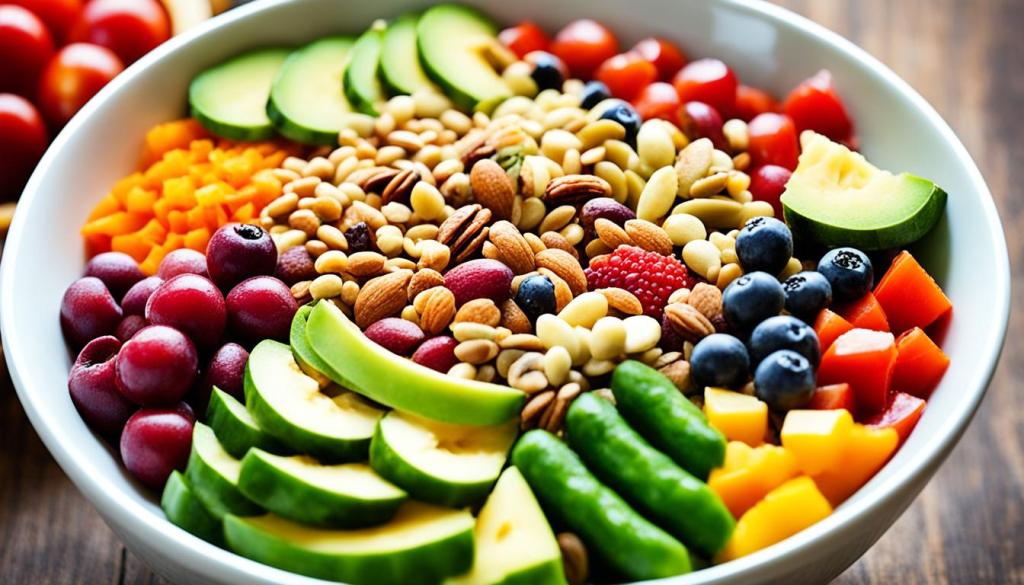
Fiber is key for losing weight. It keeps you full longer and has many health perks. It makes you feel like you’ve eaten enough, which stops you from overeating.
Eating foods high in fiber is great for your gut. They help good bacteria grow. This bacteria tells your brain you’re full and cuts down on cravings. So, including fiber in your meals helps a lot with losing weight.
You should aim for 25 grams of fiber daily. Thankfully, there are many tasty foods that can help you get there. Whole grains, like quinoa and brown rice, are top picks. Adding more fruits, veggies, and beans to your diet boosts your fiber too.
High-Fiber Foods for Weight Loss:
| Fiber-Rich Foods | Approximate Fiber Content (g) per Serving |
|---|---|
| 1 cup of cooked quinoa | 5.2 |
| 1 slice of whole wheat bread | 2 |
| 1 medium banana | 3.1 |
| 1 cup of broccoli | 5.1 |
| 1 cup of black beans | 14.9 |
Adding fiber to your meals is great for losing weight. But, increase your fiber intake slowly. This gives your body time to adjust. Make sure to drink plenty of water with your fiber. It helps your body digest it better.
Load Up on Protein
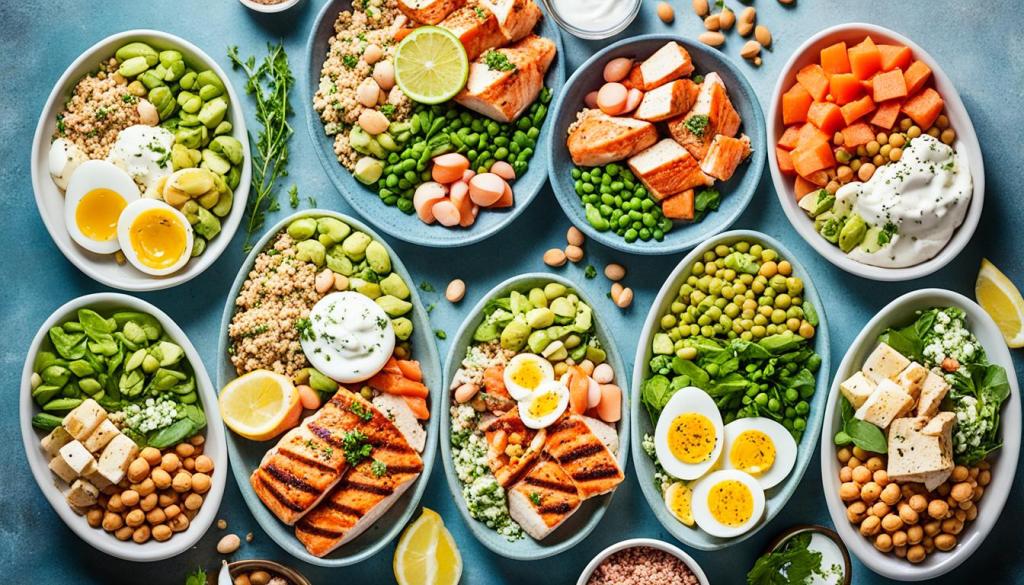
Adding enough protein to your meals boosts weight loss efforts. It helps you feel full, improves your metabolism, and grows muscle. More muscles burn more calories.
Try to have 20 grams of protein in every meal. You can do this by eating foods like fish, chicken, eggs, and low-fat dairy. They’re not just filling but also help build muscle.
Eating more protein can stop you from craving snacks. High-protein meals take longer to digest. This keeps you full longer, cutting down on unhealthy snacking.
Change up your protein sources for tasty meals. Trying new recipes keeps eating healthy fun. Plus, it keeps your weight loss on track.
Example Protein-Rich Meal Plan for Weight Loss
| Meal | Protein Source |
|---|---|
| Breakfast | Scrambled eggs with spinach and feta cheese |
| Lunch | Grilled chicken breast salad with mixed greens and avocado |
| Snack | Greek yogurt with berries and a sprinkle of nuts |
| Dinner | Baked salmon with steamed broccoli and quinoa |
By including protein in each meal, you get the nutrients you need. This also helps with losing weight. For personalized advice, talk to a professional.
Have Plenty of Fat
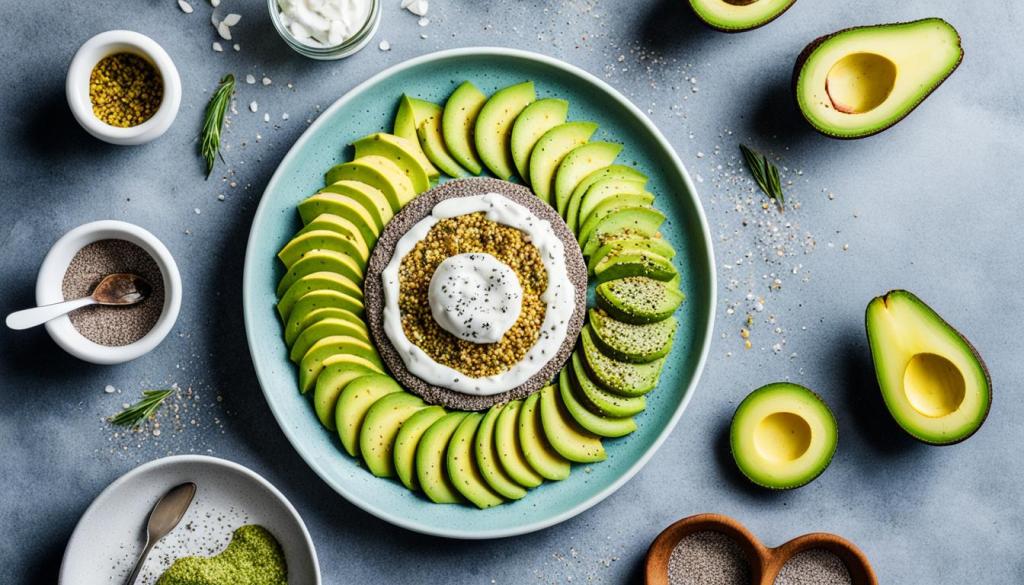
Many believe cutting out fats is vital for losing weight. But, healthy fats are crucial for health and weight loss. Foods like olive oil, avocado, nuts, seeds, and oily fish are great sources.
Including healthy fats makes you feel full longer. This helps avoid overeating and constant snacking, aiding weight loss. The Dietary Guidelines suggest fats be 20-35% of daily calories. Adding healthy fats to your meals brings both satisfaction and nutrients.
Omega-3s from fish like salmon support weight loss. They lower body inflammation, boost fat burning, and enhance insulin function. These benefits help maintain a healthy weight.
Benefits of Healthy Fats for Weight Loss:
- Help you feel fuller for longer
- Prevent overeating and unnecessary snacking
- Provide essential nutrients
- Support a healthy metabolism
- Enhance fat burning
- Improve insulin sensitivity
Moderation with healthy fats is crucial. Since fats are calorie-dense, watch your portion sizes. Try to include a range of good fats in your diet while staying within your calorie limit.
| Healthy Fats Sources | Serving Size | Calories | Total Fat (g) |
|---|---|---|---|
| Olive oil | 1 tablespoon | 120 | 14 |
| Avocado | 1/2 medium | 120 | 10 |
| Almonds | 1/4 cup | 160 | 14 |
| Chia Seeds | 2 tablespoons | 120 | 9 |
| Salmon | 3 ounces | 175 | 10 |
There are many tasty ways to add healthy fats to your meals. Try different dishes to enjoy these nutritious items and aid in your weight loss efforts.
Balance Out Your Carbs
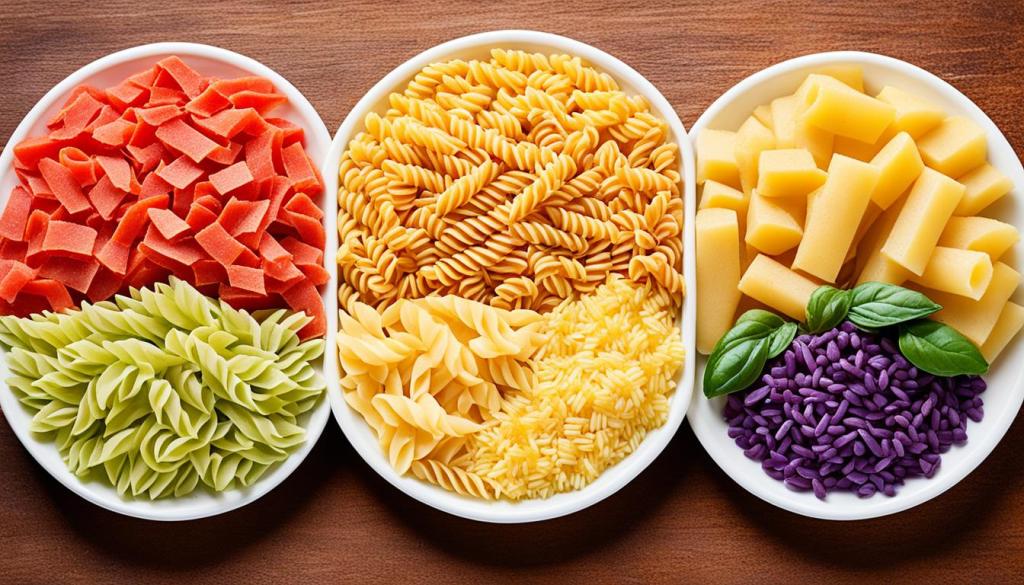
Finding the right diet balance is key for weight loss. Cutting carbs seems smart but it’s not. Removing them completely can harm your health. Focus on good carbs and keep a calorie deficit is better.
Carbs should be 45-65% of your daily calories. They provide the energy your body needs. Choose complex carbs like whole grains, fruits, and veggies. They are rich in fiber and nutrients.
Eating these carbs will keep you full longer and stop you from eating bad snacks. Fiber, especially, helps you feel full which can help with losing weight.
It’s also vital to have the right mix of protein and fats. Protein helps your body repair and build. Healthy fats are key for nutrients and hormone balance.
Carb Balance Example Meal Plan:
| Meal | Carbohydrate Source |
|---|---|
| Breakfast | Steel-cut oats with berries |
| Lunch | Quinoa salad with mixed vegetables |
| Dinner | Grilled chicken breast with sweet potato and steamed broccoli |
| Snack | Apple slices with almond butter |
Finding the right diet balance helps in lasting weight loss. With the correct carbs, proteins, and fats, you nourish your body. This aids in weight loss and health improvement.
Get Enough Sleep

Getting enough sleep is key for weight loss and control. It affects hormones that make us feel hungry. This can lead to eating more snacks and changing when and what we eat. Try to sleep for 7-9 hours every night to help manage your weight well.
| Sleep duration | Impact on weight |
|---|---|
| Less than 6 hours | Increased risk of weight gain and obesity |
| 7-9 hours | Optimal for weight management and overall health |
| More than 9 hours | Inconsistent impact on weight; may be associated with certain health conditions |
Getting good sleep makes it easier to control your appetite. It also gives you more energy to be active and choose healthy foods. To sleep better, keep a regular sleep time, relax before bed, and avoid screens near bedtime.
Benefits of Sufficient Sleep for Weight Loss
- Improves hormone balance, including those responsible for hunger and fullness cues
- Reduces cravings for high-calorie, sugary foods
- Enhances motivation to engage in physical activity
- Supports optimal metabolic functioning
Sleeping enough can really help in reaching your weight loss aims. It’s a big part of staying healthy.
Hydrate, Hydrate, Hydrate

Hydrating well is key to shedding pounds. It is important for your health and big in reaching your fitness goals.
Often, we think we’re hungry when we’re really just thirsty. This mix-up causes us to eat more than we need. Staying hydrated lets you know when you’re really hungry.
It’s a smart move to sip water before you eat. A glass before your meal makes you feel full. This might lower the number of calories you eat.
Try to drink lots of water every day. The amount you need can vary. But most people should aim for at least eight glasses daily.
Water isn’t your only source of fluids. Herbal teas, fruits, and veggies can also hydrate you. Plus, they offer a nice break from the taste of plain water.
It’s clear that water is vital. But, remember, it won’t replace good food and working out. It helps a lot with losing weight and staying healthy, though.
Make hydration a top priority. Add it to your healthy living plans. This, along with smarter eating and watching portion sizes, is the way to success.
Mindful Eating and Other Tips

Eating mindfully can help you lose weight and enjoy food more. You pay closer attention to when you’re hungry and full. This way, you won’t eat too much and make better food choices. Mindful eating means you eat slowly and really taste each bite.
This approach lets you savor your meals and feel satisfied. It stops overeating and snacking too much, which helps with losing weight. Staying present while you eat also stops bad eating habits that make you gain weight.
There are more ways to help with weight loss besides mindful eating:
- Cut out diet sodas: Even though diet sodas have no calories, they can make you gain weight. Drink water, tea, or flavored water instead.
- Manage stress: Stress can add pounds. Try meditation, breathing exercises, or hobbies you love.
- Write down what you eat: A food journal shows you how you eat and helps you to improve. It keeps you focused and on the right path to losing weight.
- Don’t stress about occasional indulgences: You don’t have to be perfect to lose weight. Treating yourself every now and then can keep you going without feeling deprived.
Real weight loss comes from changing how you live, not just what you eat. By being mindful and following these tips, you can keep the weight off and feel better in the long run.
| Benefits of Mindful Eating | Weight Loss Tips |
|---|---|
| 1. Helps control food intake | 1. Cut out diet sodas |
| 2. Prevents overeating | 2. Manage stress |
| 3. Promotes healthier choices | 3. Write down what you eat |
| 4. Reduces mindless eating | 4. Don’t stress about occasional indulgences |
Conclusion
Congratulations on starting your weight loss journey! These strategies will help you a lot. You won’t have to just rely on exercise.
Controlling how much you eat is very important. Try to eat moderate amounts. Eat foods full of fiber and protein. They help you feel full and burn fat.
Healthy fats like avocados and nuts are good for you. They keep you full longer. Eating the right amount of carbs is also important. It keeps your energy steady and stops cravings.
Lifestyle changes can really help you lose weight for good. Make sure you get enough sleep and drink plenty of water. Eat mindfully, paying attention to your body’s signals. This way, you’ll build healthy habits and become a better you!
FAQ
How can I lose weight without exercising?
You can shed pounds without a gym. Try these science-backed tips:
How does portion control contribute to weight loss?
Portion control is key. It tricks your mind into eating less. Choose smaller plates and bowls to eat fewer calories.
This also makes you feel full with smaller portions.
How does fiber aid in weight loss?
Fiber acts like a natural stop sign for hunger. It fills you up in the stomach and aids digestion. Plus, it boosts good gut bacteria, helping your body know when it’s truly full.
Why is protein important for weight loss?
Protein does wonders. It makes you feel full and satisfied. Eat around 20 grams per meal. Good sources are fish, chicken, and low-fat dairy.
Can eating healthy fats help with weight loss?
Absolutely. Foods like olive oil, avocados, nuts, and seeds will keep you satisfied longer.
Why is balancing carbohydrates important for weight loss?
A balanced diet stops overindulging. Aim for a mix of carbs, protein, and fat. The experts suggest carbs should be 45-65% of your calories.
How does sleep affect weight loss?
Getting enough sleep is crucial for losing and keeping off the weight. Lack of sleep upsets your hunger hormones. This leads to more snacks and bad food choices.
How does hydration help in weight loss?
Drinking water helps curb false hunger signals. It also aids your weight loss efforts when you drink some before meals.
What are some tips for mindful eating?
Eating mindfully is powerful. Slow down and ditch distractions. Tips like avoiding diet sodas, managing stress, and tracking your food can help. Remember, it’s okay to treat yourself sometimes.
How can I achieve long-term weight loss?
For lasting weight loss, use these proven tactics. Focus on portion control, nutrient-rich foods, and adding fiber, protein, and the right fats.
Be sure to balance your carbs. Also, prioritize sleep, drinking plenty of water, and mindful eating to make it a lifestyle.
What are the key takeaways for weight loss without exercise?
Looking to lose weight without a workout? Think long-term over fast solutions. Prioritize nutrition, portion control, fiber, protein, and fats.
Keep your carb intake balanced. Remember to sleep well, drink enough water, and be mindful while eating.
Source Links
- If You’re Looking to Lose Weight Without Exercise, Check Out These 15 Science-Backed Tips – https://www.prevention.com/weight-loss/a30188568/lose-weight-without-exercise-0/
- 9 Proven Ways to Lose Weight Without Diet or Exercise – https://www.healthline.com/nutrition/11-ways-to-lose-weight-without-diet-or-exercise
- How to lose weight without diet or exercise: 14 ways – https://www.medicalnewstoday.com/articles/322780



 trim down and shape up
Leave a comment