

Many people who were active in their youth find themselves taking a break from sports as adults. Maybe you lifted weights in your teens and 20s, then stopped after having kids. By the time you got back to the gym in your mid-40s, you found your strength and training capacity came back fast.
Ever wondered how easily your body regained its strength and muscle mass? It’s all thanks to muscle memory.
Muscle memory lets trained muscles get stronger and bigger faster than muscles that have never been trained. Scientists have made big discoveries about how muscle memory works. This explains why getting back into training after a break gives such great results.
Studies show muscle memory isn’t just in the brain. It’s also in the muscles themselves. When muscles are worked out, they keep extra cells called nuclei. These are key for muscle growth and strength. So, even after a long break, your muscles are ready to adapt quickly when you start exercising again.
So, what does this mean for you? Whether you’re a pro athlete or just starting with fitness, knowing about muscle memory can change how you train. Using muscle memory can help you get results faster, regain strength, and meet your fitness goals quicker.
Key Takeaways:
- Muscle memory is a phenomenon where previously trained muscles acquire strength and volume at a faster rate than never-trained muscles.
- Changes in muscle memory are not only neurological but also occur within the muscles themselves, with the retention of extra nuclei facilitating muscle growth and strength.
- Retraining after a period of disuse can activate muscle memory, allowing you to regain lost strength and capacity for training relatively quickly.
- Understanding and harnessing muscle memory can lead to more efficient and effective training, helping you achieve faster results and reach your fitness goals.
- Scientists have made significant breakthroughs in unraveling the science behind muscle memory, shedding light on its mechanisms and benefits.
The Two Types of Muscle Memory
There are two main types of muscle memory: neurological and physiological. Both play key roles in how our muscles work.
Neurological muscle memory helps you remember how to do things. It’s like your brain and spinal cord creating a map for your muscles. This map lets you do actions easily, like playing a guitar tune you learned before.
Physiological muscle memory helps your muscles bounce back quickly. When you exercise, your muscles grow and get stronger. Even if you stop exercising, these muscles stay with you. When you start exercising again, you get back your strength faster.
Knowing about these muscle memories can make your workouts better. Practice to improve your neurological memory and keep exercising to keep your physiological memory sharp. This will boost your muscle memory and help you perform better in sports or other activities.
The Benefits of Neurological and Physiological Muscle Memory
Both types of muscle memory are very useful. Neurological memory helps you master complex skills, making you more coordinated and precise. This is great for athletes, musicians, and dancers.
Physiological memory lets you get your muscles back faster after a break or injury. This is great for people who have been out of shape for a while or are recovering from an injury. They can quickly regain their fitness level.
For athletes or anyone wanting to stay fit, understanding both muscle memories can greatly improve your performance.
How Muscle Memory Works
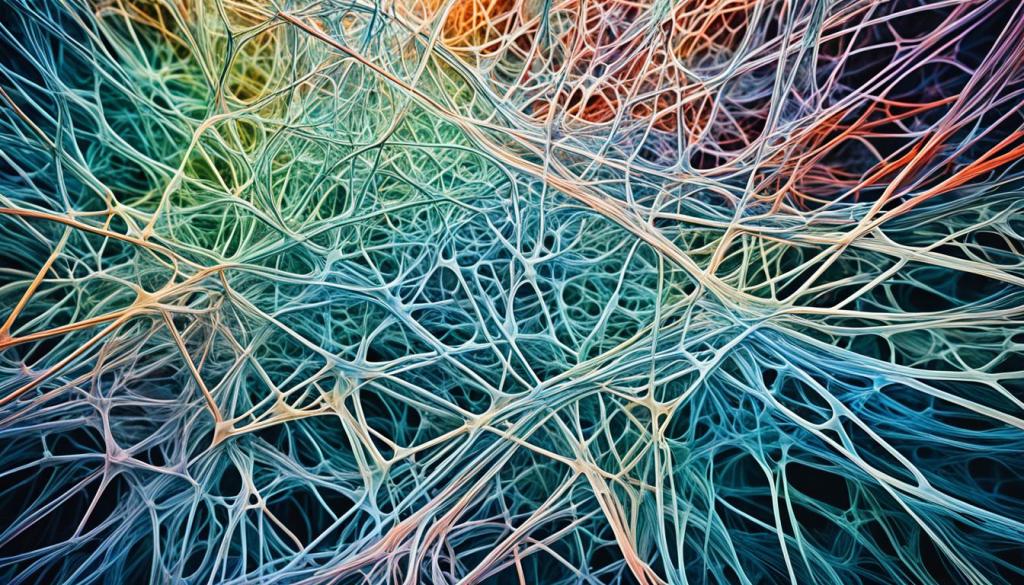
Muscle memory is a cool way our bodies learn and do physical tasks easily. It’s all about how our brain and muscles work together. Let’s explore how this happens through motor learning and the complex paths in our brain.
Motor learning is when our brain and spinal cord make strong connections to control muscles. When we learn something new, like riding a bike, our brain gets better at it with practice. This makes it easier to do later on.
As we keep practicing, our brain starts to use different paths for the actions. This lets us do hard tasks without even thinking about them. It’s like our body knows what to do automatically.
But what does muscle memory have to do with growing muscles? When we learn new movements, our muscles change to help us perform better. This includes the work of satellite cells.
Satellite cells are special cells in our muscles that wake up when we exercise. They help fix and grow our muscles. This is key for muscle memory to work well.
These cells add more nuclei to our muscle fibers. This means our muscles can make more proteins. This leads to our muscles getting bigger and stronger.
Having more nuclei in our muscles means we can make proteins faster. This helps us adapt to movements we’re familiar with. It makes us perform better and keeps muscle memory strong.
Neural Pathways and Muscle Memory
| Process | Description |
|---|---|
| Motor Learning | The process of creating efficient neural pathways to activate specific muscles through repetitive practice. |
| Transition to Basal Ganglia | When movements are repeated, neural activity shifts from cortical areas to the basal ganglia, responsible for automatic functioning. |
| Satellite Cell Activation | Engaging in physical activity activates satellite cells, which play a crucial role in muscle repair and growth. |
| Myonuclear Accretion | Satellite cells insert additional nuclei into muscle fibers, promoting protein synthesis and muscle growth. |
| Enhanced Protein Synthesis | Increased nuclei within muscle fibers facilitate faster and more efficient protein synthesis, promoting adaptation to familiar movements. |
Learning about muscle memory and how it works can help us train better and perform better. By understanding motor learning, neural pathways, and muscle growth, we can reach our full potential. This can lead to amazing achievements.
Retaining Muscle Memory
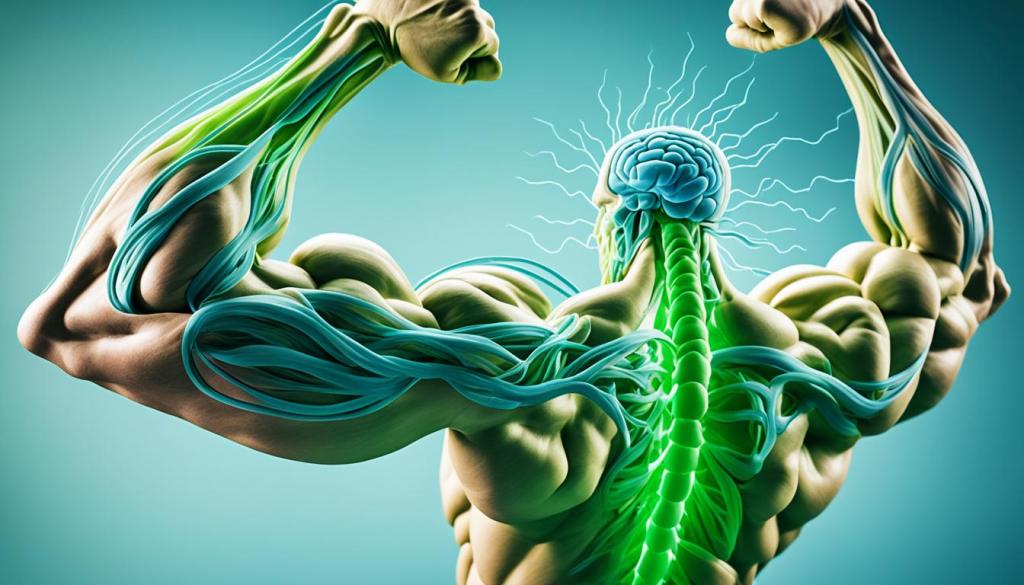
Once you’ve built muscle memory through regular training, you might wonder how to keep it. The good news is that muscle memory can last a long time, sometimes even forever.
Studies reveal that muscle memory helps you quickly regain strength and power after a break. This means if you’ve stopped exercising, you’ll get back in shape quicker than a beginner.
How fast you regain your fitness level depends on several things. These include your initial fitness, how long you took off, your age, and your past exercise routine. The more fit you were before, the easier it is to get back to your top shape.
To keep muscle memory, add maintenance workouts to your routine. These workouts should keep your strength up and work on the muscle groups you used to train. They don’t need to be as hard or as often as your old workouts, but they’re key to keeping your gains.
Also, eating well and staying healthy helps with muscle retention. A good diet gives your muscles the nutrients they need to rebuild and recover.
In short, to keep muscle memory, stick with regular maintenance workouts, eat right, and live healthily. Doing these things helps you keep your progress and enjoy the benefits of your muscle memory.
Harnessing Muscle Memory in Training

Using muscle memory can change the game in your training. It helps you progress faster and get better results. By learning how to use muscle memory, you can improve your skills quickly.
To use muscle memory well, start with a plan. Begin with exercises that are a bit easier than before. This helps your muscles get used to the movements safely.
Then, slowly increase how long and how often you work out. This keeps challenging your muscles and helps you avoid getting stuck.
Using your mind and watching videos can also help improve your skills. Imagine yourself doing the moves or watch athletes do them. This helps your brain and muscles work together better.
But muscle memory isn’t just about moving your body. It also involves your mind helping your muscles work together. By training your mind and body together, you can improve your muscle memory and reach your full potential.
Benefits of Harnessing Muscle Memory in Training
Using muscle memory in your training has many benefits:
- Accelerated skill development
- Improved coordination and technique
- Reduced risk of injury
- Enhanced muscle strength and endurance
- Increased muscle efficiency
By using muscle memory, you can make your training better and reach your fitness goals faster.
The Science Behind Muscle Memory in Training
Muscle memory in training comes from how our brains adapt. When we do a movement over and over, our brain makes new connections. These connections make the movement easier and more precise over time.
With regular training, these connections get stronger. This means your body can do the movements automatically. The more you practice, the better your muscle memory gets.
This connection between the brain, muscles, and nerves is what makes muscle memory work. It helps us get better at sports and activities through practice.
| Benefits of Harnessing Muscle Memory in Training | The Science Behind Muscle Memory in Training |
|---|---|
| – Accelerated skill development | – Adaptability of neural pathways |
| – Improved coordination and technique | – Creation of connections between motor neurons |
| – Reduced risk of injury | – Increased automaticity through consistent training |
| – Enhanced muscle strength and endurance | – Strengthening and reliability of muscle memory |
| – Increased muscle efficiency | – Optimization through practice and repetition |
The Benefits of Muscle Memory

Muscle memory brings many advantages to your fitness journey. It helps you get back in shape after a break or boost your performance. Let’s dive into how muscle memory helps you regain strength, speed up progress, and keep results over time.
1. Quicker Progress
One key benefit of muscle memory is it speeds up progress. When you start exercising again after a pause, your muscles quickly remember what they used to do. This is great for those who’ve stopped training, as it lets them jump back in at a higher level.
2. Enhanced Growth
Muscle memory is crucial for muscle growth. Regular resistance training makes your muscles adapt and grow. Even if you take a break, muscle memory helps you rebuild and grow your muscles faster than starting from zero.
3. Sustained Strength Gains
Another big plus of muscle memory is keeping strength gains over time. Regular training makes your muscles remember the effort needed to reach certain levels. This memory helps you keep and grow your strength, even if you train less often.
4. Applicable to Various Fitness Pursuits
Muscle memory is versatile, useful for many fitness activities. It’s not just for lifting weights but also for running or cross-fit. Muscle memory boosts your performance and helps you move forward in your fitness goals.
In summary, muscle memory does more than just help you get back to where you were before. It helps you bounce back from setbacks, make the most of your training, and reach new fitness goals. By using muscle memory, you can move faster, grow stronger, and excel in different fitness areas.
The Science Behind Muscle Memory
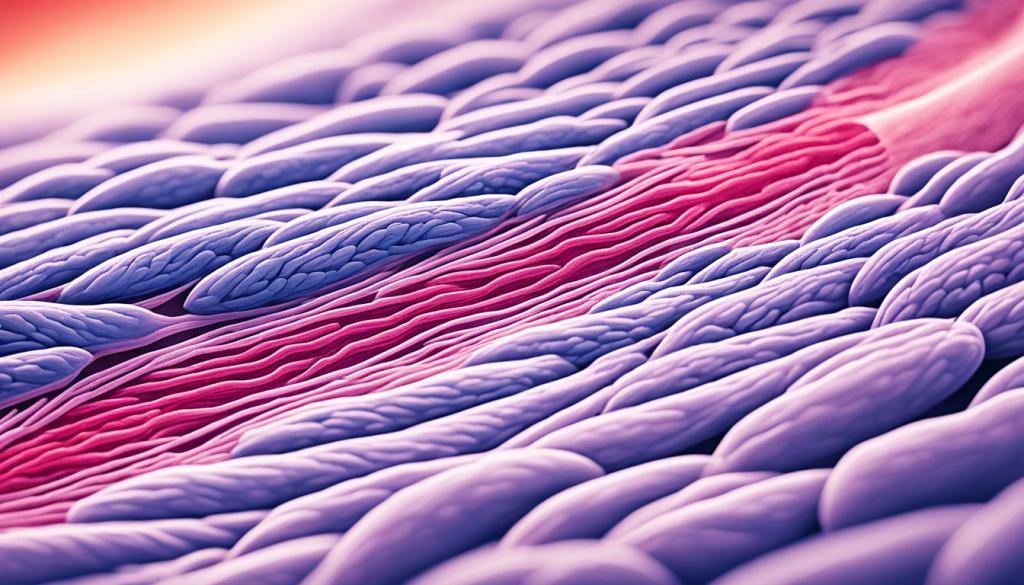
Studies are still looking into how muscle memory works. But, we know some interesting things about our bodies. It seems that changes in our muscle cells’ genes are key to muscle memory.
When we exercise a lot or lift weights, our genes change. This leads to making certain proteins that help our muscles grow and get stronger. These proteins are made because some genes turn on, making more contractile proteins.
This process helps our muscles remember past workouts. It makes them adapt faster when we do similar exercises again. This ability to remember helps our muscles grow and adapt quicker.
But, we still don’t know all the details about muscle memory. Scientists are still learning about the genes and processes behind it. They’re finding out more about how our bodies work.
As scientists learn more about muscle memory, we’ll understand how it works better. This could help us improve training and performance.
The Duration of Muscle Memory

Many people wonder how long muscle memory lasts. Unfortunately, it varies from person to person. Factors like genetics, lifestyle, and past exercise levels play a big role.
Studies show that the more you train and build muscle memory, the slower it fades when you’re not active. So, the effort you put into fitness can last even when you’re not working out.
Also, if you’ve trained before, getting back into exercise is easier. Your muscles remember the moves and quickly get back to strength and coordination.
But, muscle memory isn’t forever. Stopping exercise for a long time can make it fade away. You might lose muscle size and strength.
To keep muscle memory going, regular exercise is key. Working out often challenges your muscles. This helps keep their memory strong, so you keep your fitness gains.
How long muscle memory lasts is different for everyone. But, staying active helps you keep the benefits of muscle memory. This way, you can enjoy its advantages for a longer time.
Factors Affecting the Duration of Muscle Memory
| Factors | Description |
|---|---|
| Genetics | An individual’s genetic makeup can influence the duration of muscle memory. |
| Lifestyle Choices | Factors such as diet, sleep, and overall lifestyle can impact the retention of muscle memory. |
| Previous Activity Level | The intensity and duration of previous physical activity play a role in how long muscle memory lasts. |
| Inactivity Period | The length of time an individual remains inactive can affect the reactivation speed of muscle memory. |
Conclusion
Muscle memory is a real and fascinating phenomenon. It has big benefits for fitness lovers and athletes. By understanding it, you can make your workouts better and keep improving.
It helps you get back to your fitness level quickly after a break or injury. Your muscles remember the effort you put in before. So, when you start again, you can get back faster. It’s like your body has a blueprint for staying strong and fit.
Also, muscle memory is key in keeping your strength gains. If you pause your training, you don’t have to begin all over. Your muscles remember the strength and size you built up. This makes it easier to regain and keep your strength.
FAQ
What is muscle memory?
Muscle memory is when muscles get stronger and bigger faster if you’ve trained them before.
What are the two types of muscle memory?
There are two kinds of muscle memory. Neurological is about remembering how to do activities. Physiological is about quickly getting back muscle you’ve lost.
How does muscle memory work?
Muscle memory comes from learning how to move. The brain and spinal cord make pathways to tell muscles what to do. Special cells called satellite cells help muscles grow and come back stronger later.
How long can muscle memory be retained?
Muscle memory can last a long time, maybe even forever. Even if you stop training, you can get back your strength and power quickly when you start again.
How can muscle memory be harnessed in training?
Use muscle memory in training by starting with lighter weights and easier exercises. Slowly increase the difficulty to avoid getting hurt.
What are the benefits of muscle memory?
Muscle memory helps you get back into shape faster after being inactive. It makes progress quicker, helps muscles grow, and keeps strength over time.
What is the science behind muscle memory?
Scientists are still learning about muscle memory. They think changes in muscle cells and certain proteins help muscles grow and get stronger.
How long does muscle memory last?
How long muscle memory lasts depends on many things like your genes and how active you’ve been. The more you’ve trained, the longer your muscle memory lasts and the easier it is to get back into shape.
What can muscle memory do for you?
Muscle memory is powerful in fitness and training. It helps you progress faster, get back your fitness level quicker, and keep your strength. By using muscle memory, you can improve your workouts and get the most out of your exercise.
Source Links
- Muscle memory: What is it and how does it work? | CNN – https://www.cnn.com/2023/06/21/health/muscle-memory-explainer-wellness/index.html
- Scientists finally understand muscle memory – here’s what it means for you — Advnture | Muscle memory, Fitness facts, Scientist – https://www.pinterest.com/pin/scientists-finally-understand-muscle-memory-heres-what-it-means-for-you-advnture-in-2023–421579215134038599/
- Here’s what muscle memory really means, and how to use it – https://www.washingtonpost.com/wellness/2022/08/09/muscle-memory-motor-skills-fitness/



 trim down and shape up
Leave a comment