


Since the 1930s, Teflon pans have become very popular. They are loved by home cooks and chefs for their nonstick surfaces. These pans make cooking and cleaning easy because they need less oil or butter.
But, using these pans has health concerns. One issue is polymer fume fever, also called Teflon flu. This happens when Teflon-coated pans get too hot. In 2023, the U.S. Poison Control Centers got over 267 reports of this illness.
This shows the risks of not cooking safely. People who get Teflon flu may have a fever, headache, or trouble breathing. This makes people think twice about what pans they use in the kitchen.
Key Takeaways
- Teflon pans are popular for their easy-to-clean properties.
- Polymer fume fever, or Teflon flu, is a rising health issue linked to Teflon cookware.
- Over 250 reports of polymer fume fever were logged in 2023.
- Symptoms of Teflon flu include fever, headaches, and respiratory distress.
- Awareness of Teflon-coated pans danger is crucial for maintaining cooking safety.
- Proper cooking techniques can help mitigate health risks associated with PTFE fumes.
Understanding Teflon and Its Uses
Teflon is a brand name for the synthetic chemical polytetrafluoroethylene (PTFE). This substance has a nonstick surface that makes cooking and cleaning easier. It’s widely used in cookware, baked goods, and food packaging because of its unique properties.
When using Teflon in cookware, it prevents food from sticking. This means you can easily flip eggs and sauté vegetables without a lot of cleaning. It’s a favorite among both new and experienced cooks.
However, it’s important to know the risks of Teflon. If it gets too hot, the coating can break down and release harmful toxins. While Teflon pans are safe at normal temperatures, high heat can lead to toxic fumes. This is something to keep in mind for safety.
Knowing about Teflon’s properties and safe cooking practices can improve your cooking. This knowledge helps you choose the right cookware for your kitchen.
What Is Teflon Flu?
Teflon flu is a condition caused by breathing in toxic fumes from overheated Teflon coatings. Many people feel sick soon after being exposed. It’s important to know about this condition for safe cooking.
Definition and Symptoms
High heat can make Teflon cookware release harmful fumes. This can lead to polymer fume fever, which feels like the flu. Symptoms include:
- Headache
- Fever
- Muscle aches
- Chills
- Coughing
- Weakness
Symptoms usually start right after inhaling the fumes and go away in a few days. But, the long-term effects are still unknown. This shows we need to be careful with Teflon cookware.
Common Misconceptions
Many people think Teflon is always safe and only gets dangerous if pans are overheated for a long time. But, damaged or used wrong, Teflon cookware can release harmful fumes even at moderate heat. This can be risky in the kitchen if people don’t know the facts.
How Teflon Flu Is Linked to Nonstick Cookware

The connection between Teflon flu and cookware comes from the dangers of overheating Teflon pans. When these pans get too hot, they release toxic PTFE fumes. These fumes can make people feel sick and give them flu-like symptoms.
It’s important to know how this happens for safe cooking. Teflon pans are made for easy food release but can be dangerous if they get too hot. When they reach over 500 degrees Fahrenheit, the Teflon coating breaks down. This releases PTFE fumes that are bad for health, especially for those who don’t cook safely.
To stay safe, follow these tips:
- Avoid using cooking oils with low smoke points.
- Use medium heat settings whenever possible.
- Ventilate your kitchen to disperse any fumes that may arise.
Knowing the link between Teflon flu and overheating Teflon pans helps you make better choices in the kitchen. Keep an eye on the temperature and make sure your kitchen is well-ventilated. This way, you can lower the risk of breathing in harmful PTFE fumes. It’s a smart move for a healthier cooking space and less health risk.
Teflon Coated Pans Danger: Risks of Overheating
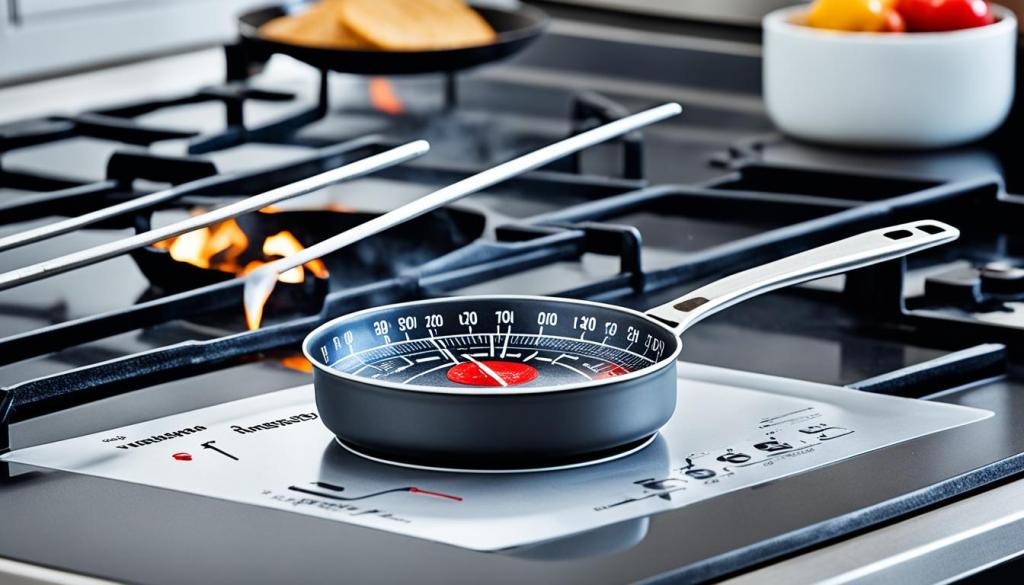
Exploring nonstick cookware means learning about overheating Teflon pans. Using these pans at safe temperatures keeps their coating intact and prevents toxic fumes. Following Teflon safety guidelines makes cooking fun and safe.
Temperature Thresholds for Safety
Avoid heating Teflon-coated pans above 500 degrees Fahrenheit. At this point, the nonstick coating can break down, leading to overheating risks. Using medium to low heat and following recommended practices reduces harmful emissions.
Consequences of Improper Use
Not following guidelines can lead to serious health issues. Overheating or using the pan when empty can create toxic fumes. These fumes can cause Teflon flu and long-term respiratory problems. Knowing the risks of overheating Teflon pans is key for every cook.
The Rise of Polymer Fume Fever Cases

Recent health reports show a worrying increase in polymer fume fever cases in the U.S. More people are learning about the dangers of exposure to PTFE fumes. This section will look into the stats and see who is most at risk.
Recent Statistics and Reports
There were over 267 reported cases of Teflon flu in 2023, the most since 2000. These numbers show we need to pay more attention to this issue. Recent health reports tell us to be careful, especially if you use nonstick cookware often.
Who is Most at Risk?
Knowing who is at risk helps us protect them. People who cook with Teflon pans a lot are at higher risk. Workers in places that make nonstick cookware also face dangers from vulnerable populations because they’re exposed to PTFE fumes all the time.
| Risk Group | Exposure Type | Health Impact |
|---|---|---|
| Home Cooks | High-Temperature Cooking | Respiratory Symptoms |
| Manufacturing Workers | Continuous PTFE Exposure | Long-term Respiratory Issues |
| Seniors | Infrequent Cooking | Acute Reactions |
| Children | Inhaling Fumes | Health Complications |
Health Implications of Inhaling PTFE Fumes

Inhaling PTFE fumes can be harmful to your health. These fumes can cause breathing problems and make you feel like you have the flu. It’s important to know the risks to protect yourself.
Studies link repeated exposure to PTFE fumes with serious health issues over time. These issues might include weakening your immune system and making you more likely to get sick. There’s also a chance of getting certain cancers from breathing in these fumes for a long time.
Knowing the dangers of PTFE fumes is key to cooking safely. Even though Teflon cookware is handy, learning how to use it safely can keep you healthy.
Preventive Measures While Using Teflon Cookware

Using Teflon cookware safely is key for your health. Safe cooking techniques and proper pan use can greatly reduce the risk of overheating. This, in turn, minimizes the release of harmful fumes.
Cooking Techniques for Safety
Using certain cooking methods can make your kitchen safer. Here are some important Teflon cookware safety tips:
- Use low to medium heat for cooking.
- Don’t preheat pans without food or oil in them.
- Start with food or oil in the pan.
These steps protect your cookware and prevent overheating. This is crucial for your health while cooking.
Ventilation Recommendations
Good ventilation is key for safe Teflon cookware use. It helps reduce harmful fume exposure. Here’s what to do:
- Make sure your cooking area is well-ventilated.
- Use exhaust fans to clear smoke and fumes.
- Open windows to improve airflow.
These tips help create a healthier cooking space. You can enjoy Teflon cookware safely without worrying about risks.
| Technique | Benefit |
|---|---|
| Low to Medium Heat | Prevents overheating and toxic fume release |
| Avoid Preheating Empty Pans | Reduces the chances of fumes |
| Use of Food or Oil | Enhances nonstick properties and safety |
| Well-Ventilated Cooking Area | Minimizes accumulation of harmful fumes |
| Exhaust Fans and Open Windows | Promotes airflow and reduces risk |
Alternatives to Teflon Cookware
If you want to avoid health risks from Teflon pans, look at safer cooking options. There are many healthy cookware choices that offer great nonstick surfaces safely.
Exploring Other Nonstick Options
Healthy nonstick cookware meets your cooking needs without sacrificing quality. Consider these materials:
- Ceramic-coated pans: These have a smooth surface that prevents food from sticking, perfect for low-fat cooking.
- Glass cookware: Durable and safe for the oven, glass gives a nonstick surface, great for baking.
- Silicone bakeware: Ideal for releasing baked goods without grease, silicone is versatile and easy to clean.
Benefits of Using Cast Iron and Stainless Steel
Cast iron and stainless steel are great alternatives to Teflon pans. Cast iron has many benefits:
- Durability: Cast iron lasts a long time, often passed down through generations.
- Natural nonstick surface: With proper seasoning, cast iron offers a great nonstick surface without harmful chemicals.
- Excellent heat retention: It keeps heat well, ideal for searing and slow cooking.
Stainless steel also has its perks:
- No coatings: Stainless steel doesn’t have coatings, so it doesn’t degrade over time.
- Excellent heat distribution: It distributes heat evenly for consistent cooking.
- Versatility: Great for various cooking methods, stainless steel excels in browning, sautéing, and simmering.
Choosing these alternatives to Teflon pans lets you cook safely and healthily. You’ll get great results in the kitchen.
The Environmental Impact of PFAS

PFAS, also known as “forever chemicals,” are a big problem because they don’t break down in nature. They stay in the environment for a long time, causing harm to ecosystems. These chemicals come from things like Teflon and spread widely.
Because PFAS don’t go away, they build up in soil and water. Studies show they’re often found in our drinking water. This is a big risk to people’s health and animals. It’s important to know how Teflon and other products affect our environment.
Cleaning up areas with PFAS contamination is hard. Old cleaning methods might not work well. Scientists are looking for new ways to fix this problem. We all need to ask for products that are better for the planet.
Knowing about PFAS helps us make smarter choices. When we learn about the dangers of Teflon and similar products, we push for safer options. Choosing products without PFAS helps our environment stay healthy.
Conclusion
The number of health issues linked to nonstick cookware is growing. This has raised concerns among consumers and health experts. It’s important to know the dangers of Teflon pans, like overheating and inhaling harmful fumes.
To keep you and your family safe, follow safe cooking tips. Use proper heating methods, make sure your kitchen is well-ventilated, and choose the right cookware. Using cast iron or stainless steel instead of Teflon can lower health risks.
Learning about the harm caused by PFAS compounds also shows we need to change our kitchen habits. Making smart choices about cookware and cooking helps your health and the planet. It’s a step towards a healthier and more sustainable future.
FAQ
What is Teflon flu?
Teflon flu, also known as polymer fume fever, is a flu-like illness. It happens when you breathe in toxic fumes from overheated Teflon pans.
What are the symptoms of Teflon flu?
Symptoms include fever, headache, muscle aches, chills, coughing, weakness, and a bad taste in your mouth. These symptoms usually go away in a few days.
How can I prevent Teflon flu while cooking?
To prevent Teflon flu, use low to medium heat and avoid preheating empty pans. Make sure your cooking area is well-ventilated. Always follow the manufacturer’s guidelines.
Is Teflon safe to use at normal cooking temperatures?
Yes, Teflon-coated pans are safe at normal cooking temperatures. But, overheating above 500 degrees Fahrenheit can release harmful fumes.
Who is most at risk for Teflon flu?
People who often cook with Teflon pans at high temperatures are at higher risk. This includes workers in places where nonstick cookware is used a lot.
What should I do if I experience symptoms of Teflon flu?
If you have symptoms like fever, headache, or breathing problems after using Teflon cookware, get medical help. They can give you the right advice and care.
Can pets be affected by Teflon fumes?
Yes, Teflon fumes can be toxic to pets. They can cause respiratory problems and other health issues.
What alternatives can I use to Teflon cookware?
You can use ceramic-coated pans, glass cookware, cast iron, or stainless steel instead. These options are safer and don’t have the risks of PTFE.
Are there long-term health risks associated with exposure to PTFE fumes?
Long-term risks may include respiratory problems and issues with the immune system and some cancers. These risks come from being exposed to PFAS chemicals for a long time.
What should I know about the environmental impact of PFAS?
PFAS, known as “forever chemicals,” can pollute soil and water. This causes long-term damage to the environment because they don’t break down easily.
Source Links
- What to know about ‘Teflon flu’ amid a rise in cases in the US – https://abcnews.go.com/GMA/Wellness/teflon-flu-amid-rise-cases-us/story?id=112306317
- Teflon flu Symptoms: Teflon flu is rising in US; symptoms, dos and don’ts while cooking in non-stick cookware | – Times of India – https://timesofindia.indiatimes.com/life-style/health-fitness/health-news/teflon-flu-is-rising-in-us-symptoms-dos-and-donts-while-cooking-in-non-stick-cookware/articleshow/111973109.cms
- ‘Teflon Flu’ Cases on the Rise: Is Your Nonstick Pan Making You Sick? – https://people.com/teflon-flu-what-is-it-how-to-avoid-8686091


 trim down and shape up
Leave a comment