



Walking is a simple yet powerful way to boost your health. It’s a low-impact exercise that benefits people of all ages. By walking daily, you can manage your weight better, reduce stress, and control your blood pressure.
Every step you take not only burns calories but also supports your immune system. It boosts your metabolism and strengthens your joints and muscles. Walking does more than just improve your physical health; it also lifts your mood and helps you sleep better.
Walking is a great way to get fit and improve your overall health. It’s easy to start and can be done almost anywhere. So, why not take a walk and feel the benefits for yourself?
Key Takeaways
- Walking aids in weight loss by burning calories effectively.
- It helps reduce stress levels and promotes a sense of well-being.
- Regular walking can lower blood pressure and improve cardiovascular health.
- This activity is suitable for all ages and fitness levels.
- Incorporating walking into your daily routine enhances mental health.
- Walking contributes to stronger muscles, joints, and bones.
The Health Benefits of Walking
Walking is great for your health, boosting both your body and mind. It makes your heart healthier, which is key for staying fit. By walking every day, you can lower your risk of getting diseases like diabetes, heart disease, and obesity.
Walking does more than just keep you fit. It also makes you feel happier and more positive. It releases endorphins, which are your body’s happy hormones. So, every step you take helps your body and mind.
Walking also makes your bones and muscles stronger. Studies show that regular walkers have stronger immune systems, fighting off sickness. It helps reduce stress and tension, making you mentally healthier. This makes walking a key part of a healthy life.
How Walking Helps You Lose Weight
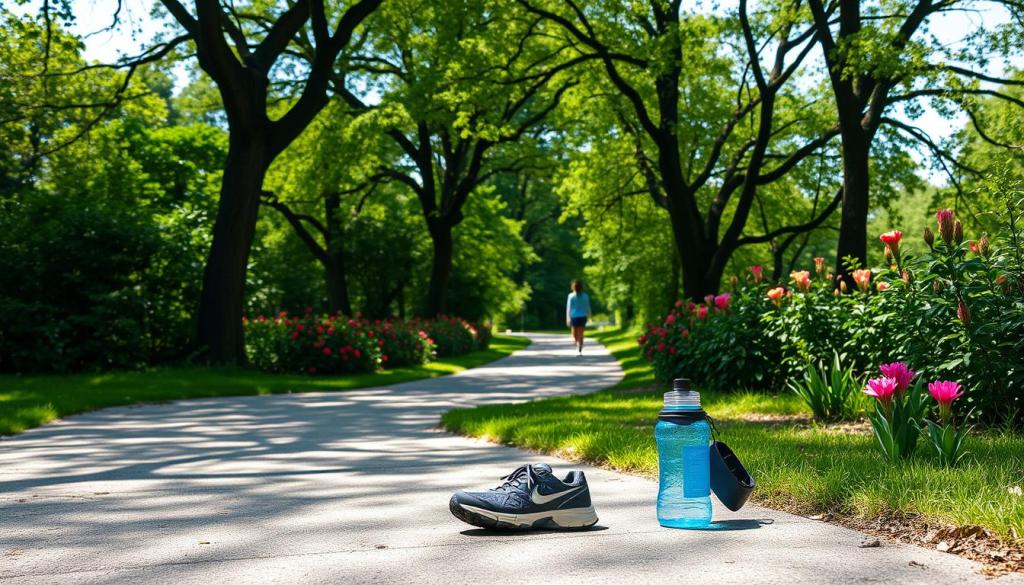
Walking is a great way to burn calories and keep a healthy weight. Adding walks to your daily routine helps with fat loss and boosts your health. It’s also an easy exercise to fit into a busy life, making it popular for many people.
Burn Calories and Maintain a Healthy Weight
Walking regularly helps you burn calories. The calories you burn depend on how fast you walk and how long you walk. For example, a fast walk for 30 minutes can burn 150 to 300 calories, based on your weight and how hard you’re walking. Walking more often and for longer will help you keep a healthy weight.
The Role of Walking in Fat Loss
Studies show that walking can help you lose fat, especially when you eat healthy too. Walking increases how many calories you burn and can also make your metabolism faster. By making walking a key part of your fitness routine, you use a fun and easy way to lose body fat and get healthier.
| Walking Pace (mph) | Calories Burned (30 minutes) | Estimated Fat Loss (per month) |
|---|---|---|
| 2.0 | 120 | 1.5 pounds |
| 3.0 | 150 | 2 pounds |
| 4.0 | 240 | 3 pounds |
Walking for Decreasing Stress
Walking is a great way to reduce stress and boost your mood. It’s simple yet effective. By moving your body, you release endorphins, which make you feel better.
Regular walking helps balance your emotions. This lets you tackle daily challenges with a positive outlook.
Instant Mood Boosters from Walking
Walking triggers the release of endorphins, known as “feel-good” hormones. These hormones are key to improving your mood and making you happy. You can walk in a park or on a treadmill and still enjoy the benefits.
Even a short walk can make you feel better and more energized.
How Walking Reduces Cortisol Levels
Studies show that walking lowers cortisol levels in your body. Cortisol is a stress hormone that can cause anxiety and depression. Regular walking helps reduce joint pain and makes you feel calmer by normalizing cortisol levels.
Walking Outdoors: A Natural Stress Reliever
Walking outside has extra benefits for stress relief. Nature and fresh air help you relax and disconnect from stress. This connection with nature refreshes your mind and body, making you feel more relaxed.
Outdoor walking is a simple yet powerful way to ease joint pain and improve your health.
Lowering Blood Pressure Through Walking

Walking regularly is key to keeping your heart healthy. This simple exercise can help lower your blood pressure over time. Studies show that walking briskly for 30 minutes daily can make a big difference in your blood pressure.
Adding walking to your daily routine boosts your fitness and overall health. It reduces your risk of chronic diseases, leading to a healthier life.
Here are the benefits of walking for your blood pressure:
- Improved Heart Function: Walking makes your heart stronger and more efficient at pumping blood.
- Enhanced Circulation: Regular walking increases blood flow, helping to lower high blood pressure.
- Weight Management: Walking helps control your weight, which is important for keeping your blood pressure healthy.
| Walking Duration | Impact on Blood Pressure |
|---|---|
| 15 minutes/day | Minor reduction in blood pressure |
| 30 minutes/day | Significant reduction in blood pressure |
| 60 minutes/day | Optimal well-being and health maintenance |
Make walking a part of your life to see these benefits. This easy change can greatly lower your blood pressure and reduce chronic disease risk. Start walking daily and feel the positive impact on your health.
Walking, Better Health, and Chronic Disease Prevention

Walking regularly can lower your risk of chronic diseases like diabetes, heart disease, and obesity. It’s a low-impact activity that’s easy for most people to do. You can fit it into your daily life easily.
Studies show that walking often makes your heart healthier. It makes your heart work better, improves blood flow, and lowers bad cholesterol. It also helps keep your blood pressure in check. This means it’s easier to keep your blood sugar levels balanced, which is good for your health.
- Strengthens the heart muscle
- Improves circulation and blood flow
- Supports weight maintenance and loss
- Increases energy levels
- Promotes better mental health
By making walking a regular part of your life, you can improve your heart health. You’ll also lower your risk of chronic diseases. Being consistent is important to see these benefits.
| Health Benefit | Description |
|---|---|
| Heart Health | Regular walking strengthens cardiovascular function and helps in lowering blood pressure. |
| Weight Management | Walking aids in maintaining a healthy weight, reducing the risk of obesity-related diseases. |
| Metabolic Function | Improvement in insulin sensitivity aids in achieving balanced blood sugar levels. |
| Mental Health | Walking contributes to enhanced mood and cognitive function, combating anxiety and depression. |
Improving Your Mental Health with Walking

Walking is a great way to boost your mental health. It’s a simple activity that can make your brain work better and lift your mood. Many people don’t realize how much walking helps their mental well-being.
Walking and Cognitive Function
Studies show that walking is good for your brain. It increases blood flow to the brain, helping new neurons grow. This can make you think sharper and remember things better. Adding walking to your daily routine helps keep your brain healthy and agile.
Enhancing Creativity Through Walking
Walking can spark creativity. Many famous thinkers and artists say it helps them come up with new ideas. Whether you’re working on a project or just want new ideas, walking outside can open up your mind and boost creativity.
Walking to Alleviate Anxiety and Depression
Walking is great for mental health, especially if you’re feeling anxious or depressed. The endorphins you get from walking can make you feel happier and calmer. It’s a way to step away from daily stress and make life easier to handle.
| Mental Health Benefits | Description |
|---|---|
| Boosts Brainpower | Improves cognitive functions and memory. |
| Enhances Creativity | Stimulates innovative thinking and problem-solving. |
| Alleviates Anxiety | Reduces stress levels and promotes relaxation. |
| Improves Mood | Increases endorphin levels for a happier disposition. |
Creating an Effective Walking Routine

Starting a regular walking routine is key to better health and happiness. It’s important to make a walking plan that fits your life. Begin by setting goals that are easy to reach. This helps you keep going.
Setting Realistic Goals for Your Walking Plan
Make sure your walking goals are doable. This way, you won’t get tired and you’ll stay excited. Here’s what to do:
- Start with a goal of walking 10-15 minutes at first.
- Slowly add more time each week.
- Make walking a part of your daily life, like during lunch or after dinner.
How Many Steps Should You Walk Every Day?
The number of steps you should walk daily depends on your fitness level and goals. Walking 10,000 steps a day is often suggested. But, the main thing is to keep walking regularly, not just aim for that number. Here are some tips:
- If you’re new to walking, start with 5,000 steps and increase it little by little.
- Use a pedometer or a mobile app to track your steps and stay motivated.
- Join walking challenges with friends to make it more fun and keep you on track.
Choosing the Right Gear for Walking
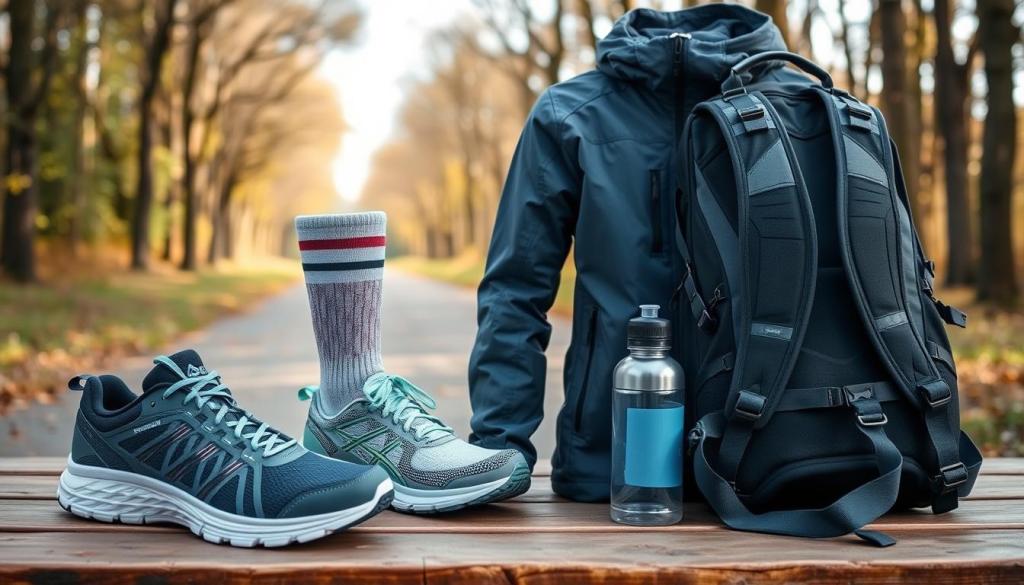
To make your walking enjoyable, picking the right gear is key. You might wonder, what gear do I need? Quality gear boosts comfort and keeps you safe. Let’s look at the must-haves for a great walk.
Essential Walking Shoes for Comfort and Support
Your walking shoes are crucial for avoiding injuries and feeling good. Look for shoes with:
- Good arch support: It’s key to keep your feet from getting strained.
- Cushioning: A comfy layer absorbs shock.
- Stability: Choose shoes that help you stay balanced.
Clothing Considerations for Different Weather Conditions
Weather affects your walk a lot. The right clothes make a big difference in how comfortable you feel. Here’s what to think about:
- Hot Weather: Pick clothes that take sweat away from your skin.
- Cold Weather: Wear layers to stay warm but not too hot.
- Rainy Conditions: Waterproof jackets keep you dry, and moisture-wicking clothes keep you comfy.
| Condition | Recommended Gear |
|---|---|
| Hot Weather | Moisture-wicking shirts, breathable shorts |
| Cold Weather | Thermal base layers, insulated jackets |
| Rainy Weather | Waterproof jackets, moisture-wicking layers |
Knowing what gear you need for different conditions makes walking better for you. It helps you stay on track with your fitness goals, no matter the weather or terrain.
Tips to Stay Motivated While Walking

Staying motivated in your walking routines can make a big difference in your fitness journey. Adding walking to your daily life makes it easier to stay on track. Simple changes can make your routine more consistent and fun.
Incorporating Walking into Your Daily Routine
Using walking tips that fit into your daily life keeps you moving without needing a special time. Here are some ideas:
- Take the stairs instead of the elevator.
- Walk during breaks instead of sitting.
- Join a walking group to socialize while staying fit.
Varying Your Walking Paths for Variety
Changing your walking paths gives you a new view. Exploring new places keeps your walks interesting and motivates you to walk more often. Here are some tips:
- Explore local parks or nature trails.
- Try urban walking routes that showcase your city’s landmarks.
- Visit different neighborhoods to appreciate diverse architectures.
Understanding Walking Technique for Better Results

Learning the right walking technique is key to getting the most out of your workouts. Paying attention to how you stand and move can make a big difference. It helps you work more efficiently and can make you feel better overall.
Importance of Proper Posture and Movement
Walking with the right posture is essential for your body’s health. Here are some important tips:
- Head Position: Keep your head up and look straight ahead for better body balance.
- Shoulder Alignment: Keep your shoulders relaxed and a bit back to help open up your chest.
- Arm Swing: Let your arms swing freely at your sides to improve your movement.
- Strides: Take steady, controlled steps to keep a good rhythm and protect your joints.
Adding these changes to your walks can make your exercises more effective. It can also boost your mood. By focusing on these techniques, you’ll likely feel more energized and happy with your walks.
The Long-term Health Benefits of Regular Walking

Walking regularly has many long-term health benefits. It’s a simple way to boost your heart health and overall well-being. It also helps protect you from various health problems.
Improving Heart Health Over Time
Walking often brings big heart health benefits. This moderate exercise makes the heart muscle stronger. It also improves blood flow and heart function. By walking regularly, you help keep your heart healthy.
Reducing Risk of Chronic Diseases
Walking every day can lower your risk of chronic diseases. Studies show that regular physical activity cuts down on type 2 diabetes, heart disease, and some cancers. So, walking is key to a healthy lifestyle.
Delaying the Onset of Varicose Veins
Regular walking can also delay varicose veins. This condition gets worse with too much sitting. Walking keeps blood flowing well and keeps blood vessels strong. It’s a great way to fight against venous disorders.
| Health Benefit | Description |
|---|---|
| Improving Heart Health | Strengthens the heart, improves circulation, and enhances cardiovascular function. |
| Reducing Risk of Chronic Diseases | Lower likelihood of developing type 2 diabetes, heart disease, and certain cancers. |
| Delaying Onset of Varicose Veins | Promotes healthy blood circulation and maintains strong blood vessels. |
How to Challenge Yourself with Walking Workouts
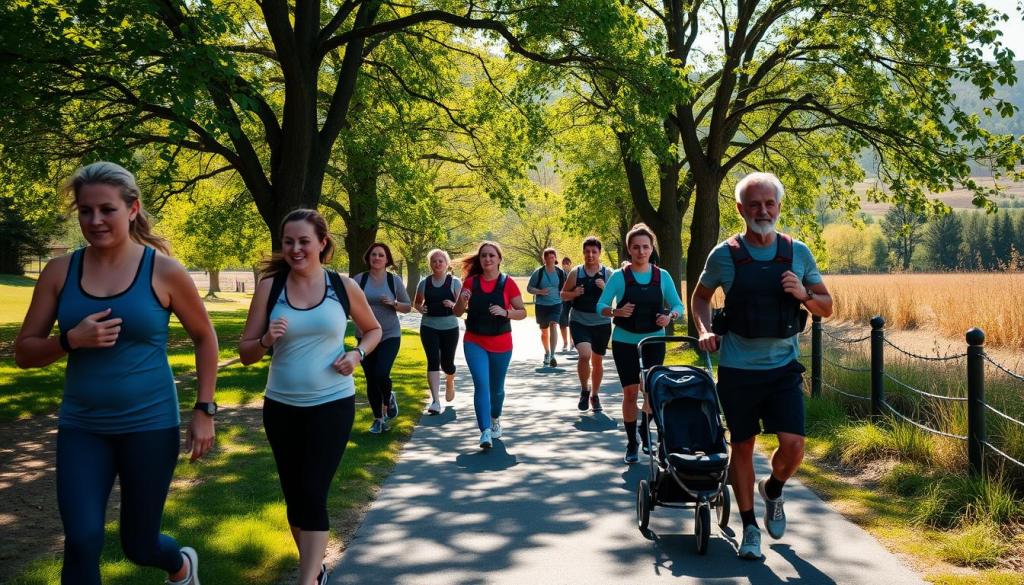
Want to make your walking more exciting and beneficial? Try new techniques that boost both fun and fitness. Learn how to push yourself in walking workouts with interval training and walking apps or trackers.
Incorporating Interval Training into Walking
Interval training makes walking more dynamic. Mix fast walking with slower recovery periods to burn more calories and improve heart health. Try walking fast for 1 minute, then slow down for 2 minutes. Keep alternating throughout your walk.
This method keeps your workout engaging and supports better heart health.
Using Walking Apps or Trackers for Progress
Walking apps and trackers are great for tracking your progress. They let you monitor distance, pace, and steps, helping you set achievable fitness goals. Many apps offer challenges and social sharing to keep you motivated.
Using these tools helps you understand how to challenge yourself in walking workouts. This leads to steady improvements and achievements in your fitness journey.
Connecting with Nature while Walking

Walking in nature can greatly improve your well-being. It gives you a beautiful view and boosts your mental health. Being in nature can make you happier, less stressed, and more relaxed.
Benefits of Walking on Outdoor Trails
Outdoor trails are great for your health. They offer many benefits, including:
- Natural stress relief: The fresh air and beautiful views calm you down.
- Increased enjoyment: Nature makes walking more fun.
- Social opportunities: Walking with friends or groups boosts motivation and support.
Vitamin D and Its Importance for Mental Health
Walking outside lets you get sunlight, which is key for vitamin D. This vitamin is vital for your mental health. Here’s why:
- Improved mood: Enough vitamin D can lessen anxiety and depression.
- Supports cognitive function: It helps with memory and thinking.
- Combats seasonal affective disorder: Sunlight during walks can ease this condition’s symptoms.
Walking for Improved Sleep Quality

Regular physical activity can make your sleep better. Walking is a simple way to help your body get into a healthy sleep pattern. Studies show that walking 20-30 minutes a day can lead to better sleep than sitting around.
The Link Between Physical Activity and Sleep Patterns
Walking boosts the release of hormones that help you sleep. It also lowers stress and anxiety, which can disrupt sleep. A regular walking routine can greatly improve your sleep over time.
- Enhanced sleep duration
- Improved sleep efficiency
- Reduced insomnia symptoms
For best results, walk at the same time every day. This helps your body get into a natural rhythm, making it easier to sleep. Walking outside also exposes you to natural light, which helps regulate your sleep cycle.
| Walking Duration | Sleep Quality Improvement |
|---|---|
| Less than 20 minutes | Minimal improvement |
| 20-30 minutes | Moderate improvement |
| More than 30 minutes | Significant improvement |
Adding walking to your daily routine can greatly improve your sleep. Make this healthy habit a part of your life and see how it changes your rest and recovery.
Is it Better to Walk Faster or Longer?

When thinking about your walking routine, you might ask, should you walk faster or cover more ground? The answer depends on your fitness goals, how much you can handle, and what you prefer. Knowing the perks of different walking speeds and distances can guide you in choosing the best walking habits for you.
Comparing Different Walking Speeds and Distances
Walking quickly can boost your heart rate a lot, giving you great heart health benefits. This pace also helps you burn calories fast, which is good for losing weight. But, walking for longer periods builds endurance and boosts your stamina. Let’s explore how different speeds and distances affect your fitness:
| Walking Style | Duration | Average Speed | Benefits |
|---|---|---|---|
| Fast Walking | 30 minutes | 4.5 – 5 mph | Increased heart rate, calorie burning |
| Moderate Walking | 60 minutes | 3 – 4 mph | Improved stamina, stress relief |
| Long Walking | 90+ minutes | 2 – 3 mph | Endurance building, mental clarity |
Choosing between walking fast or covering more distance depends on your fitness goals. Try different speeds and distances to see what works best for you. This way, you can make the most out of your walks.
Conclusion
Walking every day can greatly improve your health, both physically and mentally. By making walking a regular part of your life, you help manage your weight and boost your heart health. You’ll also feel less stressed and overall better.
This simple activity is easy and fun for anyone to start. It’s a key part of living a healthier life. By sticking with it, you take charge of your fitness. Every step you take makes you healthier in body and mind.
Start your journey to better health with just a few steps today. It doesn’t matter if it’s a slow walk, a fast pace, or a serious routine. Walking has a big impact. Remember, every step you take is a step towards a better life. It’s never too late to make a change for the better.
FAQ
What are the main benefits of walking?
Walking is great for your health. It boosts your heart health and lowers the risk of chronic diseases. It also improves your mood, energy, and sleep.
Walking helps with weight management and stress too.
How many steps should you walk every day for optimal health?
Try to walk at least 10,000 steps daily. That’s about 30 minutes of brisk walking. This keeps you at a healthy weight and boosts your heart health.
Is it better to walk faster or longer?
Walking speed and duration both have benefits. Faster walking is good for your heart. Longer walks build stamina.
Your choice should match your fitness goals and what you like.
How can I create an effective walking routine?
Begin with achievable goals, like 150 minutes of moderate activity weekly. Increase your walking time and pace to keep it challenging.
What gear do I need for walking?
Get a good pair of walking shoes with support and cushioning. Wear clothes that suit the weather, like moisture-wicking fabrics for hot days or layers for cold.
How can I stay motivated while walking?
Make walking part of your daily routine, like taking the stairs or walking during breaks. Try new walking paths to keep it exciting. Joining a walking group can also help.
How does walking improve my mood?
Walking releases endorphins, which can make you feel happier right away. Regular walks also lower stress and anxiety by reducing cortisol levels.
Can walking help with chronic disease prevention?
Yes, walking often can lower the risk of chronic diseases like heart disease, diabetes, and obesity. It improves your heart health and metabolism.
What is the relationship between walking and sleep quality?
Regular physical activity, like brisk walking, can improve your sleep. It leads to better rest and recovery over time.
How can outdoor walking trails benefit my health?
Walking on trails offers mental health benefits, boosts your mood, and reduces stress. It also helps you get vitamin D from the sun.
Source Links
- Ways walking helps you de-stress | Blue Cross NC – https://www.bluecrossnc.com/blog/healthy-living/fitness/benefits-of-walking
- Walk your way to fitness – https://www.mayoclinic.org/healthy-lifestyle/fitness/in-depth/walking/art-20046261
- 10 medicine-free ways to control high blood pressure – https://www.mayoclinic.org/diseases-conditions/high-blood-pressure/in-depth/high-blood-pressure/art-20046974



 trim down and shape up
Leave a comment