

As you get older, your body needs different nutrients. Starting at 40, your metabolism slows down by 5% every decade. This can raise your risk of heart disease, diabetes, and osteoporosis.
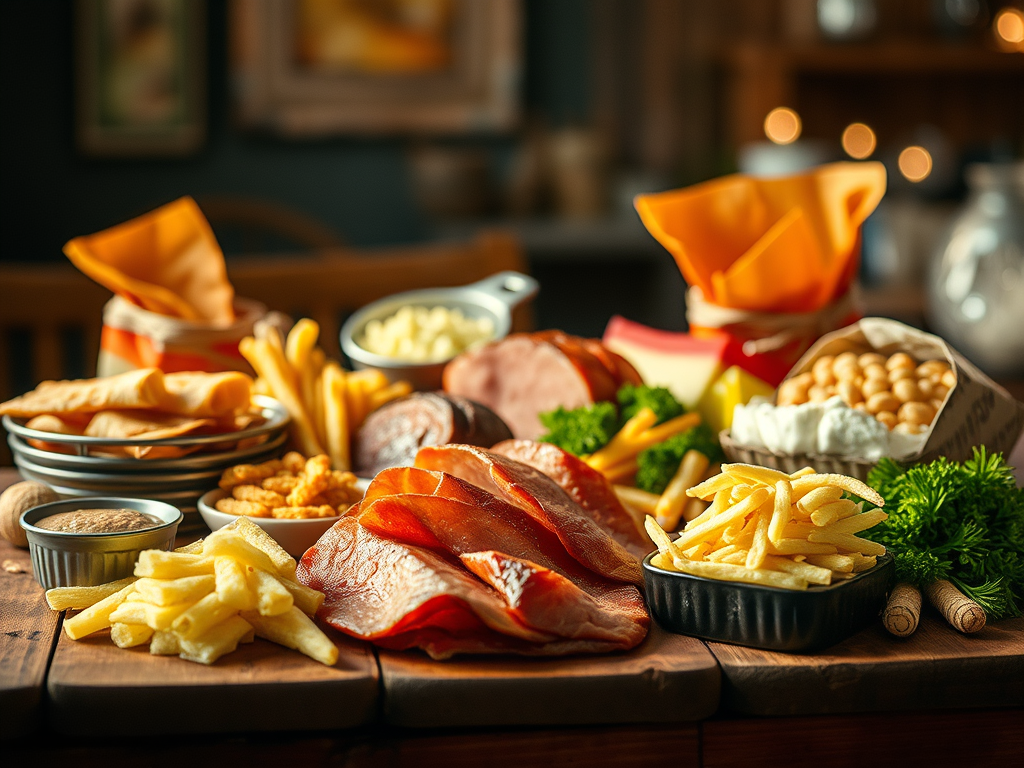
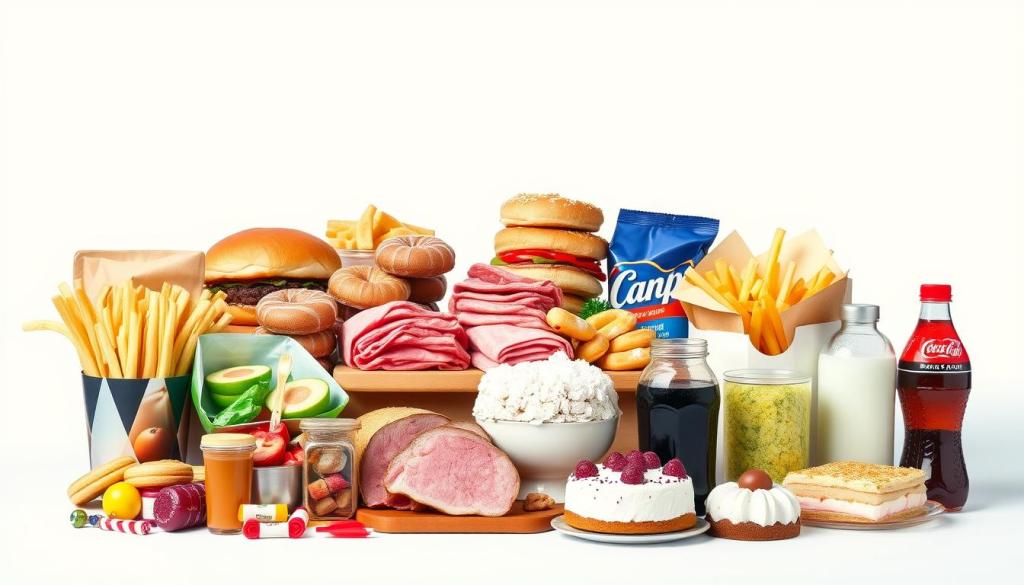
It’s important to choose your food wisely. Some foods are not good for you, even if they don’t harm you right away. Avoiding certain foods can help you stay healthy and at a good weight.
Things like processed meats, sugary snacks, and refined carbs are bad. Knowing what to cut out can help you stay healthy as you age.
Key Takeaways
- Avoid processed meats high in saturated fats that can increase bad cholesterol levels.
- Limit sugary snacks and desserts that can negatively affect your metabolism and overall health.
- Replace white bread with whole grain alternatives to lower the risk of obesity.
- Watch out for high-calorie beverages, as they are often loaded with hidden sugars.
- Be cautious with convenience foods, as they may contain excessive sodium and empty calories.
- Consider healthier drink and dessert options to maintain balance in your diet.
Understanding the Impact of Aging on Food Choices
Aging brings changes like hormone shifts and slower metabolism. These changes mean you need to choose your food wisely to stay healthy and full of energy. Eating foods rich in nutrients is key to fight off health problems linked to bad eating habits.
Studies show that older adults eating well have fewer health issues. For example, a study found that those eating healthier had a 15.2% rate of daily living limitations. This is compared to 19.6% for those eating less well. This shows how crucial good food choices are as we age.
Better food choices lead to better health. People eating well had lower levels of bad cholesterol and inflammation. This is good news for heart health and diabetes, which often get worse with age.
Shopping for food can be tough with age due to taste, smell, and vision changes. Feeling lonely can make it hard to want to cook and eat well. Sharing meals with others can help improve eating habits and fight loneliness.
Many older adults don’t get enough fiber, which is vital for digestion and health. Eating more fruits, veggies, and whole grains is important. It helps keep your diet balanced and supports your metabolism as you age.
Processed Meats: The Hidden Dangers

Processed meats, like sausages and cold cuts, are often ignored for their health risks. They have lots of sodium and preservatives like nitrates. Eating them regularly can harm your health, especially if you’re over 40.
Health Risks Associated with Processed Meats
The dangers of processed meats are real. Research shows they can increase heart disease and cancer risks. Eating too much processed food can even shorten your life.
High-fat meats also raise heart disease risks. Just a small increase in these fats can lead to a big jump in heart disease risk.
Alternatives to Processed Meats
Switching to healthier proteins can improve your diet. Lean meats, chicken, fish, and plant-based proteins are better choices. They offer important nutrients without the bad stuff in processed foods.
- Lean chicken or turkey
- Fish such as salmon or trout
- Legumes like lentils and chickpeas
- Tofu and tempeh
Choosing whole foods and cutting down on processed items can help you stay healthy as you get older.
Sugary Snacks and Desserts: A Sweet Trap

Sugary snacks and desserts are hard to resist but can harm your health, especially as you get older. They have lots of sugar and empty calories. This can mess with your metabolism and cause weight gain. It’s important to know how these snacks affect your body to make better food choices.
How Sugary Foods Affect Your Metabolism
Many snacks and desserts have a lot of sugar. This causes your blood sugar to go up fast, which is bad for your metabolism. Eating too much of these can lead to insulin resistance, which is a risk factor for type 2 diabetes, especially for people over 40. Eating too many sugary treats means you’re not getting the nutrients you need for a balanced diet and a healthy metabolism.
Better Dessert Options for a Healthy Diet
Instead of sugary snacks, try healthier dessert options that are tasty but don’t harm you. Choose fresh fruit, yogurt, or dark chocolate in small amounts. These treats are not only yummy but also good for you. Making smart dessert choices helps you avoid empty calories and supports a healthier lifestyle.
| Traditional Sugary Snacks | Healthier Dessert Alternatives |
|---|---|
| Chocolate bars | Dark chocolate (70% cocoa or more) |
| Ice cream | Greek yogurt with honey and berries |
| Gummy candies | Dried fruits without added sugar |
| Cakes and pastries | Homemade fruit crisps |
| Cookies | Oatmeal cookies with nuts |
Choosing healthier dessert options lets you enjoy sweet treats while eating more nutritious foods. This leads to better health outcomes.
White Bread and Refined Carbohydrates

White bread and other refined carbs are missing key nutrients because of how they’re made. They offer empty calories with little nutritional value. This makes them high on the glycemic index, causing blood sugar to rise quickly. This can lead to hunger soon after eating, especially for those over 40.
The Nutritional Downside of White Bread
Refined carbs, like white bread, don’t have the whole grain’s parts—bran, germ, and endosperm. Without these, important nutrients like fiber are lost. Eating too much of these foods can harm your gut and increase heart disease and type 2 diabetes risks. To stay healthy, experts say to eat half your grains as whole grains. They help with digestion and keep you feeling full.
Whole Grain Alternatives to Consider
Switching to whole grain options like whole wheat bread, brown rice, or quinoa can boost your diet. These foods are fiber-rich, helping with digestion and weight control. Adding whole grains to your meals can lower disease risks and make your carbs healthier.
| Type of Carbohydrate | Nutritional Value | Health Benefits |
|---|---|---|
| Refined Carbohydrates | Low in fiber, high in empty calories | Higher risk of chronic diseases |
| Whole Grains | Rich in fiber, vitamins, and nutrients | Improved heart health, digestion, and weight management |
Ready-to-Eat Meals: Convenience vs. Health
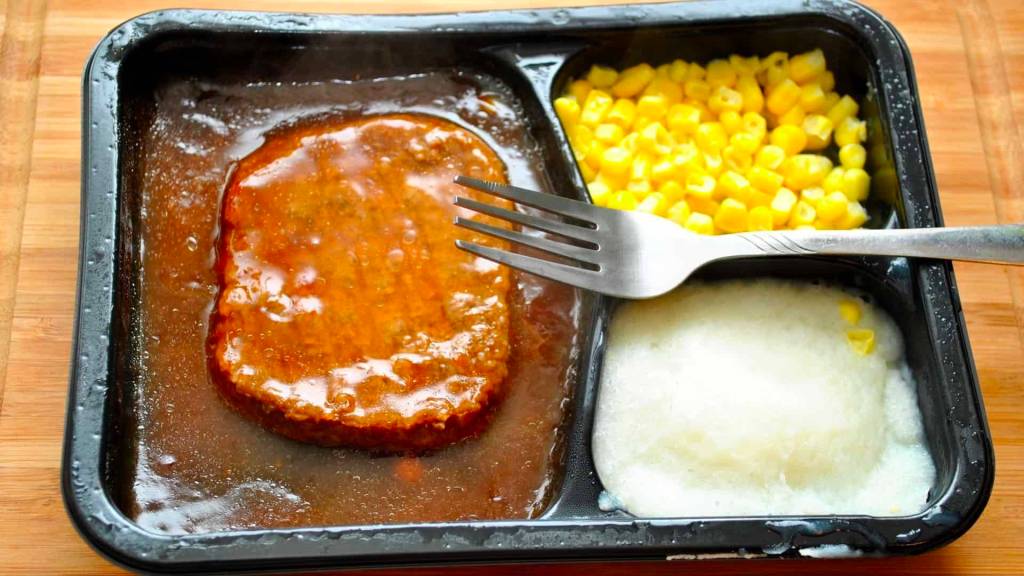
In today’s fast world, ready-to-eat meals are very popular because they’re easy. They save time and effort, which is great for busy people and families. But, many of these meals have a lot of sodium and preservatives. This can be bad for health, especially for those over 40.
Supermarket ready-meals often don’t have good nutrition. Studies show that relying too much on these meals can lead to obesity. Even “healthier” options might not meet nutritional standards. It’s also important to know that many ready-meals have too much unhealthy stuff, like saturated fats and salt.
Some numbers are quite alarming. For example, almost 90% of ready-meals in the UK are supermarket brands, with sales over £1.4 billion a year. Single parents buy 14% more ready-to-eat foods than other families. On the other hand, families with all adults working buy 12% less ready-to-eat food. This shows that time is a big factor in what we eat.
It’s important to find a balance between convenience and nutrition. Choosing meals with more protein and veggies can help. Knowing what’s in these meals helps you make better choices, especially in your 40s and beyond.
Breakfast Cereals: Not All Are Created Equal
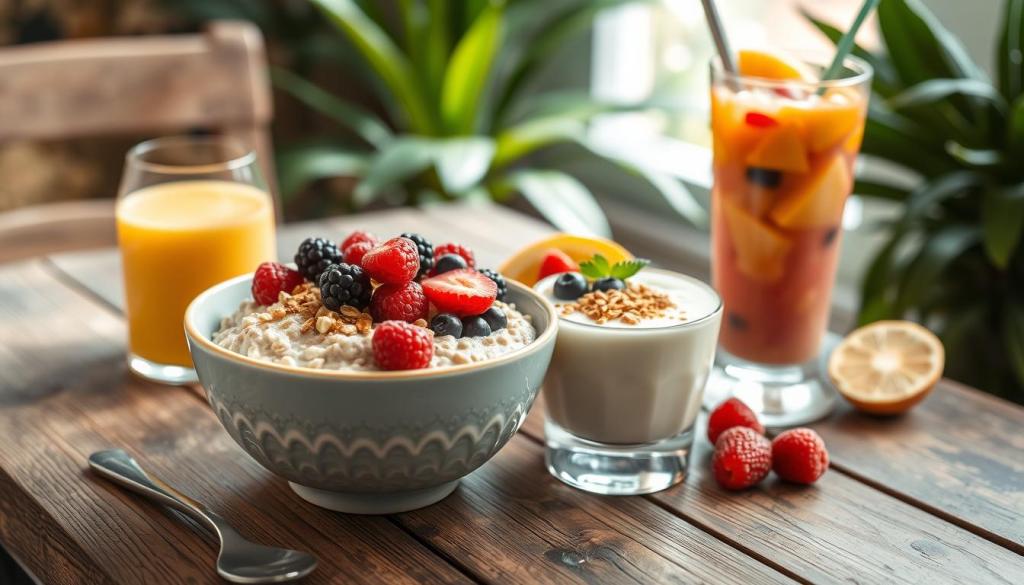
Many people choose breakfast cereals for their convenience and taste. But not all cereals are as healthy as they seem. Learning to read nutritional labels can help you pick better options, starting your day right.
Reading Labels: What to Look For
When checking out breakfast cereals, look at the labels closely. Many have too much added sugar, often listed as the second or third ingredient. Cereals made from refined grains can cause a quick rise in blood sugar. Look for cereals with:
- Under 5 grams of added sugars per serving
- At least 3 grams of fiber per serving
For a better start, try oatmeal, Greek yogurt with fruits, or smoothies with veggies and fruits. These options give you more fiber and nutrients, keeping you full longer and avoiding unhealthy snacks later.
Here’s how some common breakfast cereals compare in terms of added sugars:
| Cereal Name | Added Sugars (g) | Fiber (g) |
|---|---|---|
| Raisin Bran | 9 | 6 |
| Honey Nut Cheerios | 12 | 3 |
| Corn Flakes | 4 | 1 |
| Honey Bunches of Oats | 8 | 2 |
| Frosted Mini Wheats | 12 | 5 |
| Plantstrong’s Toasted Multigrain Flakes | 0 | 5 |
Breakfast cereals are a big source of added sugar for adults in the USA. Choosing cereals with more fiber and less sugar is key to a healthier morning.
High-Calorie Beverages: Soda and Energy Drinks
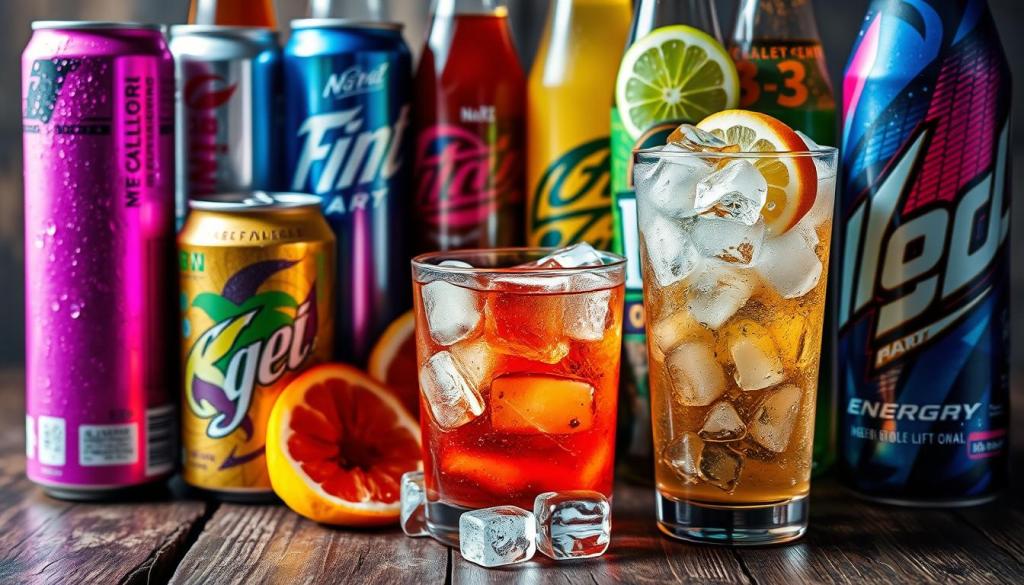
Soda and energy drinks are common in many diets. They add a lot of sugar, leading to health problems. Adults often drink them daily, which can harm their health over time.
The Hidden Sugars in Common Beverages
Soda and energy drinks have hidden sugars. Adults get about 145 calories a day from these drinks. Many don’t realize how bad they are for them.
These drinks make up a big part of daily calorie intake. Most of these calories come from added sugars. This can slow down metabolism and hurt health. People often choose these drinks for convenience, not thinking about their health.
Healthy Drink Alternatives to Keep You Hydrated
Choosing unsweetened drinks is a good choice for staying hydrated. Water, herbal teas, or sparkling water with natural flavors are better options. They keep you hydrated without adding empty calories.
Switching to these alternatives helps avoid the calories in high-calorie drinks. This can improve your health over time.
| Type of Beverage | Average Calories | Typical Added Sugars |
|---|---|---|
| Soda | 150-200 | 39g per 12 oz |
| Energy Drinks | 100-300 | 27g per 8 oz |
| Sweetened Coffee/Tea | 200 | 20g per 16 oz |
| Fruit Drinks | 150-300 | 36g per 12 oz |
| Herbal Tea (unsweetened) | 0 | 0g |
| Sparkling Water (with fruit) | 0-5 | 0g |
Unhealthy Foods to Avoid: Recognizing the Culprits
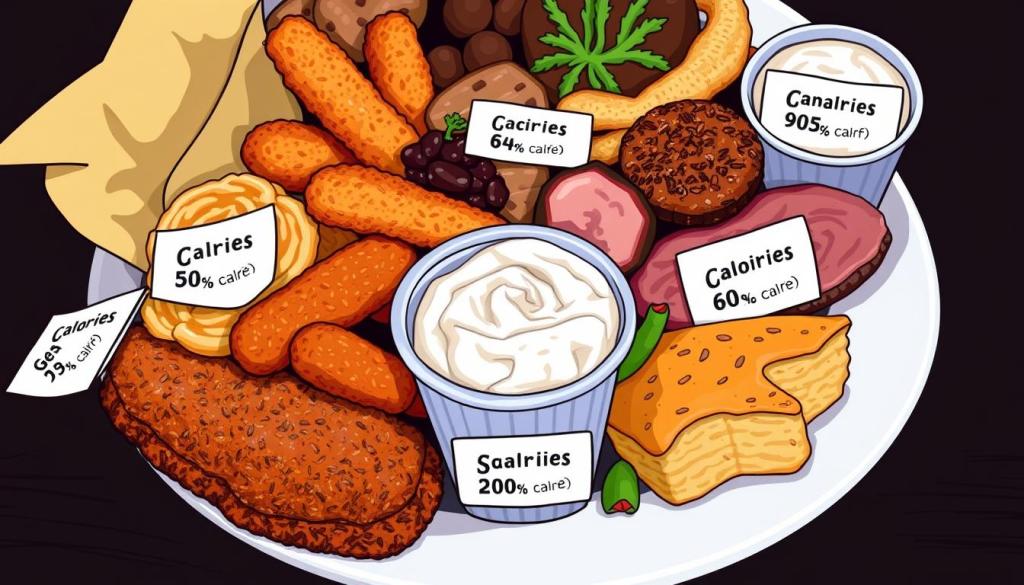
Being aware of unhealthy foods is key to staying healthy, especially as you get older. Many foods have hidden calories that might surprise you. Eating these foods regularly can cause weight gain and health problems. Knowing which foods to avoid helps you control your portions and make better choices.
Common Foods with Hidden Calories
Many everyday foods can sneak up on you with their hidden calories. For example, creamy dressings and flavored potato chips seem harmless but can add a lot to your calorie count. Here are some unhealthy foods to watch out for:
- Trans fats in fried foods increase heart disease risk
- Milkshakes with saturated fat make you feel sluggish and sick
- Processed snacks like hot dogs and French fries are high in sodium
- Chemical additives in cheesecakes and milkshakes can be harmful
- Meat products with hormones and antibiotics, found in fried chicken and bacon cheeseburgers
- High-fructose corn syrup in sodas and fast food is bad for your health
- Genetically modified ingredients in processed foods like teriyaki chicken and some tacos
- Mercury in certain seafood, like tuna melts, is a concern
Tips for a Healthier Grocery List
Making a healthy grocery list focused on whole foods makes meal planning easier. Here are some shopping tips to help:
- Choose fresh produce and lean proteins first.
- Stick to the store’s perimeter to avoid processed foods.
- Read nutrition labels to watch out for sodium and sugar.
- Include more fiber-rich foods to support digestion and avoid nutrient depletion.
- Plan your meals to stay on track and avoid impulse buys.
Knowing which foods are unhealthy and understanding their hidden calories helps you make better choices. A thoughtful approach to shopping and meal planning leads to a healthier lifestyle. It allows you to enjoy nutritious whole foods as you age.
| Unhealthy Food | Hidden Calories | Key Concern |
|---|---|---|
| Fried Chicken | High caloric and fat content | Heart disease risk |
| Milkshakes | Loaded with saturated fat | Sluggishness and sickness |
| Instant Ramen | 1,620 mg sodium per serving | High blood pressure |
| David’s Cookies Peanut Butter Cake | 820 calories per slice | Excessive sugar intake |
| Processed Snacks (e.g., Chips) | High sodium levels | Increased cravings |
Alcoholic Cocktails and Their Impact on Health

Alcoholic cocktails can be fun, but they have a health impact to consider. They often have a lot of sugar and empty calories. Drinking them too much can cause weight gain and make it hard to stay hydrated, especially as you get older.
Drinking regularly can slow down your metabolism and mess with your sleep. This can lead to health problems related to aging.
Understanding How Alcohol Affects Your Body
Drinking alcoholic cocktails means you’re getting about 7 calories per gram of alcohol. This can add up fast, especially if you mix drinks with sugary things. Drinking two beers or two glasses of wine a day can be 10% of your daily calories.
This can cause weight gain and make you eat more, especially if you drink before or with meals. You might eat up to 30% more.
Also, there’s no safe amount of alcohol. Drinking can increase your risk of heart problems and some cancers, like breast cancer. The American Institute for Cancer Research warns about the dangers of drinking even a few drinks a day.
Healthier Alcohol Choices
Choosing healthier alcohol options can help. Try low-calorie cocktails with spirits and soda water, or pick light beer and wine. These have less sugar and calories, which is better for your health.
Remember, moderation is important. Drinking less often and in smaller amounts can lower health risks from alcohol.
Make smart choices about what you drink. Switch to low-calorie drinks and control your amounts. This way, you can still have fun without hurting your health.
Conclusion
Keeping a healthy lifestyle as you get older means watching what you eat closely. It’s key to avoid unhealthy foods to keep your health strong. Eating whole foods and lean proteins helps lower the risk of chronic diseases and improves your life quality.
Processed, sugary, and high-calorie foods are more harmful as you age. It’s important to choose healthier options. This not only helps with weight management but also fights off aging-related problems like metabolic syndrome and nutrient deficiencies.
Every meal is a chance to make better choices for your health. By choosing a balanced diet with the right nutrients, you can handle unhealthy foods better. This ensures a healthier and more enjoyable life as you age.
FAQ
Why is it important for individuals over 40 to be mindful of their food choices?
As you get older, your metabolism slows down. This can raise your risk for health problems. Eating wisely can help you avoid weight gain and keep you healthy, ensuring you stay active and enjoy life.
What are some unhealthy foods to avoid after 40?
Stay away from processed meats, sugary snacks, white bread, and ready-to-eat meals. Also, avoid high-calorie drinks like soda and energy drinks. Deep-fried foods are also bad for you.
What are healthier alternatives to processed meats?
Choose lean proteins like chicken, turkey, fish, or plant-based options. These are better for you because they don’t have unhealthy fats and preservatives found in processed meats.
How do sugary snacks and desserts affect metabolism?
Eating sugary foods can quickly raise your blood sugar. This can harm your metabolism, leading to weight gain and increasing your risk of diabetes.
What should I look for when choosing breakfast cereals?
Look for cereals with whole grains, low added sugars, and at least five grams of fiber. This will give you a healthy start to your day, helping with digestion and energy.
Are there healthier drink options apart from soda and energy drinks?
Yes, drink water, herbal teas, or sparkling water with natural flavors. These choices are better for you because they don’t have the sugar found in soda and energy drinks.
What are some common foods that may contain hidden calories?
Be careful with creamy dressings, flavored potato chips, and many processed snacks. They often have more calories than you think. Knowing this can help you stay at a healthy weight.
How can I create a healthier grocery list?
Buy whole foods, fresh produce, and lean proteins. Plan your meals and shop the perimeter of the store for fresh items. This will help you make better food choices.
What can I do to limit the negative effects of alcoholic cocktails?
Choose light beer, wine, or spirits with soda water. Control your portions and drink less often. This can help reduce the negative health effects of alcohol.
Source Links
- The 20 Worst Foods for Men Over 40 – https://www.eatthis.com/worst-foods-men-over-40/
- 11 Foods to Avoid When Trying to Lose Weight – https://www.healthline.com/nutrition/11-foods-to-avoid-for-weight-loss
- Diet Quality and Health in Older Americans – https://www.ncbi.nlm.nih.gov/pmc/articles/PMC8955752/
- Eating Well as You Age – HelpGuide.org – https://www.helpguide.org/aging/healthy-aging/eating-well-as-you-age
- Nutrition for Older Adults: Factors Which Affect Food Intake – Oklahoma State University – https://extension.okstate.edu/fact-sheets/nutrition-for-older-adults-factors-which-affect-food-intake.html
- Processed foods: Health risks and what to avoid – https://www.medicalnewstoday.com/articles/318630
- What You Should Know About Processed Meat – https://www.webmd.com/food-recipes/ss/slideshow-processed-meats
- The Hidden Dangers of Fast and Processed Food – https://www.ncbi.nlm.nih.gov/pmc/articles/PMC6146358/
- My Child is Sugar Obsessed — Veggies & Virtue – https://veggiesandvirtue.com/blog/sugar-obsession
- The Sweet Trap: How Sugar Impacts Kids’ Development – GreenMind – https://www.greenmindhealth.com/blog/sugar-and-kids-development
- What Are Refined Carbs and Are They Bad for You? Here’s What a Dietitian Has to Say – https://www.eatingwell.com/article/8047875/what-are-refined-carbs/
- Refined carbs: What they are, and how to avoid them – https://www.medicalnewstoday.com/articles/refined-carbs
- Why Refined Carbs Are Bad For You – https://www.healthline.com/nutrition/why-refined-carbs-are-bad
- The nutritional content and cost of supermarket ready-meals. Cross-sectional analysis – https://www.ncbi.nlm.nih.gov/pmc/articles/PMC4509783/
- What Drives Consumers to Purchase Convenience Foods? – https://www.usda.gov/media/blog/2018/07/24/what-drives-consumers-purchase-convenience-foods
- Are Breakfast Cereals Healthy or Unhealthy? – https://www.healthline.com/nutrition/are-breakfast-cereals-healthy
- Is Your Breakfast Cereal Actually Good for You – https://plantstrong.com/blogs/news/is-your-breakfast-cereal-actually-good-for-you?srsltid=AfmBOordCzIL9-vqiHzbjIfEQ1E6QmDB0B8gTcgEccv9lJ5rn9O5OwZw
- Why we need to stop calling cereal unhealthy – https://forkful.substack.com/p/why-we-need-to-stop-calling-cereal-91c
- Sugar Sweetened Beverage Intake – https://www.cdc.gov/nutrition/data-statistics/sugar-sweetened-beverages-intake.html
- Sugary Drinks – https://nutritionsource.hsph.harvard.edu/healthy-drinks/sugary-drinks/
- 25 Unhealthy Foods You Need to Know: Your Ultimate Junk Food List | Solluna by Kimberly Snyder – https://mysolluna.com/the-25-unhealthiest-junk-food-items/
- 100 Unhealthiest Foods on the Planet – https://www.eatthis.com/unhealthiest-foods-on-the-planet/
- What Happens to Your Body When You Drink a Cocktail Every Day – https://www.eatingwell.com/article/8046234/are-cocktails-bad-for-you/
- How Alcohol Affects Nutrition And Food Absorption – https://alcoholthinkagain.com.au/alcohol-and-your-health/long-term-health-effects/alcohol-and-nutrition
- The Impacts of Junk Food on Health – https://kids.frontiersin.org/articles/10.3389/frym.2022.694523
- Junk Food Vs Healthy Food: Advantages, Disadvantages And Healthier Food Choices – https://www.netmeds.com/health-library/post/junk-food-vs-healthy-food-advantages-disadvantages-and-healthier-food-choices?srsltid=AfmBOorXitpiDnRh0GnJLohPL2gcmuFSbpVzYqwIbThi_XzXAvpGAbVi
- Evaluation of Junk Food Consumption and the Risk Related to Consumer Health among the Romanian Population – https://www.ncbi.nlm.nih.gov/pmc/articles/PMC10459196/



 trim down and shape up
Leave a comment