


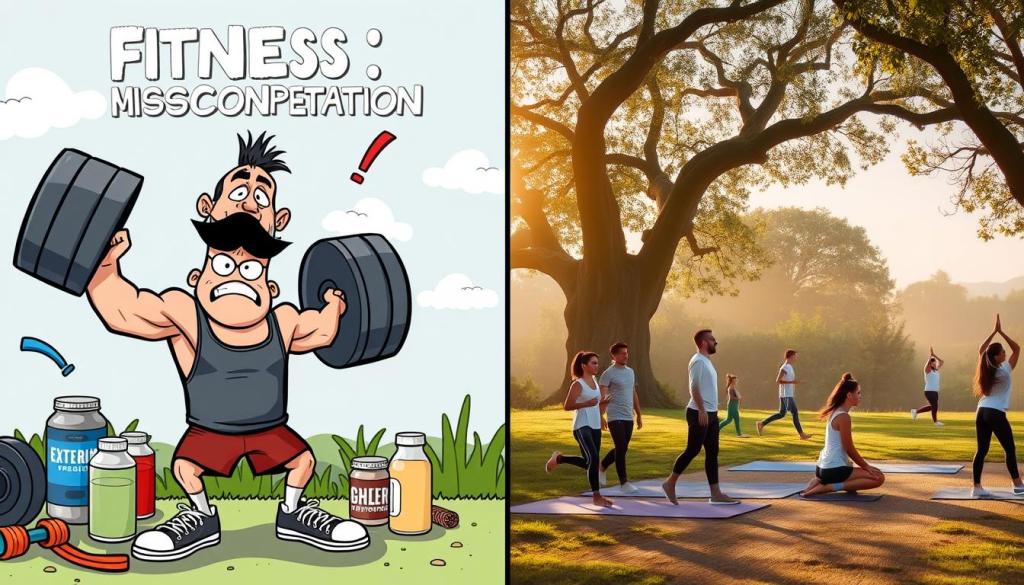
Fitness myths and exercise misconceptions can often confuse you and stop you from reaching your goals. With so much advice out there, it’s easy to believe the wrong things about workouts. These wrong beliefs can make you frustrated, waste your time, or even hurt you.
By clearing up these myths, you can focus on what really works for your exercise routine. In this article, we will look at the most common fitness myths. We’ll help you find a clearer path to your fitness goals.
Key Takeaways
- Fitness misconceptions can lead to ineffective workout strategies.
- Understanding the truth helps you optimize your exercise routine.
- Separating fact from fiction can prevent frustration and injury.
- Debunking myths can improve your overall fitness journey.
- A clear understanding of exercise principles saves time and effort.
Understanding Fitness Misconceptions
Fitness myths often spread through rumors and old methods. They can block your way to reaching your fitness goals. Many believe things that science proves wrong, leading to confusion and giving up.
One myth is that endless crunches will get you a six-pack. But, getting a defined stomach needs a mix of exercises and a healthy diet.
Another myth says women will get big from lifting weights. This comes from not understanding how muscles grow and the role of hormones. Women usually don’t have enough testosterone to get very big, even with hard training and the right food.
Lifting heavy is good for toning, without worrying about getting big.
Many think muscles turn to fat when you stop working out. But, muscles and fat are different. While muscles can shrink from not exercising, they don’t turn into fat. Losing muscle can slow down your metabolism and energy levels.
The “fat-burning zone” is also misunderstood. This zone doesn’t burn as many calories as harder workouts. Doing more intense exercises is better for losing weight.
Some think stretching before working out is good. But, research shows dynamic stretching is better for warming up. Static stretching is best for cooling down. A good warm-up gets your body ready for exercise and improves how well you do.
Clearing up fitness myths is key to getting fit. Learning from real research helps you avoid bad methods. Knowing the truth lets you move through the fitness world with confidence.
Exercise Takes Too Much Time

Many people think exercise needs a lot of time. They believe hours are needed for results. But, the truth is, short workouts of 20-30 minutes can be very beneficial. These workouts can easily fit into busy lives.
The Truth About Short Workouts
Studies show that short, focused workouts can greatly improve health. Just 75 minutes of activity a week can add 1.8 years to your life. You can split this into smaller sessions, making it easy to fit into your day.
Breaking Up Your Exercise
Exercise doesn’t have to be long. Try “exercise snacks,” or short activities during your day. For example, a few minutes of strength training or brisk walking can be very effective. Even those over 90 can see benefits from these short sessions.
- Do sets of bodyweight exercises during breaks.
- Take short walks during lunch or workday breaks.
- Use stairs instead of elevators whenever you can.
Every small effort adds up over time. This leads to real improvements in fitness and health. Focusing on efficient workouts makes it easier to fit fitness into your life.
You Have to Go to the Gym

Many think you must go to the gym to stay fit. But, fitness can be achieved through home workouts and other alternatives. These options fit your lifestyle and preferences, eliminating the need for expensive gym memberships or travel.
Home Workouts and Alternatives
Home workouts are popular for their convenience and results. You can use items like water bottles, chairs, or towels for resistance training. This lets you create a workout routine that fits your home environment.
- Bodyweight exercises include push-ups, squats, and lunges.
- Yoga and Pilates can be done at home with little equipment.
- Circuit training combines exercises for a full-body workout.
These home workouts show you don’t need a gym to stay fit. They offer a flexible way to add more exercise to your day, improving your health and wellness.
Incorporating Physical Activity into Daily Life
Finding activities that fit into your daily routine makes staying active fun. Simple tasks like walking, gardening, or doing chores can be great workouts.
“Just a short walk during lunch can significantly enhance your fitness level without feeling like a chore.”
Here are simple ways to add movement to your day:
- Take the stairs instead of the elevator.
- Park farther from entrances to increase walking distance.
- Set a timer to remind yourself to stand up and stretch every hour.
By adopting these strategies, you can enjoy a sustainable and fun fitness routine. You don’t need to rely on gym attendance to stay active and meet your fitness goals, no matter where you are.
The More You Sweat, the Better the Workout

Many think sweat means they’re working hard. But, how much you sweat depends on your body and the environment. This knowledge helps you focus on the quality of your workout, not just sweat.
Decoding Sweat Levels
Fit people, especially in endurance sports, sweat a lot. Athletes can lose up to three quarts of sweat per hour. The amount varies based on how hard you’re working.
Well-trained athletes sweat more because they work harder. Runners and football players sweat a lot because their sports are tough.
Why Sweating Does Not Indicate Effectiveness
Sweating doesn’t always mean you’re working out well. You can have a tough workout without sweating a lot. What really matters is how intense your workout is and if it meets your fitness goals.
Drinking water after your workout is key. Dark urine means you’re dehydrated. Weighing yourself before and after can show if you need to drink more water. Replacing lost electrolytes helps prevent muscle cramps and fatigue.
Exercise Needs to Be Painful to Be Effective

Many think the best workouts hurt a bit. This idea leads to the no pain no gain myth. It says you won’t get any benefits without feeling pain. But, understanding muscle soreness can clear up this myth.
Understanding Muscle Soreness
Muscle soreness, like Delayed Onset Muscle Soreness (DOMS), happens after hard workouts. A little soreness means your body is getting better. But, it’s not the only sign of a good workout.
You can get fit without a lot of pain. It’s important to listen to your body and find a balance. Severe pain might mean you’re doing something wrong, not that you’re working hard enough.
‘No Pain, No Gain’ Explained
The no pain no gain myth is misleading. It makes people think they must suffer to get better. But, good workouts can feel good and still help you improve.
Studies show people can do their usual activities even with a bit of pain. Focus on doing things right, slowly getting harder, and listening to your body. This way, you can get fit without too much discomfort.
Enjoying your workouts is key to sticking with them. You don’t have to hurt to get better. Good exercise can make you feel better and live a better life.
Stopping Exercise Turns Muscle into Fat

Many think stopping exercise turns muscle into fat. But, when you stop working out, your muscles shrink. This doesn’t turn into fat. Instead, your body changes in other ways.
When you stop exercising, your muscles get smaller. This can make your metabolism slower. If you eat more calories, you might gain weight. But, muscle and fat are not the same, and one doesn’t turn into the other.
Regular exercise helps keep your weight in check, especially with a healthy diet. It builds and keeps muscle, fights diseases, and boosts health. Try to exercise for at least 30 minutes most days.
Here’s a table to show how muscle and fat react when you stop exercising:
| Factor | Muscle | Fat |
|---|---|---|
| Response to Stopping Exercise | Atrophy (shrinkage of muscle cells) | Expansion (growth of fat cells) |
| Effect on Metabolism | Slows down due to reduced muscle mass | May increase with the accumulation of fat |
| Physical Appearance | Less toned and defined | Often appears softer |
| Health Implications | Reduced strength and endurance | Increased risk of heart disease and certain cancers |
Knowing these facts can help ease worries about stopping exercise. Science shows us how our bodies work and react to changes in activity.
Cardio Alone is Enough to Keep You Fit

Many people think doing just cardio is enough to stay fit. But, they miss out on the key role of strength training. Cardio improves heart health and endurance, but skipping strength training can hold you back.
The Importance of Strength Training
Strength training is crucial for a complete fitness plan. It helps build and keep muscle, and boosts metabolism for better weight loss. For instance, kettlebell exercises can burn calories like running fast.
Adding resistance workouts stops muscle loss from too much cardio. This is especially true for those trying to lose weight.
Balanced Fitness Regimens
Having a balanced fitness plan is key for the best results. It’s smart to mix high-intensity cardio with strength training. This way, each type of exercise can work its best.
Strength training targets different muscles, helping burn more calories after working out. A varied routine avoids overtraining and lowers injury risks. It meets different fitness goals.
| Exercise Type | Benefits | Ideal Frequency |
|---|---|---|
| Cardio | Enhances endurance, promotes heart health, aids in fat loss | 3-5 days per week |
| Strength Training | Builds muscle, boosts metabolism, prevents muscle loss | 2-3 days per week |
| High-Intensity Interval Training (HIIT) | Maximizes calorie burn, improves anaerobic fitness | 1-3 times per week |
Combining cardio and strength training in your routine is better for fitness. It improves performance and health. Knowing cardio alone isn’t enough leads to better exercise plans and health in the long run.
Strength Training is Only for Building Muscle Mass

Many think strength training is just for growing muscles. But it’s so much more. It’s key for better health, function, and happiness at any age.
Benefits Beyond Muscle Gain
Strength training does more than just make muscles bigger. Here are some cool benefits:
- Improved bone density: It helps fight conditions like osteoporosis by making bones stronger.
- Enhanced metabolism: More muscle means a faster metabolism, helping with weight control.
- Better functional movement: It makes daily tasks like carrying groceries easier.
- Mood enhancement: It boosts mood by releasing happy hormones, which can help with depression.
Strength Training for All Ages
Strength training is good for everyone, no matter how old or fit you are. For those over 40, it helps fight muscle loss. This keeps you strong and active.
Adults should work out major muscles at least twice a week. This keeps you safe and gets the most out of your workouts. Start with light weights and get help from a trainer for safety.
In short, strength training is vital for health and fitness for all ages. It’s not just about muscles. It’s about a whole-body approach to fitness.
You Can Target Fat Loss in Specific Areas

Many people want to slim down certain parts of their body. They focus on areas like the waist, thighs, buttocks, and arms. They believe that by doing specific exercises, they can lose fat in these spots.
But science says otherwise. Studies show that fat loss happens all over the body. It’s influenced by genetics and hormones, not just by where you exercise.
To really lose weight, you need a full-body workout plan. High-intensity exercises, like running and cycling, are great. So are full-body moves like burpees. Adding strength training to your cardio routine helps burn more fat.
Eating right is also key. Eating smaller portions and choosing fiber-rich foods helps. Avoiding processed snacks and eating more protein is important too.
The table below shows how different exercises and diets compare for losing fat:
| Method | Effectiveness for Overall Fat Loss | Notes |
|---|---|---|
| High-Intensity Workouts | High | Promotes significant calorie burn during and after exercise. |
| Cardiovascular Exercises | Moderate to High | Effective for endurance and calorie expenditure. |
| Strength Training | Moderate to High | Builds lean muscle mass, increasing resting metabolic rate. |
| Diet Control | Essential | Key for managing caloric intake and promoting fat loss. |
Knowing the limits of spot fat loss helps set better fitness goals. A mix of different workouts and healthy eating is the best way to lose fat. This approach not only improves how you look but also boosts your health for the long term.
Morning is the Ideal Time for Exercise

Many believe morning is the best time for exercise. It can give you energy for the day and help you stick to a workout plan. What works best for you depends on your personal preferences.
Finding the right time to work out can make it more enjoyable. This can help you stick to your routine.
Personalizing Your Workout Schedule
It’s important to make a workout plan that fits you. Not everyone is a morning person. Health experts say you should do 150 to 300 minutes of moderate exercise a week.
Short, intense workouts can be effective. Beginners might start with 15-minute brisk walks. This can help them gradually get more intense.
What Research Says About Timing
Research shows the best time to exercise varies by person. Some do great in the morning, while others prefer evening. Your work schedule, energy levels, and personal life should guide your choice.
Always put safety first. Talk to a doctor before starting any new exercise plan. Tailoring your workout schedule can help you get the most out of it and keep you motivated.
You Should Avoid Working Out on an Empty Stomach

Many think you should not work out on an empty stomach. They worry about how it affects performance and recovery. But, research shows fasting for exercise can actually help.
Studies found that working out in the morning after fasting can burn up to 20% more fat. This is great for those wanting to lose fat.
Some people enjoy training on an empty stomach. But, for activities needing speed or power, eating a balanced meal first is better. Glucose is key for these intense workouts.
Eating a big meal before working out can upset your stomach, especially if it’s high in fat or fiber. People with health issues might feel dizzy or lightheaded. They should drink water and do low-intensity exercises.
It’s important to be careful. Don’t do more than 60 minutes of fasted cardio. And, remember, good nutrition is key for weight control. Working out on an empty stomach can hurt muscle growth because you lack nutrients.
Make sure to eat enough protein when you’re in a calorie deficit. This helps keep your muscle mass. The idea that you must avoid working out on an empty stomach isn’t true for everyone. It depends on your personal preferences, how hard you work out, and how your body reacts.
Common Misconceptions about Nutrition and Exercise

It’s important to know the truth about nutrition to improve your diet. Many think cutting carbs is the only way to lose weight. But, it’s not just about carbs. Keeping a calorie deficit is key for weight loss. All nutrients, including carbs, are vital for a healthy diet.
The Truth About Cutting Carbs for Weight Loss
Going too low on carbs can lead to missing out on important nutrients. The Dietary Guidelines for Americans say half of your grains should be whole. This ensures you get enough fiber and vitamins. Instead of fearing carbs, focus on eating the right kinds and amounts.
Choosing complex carbs gives you lasting energy for workouts and daily activities.
Protein Timing and Muscle Gains
There’s a myth about when to eat protein for muscle growth. It says you must eat it right after working out. But, research shows it’s more about how much protein you eat overall. Aim for a steady intake of protein, especially before and after workouts, to help your muscles recover and grow.
| Nutrition Aspect | Myth | Truth |
|---|---|---|
| Carbohydrates | Cutting carbs leads to weight loss | Maintaining a calorie deficit is key, all macronutrients are important |
| Protein Timing | Must eat protein immediately after workouts | Total daily intake is more crucial than timing |
Conclusion
Understanding fitness myths is key to good health. These myths can confuse you and make reaching your fitness goals harder. By clearing up these misconceptions, you learn more and make better choices for your health.
Studies show how important it is to know the truth in many areas, like science and sociology. They show that knowing the right information is crucial. Just like students learn from correcting their mistakes, you can too by thinking critically about your fitness.
Your health journey is always evolving. Using reliable sources and staying open to new facts can improve your fitness. Knowing the truth helps you create a lasting, effective workout plan. This way, you get both short-term and long-term health benefits.
FAQ
Does exercise really take too much time?
No, you can get fit in just 20-30 minutes. What matters most is being consistent, not how long you work out.
Do I have to go to the gym to get fit?
No, you can stay fit at home. Simple activities like walking and doing chores also count.
Is sweating a sign of a good workout?
Not always. Sweating can vary based on the weather and your body. It doesn’t always mean you’re working out well.
Do I need to feel pain for my workout to be effective?
No, a good workout should feel good, not hurt. Severe pain is a sign to slow down.
Will stopping exercise turn my muscle into fat?
No, muscles don’t turn into fat. Stopping exercise might make muscles smaller, but they won’t turn into fat.
Is cardio alone enough to keep me fit?
No, you also need strength training. It helps with health and managing weight, along with cardio.
Is strength training only for building muscle mass?
No, it has many benefits. It can improve bone density and boost your metabolism, helping people of all ages.
Can I target fat loss in specific areas of my body?
No, you can’t spot reduce fat. Fat loss happens all over based on genetics and hormones. A full fitness program works better.
Is morning the ideal time for exercise?
Not always. The best time to exercise is when it fits your life. Find a time that works for you.
Should I avoid working out on an empty stomach?
Not always. Working out without eating can be safe and effective for some goals, as it can increase fat burning.
Is cutting carbs necessary for weight loss?
No, losing weight mainly comes from eating fewer calories. All nutrients, including carbs, are important for a balanced diet.
Do I need expensive supplements to get fit?
No, you can reach your fitness goals with a balanced diet and a good workout plan. You don’t need expensive supplements.
Does taking a break mean losing all my progress?
No, breaks are normal. You won’t lose all your progress. Understanding muscle loss and fat gain can help.
Do I need to work out every day to stay in shape?
No, while regular exercise is important, rest is too. It prevents overtraining and helps you recover.
Is running bad for my knees?
Not necessarily. Running is safe for most people if done right. Proper form and cross-training are key.
Source Links
- 21 Myths That People Get Wrong About Physical Fitness – SimpliFaster – https://simplifaster.com/articles/21-myths-misconceptions-about-physical-fitness/
- 10 Common Fitness Myths to Avoid | Integrated Rehab – https://integrehab.com/blog/health-wellness/common-fitness-myths/
- Breaking Down Fitness Myths and Misconceptions – https://www.acefitness.org/resources/everyone/blog/6913/breaking-down-fitness-myths-and-misconceptions/
- Demystifying Myths: Busting Common Gym Misconceptions – https://www.onelifefitness.com/news/busting-common-gym-misconceptions
- Busting Group Fitness Myths: The Truth Behind Common Misconceptions – https://www.sweatkelowna.com/post/busting-group-fitness-myths-the-truth-behind-common-misconceptions
- 6 common myths about exercising – https://www.heartandstroke.ca/articles/6-common-myths-about-exercising
- Flow into Wellness: Celebrating National Yoga Month with Chiropractic Harmony! – https://www.chirohealthusa.com/patients/dont-believe-the-fitness-myths/
- Are you falling victim to these commonly accepted fitness myths? – https://www.nbcnews.com/better/health/5-most-commonly-believed-fitness-myths-are-holding-you-back-ncna837236
- Fitness Misconceptions – https://www.musclebymaria.com/single-post/fitness-misconceptions
- Sweating a lot during a workout may mean you’re more fit, according to a sweat scientist – https://www.businessinsider.com/how-much-should-you-sweat-during-a-workout-expert-scientist-2020-8
- Fitness Myth Debunked: More Sweat Means A Better Workout – Brooke Burke’s Top Workouts To Transform Your Body – Brooke Burke – https://brookeburke.com/blog/fitness-myth-debunked-more-sweat-means-a-better-workout/
- Exposing 10 Common Exercise Myths – https://ace-pt.org/exposing-10-common-exercise-myths/
- 5 Common Misconceptions about Pain – https://www.rwjbh.org/blog/2020/august/5-common-misconceptions-about-pain/
- 10 myths you probably believe about exercise (and why they’re wrong) – https://www.bswhealth.com/blog/10-things-you-thought-you-knew-about-exercise
- 7 exercise myths debunked – https://www.mdanderson.org/publications/focused-on-health/exercise-myths.h12-1589046.html
- Does Muscle Turn to Fat When You Skip Workouts? – https://www.piedmont.org/living-real-change/does-muscle-turn-to-fat-when-you-skip-workouts
- 8 Myths About Cardio That Are Holding You Back – https://www.shape.com/fitness/workouts/8-cardio-myths-are-making-you-fat
- Does Cardio Burn Muscle? Debunking Common Fitness Myths | Tempo – https://tempo.fit/blog/what-are-the-most-common-exercise-misconceptions
- Debunking the myths about cardio, weight training, and calories – https://wired.me/science/cardio-weight-training-calories/
- Dispelling 4 Common Strength Training Myths | Dignity Health – https://www.dignityhealth.org/las-vegas/about-us/articles/dispelling-4-common-strength-training-myths
- Strength is for Everyone: Debunking Strength Training Myths – https://bodydynamicsinc.com/strength-training-myths/
- Busting resistance training myths – https://www.nuffieldhealth.com/article/busting-resistance-training-myths
- Is It Possible to Target Fat Loss to Specific Body Parts? – https://www.healthline.com/nutrition/targeted-weight-loss
- Why Spot Training Is Ineffective, Plus a Better Way for Reaching Fitness Goals – https://www.onepeloton.com/blog/spot-training-myth/
- Is Spot Reduction Actually a Myth? – https://www.bulknutrients.com.au/blog/weight-loss/is-spot-reduction-actually-a-myth?srsltid=AfmBOopgGFp9boiXoJP7vL5b7ROTFnbLeRfJPYCbngQDsGZU4000gk0D
- 4 Most Common Exercise Myths & Why They’re Holding You Back – https://wellbridge.com/fit-like-that/4-most-common-exercise-myths-why-theyre-holding-you-back/
- “Mornings Are the Best Time to Exercise” and Other Myths – https://www.healthhub.sg/live-healthy/real-or-not-busting-exercise-myths
- Can You Lose Weight Faster by Exercising on an Empty Stomach? – https://www.healthline.com/health/fitness-exercise/fasted-cardio-when-to-eat-workout
- Debunking 3 Myths About Working Out On an Empty Stomach | FizzUp – https://blog.fizzup.com/tips-from-the-pros/debunking-3-myths-about-working-out-on-an-empty-stomach/
- Some Myths about Nutrition & Physical Activity – NIDDK – https://www.niddk.nih.gov/health-information/weight-management/myths-nutrition-physical-activity
- Navigating common nutrition myths and misconceptions | Dietitians On Demand Blog – https://dietitiansondemand.com/navigating-common-nutrition-myths-and-misconceptions/
- Revealing & Dealing with Misconceptions – https://ablconnect.harvard.edu/revealing-and-dealing-misconceptions
- Correcting misconceptions – Understanding Science – https://undsci.berkeley.edu/for-educators/prepare-and-plan/correcting-misconceptions/


 trim down and shape up
Leave a comment