



Grapefruit is known for its health benefits and is often called a superfood. It adds color to your meals and brings many nutritional perks. Studies show that eating grapefruit regularly can help lower blood pressure and provide important vitamins and minerals.
The link between grapefruit and heart health goes beyond just nutrients. This article will show how grapefruit can boost your overall health. It explains how its special properties might help keep your blood pressure in check.
Key Takeaways
- Grapefruit is rich in essential nutrients while being low in calories.
- Eating grapefruit may help lower blood pressure and enhance heart health.
- This fruit is an excellent source of vitamin C and contains beneficial antioxidants.
- Grapefruit may interfere with certain medications, particularly those for blood pressure and cholesterol.
- Including grapefruit in a balanced diet can support various health goals.
- Proper storage of grapefruit helps maintain its freshness and nutritional value.
Understanding Blood Pressure and Its Importance
Blood pressure is the force of blood against artery walls. It’s key to your health. High blood pressure, or hypertension, raises your risk of heart attack and stroke. Over 1 billion people worldwide live with hypertension, making it a major risk for heart disease.
Keeping blood pressure healthy is crucial for your heart and blood vessels. High levels can harm your heart and blood vessels. Diet, lifestyle, and health conditions affect blood pressure. Eating foods rich in potassium and magnesium can help manage blood pressure.
Studies show that certain foods can lower blood pressure. Fruits, vegetables, legumes, and whole grains are full of nutrients good for your heart. Eating a variety of these foods helps keep your blood pressure in check.
| Food Group | Key Nutrients | Potential Benefits for Blood Pressure |
|---|---|---|
| Fruits | Potassium, fiber | May help lower blood pressure |
| Vegetables | Magnesium, antioxidants | Support cardiovascular health |
| Legumes | Potassium, magnesium | May assist in blood pressure regulation |
| Whole Grains | Fiber, vitamins | Associated with lower blood pressure risk |
| Nuts | Fiber, arginine | Potential positive effects on blood pressure |
Understanding blood pressure is more than just numbers. It’s about making lifestyle choices for better heart health. By monitoring your blood pressure and eating well, you can manage it and improve your health.
What Are the Health Benefits of Grapefruit?

Grapefruit is not just tasty; it’s also good for you. It’s low in calories but packed with nutrients. This makes it a great choice for a healthy diet. Eating grapefruit can help you feel better overall.
Nutritional Content of Grapefruit
Half of a medium grapefruit has:
| Nutrient | Amount |
|---|---|
| Calories | 39 |
| Fat | 0 g |
| Cholesterol | 0 mg |
| Sodium | 0 mg |
| Carbohydrates | 8.41 g |
| Fiber | 1 g |
| Sugar | 7.31 g |
| Protein | 0.62 g |
Grapefruit’s nutritional profile is impressive. It’s especially good for your heart. The vitamins and antioxidants in grapefruit help fix and prevent health issues.
How Grapefruit Supports Heart Health
Eating grapefruit can help your heart in several ways. The fiber in grapefruit reduces inflammation, which is good for blood vessels. Grapefruit also has antioxidants like flavonoids, which may lower heart disease and stroke risks. Studies show that grapefruit, especially red varieties, can improve cholesterol levels, which is key for heart health.
Grapefruit’s Role in Lowering Blood Pressure
Many people are curious about grapefruit’s effect on blood pressure. Studies suggest it might help a bit with high blood pressure. But remember, grapefruit is not a replacement for medical treatment. It could be a good part of a healthy lifestyle, though.
The Connection Between Grapefruit and Blood Pressure
One medium grapefruit has about 300 milligrams of potassium. Potassium is good for your heart and can help lower blood pressure. A 2012 study showed grapefruit can help with weight loss and lower blood pressure too.
Research Supporting Grapefruit’s Effects
A 2016 review looked at 154 studies and found grapefruit can lower blood pressure. Another study from 2006 found grapefruit or its juice helped people lose more weight. These studies show grapefruit can help with blood pressure by controlling weight and more.
| Study | Participants | Findings |
|---|---|---|
| 2012 Study | 74 overweight adults | Lower blood pressure, decreased waist circumference |
| 2016 Review | 154 cited studies | Statistically significant decrease in systolic blood pressure |
| 2006 Study | 91 obese adults | Greater weight loss with grapefruit consumption |
Grapefruit Is Packed with Potassium, Fiber, and the Antioxidant Vitamin C
Grapefruit is not just tasty; it’s also packed with nutrients. It’s full of potassium, which helps control blood pressure and keeps the heart healthy. A medium grapefruit gives you about 4% of your daily potassium needs.
Grapefruit is also a good source of fiber. Half of a medium grapefruit has 2 grams of fiber. Fiber is key for a healthy gut and can lower bad cholesterol. Adults should eat 28 to 33.6 grams of fiber daily, and grapefruit can help meet that goal.
Vitamin C in grapefruit is another big plus. Half a grapefruit has 43% of your daily vitamin C needs. Vitamin C boosts your immune system and keeps your skin healthy. It also fights off free radicals, which may reduce the risk of chronic diseases.
Here is a summary of the nutritional benefits of grapefruit:
| Nutrient | Amount in Half Grapefruit | % Daily Value |
|---|---|---|
| Potassium | 278 mg | 6% |
| Fiber | 2 g | 8% |
| Vitamin C | 71.8 mg | 79% |
Eating grapefruit adds potassium, fiber, and vitamin C to your diet. It helps you live a balanced and healthy life.
Eating High-Potassium Fruits, Including Grapefruit, Has Been Linked to Reducing Blood Pressure

Eating high-potassium fruits like grapefruit can help lower blood pressure. Potassium counteracts sodium’s harmful effects. It relaxes blood vessel walls, improving vascular health.
A diet full of these fruits can regulate blood pressure. It may also lower the risk of high blood pressure. Many fruits are rich in potassium, making it easy to add them to your diet.
Here’s a table showing some high-potassium fruits and their potassium content:
| Fruit | Potassium Content (mg per 100g) |
|---|---|
| Grapefruit | 135 |
| Banana | 358 |
| Avocado | 485 |
| Kiwi | 312 |
| Oranges | 181 |
Eating these fruits regularly can help keep blood pressure healthy. Choosing fruits like grapefruit is a great way to boost your heart health.
Grapefruit’s High Fiber Content May Also Contribute to Lowering Blood Pressure
Grapefruit’s high fiber content is linked to lowering blood pressure. Eating grapefruit can offer many health benefits, thanks to its fiber. Fiber is key for digestion and heart health. With over 70 million Americans having high blood pressure, fiber’s role is crucial.
Understanding Fiber and Its Benefits
Grapefruit has about 12 grams of fiber per serving. This grapefruit high fiber content helps lower cholesterol, which is vital for blood pressure control. People with heart disease or high blood pressure often see benefits from a high-fiber diet.
Fiber improves insulin sensitivity and supports heart health. Grapefruit’s pectin, a type of soluble fiber, is especially beneficial.
Here are some key fiber benefits for heart health:
- Helps to lower blood cholesterol levels.
- Contributes to weight management by promoting a feeling of fullness.
- Aids in digestion and prevents constipation.
- May help control blood sugar levels.
Eating grapefruit can add fiber benefits to your diet. It’s also very watery, with 92% water content. This makes it great for weight loss when eaten before meals. Grapefruit’s fiber and antioxidants may help keep blood pressure healthy, making it a good choice for managing hypertension.
Can You Eat Grapefruit While Taking Blood Pressure Medication?
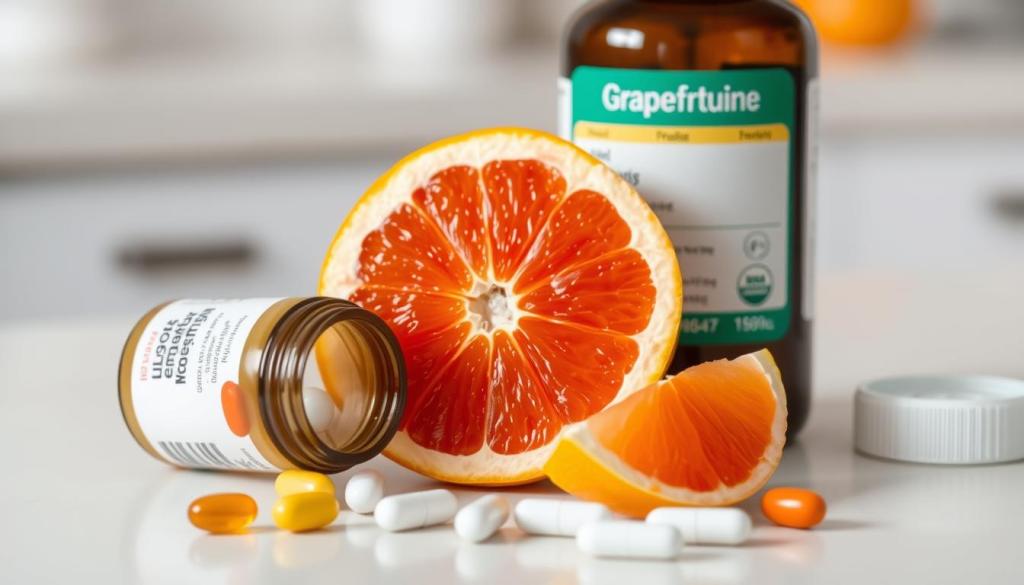
It’s important to know how grapefruit affects blood pressure medication. Grapefruit can change how your medication works, especially for blood pressure drugs. It has compounds that stop enzymes from breaking down some drugs, leading to higher levels in your blood. This can cause more side effects or make the medication less effective.
Potential Interactions Between Grapefruit and Medications
Many medications are affected by grapefruit. Here are some key interactions:
- Statins like simvastatin and atorvastatin may see increased blood levels when taken with grapefruit juice.
- Calcium channel blockers such as nifedipine, felodipine, and amlodipine can lead to elevated drug concentrations.
- Grapefruit affects anticoagulants like warfarin, raising the risk of bleeding due to increased drug effects.
- Drugs for erectile dysfunction may have heightened blood levels, leading to potential side effects.
- Anti-anxiety medications like diazepam may experience elevated blood concentrations with grapefruit consumption.
- Corticosteroids, including budesonide, could be impacted by grapefruit, necessitating caution during treatment.
- Antiarrhythmic drugs like amiodarone may exhibit increased side effects when grapefruit juice is consumed.
- Antihistamines like fexofenadine may not work optimally if grapefruit is ingested.
- Transplant rejection medications such as cyclosporine can have increased blood levels, implying heightened risks.
Consulting a Healthcare Provider Before Mixing
Talking to your healthcare provider about grapefruit and blood pressure medication is key. They can give advice based on your specific situation. Remember, everyone reacts differently to grapefruit. It’s important to manage this carefully to avoid dangerous interactions.
| Medication Type | Example Medications | Potential Effect with Grapefruit |
|---|---|---|
| Statins | Simvastatin, Atorvastatin | Increased blood levels |
| Calcium Channel Blockers | Nifedipine, Amlodipine | Elevated drug levels |
| Anticoagulants | Warfarin | Higher risk of bleeding |
| Anti-anxiety Drugs | Diazepam | Increased blood concentrations |
| Transplant Medications | Cyclosporine | Enhanced blood levels |
Ways to Incorporate Grapefruit into Your Diet

Adding grapefruit to your meals can make them taste better and be healthier. You can find many grapefruit recipes that make snacks both tasty and nutritious. Here are some easy ways to add grapefruit to your diet.
Simple Recipes with Grapefruit
- Broiled Grapefruit: Sprinkle half a grapefruit with brown sugar and broil for a few minutes until caramelized, offering a delightful sweet treat.
- Grapefruit Salad: Combine sections of grapefruit with mixed greens, avocado, and a light vinaigrette for a refreshing salad.
- Grapefruit Smoothie: Blend grapefruit sections with yogurt and a banana for a zesty smoothie packed with nutrients.
Creative Uses in Meals and Snacks
You can also be creative with grapefruit in different dishes:
- Grapefruit Salsa: Mix diced grapefruit with tomatoes, red onion, cilantro, and lime juice for a unique salsa that pairs perfectly with fish or chicken.
- Grapefruit Glaze: Create a glaze for meats by reducing grapefruit juice with honey and mustard, giving your dishes a zesty kick.
- Healthy Snacks: Grab a grapefruit for a quick snack or sprinkle with cinnamon for an extra flavor boost while reaping the health benefits.
Grapefruit Juice vs. Whole Grapefruit: What’s the Difference?
Choosing between grapefruit juice and whole grapefruit is important. Grapefruit juice is tasty and full of vitamins like C and folate. But, eating the whole fruit is better for your health.
Whole grapefruit has more fiber, which helps with digestion and keeps you full. This can stop you from eating unhealthy snacks. Grapefruit juice, on the other hand, has more sugar and calories.
This can raise your blood sugar levels too much. This is bad for people with diabetes or metabolic issues. Whole grapefruit is better because it has a lower sugar level and more nutrients.
Eating whole grapefruit is best for your blood pressure and heart health. While grapefruit juice is tasty, eating the whole fruit is better for your health in the long run.
FAQ
What are the health benefits of grapefruit?
Grapefruit is full of nutrients like potassium, fiber, and vitamin C. These help keep your heart healthy and support good cholesterol levels. They also offer antioxidant benefits.
Does grapefruit lower blood pressure?
Studies suggest grapefruit might slightly lower blood pressure. Its potassium and fiber help control blood pressure.
Eating high-potassium fruits, including grapefruit, has been linked to reducing blood pressure?
Yes, eating grapefruit and other high-potassium fruits can help lower blood pressure. They counteract sodium’s effects and relax blood vessels.
Can I eat grapefruit while taking blood pressure medication?
Grapefruit can affect certain blood pressure medications. It blocks enzymes that break down these drugs. Always check with your doctor before eating grapefruit if you’re on these medications.
How can I incorporate grapefruit into my diet?
Enjoy grapefruit in many ways, like adding it to salads or smoothies. Try broiled grapefruit recipes. Whole grapefruit is better than juice for fiber and nutrients.
What nutrients are found in grapefruit?
Grapefruit is rich in potassium, dietary fiber, and vitamin C. These nutrients are good for your heart and overall health.
How does grapefruit’s fiber content benefit health?
Grapefruit’s fiber supports your digestive health. It helps lower cholesterol and can also lower blood pressure.
Is grapefruit juice as beneficial as whole grapefruit?
Grapefruit juice has some health benefits. But, it lacks whole grapefruit’s fiber. It also has more sugars, which can affect blood sugar levels.
What should I consider before adding grapefruit to my diet if I have high blood pressure?
If you have high blood pressure or take related medications, talk to your doctor first. Grapefruit might interact with your medications.
Source Links
- Before grabbing a grapefruit, understand its power – https://www.heart.org/en/news/2020/01/17/before-grabbing-a-grapefruit-understand-its-power
- Grapefruit Benefits – https://www.hopkinsmedicine.org/health/wellness-and-prevention/grapefruit-benefits
- Can Grapefruit Interact With Common Medications? – https://www.healthline.com/nutrition/grapefruit-and-medications
- Does ruby red grapefruit lower blood pressure? – The Groves – https://www.halegroves.com/blog/does-ruby-red-grapefruit-lower-blood-pressure/?srsltid=AfmBOoqM10fdMp8hMPvAn_C2wiho-JpoHIXN5FtMaHy59OmQBC69TFNq
- The 17 Best Foods to Lower Blood Pressure – https://www.healthline.com/nutrition/foods-high-blood-pressure
- Health Benefits of Grapefruit – https://www.webmd.com/food-recipes/health-benefits-grapefruit
- Top 5 health benefits of grapefruit – https://www.bbcgoodfood.com/health/nutrition/health-benefits-grapefruit
- Can a Grapefruit a Day Keep High Blood Pressure Away: Drexel Medicine Blog – Drexel Medicine – https://drexelmedicine.org/blog/overview/can-a-grapefruit-a-day-keep-high-blood-pressure-away/
- Grapefruit juice can affect how well some medicines work – https://www.fda.gov/consumers/consumer-updates/grapefruit-juice-and-some-drugs-dont-mix
- 10 Health Benefits of Grapefruits – https://www.healthline.com/nutrition/10-benefits-of-grapefruit
- 11 Reasons To Eat Grapefruit – https://www.health.com/food/grapefruit-facts
- Grapefruit: Benefits, facts, and research – https://www.medicalnewstoday.com/articles/280882
- Grapefruit and medications – https://www.mayoclinic.org/healthy-lifestyle/consumer-health/expert-answers/food-and-nutrition/faq-20057918
- GRAPEFRUIT: Overview, Uses, Side Effects, Precautions, Interactions, Dosing and Reviews – https://www.webmd.com/vitamins/ai/ingredientmono-946/grapefruit
- Consumption of grapefruit is associated with higher nutrient intakes and diet quality among adults, and more favorable anthropometrics in women, NHANES 2003–2008 – https://www.ncbi.nlm.nih.gov/pmc/articles/PMC4016745/
- Does Grapefruit Lower Blood Pressure? – The Groves – https://www.halegroves.com/blog/does-grapefruit-lower-blood-pressure/?srsltid=AfmBOorBTAbZCdHqdzktL2PTs4pr99bKOuetnvfRwv9mjtK8crHOU5iW
- The Grapefruit – Fresh from the Sunbelt – https://blog2.pittmandavis.com/high-fiber-foods-the-grapefruit/
- Avoid Grapefruit While Taking These Medications – https://www.buzzrx.com/blog/avoid-grapefruit-while-taking-these-medications
- Does Grapefruit Juice Interact with Medications? – https://www.poison.org/articles/does-grapefruit-juice-interact-with-medications
- Interactions of grapefruit juice and cardiovascular medications: A potential risk of toxicity – https://www.ncbi.nlm.nih.gov/pmc/articles/PMC2716207/
- Heart Health | FDOC Main – https://www.floridacitrus.org/grapefruit-health/heart-health/
- The Grapefruit Diet Review: Pros and Cons – https://www.healthline.com/health/grapefruit-diet



 trim down and shape up
Leave a comment