



Many people focus on exercise and nutrition for their bodies. But, it’s also important to care for our brains. Tea, loved by many cultures, is now seen as a brain health ally. It calms us and boosts brain function.
Green tea is the top choice for brain health. It’s full of good stuff that helps our brains. This article will show how green tea can improve our thinking, mood, and focus, as dietitians suggest.
Key Takeaways
- Green tea is labeled as the clear winner for improving brain health markers.
- Polyphenols in green tea may support working and long-term memory.
- L-theanine in green tea can improve anxiety and enhance stress resilience.
- Incorporating green tea into your diet can have a positive impact on brain health.
- Regular consumption of green tea is linked to mood stabilization.
- High-quality green tea without excess sugar provides the best health benefits.
Introduction to Brain Health and Nutrition
Keeping your brain healthy is key for your thinking, feelings, and overall health. Eating the right foods is crucial for brain health. You need to eat foods rich in vitamins, minerals, and healthy fats to keep your brain sharp.
Choosing the right foods can help a lot. Foods packed with antioxidants, omega-3s, and other nutrients are great for your brain. Eating a variety of these foods can boost your memory, focus, and mood. Here’s a table showing some good foods for your brain.
| Food | Nutrient | Benefit for Brain Health |
|---|---|---|
| Fatty Fish (Salmon, Mackerel) | Omega-3 Fatty Acids | Supports cognitive function and reduces dementia risk |
| Berries (Blueberries, Strawberries) | Antioxidants | Enhances memory and communication between brain cells |
| Leafy Greens (Spinach, Kale) | Vitamins K, E, and Folate | Boosts brain function and reduces cognitive decline |
| Nuts (Walnuts, Almonds) | Vitamin E, Antioxidants | Improves cognitive performance and reduces oxidative stress |
| Green Tea | Polyphenols, L-theanine | Enhances brain function and mood while protecting against cognitive decline |
Why Tea is Beneficial for Brain Health
Tea varieties offer great tea benefits for brain health. Green tea is especially good, thanks to its polyphenols and flavonoids. These help improve memory and mood.
Tea’s antioxidants fight oxidative stress, which harms the brain. Drinking brain-boosting beverages like green tea can also reduce stress. A 2020 study found green tea lowers cognitive impairment risk by 64% in adults.
Green tea also helps prevent chronic diseases. Drinking four cups a day can lower abdominal obesity by 44%. It also improves oral health and blood sugar levels, and may reduce cancer risk.
The following table summarizes essential findings regarding the health benefits of green tea:
| Benefit | Associated Research |
|---|---|
| Reduced risk of cognitive impairment | 2020 Study: 64% lower chance |
| Improved memory and mood | Journal of Functional Foods, 2013 |
| Lower levels of Alzheimer’s disease markers | 2020 research findings |
| Better oral health | 2021 review of studies |
| Reduced abdominal obesity | Drinking 4+ cups/day linked to 44% lower risk |
The Best Tea for Brain Health
Green tea is often the top pick for brain health. It has special compounds that help the brain work better. Polyphenols and L-theanine are key, improving mood and memory.
A study with 20 healthy men showed green tea boosts mental tasks. They did math tasks many times. Tea helped them do better than drinking hot water. Roasted green tea was especially good, with less caffeine but still great benefits.
Sage tea is also great for the brain, thanks to rosmarinic and carnosic acids. It fights inflammation and stress. Yerba Mate gives a caffeine kick like coffee, improving focus and has lots of antioxidants.
Ginseng tea gives a natural energy boost, helping with memory and thinking. Oolong tea, with its caffeine and L-theanine, also helps with memory and solving problems. Both are good for brain health.
| Type of Tea | Cognitive Benefits | Key Compounds | Caffeine Level |
|---|---|---|---|
| Green Tea | Improves mood, memory, and task performance | Polyphenols, L-theanine | Moderate |
| Roasted Green Tea | Anti-fatigue properties, relaxation | Aromatic compounds | Low |
| Sage Tea | Enhances concentration, reduces mental fatigue | Rosmarinic acid, flavonoids | Low |
| Yerba Mate | Boosts focus, enhances attention span | Polyphenols, saponins | High |
| Ginseng Tea | Improves mental performance and energy | Ginsenosides | Moderate |
| Oolong Tea | Enhances memory and problem-solving | Caffeine, L-theanine | Moderate |
Green Tea: A Top Contender for Brain Health
Green tea comes from the leaves of Camellia sinensis. It’s the second most popular drink worldwide, after water. It’s packed with good stuff that helps our brains. A cup of green tea has lots of epigallocatechin-3-gallate (EGCG), which is really good for us.
Studies show green tea can make our brains work better. People in Japan who drink it a lot remember things better and feel more emotionally stable. A study on adults aged 50 to 69 found that drinking green tea daily can boost working memory.
Other plants like rosemary, ginkgo, and turmeric also help our brains. Mixing these plants can make our brains even stronger. For example, a special mix called Memory Tincture can help younger adults remember words better.
Green tea also makes us feel happier and quicker to react. Matcha, a special green tea, is even better for our brains. It has more of the good stuff that helps us focus and remember things.
| Tea Type | Active Ingredients | Brain Health Benefits |
|---|---|---|
| Green Tea | EGCG, Catechins, Flavonoids | Enhances cognitive function, memory retention |
| Matcha | Higher EGCG concentrations | Improves reaction times, attention |
| Black Tea | Theaflavins, Flavonoids | Promotes focus, information retention |
| Yerba Mate | Caffeine | Increases alertness, focus |
| Ginger Tea | Antioxidants | Potential protection against Alzheimer’s |
What Makes Green Tea Special?

Green tea is special because of its many health benefits. It’s packed with polyphenols, which are good for your brain. These antioxidants help fight off stress and inflammation, keeping your mind sharp.
Polyphenols in Green Tea
The polyphenols in green tea are strong antioxidants. They help protect your brain from damage. Drinking green tea regularly can boost your memory and mental focus.
Studies show that more polyphenols mean better brain function. This is great news for anyone looking to improve their thinking skills.
Role of Epigallocatechin Gallate (EGCG)
EGCG is a standout among green tea’s polyphenols. It’s known for its EGCG benefits for the brain. This compound helps create new brain cells, which is key for memory and learning.
Drinking green tea daily can lead to a healthier brain. EGCG is a powerful ally in the quest for better brain function.
| Benefit | Description |
|---|---|
| Antioxidant Properties | Help combat oxidative stress and protect brain cells from damage. |
| Anti-inflammatory Effects | Reduce inflammation linked to cognitive decline. |
| Memory Enhancement | EGCG promotes neurogenesis, essential for memory and learning. |
| Cognitive Performance | Improves focus and cognitive abilities, supporting daily activities. |
| Protection Against Diseases | May lower the risk of developing Alzheimer’s and Parkinson’s diseases. |
How Green Tea Supports Better Brain Health
Green tea is great for your brain, especially for memory and mood. It’s full of polyphenols and other good stuff that helps your brain work better and feel happier.
Memory Boosting Effects
Studies show green tea can help your memory. Drinking it regularly can lower your risk of brain problems. People who drink about 16 ounces a day see big benefits, six times more than those who drink just 3.5 ounces.
Green tea also helps your brain grow and change as you get older. It protects your brain from diseases that can harm it.
Improved Mood and Reducing Anxiety
Drinking green tea every day can make you feel better. It’s because of L-theanine, an amino acid that makes you relax and feel less anxious. It helps you stay calm and focused, even when things get stressful.
Incorporating Green Tea into Your Diet
Adding green tea to your daily routine can boost your health and brain function. You can enjoy it hot or iced, each way bringing out its unique flavors. This antioxidant-rich drink is perfect for any time of day.
Traditional Hot Tea Methods
To brew the perfect hot green tea, use high-quality loose-leaf or bagged tea. Here’s a simple guide:
- Boil water and let it cool slightly (ideal temperature is around 160°F to 180°F).
- Add 1-2 teaspoons of loose-leaf green tea or one tea bag to your cup.
- Pour the hot water over the tea, allowing it to steep for 2-3 minutes.
- Remove the tea leaves or bag, then enjoy!
This method lets the tea’s good stuff come out, making each sip soothing and healthy.
Refreshing Iced Green Tea Recipes
Iced green tea is a cool choice for hot days. It’s easy to make and comes in many flavors. Here are some tasty options:
- Classic Iced Green Tea: Brew green tea as you would for hot tea, then let it cool. Pour over ice and garnish with a lemon slice.
- Minty Iced Green Tea: Steep green tea with fresh mint leaves for an invigorating flavor. Strain and serve over ice with a sprig of mint.
- Berry Infused Iced Green Tea: Add a handful of fresh berries to brewed green tea. Chill, then serve over ice for a fruity twist.
These recipes make green tea a fun and healthy part of your diet. Whether you prefer it hot or iced, it’s always a good choice.
Other Tea Varieties That Might Help

Green tea is often talked about for brain health, but other herbal teas are also great. Each one has special properties that help with thinking and feeling good.
Ginkgo biloba tea is known for improving blood flow and brain function. It’s an old remedy that might help with memory and focus.
Turmeric tea is another good choice. It has anti-inflammatory properties that protect brain cells. This makes it a great addition to your tea collection.
Chamomile tea is known for its calming effects. It has antioxidants that help with emotional balance and sleep. The apigenin in chamomile promotes relaxation, which is good for the brain.
Peppermint tea is refreshing and helps with digestion. It’s caffeine-free, making it a good choice for those who want to cut down on caffeine.
| Tea Variety | Benefits |
|---|---|
| Green Tea | Enhances cognitive function, rich in catechins, especially EGCG, which supports brain health. |
| Ginkgo Biloba Tea | Improves circulation and cognitive function. |
| Turmeric Tea | Protects brain cells with anti-inflammatory properties. |
| Chamomile Tea | Reduces anxiety and promotes better sleep quality. |
| Peppermint Tea | Aids digestion and is naturally caffeine-free. |
| Rooibos Tea | Rich in antioxidants, it may lower blood pressure and reduce stress. |
| Hibiscus Tea | Contains antioxidants and aids in lowering blood pressure. |
| Ginger Tea | Eases digestive discomfort and may reduce nausea. |
| Lemon Balm Tea | Effective in alleviating stress and anxiety. |
Adding these herbal teas to your routine can make your day better. It’s fun to try different teas to find what works best for you.
Other Strategies for Brain Health

Keeping your brain healthy is more than just drinking tea. Eating a variety of foods can greatly help your brain. Here are some ways to keep your brain in top shape.
Consume Low-Mercury Seafood
Seafood like salmon, sardines, and mackerel are full of omega-3s. These fats are key to your brain’s health. Eating them regularly can boost your memory and brain function.
Eat More Berries
Berries like blueberries and blackberries are full of antioxidants. Studies show they can fight off brain aging. Adding them to your diet is a smart choice for your brain.
Include Eggs in Your Diet
Eggs are great for your brain. They have choline, which helps with memory and thinking. Eating eggs can give your brain the nutrients it needs to work well.
The Impact of Flavonoids on Brain Health

Flavonoids are key for keeping your brain healthy. They have anti-inflammatory and antioxidant effects. This helps your brain function better. Knowing about flavonoids helps you choose better foods.
Eating foods rich in flavonoids can greatly benefit your brain. Studies show they may lower the risk of brain diseases like dementia and Alzheimer’s.
Sources of Flavonoids in Your Diet
To get the most from flavonoids, eat a variety of flavonoid-rich foods. Here are some top sources:
| Flavonoid Class | Food Sources |
|---|---|
| Flavanols | Cocoa, black tea, onions, apples, tomatoes |
| Flavan-3-ols | Apples, bananas, peaches, pears, black tea |
| Flavanones | Oranges, lemons, tomatoes, tangerines |
| Flavones | Watermelon, celery, parsley, green peppers |
| Isoflavones | Soy and soy products |
| Anthocyanins | Blueberries, strawberries, raspberries, black beans, cherries, red cabbage |
Eating colorful fruits and veggies not only makes meals better but also boosts flavonoid intake. Drinking green tea and eating dark chocolate can also help your brain. Try to eat two to three fruits and three or more veggies every day, as the CDC suggests.
The Importance of a Balanced Diet for Brain Function
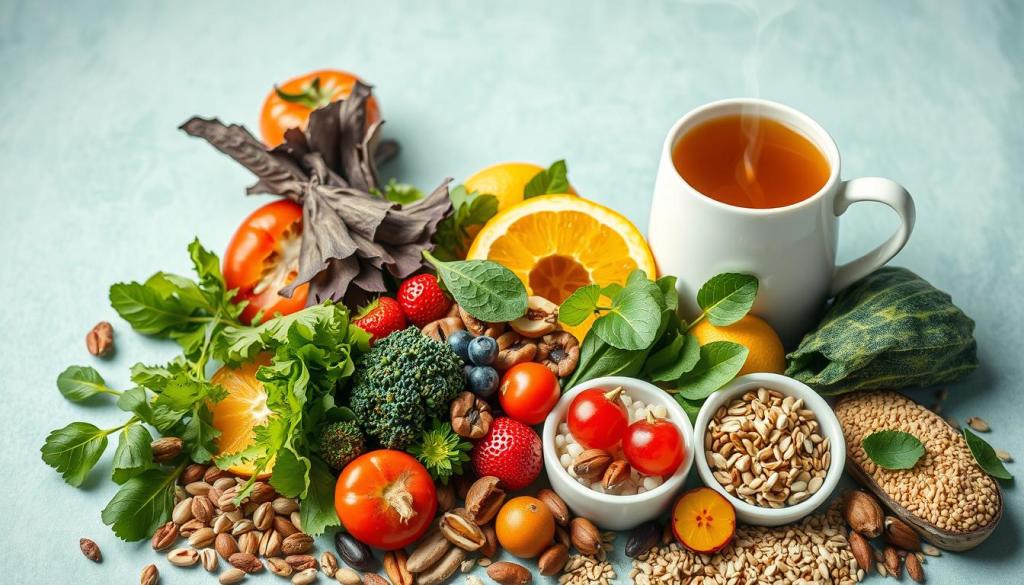
A balanced diet is key for a healthy brain. It includes essential vitamins, minerals, and fatty acids. These nutrients help the brain work well.
Omega-3 fatty acids are very important. They help the brain stay stable, especially after injuries. Foods like salmon improve memory and focus.
On the other hand, eating too much fat can harm the brain. It can lead to memory loss. Eating whole foods like fruits and lean proteins is better for the brain.
Antioxidants and B vitamins also boost brain function. Walnuts and almonds have Vitamin E, which fights brain damage. Avocados, full of folate, help with memory.
Eating colorful foods is good for both body and mind. Foods like dark chocolate and turmeric keep the mind sharp. A balanced diet helps keep the brain healthy for longer.
Practical Tips for Maintaining Brain Health
Healthy lifestyle choices are key to keeping your brain sharp. Simple changes can make a big difference in your brain’s health. Try these tips to boost your mental sharpness and improve your life.
Prioritize Adequate Sleep
Enough sleep is crucial for your brain’s recovery and function. While you sleep, your brain sorts out memories and cleans out toxins. Aim for 7-9 hours of sleep each night to help your brain work well.
Not getting enough sleep can hurt your focus, decision-making, and memory. It can also make it harder to keep your brain active.
Engage in Regular Physical Activity
Exercise is important for brain health. It boosts blood flow to the brain, giving it the oxygen and nutrients it needs. Activities like walking, swimming, or yoga help create new brain cells.
Try to do at least 150 minutes of moderate exercise each week. This helps keep your brain sharp and improves memory over time.
Conclusion
Adding green tea to your diet is a smart move for your brain health. It’s packed with good stuff like EGCG and GCG. These help keep your brain sharp and working well for longer.
Drinking green tea regularly can make your mind clearer and your mood better. It’s a great way to boost your brain power. Plus, it’s tasty and easy to add to your daily routine.
Green tea is more than just a drink; it’s a key to better brain health. It helps lower the risk of brain problems and improves focus and memory. By drinking green tea, you’re taking care of your brain and living a healthier life.
FAQ
What is the best tea for brain health?
Green tea is the top choice for brain health. It’s packed with polyphenols and antioxidants. These help keep your mind sharp and emotions stable.
How does green tea benefit cognitive function?
Green tea boosts memory and mood thanks to its polyphenols, especially EGCG. It also protects the brain, making it a great choice for thinking clearly.
What are polyphenols and how do they affect brain health?
Polyphenols in green tea fight oxidative stress and inflammation. These are linked to brain decline. They help improve memory and brain function.
How can I enjoy green tea?
Enjoy green tea by brewing it the old-fashioned way. Use high-quality loose-leaf or bagged tea. Or, try refreshing iced green tea. Add mint for extra taste.
Are there other types of tea that support brain health?
Yes, teas like ginkgo biloba and turmeric also support brain health. They improve blood flow and fight inflammation.
What additional strategies can I use for better brain health?
Besides green tea, eat low-mercury fish, berries, eggs, nuts, and seeds. These foods boost brain health.
How important is a balanced diet for brain function?
A balanced diet is key for brain health. It gives your brain the vitamins, minerals, and fats it needs. It also lowers the risk of brain decline.
What lifestyle habits can help maintain brain health?
Good sleep and regular exercise are essential. They improve blood flow to the brain. This supports thinking and keeps the brain healthy.
Source Links
- The Best Tea for Better Brain Health, According to Dietitians – https://www.eatingwell.com/the-best-tea-for-better-brain-health-8722902
- The Best Tea for Better Brain Health, According to Dietitians – https://www.aol.com/best-tea-better-brain-health-110000824.html
- Effects of Matcha Green Tea Powder on Cognitive Functions of Community-Dwelling Elderly Individuals – https://www.ncbi.nlm.nih.gov/pmc/articles/PMC7760932/
- Function of Green Tea Catechins in the Brain: Epigallocatechin Gallate and its Metabolites – https://www.ncbi.nlm.nih.gov/pmc/articles/PMC6696481/
- Green tea: Health benefits, side effects, and research – https://www.medicalnewstoday.com/articles/269538
- 10 Evidence-Based Benefits of Green Tea – https://www.healthline.com/nutrition/top-10-evidence-based-health-benefits-of-green-tea
- Green Tea, A Medicinal Food with Promising Neurological Benefits – https://www.ncbi.nlm.nih.gov/pmc/articles/PMC8033961/
- Does green tea offer cognitive and sleep benefits? – https://www.nature.com/articles/d42473-023-00394-0
- How green tea could help improve mental task performance – https://www.medicalnewstoday.com/articles/roasted-green-tea-a-japanese-staple-could-boost-cognitive-performance
- 10 Best Teas for Focus: Boost your Brain with Tea – https://ujimatchatea.com/blogs/news/best-teas-for-focus?srsltid=AfmBOooj0S9TUY8wlRGdOjAn1Idvps3sWUOdN7sSYvKUEF0vVTqUGt1Z
- The importance of tea to look after your brain – Dilston Physic Garden – https://dilstonphysicgarden.com/the-improtance-of-tea-to-look-after-your-brain/
- The Top 6 Teas for Focus, Concentration, & Mental Clarity – https://www.teamiblends.com/blogs/lifestyle/top-teas-focus-concentration?srsltid=AfmBOoogZ7nNQ-mwiVZj_N-6A6MdkU9YuXjkPq5HrroyZ2mRH6izsrWS
- Antioxidants In Tea – By Tea Type – https://www.tea-and-coffee.com/blog/antioxidants-in-tea
- Frontiers | Green tea improves cognitive function through reducing AD-pathology and improving anti-oxidative stress capacity in Chinese middle-aged and elderly people – https://www.frontiersin.org/journals/aging-neuroscience/articles/10.3389/fnagi.2022.919766/full
- Should You Drink More Green Tea? 10 Surprising Health Benefits – https://www.health.com/nutrition/benefits-green-tea
- Brain Benefits Of Green Tea – https://www.lifeextension.com/magazine/2021/3/green-tea-for-brain-health?srsltid=AfmBOoosZmtVTINKK_q0jn3UA6fdk75kQnq1UrvfZr7Plv1MnYxWzrTF
- Can green tea boost your brainpower? | CNN – https://www.cnn.com/2016/06/16/health/green-tea-health-brain-down-syndrome/index.html
- Green Tea Suppresses Brain Aging – https://www.ncbi.nlm.nih.gov/pmc/articles/PMC8401650/
- No title found – https://www.rupahealth.com/post/health-benefits-of-green-tea-and-how-to-include-it-in-your-diet
- PDF – https://gwaar.org/api/cms/viewFile/id/2006419
- The 10 Best Types of Tea for Your Health, Ranked – https://www.health.com/types-of-tea-8619678
- The top 5 teas for health – https://www.medicalnewstoday.com/articles/321243
- These 13 Herbal Teas Can Help You Reduce Your Stress and Improve Your Brain Health – https://www.healthline.com/health/mental-health/tea-for-stress
- Check Out These Foods to Help Keep Your Brain and Memory Strong – Healthy Homefront – https://healthyhomefront.com/stay-well/check-out-these-foods-to-help-keep-your-brain-and-memory-strong/
- 10 Reasons Green Tea Is Good for You – https://health.clevelandclinic.org/green-tea-health-benefits
- Brain-Boosting Beverages – https://www.webmd.com/brain/ss/slideshow-brain-boosting-beverages
- Flavonoids and brain health: multiple effects underpinned by common mechanisms – https://www.ncbi.nlm.nih.gov/pmc/articles/PMC2775888/
- Flavonoids are a flavorful way to boost heart and brain health – https://www.heart.org/en/news/2022/03/22/flavonoids-are-a-flavorful-way-to-boost-heart-and-brain-health
- Eat Flavonoids to Reduce Inflammation and Improve Brain Health – https://chesapeakeregional.com/blog/eat-flavonoids-reduce-inflammation-and-improve-brain-health
- Brain foods: the effects of nutrients on brain function – https://www.ncbi.nlm.nih.gov/pmc/articles/PMC2805706/
- The 10 Best Foods to Eat for a Healthy Brain – New Wave Physicians Group – https://newwavephysicians.com/brain-health-the-10-best-foods-to-eat-for-a-healthy-brain/
- 15 “Brain Foods” That May Help Preserve Your Memory – https://www.unitypoint.org/news-and-articles/15-brain-foods-that-may-help-preserve-your-memory
- Brain Benefits Of Green Tea – https://www.lifeextension.com/magazine/2021/3/green-tea-for-brain-health?srsltid=AfmBOoq-zBE-DVw598ko9fppxdeMtfuqRQWpqVQJqkQYzFuNTyc1l0DZ
- Effects of green tea and roasted green tea on human responses – Scientific Reports – https://www.nature.com/articles/s41598-024-59383-y
- Frontiers | Acute effects of (–)-gallocatechin gallate-rich green tea extract on the cerebral hemodynamic response of the prefrontal cortex in healthy humans – https://www.frontiersin.org/journals/neuroergonomics/articles/10.3389/fnrgo.2023.1136362/full



 trim down and shape up
Leave a comment