


Coffee is a favorite drink for many in the United States. It’s a great way to start the day or relax in the evening. But, it’s important to know that coffee might not mix well with some medicines. This is because coffee can change how your body absorbs certain drugs, which might make them less effective or cause more side effects.
In the U.S., over 37 million people have diabetes, and about one in ten take antidepressants every day. It’s key to know how coffee can affect these medicines. For example, coffee can cut the absorption of thyroid medication by more than half. It can also impact Alzheimer’s drugs, making them less effective. By understanding these interactions, you can make choices that keep you healthy.
Key Takeaways
- Understand the risks of coffee interacting with medications to safeguard your health.
- Many Americans rely on medications affected by coffee, including those for diabetes and depression.
- Timing is crucial when consuming coffee and taking certain medications, particularly those for thyroid and Alzheimer’s conditions.
- Caffeine can significantly reduce the absorption of some essential medications, compromising their effectiveness.
- It’s essential to consult healthcare professionals regarding coffee intake when on specific medication regimens.
Introduction to the Risks of Mixing Coffee with Medications
Coffee is a big part of many people’s daily lives in the United States. Many enjoy a cup of coffee with breakfast or while taking their meds. It’s important to know how mixing coffee with medications can be risky.
Research shows that caffeine can change how our bodies process medications. It can make some meds work faster or slower. For example, it can speed up the absorption of some meds, but slow down others like thyroid medications.
Knowing how coffee and medications interact is key to staying healthy. You might be surprised at how coffee can cause problems. The way caffeine affects drug absorption is complex, so it’s important to watch your morning routine if you take meds.
Keeping an eye on your caffeine intake and when you drink coffee can help protect your health. Learning more about this topic can help you make better choices for your well-being.
Understanding How Coffee Affects Medication Absorption
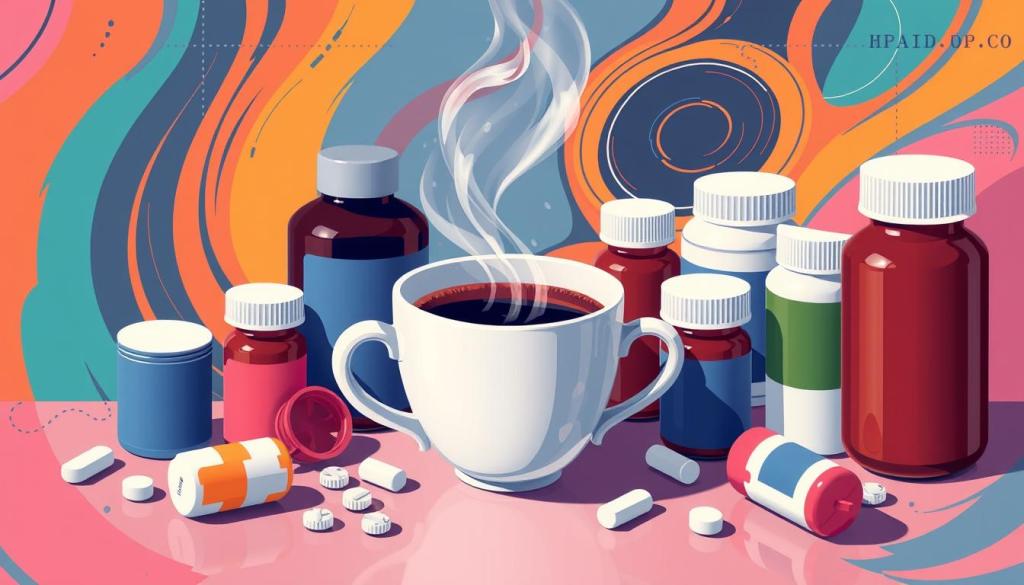
Coffee’s role in how our body absorbs medicine is complex. This is mainly because of its caffeine. Caffeine makes our stomach work harder, which can change how medicines are absorbed. For instance, drinking 2-3 cups of coffee can cut midazolam absorption by 75%.
But, caffeine can also help some medicines work better. Drinking two cups of coffee with 650-mg aspirin boosts aspirin absorption. This shows that caffeine can have both positive and negative effects on medicine absorption.
Some medicines, like blood thinners, can have their levels go up with caffeine. This increases the risk of bleeding. Also, people taking anti-seizure drugs might see more seizures if they drink caffeine. This is why it’s important to be careful with caffeine and medicine.
Knowing how coffee affects medicine absorption is key. It shows why when we take our medicine matters. Not all medicines react the same way, and timing can help avoid problems. Always think about how caffeine might change how your medicines work.
Antidepressants: MAO Inhibitors and Coffee

When we talk about coffee and antidepressants, especially MAO inhibitors, knowing about caffeine is key. MAO inhibitors, like phenelzine and tranylcypromine, work less well with coffee. Caffeine can block these medicines from being absorbed, making treatment less effective.
Effects of Caffeine on Antidepressant Effectiveness
Caffeine can mess with how neurotransmitters work, which might lessen the impact of MAO inhibitors. Too much caffeine can make you feel more anxious and have trouble sleeping. This can make managing depression harder.
Potential Side Effects and Risks
Drinking coffee with MAO inhibitors can make side effects worse. You might feel your heart racing, jittery, or have big mood swings. It can also raise your blood pressure too fast.
It’s important to watch out for signs like severe headaches, nausea, or confusion. These could mean you’re having a serious problem with your blood pressure. Always talk to your doctor about what you can eat and when to take your meds.
Thyroid Medications and the Impact of Coffee

It’s important to know how thyroid meds, like levothyroxine, work with coffee. Studies show coffee can lower how well levothyroxine works. To get the most from your meds, it’s key to follow certain rules.
How Coffee Reduces Absorption of Levothyroxine
Levothyroxine works best when taken in a specific way. Caffeine can make it harder for your body to absorb it. Drinking coffee with your meds can make them less effective.
Recommendations for Timing Your Medication
Doctors say take levothyroxine on an empty stomach in the morning. Wait 30-60 minutes before having coffee or other drinks. If you can’t skip coffee, try liquid levothyroxine like Tirosint-Sol. It’s less affected by caffeine. These tips help keep your thyroid hormones stable.
Antibiotics: Ciprofloxacin and Its Interaction with Coffee

Ciprofloxacin is a common antibiotic used for many infections. It has a notable interaction with coffee. Caffeine can affect how well the antibiotic is absorbed, which might make it less effective. It’s best to be careful about when you drink coffee while taking this antibiotic.
Why You Should Avoid Taking Ciprofloxacin with Coffee
Drinking coffee with ciprofloxacin can cause problems. Caffeine stays in your system longer when you take ciprofloxacin. This can make you feel jittery and your heart beat faster. It also changes how caffeine is broken down in your body.
Ciprofloxacin also slows down how caffeine is cleared from your body. This means caffeine’s effects last longer. It can make you feel more anxious and affect your heart rate.
To get the most out of your antibiotic, don’t drink coffee for at least two hours before and after taking ciprofloxacin. This helps your body absorb the antibiotic better and reduces side effects.
| Interaction | Effect | Details |
|---|---|---|
| Caffeine Half-Life | Increased | From 5.2 to 8.2 hours |
| Caffeine Clearance | Decreased | From 106 to 58.2 ml/min per 1.73 m² |
| Caffeine Concentration Increase | Significant | Area under the curve increased by >50% |
| Potential Side Effects | Heightened | Nervousness, rapid heart rate |
| Optimal Timing | Recommended | Avoid coffee 2 hours before and after ciprofloxacin |
Antihistamines: Taking Allergy Medications with Coffee

Many people use antihistamines to fight allergies. But mixing these with coffee can lead to unexpected effects. Caffeine’s stimulant properties can mix badly with antihistamines.
Risks of Increased Stimulant Effects
Drinking coffee with antihistamines can be risky. These medications already have stimulant parts. This can cause:
- Increased restlessness
- Jitteriness
- Elevated heart rate
For those taking diphenhydramine (Benadryl) or loratadine (Claritin), caffeine can make things worse. It’s important to talk to a doctor about how to manage allergies and coffee together.
| Antihistamine | Potential Effects with Coffee |
|---|---|
| Diphenhydramine (Benadryl) | Increased anxiety and jitteriness |
| Loratadine (Claritin) | Heightened nervousness and restlessness |
| Cetirizine (Zyrtec) | Potential increase in side effects like drowsiness |
Blood Pressure Medications: Concerns with Concurrent Coffee Use

Managing blood pressure means watching how coffee affects your meds. Many people take propranolol and felodipine to stay healthy. But, caffeine can make these meds less effective. Knowing how caffeine affects your treatment can help avoid risks.
How Caffeine Influences Medication Effectiveness
Research shows that drinking coffee regularly can raise blood pressure. This can undo the good work of blood pressure meds. Caffeine narrows blood vessels, causing a quick blood pressure increase.
Studies also link moderate coffee drinking to a lower heart failure risk. But, if you’re on blood pressure meds, too much coffee can be bad. It’s important to be careful.
Talking to your doctor about your coffee habits is key. They can help you find the right balance. Drinking coffee at times not close to when you take your meds can help. This way, you can still enjoy coffee without risking your medication’s effectiveness.
Bronchodilators: The Influence of Coffee on Asthma Treatment

People taking bronchodilators like theophylline for asthma should know about coffee’s effects. Caffeine might help lung function a bit, but it can also make side effects worse when mixed with asthma meds.
Potential Increased Side Effects
Caffeine can help lung function for a few hours, giving relief to those with asthma. This effect is seen in people with mild to moderate symptoms. But, using bronchodilators with caffeine can cause caffeine side effects like headaches, a faster heart rate, and anxiety.
The FDA says healthy adults can safely have up to 400 milligrams of caffeine a day. But, mixing it with asthma meds is a concern. Energy drinks can have up to 250 milligrams of caffeine, which is risky for asthma patients. So, it’s important to think about how caffeine affects your bronchodilator treatment.
To avoid bad reactions, try to drink coffee at times that don’t clash with your asthma meds. Understanding how caffeine works with bronchodilators can help manage your asthma better.
Osteoporosis Medications: Timing with Coffee Consumption
Timing is key when taking osteoporosis medications. Drugs like risedronate might not work as well if you drink coffee with them. This can mess up how your body absorbs the medicine. Knowing when to take your meds can make a big difference for people with osteoporosis.
How Coffee Affects Drug Absorption
High caffeine doses, like 800 mg, can lead to more calcium loss in urine. Drinking about two cups of coffee a day is usually okay. But, drinking eight cups a day can cause a huge increase in calcium loss. This can make osteoporosis worse and reduce how well your meds work.
It’s best to take your osteoporosis meds with plain water, not coffee. This helps your body absorb the medicine better. If you have osteoporosis, try to limit caffeine and stick to the right timing for your meds. This can help keep your bones strong.
| Caffeine Consumption (mg) | Calcium Excretion Increase (%) | Medication Recommendation |
|---|---|---|
| 200 mg (2 cups) | Minimal | Safe for medication |
| 400 mg (4 cups) | Safe | Safe for medication |
| 800 mg (8 cups) | 77% | Avoid with medications |
Pain Relievers: The Interaction of Aspirin and NSAIDs with Coffee

Coffee can change how pain relievers work, especially NSAIDs like aspirin. Drinking coffee might seem okay, but it can mix with these drugs in ways that affect your health.
NSAIDs might work better when you drink coffee. Caffeine in coffee can make some pain relievers more effective. Studies show that mixing paracetamol, ibuprofen, and caffeine can help with headaches more than each one alone.
Even though caffeine might help with pain, be careful. Older adults might feel side effects like stomach problems or trouble sleeping more. Pregnant women should talk to doctors about the risks and benefits. Also, kids under 18 should not take aspirin during viral infections because of Reye’s syndrome.
Knowing how coffee affects NSAIDs can help you make safer choices. Always talk to a doctor for advice on timing and dosage. Making informed choices helps you use pain relievers safely and effectively.
Diabetes Medications: Coffee’s Impact on Blood Sugar Levels
Managing diabetes means watching what you eat and your meds. Caffeine in coffee can change blood sugar levels. Knowing how coffee effects diabetes is key to keeping blood sugar in check.
How Caffeine Can Worsen Diabetes Management
Caffeine can mess with insulin and blood sugar levels. A study found that people with type 2 diabetes had 8% higher blood sugar on caffeine days. Drinking about 200 milligrams of caffeine, like in one or two cups of coffee, can really affect these levels.
Regular coffee drinkers with diabetes might not have higher blood sugar. But, how they react to caffeine can change based on age, weight, and how much caffeine they usually drink.
Studies show caffeine can lower insulin sensitivity and increase insulin production. Some research even suggests coffee might lower the risk of type 2 diabetes. This is because coffee has antioxidants that fight inflammation.
But, people on diabetes meds should be careful. Caffeine can make it harder to manage blood sugar. Doctors say decaffeinated coffee might be a better choice. It offers antioxidants without hurting insulin sensitivity.
| Study | Findings |
|---|---|
| Huxley et al. (2009) | Systematic review on coffee, tea, and diabetes risk. |
| Ding et al. (2014) | Meta-analysis on caffeinated coffee and diabetes risk. |
| Yarmolinsky et al. (2015) | Connection between coffee consumption and glucose homeostasis. |
| Beaudoin et al. (2011) | Impact of caffeine on glucose tolerance in healthy adults. |
| Gavrieli et al. (2013) | Effects of caffeine on glucose and insulin levels based on gender and BMI. |
Knowing how caffeine affects blood sugar helps make smart choices about coffee when taking diabetes meds.
10 Medications Affected by Coffee
Coffee is loved by many, but it can affect how well some medicines work. It’s important to know how coffee and medicines interact. This knowledge helps manage medicines better. Here are ten medicines that coffee can affect, along with tips on how to use them safely.
Summary of Affected Medications and Best Practices
| Medication | Interaction with Coffee | Best Practices |
|---|---|---|
| Antidepressants (e.g., fluvoxamine, amitriptyline) | Caffeine can affect absorption and efficacy. | Avoid coffee for at least 2 hours post-medication. |
| High Blood Pressure Medications (e.g., amlodipine) | Coffee may hinder drug absorption. | Monitor blood pressure closely and time coffee consumption appropriately. |
| Bronchodilators (e.g., aminophylline) | Coffee can increase side effects and reduce efficacy. | Consult a healthcare provider about caffeine intake. |
| Diabetes Medications (e.g., insulin) | Caffeine can elevate insulin and blood sugar levels. | Track blood sugar levels and discuss coffee habits with a doctor. |
| Cold and Allergy Medications (e.g., pseudoephedrine) | Increased central nervous system activity may occur. | Limit caffeine intake while using these medications. |
| Beta-Blockers (e.g., metoprolol) | Caffeine can reduce medication effectiveness. | Avoid excessive coffee consumption; discuss with a pharmacist. |
| Theophylline | Caffeine can mimic stimulant effects, increasing side effects. | Maintain consistent caffeine consumption for stable effects. |
| Antipsychotics | Caffeine may interfere with psychiatric medication absorption. | Coordinate caffeine intake with your healthcare provider. |
| Stimulants (e.g., ADHD medications) | Combining them can produce intensified side effects. | Consult your doctor about coffee consumption during treatment. |
| Opioids | Caffeine may enhance side effects and affect pain management. | Discuss your coffee routine with your prescribing physician. |
Following these guidelines can improve how you manage your medicines. It also lowers the chance of bad side effects. Always talk to your healthcare provider about coffee and your medicines.
Conclusion
It’s important to know how coffee and medications interact. Over 90 percent of adults in the U.S. drink caffeine often. This means mixing coffee with some medicines can have bad effects.
Coffee can change how well medicines work in your body. Knowing this can help you stay healthy. So, it’s key to be informed about these interactions.
Knowing which medicines don’t mix well with caffeine is a big step. Talking to your doctor can help you plan safely. This way, you can enjoy your coffee without risking your health.
By focusing on safety, you can make choices that help your health. Keep an eye on how caffeine and medicines interact. Always talk to your doctor about your caffeine use while taking medicines.
FAQ
Can I drink coffee while taking antidepressants like MAO inhibitors?
It’s wise to avoid coffee with MAO inhibitors like phenelzine or tranylcypromine. Caffeine can mess with how these meds work. This might make them less effective and cause side effects like trouble sleeping and feeling anxious.
How does coffee affect thyroid medications like levothyroxine?
Drinking coffee can cut down how much levothyroxine your body absorbs. It’s best to take this med on an empty stomach with water. Wait at least 30 minutes before having coffee.
Is it safe to consume coffee with antibiotics like ciprofloxacin?
No, mixing coffee with ciprofloxacin isn’t safe. Caffeine can make this antibiotic less effective. Try to avoid coffee for at least 2 hours before and after taking it.
What should I know about antihistamines and coffee?
Drinking coffee with antihistamines can make you feel more jittery and restless. Always talk to your doctor about when to take your allergy meds and coffee.
Can blood pressure medications interact with coffee?
Yes, coffee can make blood pressure meds like propranolol and felodipine less effective. Caffeine can also make your blood pressure go up. So, it’s important to time your coffee carefully.
How does coffee impact bronchodilators like theophylline?
Coffee can make bronchodilators like theophylline less effective. It can also make side effects like headaches and feeling anxious worse. Try to space out your coffee and medication.
Should I take osteoporosis medications with coffee?
No, it’s better to take osteoporosis meds like risedronate with plain water. Coffee can stop these meds from being absorbed well, making them less effective.
What are the risks of taking pain relievers with coffee?
Mixing pain relievers like aspirin and NSAIDs with coffee can irritate your stomach and make side effects worse. Always check with your doctor about the best timing.
How does coffee affect diabetes medications?
Caffeine can mess with insulin and blood sugar levels, making diabetes harder to manage. Talk to your doctor about how much coffee is safe for you.
Are there any best practices for taking medications with coffee?
Always talk to your doctor about when to take your meds and coffee. They can give you advice that’s right for you to avoid bad interactions and get the best results.
Source Links
- Coffee Lovers Beware: Don’t Mix Your Cup of Joe With These Medications – https://www.health.com/medications-to-not-mix-with-coffee-7561446
- 5 common medicines you must never have with tea of coffee | – Times of India – https://timesofindia.indiatimes.com/life-style/health-fitness/health-news/5-common-medicines-you-must-never-have-with-tea-of-coffee/articleshow/112325207.cms
- COFFEE: Overview, Uses, Side Effects, Precautions, Interactions, Dosing and Reviews – https://www.webmd.com/vitamins/ai/ingredientmono-980/coffee
- Caffeine – Alcohol and Drug Foundation – https://adf.org.au/drug-facts/caffeine/
- The Effect of Coffee on Pharmacokinetic Properties of Drugs : A Review – https://www.ncbi.nlm.nih.gov/pmc/articles/PMC7397437/
- What Medications Should Not Be Taken With Caffeine? – https://www.buzzrx.com/blog/what-medications-should-not-be-taken-with-caffeine
- Pharmacology of Caffeine – Caffeine for the Sustainment of Mental Task Performance – https://www.ncbi.nlm.nih.gov/books/NBK223808/
- Avoid the combination of high-tyramine foods and MAOIs – https://www.mayoclinic.org/diseases-conditions/depression/expert-answers/maois/faq-20058035
- Caffeine enhances the antidepressant-like activity of common antidepressant drugs in the forced swim test in mice – https://www.ncbi.nlm.nih.gov/pmc/articles/PMC4715838/
- The Truth Behind Coffee and Thyroid Medication – https://www.buzzrx.com/blog/the-truth-behind-coffee-and-thyroid-medication
- Why Thyroid Medication and Coffee Don’t Mix – https://www.verywellhealth.com/coffee-and-thyroid-medication-3233255
- Drinking coffee does not hinder the absorption of liquid thyroid medication – https://www.endocrine.org/news-and-advocacy/news-room/2022/drinking-coffee-does-not-hinder-the-absorption-of-liquid-thyroid-medication
- Interaction between oral ciprofloxacin and caffeine in normal volunteers. – https://www.ncbi.nlm.nih.gov/pmc/articles/PMC172463/
- Beware Coffee and Cipro and Other Drug Interactions! – https://www.peoplespharmacy.com/articles/beware-coffee-and-cipro-and-other-drug-interactions
- Danger: Don’t mix these 8 meds with coffee | MDLinx – https://www.mdlinx.com/article/danger-dont-mix-these-8-meds-with-coffee/xmjpK7Br2XCuiIKgZgBi1
- Effects of coffee intake on airway hypersensitivity and immunomodulation: an in vivo murine study – https://www.ncbi.nlm.nih.gov/pmc/articles/PMC10375320/
- Impact of Coffee Consumption on Cardiovascular Health – https://www.ncbi.nlm.nih.gov/pmc/articles/PMC10262944/
- Conflicting Effects of Coffee Consumption on Cardiovascular Diseases: Does Coffee Consumption Aggravate Pre-existing Risk Factors? – https://www.mdpi.com/2227-9717/8/4/438
- Coffee consumption and cardiometabolic health: a comprehensive review of the evidence – GeroScience – https://link.springer.com/article/10.1007/s11357-024-01262-5
- Coffee and Asthma | Allergy & Asthma Network – https://allergyasthmanetwork.org/news/coffee-and-asthma/
- Caffeine for asthma – https://www.ncbi.nlm.nih.gov/pmc/articles/PMC7053252/
- Caffeine cuts close to the bone when it comes to osteoporosis – https://www.unisa.edu.au/media-centre/Releases/2021/caffeine-cuts-close-to-the-bon–when-it-comes-to-osteoporosis/
- Does coffee drinking have beneficial effects on bone health of Taiwanese adults? A longitudinal study – BMC Public Health – https://bmcpublichealth.biomedcentral.com/articles/10.1186/s12889-018-6168-0
- Caffeine and Osteoporosis: What’s Your Risk of Bone Loss? – https://www.verywellhealth.com/caffeine-and-osteoporosis-6829369
- Aspirin And Caffeine Oral: Uses, Side Effects, Interactions, Pictures, Warnings & Dosing – WebMD – https://www.webmd.com/drugs/2/drug-57697/aspirin-and-caffeine-oral/details
- Synergistic Effects of Caffeine in Combination with Conventional Drugs: Perspectives of a Drug That Never Ages – https://www.ncbi.nlm.nih.gov/pmc/articles/PMC10224171/
- Caffeine as an analgesic adjuvant for acute pain in adults – https://www.ncbi.nlm.nih.gov/pmc/articles/PMC6485702/
- How Does Coffee Affect Your Blood Sugar? – https://www.webmd.com/diabetes/diabetes-and-caffeine
- Effects of coffee consumption on glucose metabolism: A systematic review of clinical trials – https://www.ncbi.nlm.nih.gov/pmc/articles/PMC6544578/
- Diabetes and caffeine: Pros and cons of drinking coffee – https://www.medicalnewstoday.com/articles/311180
- Five medicines you shouldn’t mix with coffee – https://www.jpost.com/health-and-wellness/nutrition/article-759661
- Caffeine: How much is too much? – https://www.mayoclinic.org/healthy-lifestyle/nutrition-and-healthy-eating/in-depth/caffeine/art-20045678
- Can You Drink Coffee While Taking Beta-Blockers? Caffeine Overdose – https://www.medicinenet.com/can_you_drink_coffee_while_taking_beta-blockers/article.htm
- Caffeine: Benefits, risks, and effects – https://www.medicalnewstoday.com/articles/285194
- Coffee health benefits: Diabetes, heart health, liver cancer, and more – https://www.medicalnewstoday.com/articles/270202
- Caffeine: MedlinePlus – https://medlineplus.gov/caffeine.html


 trim down and shape up
Leave a comment