



Starting at 30, our muscles start to shrink. Keeping our leg muscles strong is key for staying healthy as we get older. Strong legs help us move better and also boost our brain health.
Doing leg exercises regularly can improve our memory and learning. This shows that strong legs are not just for physical health. They also help keep our minds sharp as we age.
Adding leg exercises to our daily routine can make a big difference. It’s not just about staying fit. It’s also about keeping our brains healthy and strong.
Key Takeaways
- Muscle strength, especially in the legs, is crucial for cognitive function.
- Regular leg exercise can lower the risk of dementia and cognitive decline.
- More than 14 million older adults experience falls annually, with leg weakness being a primary risk factor.
- Muscle mass starts to decline at age 30, highlighting the need to maintain leg strength.
- Improved leg power is associated with better cognitive aging, as proven by studies.
The Connection Between Exercise and Brain Health
Exercise and brain health are closely linked. Studies show that physical activity boosts our mental clarity and emotional balance. It’s clear that movement has a big impact on our brain health throughout life.
How Physical Activity Enhances Cognitive Function
Research shows that regular exercise improves our brain function. It increases blood flow to the brain, helping with memory and learning. The U.S. Department of Health and Human Services suggests kids and teens do 60 minutes of activity daily. Adults should aim for 150 to 300 minutes weekly.
This activity level helps produce neurotrophins, which are crucial for brain health and cognitive resilience.
- Enhances memory retention
- Improves problem-solving skills
- Boosts emotional stability
Scientific Studies Linking Exercise to Brain Health
Many studies have found a link between exercise and brain health. Sedentary people are nearly twice as likely to experience cognitive decline. A study on older adults found that more physical activity reduced dementia risk by 31%.
This shows how important exercise is for keeping our minds sharp and protecting against age-related brain decline.
The following table displays key findings from recent studies in brain research linking physical activity to enhanced cognitive outcomes:
| Study Focus | Exercise Type | Cognitive Outcomes |
|---|---|---|
| Impact on Memory | Aerobic exercise | 30% improvement in memory recall |
| Dementia Risk | Strength training | 31% reduction in dementia risk |
| Cognitive Function in Older Adults | Mixed exercise regimen | Enhanced problem-solving skills by 25% |
Why Leg Exercise is Essential for Aging Adults
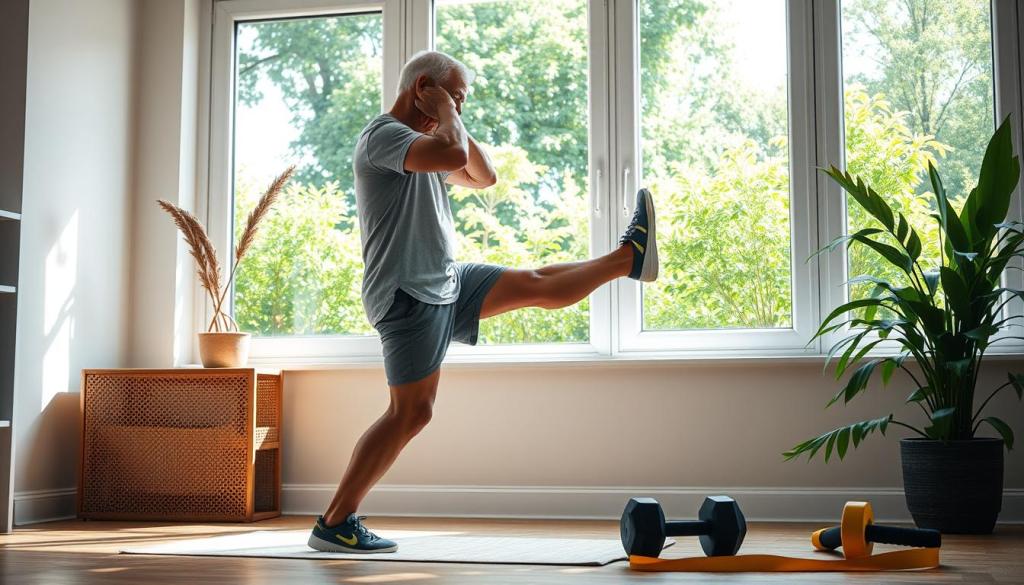
As we get older, leg exercises become more important. They help us stay physically stable and keep our minds sharp. Leg workouts boost balance and mobility, key for older adults.
Studies show a strong link between leg strength and brain function. This makes leg exercises crucial for our overall health.
The Role of Leg Strength in Cognitive Health
Leg strength affects both our physical and mental health. Research shows that strong legs reduce the risk of disability and early death. The Health, Aging, and Body Composition Study found this link in over 3,000 participants.
Strong legs improve blood flow to the brain. This supports memory and thinking skills. So, leg exercises are vital for both physical and mental health as we age.
How Leg Power Affects Brain Function
Studies have found a strong connection between leg power and brain function. A study with 324 female twins showed that leg strength predicts cognitive changes over ten years. Leg exercises can help keep our brains healthy as we age.
Strong leg muscles are linked to more gray matter in the brain. This makes leg workouts a smart way to boost cognitive health.
Understanding Brain Health and Aging

Brain health covers many areas, like thinking, feeling, and sensing. We often see brain aging as something we can’t stop. But knowing how it affects us can help us keep our minds sharp.
As we get older, our brains change in ways that can make it harder to remember things or learn new stuff. By understanding these changes, we can take steps to keep our brains healthy for years to come.
What Is Brain Health?
Brain health means our brain works well in many areas, like thinking, feeling, and moving. It’s shaped by our genes, how we live, and our surroundings. Keeping our brain’s connections strong and making new neurons is key.
Regular exercise is important for making new brain cells. This helps our brain stay sharp as we age.
Aging and Its Impact on Cognitive Abilities
As we get older, our brain faces challenges like slower thinking and memory loss. Studies show our neurons might not work as well, causing these problems. But our brains can change and recover, thanks to neuroplasticity.
Staying active is a good way to help our brain. Walking, dancing, and lifting weights improve our physical health and help our brain stay strong against aging.
Why is Leg Strength Linked to Cognitive Health?
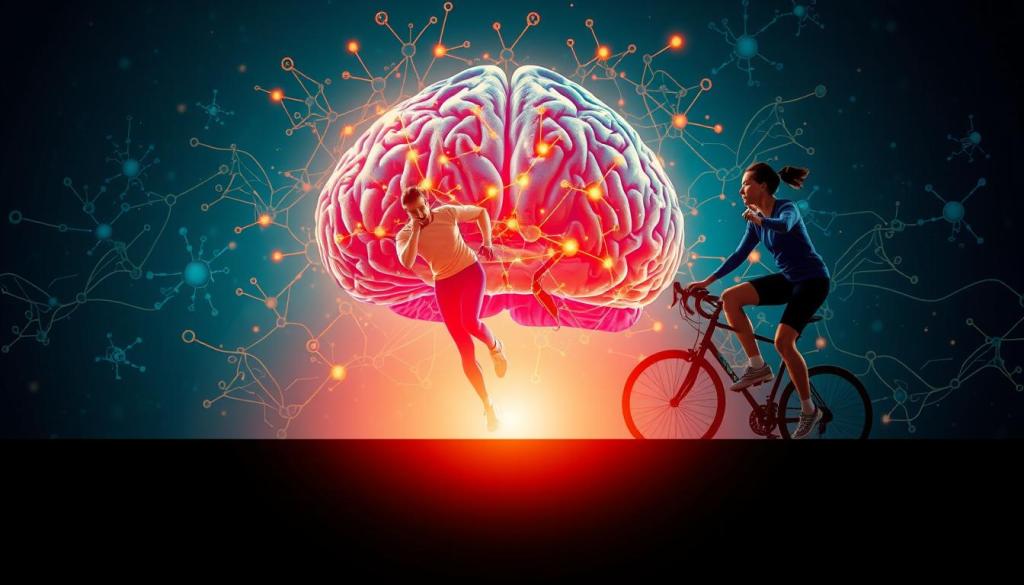
Research shows a deep connection between leg strength and brain health. Regular exercise boosts leg strength, which is good for our overall health. It shows that strong legs can improve our brain function.
Research That Highlights the Connection
A big study with over 300 twins, especially twin sisters aged 43 to 73, found a strong link. They used special gym equipment to measure leg strength. Brain function was tested with computer tasks over 10 years.
The study found a clear link between strong legs and better brain function. Even with lifestyle and health factors considered, strong legs were linked to better thinking skills. Those with stronger legs were 34% less likely to have low brain function.
Social and Physical Benefits of Strong Legs
Strong legs offer more than just brain benefits. They help with balance and endurance for daily tasks. They also boost social interactions and mental health.
Activities that work the legs can improve mood and reduce depression. This, in turn, helps our brain function better.
| Study Sample Size | Age Range | Cognitive Performance Improvement | Percentage Reduction in Low Cognitive Function |
|---|---|---|---|
| 300 Twins | 43-73 years | Associated with higher cognitive performance (β = 0.01; p = 0.039) | 34% (OR = 0.66; p = 0.02) |
| 1508 Adults | 60-85 years | Lower extremity strength linked to cognitive enhancement | SignIFICant cognitive health link through leg strength benefits |
Falling is a Leading Cause of Injury-Related Deaths in Older Adults

Falling is a big worry for older adults. The numbers show how serious it is. We must work on preventing falls to keep our seniors safe and healthy.
Improving leg strength is key. It makes us more stable and helps our overall health.
Statistics on Falls Among Older Adults
More than one in four people over 65 fall each year. This leads to about 3 million emergency visits. Around 1 million are hospitalized, with 319,000 for hip fractures.
These injuries can be very serious. One in ten falls causes injuries that need medical help.
How Improving Leg Strength Can Prevent Falls
Strengthening our legs is vital for preventing falls. Exercises for leg muscles can lower fall risks. They also improve balance and stability.
Yoga, Pilates, and tai chi are great for balance and strength. Adding these to our routine can greatly reduce fall risks. It helps us stay healthy and independent as we age.
Walking Speed Matters Too
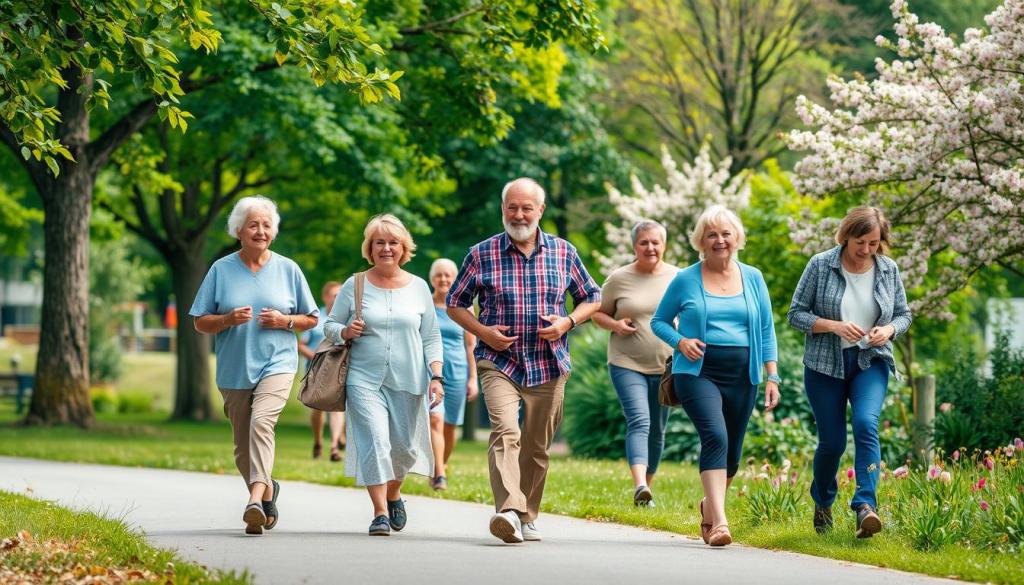
Walking speed is key to our brain health. Research shows a strong link between walking pace and brain function. Slower walkers might see cognitive decline, so it’s vital to boost our pace.
The Correlation Between Walking Speed and Brain Health
Fast walkers often have longer telomeres, a sign of youth. A UK Biobank study found that brisk walkers were 16 years younger biologically. This highlights walking speed’s impact on health and life span.
Techniques to Improve Walking Speed
To walk faster, try interval training or uphill walks. These boost fitness and brain health. Setting goals and increasing walk duration and intensity can make a big difference. It keeps walking speed optimal and may improve brain function over time.
Simple Exercises to Improve Your Leg Strength
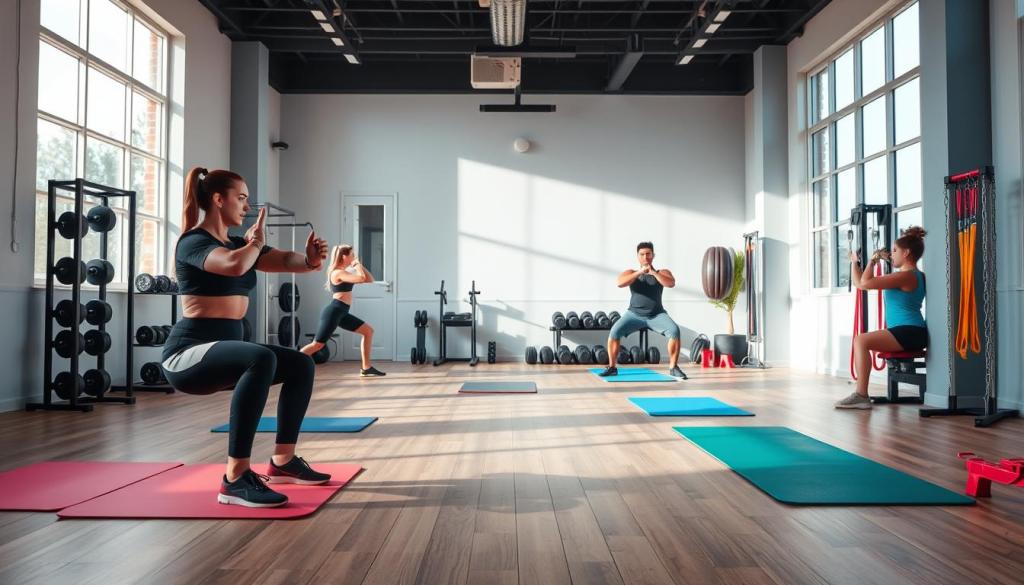
To boost our leg strength, we can add simple and advanced exercises to our routines. Squats and lunges are great for beginners. Box jumps and resistance training are more challenging but very effective. Regular strength training not only strengthens muscles but also improves brain health.
Beginner-Friendly Leg Exercises
For beginners, a few exercises can be done at home or in the gym:
- Squats: These tone the legs and shape the butt, hips, and abs.
- Chair Squats: This exercise helps ease into squats, improving balance and strength.
- Step-Ups: Step up on a platform for ten reps to build strength and endurance.
- Heel Raises: Standing heel raises strengthen the calves, doing ten reps is recommended.
- Toe Raises: Similar to heel raises, these target different leg muscles, also with ten reps.
- Single Leg Balance: Stand on one foot for 30 seconds to enhance stability.
Advanced Techniques for Enhanced Leg Power
Once we get the hang of beginner exercises, we can try more advanced ones:
- Box Jumps: Jumping onto a plyometric box tones the legs, glutes, and core.
- Indoor Cycling: It’s a great way to tone the legs, easier on the joints than running.
- Dancing: Dancing, like salsa or hip-hop, raises the heart rate and improves balance and memory.
Adding these exercises to our routine boosts strength and overall health. For best results, do three sets of each exercise with the right number of reps. Also, do aerobic activities at least twice a week, as health experts suggest.
| Exercise | Repetitions | Sets |
|---|---|---|
| Chair Squats | 2-10 | 3 |
| Step-Ups | 10 | 3 |
| Heel Raises | 10 | 3 |
| Toe Raises | 10 | 3 |
| Single Leg Balance | 30 seconds | 3 |
Physical therapy is great for those worried about balance. It provides structured guidance for safe exercises and effective strength training. Through these exercises and regular training, we can improve our leg power and support our health as we age.
Leg Exercise, Brain Health, and Aging: A Holistic Approach
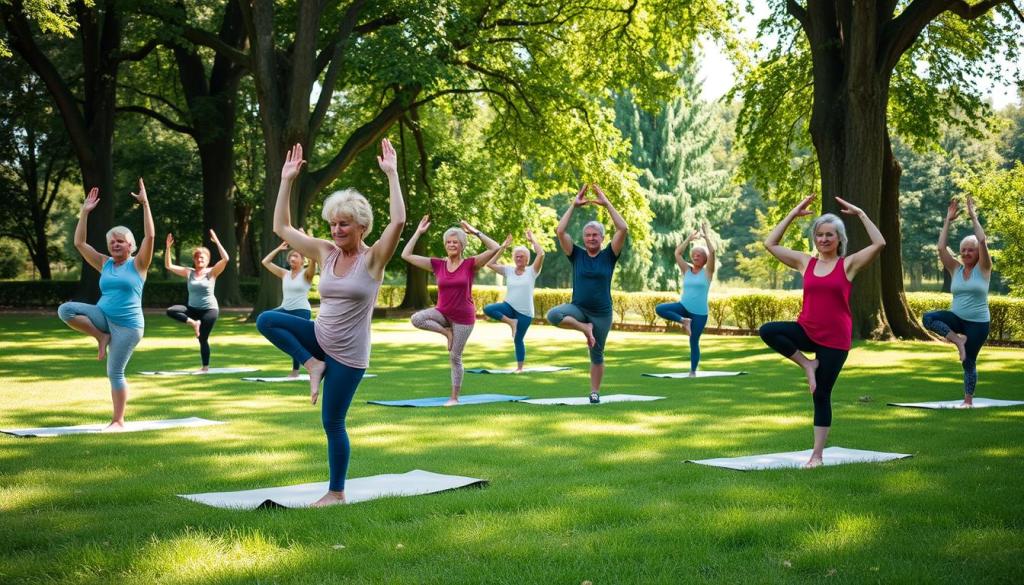
Our health is more than just physical. It’s about combining leg exercises with lifestyle changes. Leg exercises boost our lower body and brain health as we get older. It’s key to create an environment that supports both physical and mental activities.
Integrating Leg Exercises into Daily Life
Adding leg exercises to our daily routine is easy and rewarding. Here are some tips to help:
- Set a schedule: Pick specific times each week for leg exercises to stay consistent.
- Combine exercises: Mix leg workouts with social activities to make it fun.
- Utilize existing infrastructure: Use stairs instead of elevators and walk to places to strengthen your legs.
- Group workouts: Join fitness classes for social interaction and motivation.
Other Lifestyle Changes for Better Brain Health
There are many ways to improve our health beyond leg exercises:
- Regular physical activity: Aim for 150–300 minutes of moderate exercise a week for overall health.
- Cognitive stimulation: Try puzzles and reading to keep your mind sharp.
- Healthy diet: Eat foods rich in nutrients to support brain function and mood.
- Social engagement: Stay connected with friends and family for mental well-being.
- Quality sleep: Get enough sleep to keep your brain healthy.
By adding leg exercises and making lifestyle changes, we build a strong base for brain health as we age. These routines help us enjoy the benefits of holistic health and age gracefully.
Conclusion
Looking back at our journey into leg exercises, we find a strong link between physical activity and brain health. Doing leg exercises regularly boosts our physical strength and brain function as we get older. Research shows that keeping our leg muscles strong is key to keeping our brain sharp and handling age-related issues.
By focusing on exercises that boost leg power, we can lead a healthier life that supports our brain. Studies prove that exercise improves our mood, thinking, and even lowers the risk of brain diseases. Adding simple leg exercises to our daily routine helps us enjoy a better aging process.
Building strong legs is more than just staying fit; it’s a big step for our brain health. By sticking to these exercises, we improve our life quality and protect our brain as it ages. Let’s apply these insights to our lives for a brighter, healthier future.
FAQ
Why is leg strength linked to cognitive health?
Leg strength is key to brain health. Strong legs help us balance and move better. This boosts blood flow to the brain, helping with memory and thinking.
What are some simple exercises to improve leg strength?
Squats, lunges, and step-ups are great for leg strength. You can do them at home or in a gym. They’re good for everyone, no matter your fitness level.
How does improving leg strength help prevent falls?
Strong legs help prevent falls by improving balance and stability. This makes it easier to move without losing balance. It’s especially important for older adults to avoid injuries.
What is the relationship between walking speed and cognitive health?
Walking speed is linked to brain health. Slower walks might mean your brain is aging faster. Exercises like interval training can help keep your brain sharp and your body fit.
How does exercise benefit brain health as we age?
Exercise boosts brain health by improving memory and problem-solving. It also helps with emotional balance. Activities that strengthen legs are especially good for the brain.
Can social interactions contribute to cognitive health related to leg strength?
Yes, strong legs help you move more and meet people. This is good for your mental health. It can make you happier and less depressed, which is great for your brain.
How important are leg exercises in promoting physical and cognitive health?
Leg exercises are vital for staying healthy as we age. They improve balance and mobility. This helps us stay independent and keeps our brains sharp.
What lifestyle changes should complement leg exercises for better brain health?
For the best brain health, combine leg exercises with a healthy diet and mental activities. Also, stay connected with others. This holistic approach helps us age well and stay mentally sharp.
Source Links
- Exercising This Part of Your Body May Support Brain Health as You Age – https://www.verywellhealth.com/leg-strength-and-brain-health-8726261
- Physical Activity Boosts Brain Health – https://www.cdc.gov/physical-activity/features/boost-brain-health.html
- Physical Activity and Brain Health – https://www.ncbi.nlm.nih.gov/pmc/articles/PMC6770965/
- Leg exercise is critical to brain and nervous system health – https://www.sciencedaily.com/releases/2018/05/180523080214.htm
- The Importance of Leg Strength to Overall Health – https://coloradopaincare.com/the-importance-of-leg-strength-to-overall-health/
- Kicking Back Cognitive Ageing: Leg Power Predicts Cognitive Ageing after Ten Years in Older Female Twins – https://pmc.ncbi.nlm.nih.gov/articles/PMC4789972/
- Improving brain health with leg movements – https://www.medicalnewstoday.com/articles/321921
- Physical Activity and Brain Health – https://pmc.ncbi.nlm.nih.gov/articles/PMC6770965/
- Psychology is improving brain health and aging – https://www.apa.org/monitor/2024/01/trends-brain-health-aging
- Fit legs equals fit brain, study suggests – https://www.bbc.com/news/health-34764693
- The Association between Lower Extremity Muscular Strength and Cognitive Function in a National Sample of Older Adults – https://www.ncbi.nlm.nih.gov/pmc/articles/PMC6239135/
- Falls and Fractures in Older Adults: Causes and Prevention – https://www.nia.nih.gov/health/falls-and-falls-prevention/falls-and-fractures-older-adults-causes-and-prevention
- Facts About Falls – https://www.cdc.gov/falls/data-research/facts-stats/index.html
- Falls in Older Persons: Risk Factors and Prevention – The Second Fifty Years – https://www.ncbi.nlm.nih.gov/books/NBK235613/
- Can brisk walking reduce your biological age? – https://www.bhf.org.uk/informationsupport/heart-matters-magazine/news/behind-the-headlines/can-brisk-walking-reduce-your-biological-age
- How fast you walk could be a sign of dementia | CNN – https://www.cnn.com/2022/05/31/health/walk-speed-dementia-wellness/index.html
- A neuroscientist shares the 4 brain-changing benefits of exercise—and how much she does every week – https://www.cnbc.com/2021/10/22/neuroscientist-shares-the-brain-health-benefits-of-exercise-and-how-much-she-does-a-week.html
- 30 Ways to Tone Your Legs – https://www.healthline.com/health/toned-legs
- 5 home exercises to strengthen aging legs and prevent falls | Shine365 – https://shine365.marshfieldclinic.org/bone-joint/strengthen-aging-legs/
- Growing Stronger – Strength Training for Older Adults – https://www.cdc.gov/physicalactivity/downloads/growing_stronger.pdf
- A Holistic Approach to Preserving Brain Health: Costantino Iadecola, MD – https://www.neurologylive.com/view/holistic-approach-preserving-brain-health-costantino-iadecola
- The multifaceted benefits of walking for healthy aging: from Blue Zones to molecular mechanisms – https://pmc.ncbi.nlm.nih.gov/articles/PMC10643563/
- How does exercise help maintain brain health and boost longevity? – https://www.medicalnewstoday.com/articles/exercising-to-keep-the-brain-young-latest-research-and-expert-opinions
- Exercise boosts blood flow to the brain, study finds – https://www.utsouthwestern.edu/newsroom/articles/year-2021/exercise-boosts-blood-flow-to-the-brain.html



 trim down and shape up
Leave a comment