

Lifestyle choices are key to our well-being. Not all health trends are good for us. I’ll share the top five worst trends to avoid for a healthy life. We’ll look at extreme diets and misleading supplements, and why they’re bad for you.
New wellness trends pop up every year, promising quick fixes. But not all are backed by science. Experts warn about trends like the ’75 Hard’ Challenge and obsessive fitness tracking. These can harm your body and mind.
Key Takeaways
- Fad diets can lead to nutritional deficiencies and long-term health risks.
- Short-term results from unhealthy trends may not translate to lasting well-being.
- Viral wellness challenges can promote unsafe or unsustainable practices.
- Reliance on social media and AI for health guidance can be misleading.
- Misusing mental health terminology can trivialize serious conditions.
Understanding the Impact of Viral Wellness Trends
In today’s world, social media like TikTok is full of health and wellness trends. Some trends might be good, but many are not backed by science. It’s important to know the difference between real health practices and trends that are just hype.
Distinguishing Between Science-Backed Practices and Fads
Some trends, like using raw potato juice for strep throat or drinking alkaline water, are popular online but not supported by science. For example, strep throat is a bacterial infection that needs medical treatment, not a home remedy. Also, alkaline water has little evidence of health benefits and can cause alkalosis, a serious condition that can lead to muscle cramps and seizures.
Influencers often share these trends without the right qualifications or thinking about our health needs. It’s key to be skeptical of these viral wellness claims and get advice from real healthcare experts.
The Role of Social Media in Trend Promotion
Social media, especially TikTok, has made it easy for trends to spread fast, both good and bad. It lets people who aren’t experts share dangerous practices, like the “blackout rage gallon” trend. This involves mixing water, vodka, and other substances to get drunk, which is very dangerous.
We need to be careful and know the difference between trend #2 overemphasis on detoxing and myths vs. reality of detox diets and real health practices. By looking for trusted sources and focusing on our health, we can avoid the bad trends and live a balanced, healthy life.
The Rise of Dangerous Fitness Challenges
Some fitness trends are risky for our health. The “75 Hard” challenge is a prime example. It demands a strict diet, two 45-minute workouts a day, a gallon of water, and daily photos for 75 days. This can cause disordered eating, overtraining, and an unhealthy focus on looks.
These challenges ignore our unique needs and health risks. Trends like “trend #3: extreme exercise regimens” and “dangers of overtraining” are too popular. They promise transformation but can harm our well-being. They undermine the true goal of health and wellness.
“The ’75 Hard’ Challenge exemplifies dangerous fitness trends, requiring participants to follow a strict diet, perform two 45-minute workouts daily, drink a gallon of water, and take daily progress pictures for 75 days straight. This extreme regimen can lead to disordered eating, overtraining, and unhealthy fixation on appearance.”
We should focus on balanced and sustainable fitness. It’s important to value long-term health over quick fixes. By avoiding these extreme challenges, we can choose practices that care for our bodies, minds, and spirits.
The Top 5 Worst Health Trends To Avoid For A Balanced Lifestyle

When we seek health and wellness, we must watch out for the latest trends. Some popular practices can actually harm our well-being. Let’s look at the top 5 worst health trends to avoid for a balanced lifestyle.
Common Misconceptions About Health Trends
Many health trends are based on false beliefs and unrealistic promises. For example, thinking whole foods are always better than supplements can lead to missing out on nutrients. Also, believing extreme exercise is needed for fitness can cause burnout and injuries. It’s important to find a balance and focus on recovery for a healthy lifestyle.
Warning Signs of Harmful Wellness Practices
- Extreme restrictions or deprivation, such as severely limiting calorie intake or eliminating entire food groups
- Promises of quick fixes or overnight transformations, which are often unsustainable and may pose health risks
- Disregard for individual health conditions, medical history, and personalized needs
- Lack of scientific evidence or guidance from qualified healthcare professionals
- Excessive reliance on digital tools, social media trends, or artificial intelligence for health and fitness decisions
A balanced lifestyle is about making choices that are good for your body and mind. It’s not about following every new trend or believing in unrealistic promises.
“The key to a healthy lifestyle is not about perfection, but about finding a balance that works for you.” – Unknown
The Problem with Extreme Exercise Regimens
Being active is good for our health, but extreme workouts like ’75 Hard’ are risky. These programs often ignore the need for rest and recovery. This is key for fixing muscles and staying healthy.
Doing too much exercise can cause injuries, burnout, and even hormonal problems. It can also lead to unhealthy eating habits and a bad relationship with exercise.
Experts warn that running over 30 miles a week or working out every day without rest can harm us. It can undo the good that regular, moderate exercise does for our health.
- Studies show a U-shaped or reverse J-shaped relationship between exercise dose and mortality risk, with low to moderate doses of vigorous exercise significantly reducing long-term risks for total mortality and cardiovascular mortality.
- Individuals doing very high doses of vigorous exercise may lose the protection against early mortality and cardiovascular disease observed in those doing low or moderate doses.
- One study found that individuals who regularly completed strenuous workouts once a week had reduced risks for coronary heart disease events, but those who did not take any days off during the week from vigorous exercise experienced a decrease in protection against cardiovascular diseases.
It’s important to stay fit, but we must do it in a balanced way. We need to make sure we get enough rest and focus on our overall health. The risks of trend #3: extreme exercise regimens and dangers of overtraining can be too high.
“Excessive strenuous exercise can dramatically increase the risk of atrial fibrillation, particularly in individuals older than age 45.”
Digital Fitness Tracking Obsession
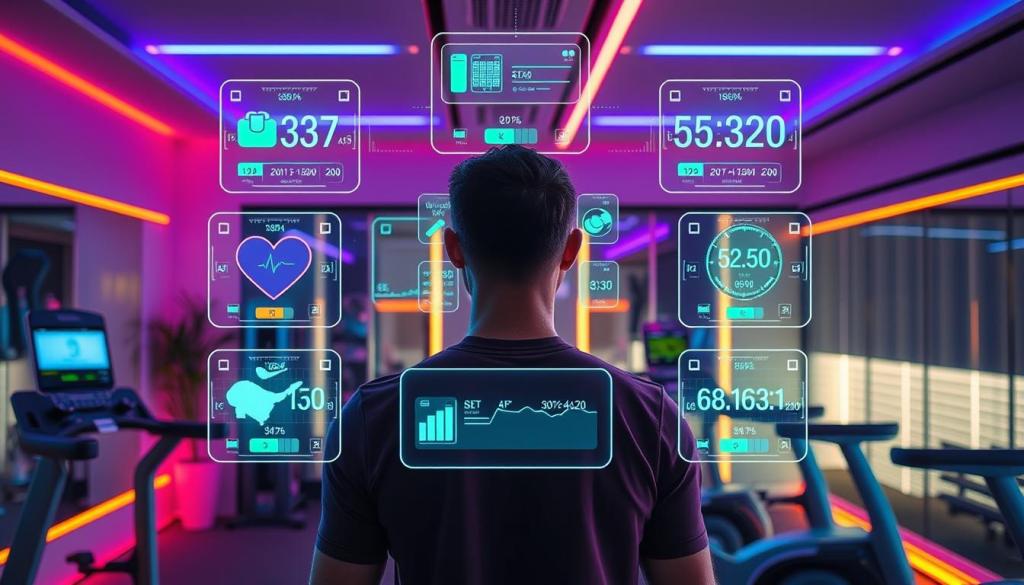
In today’s world, fitness trackers are everywhere. By 2026, we expect to see 230 million of them shipped. They give us useful info on how active we are. But, they also lead to a dark side – the obsession with “ring-closing” culture.
The Dark Side of Ring-Closing Culture
Chasing after daily activity rings can cause us to overtrain. This “no days off” attitude, often seen in fitness influencers, raises the chance of injury and burnout. Research shows that people trying to lose weight with these devices actually lose less than those without them.
Balance Between Activity and Recovery
Rest and recovery are key to a balanced fitness routine. They help our bodies heal and get stronger. But, focusing too much on digital tracking can make us think we’re healthier than we really are. This leads to unhealthy obsessions and forgetting the importance of balance and recovery.
“The problem with wearable devices is that they can become an obsession, leading to overtraining and neglect of the rest and recovery our bodies need to truly thrive.”
As digital fitness keeps changing, we must keep a healthy view. We need to remember the importance of balance and recovery in our quest for wellness. By finding the right balance, we can enjoy the benefits of these tools without harming our health in the long run.
Self-Diagnosis Through Social Media
Self-diagnosing mental health issues on social media, especially on TikTok, is a worry. Social media can raise awareness about mental health. But, it can’t replace professional diagnosis and treatment.
Trying to diagnose ADHD or depression from short videos can lead to wrong diagnoses. This can delay getting the right treatment.
A survey found a link between social media and negative body image in sexual minority men. Social media, especially image-centric platforms like Instagram, can harm body image. A 2023 study suggested it could be a risk factor for eating disorders.
A 2021 study found that comparing oneself to others on social media can harm body image. A 2022 study showed TikTok promotes disordered eating, leading to poor body image and eating disorders. Research in 2024 found “thinspiration” content can trigger eating disorders in young people.
However, engaging with body-positive content on social media can improve body image. A study with 220 undergraduate students found reducing social media use for a few weeks helped body image. If negative body image affects daily life, seeing a healthcare professional is advised.
The Role of Healthcare Providers
Healthcare providers are key in addressing self-diagnosis through social media. They can teach patients about the limits of self-diagnosis and the need for professional help. By focusing on personalized assessments and evidence-based treatments, they can guide individuals through mental health complexities.
| Key Findings | Significance |
|---|---|
| 50 studies from 17 countries reviewed between January 2016 and July 2021 found that social media usage leads to body image concerns, eating disorders/disordered eating, and poor mental health. | This underscores the significant impact of social media on mental health and the need for intervention and education. |
| The global prevalence of Anorexia or Bulimia was estimated at approximately 13.9 million individuals in 2019. | The widespread nature of eating disorders highlights the importance of addressing the underlying factors, including the role of social media. |
| 94 studies from Asia, Europe, and North America showed a weighted mean lifetime prevalence of any eating disorder at 8.4% for women and 2.2% for men. | This data indicates the significant gender disparity in eating disorders, underscoring the need for targeted interventions and support. |
In conclusion, self-diagnosis through social media is a growing concern. It needs attention from both individuals and healthcare providers. Understanding social media’s impact on mental health and body image is crucial. Emphasizing the importance of professional guidance can help individuals navigate these challenges and achieve better wellness.
The Dangers of AI-Generated Workout Plans
AI-generated workout plans might seem handy, but they have big limits. They can’t replace the personal touch a human trainer gives. AI programs don’t get the personal details that a human can, like your fitness level or health.
Limitations of Artificial Intelligence in Fitness
AI plans might miss important personal touches. They don’t know how your body reacts to exercises or if you’ve had injuries. They can’t change plans on the fly like a trainer can.
Why Human Guidance Matters
Trainers are key to safe and effective workouts. They check your form and teach you the right way to do exercises. Personalized plans are crucial for reaching your health goals.
Trainers also offer support and motivation. They help you stay on track with your fitness goals. AI can’t match the personal connection and support a human trainer gives.
“Relying solely on AI-generated workout plans can be a risky proposition. While technology can enhance our fitness journey, human guidance is essential for ensuring safety, proper form, and long-term success.”
The fitness world is always changing. It’s important to use AI tools wisely and value human expertise. By knowing AI’s limits and getting help from experts, you can reach your fitness goals better and safer.
Misuse of Mental Health Terminology
In today’s world, mental health terms like “triggered,” “gaslighting,” and “boundaries” are used a lot on social media. But using these terms lightly can make people think less of the real issues. It shows a lack of understanding about how to deal with mental health problems.
People are turning away from experts and towards social media for mental health advice. This is a big problem because it can make mental health issues seem less serious. It’s harmful for those who are really struggling and need help.
Healthcare providers play a key role in giving the right advice on mental health. They have the training and knowledge to help people with mental health issues. This includes therapists, counselors, and psychologists.
“The casual use of mental health terms on social media can minimize the seriousness of these conditions and lead to harmful misconceptions about proper treatment and support,” says Dr. Emily Wilkins, a licensed clinical psychologist. “It’s essential that individuals seek guidance from qualified mental health professionals to ensure they receive the care and resources they need.”
It’s important to think about how we talk about mental health on social media. Getting advice from licensed professionals is key. This way, people can get the right help and support for their mental health.
The Supplement Industry’s False Promises
The supplement industry is often criticized for its exaggerated claims. Berberine, known as “nature’s Ozempic,” is a popular example. It’s said to help with weight loss, but the science backing this is weak. The risks of using untested supplements are real.
More than half of Americans use herbal or dietary supplements every day. The global market is expected to hit $193 billion by 2025. Yet, many supplements contain hidden ingredients that can harm our health.
Understanding Berberine and Weight Loss Claims
Berberine is a plant compound marketed for weight loss, like Ozempic. But, the science supporting its weight loss claims is limited. A review found that only omega-3 fatty acids and folic acid are proven to prevent heart disease. The benefits of other supplements are still unclear.
Risks of Unregulated Supplements
The supplement industry lacks regulation, which is a big concern. Supplements don’t need FDA approval before hitting the market. This means side effects and interactions with drugs can be missed. For instance, too much vitamin D can cause muscle pain and kidney stones.
High levels of vitamin D can also lead to mood disorders. Mixing St. John’s Wort with certain drugs can be dangerous. These risks show why we should focus on a balanced diet and exercise, not quick fixes.
Dry Scooping and Pre-Workout Dangers
Fitness enthusiasts often seek ways to boost their performance. One risky trend is “dry scooping” pre-workout supplements. This means taking the powder without mixing it with water. It’s a shortcut that can harm your health.
Pre-workout supplements aim to give you energy and focus for workouts. But they often have too much caffeine. The supplement industry lacks regulation, making it hard to trust what’s in these products.
- Pre-workout supplements can have 150mg to 300mg of caffeine per serving, way more than you should have.
- Dry-scooping can cause choking, lung problems, and caffeine toxicity. This can lead to heart issues like irregular heartbeat and even heart attack.
- People who are sensitive to caffeine might get a racing heartbeat, stomach problems, high blood pressure, and nausea from pre-workouts.
It’s important to know the risks of these trends. They can harm your health. Instead, focus on safe fitness and nutrition with the help of healthcare experts.
“Dry scooping, a dangerous practice, has been popularized on social media and can lead to aspiration pneumonia, irregular heartbeat, palpitations, and even heart attack due to the high amount of caffeine ingested all at once.”
By understanding the dangers of dry scooping and pre-workout supplements, you can make better choices. True wellness comes from a balanced and sustainable lifestyle, not from following every fitness trend.
Alternative Medicine Claims vs. Scientific Evidence
In the world of wellness, alternative medicine trends often make bold claims. They say raw potato juice can treat strep throat and that alkaline water is good for health. But, many of these claims don’t have solid scientific evidence to back them up. The alternative medicine sector is big and profitable, with less regulation on unproven treatments.
Billions of dollars have been spent on studying alternative medicine, but with little success. These practices are often marketed as “natural” or “holistic.” But being natural doesn’t mean they work or are safe. Studies have shown that alternative therapies can lead to worse outcomes for patients with cancer or HIV.
The trend of detoxing and detox diets is another example of claims without evidence. Detox diets promise to remove toxins from the body but have no scientific support. They can even be harmful if they delay or replace proven medical treatments.
“It’s crucial to rely on evidence-based medicine and consult healthcare professionals for proper treatment. Untreated strep throat, for instance, can lead to serious complications like rheumatic fever or kidney disease.”
It’s important to be skeptical of alternative medicine and understand the science behind it. By choosing science-backed solutions and seeking professional advice, you can make better health choices. This way, you avoid the risks of unproven and potentially harmful trends.
| Claim | Scientific Evidence |
|---|---|
| Himalayan salt has unique health benefits compared to regular table salt | A teaspoon of Himalayan salt contains about 2,200 milligrams of sodium, which is similar to the 2,300 milligrams in a teaspoon of regular table salt. Himalayan salt doesn’t contain high enough levels of iodine to prevent thyroid-related complications, and consuming too much sodium may increase the risk of stomach cancer and high blood pressure, which affects nearly half of U.S. adults. |
| Alkaline water can improve health and neutralize acidity in the body | There is no scientific evidence that alkaline water has any significant health benefits or the ability to alter the body’s pH levels. The body tightly regulates its pH, and drinking alkaline water is unlikely to have a meaningful impact. |
The Role of Professional Healthcare Guidance

Getting professional healthcare advice is key for your health and wellness. Unlike generic trends or AI fitness plans, doctors can create plans just for you. They consider your health history, current status, and goals. This ensures you get the right treatment and fitness plan for you.
Importance of Personalized Health Plans
Generic health and fitness plans often don’t work for everyone. Doctors can make plans that fit your specific needs. This might include your medical conditions, injuries, or physical limits. A custom plan helps you reach your wellness goals safely and effectively.
When to Seek Expert Advice
- When dealing with any health concerns or chronic conditions
- Before starting a new exercise routine, especially if you have physical limitations
- If you’re unsure about the safety or effectiveness of a particular wellness trend
- When making significant changes to your diet or supplement regimen
- If you’re experiencing unexplained symptoms or changes in your overall health
Working with healthcare professionals ensures your health plans are safe and effective. They are tailored to your needs for long-term wellbeing. Don’t hesitate to get expert advice for your health.
| Statistic | Percentage |
|---|---|
| Estimates indicate that as many as 98,000 Americans die each year due to medical errors | N/A |
| 72 percent of individuals living with chronic conditions find it challenging to receive necessary care from healthcare providers | 72% |
| 57 percent of U.S. physicians state that their ability to provide quality care has decreased in the past 5 years | 57% |
| 41 percent of physicians admit they are discouraged or not encouraged to report medical errors | 41% |
| 76 percent of nurses feel that unsafe working conditions hinder their ability to deliver quality care | 76% |
| A survey of over 800 physicians reveals that 35 percent reported errors in their or their family member’s care | 35% |
These stats show why professional healthcare advice is vital. Both patients and healthcare providers face challenges in quality care. By teaming up with your healthcare team, you can tackle these issues and create plans that focus on your health and wellness.
“Personalized healthcare plans are crucial for achieving sustainable, long-term wellness. Healthcare providers can help you navigate the complexities of your unique health needs and develop strategies tailored to your individual goals.”
Conclusion
Viral health trends might look good, but many are not backed by science. They can even be harmful. It’s important to look at wellness with a balanced view. Focus on lasting practices and get advice from experts.
Be careful of fad diets and health claims on social media. Remember, true health and wellness need a plan that fits you, not a quick fix. It’s about long-term health, not just short-term gains.
Following every new trend can lead to nutritional deficiencies and risks. These can harm your health. Instead, make small, lasting changes that meet your needs and goals.
Get advice from healthcare professionals to create a plan that covers your physical, mental, and emotional health. This way, you can stay healthy in a lasting way.
By being careful and informed, you can avoid the dangers of health trends. Your health is precious. It needs a thoughtful, personal approach, not just fads or quick fixes.
FAQ
What are the top 5 worst health trends to avoid?
The worst health trends include extreme fitness challenges and digital fitness tracking obsession. Also, self-diagnosis through social media and AI-generated workout plans are bad. Lastly, misusing mental health terminology is harmful.
Why are viral wellness trends often problematic?
Viral wellness trends often lack scientific backing. They can lead to unsustainable practices and harm your health. It’s important to know the difference between safe practices and harmful fads.
How can social media platforms contribute to the spread of unhealthy trends?
Social media platforms like TikTok spread health trends without science backing. Influencers promote these trends without considering individual health needs.
What are the dangers of extreme exercise regimens like the ’75 Hard’ Challenge?
Extreme exercise can cause disordered eating and overtraining. It focuses too much on appearance. These challenges ignore your health needs and risks.
How can the obsession with digital fitness tracking be harmful?
Being obsessed with fitness trackers can lead to overtraining. It ignores the need for rest days. This can cause injury and burnout, as rest is key for fitness.
Why is self-diagnosing mental health disorders on social media problematic?
Self-diagnosing mental health issues on social media can be wrong. It can delay real treatment. Social media can’t replace professional diagnosis and treatment.
What are the limitations of AI-generated workout plans?
AI workout plans lack personal understanding. They can’t adapt to your needs or challenges. Human trainers provide a personalized approach that AI can’t match.
How can the misuse of mental health terminology on social media be harmful?
Misusing mental health terms on social media can be harmful. It can trivialize serious issues. It can also lead to misunderstandings about treatment and coping strategies.
What are the risks associated with the supplement industry’s claims?
The supplement industry makes exaggerated claims. Unregulated supplements can have side effects. It’s hard to trust the safety and accuracy of supplement labels.
Why is it important to rely on professional healthcare guidance?
Professional healthcare guidance is key for personalized health plans. Healthcare providers consider your medical history and goals. They offer tailored advice, unlike generic trends or AI programs.
Source Links
- Top 10 Worst Wellness Trends Of The Decade – https://www.forbes.com/sites/brucelee/2019/12/31/top-10-worst-wellness-trends-of-the-decade/
- 7 Bad Health Habits and How to Break Them – https://www.aarp.org/health/healthy-living/info-2022/how-to-break-bad-health-habits.html
- The Absolute Worst Wellness Trends We Saw In 2023 – https://www.huffpost.com/entry/worst-wellness-trends-2023_l_657b0e8ae4b00e36d2d66b5b
- 5 TikTok health trends doctors don’t want you to try – https://www.today.com/health/harmful-tiktok-health-trends-rcna74151
- The 13 Worst Health and Fitness Trends of 2022 | Lifehacker – https://lifehacker.com/the-13-worst-health-and-fitness-trends-of-2022-1849924373
- The Female Perspective On Fitness Trends That Are Downright Ineffective, Insulting, And Dangerous – Meghan Callaway – https://meghancallawayfitness.com/my-blog/the-female-perspective-on-fitness-trends-that-are-downright-ineffective-insulting-and-dangerous/
- Best and Worst Fitness Trends of 2023 | Garage Gym Reviews – https://www.garagegymreviews.com/best-and-worst-fitness-trends
- Top 10 Most Comment Health Issues – Common Senior Health Issues – Senior Health – https://www.urmc.rochester.edu/senior-health/common-issues/top-ten.aspx
- These Are the Best and Worst Diets of 2023, According to U.S. News & World Report – https://www.eatingwell.com/article/8021106/best-and-worst-diets-2023-us-news-world-report/
- Diets You Should Never Try – https://www.webmd.com/diet/ss/slideshow-bad-diets
- U.S. News & World Report Reveals the Best and Worst Diets for 2024: Mediterranean, DASH, MIND, and More – https://www.everydayhealth.com/diet-and-nutrition/diet/us-news-best-diet-plans-mediterranean-dash-more/
- The Goldilocks Zone for Exercise: Not Too Little, Not Too Much – https://pmc.ncbi.nlm.nih.gov/articles/PMC6139866/
- Opinion | I Ditched My Smart Watch, and I Don’t Regret It (Published 2022) – https://www.nytimes.com/2022/01/28/opinion/smartwatch-health-body.html
- Effects of diet and fitness apps on eating disorder behaviours: qualitative study – https://pmc.ncbi.nlm.nih.gov/articles/PMC8485346/
- 8 health trends that aren’t that healthy – Healthy Food Guide – https://www.healthyfood.com/advice/8-health-trends-that-arent-that-healthy/
- Social Media and Body Image: Negative and Positive Effects – https://www.healthline.com/health/social-media-and-body-image
- The social media diet: A scoping review to investigate the association between social media, body image and eating disorders amongst young people – https://pmc.ncbi.nlm.nih.gov/articles/PMC10032524/
- AI Risks that Could Lead to Catastrophe | CAIS – https://www.safe.ai/ai-risk
- Arguing the Pros and Cons of Artificial Intelligence in Healthcare | TechTarget – https://www.techtarget.com/healthtechanalytics/feature/Arguing-the-Pros-and-Cons-of-Artificial-Intelligence-in-Healthcare
- Microsoft Word – PI_2023.06.21_Best-Worst-Digital-Life_2035_FINAL.docx – https://www.pewresearch.org/internet/wp-content/uploads/sites/9/2023/06/PI_2023.06.21_Best-Worst-Digital-Life_2035_FINAL.pdf
- 4 Reasons for the Increase in Mental Health Conditions – https://www.health.com/condition/depression/8-million-americans-psychological-distress
- Frontiers | Unhealthy behaviors associated with mental health disorders: a systematic comparative review of diet quality, sedentary behavior, and cannabis and tobacco use – https://www.frontiersin.org/journals/public-health/articles/10.3389/fpubh.2023.1268339/full
- 7 Popular Supplements With Potential Hidden Risks – https://www.everydayhealth.com/news/supplements-risks-every-women-should-know/
- Do Supplements Work or Are They Just Another Wellness Trend? – https://notesbythalia.com/supplements-the-truth-about-this-wellness-trend/
- The Truth Behind Weight Loss Ads – https://consumer.ftc.gov/articles/truth-behind-weight-loss-ads
- Is Pre-Workout Powder Safe? Does It Work? – https://health.clevelandclinic.org/does-taking-a-pre-workout-actually-work
- Dry Scooping – A Harmful Internet Fad – https://sciencebasedmedicine.org/dry-scooping-a-harmful-internet-fad/
- How Safe Is That TikTok Health Trend? – https://health.clevelandclinic.org/tiktok-health-trends
- Alternative medicine – https://en.wikipedia.org/wiki/Alternative_medicine
- The Weight-Inclusive versus Weight-Normative Approach to Health: Evaluating the Evidence for Prioritizing Well-Being over Weight Loss – https://pmc.ncbi.nlm.nih.gov/articles/PMC4132299/
- Himalayan Salt: Is It Good for You? – https://www.webmd.com/diet/himalayan-salt-good-for-you
- Challenges Facing the Health System and Implications for Educational Reform – Health Professions Education: A Bridge to Quality – https://www.ncbi.nlm.nih.gov/books/NBK221522/
- Understanding Population Health and Its Determinants – The Future of the Public’s Health in the 21st Century – https://www.ncbi.nlm.nih.gov/books/NBK221225/
- 10 Things to Avoid for a Healthier Heart – https://www.aarp.org/health/conditions-treatments/info-2021/avoiding-unhealthy-heart-habits.html
- Overview of Health and Diet in America – Front-of-Package Nutrition Rating Systems and Symbols – https://www.ncbi.nlm.nih.gov/books/NBK209844/


 trim down and shape up
Leave a comment