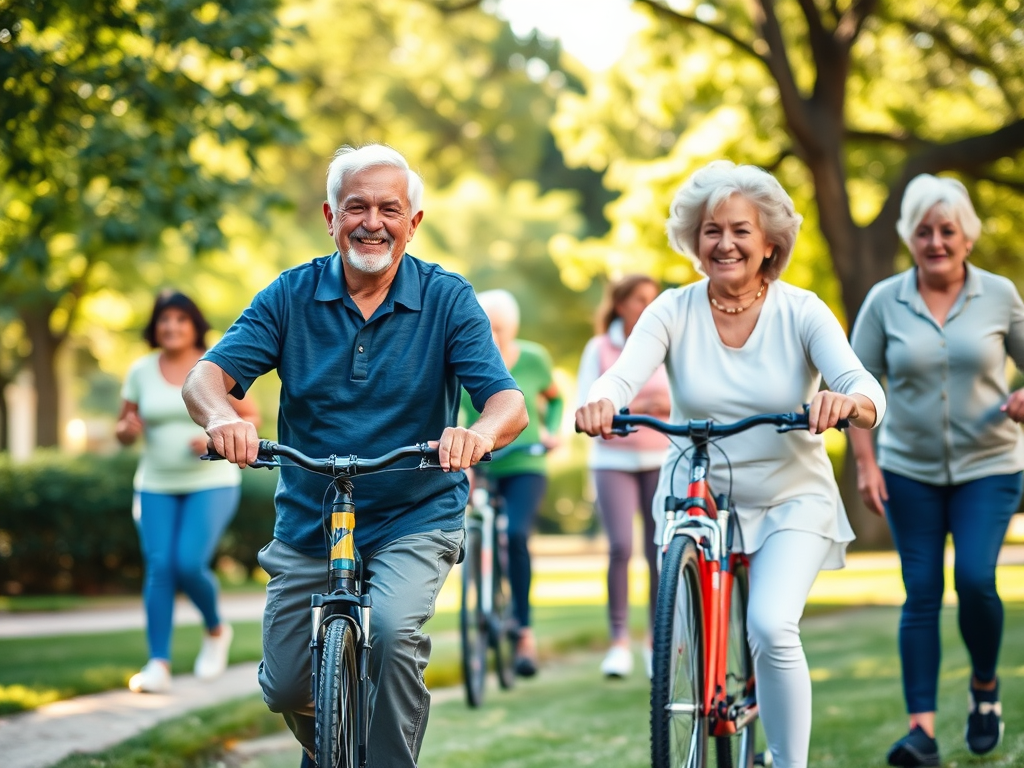


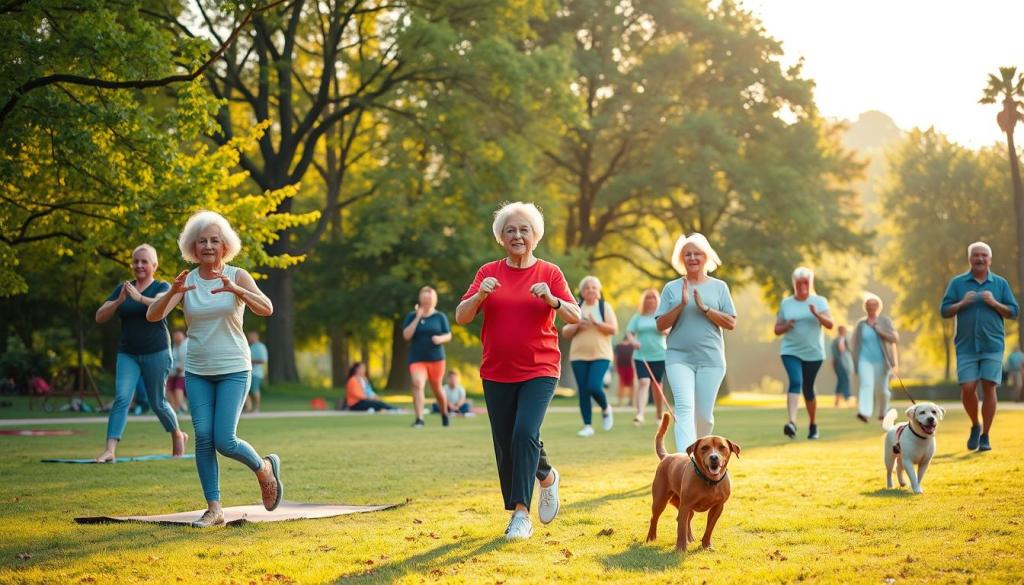
Turning 50 is a big deal, and it’s a great time to check in with your health and fitness. Staying active helps keep you mobile, strong, and feeling good. But, as you get older, your exercise routine needs to change too.
Your body can still do amazing things, maybe even more than you think. But it’s also important to exercise wisely, not just hard.
As we age, our bodies change in ways that affect how we exercise. It’s important to understand these changes to stay fit and healthy after 50. This article will show you the key dos and don’ts of exercising in your golden years. It will help you stay active, strong, and avoid injuries.
Key Takeaways
- Your body undergoes changes in flexibility, strength, and recovery time after 50, requiring a more thoughtful approach to exercise.
- Certain exercises like leg extensions, back extensions, and plyometrics can be risky for those over 50, but walking, cycling, and swimming are safer options.
- Strength training is essential to maintain muscle mass and bone density, but using proper form and lighter weights is crucial to avoid injury.
- Incorporating a warm-up, cool-down, and regular stretching into your routine can help reduce the risk of exercise-related injuries.
- Consulting with a healthcare professional can help you develop a balanced exercise plan tailored to your individual needs and abilities.
Understanding Age-Related Changes in Your Body
As you get older, your body changes in ways that affect your fitness. It’s important to know these changes to create safe and effective workouts. This way, you can meet your changing needs.
Physical Changes After 50
After 50, you might notice a drop in flexibility, muscle strength, and bone density. Research from the Mayo Clinic shows that high-intensity interval training (HIIT) boosts muscle energy and growth in older people. Also, muscle mass and strength usually peak in your 30s to 35s. They then start to decline, especially after 65 for women and 70 for men.
Impact on Exercise Capacity
These changes can really affect how well you can exercise. About 30% of adults over 70 struggle with walking, getting up, or climbing stairs, showing age-related mobility issues are common. Research from Duke University says strength activities can get harder in your 50s.
Metabolic Considerations
Muscle mass drops by about half a pound each year in women, leading to slower metabolism and weight gain. This, along with a slower metabolism, makes it harder to keep a healthy weight and body shape as you age. Regular exercise can lower metabolic risks linked to declining estrogen. It also increases HDL, reduces LDL, triglycerides, fibrinogen, and lowers the risk of heart attacks and strokes.
“Over 150 minutes a week of moderate activity is recommended for individuals over 50 to promote longevity and independence.”
Benefits of Regular Exercise for Adults Over 50
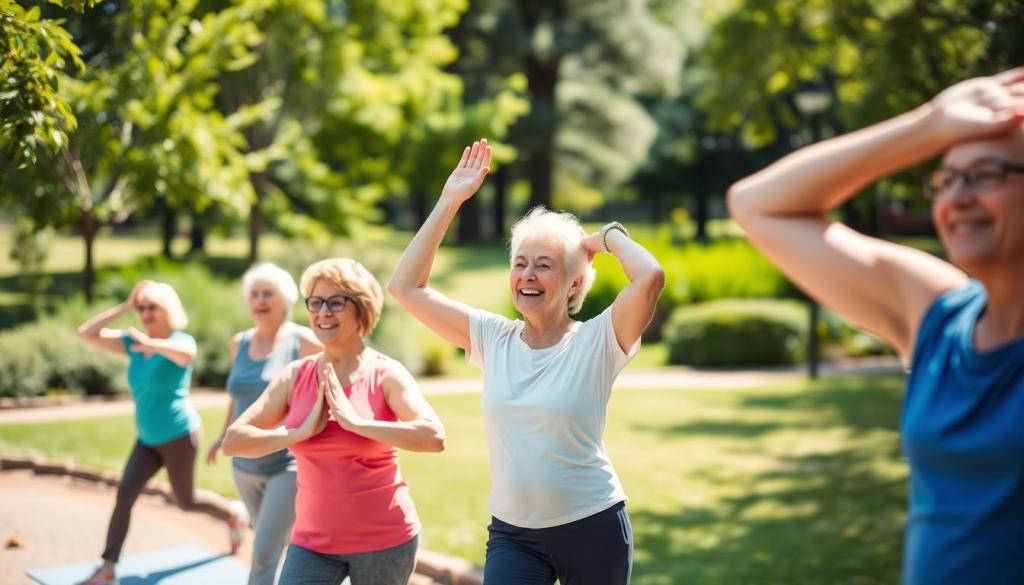
As you get older, exercise becomes more important for your health. Only one-third of adults over 50 know they should exercise 150 minutes a week. Yet, 95% think it would make them healthier.
Doing 150 minutes of exercise a week can change your life. People who do this feel better mentally and manage stress better. They also socialize more and eat healthier.
Exercise is good for your body and mind. It can help with depression as much as medicine. Just 20 minutes of activity three times a week can help a lot.
Exercise also helps prevent diseases like heart disease and diabetes. It’s key for keeping bones strong, especially for women and men over 50. Osteoporotic fractures affect 1 in 3 women and 1 in 5 men.
Even a little exercise can help a lot. Walking 30 minutes, four times a week, or 15 minutes daily can improve your health. A 12-week tai chi program can also boost balance and strength.
Exercise is a powerful tool for staying fit, mentally sharp, and independent as you age. Embrace the exercise benefits for seniors and focus on healthy aging. Regular physical activity helps prevent diseases.
Essential Types of Exercise for Aging Adults
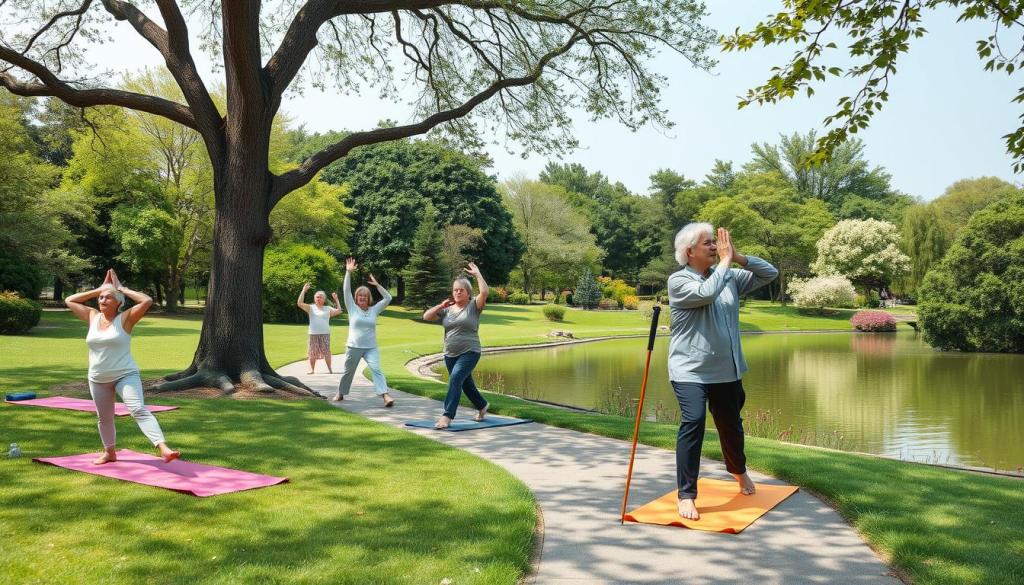
Staying active as you age is key for your health. A good exercise plan for adults over 50 should have four main parts: cardio for seniors, strength training over 50, flexibility exercises, and balance training. Each part helps improve your physical and mental health as you get older.
Cardiovascular Training
Doing regular cardio for seniors is vital for your heart and endurance. Activities like brisk walking, swimming, cycling, or using an elliptical machine boost your heart health. They also increase your energy and lower the risk of heart disease and other chronic conditions.
Strength Training
Strength training over 50 helps keep your muscles, bones, and strength up. Exercises like weight lifting, resistance bands, or bodyweight exercises help you stay independent and mobile. They also ease symptoms of chronic conditions like arthritis.
Flexibility Work
Keeping up with flexibility exercises is important for older adults. It helps keep your range of motion, reduces injury risk, and improves mobility. Gentle stretching, yoga, and Tai Chi can enhance flexibility and balance.
Balance Exercises
Improving your balance training is crucial for preventing falls and staying independent. Activities like standing on one leg, walking heel-to-toe, or using a balance board boost stability and coordination. This reduces the risk of falls and injuries from falls.
Adding these four essential exercises to your routine can keep you healthy and active as you age. Start slowly, listen to your body, and talk to a healthcare professional. They can help create a personalized exercise plan that fits your needs and goals.
The Dos and Don’ts of Exercise Once You Hit 50
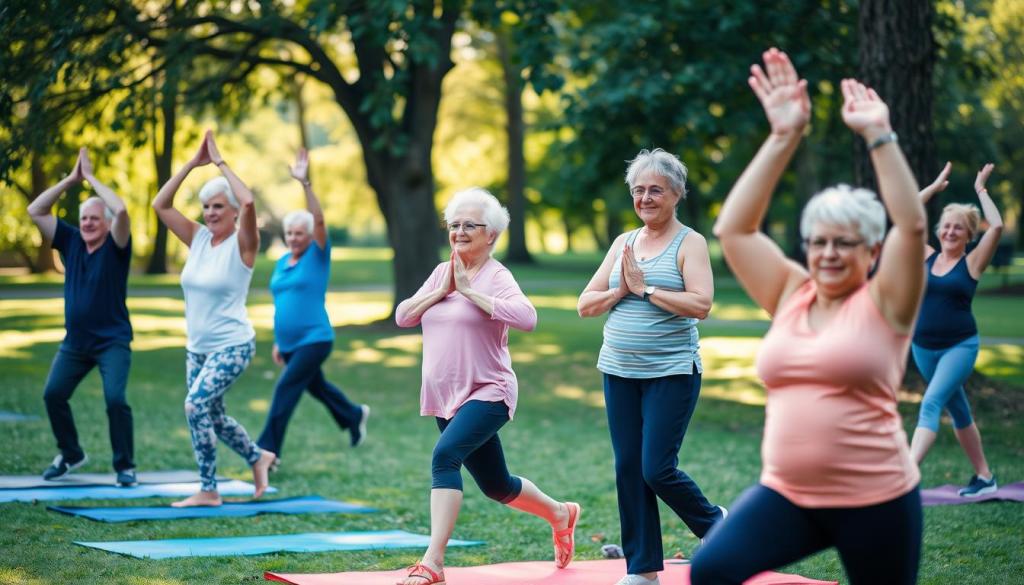
When you hit 50, staying active is more important than ever. Regular exercise is great for your health, but there are special things to remember. Knowing the right exercises for seniors can help you stay fit and healthy for years to come.
The Dos of Exercise After 50
- Focus on strength training. This helps keep your muscles strong and bones healthy as you age.
- Always warm up and cool down. These steps get your body ready for exercise and help it recover.
- Make flexibility a priority. Stretching and mobility exercises can improve your range of motion and lower injury risk.
- Listen to your body. If you feel pain or discomfort, change your routine or take a break.
The Don’ts of Exercise After 50
- Don’t skip recovery days. Your body needs time to heal and rebuild, especially as you get older.
- Don’t do the same workout forever. Changing your routine keeps your body challenged and prevents boredom.
- Be careful with high-intensity workouts. While they’re good, balance them with easier activities to avoid injury.
- Don’t compare yourself to others. Everyone’s fitness journey is different. Focus on your own goals and progress.
By following these tips, you can stay active and healthy well into your 50s and beyond. Remember to listen to your body, start slowly, and choose activities you love.
Safe and Effective Strength Training Guidelines
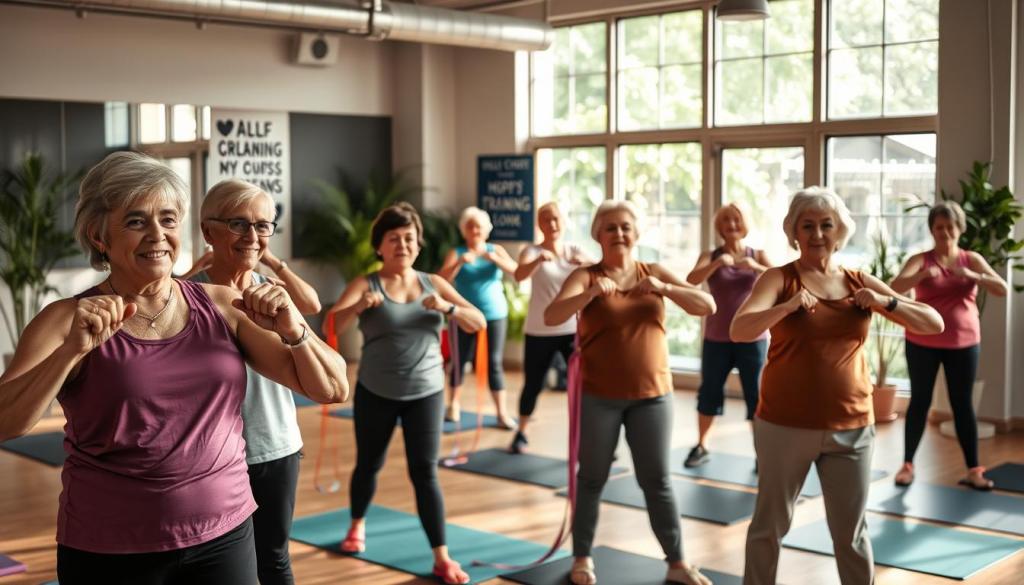
When you reach 50, strength training is key for keeping muscles, bones, and health in check. But, it’s vital to do it safely and right to get the best results.
Proper Form Techniques
For seniors, proper form in strength training is crucial. Make sure to do each exercise carefully to avoid injuries. Keep your core tight, back straight, and watch your body’s alignment.
Weight Selection Tips
Begin with lighter weights and slowly add more as you get stronger. Aim for 2-3 strength training sessions a week. Do exercises that work many muscles at once, like squats and rows. Get advice from a personal trainer to pick the right weights for you.
Recovery Requirements
Give your body time to rest between workouts. You might need a day or two off to let your muscles heal. Listen to your body and adjust your schedule to avoid overtraining and injury.
Remember, strength training for seniors is about building a strong base for a healthy life, not just pushing limits. By following these tips, you can enjoy the perks of weight lifting over 50 and stay strong and independent as you age.
“The best exercise for older adults is the one they will actually do consistently. Focus on finding activities you enjoy, and you’ll be much more likely to stick with them long-term.”
– Denise Austin, Fitness Expert
Low-Impact Cardio Activities to Embrace
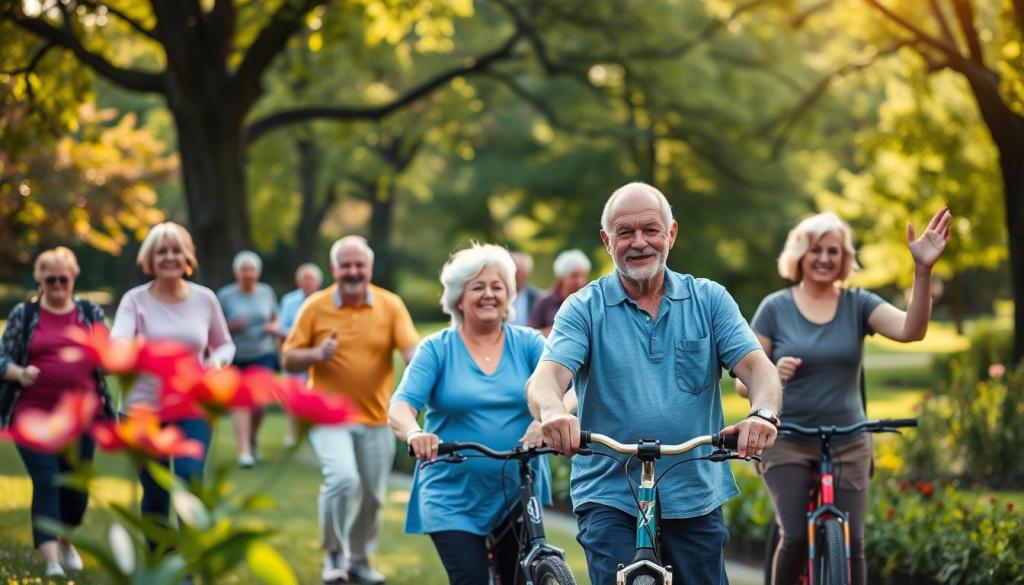
As you age, it’s key to choose low-impact exercises that are easy on your joints. These activities help keep you fit without risking injury. Let’s look at some great options for a healthy heart and strong body.
Walking is a top choice for low-impact cardio. It’s easy to add to your daily routine. Whether it’s a quick walk or a hike, it’s good for your heart and joints. Swimming is also excellent, as it supports your body and eases joint stress. Try water aerobics for cardio benefits in the water.
Cycling is another great option for adults over 50. It’s smooth and doesn’t stress your joints. You can use a stationary bike or ride outdoors. The elliptical trainer is also good, mimicking running or walking without the impact.
It’s important to pick activities you like and can do regularly. Aim for 150 minutes of moderate cardio each week. This helps you stay consistent and enjoy the benefits.
Adding these low-impact cardio activities to your routine can boost your heart health and muscle mass. It also lowers injury risk as you age. Always listen to your body, start slow, and increase your workouts gradually for a safe and effective routine.
Importance of Proper Warm-Up and Cool-Down
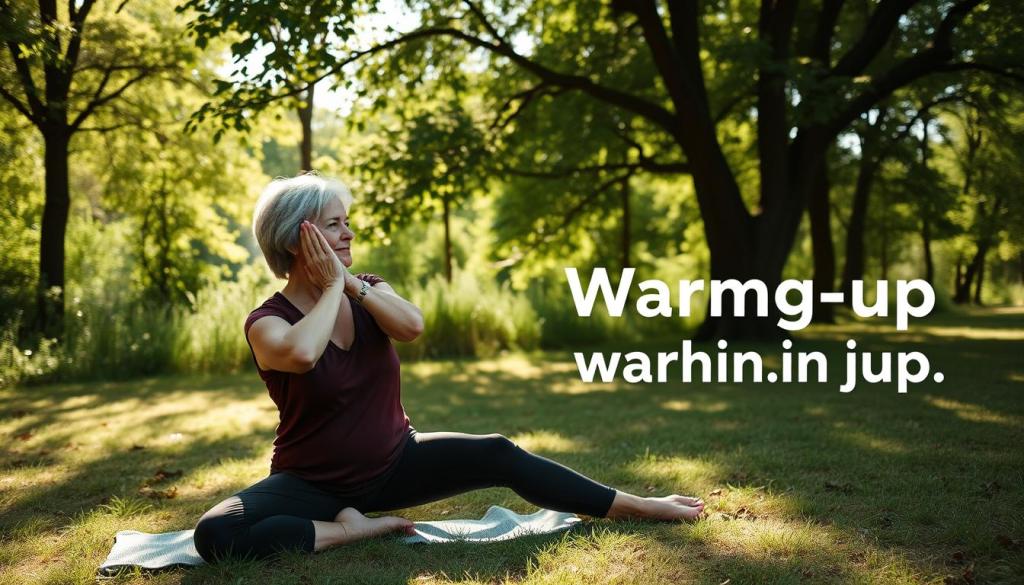
Getting your body ready for exercise and letting it rest afterward are key steps. Fitness experts say to spend at least five minutes on each. This helps avoid injuries and muscle soreness. By warming up properly and stretching for seniors, you get your heart rate up and muscles ready for the workout.
Dynamic Stretching Routines
Dynamic stretching is the best way to warm up. It involves gentle, controlled movements. This type of stretching boosts flexibility, range of motion, and blood flow to your muscles. Try dynamic stretches that target the muscles you’ll use during your workout.
Post-Exercise Recovery Practices
After working out, it’s vital to cool-down exercises and let your body recover. Do static stretches, focusing on the muscles you worked the hardest. Also, using a foam roller or light massage can help reduce muscle soreness and improve circulation.
As you age, your body might need more time and care for warm-up and cool-down. If you have ongoing aches or pains, talk to a fitness pro or your doctor. This ensures you’re addressing any issues and preventing more injuries.
“Proper warm-up and cool-down routines are essential for maintaining flexibility, reducing injury risk, and enhancing your overall exercise experience as you get older.” – Stephen Holt, Certified Personal Trainer
Exercises to Avoid After Age 50
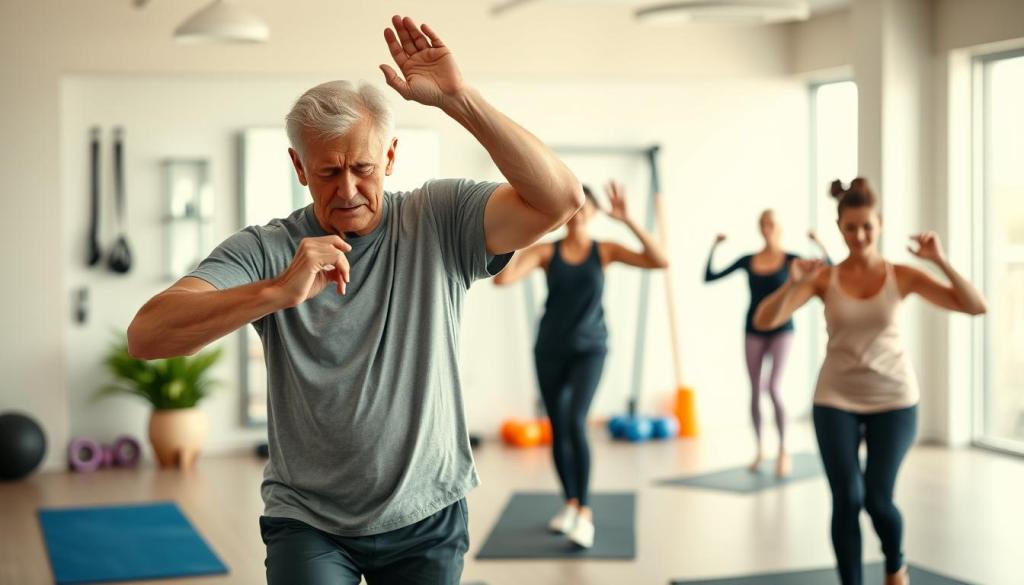
As you get older, your body changes a lot. This makes some exercises riskier. It’s important to avoid high-impact and joint-stress activities to stay fit and safe. Let’s look at the exercises to avoid after turning 50.
One exercise to avoid is the leg press. It can harm your spinal discs, especially with heavy weights. The movement can flatten your lower back and then shift it back into its natural arch. Crunches are also tricky for older adults. They involve flattening the lower back against the floor, which can lead to injury with repetitive motions.
Running is great for fitness but can be tough for older and heavier people. It involves over 2,000 strides per mile. The force on landing can be three to four times your body weight, stressing your joints a lot.
- Avoid high-impact exercises like sprinting or plyometrics, as they can be harsh on your joints.
- Steer clear of exercises that put excessive stress on your joints, such as deep squats or leg presses with heavy weights.
- Avoid behind-the-neck pull-downs or pull-ups, as these movements can strain your shoulder joints.
Instead, choose modified versions or alternative exercises that are safer. Go for low-impact cardio, strength training with lighter weights and higher reps. Also, do flexibility exercises to keep your joints mobile and stable.
As you age, listening to your body is key. Make changes to your workout routine to stay safe and healthy. Avoiding high-impact and joint-stress activities helps you stay active without risking injury.
Building a Balanced Exercise Routine

As you age, it’s key to keep your workouts balanced. A good balanced workout plan meets your changing needs. It should include cardio, strength training, flexibility, and balance exercises.
Weekly Schedule Planning
Try to do at least 150 minutes of moderate-intensity aerobic activity or 75 minutes of vigorous-intensity activity weekly. Activities like brisk walking, swimming, or cycling are great. Add 2-3 strength training sessions to work all major muscles.
Don’t forget to include flexibility and balance exercises. Yoga or Tai Chi are good for keeping you mobile and stable.
Exercise Duration Guidelines
It’s important to do keep your workouts fun and varied. Break your workouts into 10-15 minute sessions. This makes them easier to stick to.
Finding the right exercise frequency is key. It should keep you motivated and active.
| Exercise Type | Recommended Frequency | Duration |
|---|---|---|
| Cardiovascular | 150-300 minutes per week | 10-30 minutes per session |
| Strength Training | 2-3 sessions per week | 15-30 minutes per session |
| Flexibility | 2-3 sessions per week | 10-15 minutes per session |
| Balance | 2-3 sessions per week | 10-15 minutes per session |
Finding the right mix of exercises is crucial. It keeps you motivated and engaged. Do keep your workouts fun and try new things to find what works best for you.
Hydration and Nutrition for Active Seniors

As an active senior, staying hydrated and eating right is key. Drink water before, during, and after workouts to avoid dehydration. Eat a balanced diet with lean proteins, fruits, veggies, and whole grains to keep your body fueled and muscles recovering.
Men over 50 need 30 grams of fiber daily, while women over 50 should aim for 21 grams. The Mediterranean diet is good for your heart, focusing on fish, fruits, veggies, beans, and whole grains. Drinking more water boosts energy, so make it a priority.
Seniors should do 20 to 30 minutes of activity daily, mixing aerobic exercises like walking or swimming with strength training. Break your workouts into shorter sessions, like 15-minute walks twice a day. Exercising with a friend makes it more fun and social.
Before starting a new exercise routine, talk to a doctor, especially if you’re new to physical activities. Starting small and rewarding yourself for each step can improve your well-being over time.
When changing your diet, start with small steps. Adding more leafy greens and seafood can improve your health slowly. Remember, taking care of your hydration and nutrition is vital for an active lifestyle as you age.
| Nutrient | Benefits for Seniors |
|---|---|
| Leafy Greens | People who ate just one cup of nitrate-rich leafy green vegetables every day had 11% stronger lower limbs (Australian study).Individuals who consumed dark-green leafy vegetables had a 12 to 26% lower risk of heart disease (Danish study).Higher levels of antioxidants found in green leafy vegetables were associated with a lower likelihood of developing dementia (study published in Neurology). |
| Omega-3 Fats | Regular intake of omega-3 fats from nuts and seeds can help protect the brain. |
| Seafood | Consuming seafood two to three times a week can reduce the risk of death from chronic diseases by about 17%. |
| Nuts vs. Hot Dogs | A study stated that consuming a hot dog could cost 36 minutes of healthy life, while eating a serving of nuts instead could provide an extra 26 minutes of healthy life. |
“Adopting healthy habits can be challenging initially; starting small and rewarding each step taken can lead to improved well-being.”
Listening to Your Body: Signs and Signals
As you age, keeping safe while exercising is key. Physical activity is great for adults over 50, but it’s important to do listen to your body. This way, you can avoid pain management problems and stay injury-free.
When you work out, watch for any odd feelings or pain. Know the difference between tired muscles and a possible injury. If you feel chest pain, can’t breathe, get dizzy, or have sharp joint pain, stop exercising right away. These could be signs of a serious issue that needs a doctor.
But, some muscle soreness after a tough workout is normal. It shows your body is getting stronger. It’s important to know the difference between “good pain” and “bad pain.” While some soreness is okay, if the pain doesn’t go away or gets worse, it might mean you need to rest and see a doctor.
| Good Pain | Bad Pain |
|---|---|
| Mild muscle soreness or stiffness | Sharp, stabbing, or severe pain |
| Slight discomfort that subsides within 24-48 hours | Pain that persists or worsens during/after exercise |
| Sign of muscle adaptation and growth | Potential indicator of injury or underlying condition |
By listening to your body and knowing the difference between normal soreness and harmful pain, you can keep exercising safely. This is true even as you get older.
Social Aspects of Exercise: Group Activities and Classes
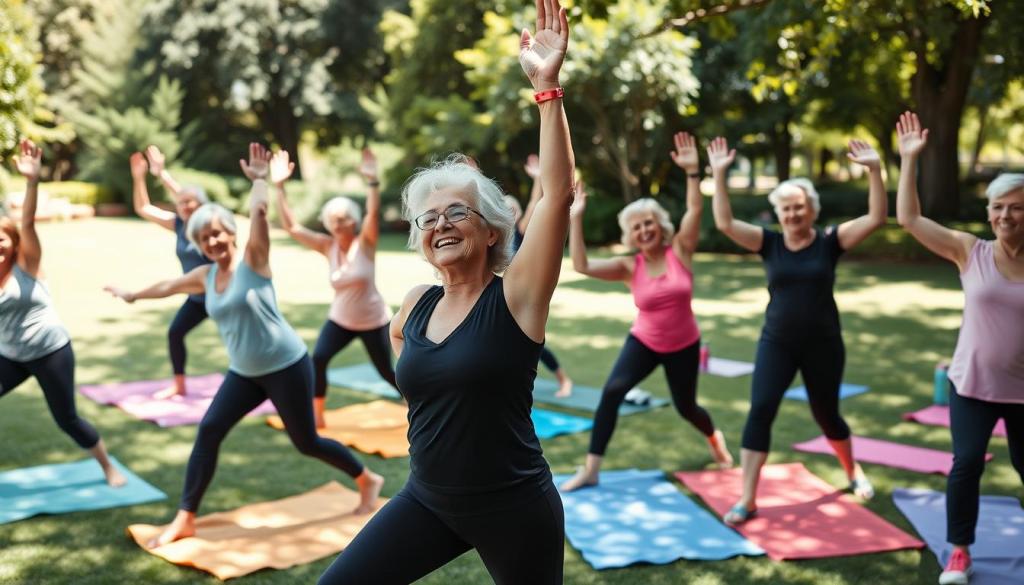
Exercise is more than just physical health. It also offers social interaction and a sense of community. Group fitness classes for seniors are a great way to stay active and meet others. Activities like water aerobics and yoga make exercise more fun and motivating.
Benefits of Group Exercise
Group fitness classes for older adults have many benefits. Studies show they can improve your quality of life and help you feel more connected. Sharing goals and supporting each other can be very uplifting.
Choosing the Right Class
When picking a group fitness class, choose one that fits your interests and fitness level. Talk to the instructor about any special needs you have. They want to make sure you have a good time and stay safe.
Adding a social element to your exercise routine can make it more enjoyable and lasting. Joining a group fitness for seniors or exercise classes for older adults can help you stay active and build friendships.
“More than 44,000 Heart Foundation walkers report that social contact is what keeps them coming back year after year.”
Preventing Exercise-Related Injuries
As you get into your 50s and beyond, it’s key to focus on injury prevention when starting to exercise. Start slow and gradually add more intensity and time to your workouts. Make sure to wear supportive shoes to avoid common problems like shin splints.
It’s vital to learn the right way to do each exercise to protect your tendons and joints. You might want to get a personal trainer or watch exercise videos to check your form. Also, don’t forget to include rest days to help your body heal and prevent injuries.
Regular health check-ups are also important to find any health issues that might affect your exercise. Your doctor can help you choose safe and right activities. This way, you can enjoy safe workouts and stay active while getting regular health checkups.
FAQ
What are the key dos for exercising after 50?
After 50, focus on strength training and warming up right. Don’t forget to prioritize flexibility and listen to your body. Make sure your workouts are fun too.
What are the important don’ts when exercising after 50?
Avoid skipping recovery days and sticking to the same routine forever. Don’t overdo high-intensity workouts or ignore your joints. Also, don’t compare yourself to others.
How can strength training benefit adults over 50?
Strength training helps keep muscle and bone strong after 50. Use proper form and start with lighter weights. Gradually increase weights to avoid injuries. Focus on exercises that work many muscles at once and improve core stability.
What are some low-impact cardio activities suitable for adults over 50?
Good options for adults over 50 include walking, swimming, cycling, and using elliptical machines. These activities are easier on the joints. Water aerobics and dancing are also great choices.
Why is proper warm-up and cool-down important for older adults?
A proper warm-up and cool-down prevent injuries and improve flexibility. Start with dynamic stretches and end with static stretches and gentle movements. This helps with recovery.
What types of exercises should adults over 50 avoid?
Avoid high-impact activities like sprinting or plyometrics. Also, stay away from exercises that stress joints too much. Instead, choose modified versions or alternative exercises.
How can older adults prevent exercise-related injuries?
Start slowly and gradually increase intensity and duration. Use proper equipment and learn correct form. Include rest days and get regular health checkups to catch any issues early.
How can group exercise benefit older adults?
Group exercise boosts motivation, accountability, and enjoyment. Try water aerobics, yoga classes, or walking groups for exercise and social interaction. Choose classes that fit your fitness level and interests.
Why is hydration and nutrition important for active seniors?
Hydration and nutrition are key for an active lifestyle after 50. Drink water before, during, and after exercise. Eat a balanced diet with lean proteins, fruits, vegetables, and whole grains to support muscle recovery and health.
How can older adults listen to their body’s signals during exercise?
Pay attention to your body’s signals during exercise. Know the difference between normal muscle fatigue and injury. Stop exercising if you have chest pain, shortness of breath, dizziness, or unusual joint pain.
Source Links
- Exercises to Avoid After 50 – https://www.webmd.com/healthy-aging/exercises-to-avoid-after-50
- Fitness Tips for 50-Plus – https://www.hopkinsmedicine.org/health/wellness-and-prevention/fitness-tips-for-50-plus
- 5 Things to Do in Your 50s to Be Active in Your 80s – https://www.aarp.org/health/healthy-living/info-2021/improving-healthspan.html
- How can strength training build healthier bodies as we age? – https://www.nia.nih.gov/news/how-can-strength-training-build-healthier-bodies-we-age
- Exercise beyond menopause: Dos and Don’ts – https://pmc.ncbi.nlm.nih.gov/articles/PMC3296386/
- Few people 50-plus know how much exercise is enough – https://www.aarp.org/pri/topics/health/prevention-wellness/physical-activity-exercise-benefits/
- 17 Convincing Reasons to Exercise Today – https://www.silversneakers.com/blog/exercise-today/
- Do’s and Don’ts Beyond Age 50 — The Benefits of Middle-Age Fitness – https://atlantmed.com/exercise-dos-and-donts-beyond-age-50/
- Senior Exercise and Fitness Tips – HelpGuide.org – https://www.helpguide.org/aging/healthy-aging/exercise-and-fitness-as-you-age
- How Older Adults Can Get Started With Exercise – https://www.nia.nih.gov/health/exercise-and-physical-activity/how-older-adults-can-get-started-exercise
- Fitness Over 50: Useful Tips For Success And Safety – https://betterme.world/articles/fitness-over-50/
- Exercising in your 50s and beyond: Tips from a doctor and fitness pros – https://www.cnet.com/health/fitness/how-to-start-exercising-in-your-50s-and-beyond/
- Exercising When You’re Over 50: Best Practices and Routines – https://www.seniors.com.au/funeral-insurance/discover/exercising-over-50
- Working Out Over 50: The Do’s and Don’ts – https://www.weightlossresources.co.uk/exercise/tips/working-out-over-50.htm
- The #1 Exercise to Do as You Get Older – https://www.aarp.org/health/healthy-living/info-2022/squats-best-exercise-for-strength.html
- 5 Strength Training Exercises for Seniors – SilverSneakers – https://www.silversneakers.com/blog/strength-training-for-seniors/
- Working out when you’re 50: The beginner’s guide (part 1) – https://www.linkedin.com/pulse/working-out-when-youre-50-beginners-guide-part-1-almasan
- Fitness After 40: Recommendations for Midlife – https://www.everydayhealth.com/menopause/know-about-midlife-exercise-needs/
- Over 50? Here Are 6 Exercise Mistakes You’re Too Old To Make – https://www.eatthis.com/exercise-mistakes-over-50/
- How to Keep Playing the Contact Sports You Love – https://www.aarp.org/home-family/friends-family/info-2024/how-to-keep-playing-contact-sports.html
- 5 exercise tips for older adults – https://www.avogel.co.uk/get-active/5-exercise-tips-for-older-adults/
- 7 Worst Exercises that Seniors Should Avoid – SilverSneakers – https://www.silversneakers.com/blog/worst-senior-exercises/
- Fitness Over 50? Here Are 5 Exercise Mistakes You’re Too Old To Make – https://www.onlymyhealth.com/fitness-mistakes-to-avoid-after-50-years-of-age-1675426877
- 5 Ways to Avoid an Exercise Injury After Age 50 – https://www.aarp.org/health/healthy-living/info-2021/exercise-injury.html
- 14 Exercises You Should Modify If You’re Over 50 – https://www.thehealthy.com/exercise/exercises-to-modify-over-50/
- 20 Expert Tips for Losing Weight After 50 – https://www.aarp.org/health/healthy-living/info-2021/weight-loss-after-50.html
- How much exercise do you really need? – https://www.mayoclinic.org/healthy-lifestyle/fitness/expert-answers/exercise/faq-20057916
- Healthy Habits At 60 And Beyond – Diet And Exercise | familydoctor.org – https://familydoctor.org/healthy-habits-at-age-60-and-beyond/
- 8 Superfoods to Eat After 50 – https://www.aarp.org/health/healthy-living/info-2021/superfoods-for-adult-health.html
- Why Getting Older Causes Your Body Shape to Change – https://www.verywellfit.com/how-your-body-shape-changes-with-age-2223440
- The Dos and Don’ts of Exercise Once You Hit 50 – https://totallythebomb.com/the-dos-and-donts-of-exercise-once-you-hit-50
- How Women in Their 50s Can Stay Active – https://www.webmd.com/healthy-aging/women-active-after-50
- Group fitness benefits | HCF – https://www.hcf.com.au/health-agenda/body-mind/physical-health/group-fitness
- Americans, Exercise, and Inactivity: Sweating Together Helps – AARP – https://www.aarp.org/pri/topics/health/prevention-wellness/exercise-inactivity-social-preferences/
- How to keep fit after 50? – https://kauveryhospital.com/blog/geriatrics/how-to-keep-fit-after-50/

 trim down and shape up
Leave a comment