

Cholesterol-lowering foods are key to a healthy diet. But what does this mean for your heart? It’s simple: there are two types of cholesterol. LDL is the ‘bad’ kind, and HDL is the ‘good’ kind.
Americans often have too much cholesterol. To lower it, eat less sugar, saturated fat, and cholesterol. Changing your diet can slowly lower your cholesterol levels. This article will show you 14 foods that can help.
Key Takeaways
- Reducing saturated fat, sugar, and cholesterol intake can help lower cholesterol levels.
- Incorporating more fiber-rich foods like whole grains, fruits, and vegetables can prevent cholesterol absorption.
- Healthy fats from nuts, seeds, and plant-based oils can improve HDL (good) cholesterol levels.
- Lean protein and soy-based foods can also contribute to heart-healthy cholesterol management.
- A balanced diet with a variety of these cholesterol-lowering foods is the key to improving overall heart health.
Understanding Cholesterol and Its Impact on Health
Cholesterol is a waxy substance found in our bodies. It’s important for many functions, but too much can harm our health. There are two main types: LDL (bad) and HDL (good) cholesterol.
The Difference Between LDL and HDL Cholesterol
LDL cholesterol is called “bad” because it can clog arteries. This can lead to heart disease and stroke. HDL cholesterol, on the other hand, is “good” because it helps remove LDL from the blood.
Why Managing Cholesterol Levels Matters
High levels of LDL cholesterol are a big risk for heart disease and stroke. In the U.S., about 86 million adults have high cholesterol. Keeping cholesterol levels healthy is key for a long and healthy life.
Normal Cholesterol Range Guidelines
The National Heart, Lung, and Blood Institute (NHLBI) sets guidelines for cholesterol levels:
- Total cholesterol: Less than 200 mg/dL
- LDL cholesterol: Less than 100 mg/dL
- HDL cholesterol: 40 mg/dL or higher for men, 50 mg/dL or higher for women
- Triglycerides: Less than 150 mg/dL
Knowing your cholesterol levels and managing them can lower your risk of heart disease and stroke.
Power-Packed Nuts and Seeds for Heart Health
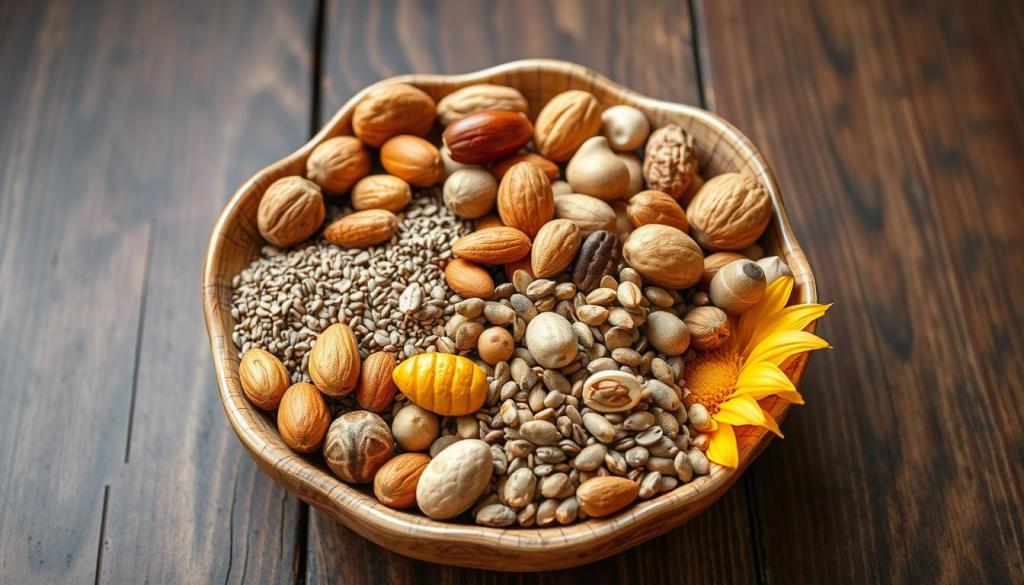
Adding nuts and seeds to your meals can boost heart health. These foods are full of polyunsaturated fatty acids. They help lower bad cholesterol and improve heart function.
Benefits of Walnuts and Almonds
Walnuts stand out for their omega-3 fatty acids. They have more ALA omega-3s than any other nut. Eating 1-2 ounces of walnuts daily can improve brain function and lower dementia risk.
Almonds are also great for heart health. They have phytosterols that lower bad cholesterol. A study showed eating 2 ounces of almonds daily can lower LDL cholesterol and improve blood sugar control.
How Chia Seeds and Flaxseeds Lower Cholesterol
Chia seeds and flaxseeds are also good for cholesterol. They are full of omega-3 fatty acids and fiber. These nutrients can lower bad cholesterol and triglycerides.
Recommended Daily Portions
Experts say to eat a small handful (about 1 ounce or 28 grams) of nuts and a tablespoon of seeds daily. Mixing different nuts and seeds, like almonds, walnuts, chia, and flaxseeds, adds many nutrients for heart health.
“Eating nuts as part of a healthy diet can improve artery health, reduce inflammation related to heart disease, and decrease the risk of blood clots, heart attacks, strokes, high blood pressure, and early death due to heart disease.”
Beneficial Effects of Fatty Fish
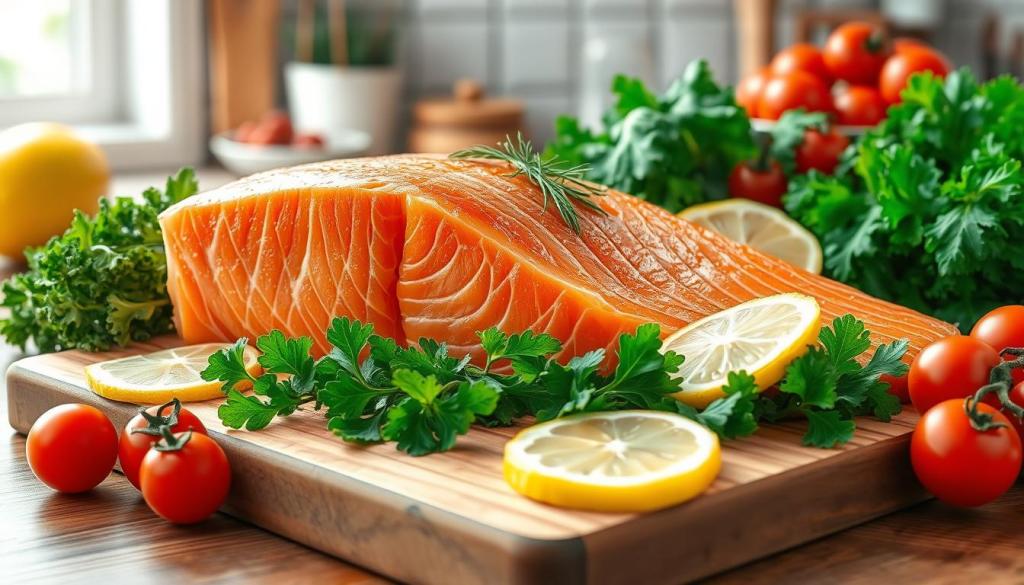
If you want to lower your cholesterol, try eating more salmon, tuna, sardines, and other omega-3 fatty acids-rich fish. These fatty fish are full of good fats. They can help lower the risk of heart disease and stroke.
Studies show that omega-3 fatty acids from fish oil can cut triglyceride levels by 25%-30%. The FDA has approved a health claim for omega-3s (EPA and DHA) in reducing heart disease risk. Just 3 ounces of salmon gives about 1 gram of these fats. A 3.5-ounce serving of trout has around 1 gram of EPA plus DHA.
Experts say we should eat at least two fish servings a week. The American Heart Association suggests more for those with heart disease – up to 1 gram of EPA or DHA daily, from fish. So, choose healthier protein sources like salmon, tuna, and sardines instead.
“Omega-3 fatty acids are polyunsaturated fats that the body cannot produce in sufficient quantities to survive. Incorporating more of these healthy fats from fatty fish is crucial for heart health.”
Fiber-Rich Whole Grains That Lower Cholesterol
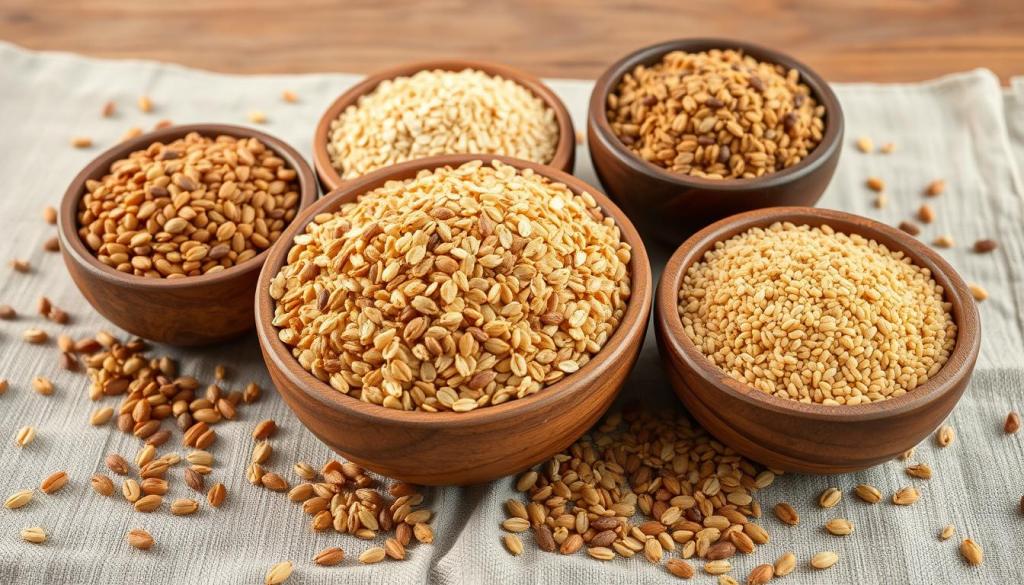
Whole grains are great for your heart. They are full of soluble fiber, which can lower cholesterol and heart disease risk. Oats, barley, and quinoa are top choices for a heart-healthy diet.
The Role of Beta-Glucan in Oats
Oats are famous for their beta-glucan, a soluble fiber. It helps lower LDL (bad) cholesterol. Beta-glucan binds to bile acids, leading the liver to use more cholesterol. This reduces overall cholesterol levels.
Incorporating Barley and Quinoa
Barley is also high in beta-glucan and can lower cholesterol. Quinoa, not a grain but a superfood, is rich in soluble fiber. Adding these to meals like soups and salads boosts fiber and heart health.
Switching to whole grains is key. Oats, barley, and quinoa help manage cholesterol and heart disease risk.
“Consuming three or more servings of whole grains daily is associated with a 20% lower risk of heart disease compared to eating less than one serving per day.”
Heart-Healthy Fruits and Berries
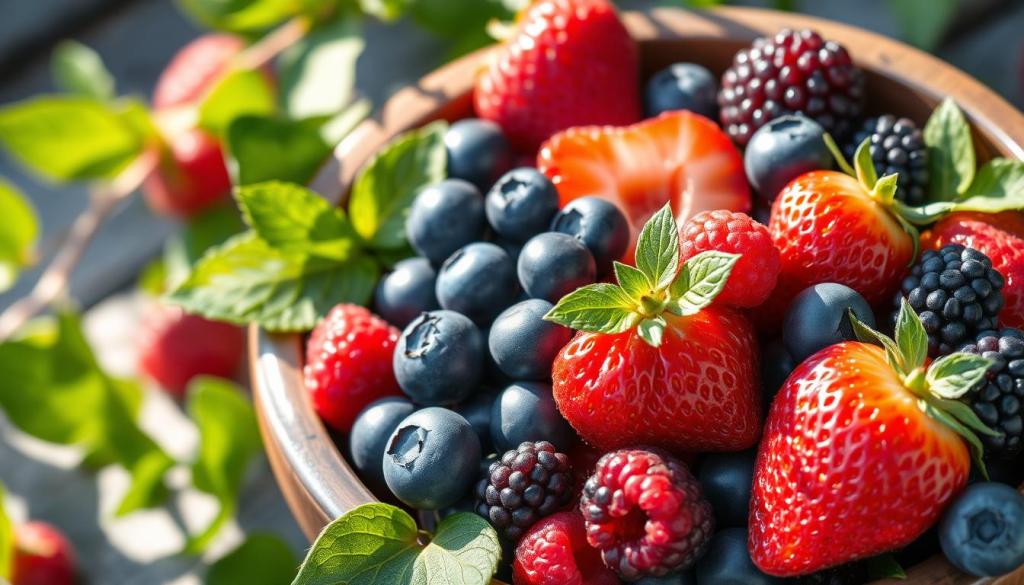
Incorporating heart-healthy fruits and berries into your diet can help manage cholesterol levels. These foods are full of soluble fiber, antioxidants, and other nutrients. They support heart health.
Apples, citrus fruits, and berries are great for lowering cholesterol. Pectin, a soluble fiber in these fruits, can reduce LDL (bad) cholesterol by up to 10%. Berries contain anthocyanins, which are anti-inflammatory and boost HDL (good) cholesterol.
- Blueberries, raspberries, and blackberries are rich in soluble fiber and antioxidants that support heart health.
- Apples and citrus fruits, such as oranges and grapefruit, contain pectin, a type of soluble fiber that helps lower cholesterol.
- Strawberries are packed with vitamin C, folate, and antioxidants, all of which contribute to cardiovascular well-being.
Eating a variety of heart-healthy fruits and berries is a tasty way to manage cholesterol. Try to have at least two servings of fruit daily. Choose ones high in soluble fiber and antioxidants.
“Eating fruits and berries is an easy and enjoyable way to boost your heart health and lower your cholesterol. The key is to choose a diverse array of these nutrient-packed powerhouses.”
Legumes: Your Cholesterol-Fighting Allies
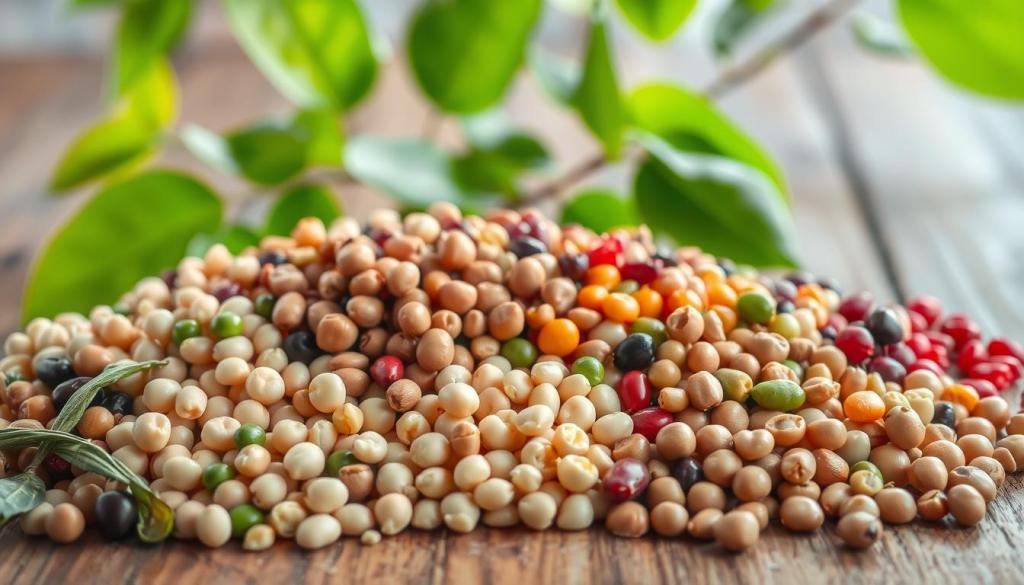
Legumes, like beans, lentils, and chickpeas, are great for managing cholesterol. They are full of soluble fiber, which helps lower bad cholesterol.
Types of Beneficial Legumes
Many legumes can improve your cholesterol levels. For example, eating 1 cup of beans daily can lower bad cholesterol in 29 days. Also, adding 4.5 ounces of beans to your diet can cut bad cholesterol by up to 5%.
Creative Ways to Include Legumes in Your Diet
- Add beans to chili, soups, and stews for a fiber-rich boost.
- Enjoy lentils in salads, curries, or as a meat substitute in tacos and burgers.
- Use chickpeas to make homemade hummus, roast them for a crunchy snack, or blend them into dips and spreads.
Adding more legumes to your meals is tasty and good for your heart. Try different ways to use beans, lentils, and chickpeas to enjoy their benefits.
The Power of Dark Leafy Greens
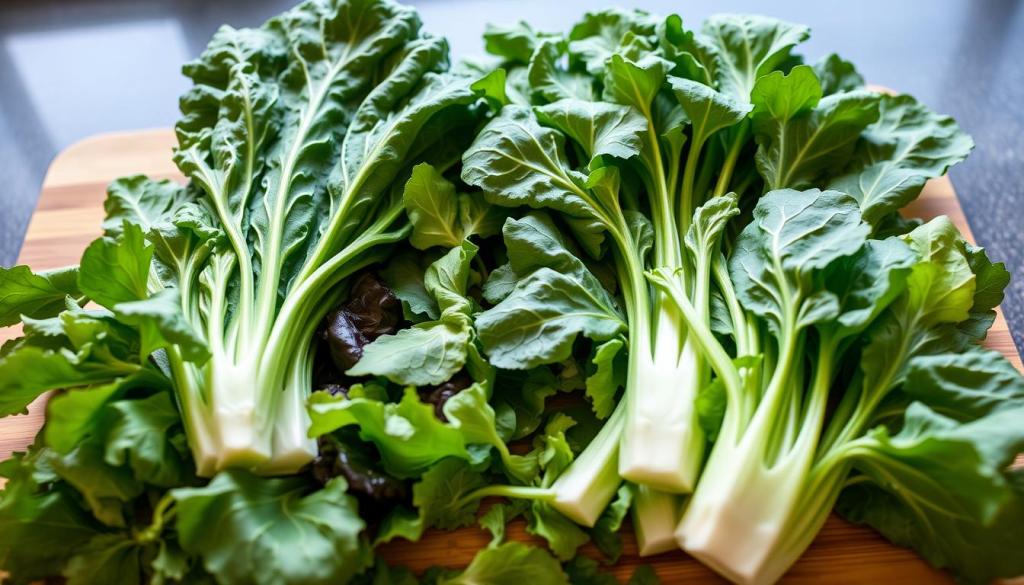
Dark leafy greens like kale, spinach, and bok choy are superstars for heart health. They are full of vitamins, minerals, and antioxidants. These nutrients help lower the risk of heart disease.
Research shows that lutein and carotenoids in these greens can lower cholesterol. They bind to bile acids and help remove them from the body. This can reduce bad cholesterol and increase good cholesterol, improving overall cholesterol balance.
Dark leafy greens are also rich in fiber. Fiber helps control blood sugar and keeps you full. They also support a healthy immune system, reduce inflammation, and protect against cancer.
To get the most benefits, eat a variety of dark leafy greens. Include kale, spinach, Swiss chard, collard greens, and romaine lettuce in your diet. Aim for one to two cups daily, either raw or lightly cooked.
“Eating just one serving of dark leafy greens per day can have a significant impact on cognitive function, equivalent to being 11 years younger.”
Adding dark leafy greens to your diet is a big step towards healthy cholesterol levels and heart health. Make sure to include them in your meal planning regularly.
Healthy Oils and Fats for Cholesterol Management
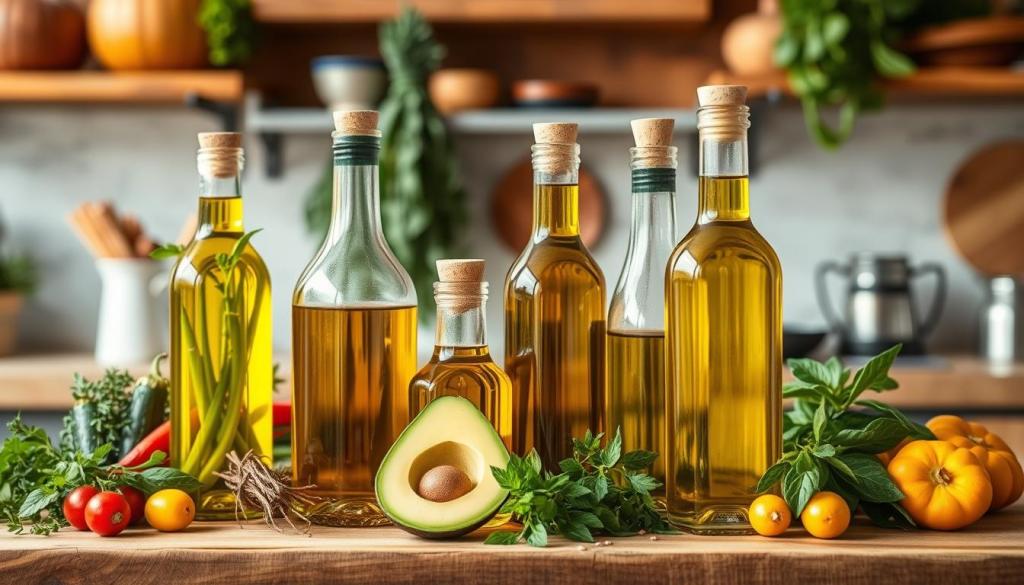
Choosing the right fats and oils is key to managing cholesterol. Monounsaturated fats in olive oil, avocado oil, and canola oil are great for heart health.
Benefits of Extra Virgin Olive Oil
Extra virgin olive oil is a heart-healthy staple. A 2019 study showed it boosts HDL (good) cholesterol more than other oils. Switching to these fats can lower cholesterol.
Choosing the Right Cooking Oils
Dr. Bhattacharya suggests using oils like avocado oil, canola oil, flaxseed oil, olive oil, and sunflower seed oil. These monounsaturated fats and polyunsaturated fats improve cholesterol levels. But, remember, these oils are high in calories, so use them in moderation.
| Oil | Fatty Acid Composition | Smoke Point | Best Uses |
|---|---|---|---|
| Olive Oil | High in monounsaturated fats | 375-400°F | Sautéing, roasting, baking |
| Avocado Oil | High in monounsaturated fats | 520°F | High-heat cooking, grilling, baking |
| Canola Oil | Balanced in monounsaturated and polyunsaturated fats | 400-450°F | Sautéing, roasting, baking |
By choosing wisely, you can help keep your cholesterol levels healthy. This supports your heart health too.
Soy-Based Foods and Their Benefits
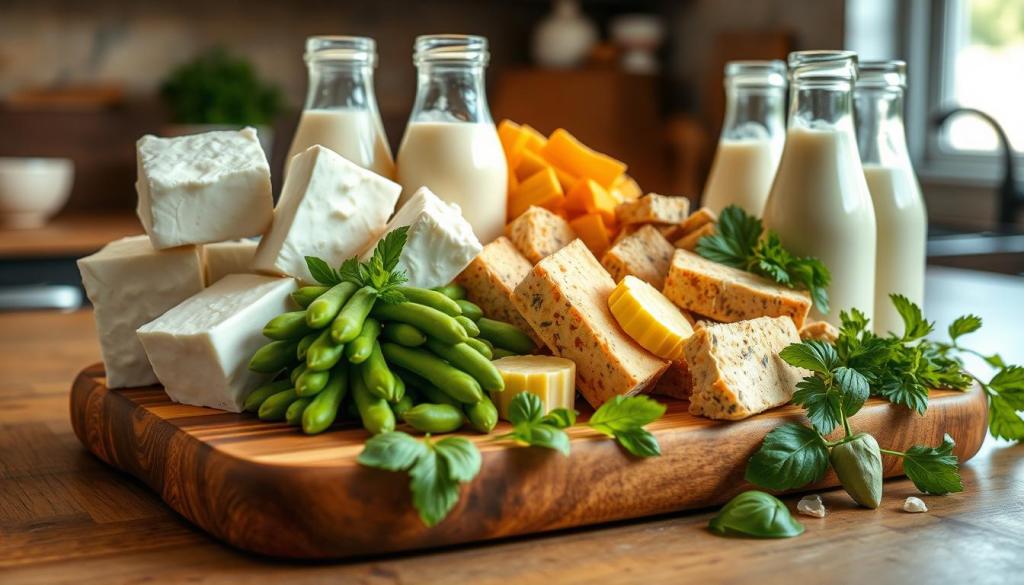
If you want to lower your cholesterol, try adding soy-based foods to your diet. Studies show soy might help your heart, but the proof isn’t solid yet.
Eating soy can lower your bad cholesterol by 3%. Soy is cholesterol-free and has less saturated fat, making it good for your heart. Swapping soy for animal fats can also help your cholesterol. But, soy isoflavone supplements don’t seem to have the same effect.
Choose soy products that are low in bad fats, cholesterol, salt, and sugar. Use soy protein instead of animal protein a few times a week to reduce bad fats. Some people might get stomach problems from soy, so listen to your body.
| Soy Food | Benefits for Cholesterol |
|---|---|
| Tofu | Rich in soy protein and low in saturated fat |
| Edamame | Provides soy protein and fiber to support heart health |
| Soy milk | Cholesterol-free and can replace dairy milk in your diet |
While soy might help with cholesterol, talk to a doctor first, especially if you’re a man. A plant-based diet with foods like oats, nuts, and beans is also good for your heart.
The Role of Garlic in Heart Health
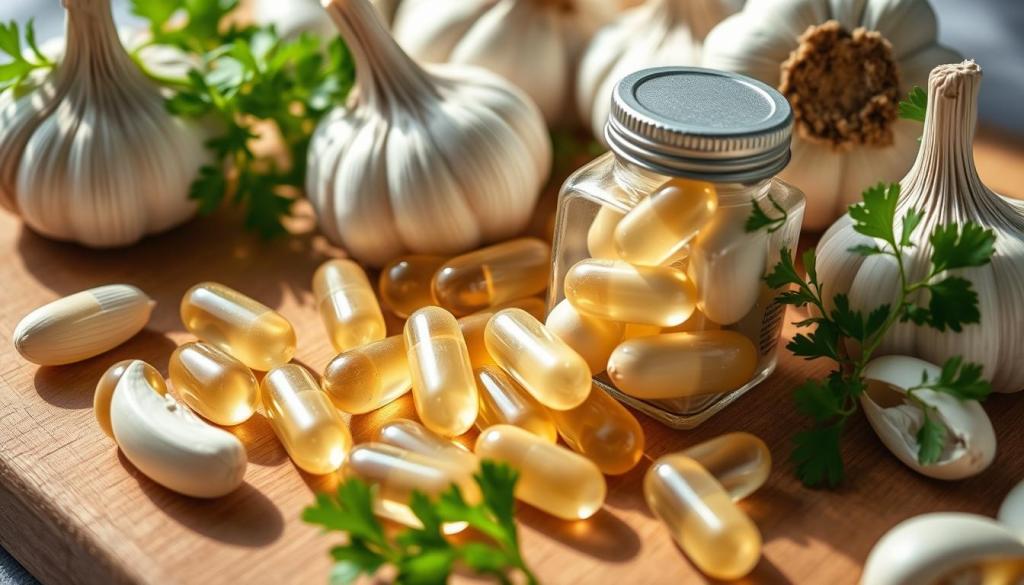
Garlic is more than just a flavor enhancer in cooking. It’s packed with compounds that might help your heart. The key one is allicin, which scientists and health fans are really interested in.
The Cholesterol-Lowering Power of Garlic
Studies show garlic could lower LDL (bad) cholesterol and total cholesterol. A 2018 review found garlic supplements might cut LDL by 10% and total cholesterol by 6%.
But, you need a lot of garlic to see these benefits. Garlic supplements might be better because they give you more of the good stuff.
Maximizing Garlic’s Benefits
To get garlic’s heart benefits, try adding it to your meals or take supplements with your doctor’s okay. Eating one to two cloves of fresh garlic daily, or the same amount in supplements, might help with cholesterol levels.
Garlic also fights heart disease in other ways. It’s an antioxidant, antimicrobial, and anti-inflammatory. The compounds in garlic, like allicin and aged garlic extract, show promise in studies.
Remember, talk to a doctor before making any changes to your diet or supplements. This is especially true if you’re on medication. They can help you use garlic safely and effectively for your health.
Dark Chocolate and Cocoa’s Impact on Cholesterol
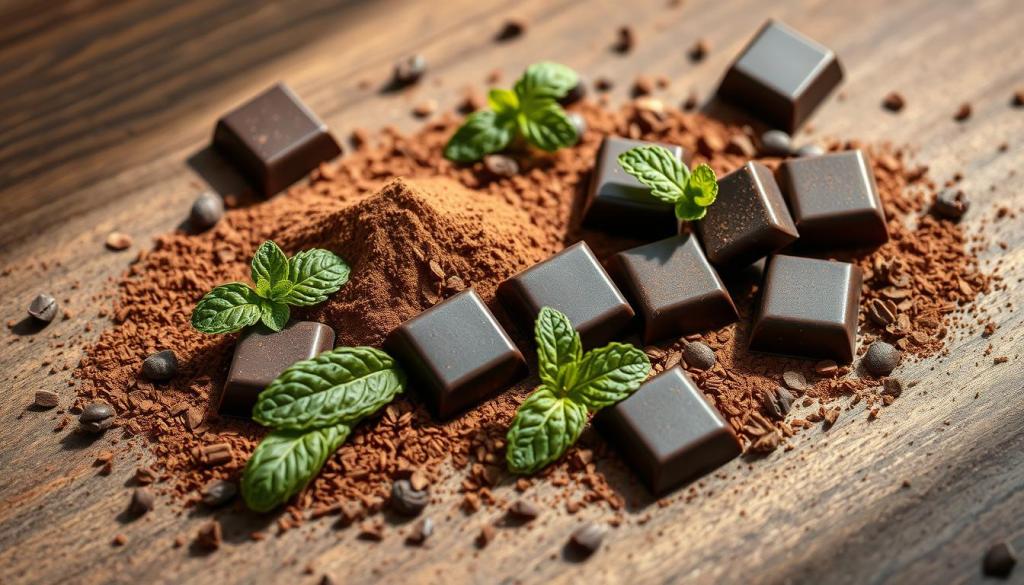
Looking to lower your cholesterol? Dark chocolate and cocoa powder might be the answer. They’re packed with flavonoids and antioxidants. These can lower your bad cholesterol and raise your good cholesterol.
A 2015 study showed that drinking cocoa twice a day for a month cut LDL cholesterol by 0.17 mmol/l (6.5 mg/dl). In 2022, research found that cocoa powder compounds like polyphenols and resveratrol help manage cholesterol.
For the best heart benefits, pick dark chocolate with 75–85% cocoa. Or use unsweetened cocoa powder in your recipes. This way, you avoid sugars that can undo the good.
“Combining raw almonds, dark chocolate, and cocoa significantly reduced the number of low-density lipoprotein (LDL) particles in the blood of overweight and obese individuals.”
While dark chocolate and cocoa are great, they’re just part of a healthy diet. Include fruits, veggies, whole grains, and lean proteins too. Eating in moderation helps keep your cholesterol levels in check.
Tea Varieties That Help Lower Cholesterol
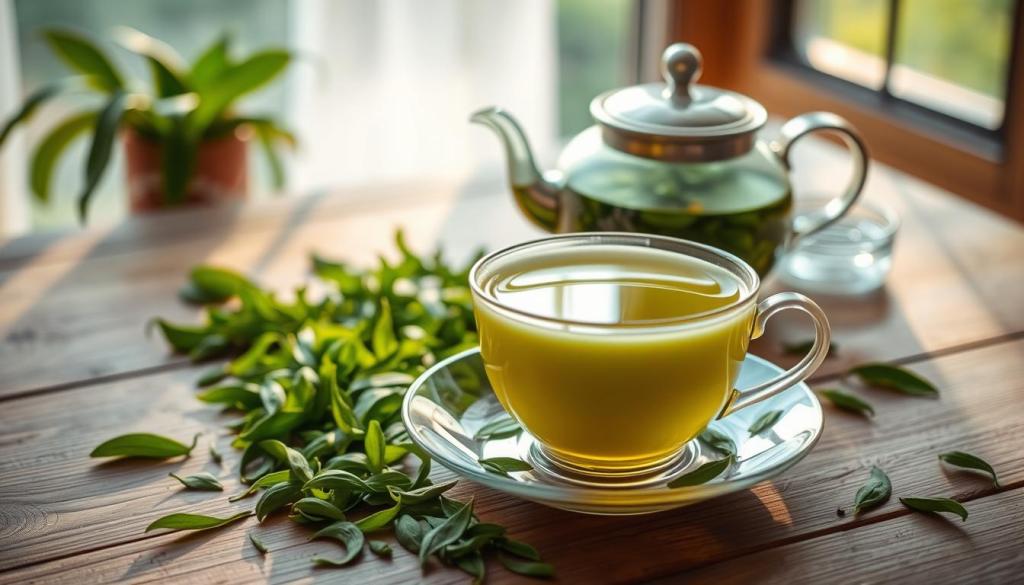
Certain teas can help keep your cholesterol levels healthy. Green tea, black tea, and herbal teas have compounds that are good for your heart.
A 2020 review looked at 31 studies. It found green tea lowers LDL (bad) and total cholesterol. Catechins, antioxidants in green tea, fight inflammation and cancer.
Black and white teas also help with cholesterol. Most studies show they lower total and LDL cholesterol. But, their effect on HDL (good) cholesterol is not clear.
Optimal Tea Dosage for Cholesterol Management
There’s no set amount of tea for cholesterol. It varies based on age, health, and diet. A 2023 study found drinking three cups of green tea daily lowered total cholesterol in people with type 2 diabetes and nephropathy.
Herbal teas might affect some medicines. Always talk to a doctor before using tea for cholesterol.
Choosing High-Quality Tea
Choose teas from trusted brands that check for contaminants. Green tea has less caffeine than coffee, making it a good choice for many.
“Green tea may significantly lower both total and LDL cholesterol levels,” according to a recent meta-analysis.
Avocado: A Heart-Healthy Superfood
Avocados are more than just a tasty addition to your meals. They are a real powerhouse for heart health. These creamy fruits are full of monounsaturated fats, like oleic acid. These fats help lower bad cholesterol and raise good cholesterol.
Nutritional Profile of Avocados
Avocados are a nutritional gem, packed with compounds that boost heart health. Eating at least two servings of avocado a week can lower heart disease risk by 16%. It also lowers coronary heart disease risk by 21% compared to those who rarely eat avocados.
Replacing certain fatty foods with avocado can lower cardiovascular disease risk by 16% to 22%. This shows how avocados can be a heart-healthy choice.
Creative Ways to Enjoy Avocados
Adding avocados to your diet is easy and tasty. Try adding sliced avocado to sandwiches, salads, or even your morning toast. It adds a creamy and heart-healthy twist.
Avocado oil, with its mild, nutty flavor, is a healthier cooking oil option. Whether mashed into guacamole or blended into a smoothie, avocados are a versatile and nutritious choice for heart health.
FAQ
What are the most effective cholesterol-lowering foods to incorporate into my diet?
To lower cholesterol, eat nuts, fatty fish, and whole grains. Also, include fruits and berries, legumes, dark leafy greens, olive oil, soy-based foods, garlic, dark chocolate, tea, and avocados.
How do nuts and seeds help lower cholesterol?
Nuts like walnuts and almonds are full of healthy fats. They can lower bad cholesterol. Chia seeds and flaxseeds have fiber that helps remove cholesterol from the body.
What are the benefits of eating fatty fish for heart health?
Fatty fish like salmon are rich in omega-3s. These fats can boost good cholesterol and lower bad fats. This can reduce heart disease risk.
How do whole grains help manage cholesterol levels?
Whole grains, like oats, have beta-glucan. This fiber helps remove cholesterol and bile. It lowers bad cholesterol and total cholesterol.
What are the heart-healthy benefits of fruits and berries?
Fruits and berries are full of fiber. This fiber helps remove cholesterol and stops the liver from making more. Antioxidants in berries also help manage cholesterol.
How can legumes help lower cholesterol?
Legumes, like beans, are high in fiber. This fiber can lower bad cholesterol. They also help prevent obesity, diabetes, and high blood pressure.
What are the cholesterol-lowering properties of dark leafy greens?
Dark greens, like kale, have lutein and carotenoids. These can lower heart disease risk. They help remove bile acids from the body.
How can olive oil and other healthy oils help manage cholesterol?
Olive oil can increase good cholesterol and lower bad cholesterol. Replacing saturated fats with olive oil is beneficial. Avocado oil and others also help manage cholesterol.
What are the heart-healthy benefits of soy-based foods?
Soy foods, like tofu, can lower bad cholesterol and raise good cholesterol. Eating 25 grams of soy protein daily can reduce cholesterol by 5 to 6%.
How can garlic help lower cholesterol levels?
Garlic has compounds like allicin that can lower bad cholesterol. While it takes a lot of garlic, it can help manage cholesterol. Garlic supplements can also be beneficial.
What are the cholesterol-lowering benefits of dark chocolate and cocoa?
Dark chocolate and cocoa have flavonoids that can lower bad cholesterol. Eating dark chocolate with 75-85% cocoa or using cocoa powder can be heart-healthy.
How do different types of tea help lower cholesterol?
Green and black tea have compounds that can lower bad cholesterol. Catechins in these teas also reduce inflammation and oxidation.
What are the cholesterol-lowering benefits of avocados?
Avocados have healthy fats and fiber. They can lower bad cholesterol and raise good cholesterol. Replacing other fats with avocados can also lower total cholesterol and triglycerides.
Source Links
- 10 Foods to Lower Cholesterol – https://www.massgeneralbrigham.org/en/about/newsroom/articles/10-foods-to-lower-cholesterol
- Foods To Help Lower LDL (‘Bad’) Cholesterol – https://www.webmd.com/cholesterol-management/ss/slideshow-cholesterol-lowering-foods
- About Cholesterol – https://www.cdc.gov/cholesterol/about/index.html
- What is Cholesterol? – https://www.heart.org/en/health-topics/cholesterol/about-cholesterol
- High cholesterol – Symptoms and causes – https://www.mayoclinic.org/diseases-conditions/high-blood-cholesterol/symptoms-causes/syc-20350800
- The Top 9 Nuts to Eat for Better Health – https://www.healthline.com/nutrition/9-healthy-nuts
- How do nuts help your heart health? – https://www.mayoclinic.org/diseases-conditions/heart-disease/in-depth/nuts/art-20046635
- Nuts & Seeds For A Healthy Heart – https://www.megawecare.com/good-health-by-yourself/heart-health/best-nuts-seeds-for-a-healthy-heart
- Fatty Fish & Your Cholesterol – https://www.webmd.com/cholesterol-management/features/low-cholesterol-diet-fatty-fish
- Omega-3 Fatty Acids & the Important Role They Play – https://my.clevelandclinic.org/health/articles/17290-omega-3-fatty-acids
- The whole truth about whole grains – https://www.mayoclinic.org/healthy-lifestyle/nutrition-and-healthy-eating/in-depth/whole-grains/art-20047826
- Can eating certain foods help improve your cholesterol levels? – https://www.mayoclinic.org/diseases-conditions/high-blood-cholesterol/in-depth/cholesterol/art-20045192
- Get to Know Grains: Why You Need Them, and What to Look For – https://www.heart.org/en/healthy-living/healthy-eating/eat-smart/nutrition-basics/whole-grains-refined-grains-and-dietary-fiber
- 17 Incredibly Heart-Healthy Foods – https://www.healthline.com/nutrition/heart-healthy-foods
- Berry Good for Your Heart – https://www.hopkinsmedicine.org/health/wellness-and-prevention/berry-good-for-your-heart
- Berries: emerging impact on cardiovascular health – https://pmc.ncbi.nlm.nih.gov/articles/PMC3068482/
- Got high cholesterol? Here are five foods to eat and avoid – https://theconversation.com/got-high-cholesterol-here-are-five-foods-to-eat-and-avoid-63941
- Study shows pinto beans may lower cholesterol more than oatmeal – https://news.asu.edu/content/study-shows-pinto-beans-may-lower-cholesterol-more-oatmeal
- Leafy Greens, The Superfood | Western Missouri Medical Center – https://wmmc.com/leaf-greens-the-superfood/
- The 13 Healthiest Leafy Green Vegetables – https://www.healthline.com/nutrition/leafy-green-vegetables
- The effect of green leafy and cruciferous vegetable intake on the incidence of cardiovascular disease: A meta-analysis – https://pmc.ncbi.nlm.nih.gov/articles/PMC4973479/
- Cholesterol and Cooking: Fats and Oils – https://www.webmd.com/cholesterol-management/features/cholesterol-and-cooking-fats-and-oils
- Discover What the Healthiest Oils Are to Lower Your Cholesterol – https://www.verywellhealth.com/healthiest-cooking-oils-for-high-cholesterol-697832
- Fats and oils – https://www.heartuk.org.uk/low-cholesterol-foods/fats-and-oils
- Soy Protein and Cholesterol: Benefits, Risks, How Much to Eat – https://www.webmd.com/cholesterol-management/features/soy-and-cholesterol
- LDL cholesterol: Soybean protein may be as effective as statins – https://www.medicalnewstoday.com/articles/soybean-protein-may-help-lower-cholesterol-be-as-beneficial-as-statins
- Does garlic lower cholesterol? – https://www.medicalnewstoday.com/articles/does-garlic-lower-cholesterol
- Effect of garlic on cardiovascular disorders: a review – https://pmc.ncbi.nlm.nih.gov/articles/PMC139960/
- Dark chocolate – https://www.heartuk.org.uk/low-cholesterol-foods/dark-chocolate
- Eating almonds and dark chocolate lowers bad cholesterol – https://www.heart.org/en/news/2019/10/25/eating-almonds-and-dark-chocolate-lowers-bad-cholesterol
- Heart disease: Can consuming cocoa help lower risk? – https://www.medicalnewstoday.com/articles/cocoa-may-help-lower-blood-pressure-cholesterol-risk
- The Best Tea to Help Lower Cholesterol, According to Dietitians – https://www.eatingwell.com/best-tea-to-help-lower-cholesterol-8652097
- Herbal tea for high cholesterol: Potential benefits and teas to try – https://www.medicalnewstoday.com/articles/herbal-teas-for-cholesterol
- Herbal Teas for Cholesterol Management: Know the Facts – https://www.healthline.com/health/high-cholesterol/herbal-tea
- Eating two servings of avocados a week linked to lower risk of cardiovascular disease – https://newsroom.heart.org/news/eating-two-servings-of-avocados-a-week-linked-to-lower-risk-of-cardiovascular-disease
- Avocados: Effect on cholesterol and ways to eat them – https://www.medicalnewstoday.com/articles/is-avocado-good-for-cholesterol
- Avocado and Cholesterol – https://avocadosfrommexico.com/avocado-nutrition/avocado-and-cholesterol/


 trim down and shape up
Leave a comment