



Your workout routine might include strength training, high-intensity interval training, and cardio. You might aim to tone your body, build muscle, or boost endurance. So, should you do more reps or lift heavier weights?
Starting strength training can be tricky, with many conflicting tips. Some say use heavy weights for a few reps, while others suggest light weights for many reps. Your choice depends on what you want to achieve, like growing muscle, keeping lean muscle, or shedding pounds. The American College of Sports Medicine suggests beginners do 1-3 sets of 8-12 reps at 70-85% of their max weight to build strength and muscle.
Key Takeaways
- Finding the right rep range and weight is key for your fitness goals.
- Beginners should start with lighter weights and higher reps to focus on proper form and technique.
- Gradually increasing weight and adjusting rep ranges can help you achieve your strength and muscle building goals.
- Incorporating both low-rep, heavy weight and high-rep, light weight training can lead to well-rounded fitness improvements.
- Mixing up your routine and challenging your body in different ways can help maintain motivation and continue progress.
Understanding the Fundamentals of Strength Training
To start an effective exercise plan, you need to know the basics of muscle growth and strength training. Muscle hypertrophy, or growth, happens when you gradually increase the stress on your muscles. This makes them stronger over time.
The Science Behind Muscle Development
Muscle growth is called hypertrophy, where muscle fibers get bigger. There are two main types of fibers: Type 1 (slow-twitch) and Type 2 (fast-twitch). Type 1 fibers help with endurance, while Type 2 fibers are key for strength and power.
Knowing the difference between these fibers helps you focus your workouts. This way, you can reach your fitness goals better.
Basic Principles of Progressive Overload
- To build muscle and increase strength, you need to gradually challenge your muscles by increasing the demands placed on them over time.
- This can be achieved by gradually increasing the weight, reps, sets, or intensity of your strength training exercises.
- Providing your muscles with a new stimulus through progressive overload is the key to continued muscle growth and strength gains.
Different Types of Muscle Fibers
Your muscles have a mix of Type 1 and Type 2 fibers. Each type has its own role and function. Knowing this helps you create a better exercise plan.
This plan can help you achieve your fitness goals. Whether it’s building muscle hypertrophy, increasing strength training, or boosting muscle fibers endurance.
“Strength training is not just about lifting heavy weights; it’s about understanding the underlying principles that drive muscle growth and adaptation.”
By learning the basics of strength training, you can create a workout plan that works. It can help you build muscle hypertrophy, boost strength training, or target specific muscle fibers.
The Impact of Heavy Weights and Low Repetitions

The debate over heavy weights versus high repetitions in strength training is ongoing. Both methods can significantly impact your fitness goals. If you want to build muscle strength and increase muscle mass, lifting heavy with low reps (1-5) at 90-95% of your max is effective.
This method targets Type 2 muscle fibers, key for powerful movements. A 2016 study showed that heavy weights and fewer reps lead to more strength gains than lighter weights with more reps. This is why powerlifters and competitive bodybuilders prefer it for muscle strength and muscle mass.
“The advice given in the article emphasizes the importance of determining individual fitness goals and mindset as factors when deciding between lifting heavier weights with low repetitions or lighter weights with high repetitions.”
Yet, this method is tougher on the body and may need longer to recover. For those new or aiming for a sleek and toned look, lighter weights with more reps (12-15) are better. They boost endurance and muscle definition.
Choosing between heavy weights and lighter ones depends on your goals, experience, and preferences. The goal is to find a balance and stick to your routine. Consistency is key for lasting results.
Benefits of Light Weights and High Repetitions

The debate on “more reps or more weight” in strength training is ongoing. Heavy weights help build muscle, but light weights and high reps have their own benefits. They can be a great addition to your workout routine.
Muscle Endurance and Stamina
Using light weights (about 50% of your one-rep max) and doing 12-15 reps or more targets your Type 1 muscle fibers. These fibers are key for endurance and stamina. This method can boost your muscle endurance, letting you hold muscle contractions longer.
Fat Loss and Toning Benefits
Light weight, high-rep workouts are good for losing fat and toning. They raise your metabolic rate and burn more calories. This can lead to a leaner, toned body. Plus, they’re easier on your joints, making them great for those who want to look toned or are stressed or tired.
Recovery and Injury Prevention
Light weights with high reps are gentler on your joints and connective tissues. This can aid in better recovery and lower injury risk. It’s a good choice for keeping fit without putting too much strain on your body.
Combining light and heavy weight training in your routine can offer a balanced fitness approach. It meets different goals, like muscle endurance, fat loss, or overall strength and power.
“Prioritizing form and technique over the amount of weight on the bar is recommended when using light weights.”
– Teddy Savage, national lead trainer at Planet Fitness
Aligning Your Training with fitness goals, workout routine

Finding your fitness goals is key to picking the right workout routine and exercise plan. Whether you want to lose weight, build muscle, or improve overall health, a tailored training plan can make a big difference.
For keeping fit, mixing heavy and light weights works well. Those looking to grow muscle can choose either, as long as the exercises are tough. But, if you’re after absolute strength gains, using heavier weights with fewer reps might be better.
When planning your workout routine, think about your schedule, what you enjoy, and safety. Try a program for at least three weeks before changing it. This lets your body adjust and improve.
- Percentage of individuals unaware of their current fitness level: 42%
- Average number of bodyweight squats beginners can perform in a minute: 25
- Ratio of successful fitness goal achievement with SMART goals vs. vague goals: 3:1
To hit your fitness goals, pick an exercise plan that fits your needs and likes. Understanding strength training basics and choosing the right method can lead to great results and a rewarding workout routine.
“Achievers are driven by success and measurable results. Setting clear, quantifiable goals like ‘add 20 pounds to my deadlift in 6 weeks’ or ‘lose 5 pounds in 30 days’ will give them the sense of accomplishment they seek.”
The Role of Time Under Tension in Muscle Growth
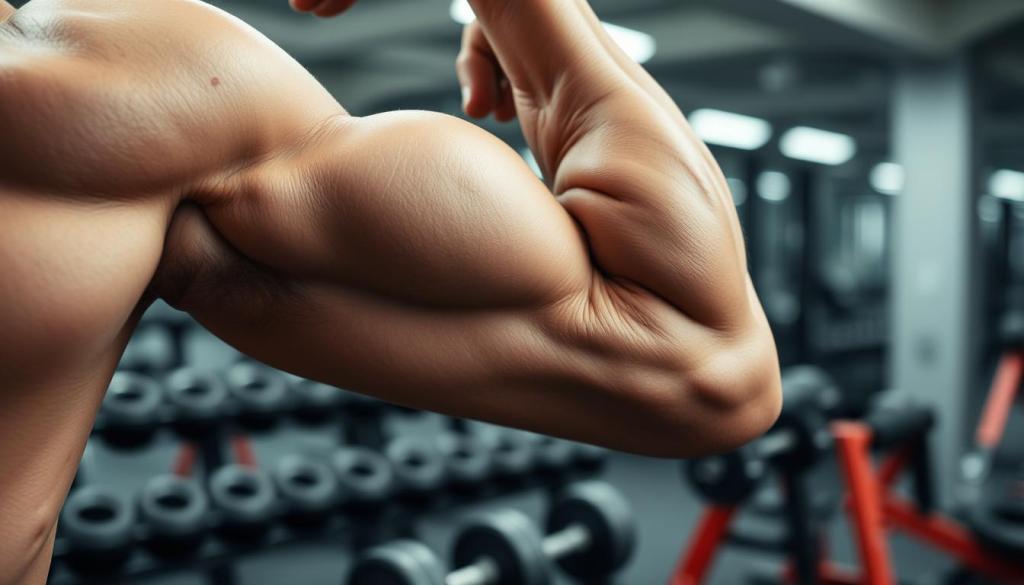
Building muscle is all about time under tension (TUT). TUT is how long your muscles are active during a rep. Studies show that changing TUT can really help muscles grow.
Understanding Rep Speed and Control
How fast you do reps affects TUT and muscle growth. Aim for 1-8 seconds per rep for best results. Reps slower than 10 seconds might not work as well.
It’s key to control the lowering part of a rep. A slow, controlled move increases muscle tension. This leads to more muscle growth.
Optimizing Rest Periods Between Sets
Rest time between sets is also important for muscle growth. Rest for no more than 2 minutes between sets. This helps your muscles recover and stay strong.
If you want better endurance, rest for about 90 seconds. This keeps your muscles tense longer, improving stamina.
“Proper time under tension and rest periods are crucial for maximizing muscle growth and performance.”
Using the right TUT strategies can change your muscle-building game. Knowing about rep speed, control, and rest can help you reach your muscle-building goals.
Combining Both Approaches for Maximum Results

Building muscle and reaching your fitness goals is all about finding the right mix. Using heavy weights and low reps, and light weights with high reps, is key. This mix helps you build muscle and get stronger.
Studies show that setting clear, achievable goals helps you stay on track. It’s best to work on 2-3 goals at a time for 12-18 weeks. This way, you can make steady progress in strength, flexibility, and skills.
Switching between heavy and light weights keeps your workouts fresh and prevents plateaus. It also helps avoid injuries and keeps your muscles guessing. This approach boosts both strength and endurance.
It’s important to plan your workouts carefully to avoid overloading your body. Rest and recovery are crucial for avoiding overtraining. Staying consistent and making smart changes in your routine helps your muscles grow.
“It takes six times less effort to maintain than gain in terms of fitness goals.” – Charles Poliquin
By mixing heavy and light weight training, you can reach your full potential. This approach prevents plateaus and makes reaching your muscle and strength goals more enjoyable.
Common Mistakes to Avoid in Strength Training

Starting a strength training journey is exciting and rewarding. But, it’s key to watch out for common mistakes. These can slow down your progress. By fixing these issues, you can train better and safer, leading to better fitness.
Form and Technique Errors
Keeping the right form and technique is vital in strength training. It helps you get the most out of your workouts and keeps you safe. Many gym-goers skip warming up, which raises injury risks. Also, a lot of people lift with bad form, which can lead to injuries and slow down progress.
Progressive Overload Mistakes
Progressive overload means slowly making your workouts harder. But, mistakes in this can set you back. Studies show that lifting too fast and using momentum can limit gains. Also, many lifters choose weights that are too light, which doesn’t help reach fitness goals.
To avoid these mistakes, focus on proper form and slowly increase the intensity of your workouts. Listen to your body to make sure you’re pushing yourself but not too hard. By doing this, you can get the most out of your strength training and reach your fitness goals.
Adapting Your Training Based on Experience Level
As you move forward in your fitness goals and workout routine, it’s key to adjust your training. Beginners should start with mastering the right form and technique. Use moderate weights and rep ranges to build a strong base and avoid injuries.
As you gain more experience, try different rep ranges and weights to see what suits you best. Advanced lifters might find benefit in specialized programs with varying intensity. Always listen to your body and tweak your training to keep moving forward and stay motivated.
Having a skilled personal trainer is very helpful. They can create a strength training plan that fits your level and goals. They’ll teach you the right form, how to increase your load, and make changes to keep you improving.
FAQ
What is the difference between doing more reps or lifting heavier weights, and which one is better for my fitness goals?
Choosing between more reps or heavier weights depends on your fitness goals. Heavy weights with low reps (1-5) at 90-95% of your max engage Type 2 fibers. This boosts strength and muscle growth, great for powerlifters and bodybuilders.
On the other hand, lighter weights with high reps (12-15 or more) at 50% of your max activate Type 1 fibers. This improves endurance and stamina, helping with fat loss and toning.
What are the fundamental principles of muscle development and progressive overload?
Muscle growth comes from hypertrophy, which is boosted by progressive overload. This means gradually increasing muscle stress over time. There are two main muscle fibers: Type 1 for endurance and Type 2 for strength and power.
Knowing this helps create a workout plan that meets your fitness goals.
What are the benefits of lifting heavier weights with lower repetitions?
Lifting heavy weights with low reps (1-5) at 90-95% of your max engages Type 2 fibers. This boosts strength and muscle growth. A 2016 study showed that heavier weights and fewer reps lead to more strength gains than lighter weights with more reps.
What are the advantages of using lighter weights with higher repetitions?
Using light weights with high reps (12-15 or more) at 50% of your max activates Type 1 fibers. This improves endurance and stamina. It’s also better for fat loss and toning, as it increases calorie burn.
It’s gentler on joints, promoting better recovery and reducing injury risk. It’s a good choice for those aiming for a toned look or who are stressed or fatigued.
How do I determine the best approach for my fitness goals?
Knowing your fitness goals is key to choosing the right approach. For general fitness, a mix of heavy and light lifting works well. Those aiming for muscle size can use either method, as long as the sets are challenging.
For strength gains, heavier weights with fewer reps are better. Consider your time, enjoyment, and safety when planning your workouts.
How important is time under tension for muscle growth?
Time under tension is vital for muscle growth. Research shows that reps between 1-8 seconds can maximize growth. Very slow reps (over 10 seconds) may not be as effective.
Controlling rep speed and focusing on the lowering phase of movements can enhance growth. Rest periods between sets also matter; for growth, rest should not exceed 2 minutes, and for endurance, it should be limited to 90 seconds.
Is it better to alternate between heavy weights with low reps and light weights with high reps?
Combining heavy and light weight approaches can offer comprehensive benefits. This strategy prevents plateaus, reduces injury risk, and keeps workouts interesting. Alternating between these methods in different sessions or on a weekly/monthly basis is effective.
The key is to stay consistent and plan routine changes to challenge muscles and promote growth.
What are some common mistakes to avoid in strength training?
Common mistakes include poor form and technique, leading to injuries and reduced effectiveness. Increasing weight too quickly or not at all can hinder progress. Other mistakes include inadequate rest, neglecting muscle groups, and not varying exercises.
Avoiding these mistakes ensures safer and more effective workouts.
How should I adjust my training as I become more experienced?
Training should evolve with your experience level. Beginners should focus on mastering form and technique with moderate weights and reps. As you gain experience, try different rep ranges and weights to find what works best for your goals.
Advanced lifters may benefit from specialized programs, including periodization and varying intensity. Listen to your body and adjust your training as you progress to avoid plateaus and stay motivated.
Source Links
- Discover whether more reps or more weight is best – https://www.themanual.com/fitness/more-reps-or-more-weight-workout-guide/
- More Reps or More Weight? What’s Better for Muscle Growth? – https://www.chicagoathleticclubs.com/blog/more-reps-or-more-weight
- The Great Weight Debate: Is Heavier Weight or More Reps Better for You? – https://greatist.com/fitness/lifting-heavier-vs-more-reps
- 5 basics of a well-rounded fitness routine – https://www.mayoclinic.org/healthy-lifestyle/fitness/in-depth/fitness-training/art-20044792
- Guidelines and Fundamentals of Strength Training – https://iascfitness.org/guidelines-fundamentals-strength-training/
- Should you do more reps or lift heavier weights? A trainer weighs in – https://www.today.com/health/diet-fitness/low-weight-high-reps-or-high-weight-low-reps-rcna20248
- Which Is Better: High- or Low-Rep Workouts? – https://www.onepeloton.com/blog/high-reps-vs-low-reps/
- Are Light Weights Enough to Build Strength? – https://www.onepeloton.com/blog/low-weight-high-reps/
- How to Incorporate Lifting Light Weights Into Your Routine – https://www.prevention.com/fitness/workouts/g43283016/lifting-light-weights-benefits/
- Setting Realistic Fitness Goals: A Beginner’s Roadmap to Success | Decent – https://www.decent.com/blog/setting-realistic-fitness-goals-a-beginners-roadmap-to-success
- How to create a workout plan for your fitness goals – https://www.piedmont.org/living-real-change/how-to-create-a-workout-plan-for-your-fitness-goals
- Align fitness strategy and motivation to hit your goals – https://motivationcode.com/fitness-and-motivation/
- Time Under Tension: How to Do This Type of Strength Training – https://www.healthline.com/health/exercise-fitness/time-under-tension
- Time Under Tension Training Plan – Muscle & Fitness – https://www.muscleandfitness.com/workout-plan/workouts/workout-routines/time-under-tension-training-plan/
- How to combine strength, flexibility and skill training. — The Sustainable Training Method – https://www.thesustainabletrainingmethod.com/tstm-blog/2023/5/17/how-to-combine-strength-flexibility-and-skill-training
- The Advantages of Combining Cardio and Strength Training for Optimal Weight Loss Results – https://healthiapp.com/blog/the-advantages-of-combining-cardio-and-strength-training-for-optimal-weight-loss-results
- The Most Common Weightlifting Mistakes – https://www.piedmont.org/living-real-change/the-most-common-weightlifting-mistakes-people-make
- Should You Go to the Gym Every Day? – https://www.verywellfit.com/how-to-avoid-the-5-biggest-workout-mistakes-3495983
- Weight-training do’s and don’ts – https://www.mayoclinic.org/healthy-lifestyle/fitness/in-depth/weight-training/art-20045842
- Adapting Our Fitness Routines Based on Our Goals and Our Age – https://www.linkedin.com/pulse/adapting-our-fitness-routines-based-goals-age-scott-m-ryan-rqvbc
- In Training, Consistency Is the Key to Your Fitness Goals – https://www.nifs.org/blog/in-training-consistency-is-the-key-to-your-fitness-goals
- What Types of Adjustments Should You Make To Your Training Plan – TrainerRoad Blog – https://www.trainerroad.com/blog/what-types-of-adjustments-should-you-make-to-your-training-plan/



 trim down and shape up
Leave a comment