

A recent study has uncovered disturbing facts about sucralose, a sweetener in diet sodas and sugar-free foods. It shows that sucralose-6-acetate, a byproduct of sucralose, can harm DNA and cells. This raises serious concerns about its impact on our health over time.
Key Takeaways
- Sucralose-6-acetate, a metabolite of the artificial sweetener sucralose, has been found to be genotoxic and cause DNA damage.
- Recent studies suggest that sucralose-6-acetate can exceed the European Food Safety Authority’s threshold of toxicological concern for genotoxic substances.
- Exposure to sucralose-6-acetate has been linked to increased expression of genes associated with inflammation, oxidative stress, and cancer.
- Sucralose consumption has also been associated with the development of leaky gut syndrome, which can further contribute to health problems.
- Concerns have been raised about the potential long-term health effects of consuming products containing sucralose, including an increased risk of heart disease and cancer.
Understanding Sucralose and Its Chemical Composition
Sucralose is an artificial sweetener, 600 times sweeter than sugar. It’s found in many products like baked goods, soda, and gum. Knowing how sucralose is made and what it’s made of is key to understanding its safety and health effects.
What is Sucralose-6-acetate?
Sucralose-6-acetate is a fat-soluble compound made during sucralose’s production and metabolism. It’s found in commercial sucralose samples, up to 0.67% of the total sucralose content.
Formation During Manufacturing and Digestion
Sucralose-6-acetate forms during both making and digestion of sucralose. Studies in rodents show it can be in fecal samples up to 10% of the sucralose amount. This suggests intestinal acetylation plays a role in its formation.
Prevalence in Commercial Products
Recent studies found commercial sucralose samples can have up to 0.67% sucralose-6-acetate. This small amount is still important for assessing the safety and health effects of artificial sweeteners in products.
| Compound | Concentration in Commercial Samples | Relative Concentration in Fecal Samples |
|---|---|---|
| Sucralose | – | 100% |
| Sucralose-6-acetate | Up to 0.67% | Up to 10% |
“The formation of sucralose-6-acetate can occur during both the manufacturing and digestion of sucralose, with levels up to 10% relative to the amount of sucralose consumed.”
Breaking News: Groundbreaking Study Reveals DNA Damage Concerns
A recent study by North Carolina State University and the University of North Carolina at Chapel Hill has found something alarming. They discovered that sucralose, a common artificial sweetener, can cause DNA damage. This damage is due to a chemical called sucralose-6-acetate, which forms during sucralose’s production and digestion.
The researchers tested sucralose-6-acetate on human blood cells and gut tissues. Their results were shocking. They found that this chemical can break down DNA in cells, raising serious health concerns about sucralose use.
“The mounting evidence of the significant risks associated with sucralose consumption is deeply concerning and warrants a closer examination of its safety and regulatory status,” said the study’s lead author.
Sucralose, known as Splenda, is a favorite in the U.S. with 51.4% of Americans choosing it over other sweeteners. But this study questions its safety as a sugar substitute.
The study suggests that sucralose-6-acetate could lead to cancer if DNA damage isn’t fixed. It also found that sucralose and its byproduct can cause “leaky gut” syndrome. This is when the gut lining lets harmful substances into the bloodstream.
The study’s findings have sparked a debate on artificial sweeteners’ safety. It calls for stricter rules and more research. As consumers, it’s important to stay updated on scientific news and make smart choices about what we eat.
How Sucralose Damages DNA Through Genotoxic Effects

New studies reveal the harmful genotoxic effects of sucralose, a common artificial sweetener. Genotoxicity means a substance can harm genetic material, like DNA. Research shows how sucralose can cause this damage.
Understanding Genotoxicity
Genotoxicity is key in checking if a chemical is safe. It shows if a substance can harm DNA, leading to mutations and other genetic issues. Knowing a chemical’s genotoxic potential helps understand its safety and health risks.
DNA Strand Breakage Mechanisms
Studies found sucralose-6-acetate, a byproduct of sucralose, is very concerning. It can cause DNA strand breakage, which harms genetic material.
Cellular Impact Assessment
Deep studies on cells show sucralose-6-acetate’s harmful effects. It boosts genes linked to inflammation, oxidative stress, and cancer. The MT1G gene shows the biggest increase, highlighting sucralose-6-acetate’s danger.
“The genotoxic effects of sucralose-6-acetate are a cause for concern, as they have the potential to disrupt the genetic integrity of cells and potentially contribute to the development of various health problems.”
The Link Between Sucralose and Leaky Gut Syndrome
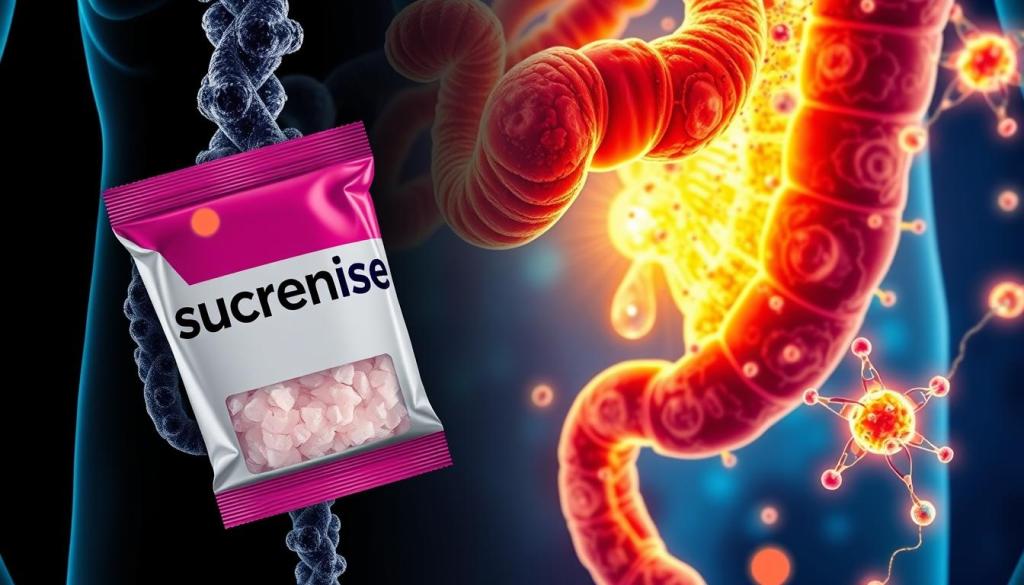
Research has found a scary link between sucralose and leaky gut syndrome. Studies show that sucralose and its byproduct can damage the gut’s lining. This makes the gut more open and leaky.
The gut has a thin layer of cells called the epithelium. It keeps bad stuff out and good stuff in. But if it gets damaged, bad stuff can get into the blood. This can start an inflammation and cause health issues.
A study tested human gut tissues with sucralose and its byproduct. The results were shocking. Both chemicals messed with the tight junctions between cells. This made the gut’s barrier weak, letting more stuff through.
This study shows the dangers of sucralose leaky gut. It’s key to keep the intestinal barrier integrity for good gut health. People should know the risks of sucralose in foods and drinks.
| Compound | Effect on Intestinal Barrier |
|---|---|
| Sucralose | Impaired tight junctions, increased permeability |
| Sucralose-6-acetate | Impaired tight junctions, increased permeability |
This study calls for more research and awareness about sucralose consumption. As consumers, we need to know and choose wisely to protect our gut health and well-being.
Scientific Evidence: Laboratory Findings and Research Methods
Scientists have done a lot of sucralose research methods to see how it affects human health. They used in vitro testing to learn about the effects of sucralose-6-acetate. This is a byproduct made when sucralose is made and digested.
In Vitro Testing Procedures
Researchers tested human blood cells with different amounts of sucralose-6-acetate. They watched for genotoxicity, or damage to the genetic material. The tests showed sucralose-6-acetate could break DNA strands and cause other harmful effects.
Human Blood Cell Response
They also used the RepliGut® System to mimic human intestines. This allowed them to see how sucralose-6-acetate and sucralose affect human cells. They used RNA-seq analysis to study this at a molecular level.
Gut Tissue Analysis Results
The study looked at how sucralose-6-acetate and sucralose affect the gut. They measured how well the gut tissue works. This helped them understand if these compounds could cause leaky gut syndrome.
“The findings from these comprehensive research methods underscore the need for a closer examination of the safety of sucralose and its byproducts, particularly in light of their potential to disrupt cellular processes and compromise gut health.”
Health Implications of Sucralose Consumption

Research shows that long-term sucralose consumption might harm our health. It could cause DNA damage, increase inflammation, and be linked to leaky gut syndrome and digestive problems. These findings raise concerns about the use of artificial sweeteners and their effects on our health.
Studies found that sucralose can turn into sucralose-6-acetate (S6A) in our gut. This S6A can damage DNA, which might raise cancer risk. It also activates genes linked to inflammation, oxidative stress, and cancer in our intestines.
Sucralose, in its pure form or as S6A, can harm our gut. It can cause a leaky gut condition. This can lead to inflammatory bowel diseases and make chronic liver disease worse.
| Potential Health Risks of Sucralose Consumption | Findings |
|---|---|
| DNA Damage | Sucralose-6-acetate (S6A) was found to directly damage DNA, potentially increasing cancer risk. |
| Inflammation and Oxidative Stress | Exposure to S6A activated genes linked to inflammation and oxidative stress in human intestinal tissue. |
| Leaky Gut Syndrome | Sucralose, in both its pure form and as S6A, compromised the intestinal cell binding elements, leading to a leaky gut. |
| Immune System Suppression | High doses of sucralose have been shown to suppress the immune system in mice, decreasing T-cell levels. |
These studies highlight the dangers of sucralose consumption over time. They show we need more research and to be aware of the risks. As artificial sweeteners become more common, it’s important to look for safer, natural options to satisfy our sweet tooth.
Understanding the Threshold of Toxicological Concern

The European Food Safety Authority has set a strict threshold of toxicological concern for all genotoxic substances at 0.15 micrograms per person per day. This safety standard aims to limit exposure to chemicals that have the potential to damage DNA and cause genetic alterations. However, a recent study has raised concerns about the safety of sucralose, a widely used artificial sweetener.
The study found that the trace amounts of sucralose-6-acetate, a genotoxic metabolite of sucralose, in a single daily sucralose-sweetened drink may exceed this toxicological threshold, even before accounting for additional metabolites that may form after consumption. This revelation challenges the current sucralose safety standards and calls for a closer examination of the potential health risks associated with long-term daily sweetener intake.
European Safety Standards
The European Food Safety Authority has set a strict safety limit for genotoxic substances, recognizing the potential for these chemicals to cause DNA damage and increase the risk of cancer. This toxicological threshold is designed to protect consumers from harmful exposure, but the new research suggests that current sucralose regulations may need to be reconsidered.
Daily Exposure Limits
According to the study, the trace amounts of sucralose-6-acetate found in a single daily sucralose-sweetened drink may exceed the European Food Safety Authority’s toxicological threshold of 0.15 micrograms per person per day. This alarming finding raises concerns about the long-term daily sweetener intake and its potential impact on human health.
“The trace amounts of sucralose-6-acetate in a single daily sucralose-sweetened drink may exceed the toxicological threshold set by the European Food Safety Authority, not accounting for additional metabolites produced after consumption.”
Inflammation and Oxidative Stress: The Hidden Dangers

Recent studies have found a link between sucralose and inflammation and oxidative stress. A study found that sucralose-6-acetate, a byproduct of sucralose, can damage DNA. This is concerning.
The study was published in the Journal of Toxicology and Environmental Health Part B: Critical Reviews. It showed that sucralose-6-acetate can increase genes related to inflammation and oxidative stress. This imbalance can harm fatty tissues, DNA, and proteins. It may lead to diseases like diabetes and cancer.
Inflammation from sucralose-6-acetate can cause many health problems. These include heart disease and autoimmune diseases. The study suggests sucralose may be riskier than thought. It calls for a closer look at its safety.
| Compound | Potential Health Risks | Regulatory Concerns |
|---|---|---|
| Sucralose-6-acetate | Genotoxicity (DNA damage)Increased inflammationOxidative stressCarcinogenicity | The European Food Safety Authority (EFSA) has set a toxicological concern threshold of 0.15 micrograms per person per day.Trace levels of sucralose-6-acetate in a single daily beverage sweetened with sucralose may exceed the EFSA’s established threshold.Regulatory bodies like the FDA and JECFA consider sucralose safe for consumption within recommended limits, but the study suggests potential risks due to sucralose-6-acetate. |
The study highlights the dangers of sucralose and its metabolites. It advises people to avoid sucralose in products. Instead, choose natural sweeteners.
“The research was conducted with support from the Engineering Foundation at NC State and calls for a reevaluation of the safety and regulatory status of sucralose, advising individuals to consider avoiding products containing this artificial sweetener.”
Regulatory Status and Safety Concerns

Sucralose, a common artificial sweetener, is facing new safety questions. The FDA says it’s safe, but new research suggests otherwise. This has led to a reevaluation of its safety and guidelines.
FDA Guidelines and Recommendations
The FDA allows sucralose in many foods and drinks. Splenda, a popular brand, has millions of users. But, studies have found sucralose and its byproduct could be harmful.
Current Safety Classifications
- The Joint FAO/WHO Expert Committee and Food Standards Australia New Zealand agree sucralose is safe.
- The European Food Safety Authority has a limit for sucralose-6-acetate, a byproduct of sucralose.
- But, the World Health Organization warns against using artificial sweeteners for weight control or disease prevention.
New studies on sucralose’s effects on DNA and gut health are alarming. This calls for a review of its safety and rules. It’s important for health agencies to keep up with research to protect us.
| Regulatory Body | Safety Classification | Approved Year |
|---|---|---|
| FDA (United States) | Approved for use | N/A |
| JECFA (Joint FAO/WHO) | Classified as safe | N/A |
| Food Standards Australia New Zealand | Classified as safe | N/A |
| European Food Safety Authority | Safe threshold for sucralose-6-acetate | N/A |
| World Health Organization | Advises against use for weight control | N/A |
As we learn more about sucralose’s risks, it’s key for health agencies to stay updated. They must adjust their rules to keep us safe.
Alternative Natural Sweeteners: Safer Options
Health experts are now looking at natural sugar alternatives due to concerns about artificial sweeteners. Stevia and monk fruit are seen as healthier choices. They are plant-based and don’t have the chemical byproducts found in sucralose. Plus, they have lower glycemic indexes, which is good for blood sugar control.
Other natural sweeteners like date sugar, yacon syrup, and coconut sugar are also good options. Honey and maple syrup are also considered better than artificial sweeteners. But, it’s key to remember that even natural sweeteners should be used in moderation. Too much can harm your health.
The search for healthier sugar alternatives is ongoing. Natural sweeteners offer a safer choice compared to artificial ones. By choosing these options, you can enjoy sweetness while taking care of your health.
FAQ
What is sucralose-6-acetate and how is it related to sucralose?
Sucralose-6-acetate is a compound made when the body breaks down sucralose, an artificial sweetener. It’s also present in small amounts in sucralose products before we eat them.
What are the health concerns associated with sucralose-6-acetate?
Studies show that sucralose-6-acetate can harm DNA. It may also increase genes linked to inflammation, oxidative stress, and cancer.
How does sucralose-6-acetate impact gut health?
Research indicates that sucralose-6-acetate and sucralose can damage gut walls. This damage makes the gut more permeable, letting harmful substances into the bloodstream.
What were the key findings of the study on sucralose-6-acetate?
A study by North Carolina State University and the University of North Carolina at Chapel Hill found sucralose-6-acetate is genotoxic. It can break down DNA in cells.
How prevalent is sucralose-6-acetate in commercial sucralose products?
The study found commercial sucralose products contain up to 0.67% sucralose-6-acetate. Fecal samples showed levels up to 10% relative to sucralose, indicating intestinal acetylation.
What are the potential long-term health implications of sucralose consumption?
The study suggests sucralose may pose health risks like DNA damage and increased inflammation. It could also lead to oxidative stress and cancer. Additionally, it may cause leaky gut syndrome and other digestive problems.
How do the current regulatory standards for sucralose compare to the new research findings?
The European Food Safety Authority has a threshold for genotoxic substances at 0.15 micrograms per person per day. The study’s findings indicate a single sucralose-sweetened drink may exceed this threshold. This raises concerns about sucralose’s safety standards.
What are some healthier alternatives to sucralose?
Experts suggest using natural sugar substitutes like stevia, monk fruit, and date sugar. Yacon syrup, coconut sugar, molasses, honey, and maple syrup are also better options than artificial sweeteners like sucralose.
Source Links
- Chemical Found in Common Sweetener Damages DNA – https://news.ncsu.edu/2023/05/genotoxic-chemical-in-sweetener/
- Common artificial sweetener may cause DNA damage, cancer – https://www.medicalnewstoday.com/articles/a-chemical-found-in-common-artificial-sweetener-may-cause-dna-damage-cancer
- Chemical Found in Common Sweetener Damages DNA – Joint BME – https://bme.unc.edu/2023/06/chemical-found-in-common-sweetener-damages-dna/
- Sucralose, A Synthetic Organochlorine Sweetener: Overview of Biological Issues – https://pmc.ncbi.nlm.nih.gov/articles/PMC3856475/
- Not so sweet: Chemical in common artificial sweetener found to damage DNA – https://newatlas.com/health-wellbeing/artificial-sweetener-chemical-damages-dna/
- Chemical found in widely used sweetener breaks up DNA – https://www.news-medical.net/news/20230531/Chemical-found-in-widely-used-sweetener-breaks-up-DNA.aspx
- Does Sucralose Damage DNA? – https://tctmed.com/sucralose-damage-dna/
- Toxicological and pharmacokinetic properties of sucralose-6-acetate and its parent sucralose: in vitro screening assays – PubMed – https://pubmed.ncbi.nlm.nih.gov/37246822/
- Chemical found in ‘widely used sweetner’ damages human DNA, new study says – https://abc3340.com/news/nation-world/chemical-found-in-widely-used-sweetner-damages-human-dna-new-study-says-genotoxic-north-carolina-state-university-sucralose-splenda-susan-shiffman-diet-health-artificial-sugar
- Sucralose: Sweetener May Damage DNA and Increase Cancer Risk – https://www.healthline.com/health-news/sucralose-a-common-artificial-sweetener-may-increase-cancer-risk
- Researchers Warn Against Sucralose After Finding it Damages DNA, Causes Leaky Gut – https://www.food-safety.com/articles/8641-researchers-warn-against-sucralose-after-finding-it-damages-dna-causes-leaky-gut
- Sucralose Non-Carcinogenicity: A Review of the Scientific and Regulatory Rationale – https://pmc.ncbi.nlm.nih.gov/articles/PMC5152540/
- Frontiers | Hazardous Effects of Sucralose and Its Disinfection Byproducts Identified From an E. coli Whole-Cell Array Analysis – https://www.frontiersin.org/journals/environmental-science/articles/10.3389/fenvs.2021.724685/full
- Is Splenda Really As Bad for You As Recent Research Suggests? – https://www.verywellhealth.com/how-bad-is-sucralose-for-your-body-7555369
- New Research with Mice Reveals the Dangers of Sweeteners – https://www.kentscientific.com/blog/new-research-with-mice-reveals-the-dangers-of-sweeteners/?srsltid=AfmBOorIw37zeMBL-Dp0XKeE70LkNmdoQvd7PvZKe81nygR7TL7ymMHT
- Sucralose: From Sweet Success to Metabolic Controversies—Unraveling the Global Health Implications of a Pervasive Non-Caloric Artificial Sweetener – https://pmc.ncbi.nlm.nih.gov/articles/PMC10971371/
- Chemical found in sucralose reportedly damages DNA: ‘It’s something you should not be eating’ – https://studyfinds.org/chemical-splenda-damages-dna/
- This Common Artificial Sweetener Can Break Down DNA, Scientists Warn – https://www.sciencealert.com/this-common-artificial-sweetener-can-break-down-dna-scientists-warn
- New Study Suggests Chemical Found in Sucralose Genotoxic – Genexa – https://www.genexa.com/blog/new-study-on-sucralose/
- NC study discovers chemical in common sweetener damages DNA, can cause cancer – https://www.wral.com/story/nc-study-discovers-chemical-in-common-sweetener-damages-dna-can-cause-cancer/20888182/
- GeneOnline News From Sweet to Risky: The Alarming Findings on Sucralose’s Genotoxicity – – https://www.geneonline.com/sweetner-sucralose-6-acetate-genotoxicity/
- America’s most popular artificial sweetener damages our DNA, scientists say – https://www.newsweek.com/artificial-sweetner-sucralose-dna-damage-1804008
- Digestion of artificial sweetener sucralose appears to create metabolite that damages DNA – https://www.chemistryworld.com/news/digestion-of-artificial-sweetener-sucralose-appears-to-create-metabolite-that-damages-dna/4017552.article
- Study Finds This Popular Artificial Sweetener May Cause Cancer and DNA Damage – https://www.prevention.com/food-nutrition/a44156389/sucralose-artificial-sweeteners-splenda-may-cause-cancer-dna-damage-study/
- Sugar Substitutes: The truth about sugar substitutes: Safe alternative or hidden health risk? | – Times of India – https://timesofindia.indiatimes.com/life-style/health-fitness/health-news/the-truth-about-sugar-substitutes-safe-alternative-or-hidden-health-risk/articleshow/113518990.cms



 trim down and shape up
Leave a comment