


Vitamin D is key for our health, mainly from sunlight. Studies show a link between low vitamin D and depression. You might wonder, what’s the role of vitamin D and does it cause depression? It’s vital to grasp how vitamin D deficiency relates to depression.
Research shows vitamin D levels are tied to depression and anxiety. Depression hits 5.0% of adults, and low vitamin D can make it worse. If you’re feeling down, talking to a doctor about vitamin D and depression is important.
Knowing how vitamin D and depression are connected can guide you. You can learn about vitamin D’s role and signs of deficiency and depression.
Key Takeaways
- Vitamin D is an essential nutrient obtained primarily from sun exposure.
- Vitamin D deficiency has been linked to an increased risk of depression.
- Low levels of vitamin D are associated with increased symptoms of depression and anxiety.
- Depression affects 5.0% of adults, and vitamin D deficiency can exacerbate the condition.
- Talking to a healthcare provider is crucial if you’re suffering from depression and suspect a link to vitamin D deficiency.
- Understanding the connection between vitamin D deficiency and depression can help you take the necessary steps to address the issue.
Understanding Vitamin D: The Sunshine Vitamin
Vitamin D, also known as the sunshine vitamin, is key for strong bones and health. It’s a fat-soluble vitamin that helps with calcium-phosphate balance and bone health. Your body gets vitamin D from the sun, food, and supplements.
How Your Body Processes Vitamin D
Your body works hard to process vitamin D. It starts with the skin making vitamin D from sunlight. Then, the liver and kidneys turn it into its active form. This active form helps keep your bones strong and your health in check.
Natural Sources of Vitamin D
Fatty fish like salmon and mackerel are good sources of vitamin D. So are fortified dairy products and cereals. Sunlight is also a natural source, but it’s harder to get in winter months in northern areas.
Recommended Daily Intake Levels
The daily vitamin D needs change with age and other factors. Babies and kids need 400-600 IU (10-15 mcg) daily. Adults need 600-800 IU (15-20 mcg) daily. Pregnant and nursing moms should aim for 600 IU (15 mcg) daily.
| Age Group | Recommended Daily Intake |
|---|---|
| Infants (0-12 months) | 400 IU (10 mcg) |
| Children (1-18 years) | 600 IU (15 mcg) |
| Adults (19-70 years) | 600 IU (15 mcg) |
| Older Adults (71 years and older) | 800 IU (20 mcg) |
| Pregnant and Lactating Women | 600 IU (15 mcg) |
The Growing Concern of Vitamin D Deficiency in Modern Life

Vitamin D deficiency is a growing concern in today’s world. It affects about 35% of adults in the United States. This issue is linked to health problems like heart disease, diabetes, and depression.
Modern life makes it harder to get enough vitamin D. We spend less time outside, eat less vitamin D-rich foods, and have medical conditions that affect our vitamin D levels.
Some reasons for vitamin D deficiency include:
- Limited sun exposure, especially for those with darker skin
- Eating too few foods rich in vitamin D
- Having certain diseases like kidney or liver problems
Studies show that about 1 billion people worldwide have vitamin D deficiency. In the U.S., about 35% of adults are affected. This is more common in people with darker skin.
To tackle this issue, we need to understand why it happens. Knowing the causes helps us find ways to prevent or manage it. This can lower the risk of related health issues.
| Condition | Description |
|---|---|
| Vitamin D Deficiency | Less than 20 ng/mL |
| Vitamin D Insufficiency | 21-29 ng/mL |
| Vitamin D Sufficiency | Equal to or more than 30 ng/mL |
What Depression Looks Like in Today’s World

Depression is a mood disorder that affects how a person feels and acts. It’s important to know the common signs and symptoms to get help. These can include changes in sleep, appetite, and energy. Also, feeling worthless, having trouble concentrating, and feeling low are signs.
Several risk factors can lead to depression. These include a family history, major life changes, trauma, or certain medical conditions. Knowing these risk factors helps in taking steps to prevent it. If you feel sad, hopeless, or uninterested in things, it’s time to seek help.
Getting professional help is the first step to recovery. A mental health professional can diagnose and create a treatment plan. Understanding depression and its common signs and symptoms helps in seeking help and managing it well.
The Link Between Vitamin D Deficiency and Depression

Research shows a strong link between vitamin D deficiency and depression. Studies reveal that people with low vitamin D are more likely to feel depressed and anxious. A study found that those with low vitamin D levels show more symptoms of depression and anxiety.
The connection between vitamin D and depression is complex. More research is needed to understand how they are linked. Yet, it’s clear that vitamin D is important for our mental health. Key findings include:
- Vitamin D deficiency is linked to a higher risk of depression, especially in older adults.
- Low vitamin D levels are associated with more symptoms of depression and anxiety.
- Vitamin D supplements can help improve depressive symptoms in some people.
Treating vitamin D deficiency is simple with supplements or more sunlight. If you’re feeling depressed, see a doctor to check for vitamin D deficiency and other conditions.
How Vitamin D Affects Your Brain Chemistry
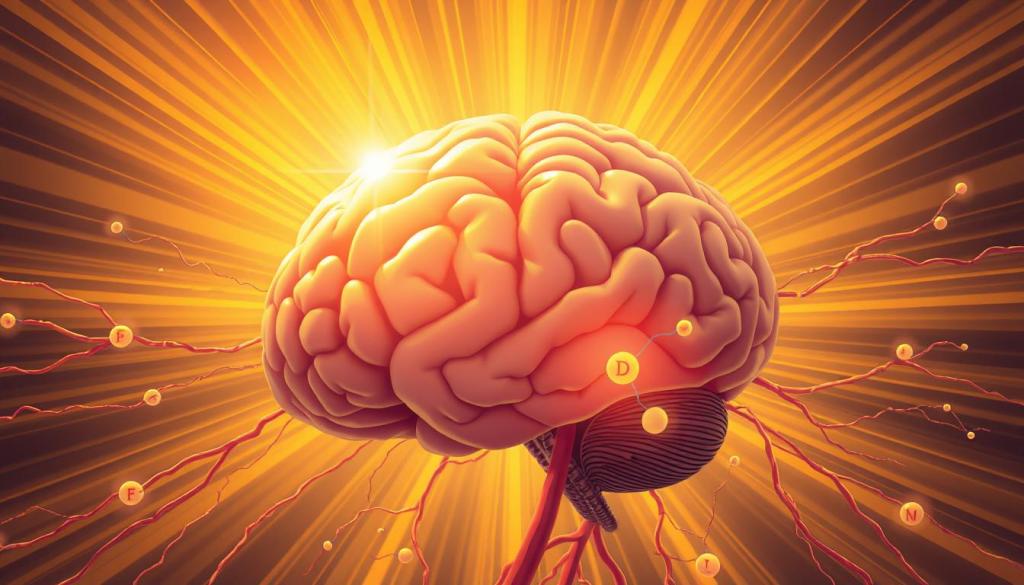
Vitamin D is key to your brain’s chemistry. Studies show it greatly affects your mood and brain function. Vitamin D receptors are in many brain areas. The active form of vitamin D can reach these receptors, changing brain chemistry.
Vitamin D’s role in mood is clear. Scientific evidence links low vitamin D to depression and mood disorders. A study by Durk MR et al. found vitamin D3 helps reduce brain amyloid-β peptides. This is important for fighting Alzheimer’s disease.
Here are some key findings on vitamin D’s effect on brain chemistry:
- Vitamin D deficiency raises dementia risk, especially in adults over 65.
- Low vitamin D may lead to more anxiety and depression. This could increase psychosis risk in children with chromosome 22q11.2 deletion syndrome.
- Early vitamin D deficiency can cause learning and memory problems. It may also lead to autism and schizophrenia-like disorders.
In summary, vitamin D is vital for brain health. A deficiency can harm mood and brain function. This shows vitamin D’s critical role in maintaining healthy brain chemistry.
| Condition | Vitamin D Level | Risk |
|---|---|---|
| Dementia | Less than 25 nmol/l | Increased risk |
| Depression | Less than 25 nmol/l | Increased risk |
| Anxiety | Less than 25 nmol/l | Increased risk |
Recognizing the Signs of Vitamin D Deficiency
Vitamin D deficiency can cause many health problems. You might feel tired, have bone pain, or feel sad. Muscle weakness is another sign. If you notice these symptoms, getting a blood test for vitamin D levels is a good idea.
Some people are more likely to have low vitamin D. This includes those with darker skin and nearly 42% of adults in the U.S. have it. A level below 20 ng/mL is considered low. Knowing the signs is key to treating it early and preventing health problems.
- Fatigue
- Bone pain or achiness
- Depression or feelings of sadness
- Muscle weakness
To avoid deficiency, make sure to get enough vitamin D. Most adults need 1,500–2,000 IU daily. Spotting the signs early and taking steps to prevent it can keep you healthy.
| Symptom | Description |
|---|---|
| Fatigue | Feeling tired or weak |
| Bone pain | Pain or achiness in the bones |
| Depression | Feelings of sadness or hopelessness |
| Muscle weakness | Weakness or fatigue in the muscles |
Testing and Diagnosis Options

Testing is key to figuring out your vitamin D levels. A healthcare provider might ask for a blood test to check your vitamin D levels. This test helps spot a diagnosis of vitamin D deficiency.
Getting a professional assessment is also important. It helps make sense of the blood tests and figure out what to do next. This step is vital for understanding your test results and making a plan to fix any issues.
Here are some key points to consider when undergoing testing and diagnosis for vitamin D deficiency:
- Vitamin D levels can be measured using a blood test
- A professional assessment is necessary to interpret the results and determine the best course of action
- Understanding test results is crucial to developing a plan to address any deficiencies
By following these steps and working with a healthcare provider, you can get an accurate diagnosis. You’ll also have a plan to tackle any vitamin D deficiencies.
| Test | Description |
|---|---|
| Vitamin D blood test | Measures the levels of vitamin D in the blood |
| Professional assessment | Interprets the results of the blood test and determines the best course of action |
Treatment Approaches for Dual Concerns

Dealing with dual concerns like vitamin D deficiency and depression needs a full treatment approach. Studies show that about 32.7% and 41.9% of adults have low or very low vitamin D. This shows we need to tackle both issues together.
A doctor can create a plan just for you. This might include taking vitamin D, changing your lifestyle, and therapy. It’s important to talk to a doctor to find the right treatment for you.
Some important things to think about in treatment approaches are:
- Fixing vitamin D deficiency by getting more sun or eating right
- Handling depression symptoms like mood swings and trouble sleeping
- Keeping an eye on vitamin D levels and changing supplements if needed
By tackling dual concerns together, you can manage vitamin D deficiency and depression. This can greatly improve your health and happiness.
| Treatment Approach | Description |
|---|---|
| Vitamin D Supplementation | Addressing vitamin D deficiency through supplementation |
| Therapy | Managing symptoms of depression through talk therapy or counseling |
| Lifestyle Modifications | Making changes to diet, exercise, and sun exposure to support overall health |
Supplementation Strategies and Safety
When thinking about vitamin D supplements, safety and smart choices are key. There are many options, so picking a good one is important. Knowing the right dose and possible side effects is also crucial for a good experience.
First, talk to a doctor before starting any supplement. They can guide you and suggest the best supplement. Look at the type of vitamin D, how strong it is, and what else is in it.
- Choosing the right supplement form, such as vitamin D2 or D3
- Following proper dosage guidelines to avoid excessive intake
- Being aware of potential side effects, such as nausea or stomach cramps
By focusing on safety and making smart choices, you can get the most from vitamin D. This way, you can enjoy its benefits without risks.
Lifestyle Changes to Boost Vitamin D Naturally

To naturally boost vitamin D, making lifestyle changes is key. This includes safe sun exposure, dietary changes, and regular exercise. These habits help keep your vitamin D levels healthy.
Getting some sun is a great way to boost vitamin D. Lighter skin can make vitamin D in just 8–15 minutes of sun. But, it’s important to do it safely to avoid harm.
Eating foods high in vitamin D is also helpful. Salmon, mushrooms, and fortified foods like milk and cereals are good choices. Always talk to a doctor before starting supplements.
Exercise and being outside also help. Activities like walking, jogging, and gardening can boost vitamin D. They also improve your health and mood.
- Walking or hiking
- Jogging or running
- Cycling
- Swimming
- Gardening
By making these changes, you can keep your vitamin D levels healthy. Always be safe in the sun and check with a doctor before taking supplements.
| Lifestyle Change | Benefits |
|---|---|
| Safe Sun Exposure | Boosts vitamin D production, improves mood |
| Dietary Modifications | Increases vitamin D intake, supports overall health |
| Exercise and Outdoor Activities | Improves overall health, boosts vitamin D levels |
When to Consult Healthcare Professionals

If you think your vitamin D levels are low and you’re feeling down, see a doctor. They can figure out what to do next. They might suggest tests to see if you’re lacking vitamin D.
Look out for signs like feeling tired, pain in bones or joints, low energy, anxiety, or being easily upset. If you notice these, talk to a doctor. They can check if something else is causing your symptoms.
Doctors might suggest:
- Lab tests to check for vitamin D deficiency
- Vitamin D supplements or prescription medication
- Lifestyle changes, such as more sun or different foods
Always talk to a doctor before starting new supplements or medicines. They can cause problems with other drugs or have side effects. A doctor can make sure you get the right treatment for you.
Seeing a doctor is the first step to dealing with vitamin D issues and related health problems. If you’re worried about your vitamin D or health, don’t wait to contact a doctor.
| Symptom | Description |
|---|---|
| Fatigue | Feeling tired or weak |
| Bone or joint pain | Pain or stiffness in the bones or joints |
| Low energy | Feeling lethargic or lacking energy |
| Anxiety or irritability | Feeling anxious or irritable |
Managing Depression While Addressing Vitamin D Deficiency

When managing depression, it’s key to think about vitamin D’s role. Research links vitamin D to mood and depression. The World Health Organization says over 322 million people worldwide suffer from depression, with more women affected.
To tackle addressing vitamin D deficiency and depression, knowing their connection is vital. Studies show vitamin D supplements can help lower depression symptoms, especially in those lacking it. For example, a study found older adults with vitamin D deficiency saw their depression scores drop after taking supplements.
Changing your lifestyle can also help with managing depression and addressing vitamin D deficiency. This means getting more sun, eating foods rich in vitamin D, and exercising regularly. A holistic approach to managing depression and vitamin D deficiency can reduce symptoms and boost mental health.
Conclusion
Understanding the link between vitamin D deficiency and depression is vital for your health. By learning about this connection, you can take steps to boost your vitamin D levels. This can be done through safe sun exposure, changing your diet, or using supplements.
It’s important to talk to healthcare professionals about managing depression and vitamin D levels. They can help you create a plan that suits your needs. By focusing on vitamin D, you can improve your mental and physical health.
FAQ
What does vitamin D do?
Vitamin D is key for your health. It helps keep bones strong, boosts the immune system, and affects mood and brain function.
Does vitamin D deficiency cause depression?
Yes, research shows a link between low vitamin D and depression. It might affect brain chemistry and mood.
What are the signs and symptoms of depression?
Depression signs include sadness, anxiety, and losing interest in things you used to enjoy. You might feel hopeless, irritable, or tired. Difficulty concentrating, sleep changes, and physical pain are also symptoms.
Can vitamin D supplementation help treat depression?
Some studies suggest vitamin D supplements can help with depression, especially in those with a deficiency. But more research is needed.
How can I supplement with vitamin D if I have depression?
If you’re depressed and think you might be low on vitamin D, talk to your doctor. They can check your levels and suggest a supplement plan that’s right for you.
How do I choose a safe and effective vitamin D supplement?
Look for a vitamin D supplement that’s been tested by a third party. Check the dosage and whether it’s D3 or D2. Always follow the dosage and talk to your doctor, especially if you’re on other medications.
What are the potential side effects and risks of taking too much vitamin D?
Too much vitamin D can cause nausea, vomiting, and confusion. It can also lead to muscle weakness, dehydration, and excessive thirst. Vitamin D toxicity is rare but serious. Always follow the recommended dosage and talk to your doctor before starting supplements.
Source Links
- Is Vitamin D Important in Anxiety or Depression? What Is the Truth? – https://pmc.ncbi.nlm.nih.gov/articles/PMC9468237/
- What to Know About Vitamin D and Mental Health – https://www.webmd.com/vitamins-and-supplements/what-to-know-about-vitamin-d-and-mental-health
- Vitamin D and Depression: Where is all the Sunshine? – https://pmc.ncbi.nlm.nih.gov/articles/PMC2908269/
- Depression and Vitamin D Deficiency – https://www.healthline.com/nutrition/depression-and-vitamin-d
- The Essential Guide to Vitamin D: The Sunshine Vitamin – https://www.renown.org/blog/the-essential-guide-to-vitamin-d
- Vitamin D status and its correlation to depression – https://pmc.ncbi.nlm.nih.gov/articles/PMC9389668/
- Vitamin D Deficiency: Causes, Symptoms & Treatment – https://my.clevelandclinic.org/health/diseases/15050-vitamin-d-vitamin-d-deficiency
- Frontiers | Association between dietary intake of vitamin D and risk of depression, anxiety, and sleep disorders among physically active adults: a cross-sectional study – https://www.frontiersin.org/journals/nutrition/articles/10.3389/fnut.2024.1339152/full
- Low vitamin D and depression: Risk factors, symptoms, and more – https://www.medicalnewstoday.com/articles/low-vitamin-d-and-depression-risk-factors-symptoms-and-more
- The Connection Between Vitamin D and Mental Health – https://www.news-medical.net/health/The-Connection-Between-Vitamin-D-and-Mental-Health.aspx
- Causality, Assessment, and Clinical Practice Implications – https://www.jneuropsychiatry.org/peer-review/depression-and-vitamin-d-deficiency-causality-assessment-and-clinical-practice-implications-12051.html
- Vitamin D deficiency and depression in adults: systematic review and meta-analysis | The British Journal of Psychiatry | Cambridge Core – https://www.cambridge.org/core/journals/the-british-journal-of-psychiatry/article/vitamin-d-deficiency-and-depression-in-adults-systematic-review-and-metaanalysis/F4E7DFBE5A7B99C9E6430AF472286860
- The association of vitamin D deficiency, age and depression in US adults: a cross-sectional analysis – BMC Psychiatry – https://bmcpsychiatry.biomedcentral.com/articles/10.1186/s12888-023-04685-0
- The Role of Vitamin D in Brain Health: A Mini Literature Review – https://pmc.ncbi.nlm.nih.gov/articles/PMC6132681/
- Understanding Vitamin D Deficiency Effects on the Brain – Altoida – https://altoida.com/blog/understanding-vitamin-d-deficiency-effects-on-the-brain/
- 9 vitamin D deficiency symptoms (and 10 high vitamin D foods) | University Health Center – https://health.unl.edu/9-vitamin-d-deficiency-symptoms-and-10-high-vitamin-d-foods/
- Vitamin D Deficiency: Symptoms, Treatments, and Causes – https://www.healthline.com/nutrition/vitamin-d-deficiency-symptoms
- Associations Between Vitamin D Levels and Depressive Symptoms in Later Life: Evidence From the English Longitudinal Study of Ageing (ELSA) – https://pmc.ncbi.nlm.nih.gov/articles/PMC6132123/
- Vitamin D Deficiency in Adults: When to Test and How to Treat – https://pmc.ncbi.nlm.nih.gov/articles/PMC2912737/
- Vitamin D Screening and Supplementation in Community-Dwelling Adults: Common Questions and Answers – https://www.aafp.org/pubs/afp/issues/2018/0215/p254.html
- Vitamin D Deficiency in Adults: Screening – https://www.uspreventiveservicestaskforce.org/uspstf/recommendation/vitamin-d-deficiency-screening
- Severe Vitamin D Deficiency—A Possible Cause of Resistance to Treatment in Psychiatric Pathology – https://pmc.ncbi.nlm.nih.gov/articles/PMC10744484/
- Vitamin D and the risk of treatment-resistant and atypical depression: A Mendelian randomization study – Translational Psychiatry – https://www.nature.com/articles/s41398-021-01674-3
- Efficacy of Vitamin D Supplementation in Depression in Adults: A Systematic Review – https://pmc.ncbi.nlm.nih.gov/articles/PMC5112012/
- Effect of vitamin D supplementation on the incidence and prognosis of depression: An updated meta-analysis based on randomized controlled trials – https://pmc.ncbi.nlm.nih.gov/articles/PMC9376678/
- How to Get Vitamin D: 7 Effective Ways – https://www.healthline.com/nutrition/how-to-increase-vitamin-d
- Office of Dietary Supplements – Vitamin D – https://ods.od.nih.gov/factsheets/VitaminD-HealthProfessional/
- The Mental Health Benefits of Vitamin D | Sage Mental Wellness – https://sagementalwellness.com/the-mental-health-benefits-of-vitamin-d/
- How to Spot a Vitamin D Deficiency – https://www.unitypoint.org/news-and-articles/how-to-spot-a-vitamin-d-deficiency
- Vitamin D Deficiency: The Connection to Depression and Anxiety – https://montarebehavioralhealth.com/blog/vitamin-d-the-connection-to-depression-and-anxiety/
- Vitamin D and Depression: A Critical Appraisal of the Evidence and Future Directions – https://pmc.ncbi.nlm.nih.gov/articles/PMC6970300/
- Effect of vitamin D supplementation on depression treatment – https://www.scielo.br/j/ramb/a/jyHttR53LrrWJsxrJbb9CBM/?lang=en
- Vitamin D and Depression – https://www.everydayhealth.com/depression/can-vitamin-d-help-treat-depression/
- Vitamin D status and its correlation to depression – Annals of General Psychiatry – https://annals-general-psychiatry.biomedcentral.com/articles/10.1186/s12991-022-00406-1
- Mental Health in the Sun: The Role of Vitamin D Deficiency in Mental Illness – https://www.psychiatrictimes.com/view/mental-health-in-the-sun-the-role-of-vitamin-d-deficiency-in-mental-illness



 trim down and shape up
Leave a comment