



Working out can feel amazing, but some habits might harm your body. If you’re in pain, stop and think about your routine. It should make you feel better, not worse.
Feeling sick often, not sleeping well, or losing your appetite are warning signs. They mean you might be pushing too hard and risking injury.
It’s crucial to listen to your body and know when it’s telling you something’s wrong. Studies show that 50% or more of people feel pain during workouts, which could mean injury. About 30% feel dizzy or really tired after hard workouts. If you’re feeling these symptoms, it’s time to adjust your workout to stay safe and effective.
Key Takeaways
- If you’re in any amount of pain, stop what you’re doing and reassess your routine.
- Working out shouldn’t be a source of pain, but rather a way to improve your overall health and well-being.
- Getting sick often, not sleeping well, or losing your appetite are signs you may be overtraining.
- 50% or more of individuals can experience localized pain during workouts, indicating potential injury.
- Approximately 30% of people may experience dizziness or prolonged fatigue after intense workout sessions.
- It’s essential to listen to your body and recognize the signs that your workout may be hurting you.
Understanding the Fine Line Between Progress and Damage
When working out, it’s key to listen to your body. Good pain means you’re pushing yourself, while bad pain signals harm. Jasmine Marcus, a New York physical therapist, says pain is a warning sign of injury.
Working out shouldn’t leave you dizzy or weak for long. These signs might mean you’re pushing too hard. Finding a balance is crucial to avoid injuries and keep your fitness journey safe and effective.
The importance of listening to your body
Listening to your body is vital when working out. If you’re tired or in pain, stop and rest. Ignoring these signs can cause injuries and long-term harm.
Differentiating between good and bad pain
Good pain shows you’re making progress and challenging yourself. It’s a dull ache that goes away in a few days. Bad pain, however, is sharp and stabbing, indicating injury. It’s important to know the difference and act accordingly.
Why proper form matters
Proper form is essential in working out. It prevents injuries and ensures you’re working the right muscles. Bad form can harm your body and make workouts less effective.
Understanding the line between progress and damage helps you stay safe and effective in your fitness journey. Always listen to your body, tell good pain from bad, and focus on proper form to avoid injuries and reach your fitness goals.
Persistent Pain That Won’t Go Away
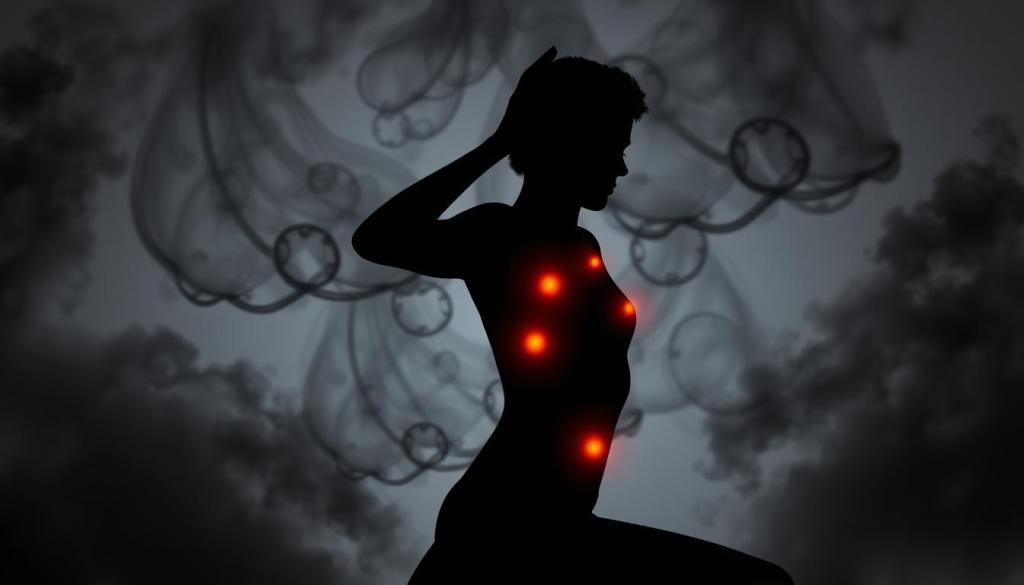
When you’re working out, some discomfort is normal. But if the pain keeps coming back, it’s time to stop and think about your routine. Chronic pain affects about 100 million adults in the U.S. It might mean you’re physically damaging your body.
Some common signs of persistent pain include:
- Severe pain lasting three months or more
- Fatigue, with many individuals feeling constantly tired, regardless of rest or sleep
- Lack of quality sleep and mental health issues, such as stress and depression, which can exacerbate pain levels
If you’re feeling these symptoms, listen to your body. Stop what you’re doing to avoid more injury. Try different exercises or see a doctor to find out why you’re in pain.
Unusual Dizziness and Weakness During Exercise

Feeling a bit lightheaded or weak while working out is normal. But if these feelings don’t go away, your workout routine could be to blame if you keep getting sick. Mitchell Starkman, a sports and orthopedic physical therapist, says some dizziness is okay. But if it lasts even after you stop, it’s time to rethink your routine.
Dehydration, low blood sugar, and too much effort can cause dizziness. It’s crucial to listen to your body and stop if you feel dizzy or weak. Dehydration can make you feel lightheaded, and severe dehydration can cause confusion and irritability.
Common causes of exercise-induced dizziness
- Dehydration
- Low blood sugar
- Overexertion
Knowing why you get dizzy during exercise helps you stay safe and effective. Drink plenty of water, eat well, and listen to your body. This way, you can avoid dizziness and weakness during your workouts.
Frequent Illness and Compromised Immunity
Working out regularly should make you healthier and fitter. But, if you keep getting sick, it might mean your workouts are too much. Overtraining can weaken your immune system, making you more likely to catch colds or flu.
Studies show that regular, moderate exercise can boost your immune system. But, too much exercise can do the opposite. Arduous exercise can increase your risk of getting sick, especially if you’re an athlete. Some research suggests athletes might get more colds and flu than regular people.
Here are some important findings about exercise and immunity:
- High-performance athletes often get sick, losing training days before big events.
- Getting sick after exercise is complex. It’s not clear if exercise alone makes athletes more prone to infections.
- Scientists are looking at biomarkers to check if athletes’ immune systems are okay. But, it’s still a topic of debate.
To stay healthy and avoid getting sick, listen to your body. Make sure to rest and eat well to support your immune system. Adjust your workout routine to focus on your health. This way, you can lower your risk of getting sick and keep your immune system strong.
| Exercise Type | Infection Risk |
|---|---|
| Moderate-intensity exercise | Low to moderate |
| High-performance exercise | High |
| Arduous exercise | High |
Sleep Disturbances and Insomnia

Working out can affect your sleep. If you’re having trouble sleeping, it might be from overtraining. Sleep problems like insomnia can mean your workout is too much.
Chelsea Axe, a chiropractic physician, says overtraining can cause insomnia and restlessness. This is a common issue.
Studies show athletes who sleep well perform better. For example, a Stanford study found that basketball players sleeping 10 hours improved their shooting by 9%. Swimmers also saw better times and faster reactions with 10 hours of sleep.
It’s important to listen to your body and rest enough. Overtraining can disrupt sleep, causing insomnia and other problems. By focusing on sleep and adjusting your workout, you can do better and stay healthy.
Some key findings on sleep and athletic performance include:
- Athletes who get at least 9 hours of sleep per night tend to perform better and have faster reaction times.
- Sleep deprivation can lead to decreased decision-making abilities and increased injury rates.
- Poor sleep habits are associated with a lowered resistance to illnesses, such as the common cold.
Signs Your Workout Is Physically Damaging Your Body

When working out, it’s key to listen to your body. Look out for signs that you might be physically damaging your body. Pain, dizziness, or sickness after exercise could mean you need to change your routine. In addition to messing up your sleep schedule, too much fatigue can also be a warning sign.
Some common signs of physical damage from working out include:
- Prolonged muscle soreness
- Increased risk of injury
- Chronic illnesses
- Insomnia and sleep disturbances
It’s important to spot these signs and act to prevent more damage. Adding rest days, eating right, and balancing your exercise can help. This way, you can keep your workout safe and healthy.
Remember, finding a balance between working out and rest is crucial. By listening to your body and adjusting your routine, you can have a safe and effective fitness journey.
Chronic Fatigue and Energy Depletion

Feeling tired after working out is normal. But if you’re always tired, even when you’re not exercising, it might be a sign of overdoing it. Megan Ostler, a registered dietitian, says sore muscles are okay with new exercises, but being too tired is not.
Chronic fatigue syndrome affects about 836,000 to 2.5 million Americans. Studies show that 50% of those with it feel much more tired when they exercise.
Understanding Energy Systems
To manage energy depletion well, you need to know how your body uses energy. When you work out, your body uses different energy systems. If you don’t rest enough between workouts, you might feel too tired and lose your appetite.
Recovery Techniques for Better Energy Management
To prevent chronic fatigue and energy depletion, add recovery to your routine. This includes stretching, foam rolling, and enough sleep. Listening to your body and resting when needed helps avoid overtraining and keeps your energy up.
Changes in Appetite and Eating Patterns

When you’re working out regularly, you might notice changes in appetite and eating patterns. This shows your body is adapting to the new demands. But, depression or irritability can also happen if you work out too much.
Megan Ostler says many athletes think they can just follow their hunger to know how much to eat. But, this isn’t always true. Some might eat less, while others might eat more. It’s important to listen to your body and eat enough to stay healthy.
Here are some key points to consider about changes in appetite and eating patterns:
- Pay attention to your hunger and fullness cues to ensure you’re eating the right amount of food.
- Make sure you’re getting enough protein, complex carbohydrates, and healthy fats to support your energy needs.
- Avoid restrictive dieting, as this can lead to disordered eating patterns and negatively impact your relationship with food.
By being mindful of your changes in appetite and eating patterns, you can adjust your diet and working out routine. This supports your overall health and well-being. Remember to prioritize balanced eating patterns and listen to your body to avoid unwanted side effects like depression or irritability.
Emotional and Psychological Warning Signs

When working out, it’s key to listen to your body. Look out for emotional warning signs and psychological warning signs that show you might be pushing too hard. If your heart keeps racing after exercise, you might be overdoing it. It’s important to rest and recover well to stay healthy.
Chelsea Axe says too much aerobic activity can cause problems. Symptoms like fatigue, depression, and poor sports performance can happen. Exercise can even make anxiety or depression worse. So, finding the right balance is crucial.
Exercise Addiction Warning Signs
Feeling guilty or ashamed for missing workouts can be a sign of a problem. Too much exercise can be a way to avoid emotions, making things worse.
Balance Between Motivation and Obsession
It’s important to know when you’re motivated versus obsessed with exercise. While regular exercise is good, too much can harm you. It can disrupt sleep, make you feel isolated, and even affect your ability to have children.
Being aware of these emotional warning signs and psychological warning signs helps prevent overtraining. It keeps your workout routine balanced with rest. Always listen to your body and put your well-being first.
Abnormal Heart Rate Patterns

When working out, it’s key to watch how your body reacts. Your heart rate is a big clue. Abnormal heart rate patterns could mean your workout is too much. If your resting heart rate keeps changing, it’s time to rethink your routine.
Muscle pain that won’t go away might mean you’re hurting yourself. It’s important to listen to your body and rest enough. Chelsea Axe says a changing resting heart rate is a sign of overdoing it, especially for those who exercise a lot. Finding a balance between working out and resting is crucial.
- Begin with easy workouts and slowly make them harder
- Rest when your body tells you to
- Drink plenty of water and eat well
Being aware of how your body reacts to exercise helps keep your workouts safe and effective. It’s vital to balance working out with rest to prevent persistent muscle aches and injuries.
Understanding Muscle Soreness vs. Injury
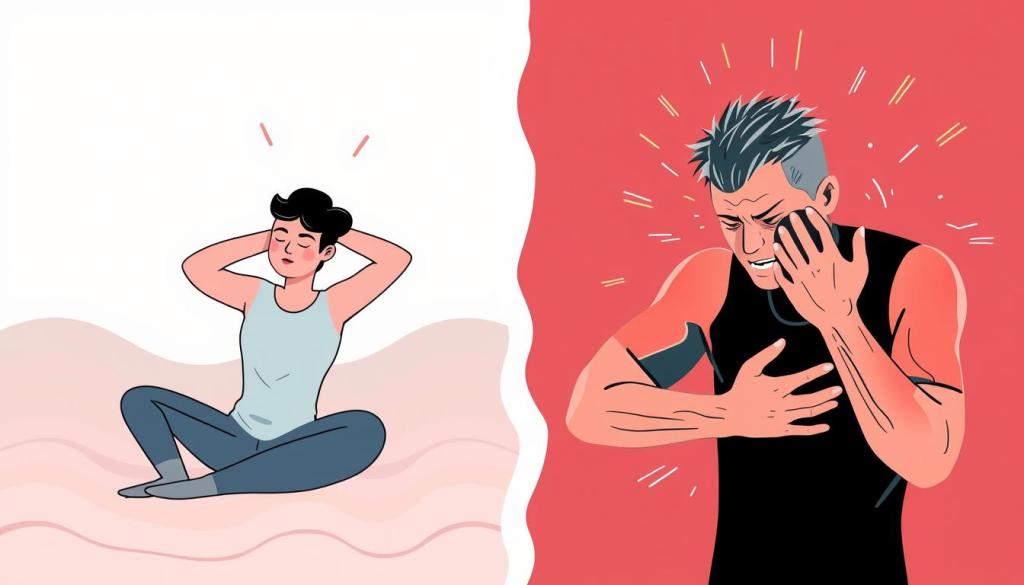
When working out, you might feel muscle soreness after hard exercise. It’s key to tell normal soreness from a injury. Emily Paskins, a personal trainer, says soreness comes from tiny muscle tears. These can help muscles grow if given time to heal.
Delayed onset muscle soreness (DOMS) usually peaks at 48 hours after exercise. But, pain that starts quickly or lasts more than three days might mean a injury. Pay attention to signs like swelling, redness, and bruising.
- Muscle soreness usually lasts one to three days
- Long-lasting soreness over one to two weeks might show muscle, tissue, or joint damage
- Pain in joints and muscles could mean an injury
If muscle soreness lasts or comes with dizziness or weakness, see a doctor. Working out shouldn’t leave you dizzy or weak for long. Always put your health first.
The Role of Rest and Recovery
When working out, it’s key to listen to your body. Make sure to take time for rest and recovery. If you feel any pain, stop right away. Mark Slabaugh, an orthopedic sports medicine surgeon, says taking a break of one to two weeks can help you feel better.
Athletes should plan a rest day every 7 to 10 days, as the American Council on Exercise (ACE) suggests. Proper rest and recovery prevent injuries and keep you healthy. Signs you might need a rest day include:
- General feelings of fatigue
- An unexplained decrease in performance
- Persistent muscle soreness
Remember, rest and recovery are key to a good working out plan. Giving your body time to heal lets you avoid injuries and reach your fitness goals.
| Recommendation | Frequency |
|---|---|
| Rest day | Every 7-10 days |
| Protein intake | 1.2-2.0 grams per kilogram of body weight daily |
| Carbohydrate intake | 3-10 grams per kilogram of body weight daily |
Proper Form and Technique Fundamentals
When working out, it’s key to focus on proper form and technique. This helps avoid injuries and boosts health. Oluseun Olufade, an orthopedics professor, warns that rushing your training can harm your shoulders. If you’re hurt or in pain, it might mean your form and technique need a tweak.
Your workout routine might be the culprit if you’re always getting sick. It’s vital to listen to your body and rest enough. Here are some common form mistakes to dodge:
- Not warming up properly before a workout
- Not cooling down after a workout
- Using incorrect posture or form during exercises
To dodge injuries, focus on proper form and technique in your workouts. This means:
| Exercise | Proper Form |
|---|---|
| Squats | Keep your back straight, engage your core, and lower your body down slowly |
| Lunges | Keep your front knee behind your toes, engage your core, and lower your body down slowly |
By prioritizing proper form and technique, you lower injury risks and boost health. Always listen to your body and adjust your workout routine as needed.
When to Modify Your Workout Routine
Working out is key for our health and well-being. But knowing when to change your routine is just as important. Overtraining can cause fatigue, lower performance, and higher injury risk. Adjusting exercises to fit your fitness level helps avoid these problems and supports your health.
Changing your workout can be simple. You might switch from running to swimming or cycling to ease your joints. Or, you could make exercises easier or longer to suit your fitness level.
Modifying your workout has many benefits. It can lower injury risk, boost health and happiness, increase motivation, and improve performance.
- Reduced risk of injury
- Improved overall health and well-being
- Increased motivation and engagement
- Enhanced performance and progress
It’s crucial to listen to your body and adjust as needed. Feeling tired, sore, or seeing performance drop? It’s time to tweak your routine. By changing exercises and adding new ones, you can avoid plateaus, prevent overtraining, and reach your fitness goals.
| Workout Routine | Benefits |
|---|---|
| High-Intensity Interval Training (HIIT) | Increased calorie burn, improved cardiovascular health |
| Strength Training | Improved muscle mass, increased bone density |
| Yoga or Pilates | Improved flexibility, reduced stress and anxiety |
Creating a Sustainable Exercise Plan
When working out, it’s key to make a sustainable exercise plan that boosts your health. David Miranda, a physical therapist, says too much exercise can harm you. A good plan should mix different types of workouts, like cardio, strength training, and flexibility exercises.
A sustainable exercise plan also needs to focus on what you eat. Loss of appetite can mean you’re overdoing it. It’s important to eat well to keep your energy up. A balanced diet with protein, carbs, and healthy fats is crucial for your fitness goals.
Some important parts of a sustainable exercise plan are:
- Slowly increase workout intensity to let your body adjust and recover
- Take regular rest days to avoid injuries
- Drink plenty of water to help your body heal
By making a sustainable exercise plan and listening to your body, you can avoid injuries and burnout. This way, you can reach your fitness goals in a healthy and lasting manner.
Conclusion: Building a Safer and More Effective Fitness Journey
Starting your fitness journey is exciting, but safety and well-being come first. Working out has many benefits, but listening to your body is key. Feeling depression or irritability can mean you’re pushing too hard.
Creating a safer and more effective fitness journey means enjoying exercise without overdoing it. Aim for habits that last, rest well, and keep your form right. The goal is to find a balance that supports your health, not to exhaust yourself.
FAQ
What are the 9 signs that your workout may be physically damaging your body?
The 9 signs include: persistent pain that won’t go away, unusual dizziness and weakness during exercise. Also, frequent illness and compromised immunity, sleep disturbances and insomnia, and chronic fatigue and energy depletion.
Changes in appetite and eating patterns, emotional and psychological warning signs, abnormal heart rate patterns, and persistent muscle aches are also signs.
Why is it essential to listen to your body and stop what you’re doing if you’re in any amount of pain?
Working out should improve your health, not cause pain. If you’re in pain, it’s time to rethink your routine. Making changes can help avoid injury.
How can you differentiate between good and bad pain when working out?
Good pain means you’re pushing yourself. Bad pain means you’re hurting yourself. Always use proper form to avoid injury and get the most from your workout.
What are some common causes of exercise-induced dizziness?
Dehydration, low blood sugar, and overexertion can cause dizziness. If dizziness or weakness lasts after stopping, it’s time to adjust your routine.
How can overtraining affect your sleep patterns?
Overtraining can disrupt sleep, leading to insomnia and restlessness. Listen to your body and rest well to support your health.
What are some signs of exercise addiction or an imbalance between motivation and obsession?
Signs like exercise addiction or an imbalance between motivation and obsession need attention. It’s time to reassess your routine and make changes.
How can persistent muscle aches be a sign that you’re injuring yourself?
Persistent muscle aches can mean injury. Listen to your body and rest well to support your health.
Why is it important to understand the difference between muscle soreness and injury?
Knowing the difference between muscle soreness and injury is key. Muscle soreness might mean you need to adjust your routine.
How can modifying your workout routine help you avoid injury and support your overall health and well-being?
Changing your workout routine can prevent injury and support your health. Adapting exercises and trying new options can help avoid injury.
Source Links
- 9 signs your workout may be hurting you – https://www.businessinsider.com/signs-workout-is-hurting-you-fitness-experts
- 9 Signs You’re Overtraining – Cary Orthopaedics – https://www.caryortho.com/9-signs-youre-overtraining/
- No pain, no gain? Training too hard can have serious health consequences – https://www.uclahealth.org/news/article/no-pain-no-gain-training-too-hard-can-have-serious-health
- Pathophysiology of Exercise-Induced Muscle Damage and Its Structural, Functional, Metabolic, and Clinical Consequences – https://pmc.ncbi.nlm.nih.gov/articles/PMC8549894/
- Fibromyalgia – https://versusarthritis.org/about-arthritis/conditions/fibromyalgia/
- What Is Chronic Pain and What Are the Symptoms? – https://www.webmd.com/pain-management/understanding-pain-management-chronic-pain
- Pain That Won’t Quit? Learn the Difference Between Acute and Chronic Pain—and How to Treat It – Professional Therapy Services, Inc. – https://ptsinc.org/pain-that-wont-quit-learn-the-difference-between-acute-and-chronic-pain-and-how-to-treat-it/
- 7 Causes of Lightheadedness During Exercise You Should Know – https://www.health.com/fitness/dizzy-during-workouts-when-to-see-a-doctor
- Dizzy after workout: 7 causes and what to do – https://www.medicalnewstoday.com/articles/326851
- Can exercise affect immune function to increase susceptibility to infection? – PubMed – https://pubmed.ncbi.nlm.nih.gov/32139352/
- Debunking the Myth of Exercise-Induced Immune Suppression: Redefining the Impact of Exercise on Immunological Health Across the Lifespan – https://pmc.ncbi.nlm.nih.gov/articles/PMC5911985/
- Sleep, Athletic Performance, and Recovery – https://www.sleepfoundation.org/physical-activity/athletic-performance-and-sleep
- Insomnia Symptoms and Cardiorespiratory Fitness in Healthy Individuals: The Nord-Trøndelag Health Study (HUNT) – https://pmc.ncbi.nlm.nih.gov/articles/PMC3524509/
- Sleep and Athletic Performance: Impacts on Physical Performance, Mental Performance, Injury Risk and Recovery, and Mental Health – https://pmc.ncbi.nlm.nih.gov/articles/PMC9960533/
- Overexercising: Signs, Complications, and Outlook – https://www.everydayhealth.com/fitness/are-you-exercising-too-much-heres-how-to-tell-and-why-it-can-be-risky/
- Are you getting too much exercise?: MedlinePlus Medical Encyclopedia – https://medlineplus.gov/ency/patientinstructions/000807.htm
- Signs That Exercise Is Actually Hurting Your Health – https://health.clevelandclinic.org/7-signs-that-exercise-is-actually-hurting-your-health
- Exercise and fatigue – PubMed – https://pubmed.ncbi.nlm.nih.gov/19402743/
- Exercise Causes Muscle Damage and Energy Depletion in Long COVID – Health Rising – https://www.healthrising.org/blog/2024/01/09/exercisse-muscle-damage-energy-depletion-long-covid/
- Understanding Muscle Dysfunction in Chronic Fatigue Syndrome – https://pmc.ncbi.nlm.nih.gov/articles/PMC4779819/
- The Effects of the Type of Exercise and Physical Activity on Eating Behavior and Body Composition in Overweight and Obese Subjects – https://pmc.ncbi.nlm.nih.gov/articles/PMC7071486/
- The Neurocognitive Connection between Physical Activity and Eating Behavior – https://pmc.ncbi.nlm.nih.gov/articles/PMC3535467/
- Is Your Gym Routine Hurting Your Mental Health? Here’s How to Tell – https://www.cnet.com/health/fitness/exercise-can-be-unhealthy-too-warning-signs-to-know/
- Exercising too much | Symptoms & Signs of Overexercise – https://withinhealth.com/learn/articles/what-are-over-exercising-symptoms
- Overtraining: What It Is, Symptoms, and Recovery – https://www.hss.edu/article_overtraining.asp
- Potential Adverse Cardiovascular Effects From Excessive Endurance Exercise – https://pmc.ncbi.nlm.nih.gov/articles/PMC3538475/
- Physical Activity with an Abnormal Heart Rhythm – https://www.okheart.com/about-us/ohh-news/physical-activity-with-an-abnormal-heart-rhythm
- Is Your Pain Just Muscle Soreness or a Serious Injury? – https://www.houstonmethodist.org/blog/articles/2020/aug/is-your-pain-just-muscle-soreness-or-a-serious-injury/
- How to tell the difference between soreness and an injury | UT Physicians – https://www.utphysicians.com/how-to-tell-the-difference-between-soreness-and-an-injury/
- How to Know the Difference Between Soreness and Pain – https://www.reboundmd.com/news/how-know-difference-between-soreness-pain
- Rest and recovery are critical for an athlete’s physiological and psychological well-being – https://www.uchealth.org/today/rest-and-recovery-for-athletes-physiological-psychological-well-being/
- Exercise Rest Day: Benefits, Importance, Tips, and More – https://www.healthline.com/health/exercise-fitness/rest-day
- Workout Injuries: Prevention and Treatment – https://www.webmd.com/fitness-exercise/workout-injuries-prevention-and-treatment
- Weight-training do’s and don’ts – https://www.mayoclinic.org/healthy-lifestyle/fitness/in-depth/weight-training/art-20045842
- How to Avoid Injuries While Exercising – https://www.uhhospitals.org/blog/articles/2022/12/how-to-avoid-injuries-while-exercising
- Not Getting The Results You Want? Time To Switch Up Your Workout – https://fitnesslabco.com/not-getting-the-results-you-want-in-the-gym-time-to-switch-up-your-workout-routine/
- 6 Signs it’s Time to Switch Up Your Workout – https://www.acefitness.org/resources/everyone/blog/4984/6-signs-it-s-time-to-switch-up-your-workout/?srsltid=AfmBOopMzuwy2KAWW7Q5UF_SvyeUtVHwambcXYtCGvqyaE-HfnymfWIg
- Creating a Sustainable Fitness Routine Balancing Workouts and Recovery – https://www.linkedin.com/pulse/creating-sustainable-fitness-routine-balancing-workouts-jason-rany
- Physical activity – https://www.who.int/news-room/fact-sheets/detail/physical-activity
- Strength Training and Pain Rehabilitation – https://www.painscience.com/articles/strength-training.php
- Physical Activity and Sports—Real Health Benefits: A Review with Insight into the Public Health of Sweden – https://pmc.ncbi.nlm.nih.gov/articles/PMC6572041/
- The compelling link between physical activity and the body’s defense system – https://pmc.ncbi.nlm.nih.gov/articles/PMC6523821/


 trim down and shape up
Leave a comment