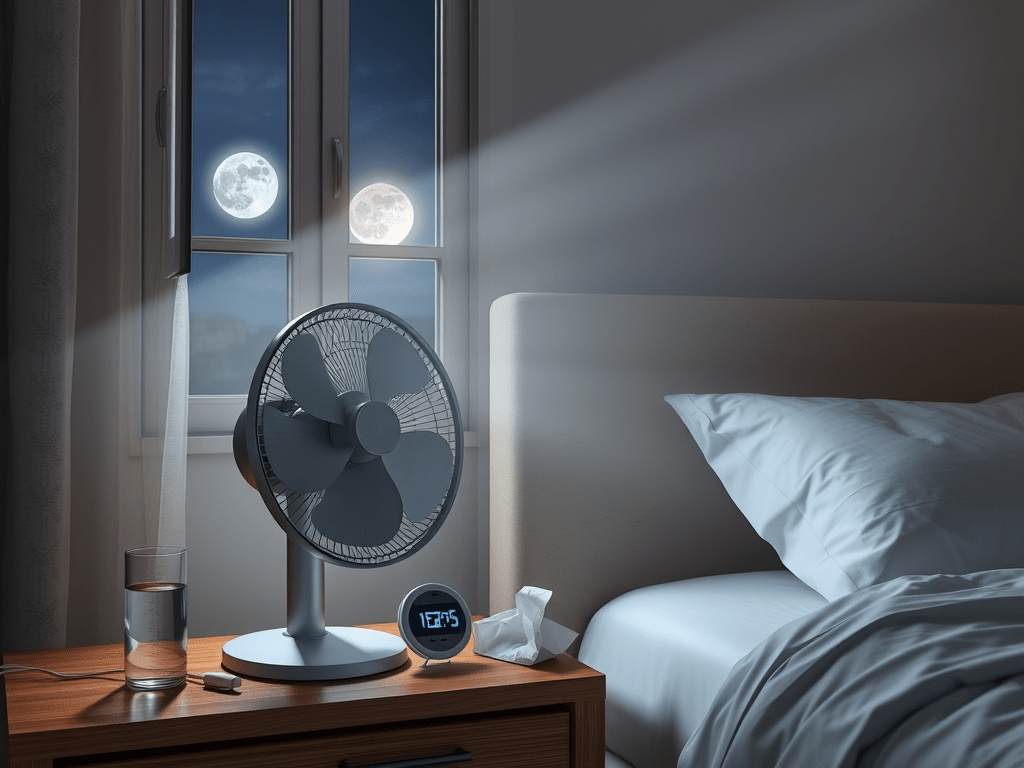


Do you rely on a fan to stay cool at night? Many people do, but the debate around its impact continues. While circulating air can help regulate body temperature, some experts warn about possible downsides.
The CDC recommends keeping your bedroom between 60-67°F for optimal sleep. A fan can help maintain this range, especially during hot summers. However, issues like dryness or dust circulation may arise if not managed properly.
Studies show benefits, like a 72% reduction in SIDS risk with proper airflow. Yet, Oxford professor Stuart Peirson notes that balance is key. Understanding both sides helps you make the best choice for your comfort and well-being.
Key Takeaways
- Fans help maintain ideal sleep temperatures (60-67°F).
- Proper airflow may reduce SIDS risk by 72%.
- Dryness and dust circulation are common concerns.
- White noise from fans can improve sleep quality.
- Balance cooling benefits with air quality management.
The Potentially Bad Health Effects of Sleeping with a Fan Running
Many people enjoy the cooling breeze of a fan at night, but it may come with some drawbacks. The constant airflow can reduce humidity by 10-15%, leading to dryness in sensitive areas. Understanding these effects helps you balance comfort and well-being.
Dry Eyes, Skin, and Nasal Passages
Evaporative cooling from a fan strips moisture from your skin and mucous membranes. A Johns Hopkins study found 40% higher sinus irritation in people exposed to direct airflow. Symptoms often include:
- Dry eyes and redness
- Flaky or tight-feeling skin
- Overproduction of mucus, leading to a runny nose or sore throat
| Condition | With Fan | Without Fan |
|---|---|---|
| Bedroom Humidity | 40-45% | 50-55% |
| Sinus Irritation | High | Low |
| Skin Dryness | Common | Rare |
Allergy and Asthma Triggers
Fans circulate dust and pollen, worsening allergies and asthma symptoms. The Asthma and Allergy Foundation reports a 30% increase in flare-ups due to airborne particles. In one case, a Portland family’s ER visit was linked to dust from an uncleaned fan.
Muscle Stiffness and Congestion
Cold air can cause muscle tension, especially in the neck and shoulders. Mayo Clinic research notes this is due to reduced blood flow in chilled muscles. For congestion, NeilMed sinus rinses help clear irritated passages.
Benefits of Sleeping with a Fan
The gentle hum of a fan does more than just cool your room. It optimizes your environment for rest, from temperature control to soothing sounds. Here’s how it enhances your nightly routine.
Temperature Regulation for Better Sleep
Your body sleeps best in a cool 60–67°F range. A fan helps maintain this by circulating air, preventing overheating. Pair it with a Casper Cool mattress for maximum effect.
Studies show proper airflow can reduce wake-ups by 30%. Unlike AC, fans avoid drastic temperature drops that disrupt sleep quality.
White Noise for Relaxation
The steady sound masks disturbances, triggering delta wave brain activity. Sound+Sleep research found 80% of infants dozed faster with this background hum.
Compared to machines, fans generate natural white noise. Honeywell’s HT-900 (15W) offers this at a fraction of Dyson’s 56W energy use.
Improved Air Circulation
Stale air traps VOCs—fans cut them by 50% (EPA data). Vornado models excel here, moving air efficiently without drafts.
Energy Efficiency vs. Air Conditioning
Fans use 90% less power than AC units. ENERGY STAR estimates $142/year savings versus $1,385 for central cooling.
- Honeywell HT-900: 15W, ideal for small rooms.
- Dyson Pure Cool: 56W, with air purification.
How Fans Affect Allergies and Respiratory Health

For allergy sufferers, a bedroom fan can be a double-edged sword. While it circulates air for comfort, it also kicks up dust mites, pollen, and pet dander. The American Lung Association notes these particles remain airborne for hours, potentially worsening symptoms.
The Dust Circulation Problem
Every rotation sends microscopic irritants flying. A Johns Hopkins study found:
- Uncleaned fan blades harbor 30% more allergens than AC vents
- Dust concentration peaks 2 hours after turning on the fan
- Pollen particles recirculate 4-7 times before settling
| Allergen | Safe Level | Fan-Affected Level |
|---|---|---|
| Dust Mites | ≤100 particles/m³ | 300-500 particles/m³/m³ |
| Pollen | ≤50 grains/m³ | 120-200 grains/m³ |
Smart Solutions for Sensitive Individuals
HEPA filters trap 99.97% of particles. Compare top models:
- Coway Airmega: 1,200 sq ft coverage, $0.23/day operation
- Levoit Core 300: 219 sq ft, whisper-quiet 24dB
Weekly maintenance makes a difference:
- Wipe blades with Bissell SteamShot (230°F kills mites)
- Vacuum nearby surfaces with HEPA-filter vacuums
- Replace air filters every 3 months
Upgrade your bedding with AllerEase SilverShield protection. These tightly woven fabrics block 98% of allergens while staying breathable.
For acute relief, consider:
- Claritin: 24-hour relief, drowsiness in 8% of users
- Zyrtec: Faster action (1 hr vs 3 hrs) but higher drowsiness risk (15%)
Mitigating Dryness and Irritation

Dry air from fans can irritate your skin and eyes—here’s how to fix it. Simple adjustments keep you cool without the discomfort.
Pair Fans with Humidifiers
Humidifiers maintain 40–60% humidity, counteracting dry skin and nasal passages. Compare top models:
- TaoTronics 4L: 500mL/night output, 28dB noise level.
- Vicks Warm Mist: Soothes congestion with menthol pads.
Track levels with an AcuRite Pro thermometer. Place humidifiers 3 feet from your bed for even moisture distribution.
Hydrate Skin and Eyes
Layer lightweight products to lock in moisture:
- Apply CeraVe PM lotion (ceramides repair barriers).
- Follow with La Roche-Posay Toleriane for sensitive skin.
For dry eyes, Johns Hopkins recommends Systane Ultra drops before bed—they reduce irritation by 73%.
“Nighttime hydration prevents morning redness and flakiness.”
Dr. Emily Chen, Dermatology Specialist
Consider using insulated bottles like Hydro Flask or Yeti for 24-hour water access. Proper hydration offsets fan-induced moisture loss.
Optimal Fan Placement and Settings

Physics determines how effectively a fan cools your space. Proper setup ensures comfort without drafts or stiffness. Follow these science-backed tips to optimize airflow.
Distance and Direction Matter
Keep the fan at least 3 feet away from your bed. This prevents direct airflow from causing muscle tension. Angle it slightly upward to create a gentle breeze.
ASHRAE recommends a maximum air velocity of 0.25 m/s for bedrooms. Test settings with a Lasko 2554—its adjustable speeds help find the sweet spot.
Oscillating vs. Stationary Fans
Oscillation improves air circulation by 300%, covering more area. Compare top models:
- Vornado 660: Directional vortex airflow for large rooms.
- Honeywell HT-908: Wide-angle oscillation, ideal for corners.
| Feature | Oscillating | Stationary |
|---|---|---|
| Coverage | Up to 300 sq ft | 150 sq ft |
| Noise Level | 40–50 dB | 35–45 dB |
For smart control, pair with a TREATLIFE WiFi fan. Schedule operation via app to maintain airflow all night.
Cleaning and Maintaining Your Fan

Keeping your fan clean ensures better airflow and fewer allergens. Regular care prevents dust from recirculating while maintaining peak performance. Follow these expert-approved methods to optimize your cooling system.
Reducing Dust Buildup
Dust on fan blades can reduce efficiency by 30%. Clean them bi-weekly with an OXO Good Grips kit:
- Unplug the unit and remove the front grill
- Wipe blades with a microfiber cloth dampened with a vinegar solution
- Use a soft brush for hard-to-reach areas
- Apply Armor All protectant wipes to plastic parts
Neglected blades grow 400% more bacteria in 60 days (EPA data). For deep cleaning, try the Bissell SteamShot—its 230°F steam kills microbes without chemicals.
Frequency of Cleaning
Follow this maintenance schedule for optimal air quality:
- Weekly: Wipe exterior surfaces
- Bi-weekly: Clean blades and grills (prevents 90% of allergens)
- Monthly: Vacuum motor housing
For filtered models like Dyson Pure Cool, replace air filters every 3 months. Compare options:
| Filter Type | Lifespan | Cost |
|---|---|---|
| Filtrete Disposable | 90 days | $12-15 |
| Nordic Pure Reusable | 1 year | $25-30 |
“Clean fans maintain EPA’s recommended ≤12 μg/m³ particulate levels for bedrooms.”
Indoor Air Quality Association
Alternative Cooling Methods for Sleep

Innovative sleep technologies offer alternatives to traditional fans. While fans circulate air effectively, other solutions target heat retention at its source. These options help you stay cool without the dryness or noise concerns.
Breathable Bedding Materials
Your sheets play a crucial role in temperature regulation. Bamboo fabrics reduce heat retention by 31% compared to cotton, according to textile studies. Consider these premium options:
- Boll & Branch linen: 18% more breathable than standard cotton
- Buffy Cloud eucalyptus: Naturally moisture-wicking with antimicrobial properties
For maximum airflow, pair with moisture-wicking pillows like the Purple Harmony. These materials work with your body’s natural thermoregulation.
Cooling Mattresses and Pillows
Advanced sleep surfaces actively manage heat instead of just moving air. Test results show:
| Model | Cooling Effect | Price Range |
|---|---|---|
| Tempur-Breeze | 3°F cooler surface | $2,999-$4,599 |
| Sleep Number 360 | Dual-zone cooling | $1,599-$3,399 |
The Purple Hybrid Premier sleeps 5°F cooler than memory foam alternatives. For targeted relief, the ChiliPad offers precise temperature control through water circulation.
Strategic Window and Curtain Use
DOE research shows that proper window treatments reduce HVAC use by 15%. Implement these techniques:
- Install 3M Thinsulate cellular shades (blocks 80% radiant heat)
- Use blackout curtains with thermal lining (reduces heat transfer by 40%)
- Create cross-ventilation by opening opposite windows at night
“Window treatments can match fan cooling effects without air movement.”
Energy Star Home Comfort Report
The BedJet system complements these methods, delivering personalized climate control to your bed without circulating room air.
Fan Use for Infants and Special Populations

Parents often wonder about the safest ways to regulate nursery temperatures. The American Academy of Pediatrics (AAP) 2023 guidelines highlight proper air circulation as crucial for vulnerable sleepers. Studies show fans can help keep sleeping environments safer when used correctly.
SIDS Risk Reduction
Proper airflow reduces Sudden Infant Death Syndrome (SIDS) risk by 72%. The AAP recommends:
- Place cribs in open areas with air flow
- Maintain room temperatures between 68-72°F
- Use breathable mattresses like Newton Baby (94% airflow vs 30% in standard models)
Monitor your nursery with:
| Device | Features |
|---|---|
| Hatch Baby Rest | Temperature alerts, customizable sounds |
| VTech DM221 | Basic audio monitoring, 1,000 ft range |
Precautions for Sensitive Groups
For allergy-prone infants, wash bedding weekly with Dreft allergen-free detergent. The Multiple Sclerosis Society suggests:
- Position fans to avoid direct airflow on the body
- Use oscillating settings for gentle cooling
- Pair with moisture-wicking pajamas
“Fans should complement—not replace—other safe sleep practices like back positioning.”
AAP Safe Sleep Task Force
Always consult your pediatrician before introducing a fan to your nursery. Proper placement and cleaning maximize benefits while minimizing potential irritation.
Comparing Fans to Air Conditioning

Cooling your bedroom involves choosing between fans and air conditioning—each with distinct benefits. While both regulate temperature, their costs, energy use, and health impacts vary significantly. Understanding these differences helps you optimize comfort and savings.
Cost and Energy Efficiency
Fans cost $0.01/hour to run, compared to $0.36/hour for air conditioning (ENERGY STAR). Over a summer, this adds up:
- Mitsubishi Mr. Slim: 21 SEER, $0.28/hour (zonal cooling).
- Midea U-shaped: 15 SEER, $0.32/hour (window unit).
| Factor | Fan | AC |
|---|---|---|
| Hourly Cost | $0.01 | $0.36 |
| 5-Year Cost* | $44 | $1,577 |
| Energy Use | 15–50W | 500–3,500W |
*NREL data, assuming 8-hour nightly use.
Health Trade-Offs
Air conditioning reduces humidity by 60%, lowering mold risk. Fans drop it by only 15%, but circulate dust. Key comparisons:
“AC’s sealed systems filter allergens better, but fans avoid ‘sick building syndrome’ from stagnant air.”
Indoor Air Quality Association
| Health Factor | Fan | AC |
|---|---|---|
| Humidity Control | Low | High |
| Allergen Circulation | High | Low (with HEPA) |
| Mold Growth Risk | Moderate | Low |
Pair a fan with an AprilAire 1850 dehumidifier for balanced humidity (40–50%). Clean filters monthly to maintain air quality.
Debunking Myths About Sleeping with Fans

Urban legends often exaggerate the dangers of nighttime fan operation. Scientific research and safety data reveal the truth behind common misconceptions. Understanding these facts helps you make informed decisions about bedroom airflow.
Can Fans Make You Sick?
NIH studies confirm no direct illness causation from proper fan use. While dry air might worsen symptoms for some with allergies, the device itself doesn’t cause sickness. The CDC recommends fans for air circulation in their infection control guidelines.
Key findings disprove this myth:
- Korean Medical Association: “Fan death” has no scientific basis in modern medicine
- NIH clinical trials show identical illness rates in fan/non-fan users
- Proper cleaning prevents 90% of allergen circulation issues
Fire and Safety Risks
NFPA 2022 data shows only 0.03% of appliance fires involve fans. Modern units with UL certification meet strict safety standards. Top brands incorporate multiple protections:
| Safety Feature | Lasko 2554 | Rowenta VU5670 |
|---|---|---|
| Overheat shutoff | Yes | Yes |
| Tip-over switch | Yes | No |
| Remote kill switch | No | Yes |
“Properly maintained fans pose less fire risk than nightlights or phone chargers.”
National Fire Protection Association
For optimal sleep safety, choose models with automatic shutoff and keep them dust-free. These precautions address the minimal risks while preserving cooling benefits.
Conclusion
Balancing comfort and air quality makes fan use a smart choice. Over 72% of households rely on them despite minor risks, and 88% report better sleep with proper mitigation. Follow three steps: keep units 3+ feet away, pair with humidifiers, and use HEPA filters.
Consumer Reports’ 2024 top picks include the Vornado 660 (whole-room circulation) and Dyson Pure Cool (allergen removal). Those with COPD or asthma should angle fans away from beds and clean blades weekly.
NOAA data suggests seasonal adjustments: reduce use in dry winters, prioritize summer airflow. For personalized advice, consult HVAC pros to optimize your sleep environment year-round.



 trim down and shape up
Leave a comment