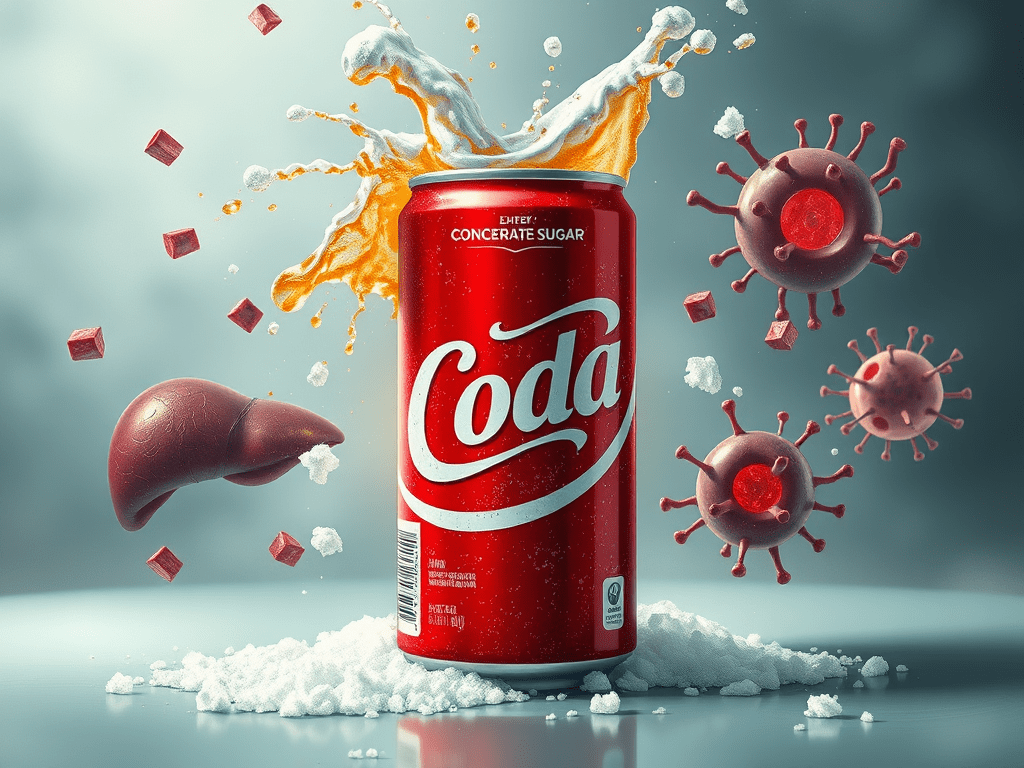


You might think that as long as you’re maintaining a healthy weight, your daily soda isn’t causing any real harm. But here’s what researchers are discovering: the sugar in your favorite soft drink is doing damage to your metabolism that has nothing to do with the number on your scale.
Every time you crack open a can of soda, you’re not just consuming empty calories. You’re bypassing your body’s natural defense systems and delivering a concentrated sugar bomb directly into your bloodstream. Unlike the apple you had for lunch, there’s no fiber to slow things down, no chewing to trigger fullness signals—just pure, rapid-fire sugar that forces your pancreas and liver into emergency mode.
This metabolic ambush might seem harmless at first, but it’s quietly rewiring how your body handles insulin, stores fat, and manages energy. The scary part? This damage starts accumulating from your very first sip, long before you notice any symptoms or changes in your weight.
If you’re reaching for soda daily—or if your kids are—it’s time to understand what’s really happening inside your body with every gulp.
Why Your Liver Can’t Handle the Sugar in Your Soda

You’ve probably heard that “sugar is sugar,” but when it comes to your health, this couldn’t be more wrong. The high-fructose corn syrup in your soda creates a completely different metabolic response than the natural sugars in whole foods, and your liver pays the price.
When you bite into an apple, you’re getting fructose wrapped in nature’s perfect package—fiber, water, and protective antioxidants. This natural packaging slows down sugar absorption, giving your body time to respond appropriately. Your liver can handle the fructose load without breaking a sweat.
But the fructose in your soda? That’s a different story entirely. It’s isolated, concentrated, and stripped of any protective components. When you drink it, your liver gets slammed with more fructose than it can process, and here’s the kicker—your liver is the only organ that can handle fructose.
When your liver becomes overwhelmed, it does the only thing it can: it converts the excess fructose into fat. This isn’t just about gaining weight—it’s about developing fatty liver disease and starting a dangerous cascade of metabolic dysfunction. More fat in your liver means more insulin resistance, more inflammation throughout your body, and more problems down the road.
The damage doesn’t stop there. Your mitochondria—the powerhouses of your cells—also take a hit. They get bombarded with toxic byproducts when your liver processes too much fructose, creating what scientists call “reductive stress.” This leaves your cells inflamed, exhausted, and unable to function properly.
If you’re dealing with unexplained fatigue, stubborn belly fat, or rising blood sugar levels, the fructose in your daily soda is likely playing a starring role.
The Research That Should Make You Rethink Your Drink Choices

A massive review of 29 studies published in Advances in Nutrition looked at how different types of sugar affect your risk of developing Type 2 diabetes. What they found should make you pause before reaching for that next soda.
People who drank sugary beverages daily had a 25% higher risk of developing Type 2 diabetes with each additional serving. That’s not a small increase—that’s a significant jump in your likelihood of developing a serious, chronic disease.
But here’s what’s even more interesting: when people got their sugar from whole foods like fruit, their diabetes risk actually went down. The same substance—sugar—had completely opposite effects depending on how it was consumed.
The difference comes down to how your body processes liquid versus solid sugar. When you drink sugar, it hits your bloodstream like a tidal wave, overwhelming your pancreas and spiking your insulin levels. This rapid absorption happens without any of the natural brakes that come with solid food—no chewing, no fiber, no feeling of fullness to make you stop.
Over time, these repeated insulin spikes lead to insulin resistance, which is the stepping stone to Type 2 diabetes. And this process can happen regardless of your weight.
Your Kids Are Already Showing Signs of Damage

If you think diabetes is just an adult problem, recent research from the American Heart Association will change your mind. A long-term study of school-age children found that boys who regularly consumed sugary drinks were already showing signs of prediabetes by their late teens.
Each daily 8-ounce serving of sugary beverages increased insulin resistance by 34%, raised fasting glucose by 5.6 mg/dL, and increased HbA1c levels—a marker of average blood glucose over several months. These weren’t hypothetical future risks—these were measurable changes happening in real-time.
The most alarming part? These metabolic changes were already evident by age 17. The damage was occurring years before any symptoms of diabetes would appear, and long before any doctor would make a formal diagnosis.
This research emphasizes something crucial: if you have kids who drink soda regularly, the time to act is now. The metabolic damage doesn’t wait until adulthood—it starts in childhood, often before you even realize there’s a problem.
Even Healthy Men Aren’t Safe from Daily Soda

A groundbreaking 20-year study published in the American Journal of Clinical Nutrition followed over 40,000 men to see how daily soda consumption affected their diabetes risk. The results were eye-opening, especially for men who considered themselves healthy.
Men who drank one or more servings of sugar-sweetened beverages per day had a 16% higher risk of developing Type 2 diabetes compared to those who rarely drank them. This increased risk remained even after researchers accounted for body weight, exercise habits, smoking, and total calorie intake.
In other words, even if you’re at a healthy weight, exercise regularly, and eat well otherwise, your daily soda habit is still putting you at significantly higher risk for diabetes.
The study also found that small changes make a big difference. Replacing just one daily soda with water or unsweetened coffee reduced diabetes risk by 17%. You don’t need to overhaul your entire lifestyle—just swapping out one drink per day can have a measurable impact on your future health.
Interestingly, cola was the worst offender among all the sugary drinks studied. While all sweetened beverages increased risk, colas were consistently linked to the greatest increase in diabetes risk, possibly due to their combination of high sugar content and additives like caramel coloring.
How to Protect Yourself Starting Today

If you want to avoid diabetes or reverse early signs of insulin resistance, you need to stop flooding your system with liquid sugar. Every piece of research makes this crystal clear: the refined sugar in soda hits your bloodstream fast and hard, giving your pancreas no time to recover between assaults.
You don’t need to transform your entire diet overnight, but you do need to stop the primary source of damage before you can expect real improvement. Here’s how to start:
Stop drinking soda and other sugary beverages immediately. This is the single most important change you can make for your long-term health. Replace your usual soda with water, unsweetened iced tea, or sparkling water with a splash of lemon or lime. Remember, it’s not about eliminating all sugar—it’s about stopping the liquid sugar that bypasses your body’s natural defenses.
Replace one soda per day with black coffee or green tea. If you’re currently drinking multiple sugary beverages daily, start by replacing just one with unsweetened coffee or tea. This simple swap can significantly lower your diabetes risk, and it’s an achievable first step toward complete elimination.
Get your sweet fix from whole fruit instead. While you should avoid the high-fructose corn syrup in soda, the natural fructose in fruit isn’t problematic. Whole fruits come with fiber that slows sugar absorption, plus they actually fill you up and provide beneficial nutrients your body needs.
Stay hydrated to prevent automatic sugar cravings. Sometimes when you reach for a soda, you’re not really craving sugar—you’re just thirsty. Keep a refillable water bottle with you throughout the day, and add natural flavors like lemon, lime, or cucumber slices. When you’re consistently hydrated, you’ll notice fewer cravings and less temptation to default to sweet drinks.
Find healthy alternatives you actually enjoy. The key to making this change stick is finding replacements that don’t make you feel deprived. Experiment with different herbal teas, unsweetened iced teas, or flavored sparkling waters until you find something you genuinely like. Once you have a go-to drink you enjoy, it becomes much easier to skip the soda.
What You Need to Know Right Now
What’s the biggest risk of drinking soda every day? Your daily soda floods your bloodstream with fast-absorbing sugar, overwhelming your liver and pancreas. Over time, this leads to insulin resistance—a key factor in Type 2 diabetes—even if you’re not overweight.
Is the fructose in fruit the same as what’s in soda? No, they’re completely different. Fruit fructose comes naturally packaged with fiber, water, and antioxidants that slow absorption and protect your metabolism. The processed fructose in soda hits your system all at once, forcing your liver to convert excess into fat and triggering metabolic problems.
Do sugary drinks affect kids as much as adults? Actually, they may affect kids even more. Research shows that each daily 8-ounce sugary drink raises insulin resistance in boys by 34% and increases their blood sugar markers. The damage often begins in childhood, years before any symptoms appear.
Can I really lower my diabetes risk just by changing what I drink? Absolutely. A 20-year study found that replacing just one daily sugary drink with water, coffee, or unsweetened tea lowered diabetes risk by 17%. Small changes in your drinking habits can create big changes in your long-term health.
What’s the best way to protect myself and my family? Start by eliminating soda and sweetened drinks from your daily routine. Stay hydrated with water, satisfy sweet cravings with whole fruits, and find healthier alternatives you actually enjoy. The goal is to stop the metabolic damage before it turns into chronic disease.
The bottom line? Your daily soda habit is doing more damage than you realize, and that damage is happening whether you’re overweight or not. But the good news is that you have the power to stop it, starting with your very next drink choice.



 trim down and shape up
Leave a comment