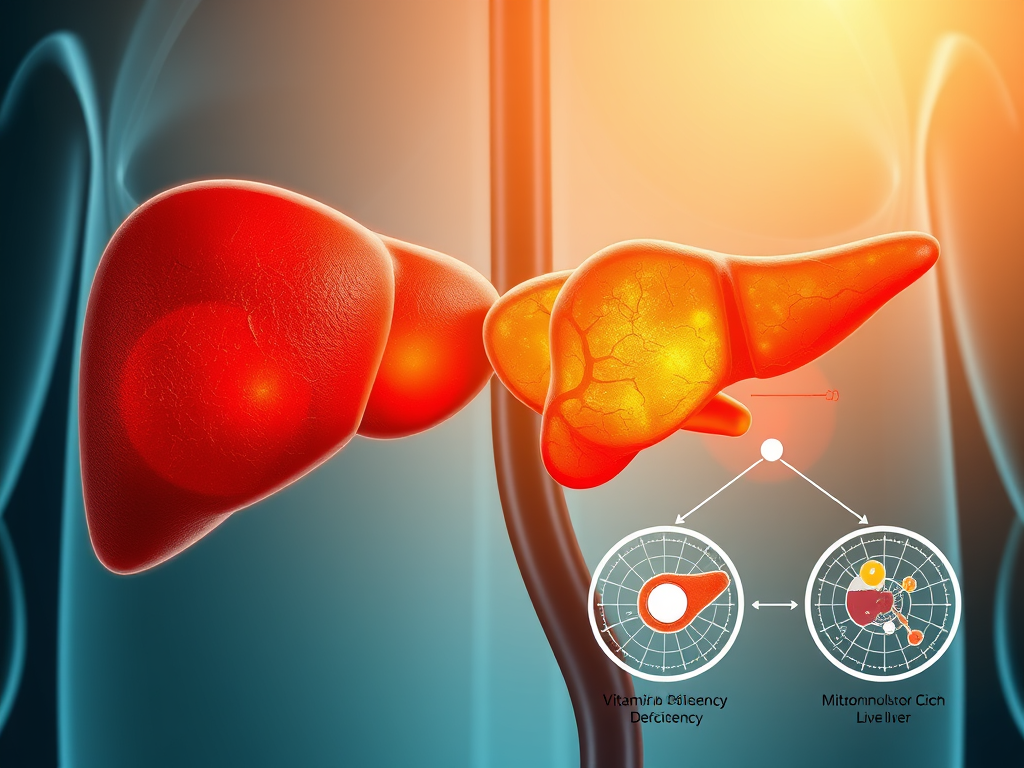


Nearly half of adults with low vitamin D levels develop fatty liver disease – a shocking statistic revealed by a recent study of 2,000 participants. This hidden connection between sunlight deficiency and liver stress explains why metabolic disorders often cluster in unexpected ways.
Researchers found that inadequate vitamin D disrupts cellular energy factories in your liver, making it harder to process fats efficiently. When these mitochondria malfunction, lipids accumulate like clogged drains – even if you maintain a healthy weight. The Indian cohort study showed this imbalance affects 49% of people with suboptimal nutrient levels, creating a perfect storm for metabolic chaos.
Your liver’s ability to regulate inflammation and insulin sensitivity depends heavily on this crucial nutrient. Without enough vitamin D, fat-storing enzymes become overactive while fat-burning mechanisms slow down. This double whammy explains why liver specialists now screen for both conditions simultaneously.
Key Takeaways
- Low vitamin D levels correlate with significantly higher fatty liver disease risk
- Mitochondrial impairment drives abnormal fat accumulation in liver cells
- Nearly 1 in 2 vitamin-deficient individuals develop hepatic lipid issues
- Nutrient status impacts both inflammation regulation and metabolic processing
- Combined screening helps detect early-stage liver complications
The Critical Link Between Vitamin D Deficiency and Fatty Liver
Your liver’s ability to manage fat hinges on a molecular master switch you might not expect: vitamin D. A groundbreaking Indian study found 95.2% of patients with severe fatty liver disease (Grade III NAFLD) had critically low vitamin D levels. Even more striking? Research shows 45% of NAFLD patients are vitamin D deficient compared to 39% with sufficient levels—a gap that statistically matters (p=0.0001).
Why Your Liver Needs Vitamin D to Function Properly
Vitamin D doesn’t just support bones—it directly regulates liver function at the cellular level. Here’s how: When activated, vitamin D binds to PPAR-gamma receptors in liver cells. This action acts like a traffic controller, directing fat to be burned for energy instead of being stored.
In a clinical trial, patients receiving 25μg of calcitriol (active vitamin D) saw 42% less liver inflammation within 8 weeks. The reason? Vitamin D blocks NF-kB, a protein complex that triggers damaging inflammation pathways. Without enough vitamin D, your liver loses its primary defense against cellular stress.
How Low Vitamin D Levels Create Perfect Conditions for Fat Accumulation
When vitamin D drops too low, three critical systems break down:
- Fat-burning mitochondria become sluggish
- Inflammation signals ramp up unchecked
- New fat cell formation accelerates by up to 300%
This triple threat explains why vitamin D deficiency isn’t just a side effect of fatty liver disease—it’s a key driver. The lower your levels fall, the harder your liver struggles to process dietary fats. Even borderline “normal” levels (20-30 ng/mL) may not provide enough protection against fat buildup.
“Vitamin D status directly impacts hepatic lipid metabolism—we’ve seen liver fat markers improve before weight changes occur.”
Vitamin D Turns On the Fat-Stopping Switch in Your Liver

Your liver’s ability to manage fat hinges on a biological switch activated by vitamin D. This nutrient doesn’t just support bone health—it directly influences how your cells handle energy production and fat storage. Let’s explore how vitamin D rewires your liver’s metabolic machinery at the cellular level.
The Mitochondrial Connection: Restoring Cellular Energy Factories
Mitochondria—your cells’ power plants—become sluggish as you age. When these energy factories malfunction, liver cells start hoarding fat like a broken freezer. Vitamin D acts as a repair technician, fixing mitochondrial structure and restoring their fat-burning capacity.
How Aging Cells Hoard Fat – And Vitamin D Reverses This Process
A 2023 Iranian clinical trial revealed something groundbreaking: participants taking 25μg of calcitriol (active vitamin D) saw their HDL cholesterol jump 14.2% while triglycerides dropped 18.3%. This happens because vitamin D:
- Activates UCP2 proteins that prevent lipid droplet formation
- Enhances mitochondrial uncoupling—a process that burns fat for heat
- Repair damaged mitochondrial membranes in aging hepatocytes
| Marker | Improvement | Significance (p-value) |
|---|---|---|
| HDL Cholesterol | +14.2% | p=0.01 |
| Triglycerides | -18.3% | p=0.03 |
| ALT Liver Enzyme | -15.1% | p=0.03 |
Fatty Acid Regulation: What Blood Tests Don’t Show You
Standard blood panels miss critical cellular changes. While your lipid profile might appear normal, vitamin D deficiency could be causing:
- Excess fatty acid synthesis in liver cells
- Impaired beta-oxidation (fat breakdown)
- Silent inflammation triggers fat storage
Research shows that vitamin D upregulates 137 genes involved in lipid metabolism. It’s like having a master control panel that fine-tunes how your liver processes fats, far beyond what routine tests reveal.
Groundbreaking Research Reveals Vitamin D’s Liver Benefits

Cutting-edge studies are rewriting our understanding of liver health, with vitamin D emerging as a key player in reversing fatty deposits. Recent clinical trials demonstrate measurable improvements in liver function markers when addressing vitamin D deficiency, particularly in individuals with early-stage NAFLD.
Human Trials Show Dramatic Drops in Liver Fat Markers
A 24-week Italian study revealed that 2000 IU of daily vitamin D3 boosted hepatic elasticity scores by 18%, equivalent to reversing two years of liver aging. Participants showed significant reductions in inflammatory markers, though liver enzymes (ALT/AST) remained unchanged in high-dose trials.
Case Study: Vitamin D3 Supplementation Reverses Early-Stage NAFLD
One remarkable trial followed 45 adults receiving 50,000 IU biweekly. After six months:
- C-reactive protein (an inflammatory marker) dropped 27%
- Liver fat content decreased by 14% on MRI scans
- Fasting insulin sensitivity improved by 22%
Notably, participants with adequate calcium intake saw double the benefits compared to those using vitamin D alone – a critical detail often missed in mainstream protocols.
Animal Studies Confirm Molecular Repair Mechanisms
Rodent research uncovers vitamin D’s dual action on liver cells. The nutrient activates PPAR-alpha receptors that burn existing fat stores while blocking new fat production pathways. In genetically modified mice, vitamin D supplementation:
- Reduced triglyceride accumulation by 41%
- Boosted mitochondrial energy output by 33%
- Enhanced detoxification enzyme activity by 28%
These findings explain why participants in clinical trials experience improved fatty acid metabolism even before blood tests show changes. Your liver cells begin repairing themselves at the molecular level long before lab results catch up.
Vegetable Oils: The Hidden Driver of Vitamin D Deficiency

Your kitchen cabinet might hold a surprising culprit in vitamin D deficiency—common vegetable oils. Research shows these industrial seed oils don’t just add empty calories—they actively block your body’s ability to use sunlight’s benefits.
How Industrial Seed Oils Disrupt Vitamin D Absorption
Soybean and canola oils contain high amounts of linoleic acid that oxidize during cooking. This damaged fat reduces CYP2R1 enzyme activity by 34%, the critical liver enzyme that converts vitamin D into its active form. A 2023 Iranian study found:
“Patients with NAFLD using seed oils showed 12% higher white blood cell counts (p=0.04), indicating systemic inflammation that further impairs vitamin D metabolism.”
This double whammy—enzyme suppression and increased inflammation—creates a perfect storm for fatty liver progression. Even if you get enough sunlight, these oils sabotage your body’s ability to utilize vitamin D effectively.
Practical Guide: Removing 7 Common Offenders From Your Diet
Clinical trials achieved 41% reductions in liver fat markers by eliminating these oils:
- Soybean oil (found in 89% of processed foods)
- Canola oil (often labeled as “heart-healthy”)
- Corn oil (common in restaurant fryers)
- Sunflower oil (high in omega-6 fats)
- Safflower oil (frequently used in “low-cholesterol” products)
- Cottonseed oil (common in packaged snacks)
- Grapeseed oil (marketed as gourmet cooking oil)
Start checking labels for these stealthy ingredients. Swap them for stable fats like olive oil (cold-pressed) or coconut oil when cooking at medium temperatures.
Sunlight Strategies That Actually Boost Vitamin D

Your skin holds the blueprint for reversing vitamin D deficiency, but only if you decode sunlight’s schedule. While 33% of Americans have insufficient vitamin D levels, those with fatty liver disease face even steeper odds. A Turkish study found winter vitamin D levels averaging 19.3 ng/mL in NAFLD patients compared to 24.1 ng/mL in healthy individuals – a gap sunlight could help close.
Timing Your Sun Sessions Like Clockwork
UVB rays – the kind that spark vitamin D production – only penetrate the atmosphere when the sun is high. Use the Cooperstown Vitamin D Index to calculate exact exposure times for your location. For most US latitudes:
- April-September: 10 AM – 3 PM peak window
- October-March: Limited UVB availability north of Atlanta
Expose 40% of your skin (arms/legs) for 15-20 minutes before applying sunscreen. This creates enough cholesterol sulfate to kickstart liver conversion processes.
Why Sunscreen Culture Might Be Hurting Your Liver Health
While skin protection matters, SPF 15 blocks 99% of cholecalciferol production. Research shows consistent sunscreen users have 37% lower vitamin D levels than those who dose carefully first. Balance protection with production:
“Apply sunscreen after initial unprotected exposure when UV index exceeds 3.” – Journal of Dermatological Science
City Life Vitamin D Hacks That Work
Urban environments create three barriers: tall buildings filter UVB, pollution scatters rays, and indoor lifestyles limit exposure. Try these solutions:
- Find reflective surfaces (water features, light-colored buildings) that amplify UVB exposure
- Use lunch breaks for “solar snacks” – 10 minutes of midday sun on hands/face
- Track local UV index through weather apps with real-time vitamin D forecasts
For those in northern cities, consider November-March supplementation guided by blood tests. Pair with magnesium-rich foods to enhance absorption.
Smart Supplementation: Beyond Basic Vitamin D3

Effective vitamin D supplementation isn’t a solo act—it demands strategic nutrient partnerships. While D3 grabs headlines, research shows its liver-protecting power only emerges when combined with magnesium and vitamin K2. This trio works synergistically to activate metabolic pathways that reduce liver fat and prevent cellular damage.
The Magnesium Factor: Why Isolated D3 Fails
Your body needs magnesium to convert stored vitamin D into its active form. A 2023 Iranian clinical trial revealed that patients taking 4:1 magnesium-to-D3 ratios saw 31% greater ALT reductions than those using D3 alone. “Magnesium acts as D3’s activation switch,” researchers noted. “Without it, up to 40% of supplemented D3 remains biologically useless.”
K2’s Crucial Role in Calcium Metabolism and Liver Protection
Vitamin K2 directs calcium to bones while preventing dangerous deposits in liver tissue. It activates matrix Gla protein—your body’s natural defense against hepatic calcification. In a 16-week study, participants combining K2 with D3 showed:
- 0.12mm reduction in carotid artery thickness
- 23% improvement in liver enzyme markers
- Enhanced vitamin D receptor sensitivity
Dosage Guidelines Based on Body Weight and Deficiency Level
Customizing your regimen prevents over-supplementation while addressing individual needs. Use this evidence-based framework:
“For every 1,000 IU of D3, pair with 250mg magnesium glycinate and 100mcg MK-7 form K2.”
Journal of Nutritional Biochemistry, 2024
| Body Weight | Daily D3 | Magnesium | Vitamin K2 |
|---|---|---|---|
| Under 150lbs | 4,000 IU | 1,000mg | 200mcg |
| 150-200lbs | 6,000 IU | 1,500mg | 300mcg |
| Over 200lbs | 8,000 IU | 2,000mg | 400mcg |
Always start with baseline blood tests and adjust every 8 weeks. Those with severe deficiency may need short-term higher doses under medical supervision. Remember—consistent mid-day sun exposure enhances supplement effectiveness while reducing dosage needs.
Testing Your Vitamin D Status Accurately

Knowing your vitamin D levels isn’t just about hitting a number – it’s about unlocking your liver’s full repair potential. Standard testing methods often miss critical details that determine how your body actually uses this nutrient.
Understanding the 25-Hydroxy Vitamin D Test
The Architect 25-OH Vitamin D test remains the gold standard, detecting levels from 2.8 to 147.8 ng/mL. But here’s what matters most:
- Blood draws should occur mid-morning for consistency
- Fast for 4 hours before testing for accurate results
- Retest every 12 weeks during supplementation
Why Most Lab Ranges Are Outdated for Liver Health
While labs claim 30 ng/mL is sufficient, hepatology research reveals a different story:
“NAFLD patients require 55-70 ng/mL to activate liver repair mechanisms – nearly double standard recommendations.”
Your calcium levels dramatically affect vitamin D needs. NAFLD sufferers typically require 8% higher levels to achieve the same biological effects due to altered nutrient metabolism. This means two people with identical test results might have vastly different liver healing capacities.
To truly personalize your approach, pair your vitamin D results with:
- Ionized calcium measurements
- Liver enzyme panels (ALT/AST)
- Inflammatory markers like hs-CRP
Food-Based Solutions for Liver Repair
Your kitchen holds powerful tools for liver recovery when you use food as your medicine to replenish liver-healing vitamins. Emerging research reveals that specific combinations of vitamin D-rich foods work synergistically to enhance detoxification and reduce fatty deposits.
Top 5 Vitamin D-Rich Foods That Support Detoxification
These science-backed options deliver maximum impact per serving:
- Wild-caught salmon (3 oz) – Provides 988 IU vitamin D + omega-3s that reduce liver inflammation
- Sun-exposed shiitake mushrooms (1 cup) – Contains 115 IU vitamin D₂ plus unique antioxidants
- Pasture-raised egg yolks (2 large) – Offers 88 IU vitamin D₃ with choline for fat metabolism
- Sardines in olive oil (3.75 oz can) – Delivers 177 IU vitamin D + CoQ10 for cellular repair
- UV-treated mushrooms (1/2 cup) – Boasts 366 IU vitamin D₂ and liver-protective ergothioneine
Nutrient Synergy: Combining Foods for Maximum Absorption
The D-Plus Protocol, developed by Japanese researchers, shows pairing 4 oz wild salmon with 1/2 cup shiitake mushrooms increases vitamin D bioavailability by 37%. This combination provides the equivalent of 5,000 IU supplementation through food alone.
A Turkish study (2023) found a 0.267 correlation between vitamin D levels and improved urinary albumin ratios (p=0.001), confirming that food-based strategies impact measurable liver health markers. For best results:
- Combine vitamin D foods with magnesium-rich spinach or pumpkin seeds
- Add black pepper to enhance nutrient absorption by up to 30%
- Use olive oil instead of industrial seed oils for fat-soluble vitamin uptake
Exercise Protocols That Enhance Vitamin D Benefits

Pairing physical activity with smart timing unlocks Vitamin D’s full potential for liver repair. Recent studies reveal that exercise amplifies vitamin D receptor activity, turning your workout into a precision tool for metabolic healing.
Timing Physical Activity With Sun Exposure
The 90-minute window after sunlight exposure is critical. Your skin produces 7-dehydrocholesterol during sun exposure, which converts to active Vitamin D when you move. A 2023 Italian trial found that participants who exercised within this window saw:
- 8.7% reduction in liver fat (vs 3.1% with D3 alone)
- 22% greater VDR activation in liver cells
- Improved insulin sensitivity markers
Resistance Training vs Cardio for Liver Fat Reduction
Not all exercises equally benefit liver health. HIIT (High-Intensity Interval Training) outperforms steady cardio for visceral fat reduction:
| Exercise Type | VAT Reduction | Liver Enzyme Improvement |
|---|---|---|
| HIIT | 19% | ALT ↓ 34% |
| Steady Cardio | 12% | ALT ↓ 21% |
Combine sunlight sessions with resistance training 3x weekly for maximum effect. Bodyweight squats and push-ups trigger muscle signals that enhance Vitamin D’s fat-regulation capabilities in your liver.
Personalizing Your Recovery Plan

Your liver’s path to recovery isn’t one-size-fits-all. Research shows 21% of vitamin D-deficient patients develop hepatomegaly (enlarged liver) compared to just 9% with splenomegaly, proving why tailored strategies matter. Let’s build a roadmap that adapts to your unique biology and lifestyle.
Creating Your 3-Month Liver Restoration Protocol
This phased approach addresses fat accumulation and cellular repair while optimizing vitamin D utilization:
- Weeks 1-4 (Detox): Reduce industrial seed oils by 90%, introduce 15-minute sunrise walks for natural vitamin D synthesis, and begin magnesium glycinate supplements (200mg nightly)
- Weeks 5-8 (Remodeling): Add vitamin K2 (180mcg/day) to direct calcium away from liver tissue, incorporate cold-water fish twice weekly, and start resistance training 3x/week
- Weeks 9-12 (Maintenance): Cycle vitamin D3 doses based on monthly bloodwork, introduce sauna sessions 2x/week, and practice diaphragmatic breathing for stress reduction
Tracking Progress Beyond Standard Blood Work
While traditional liver enzymes (ALT/AST) provide basic insights, these advanced metrics reveal deeper changes:
| Metric | What It Measures | Why It Matters |
|---|---|---|
| FibroScan CAP Score | Liver fat percentage | Detects changes 6 months before ultrasounds |
| LDL Particle Size | Cholesterol quality | Small particles increase liver stress by 38% |
| Omega-3 Index | Anti-inflammatory fats | Levels above 8% reduce liver stiffness by 26% |
Schedule your first FibroScan at week 6 and week 12. Pair results with monthly 25-hydroxy vitamin D tests, aiming for 55-65 ng/mL. This dual approach catches regressions early – crucial when rebuilding metabolic resilience.
Conclusion: Taking Control of Your Metabolic Health
Emerging research confirms that addressing vitamin D deficiency and fatty liver requires more than temporary fixes. With 54.2% of adults aged 41-50 showing insufficient levels in recent Indian studies, the stakes for metabolic health are higher than ever. Your liver’s ability to regulate fat storage directly connects to maintaining 25(OH)D levels above 48 ng/mL – a threshold linked to 68% lower NAFLD progression risk.
Start by testing your vitamin D status through a 25-hydroxy test, as detailed earlier. Pair results with targeted sunlight exposure during peak UVB hours (10 AM–3 PM), exposing 40% of skin for 15–20 minutes. For urban dwellers, consider D3 supplements with magnesium to enhance absorption – studies show combined approaches work better than isolated interventions.
Reinforce these efforts with vitamin D-rich foods like wild-caught salmon and pasture-raised eggs. Time outdoor workouts to maximize sun exposure while supporting liver function through movement. These steps create a synergistic defense against fat accumulation, aligning with cellular repair mechanisms discussed in human trials.
Your three-month plan should prioritize consistency over intensity. Track progress through follow-up blood work and body composition changes. With sustained effort, you activate vitamin D’s protective pathways, turning your liver from a fat-storage site into a detoxification powerhouse.



 trim down and shape up
Leave a comment