


Ever thought a single test could show your body’s real age? The Standing Strength Test, or sit-to-stand test, is a key to understanding your health. It goes beyond usual fitness checks.
This test looks at your body’s core strength and how well you move. It shows your muscle power and how flexible you are. Unlike big medical tests, it gives you a quick look at your aging body. This lets you start taking steps to stay healthy.
Aging isn’t just about how old you are. It’s about how well your body does everyday tasks. The sit-to-stand test is a straightforward way to see how you’re doing physically.
Key Takeaways
- A single test can reveal your body’s true biological age
- Measure muscle strength and mobility with a simple assessment
- Understand your physical resilience beyond chronological years
- Identify potential areas for improvement in physical function
- Gain insights into long-term health and independence
Understanding the Sit-to-Stand Test: A Window Into Your Physical Age
The sit-to-stand test gives a unique look at your body’s true age. It’s more than just checking strength. It shows how well you move and function.
Aging isn’t just about how old you are. It’s about how well you do basic movements. The sit-to-stand test shows how well your body works.
What Sets This Test Apart
This test is different from usual fitness tests. It checks many parts of your physical health:
- Muscle strength across different muscle groups
- Dynamic stability during complex movements
- Mobility and range of motion
- Neuromuscular coordination
The Science of Movement Quality
Studies show that how well you move is linked to aging. Your ability to stand up smoothly shows:
- Muscular endurance
- Joint flexibility
- Neurological efficiency
- Overall functional fitness
| Physical Attribute | Measurement Indicator | Aging Impact |
|---|---|---|
| Strength | Muscle power output | Decreases 3-8% per decade after 30 |
| Stability | Balance maintenance | Reduces risk of falls |
| Mobility | Joint range of motion | Preserves functional independence |
Key Components of Assessment
The sit-to-stand test combines strength, stability, and mobility into one tool. It checks how well you move from sitting to standing. This helps doctors see your true age and how well you’ll function in the future.
How to Properly Perform the Standing Strength Test
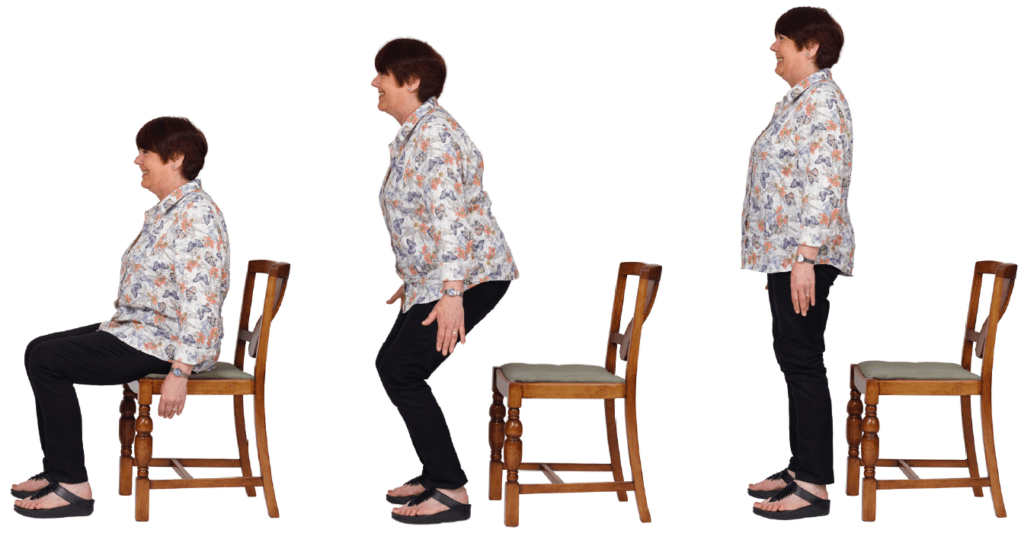
Learning the sit-to-stand test takes preparation and the right technique. It shows how strong and mobile you are as you get older. First, make sure you have the right tools and a safe place to test.
To do the Standing Strength Test right, you need:
- A sturdy chair (17-18 inches tall)
- Clear floor space
- A wall for potential support
- A timer or stopwatch
Begin by placing the chair against a wall so it doesn’t move. Sit with your feet flat, shoulder-width apart. Getting the right position is key to good results.
Here are the main steps for the sit-to-stand test:
- Cross your arms over your chest to avoid using them for help
- Keep your back straight and your core tight
- Stand up fully, extending your hips
- Sit back down, touching the chair fully
- Do as many as you can in 30 seconds
Focus on moving slowly and smoothly. It’s more important to do it right than to do it fast. Only count when you stand up straight and sit down fully.
Tip: Practice the movement slowly first to understand the correct technique before timing yourself.
When you do the Standing Strength Test, safety comes first. If you feel pain or discomfort, stop right away and talk to a doctor.
The Standing Strength Test That Reveals How Well Your Body Is Aging

Getting ready for the Standing Strength Test is all about paying attention to the details. How well you test yourself can really show how fit you are and how aging might affect you.
First, make sure you have all the right gear for a fair test of your physical skills.
Equipment Needed for Accurate Testing
- A sturdy, armless chair with a flat seat
- A stopwatch or timer
- Clear, open space with a non-slip floor
- Comfortable, supportive clothing
Common Mistakes to Avoid During Testing
When you do the Standing Strength Test, being precise is key. Knowing what mistakes to avoid helps you get the best results.
- Avoid using hands to push off the chair
- Complete full repetitions without partial movements
- Maintain consistent speed throughout the test
- Keep your back straight and head aligned
“The quality of your movement reveals more about your fitness than the quantity of repetitions.” – Fitness Experts
Safety Considerations and Precautions
Your safety is the most important thing when doing any physical test. If you have health issues, talk to a doctor before trying the Standing Strength Test.
- Warm up with light stretching beforehand
- Stop immediately if you experience pain or dizziness
- Ensure proper footwear with good traction
- Have someone nearby to assist if needed
Remember, the Standing Strength Test is a tool for understanding your physical capabilities, not a competition. Listen to your body and proceed with care.
Interpreting Your Test Results: What the Numbers Mean

Understanding your standing strength test results is more than just looking at numbers. It’s about seeing how your body performs in different ways. Your score shows how strong your lower body is, how mobile you are, and how fit you are overall.
Performance categories help you see how you compare to others your age. They divide your test results into clear levels. This makes it easy to know where you stand and what you can work on.
- Excellent: Top-tier performance indicating superior strength and mobility
- Good: Strong functional capacity with room for targeted improvement
- Average: Standard fitness level for your age demographic
- Below Average: Potential areas requiring focused training
- Needs Improvement: Signals significant opportunities for physical development
Your test score is about more than just how strong you are. It shows how well your body moves, stays balanced, and does basic actions. Experts use these categories to make fitness plans that fit your needs and any age-related challenges.
Remember, your test results are a snapshot of your current physical condition – not a permanent verdict.
Every rep in the test gives you important info about your muscles, joints, and how you move. By looking at these results closely, you can make plans to get better and stay active as you get older.
Age-Related Benchmarks and Performance Standards

Knowing your standing strength is more than just a simple test. Age-related benchmarks give you key insights into your physical abilities. They help you see how you compare to others your age and where you can get better.
Your standing strength can change a lot due to different factors. Fitness experts have set up age-related benchmarks. These help you set realistic goals and track your progress well.
Performance Categories by Age Group
Each age group has its own standards for standing strength. Here’s a look at the categories:
- 20-30 years: Peak physical performance range
- 31-40 years: Maintaining muscular strength
- 41-50 years: Strategic strength preservation
- 51-60 years: Adaptive fitness strategies
- 61+ years: Functional strength maintenance
Setting Realistic Goals for Improvement
To set good fitness goals, you need to know your current level. Your goals should be personal and get better over time. They should also take into account your health and physical shape.
| Age Group | Beginner Goal | Intermediate Goal | Advanced Goal |
|---|---|---|---|
| 20-30 | 10-12 repetitions | 15-18 repetitions | 20+ repetitions |
| 31-40 | 8-10 repetitions | 12-15 repetitions | 16-19 repetitions |
| 41-50 | 6-8 repetitions | 10-12 repetitions | 13-16 repetitions |
| 51-60 | 4-6 repetitions | 7-9 repetitions | 10-13 repetitions |
| 61+ | 3-5 repetitions | 6-8 repetitions | 9-11 repetitions |
Understanding Score Variations
Score variations are normal and influenced by many factors. Genetics, lifestyle, previous injuries, and overall fitness level can affect your standing strength. Regular practice and specific exercises can help you improve your scores over time.
The Connection Between Standing Strength and Daily Function

Your standing strength is key to staying independent and enjoying life as you get older. It helps you do simple things like getting up from a chair. It also lets you do daily tasks with confidence.
There’s a strong link between standing strength and daily function. Here’s what we’ve learned:
- Strong muscles help with basic movements
- Less chance of falling and getting hurt
- More mobility and staying physically independent
Studies show that strong standing muscles help keep you moving well. Your current movement patterns predict future mobility potential. So, the strength you build now affects your ability to do everyday tasks later.
Keeping your standing strength up has many benefits:
- Easier to do household chores
- Better balance and coordination
- More confidence in your physical abilities
- May stop the age-related loss of mobility
By focusing on standing strength, you’re investing in your future mobility. Simple exercises and regular training keep your muscles strong. This lets you stay active and involved in your life.
“Movement is the key to maintaining your body’s functional capacity.” – Dr. Emily Rodriguez, Geriatric Movement Specialist
Essential Exercises to Improve Your Standing Strength

To build standing strength, you need a plan that includes basic movements and progressive training. Your body’s stability and power come from exercises that target key muscles and movements.
Creating a strong standing strength routine means focusing on core movements. These exercises challenge your body’s functional abilities. The right mix can boost your physical performance and fight off age-related decline.
Foundational Movement Patterns
Your workouts should include essential movements that mimic everyday challenges. Key foundational exercises are:
- Bodyweight squats to build lower-body strength
- Glute bridges for hip stability
- Step-ups to enhance unilateral leg power
- Box squats for improved posterior chain engagement
- Heel-elevated split squats for balance and strength
Progressive Training Methods
To boost standing strength, use a progressive training method. Begin with bodyweight exercises, then add resistance with:
- Increasing repetition count
- Adding resistance bands
- Incorporating lightweight dumbbells
- Introducing more complex movement variations
Recovery and Maintenance Strategies
For lasting strength, smart recovery is key. Rest, proper nutrition, and consistent mobility work help keep your progress and prevent injuries.
Quality is more important than quantity. Prioritize perfect form and controlled movements over speed. Your body will reward you with better standing strength and fitness.
Tracking Progress and Making Adjustments

Tracking your progress in the Standing Strength Test is key to understanding your fitness journey. By regularly checking your results, you can make smart changes to your workout. This helps you focus on areas where you need to get better.
To track your progress well, try these methods:
- Create a detailed fitness journal documenting each test result
- Use digital fitness tracking apps for precise measurements
- Photograph or video record your test performances
- Schedule regular testing intervals (every 4-6 weeks)
When looking at your results, focus on important signs of strength and flexibility. Spotting patterns shows you where to tweak your workout. This helps you improve faster.
| Performance Metric | Improvement Strategy |
|---|---|
| Repetition Count | Increase resistance training |
| Stability | Add balance and core exercises |
| Recovery Time | Optimize rest and nutrition |
Remember, tracking progress is about getting better, not being perfect. Small, incremental changes can lead to significant long-term fitness gains. Stay patient, stay committed, and adjust your workout as needed.
“Progress is impossible without change, and those who cannot change their minds cannot change anything.” – George Bernard Shaw
Incorporating the Test into Your Fitness Routine

Adding the standing strength test to your fitness routine needs careful planning. It’s a powerful tool for tracking your health and understanding your physical limits.
Here are some tips for adding test measurements to your fitness plan:
- Do the standing strength test every 4-6 weeks
- Use the results to make your workouts more intense
- Keep track of your progress by documenting it
- Change your exercise plan based on how you do in the test
Your fitness plan should grow with your test results. Begin with a baseline test, then create exercises that target your weak spots.
| Test Frequency | Recommended Action |
|---|---|
| Monthly | Minor routine adjustments |
| Quarterly | Comprehensive program redesign |
Professional athletes and fitness lovers know that regular tests lead to better performance. By using test results in your fitness routine, you make your wellness plan more effective and adaptable.
“Measurement is the first step that leads to control and eventually to improvement.” – H. James Harrington
The standing strength test is more than just a check-up. It’s a guide for personal growth in your fitness journey. Use it as a key part of your overall fitness plan.
Conclusion
The Standing Strength Test gives you a deep look into how your body ages and stays fit. It shows you where you stand physically. This lets you take steps to keep your strength and health up as you get older.
Adding this test to your workout routine helps you see how you’re doing. It shows you where you need to get better. It’s more than just counting reps; it’s about how well your body moves.
It’s not about being perfect; it’s about getting better every day. Start with a baseline, do the exercises, and check your progress often. Little steps can make a big difference in how well you age and live.
Functional fitness is a long-term goal. By focusing on your standing strength, you’re choosing a healthier, more active life. Start today and change how you see aging through smart, active choices.



 trim down and shape up
Leave a comment