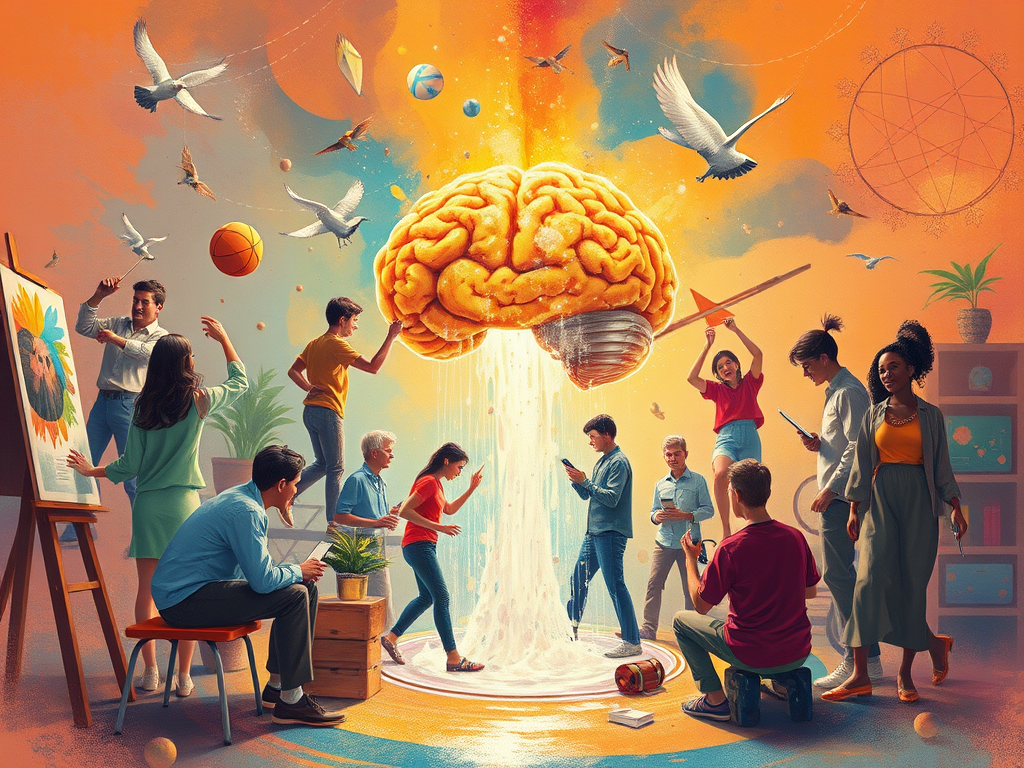


Did you know that creative activities can make your brain feel 7.4 years younger? This amazing fact shows that creativity is a powerful brain booster. It can actually make your brain younger again.
Doing creative things helps your mood, memory, and thinking speed. Whether you paint, play music, or cook new dishes, these activities are more than hobbies. They keep your brain young and healthy.
Think about keeping your mind sharp and flexible by being creative every day. It’s not about becoming a pro artist. It’s about enjoying the amazing brain benefits of creativity that anyone can experience.
Key Takeaways
- Creativity can potentially reverse brain aging
- Creative activities are accessible to everyone
- Cognitive health can be improved through regular creative practice
- Brain flexibility increases with creative engagement
- No artistic expertise is required to benefit from creativity
How Creative Activities Keep Your Brain Biologically Younger

Your brain loves creativity, making it a powerful tool for staying young and sharp. Activities like music, dance, art, or gaming can make your brain feel up to seven years younger than it actually is.
Research shows how creative pursuits boost brain function. These activities are more than just fun. They’re brain exercises that keep your neural networks active and fresh.
The Neuroscience of Creative Expression
Different creative activities affect your brain in special ways:
- Music works many brain areas at once
- Dance boosts coordination and spatial sense
- Visual art sharpens problem-solving skills
Strategic Gaming: A Modern Brain-Boosting Outlet
Strategic gaming is more than just fun. It’s a brain workout that enhances:
- Reaction speed
- Strategic thinking
- Complex problem-solving
| Creative Activity | Brain Benefits |
|---|---|
| Musical Instruments | Boosts memory, improves coordination |
| Dance | Increases neuroplasticity, spatial awareness |
| Strategic Gaming | Speeds up cognitive processing and decision-making |
The secret is to keep engaging and trying new creative challenges. This keeps your brain adaptable and youthful.
The Brain Clock Model — Machine Learning Meets Neuroscience

Neuroscience has entered a groundbreaking era. The brain clock model reveals fascinating insights into how our minds age. Machine learning techniques now allow researchers to decode the intricate patterns of neural connectivity. They can assess brain biological age with unprecedented precision.
The brain clock model represents a revolutionary approach to understanding brain aging. By analyzing complex neural networks, researchers can now determine your brain’s true biological age. This might differ significantly from your chronological age.
- Advanced algorithms scan brain imaging data
- Machine learning identifies age-related neural patterns
- Artificial intelligence quantifies brain health markers
Your brain carries unique biological markers of age, much like your body. These markers include:
| Neural Marker | Aging Indicator |
|---|---|
| Gray Matter Volume | Structural Changes |
| Neural Connectivity | Communication Efficiency |
| Synaptic Plasticity | Learning Capacity |
By training artificial intelligence on thousands of brain scans, scientists can now objectively measure how creative activities rejuvenate neural networks. This breakthrough allows researchers to move beyond subjective assessments. They can provide concrete evidence of brain health improvements.
Short Bursts of Creative Learning Can Turn Back Your Brain’s Clock

Discovering the power of creative learning doesn’t need years of practice. Research shows short creative sessions can greatly improve brain health and function.
Studies found that 30 hours of creative practice can make big changes in the brain. This is a doable goal for most people, like an hour a day for a month or a few hours a week for months.
What 30 Hours of Focused Practice Can Do
Your brain reacts fast to creative activities. Short creative learning sessions can bring big benefits:
- Reduce biological brain age by about three years
- Boost cognitive processing speed
- Help with memory consolidation
- Make your brain more flexible
Measurable Improvements in Brain Function
Brain scans and tests show real changes from focused creative practice. These changes are not small – they are big improvements in how your brain works.
| Creative Activity | Brain Function Improvement | Time Investment |
|---|---|---|
| Musical Instrument Learning | Enhanced Cognitive Processing | 30 hours |
| Digital Art Creation | Increased Neural Connectivity | 30 hours |
| Creative Writing | Improved Memory Consolidation | 30 hours |
The good news is you don’t need to spend years to see brain benefits. Creative learning can be your brain’s fountain of youth, helping keep your mind sharp and flexible.
Creativity Can Be a ‘Fountain of Youth’ for Your Brain

Recent studies in neuroscience have found a strong link between creativity and brain health. They showed that creative people have younger brains. This is because creative activities keep the brain sharp and young.
Research shows that being creative makes your brain work better. It strengthens brain connections and improves thinking skills. By trying different creative activities, you can slow down brain aging and keep your mind flexible.
- Musical activities stimulate multiple brain regions simultaneously
- Visual arts create new neural connections
- Learning complex skills challenges brain plasticity
Studies using brain imaging have found big differences between creative and less creative people. Neuroplasticity grows more in those who are creative. This means your brain can keep changing and adapting as you age.
Creativity isn’t just an artistic expression—it’s a powerful tool for maintaining cognitive vitality.
When you do creative things, you’re not just having fun. You’re also taking care of your brain’s health. The important thing is to keep doing it and try new things.
How Creativity Strengthens Brain Networks and Communication

Your brain is made up of many parts that work together. They help you process information, solve problems, and stay mentally flexible. Creativity is key in making these connections stronger, keeping your mind sharp as you get older.
Engaging in creative activities changes your brain in amazing ways. It makes different brain parts talk better to each other. This creates a strong workout for your mind, keeping it quick and ready to respond.
Mapping Brain Network Interactions
During creative tasks, your brain’s networks interact in interesting ways. Here are some important connections that get stronger with creativity:
- Default Mode Network: Supports imagination and introspection
- Executive Control Network: Manages complex cognitive tasks
- Salience Network: Helps prioritize important information
| Brain Network | Creative Function | Cognitive Benefit |
|---|---|---|
| Default Mode Network | Generates novel ideas | Enhances cognitive flexibility |
| Executive Control Network | Implements creative strategies | Improves problem-solving skills |
| Salience Network | Filters and processes creative input | Increases attentional focus |
Neural Integration and Cognitive Resilience
The idea of neural integration shows how creativity makes different brain parts talk better. This better communication builds stronger connections in your brain. It helps you stay mentally clear and focused as you age.
You Don’t Need to Be an Artist to Benefit From Creative Engagement

Don’t think creativity is only for artists. Your brain loves creative experiences, no matter your skill level. The real magic is in the making, not the final product.
Even simple activities can spark your brain’s creativity. You don’t need to be a genius to enjoy the brain benefits. Just doing something creative keeps your brain sharp and adaptable.
- Journaling your thoughts creatively
- Cooking without strict recipes
- Designing your living space
- Solving problems in unique ways
Your brain loves the act of creating, not just the outcome. Neurological research shows that creative engagement stimulates neural pathways. It doesn’t matter if you make a masterpiece or just tidy up your space.
| Creative Activity | Brain Benefits |
|---|---|
| Intuitive Cooking | Enhances problem-solving skills |
| Journaling | Improves emotional processing |
| Space Design | Boosts spatial reasoning |
Let your creativity shine without worrying about being perfect. Every time you try something new, you’re working out your brain’s best abilities. The most important thing is to enjoy the journey, not just the end result.
Everyday Creative Choices That Keep Your Brain Flexible and Resilient

Creativity doesn’t need big talents or lots of time. You can make daily tasks fun by adding a creative twist. Your brain loves new experiences and fun ways to do things.
Journaling Beyond Words
Journaling is a great way to make routine fun. Don’t just write—try creative journaling that uses different parts of your brain:
- Sketch alongside your written entries
- Use color-coded bullet journaling
- Create mind maps of your thoughts
- Incorporate collage elements
Culinary Creativity and Space Design
Cooking and designing your home offer chances to be creative. Try new recipes, change your home’s look, or find unique ways to decorate. These activities can make your brain work in new ways.
Making Routine Tasks Playful
Make everyday tasks fun by thinking creatively. Try new routes, solve problems in new ways, or organize your space differently. This keeps your mind flexible.
- Challenge yourself to find multiple solutions to simple problems
- Introduce unexpected elements into daily tasks
- Approach routine with curiosity and playfulness
Remember, it’s not about being perfect. It’s about having fun, exploring, and enjoying the journey of making routine tasks creative.
The Long-Term Brain Health Benefits of Regular Creative Practice

Think of your brain as a muscle that gets stronger with exercise. Regular creative activities do more than just give you a temporary boost. They are a long-term investment in your brain’s health. Studies show that keeping your brain active can create a protective shield against aging.
Every time you create, whether it’s through art, music, or solving problems, you’re building your brain. These activities help make your brain connections stronger. This makes your brain more flexible and better able to adapt as you get older.
- Creative activities strengthen neural networks
- Sustained practice builds cognitive resilience
- Regular engagement supports brain plasticity
Long-term studies on creative people show amazing benefits. Those who keep creating shows:
| Cognitive Benefit | Impact |
|---|---|
| Memory Function | Enhanced recall and retention |
| Problem-Solving Skills | Increased mental flexibility |
| Neurological Protection | Reduced risk of cognitive decline |
Your brain loves new challenges. By making creativity a regular part of your life, you’re protecting your brain. Think of each creative session as a way to invest in your brain’s health. These small, regular efforts add up over time.
Practical Ways to Make Daily Creativity Non-Negotiable
To make creativity a daily habit, you need a plan and commitment. Your brain loves to be creative every day. So, it’s key to add creative activities to your daily routine.
Being creative doesn’t mean you have to be a pro artist. It’s about finding ways to try new things and think outside the box.
Challenge Yourself With New Skills
Learning new things keeps your brain sharp and active. Here are some ways to start:
- Learn a musical instrument
- Study a foreign language
- Try a craft like pottery or knitting
- Explore digital design software
Every new skill you learn helps your brain grow and stay strong.
Engage All Your Senses in Creative Activities
Using all your senses in creative activities is great for your brain. Try activities that challenge your senses:
| Sense | Creative Activity |
|---|---|
| Visual | Painting, photography |
| Auditory | Music composition, sound mixing |
| Tactile | Sculpture, woodworking |
| Gustatory | Experimental cooking, flavor pairing |
By making creativity a daily habit, you’re taking care of your brain. Start small, stay consistent, and see your creativity grow.
Conclusion
Exploring how creativity affects brain health shows a key truth. Creative activities are more than fun—they’re vital for keeping our minds sharp. Studies show that regular creative pursuits can make our brains feel up to seven years younger.
This is great news because it’s easy to get started. You don’t need to be a genius or have special skills. Simple things like cooking, writing, learning a new game, or redecorating can boost your brain. Every creative act helps keep your brain flexible and strong.
Starting your creative journey is simple. It’s about taking small steps, no matter your age. Your brain can adapt and change, even as you get older. By choosing to be creative, you’re not just keeping your mind sharp. You’re also improving your focus, problem-solving, and memory.
Remember, creativity is a lifelong adventure. It’s about trying new things, learning, and enjoying the journey. By embracing creativity, you’re giving your brain the best chance to stay young and vibrant.



 trim down and shape up
Leave a comment