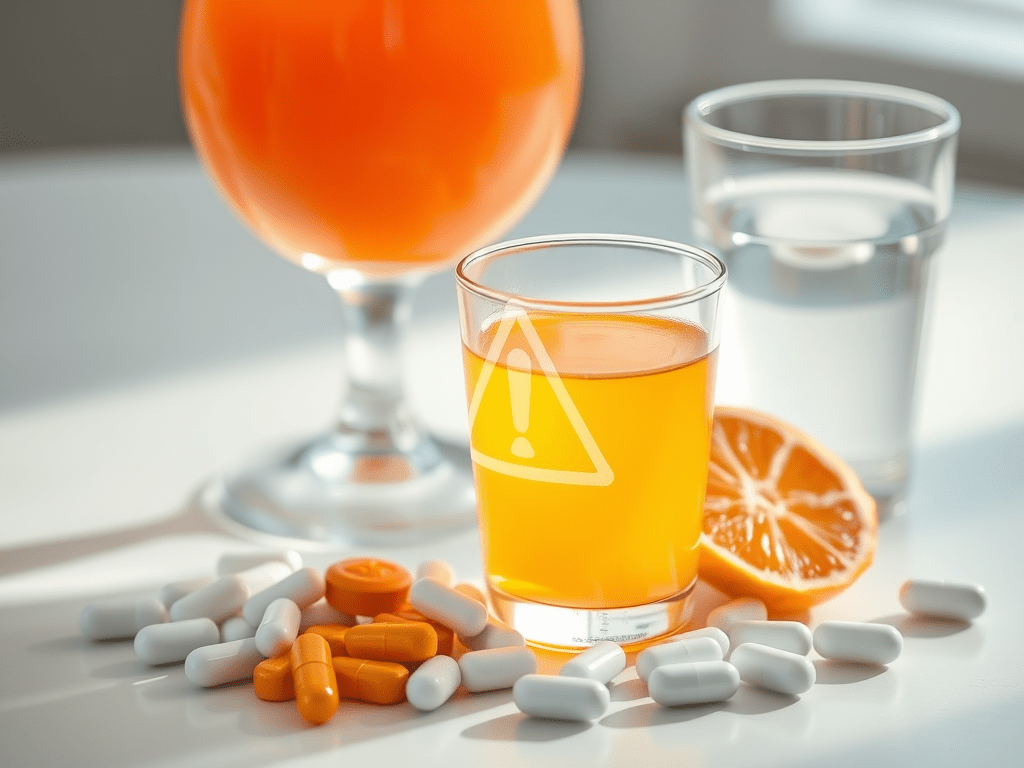


Did you know that nearly 70% of Americans take a daily medication? This could be affected by drinking juice. Many people choose juice over water because it tastes better. But juices like grapefruit, orange, apple, and cranberry can make medications dangerous.
These juices can raise drug levels by 500%. This means your morning drink could change how your medication works. Some juices can even stop medications from being absorbed, which can be very risky.
Knowing about these hidden interactions is crucial. It could mean the difference between good health and serious problems. Your choice of drink might seem small, but it can have big effects on your medication.
Key Takeaways
- Some juices can increase medication levels by up to 500%
- Grapefruit, orange, and cranberry juices are problematic
- Juice can prevent medications from being absorbed
- Medication interactions with juice can lead to serious health risks
- Water is the safest beverage for taking most medications
Why Juice Can Be Dangerous with Medication

Your morning glass of juice might seem harmless. But it could potentially create dangerous interactions with your medications. It’s important to understand why juice can be dangerous with medication for your health and safety.
Medications work by using specific biological processes. Juice can interfere with these processes in several ways.
Blocking Liver Enzymes
Certain compounds in juice can block essential liver enzymes. These enzymes are key to processing medications. The CYP3A4 enzyme system, which breaks down many prescription drugs, is affected by juice compounds.
- Enzyme blockage can cause medication to accumulate in your body
- Potential for unexpected toxic drug levels
- Reduced medication effectiveness
Disabling Intestinal Transport Proteins
Juice can also disrupt how medications move through your digestive system. It does this by affecting transport proteins. These proteins are vital for moving drugs from your intestines into your bloodstream.
- Reduced drug absorption rates
- Potential decrease in medication effectiveness
- Unpredictable drug concentration levels
Changing Gut Acidity and Drug Absorption
The acidity of juice can change how medications dissolve and are absorbed. Increasing drug absorption unpredictably means even one glass can disrupt medication levels for days.
Your safest approach is to discuss juice consumption with your healthcare provider. Always follow medication instructions carefully.
Heart and Blood Pressure Medications
Grapefruit juice can be dangerous for your heart and blood pressure medications. It might seem harmless, but it can change how your drugs work.

Why Grapefruit Juice Disrupts Heart Drugs
Grapefruit juice blocks an enzyme in your liver called CYP3A4. This enzyme helps break down many heart medications. Without it, drug levels can get too high.
- Statins (Lipitor, Zocor, Crestor)
- Calcium channel blockers (Norvasc, Procardia)
- Blood pressure drugs (Losartan, Verapamil)
- Anti-arrhythmia medications (Amiodarone)
Potential Side Effects and Risks
Drinking grapefruit juice with heart medications can lead to serious problems:
- Sudden blood pressure drops
- Dangerous heart rhythm disturbances
- Potential kidney damage
- Muscle tissue breakdown (rhabdomyolysis)
A single glass of grapefruit juice can affect drug metabolism for up to 72 hours, making even occasional consumption risky.
Medical professionals strongly recommend avoiding grapefruit juice entirely if you’re taking heart and blood pressure medications.
Anxiety, Sleep, and Mental Health Medications

When you mix your anxiety, sleep, and mental health medications with certain juices, it can be dangerous. Drugs like Xanax, Valium, and Prozac can react badly with fruit juices. This can lead to serious health issues.
The dangers of mixing juices with mental health meds include:
- Extreme sedation that’s more than usual
- Unexpected confusion and problems with thinking
- Slow breathing that could be deadly
- Potential blackouts and memory loss
- Higher risk of overdose
Grapefruit juice can block enzymes that break down psychiatric drugs. This causes drug levels to build up fast in your blood. This can lead to dangerous side effects.
Some medications at high risk are:
- Benzodiazepines (Xanax, Valium, Klonopin)
- Antidepressants (Zoloft, Prozac, Lexapro)
- Sleep aids (Trazodone)
- Antipsychotics (Seroquel)
It’s safest to take these meds with plain water and avoid fruit juices. Always talk to your doctor about possible medication interactions. This helps keep you safe and ensures your treatment works well.
Painkillers and Opioids
Mixing grapefruit juice with opioid painkillers can be very dangerous. It can turn your prescription into a deadly risk with just one glass of juice.

Opioid meds like Oxycodone, Hydrocodone, Fentanyl, and Methadone are at risk. Grapefruit juice stops your body from breaking down these drugs. This means they can build up to dangerous levels.
How Juice Disrupts Opioid Metabolism
Drinking grapefruit juice messes with your liver’s drug processing. This can lead to serious problems:
- Medication levels can spike unexpectedly
- There’s a risk of sudden overdose
- The drug’s effect can become much stronger
Life-Threatening Complications
The dangers of grapefruit juice with opioids are real. You could face:
- Respiratory failure: Your breathing could slow down too much
- Loss of consciousness
- Overdose, even with the right dose
“One glass of grapefruit juice can transform a standard medication dose into a potentially fatal cocktail.” – Medical Safety Research Institute
Doctors advise against grapefruit with opioid meds. They say to use water instead to avoid these risks.
Cholesterol Medications (Statins)

Cholesterol medications statins, can be dangerous when mixed with certain juices. Your favorite grapefruit drink might be secretly sabotaging your heart health treatment.
Statins like Lipitor atorvastatin, Zocor simvastatin, and Mevacor are key for managing cholesterol levels. They help lower your risk of heart attacks by blocking cholesterol production in the liver.
- Lipitor atorvastatin reduces cholesterol absorption
- Zocor simvastatin helps lower cardiovascular risks
- Mevacor provides essential heart protection
Drinking grapefruit juice while taking these medications can create serious health risks. The juice interferes with enzyme processing, potentially causing dangerous drug interactions.
| Statin Medication | Potential Juice Interaction Risk |
|---|---|
| Lipitor | High interaction risk |
| Zocor | Moderate interaction risk |
| Mevacor | Significant interaction risk |
Potential complications from these interactions include muscle pain, muscle breakdown, and in extreme cases, kidney failure. Your body might experience unexpected drug concentration increases, making your medication potentially toxic.
Always consult your healthcare provider about potential juice interactions with your cholesterol medications.
Allergy and Cold Medications
When you’re fighting allergies or a cold, you don’t want to make your meds less effective. Surprisingly, common fruit juices can really affect how your allergy and cold medications work.

Medications like Allegra (fexofenadine), Claritin, and Zyrtec can lose their strength when you drink certain juices. Apple, orange, and grapefruit juices are the main culprits. They block important transporters in your gut.
How Juice Interferes with Medication Absorption
These juices can make your meds up to 70% less effective. It’s a pretty cool biological process. Here’s what’s happening:
- Juice compounds block organic anion-transporting polypeptides (OATPs)
- These proteins help move medications from your digestive system into your bloodstream
- Without these transporters, less medication gets into your system
Practical Guidance for Taking Allergy Medications
To make sure your meds work well, follow these tips:
- Take medications with plain water
- Avoid citrus and apple juices for at least 2-4 hours before and after taking medication
- Check with your healthcare provider about specific interactions
By knowing these tips, you can make your meds more effective. This way, you can find relief from allergy and cold symptoms faster.
Antibiotics

Choosing the right drink when on antibiotics is important. Some juices can mess with how well your antibiotics work. This might make them less effective or cause more side effects.
Fluoroquinolone antibiotics, like Ciprofloxacin, have big problems with juice. They can react badly with drinks that have minerals like calcium, iron, or magnesium.
- Ciprofloxacin can lose up to 50% of its absorption when taken with calcium-rich juices
- Erythromycin’s effectiveness may be reduced by juice interactions
- Doxycycline absorption can be compromised by certain fruit drinks
Juice changes how your stomach works. It can affect how well your body absorbs antibiotics. This is because minerals in juice can bind to the medicine, making it hard for your body to use.
To make sure your antibiotics work right, follow these tips:
- Always take antibiotics with plain water
- Wait at least two hours before or after taking antibiotics to consume juice
- Complete your full antibiotic course as prescribed
Pro tip: Protecting your medication’s absorption is crucial for successful treatment and preventing antibiotic resistance.
7 Pills You Shouldn’t Take with Juice
Some medicines can react badly with juice, but many people don’t know this. Knowing about these interactions can help keep you safe from serious health problems.
Anti-Rejection and Cancer Medications: A Critical Warning
Medicines for fighting off organ rejection and cancer are very sensitive. Drugs like Tacrolimus and Cyclosporine need to be given just the right amount. This is to avoid harming organs and keep the immune system in balance.

- Tacrolimus can reach toxic levels when combined with juice
- Potential risks include severe immune suppression
- Dangerous infections may develop from improper medication interactions
When juice messes with these medicines, it can put patients at risk for big health problems. The window for these medicines is very small. Even a tiny mistake can cause serious side effects.
Iron Supplements and Juice Interactions
Iron supplements need to be taken carefully to work properly. Some juices can make iron less effective in your body.
| Juice Type | Iron Absorption Impact |
|---|---|
| Green Juices | Polyphenols bind to iron, blocking absorption |
| Calcium-Fortified Juices | Calcium directly inhibits iron uptake |
To get the most out of iron supplements, wait at least two hours after taking your supplement before drinking any juice. This simple step helps your body get the most nutrition from the iron.
The Safest Way to Take Almost All Pills
Taking medication safely is all about paying attention to the details. To take pills safely, follow a few important steps. These steps can make your medication work better and lower risks.
Here are the key guidelines to follow:
- Use plain water as your primary liquid for swallowing pills
- Sit upright during and after taking medication
- Wait 30 minutes before eating or drinking anything else
- Avoid juice within 4 hours of medication
Water is key to how your body absorbs medication. Drinking room-temperature water helps pills dissolve and move through your system. Always drink a full 8-ounce glass to help your medication get where it needs to go.
| Action | Recommendation |
|---|---|
| Liquid for Pills | Plain water only |
| Body Position | Sit or stand upright |
| Wait Time | 30 minutes before eating/drinking |
| Juice Restriction | Avoid within 4 hours |
Your position is important when taking medication. Stay upright for at least 10 minutes after swallowing. This helps prevent pills from getting stuck in your esophagus. It also keeps your throat safe from irritation or damage.
Always check with your doctor or pharmacist about special instructions for your medication. Some drugs have unique needs.
By sticking to these guidelines, you’ll get the most out of your medication. And you’ll reduce the chance of bad interactions. Remember, being consistent is crucial for managing your health and medication routine.
How Long Does Juice Affect Your Medication
It’s important to know how long juice affects your medication. A single glass of grapefruit juice can change how your body breaks down drugs for a long time.
Many people don’t know that juice can keep affecting your drugs for days. Just one glass of grapefruit juice can change how your body breaks down drugs for up to 72 hours. That’s three whole days!
The Surprising Persistence of Juice Effects
The way juice affects your body is quite interesting. Furanocoumarins in grapefruit juice don’t just block liver enzymes for a short time. They actually permanently disable certain enzyme molecules. This means your body has to make new enzymes to get back to normal.
- One glass of juice can impact medication for 72 hours
- Enzyme disruption varies by individual factors
- Effects depend on juice quantity and the type of medication
Your body reacts differently to juice based on several things:
- How much juice do you drink
- Your age and how well your liver works
- The drugs you’re taking
- Genetic differences in you
So, if you’re taking drugs that can be affected by juice, think about how much juice you drink over a few days. Some juices can have effects that last and can make your medication less effective or even unsafe.
What to Tell Your Doctor and Pharmacist
When it comes to medication safety, talking is crucial. If you often drink juice, let your healthcare team know. They need to know about your juice drinking to keep you safe from bad medicine interactions.
Before starting any new medicine, talk to your pharmacist or doctor. Share these important details:
- Types of juice you drink regularly (grapefruit, orange, apple, cranberry)
- How often do you drink juice
- How much juice do you usually have
- If you eat whole fruits, that might mix with medicines
When you get a prescription, ask your healthcare team these questions:
- Do any medicines mix badly with drinks?
- Is it okay to drink juice with this medicine?
- How long should I wait to drink juice after taking medicine?
Your pharmacist can give you great advice. They might recommend different medicines if your juice drinking could cause problems. Remember, no question is too small when it comes to your health and safety.
Being proactive about talking helps make sure you use medicines safely and effectively.
Conclusion
It’s important to know how juice and medications interact. The “7 Pills You Shouldn’t Take with Juice” guide shows how some drugs can be affected. Drinking water instead of juice is key when taking medicines.
Choosing the right drink with your medication is crucial. Some medicines, like heart drugs or mental health treatments, can be changed by juice. Talking to your doctor or pharmacist helps make sure your medicines work right.
Juice is good for you, but it can mess with some medicines. Drinking water with your pills is best. Always talk to your doctor about what you eat and drink.
Being careful with your medicines is your job. Knowing how juice affects drugs helps keep you safe. Always ask questions and make smart choices about your health.
 trim down and shape up
Leave a comment