


What if the secret to staying independent and confident after 50 lies in a single movement you can do almost anywhere? Most women over 50 struggle with balance and strength. Yet many don’t realize how quickly these abilities fade without the right balance of exercises. The good news is that you don’t need complicated gym routines or expensive equipment to transform your physical health.
Your body changes dramatically as you age. Muscle mass starts declining as early as your 30s, dropping roughly 1% each year. After age 60, the decline accelerates, with losses of 3-8% per decade. This isn’t just about appearance. When women over 50 lose muscle and balance, everyday activities become dangerous. Climbing stairs, carrying groceries, and even standing up from a chair become risky. Approximately 30% of people over 65 experience balance problems at some point.
The reality is stark, but the solution is simple. One exercise can address both muscle loss and balance issues at the same time. Strength training for women doesn’t require hours at the gym. You’ll discover how to improve balance and strength with a single foundational movement that works your entire body. This approach is practical, accessible, and proven effective for women at any fitness level.
The following sections break down why your body changes after 50 and reveal the exact exercise that tackles these challenges head-on. You’ll learn proper form, how to progress safely, and how to fit this strength training for women into your daily routine. Aging brings changes, yet it’s never too late to build the foundation for a stronger, more confident future.
Key Takeaways
- Muscle mass declines 3-8% per decade after age 30, with faster loss after age 60
- About 30% of people over 65 face balance problems that impact daily life
- One simple exercise can build both balance and strength for women over 50
- You don’t need expensive equipment or complex routines to see real results
- Strength training for women becomes more critical as you age to maintain independence
- Starting an exercise for balance now prevents falls and injuries later
Why Muscle Mass and Balance Decline After 50
As you hit your 50s, your body changes a lot. Knowing how your muscles and balance work can help you stay active. The good news is, you can slow down or even stop muscle loss with the right fitness and nutrition.

The Science Behind Age-Related Muscle Loss
Sarcopenia is a condition in which your muscles waste away as you age. This starts around age 30. You lose about 1% of your muscle mass each year unless you’re working out and eating enough protein.
Between 30 and 60, you lose 3% to 8% of your muscle mass per decade. After 60, the loss speeds up. Your muscles have special fibers that help you move. These fibers shrink and decrease in number as you age.
Protein synthesis, which builds muscle, gets less efficient with age. To maintain your muscles, you need to strength-train. Just sitting won’t keep your muscles strong.
| Age Range | Muscle Loss Per Decade | Annual Loss Rate | Cumulative Loss from Age 30 |
|---|---|---|---|
| 30-40 | 3-5% | 0.3-0.5% | 3-5% |
| 40-50 | 3-5% | 0.3-0.5% | 6-10% |
| 50-60 | 3-8% | 0.3-0.8% | 9-18% |
| 60+ | 8%+ | 0.8%+ | 17%+ and accelerating |
How Menopause Affects Your Physical Strength
Menopause changes your hormones, including a drop in estrogen. This hormone change affects your muscle strength. The link between menopause and muscle is strong and impacts many body systems.
During menopause, the loss of estrogen weakens your muscles. Your muscles need estrogen to work properly. When estrogen drops, your muscles get weaker faster. Studies show that over 70% of menopausal women have musculoskeletal symptoms, and about 25% find them disabling.
The musculoskeletal changes during menopause include:
- Pain in joints and muscles
- Loss of lean muscle mass beyond normal aging
- Decreased bone density
- Increased risk of tendon and ligament injuries
- Overall weakness and fatigue
Balance also declines with age, more so after menopause. About 30% of people over 65 have balance problems. Weak muscles can’t keep your body stable. This makes falls a bigger risk. That’s why it’s key to build strength through exercises during and after menopause.
The combination of muscle loss and hormonal changes makes your 50s a critical time to act. Waiting until age 60 or 65 means you’ve already lost a lot of muscle. Starting strength training now is your best chance to stay independent and maintain a good quality of life.
Every Woman Over 50 Should Do This Simple Exercise to Help with Balance and Strength
After 50, your body changes a lot. Your muscles shrink, bones weaken, and balance gets shaky. But there’s good news. Walking lunges are the best exercise for balance and strength for women your age.
Walking lunges work your whole body at once. They’re different from exercises that target just one muscle. Your legs, core, and stabilizer muscles all work together with each step. This means you get great results with little effort.

Certified personal trainers everywhere say walking lunges are great for women over 50. Here’s why you should try them:
- No equipment needed—start today with just your body weight
- Accessible for all fitness levels, whether you’re a beginner or an experienced exerciser
- Builds functional strength for everyday activities like climbing stairs and walking
- Improves your balance and stability through natural movement patterns
- Takes minimal time but delivers significant results
Walking lunges aren’t just a trend. They’re backed by science to help with age-related physical changes. They help prevent falls, support bone density, and keep you independent.
Walking lunges are perfect for busy or new exercisers. You can do them anywhere—your living room, backyard, or local park. Start today and see why fitness pros love this simple yet powerful exercise.
What Makes Walking Lunges the Ultimate Exercise for Women Over 50
Walking lunges are a top choice for fitness after 50. They work your whole body at once. This makes them efficient for those with busy lives.
This exercise boosts lower-body strength. It also lowers the risk of injury in everyday life. Your legs, core, and stabilizing muscles get a workout all at once.

Full-Body Engagement in One Movement
Walking lunges are more than just leg exercises. They challenge your entire body. Your quads push you forward, while your core keeps you stable.
Your glutes and hamstrings power each step. Your hip and pelvic muscles help you stay balanced. This full-body workout is great for building strength.
- Quads strengthen with each stepping motion.
- Core muscles stabilize your upright posture.
- Glutes and hamstrings power your movement.
- Hip and pelvic muscles maintain balance.
- Back muscles support proper alignment.
Building Functional Strength for Daily Activities
Functional strength helps with everyday tasks. Walking lunges prepare you for climbing stairs and carrying groceries. Your body uses the same muscle patterns for these activities.
These exercises improve balance and coordination. This is crucial as you age. Better balance means fewer falls. Improved coordination helps you move safely on uneven surfaces.
| Daily Activity | Muscles Used | How Lunges Help |
|---|---|---|
| Climbing stairs | Quads, glutes, hamstrings | Builds power for upward movement |
| Rising from a chair | Quads, glutes, core | Strengthens pushing power from legs |
| Carrying groceries | Core, back, legs | Improves stability while holding weight |
| Walking on uneven ground | Hip muscles, stabilizers, core | Enhances balance and coordination |
| Getting in and out of cars | Quads, glutes, hip flexors | Increases flexibility and strength range |
Walking lunges connect your workout to everyday life. They improve your ability to move safely and confidently. This exercise bridges the gap between fitness and real life.
The Connection Between Strength Training and Bone Density
Your bones are living tissue that responds to the demands you place on them. When you do exercises like walking lunges, your muscles contract. This puts pressure on your bones, prompting your body to make them stronger.
This process is key for women over 50. It involves depositing calcium and creating new bone tissue. This is one of the best benefits of strength training for women over 50.
After menopause, women’s bone health becomes a pressing concern. Estrogen levels drop, causing bone loss at a faster rate. Without action, this can lead to osteoporosis, where bones become brittle and break easily.
Research shows that resistance training can slow or even reverse bone loss during this critical time.

How Resistance Training Builds Stronger Bones
Walking lunges are great for your bones. They provide the weight-bearing stimulus your skeleton needs. When your muscles work against gravity and resistance, they send signals to your bones to get stronger.
This bone-building mechanism works because your muscles and bones are connected. Muscle contractions apply force to your bones. Your body responds by increasing bone mineral density. Calcium deposits accumulate in stressed areas, making bone denser and more resistant to fractures.
Osteoporosis prevention through resistance training is supported by scientific evidence. Studies show that women who perform regular resistance training maintain higher bone density. This is compared to those who remain inactive.
Long-Term Benefits for Your Independence
Stronger bones mean fewer fractures if you fall. They also support better posture and mobility as you age. The combination of building muscle and improving bone density through resistance training creates a powerful defense against age-related decline.
Strong bones give you the foundation for an active, independent life.
Your investment in strength training today pays dividends in freedom and quality of life tomorrow.
What Muscles Do Walking Lunges Work
Walking lunges are great for women over 50 because they work many muscles. They mainly target the quadriceps, hamstrings, and glutes. These muscles help you move around, such as when climbing stairs or walking.
Walking lunges do more than just work your legs. Your whole body works together to move and stay balanced. This helps you stay strong and less likely to fall as you get older.

Primary Muscle Groups Targeted
Walking lunges focus on the quadriceps, hamstrings, and glutes. Each muscle has a key role:
- Quadriceps: These front thigh muscles help you lower your knee and control your step
- Hamstrings: On the back of your thighs, these muscles bend your knee and extend your hip
- Glutes: Your biggest muscles help you stand up and keep your pelvis stable
- Calves: Your lower leg muscles push you forward with each step
Hidden Core and Stability Benefits
Walking lunges also work your core muscles. Your deep abs, obliques, and lower back keep you balanced. This constant work strengthens your core, protecting your spine.
| Muscle Group | Primary Function During Walking Lunges | Daily Activity Benefits |
|---|---|---|
| Quadriceps | Extend knee and control descent | Climbing stairs, standing from chairs |
| Hamstrings | Support knee flexion and hip extension | Walking, stepping, bending movements |
| Glutes | Provide power and pelvic stability | Rising from sitting, maintaining posture |
| Core Muscles | Maintain upright position and balance | Preventing falls, protecting back |
Walking lunges work your whole body, keeping your core active. This strengthens your muscles, making your legs stronger and your spine more resilient. You’ll feel more confident and able to move easily in your daily life.
“The beauty of walking lunges is that they train your muscles the way you actually use them in real life—dynamically and with purpose.”
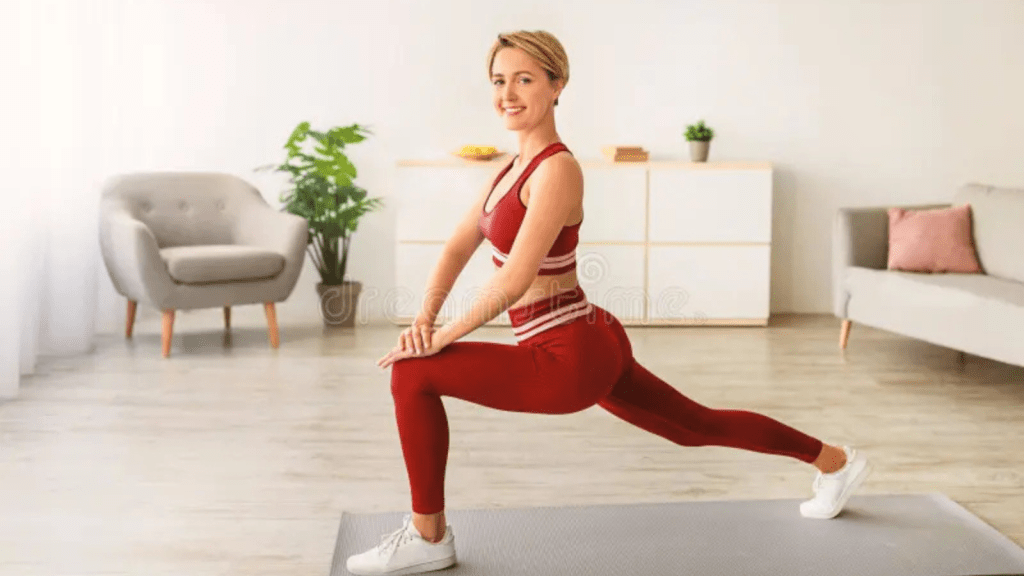
How to Do Walking Lunges Correctly
Learning to do walking lunges correctly takes time and focus on your body’s position. You need a clear area to walk in a straight line for about 20 steps. This setup helps you stay balanced and focus on the right lunge form.

- Stand tall with your feet hip-width apart and your core engaged
- Take a long step forward with your right leg, keeping your torso upright
- Lower your body by bending your front knee until your thigh is parallel to the ground
- Keep your back knee low toward the floor without letting it touch the ground
- Press firmly through your front heel to stand back up and step forward with your opposite leg
- Repeat this pattern, maintaining a straight-line walking path
Getting the lunge right means keeping your body aligned. Your torso should stay upright and not lean too far forward. Your front knee should be directly above your ankle, not past your toes. Move straight ahead, avoiding side steps that can upset your balance.
Key form tips: Push through your front heel as you rise from each lunge. Keep your shoulders relaxed and your head facing forward. Breathe steadily throughout. With regular practice, proper lunge form will become second nature, and you’ll feel stronger with each step.
Common Mistakes to Avoid When Performing Walking Lunges
Walking lunges are great for women over 50, but many make mistakes. These errors can reduce results or cause discomfort. Knowing what to avoid helps you do lunges safely and effectively.
It’s all about quality, not quantity. Doing ten perfect lunges is better than thirty sloppy ones. Aim to move with control and awareness in every rep.
Preventing Knee Strain and Injury
Your knees are delicate and need care. One big mistake is bending your knee too far. This can stress your knee joint and increase the risk of injury.

Keeping your knees right is key to avoiding injury. Your front knee should line up with your toes. Avoid leaning forward too much, as this can hurt your lower back.
Look out for these signs of bad form:
- Sharp or persistent knee pain during the movement
- Wobbling or feeling unstable during lunges
- Your front knee extends past your toes
- Your torso is leaning excessively forward
- Taking steps that are too short or too long
Stay safe by limiting side-to-side motion and keeping your posture upright. Move slowly to control each step. Stop if you feel sharp pain. Remember, knee safety starts with respecting your limits and not pushing too hard.
Listening to your body and adjusting your form is crucial. Small changes can prevent big problems later.
Walking Lunges with Dumbbells for Added Intensity
Once you’ve mastered bodyweight walking lunges, it’s time to step up your game. Adding dumbbells to your lunges boosts strength and challenges your muscles. This move increases the demand on your body, helping with bone density, muscle growth, and overall fitness.
Dumbbell lunges introduce progressive overload, gradually increasing the challenge as you get stronger. Start with 5 to 10 pounds in each hand. This helps maintain proper form and engages your muscles more than bodyweight lunges.

Proper grip is key for safety and effectiveness. Hold the dumbbells with your arms at your sides and a neutral grip. Keep your shoulders back and core tight to support the added weight.
When to Add Weight to Your Lunges
Timing is everything. Add weight only when you can do all sets and reps with perfect form. Adding weight too early can lead to injuries and reduce the benefits of the exercise.
- Complete all reps without form breakdown.
- Feel stable and balanced throughout the movement
- Have no knee or joint discomfort
- Want continued challenge and progress
Progression Guidelines for Dumbbell Lunges
As you get stronger, increase the weight slowly. Aim to add 2 to 5 pounds every 2 to 3 weeks. This gradual increase keeps your workouts challenging without overwhelming you.
| Experience Level | Starting Weight | Reps per Leg | Progression Timeline |
|---|---|---|---|
| Beginner | 5-8 lbs per hand | 8-10 | Every 3 weeks |
| Intermediate | 10-15 lbs per hand | 10-12 | Every 2-3 weeks |
| Advanced | 15-25 lbs per hand | 12-15 | Every 2 weeks |
Adding weight to lunges requires patience and attention to form. Increasing intensity too fast can strain your knees and lower back. Holding dumbbells requires more control and balance, so move deliberately.
Walking lunges with dumbbells strengthen your grip and leg power. The extra resistance helps build bone density, which is crucial for women over 50. You’ll feel more confident and stable in your daily activities, like carrying groceries or laundry baskets.
How Often Should You Do Walking Lunges for Best Results
Finding the right exercise frequency and workout schedule is key to building strength safely. Walking lunges need consistency over intensity. Your body needs a balance between challenge and rest to grow strong.
Muscles grow stronger during rest, not during exercise. So, how often you work out is very important. Too much without rest can lead to burnout and injury. Not enough can slow your progress.
Most women find success with a balanced workout routine. This means doing walking lunges two to three times a week. Each session should have about 10 reps per leg to build a strong base.
Start with these beginner guidelines:
- Perform walking lunges two to three times per week
- Do two to three sets of 10 lunges per leg each session
- Rest one to two minutes between sets
- Allow at least one rest day between training days
- Focus on proper form rather than speed
Even doing 5 to 10 lunges with perfect form is a great start. Quality is more important than quantity when you’re new to strength training.
Progression Strategies as You Get Stronger
Progressive training keeps your muscles challenged and prevents plateaus. As you get stronger, increase reps or add weights. Changing your routine every few weeks keeps results coming.
Consider these progression methods for your ongoing development:
| Progression Method | Starting Point | Advanced Level |
|---|---|---|
| Increase Repetitions | 10 reps per leg | 15-20 reps per leg |
| Add Weight | Bodyweight only | Light to moderate dumbbells |
| Slow Tempo | 2-3 seconds per rep | 3-4 seconds lowering phase |
| Reduce Rest Time | 2 minutes between sets | 45-60 seconds between sets |
| Circuit Training | Walking lunges alone | Combined with squats or pushups |
Once you’ve built your base fitness level, aim for three to four sets of 8 to 12 reps with strategic rest periods. As you get stronger, increase reps or add weights gradually. This approach ensures continuous improvement without overwhelming your body.
Your workout schedule should allow adequate recovery between sessions. A 48-hour recovery window is best for muscle adaptation and growth. Listen to your body and adjust as needed to stay healthy and strong.
Who Should Avoid Walking Lunges and When to Consult Your Doctor
Walking lunges are great for women over 50, but they’re not for everyone. Knowing when to avoid lunges and when to get medical clearance is key. This ensures you stay safe while getting stronger.
Some health issues need extra care before starting. If you have joint problems or concerns, talking to your doctor is crucial. This is true for severe osteoarthritis, recent joint surgery, or inflammation in your lower body.
Always take safety seriously. Here’s a list of times when you should talk to your doctor first:
- Degenerative joints or severe arthritis affecting your knees or hips
- Cardiovascular disease that has not been cleared for exercise
- Dizziness or balance disorders that affect your stability
- Severe osteoporosis with high fracture risk
- Recent surgery or acute injuries in your lower body
- Chest pain or severe shortness of breath during physical activity
If you’ve been inactive for a while, start slow. Gradually increase your fitness level. Your body needs time to adapt.
Stop exercising if you feel sharp pain in your joints, notice swelling, experience chest discomfort, or get very short of breath. These signs mean you should rest and call your doctor. Getting medical clearance ensures your safety and confidence in exercising.
Alternative Exercises That Complement Walking Lunges
Walking lunges are great for your lower body, but you need more. A good workout plan includes exercises for your upper body and core, too. These extra moves help you get stronger all over, for everyday activities.
For a full workout, mix exercises that target different muscles on different days. Lunges are good for your legs and glutes. But you also need to work your chest, shoulders, arms, and core. This way, you avoid muscle imbalances and injuries.
Push-ups for Upper Body Strength
Push-ups are key for women over 50 to build upper-body strength. They work your chest, shoulders, triceps, and core at the same time. This is without needing any special equipment.
As you get older, these muscles can weaken. Strong shoulders help you reach up. Triceps let you open doors and lift things. A strong core keeps you balanced and upright.
There are many types of push-ups for women over 50. Start with wall push-ups or incline push-ups. Move to regular floor push-ups as you get stronger. This makes push-ups easy to start with, no matter your fitness level.
Building Your Complete Workout Routine
Here’s how to mix walking lunges with other exercises for the best results:
- Sit-to-stand movements help you get up from chairs and the floor
- Single-leg Romanian deadlifts work your back, glutes, and balance
- Step-ups boost leg power and coordination
- Pallof presses improve core stability and rotation
- Medicine ball power presses increase upper-body explosiveness
| Exercise | Primary Muscles | Equipment Needed | Best For |
|---|---|---|---|
| Pushups | Chest, shoulders, triceps, core | None | Upper body strength |
| Sit-to-stand | Glutes, quadriceps, core | Chair | Functional leg strength |
| Single-leg RDL | Hamstrings, glutes, lower back | None or dumbbell | Balance and posterior chain |
| Step-ups | Quadriceps, glutes, calves | Step or bench | Unilateral leg power |
| Pallof press | Core, obliques, shoulders | Resistance band or cable | Anti-rotation stability |
| Medicine ball press | Chest, shoulders, triceps, core | Medicine ball | Upper body power |
When you mix walking lunges with push-ups and other exercises, your workout gets even better. This approach covers all aspects of fitness. You’ll become stronger and more confident in your daily life.
Conclusion
Balance and strength are key to your health and freedom. Walking lunges are a simple way to tackle both. This exercise works many muscles in your legs, core, and lower body. Plus, you don’t need any equipment to start.
Your body weight is enough to build strength and stability. It’s never too late to start exercising. Studies show that women of all ages can see real benefits from exercise.
Resistance training helps build muscle, strengthen bones, and boost metabolism. Women over 50 who do strength training see better balance and strength. Starting your fitness journey today is an investment in your future.
Walking lunges can change your physical abilities in just weeks. Do two to three sessions a week. You’ll see improvements in climbing stairs, carrying groceries, and more.
Improvement comes with regular practice. Focus on doing each lunge correctly, not rushing. Each lunge strengthens your muscles and bones for the future.
You’ll notice changes in your daily life. This one exercise can help you age with strength and confidence. Start today, stay consistent, and see your body become stronger and more capable.


 trim down and shape up
Leave a comment