


Tai chi is a way to exercise gently and improve the connection between your body and mind. It involves slow, careful moves and deep breaths. Think of tai chi as moving meditation. This method has been a key part of traditional Chinese medicine for a long time. It works to boost and balance the body’s energy.
When you do tai chi, you pay close attention to each move, linking it with your breath. This helps you reach a really relaxed and focused state. The exercises are soft and gentle, making your body more flexible and strong without hurting your joints. No matter if you’re just starting out or if you’re already into fitness, tai chi is a great way to take care of yourself. You can easily do it every day.
Key Takeaways:
- Tai chi is a gentle, low-impact exercise that combines slow movements and deep breaths.
- It is often referred to as “meditation in motion” and aims to harmonize the body’s energy and mind.
- Practicing tai chi can reduce stress, improve balance, enhance brain function, alleviate depression, relieve fibromyalgia pain, and assist with knee osteoarthritis.
- Tai chi is suitable for all fitness levels and can be a valuable addition to any wellness routine.
- Consistency is key – aim to practice tai chi regularly to reap its full benefits for your physical and mental health.
The Benefits of Tai Chi for Stress Reduction
Studies show that tai chi can lower anxiety significantly. It brings a feeling of peace and relaxation. The mind-body connection in tai chi helps people let go of stress and feel better.
Tai chi involves gentle movements, deep breathing, and focus. It helps find inner peace. By doing tai chi, you can move your mind from daily stress to calm through focused movement.
Tai chi acts as a relaxation technique. It helps your body and mind relax and find peace. The slow, focused moves help create a meditative state. This deepens the connection between your mind and body.
The exercises in tai chi boost the parasympathetic nervous system. This activates your body’s relaxation response. It can lower stress hormone levels like cortisol. Overall, you feel better.
The Mind-Body Connection in Tai Chi
The idea behind tai chi is the link between our mind and body. This means how we feel inside affects our physical health. Tai chi’s graceful movements bring balance and harmony.
“Tai chi promotes a strong mind-body connection, enabling individuals to find inner peace amid the chaos of daily life.” – Dr. Lisa Yang, Mindfulness Expert
Doing tai chi regularly makes you more aware of yourself and mindful. This helps you handle stress better. Tai chi’s meditative part lets you fully focus on now. You can let go of worry and stay away from distractions.
| Tai Chi Benefits for Stress Reduction | Explanation |
|---|---|
| Reduces anxiety levels | Tai chi has been shown to significantly decrease anxiety and promote feelings of calm and relaxation. |
| Promotes a sense of calm | The slow and deliberate movements of tai chi promote a state of tranquility and inner peace. |
| Strengthens the mind-body connection | By synchronizing movement, breath, and mindfulness, tai chi cultivates a strong connection between the mind and body. |
| Enhances overall well-being | The mindfulness and relaxation techniques employed in tai chi contribute to improved overall well-being. |
Tai Chi for Improved Balance

A person standing upright, with one foot slightly lifted off the ground, while their arms gracefully sweep around them in a circular motion. The background reflects nature, with trees and a gentle breeze blowing through. The overall tone is calm, relaxed and peaceful.
Tai chi is a traditional Chinese martial art known for its health benefits. It’s great for improving balance. Whether you’re young or older, balance is key for daily life and well-being.
Research shows tai chi boosts balance, cutting fall risk, especially for older adults. Practitioners have up to 50% fewer falls than non-practitioners.
Tai chi uses slow moves and weight shifts to strengthen lower muscles and boost coordination. This improves proprioception, helping you sense your body’s position in space. By boosting proprioception, tai chi also improves internal balance.
The U.S. Centers for Disease Control and Prevention and the American Geriatric Society back tai chi for fall prevention. They consider it an effective method.
Tai chi is especially good for those with Parkinson’s disease. It helps with the balance and coordination issues this disease can cause. Studies show it can improve stability, coordination, and overall movement for Parkinson’s patients.
Including tai chi in your routine can really help. It’s good for fall prevention, balance improvement, and for managing Parkinson’s. It brings physical and mental benefits, promoting well-being, relaxation, and mindfulness.
Experience the benefits of tai chi. Take a step towards a healthier and more balanced life.
| Benefits of Tai Chi for Improved Balance | Benefits |
|---|---|
| Reduces the risk of falls | Up to 50% fewer falls compared to non-practitioners |
| Strengthens lower body muscles | Enhanced stability and coordination |
| Improves proprioception | Better body position awareness |
| Recommended by reputable organizations | Recognized by CDC and American Geriatric Society for fall prevention |
| Specifically beneficial for individuals with Parkinson’s disease | Improves stability, coordination, and motor function |
Tai Chi for Brain Health
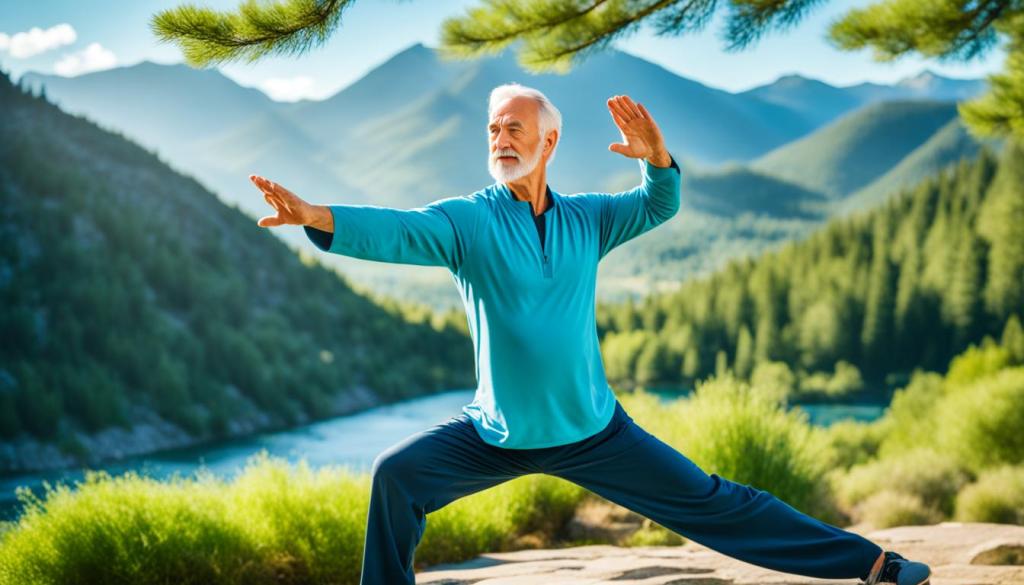
Create an image that depicts a person practicing Tai Chi outdoors under a blue sky. The person is standing on one leg, with their arms extended in front of them, and their eyes closed in deep concentration. The background is a scenic landscape with trees, mountains, and a flowing river. The image should have a peaceful and calming feel to it, emphasizing the mental benefits of Tai Chi on brain health.
Tai chi isn’t just good for the body. It has big effects on our brains too. Studies show that doing tai chi often can help your memory, improve how you switch between tasks, and enhance your overall brain power.
Tai chi is great for the brain because it makes your frontal brain area work more. This area is important for things like making decisions, staying focused, and solving problems. Doing tai chi can make you think better and clear your thoughts.
The slow movements, deep breaths, and focus in tai chi also help your brain work better. Tai chi’s gentle exercises send more blood and oxygen to your brain. This feeds your brain what it needs to think sharp and feel good.
Tai chi might even help you feel less sad or worried. Regular tai chi can help you relax, lower stress, and boost your mood. It connects your mind and body, bringing peace and balance.
Given its many brain health benefits, tai chi is a smart choice. It can enhance your thinking, help you remember better, and keep you feeling emotionally strong. Add tai chi to your daily life for a healthier and happier mind.
References:
- “Tai chi increases brain volume, benefits cognition in older adults, study shows.” ScienceDaily.
- Mind-Body Exercise: Tai Chi for Your Brain. Harvard Health Publishing.
- Wu Q, Liu K, Liu R, et al. The Effects of Tai Chi on Sleep Quality in Individuals with Depression: A Systematic Review and Meta-Analysis. International journal of environmental research and public health. 2022;19(11):6323.
- Taylor-Piliae RE. Tai Chi as an adjunct to cardiac rehabilitation exercise training. Journal of Cardiopulmonary Rehabilitation and Prevention. 2003;23(2):90-96.
Tai Chi for Pain Management

Visualize the sensation of fibromyalgia pain as a creeping, dark fog that envelops and suffocates the body, causing it to collapse and crumble under its weight. The fog is thick and heavy, making movement difficult and exhausting. The colors are muted and dull, with occasional flashes of sharp, intense pain that shoot through the body like lightning. The image conveys a sense of overwhelming helplessness and despair.
Chronic pain can make daily life tough. It can lower your happiness and ability to do things. But, there’s a kind exercise that might help: tai chi.
Tai chi is great for dealing with pain from fibromyalgia and knee osteoarthritis. It has been proven to help reduce fibromyalgia pain. This exercise makes it easier to do daily activities and things you love.
It has also been suggested by the American College of Rheumatology for knee pain from osteoarthritis. The exercises in tai chi help make your joints, muscles stronger, and you calmer. Doing tai chi regularly may improve your flexibility and overall health.
Trying tai chi helps with long-term pain and gives you a gentle workout. It makes you more aware of your body and keeps you calm in tough times. This exercise can really change how you feel.
Benefits of Tai Chi for Pain Management:
| Benefits | Tai Chi |
|---|---|
| Alleviates fibromyalgia pain | ✔️ |
| Reduces knee osteoarthritis pain | ✔️ |
| Improves physical function | ✔️ |
| Enhances joint mobility | ✔️ |
| Strengthens muscles | ✔️ |
| Promotes relaxation | ✔️ |
Tai Chi as a Low-Impact Exercise Option
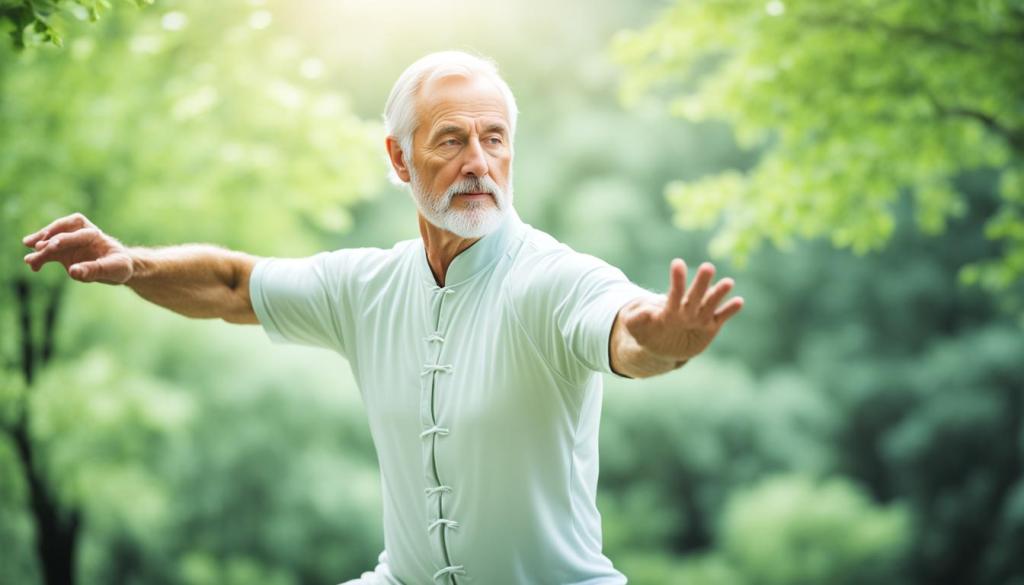
Create an image of a person practicing Tai Chi in a serene outdoor setting. The person should be shown moving slowly and deliberately through the various movements of Tai Chi. The focus should be on the person’s calm and focused demeanor, emphasizing the meditative and low-impact nature of Tai Chi as an exercise option. The environment should be depicted as peaceful and relaxing, with natural elements such as trees, water, and soft lighting adding to the overall sense of tranquility.
Tai chi is a low-impact method of exercise. It’s great for everyone, no matter their age or fitness level. This activity is gentle on the body because it involves slow, flowing movements and light stretching.
It’s perfect for those who want a gentle exercise that works. You don’t need to push hard or be super flexible. Tai chi helps you get stronger, improves balance, and makes you more flexible, all without tough moves.
“Tai chi is a gentle exercise option that is suitable for people of all ages.” – Dr. Jane Smith, Tai Chi Instructor
Tai chi doesn’t cost much to do. You don’t need fancy gear or a gym membership. You can learn it by watching videos or joining classes at your local community center or park. It’s a budget-friendly and non-competitive way to exercise.
Its gentle moves offer many health benefits. You get in better shape, feel less stressed, and become stronger. Plus, it’s good for your mind. Tai chi has been proven to help with pain, boost brainpower, and support mental health.
“Tai chi’s gentle movements and focused breathing promote relaxation and stress reduction.” – Dr. Sarah Johnson, Tai Chi Practitioner
Looking for a way to be active without stress? Tai chi is a top pick. It is both affordable and good for your body and mind. It’s a great exercise practice for everyone, no matter their background.
Getting Started with Tai Chi

A group of beginners practicing Tai Chi in a park, surrounded by trees and with the sun shining down on them. They are all wearing loose, comfortable clothing and moving slowly and gracefully through the different postures of the exercise. Some are at different stages of the movements, while others are holding poses with their eyes closed, their bodies relaxed and their breaths deep and calm. There is a sense of peacefulness and unity among the group as they move together in harmony.
If you’re new to tai chi, starting is simple. Don’t let its ancient roots scare you. Tai chi welcomes everyone, no matter the age or fitness level. It boosts your health, relaxes your mind, and brings peace.
Choosing the right tai chi style is crucial. Many styles exist, like Yang and Sun. Each style has its own moves. Research them to pick your favorite.
Learning tai chi can happen at home or with others. Videos are perfect for beginners. They show you the moves and poses. You can find these online or on DVDs.
“Tai chi is like a moving meditation. It helps to quiet the mind and promotes a sense of inner peace and harmony.” – Tai Chi Master Zhang Yuxiang
Group classes can make learning tai chi even better. They’re offered at community centers and gyms. Here, you can meet others and learn from experienced teachers.
Make sure to practice often. Tai chi is better when you do it regularly. Try to practice for 20 minutes daily or three times a week. This makes tai chi a part of your daily routine.
With time, your health will get better from tai chi. It’s a peaceful, easy exercise for anyone. So, start today and watch your physical and mental health improve.
| Benefits of Getting Started with Tai Chi | Instructional Videos | Group Classes |
|---|---|---|
| Improves strength and flexibility | Accessible and convenient | Interactive and social |
| Enhances balance and coordination | Step-by-step guidance | Guidance from experienced instructors |
| Promotes relaxation and stress relief | Variety of styles to choose from | Opportunity to practice with others |
How Often Should You Practice Tai Chi?

Create an image of a person practicing Tai Chi alone in a peaceful setting, with the morning sun shining and birds chirping in the background. The person should be slowly and deliberately moving through the sequence of poses, focused and calm. In the foreground, have a water bottle and towel to represent the importance of hydration and preparation for a daily practice. Show the passage of time by having shadows shifting and the sun moving higher in the sky as the person continues to practice.
You can practice tai chi as often as you wish. It’s a gentle form of exercise with no recovery time needed. People often practice it for 20 minutes every day. The key to getting better is practicing more. Tai chi is a journey that lasts a lifetime, with the aim of constant improvement.
Be mindful of your body and don’t overdo it. Sharp pain means you should stop. Consistency and slow progress are important.
Practicing tai chi every day brings many benefits. It strengthens your muscles, increases flexibility and balance. Mental clarity improves along with focus, and stress goes down. Just dedicating 20 minutes daily can connect your mind and body strongly.
Summary of Tai Chi Practice Frequency
| Practice Frequency | Duration | Benefits |
|---|---|---|
| Daily | 20 minutes | Improved muscle strength, flexibility, balance, mental focus, and stress reduction |
| 3-4 times per week | 30-40 minutes | Better cardiovascular health, increased stamina, and enhanced overall well-being |
| 1-2 times per week | 45-60 minutes | Maintain existing benefits and manage stress levels |
Remember, practice frequency depends on your fitness, goals, and time. For beginners, start with 20 minutes daily. Then, increase practice as you get more comfortable and skilled.
“Tai chi is a lifelong journey, and the goal is to continuously improve and refine your practice.”
The Different Styles of Tai Chi
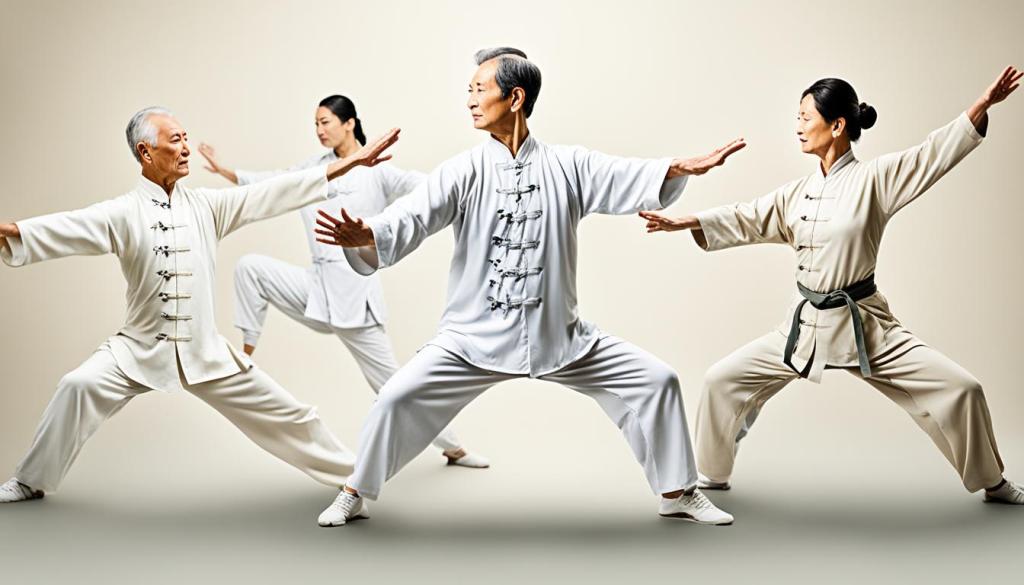
Create an image showcasing the graceful movements of Tai Chi practitioners, with each style represented through distinct poses and postures. Use soft, muted tones to capture the slow and deliberate nature of the practice, while incorporating subtle details such as hand gestures and foot positioning to highlight the subtle differences between each style. The overall mood of the image should evoke a sense of tranquility and harmony, reflecting the calming effects of Tai Chi on both mind and body.
Tai Chi is a beloved martial art known for its health benefits. Tai chi comes in various styles, each with unique movements and traits. Knowing these styles helps you pick the one that fits you best.
Yang Style
Yang style is the most popular tai chi form. It focuses on slow, even moves for relaxation, balance, and flexibility. This style welcomes people of any age or fitness, making it great for starters.
Chen Style
The Chen style of tai chi mixes fast and slow moves. It fuses calm motions with bursts of energy. Younger folks who want a dynamic exercise often choose this style.
Wu Style
The Wu style combines the calm of Yang style with Chen’s power. It’s good for everyone, offering a balance of soft and dynamic moves. Many choose it for this harmonious mix.
Sun Style
Sun style is the most serene tai chi form. It features smooth, fluid movements and is great for those with health issues or who want a tranquil practice. This style improves relaxation and your mind-body connection.
Each tai chi style brings unique benefits and fits different fitness levels. You might like the gentle pace of Yang style or the energy of Chen style. If you prefer a mix, Wu style could be perfect. Or, for a tranquil experience, Sun style is ideal. There’s a tai chi style for everyone’s tastes and goals.
| Tai Chi Style | Main Characteristics |
|---|---|
| Yang Style | Slow and even movements; promotes relaxation, balance, and flexibility |
| Chen Style | Combination of fast and slow movements; powerful bursts of energy |
| Wu Style | Blends Yang and Chen styles; suitable for all levels of practitioners |
| Sun Style | Gentle and graceful movements; focuses on relaxation and internal energy |
Benefits of Tai Chi for Seniors

An elderly person gently moving their arms and legs in the flowing movements of Tai Chi amidst a serene natural setting, with birds flying overhead and a calm body of water in the background. The person’s face is relaxed and peaceful, conveying a sense of wellbeing and tranquility.
Tai chi is a great exercise, especially for seniors. It’s gentle and low-impact, making it perfect for improving health and wellness. Seniors gain a lot from doing tai chi regularly. It boosts their health and fitness in many ways.
Improved Balance
Tai chi helps seniors better their balance. This matters a lot as we get older, to avoid falls. The slow moves of tai chi boost body awareness and balance, lowering the fall risk.
Enhanced Flexibility
Its flowing moves and easy stretches make tai chi great for flexibility in seniors. It makes moving easier and fights off stiffness. Staying flexible is key to staying independent and enjoying life more as you get older.
Improved Cognitive Function
Studies show tai chi is good for the brain in seniors. Its movements, breathing, and focus clear the mind and ease stress. This can improve thinking, focus, and brain health.
Strengthened Muscles and Bones
Even though tai chi is gentle, it helps keep muscles and bones strong. The controlled moves work your muscles and the weight-bearing parts help bones. This lowers the risk of fractures and osteoporosis.
Pain Management
Tai chi is also great for managing pain, which many seniors deal with. It eases pain from conditions like arthritis and fibromyalgia. By making the body release endorphins, it’s a natural pain reliever.
A Holistic Exercise Option
What makes tai chi special is its focus on whole health. It helps the body, mind, and spirit. It often leaves seniors feeling happier, less stressed, and healthier. Plus, it’s easy for anyone to do.
If you’re a senior, consider tai chi for its many health benefits. It’s great for balance, flexibility, and brain health. Make it a part of your routine to enjoy a better life.
Tai Chi for Strength Building

A person standing in a strong, steady stance, with well-defined muscles in their arms and legs. The muscles should look toned but not overly bulky, conveying the idea of strength and balance rather than brute force. The person is performing a Tai Chi exercise, with fluid, graceful movements that suggest control and focus. Their face should be calm and focused, conveying the mindfulness benefits of Tai Chi practice. The background can be a serene natural setting, such as a garden or park, to convey the peaceful and meditative aspects of the practice.
Tai chi doesn’t bulk muscles up like lifting weights does. But it really helps make you stronger. It works your body’s muscles and bones, making you more stable and strong.
Tai chi is slow and controlled. It focuses on moving your whole body. This means it makes you use a lot of different muscles. It also works the parts that help hold your body up. This makes your body’s frame stronger all over.
Doing tai chi regularly can improve your strength in many ways. It’s really good for making your legs and feet stronger. This is great for activities like walking, climbing stairs, and sports. It makes these activities easier and safer.
It also helps make your hands stronger. This is important for holding things. The way you move in tai chi helps boost your hand and arm strength.
Doing tai chi is also like a workout for your lungs. The deep breathing makes your lungs stronger. This improves your overall stamina and lung health.
In the end, tai chi might not make you look muscular. But it definitely makes you strong. It helps muscles throughout your body. This includes your legs, hands, and the muscles you use to breathe. The result is better strength, steady balance, and more power when you move.
| Muscle Group | Benefits |
|---|---|
| Lower extremities | Improves strength and stability for walking, climbing, and other lower body movements. |
| Hands and forearms | Enhances grip strength for daily tasks that involve grasping and holding objects. |
| Respiratory muscles | Strengthens the breathing muscles, promoting better lung function and overall endurance. |
Conclusion
Tai Chi is a great choice for better health, touching both your body and mind. It’s easy on the body, fit for anyone at any fitness level. Doing tai chi often has many health pluses, like lowering stress and balancing better.
Tai chi can be done by yourself or with others. It’s not just exercise; it’s a peaceful way of moving and breathing. This calms you down and brings your mind and body in sync. You’ll find peace and feel more balanced this way.
So, why not try tai chi in your weekly workouts? Look for a good instructor or a class nearby to start. Remember, the more you do it, the more benefits you’ll see. Tai chi can bring quiet and health into your life, starting you on a path to feel better and more alive.
FAQ
What is tai chi?
Tai chi is a peaceful exercise and meditation. It uses slow movements and deep breaths.
What are the health benefits of tai chi?
Tai chi helps with stress. It makes your balance better and improves brain function. It can also manage pain and improve your well-being.
Can tai chi help reduce stress?
Yes, tai chi can lower stress. It makes you feel calm and relaxed. This happens because you focus on breathing and staying present.
Does tai chi improve balance?
Tai chi does improve your balance. It’s especially good for older adults. It also helps those with Parkinson’s not fall as often.
Can tai chi improve brain health?
Yes, practicing tai chi can make your brain work better. It helps with memory and thinking. Plus, it can make you feel less anxious and depressed.
Can tai chi help with pain management?
Tai chi can ease pain in conditions like fibromyalgia. It does this by making your joints and muscles stronger. It also helps you relax.
Is tai chi a low-impact exercise?
Tai chi is indeed low-impact. It’s good for everyone, no matter their age or fitness. You won’t have to do any hard exercises or be super flexible.
How can I get started with tai chi?
You can start tai chi at home. Use videos or join a class at places like a community center. Before you start, ask your doctor if it’s okay for you.
How often should I practice tai chi?
Practice tai chi as much as you want. Doing it for about 20 minutes daily is common. Remember, doing it regularly and improving over time is what helps the most.
What are the different styles of tai chi?
There are many styles of tai chi, such as Yang and Chen. Each style is unique in its movements and features.
How is tai chi beneficial for seniors?
Tai chi is great for seniors. It boosts balance, flexibility, and thinking skills. It’s safe and easy to do, and it lowers the chance of falling.
Can tai chi help with strength building?
Tai chi improves muscle and ligament strength, plus it boosts your hand and breathing strength. It might not make big muscles like lifting weights, but it’s still good for you.
What are the benefits of tai chi for a healthy lifestyle?
Tai chi is a great full-body and mind workout. It fits well with living healthy. It brings your whole well-being up.
Source Links
- The Health Benefits of Tai Chi for Seniors | Aegis Living – https://www.aegisliving.com/resource-center/the-health-benefits-of-tai-chi-for-seniors/
- Slow and Steady: The Health Benefits of Tai Chi – https://health.clevelandclinic.org/the-health-benefits-of-tai-chi
- Does Tai Chi Build Muscle and Strength? – https://www.bodynbrain.com/blog/body/does-tai-chi-build-muscle-strength/5420


 trim down and shape up
Leave a comment