


Your heart rate shows how well you’re doing health-wise. It’s the number of times your heart beats every minute. To find out your normal heart rate, just check your pulse at the wrist or neck. For adults, a normal resting heart rate is usually between 60 to 100 beats per minute (bpm).
Many things can change your heart rate, like how much you sleep, how active you are, your hormones, and stress levels. It’s important to know the difference between a normal heart rate and one that could be dangerous. If your heart rate is too high or too low, it might mean you have a health issue that needs a doctor’s help.
This article will help you understand what’s normal and what’s not when it comes to your heart rate. We’ll also talk about things that can change your heart rate and how to keep your heart healthy.
Key Takeaways
- Your heart rate is the number of beats per minute.
- Normal resting heart rate ranges from 60 to 100 bpm.
- Age, fitness level, and activity influence heart rate variability.
- Recognizing the signs of a dangerous heart rate is vital for health.
- Regular monitoring can help maintain cardiac health.
- Seek medical assistance if you notice significant fluctuations.
Understanding Your Heart Rate
Your heart rate shows how many times your heart beats every minute, usually measured in beats per minute (bpm). For adults, a normal resting heart rate is between 60 to 100 bpm. This shows how your body is doing in different states of activity or rest. Knowing about heart rate is key to keeping an eye on your health.
Resting heart rate is a key sign of your heart’s health. It tells you how well your body is resting and recovering. Many things can change your heart rate, like:
- Sleep patterns
- Physical activities
- Emotional states
- Overall health conditions
By watching your resting heart rate and how it changes, you can learn a lot about your fitness and health. Knowing these numbers helps you keep an eye on your heart health. It also means you can talk to doctors when you need to.
| Heart Rate Status | Beats Per Minute (bpm) | Health Implications |
|---|---|---|
| Normal Resting Heart Rate | 60 – 100 | Indicates good cardiovascular health |
| Bradycardia | Below 60 | Potential health issues; consult a doctor |
| Tachycardia | Above 100 | May indicate underlying health problems |
Normal vs Dangerous Heart Rates
Knowing the difference between a normal and dangerous heart rate is key for your heart health. Your heart rate can change a lot, based on your age and how fit you are. Most adults have a resting heart rate between 60 to 100 beats per minute. Kids usually have a higher rate.
Understanding what’s normal and what’s not can help you make smart health choices.
Defining Good vs Abnormal or Dangerous Readings
A normal heart rate is within a certain range. But, rates outside this range can mean health issues. If your heart beats over 100 bpm, it’s called tachycardia. A rate under 60 bpm is called bradycardia.
For athletes, bradycardia might be normal. But for older people, it could mean you need a doctor’s check-up. Knowing these differences helps you spot when your heart rate could be in danger.
Age and Heart Rate Variations
Age affects what’s considered normal for heart rates. Young people, like kids and teens, have faster heart rates. As you get older, your heart rate might stay steady or change due to your activity level and health.
Diseases, medicines, and stress can make your heart rate dangerous. Keeping an eye on these changes is key to managing your health well.
Factors Influencing Your Heart Rate

Your heart rate changes due to many factors. Knowing what affects it can help you understand your heart health better. Key areas to look at include your hydration, nervous system, and hormones.
Your Heart Rate Depends on Many Factors, Including:
- Hydration status
- State of the nervous system
- Hormonal effects
State of the Nervous System
The nervous system helps control your heart rate. Stress makes your heart beat faster by activating the sympathetic nervous system. On the other hand, relaxing uses the parasympathetic system to slow it down.
Things like anxiety, fear, or pain can make your heart race.
The Hormones and Hydration Status
Hormones can also change your heart rate. For example, changes during menstruation, pregnancy, or hormonal disorders can affect it. Being well-hydrated is also key.
Not drinking enough water can make your heart work harder, raising your heart rate. Drinking enough water helps keep your heart working well.
When Heart Rates Naturally Increase

Your heart rate often goes up during different activities you do every day. Knowing when this happens can help you not worry too much. Here are the main reasons why your heart rate might go up.
Performing Daily Activities
Even simple tasks like walking, climbing stairs, or doing chores can make your heart rate go up. This is because your body needs more oxygen-rich blood for the muscles to work harder. For example, walking quickly makes your body work harder, so your heart beats faster.
Exercising and Physical Efforts
Exercise really affects your heart rate, especially during hard workouts. Activities like running or lifting weights make your heart pump faster to get oxygen to your muscles. It’s important to know how your body reacts during these times to keep track of your fitness and stay safe.
Emotional Stress and Pain Responses
Feeling stressed can make your heart rate go up a lot. Stress or anxiety can make your heart beat faster because of the adrenaline released. Feeling pain or discomfort can also make your heart rate go up as your body reacts. Knowing this can help you tell when your heart rate is just normal or if it’s something to worry about.
| Activity | Typical Heart Rate Change | Duration of Increase |
|---|---|---|
| Daily Activities | 10-30 bpm increase | Variable, often brief |
| Exercising | 30-100 bpm increase | Duration of workout |
| Emotional Stress | 15-50 bpm increase | Minutes to hours, depending on stressor |
| Pain Responses | 20-60 bpm increase | Until pain subsides |
What is an Arrhythmia?
An arrhythmia is when the heart’s rhythm is off, causing abnormal heartbeats. This can mean the heart beats too fast, known as tachycardia, or too slow, called bradycardia. Both can affect heart health and need to be checked out.
Understanding Bradycardia and Tachycardia
Bradycardia is when the heart beats less than 60 times a minute. It’s normal for some athletes, but for others, it could mean a health problem. Signs of bradycardia include feeling tired or dizzy, showing the heart might not be pumping enough blood.
Tachycardia is when the heart beats over 100 times a minute. Sometimes, it happens because of stress or anxiety. But if it happens suddenly and you feel lightheaded or have chest pain, you should see a doctor fast. Knowing these signs helps you know when you need quick medical help.
| Condition | Heart Rate (bpm) | Potential Symptoms | Possible Consequences |
|---|---|---|---|
| Bradycardia | Below 60 | Fatigue, Dizziness | Inadequate Blood Flow |
| Tachycardia | Above 100 | Lightheadedness, Chest Pain | Increased Risk of Heart Problems |
Heart Rate vs Pulse: What’s the Difference?
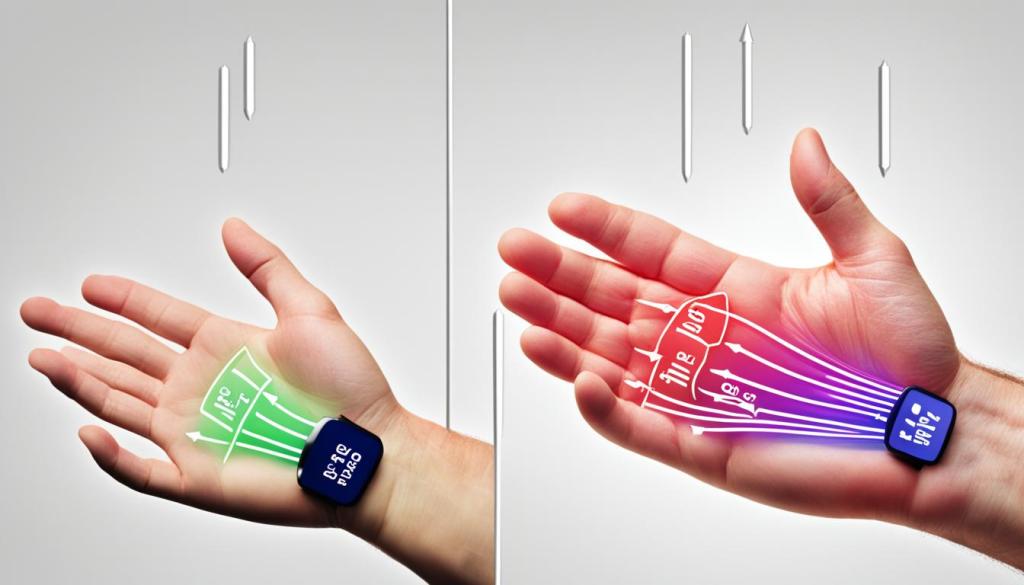
It’s key to know the difference between heart rate and pulse for heart health. These terms are often mixed up, but they mean different things. Heart rate is the number of heartbeats in one minute, showing how active your heart is.
Pulse, however, is the feeling of blood moving in your arteries with each heartbeat. You can feel it at places like your wrist or neck. It’s a simple way to check your heart rate when you can’t use a device.
Knowing the difference helps you watch your heart health better. Understanding both heart rate and pulse lets you see how your body reacts to activities, stress, or health issues.
| Aspect | Heart Rate | Pulse Measurement |
|---|---|---|
| Definition | Number of heartbeats per minute | Feelings of blood flow in arteries |
| Site of Measurement | Accessed through devices like ECG | Detected at wrist, neck, etc. |
| Significance | Indicates heart health and fitness levels | Offers a quick estimate of heart rate |
| Influence Factors | Exercise, stress, health conditions | Position, activity, hydration |
Ideal Heart Rate During Rest vs Exercise
Your heart rate is a key sign of your health, changing a lot when you’re resting or moving. Knowing the right heart rate for rest and exercise is key to your fitness journey.
Calculating Your Maximum Heart Rate
To get the most from your workouts, start by figuring out your maximum heart rate. Use the easy formula 220 minus your age. This gives you a starting point to set your target heart rates for exercise.
Target Heart Rate for Effective Workouts
The American Heart Association says aim for a heart rate of 50-85% of your max during workouts. This zone is safe and helps you get health benefits. Here’s a table showing ideal and target heart rates for different ages during exercise:
| Age (Years) | Maximum Heart Rate (BPM) | Target Heart Rate Zone (BPM) | Ideal Heart Rate During Exercise (BPM) |
|---|---|---|---|
| 20 | 200 | 100 – 170 | 150 |
| 30 | 190 | 95 – 162 | 145 |
| 40 | 180 | 90 – 153 | 135 |
| 50 | 170 | 85 – 145 | 125 |
| 60 | 160 | 80 – 136 | 115 |
This table guides you to stay in your target heart rate zone. It makes your workouts better and boosts your health.
How to Measure Your Heart Rate
Knowing how to measure your heart rate is key to keeping an eye on your heart health. You can use both old-school methods and new digital tools. Each way gives you important info about your heart’s health and how you’re feeling.
Using Traditional Methods
Checking your heart rate the old-fashioned way is still a go-to. Just put your fingers on your wrist or neck to find your pulse. Count how many beats you feel in 30 seconds, then multiply by two to get your beats per minute (bpm). It’s easy and can be done anywhere, making it handy for lots of people.
Digital Tools and Wearables
Thanks to tech advances, digital tools for checking your heart rate are now more common. Wearables like smartwatches and fitness trackers let you monitor your heart rate in real-time. They give you updates during exercise and when you’re just relaxing. These gadgets help you stay on top of your heart health easily.
Maintaining a Normal Heart Rate

Keeping your heart rate normal is key to good health. Making healthy choices is crucial. By choosing the right lifestyle, you can boost your heart’s health. Activities like exercise, eating right, and getting enough sleep help keep your heart in top shape.
Healthy Lifestyle Choices
Here are some heart-friendly habits to follow:
- Engage in regular exercise: Try to do at least 150 minutes of moderate aerobic activity each week.
- Follow a heart-healthy diet: Eat more whole grains, lean proteins, healthy fats, fruits, and veggies.
- Stay hydrated: Drinking enough water helps keep your heart rate normal and boosts overall health.
- Prioritize sleep: Aim for 7 to 9 hours of good sleep to support your heart.
- Avoid smoking and limit alcohol: Both can harm your heart health.
Monitoring and Seeking Help
Pay attention to your heart’s health. Keep an eye on your heart rate, especially during rest and exercise. If you notice any strange beats or feel dizzy or your heart skips beats, get help. Early treatment can keep your heart healthy and strong.
Your Heart Rate: What’s Normal vs Dangerous

Knowing the difference between normal and dangerous heart rates is key to staying healthy. It’s important to watch your heart rate closely. If it’s over 100 bpm or under 60 bpm when you’re resting, you should see a doctor.
Recognizing Dangerous Heart Rates
It’s vital to know the signs of severe heart issues. Watch out for these warning signs:
- Chest pain or discomfort
- Shortness of breath
- Dizziness or lightheadedness
- Fainting or near fainting spells
If you feel any of these symptoms with an abnormal heart rate, it’s a red flag. Taking quick action is crucial for your health.
Emergency Situations: When to Seek Help
If you notice strange readings or symptoms, get emergency medical attention right away. Knowing when to act is key. Don’t wait to call for help if you think something serious is happening. Your health is priceless, and quick action can save your life.
| Heart Rate (bpm) | Condition | Action Required |
|---|---|---|
| Below 60 | Bradycardia | Consult a healthcare provider |
| 60-100 | Normal | No action needed |
| Above 100 | Tachycardia | Seek medical advice |
Conclusion
Knowing your heart rate is key to keeping your heart healthy. This summary shows the big differences between normal and dangerous heart rates. It helps you take steps to protect your heart.
Living a healthy life is crucial for your heart. This means staying active, drinking enough water, and managing stress. Checking your heart rate often helps you know how your body is doing. This lets you act fast if something’s wrong.
Knowledge is your best friend when it comes to heart health. Being aware of your heart rate and what to do if it’s not right can make a big difference. Take control of your heart health and start your journey to a longer, healthier life.
FAQ
What is considered a normal heart rate?
A typical resting heart rate for adults is between 60 to 100 beats per minute (bpm).
What factors can influence my heart rate?
Your heart rate can change due to age, fitness level, how hydrated you are, hormonal changes, and your nervous system’s state.
How does my heart rate change during exercise?
When you exercise, your heart rate goes up to deliver more oxygen-rich blood to your muscles. Aim for 50-85% of your maximum heart rate during workouts for best results.
What is the difference between heart rate and pulse?
Heart rate is the number of times your heart beats in a minute. Pulse is the feeling of blood flowing through arteries with each heartbeat. You can check your pulse at different spots on your body.
When should I seek medical attention for my heart rate?
If your resting heart rate is over 100 bpm (too fast) or under 60 bpm (too slow), get medical help. This is especially true if you have chest pain, shortness of breath, or feel dizzy.
What is an arrhythmia?
An arrhythmia means your heart beats irregularly. This can show up as a rate that’s too fast (tachycardia), too slow (bradycardia), or not steady.
How can I measure my heart rate?
You can check your heart rate by feeling your pulse on your wrist or neck. Count the beats for 30 seconds and multiply by two. Digital tools and wearables also give real-time readings.
What lifestyle choices help maintain a normal heart rate?
To keep a normal heart rate, stay active, eat a balanced diet with lots of fruits and veggies, drink enough water, and get enough sleep. Also, keep an eye on your heart rate regularly.
Source Links
- What to Know About Heart Rate – https://www.verywellhealth.com/heart-rate-8678182
- Normal Heart Rate: Range, When It’s Dangerous, and More – https://www.healthline.com/health/dangerous-heart-rate
- What Is A Dangerous Heart Rate? – https://www.forbes.com/health/wellness/dangerous-heart-rate/



 trim down and shape up
Leave a comment