

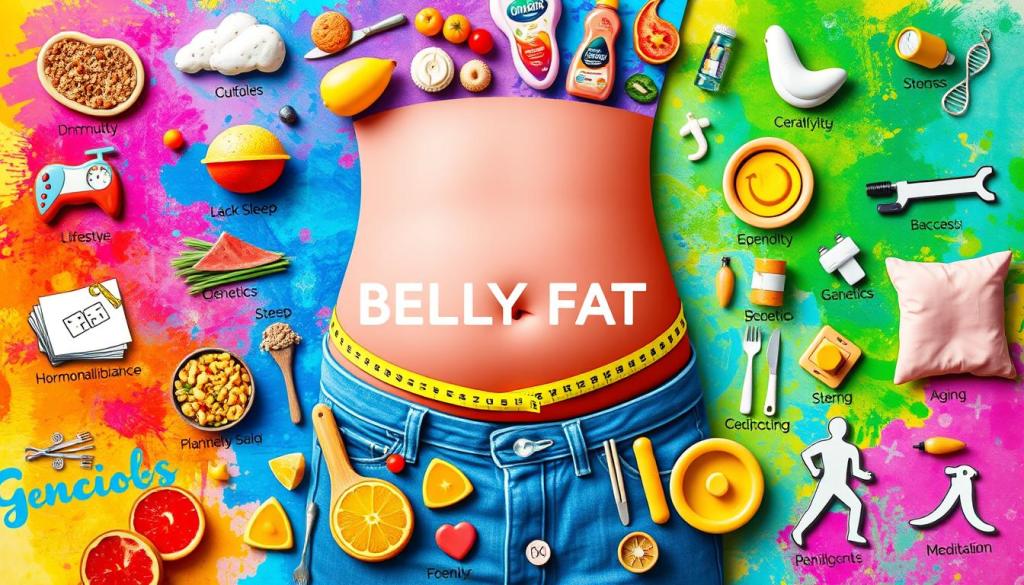
Belly fat is a common worry for many. It can be seen or hidden. The fat you see is called subcutaneous fat, right under your skin. The more dangerous fat, visceral fat, wraps around your organs.
Knowing why you have belly fat is key to losing it. Your diet, how active you are, and even genetics and age play parts. These factors all affect how much belly fat you have.
Eating too many calories and not enough nutrients can make you gain weight. This includes both visceral and subcutaneous fat. Sitting too much also makes belly fat worse. Stress, not sleeping well, and your genes also play roles in where fat goes on your body.
Understanding these factors is important for a healthier life. By changing your diet and moving more, you can fight belly fat. This improves your health and well-being.
Key Takeaways
- Belly fat consists of both subcutaneous and visceral fat, the latter posing higher health risks.
- Diet plays a pivotal role in the causes of belly fat; high-calorie, low-nutrient foods should be avoided.
- Regular physical activity is essential for counteracting belly fat and maintaining a healthy weight.
- Stress and poor sleep can lead to increased fat storage, particularly in the abdomen.
- Genetics influence where fat is stored in your body, making individual responses to diet and exercise vary.
Understanding Belly Fat: Types and Health Risks
Belly fat comes in two main types: subcutaneous fat and visceral fat. Subcutaneous fat is the soft fat just under the skin. It’s the kind you can pinch and is seen as less harmful. On the other hand, visceral fat is deeper in the belly, around organs like the liver, and is more dangerous.
Visceral fat is active and can lead to insulin resistance. This increases the risk of serious health issues like type 2 diabetes and heart disease. Studies show that more visceral fat means a higher risk of death from different causes. Women usually have more subcutaneous fat, while men tend to have more visceral fat, leading to an apple-shaped body.
Men often start to gain visceral fat after 40. Women, especially after menopause, start to gain more visceral fat too. Keeping a healthy waist size is key to avoiding the dangers of belly fat, especially visceral fat. A waist size of 35 inches or more in women and 40 inches in men can mean too much visceral fat.
Health risks include higher blood pressure, heart disease, and even cancer risks like polyps. Also, more visceral fat means a tripled risk of dementia, like Alzheimer’s disease. Making lifestyle changes, like eating more fiber and being more active, can help reduce belly fat and improve health.
| Type of Belly Fat | Description | Health Risks |
|---|---|---|
| Subcutaneous Fat | Fat located just beneath the skin, soft and pinchable. | Lower health risks; typically seen as less harmful. |
| Visceral Fat | Fat surrounding internal organs, metabolically active. | Increased risk of type 2 diabetes, heart disease, and higher mortality rates. |
Diet and Its Role in Belly Fat Accumulation
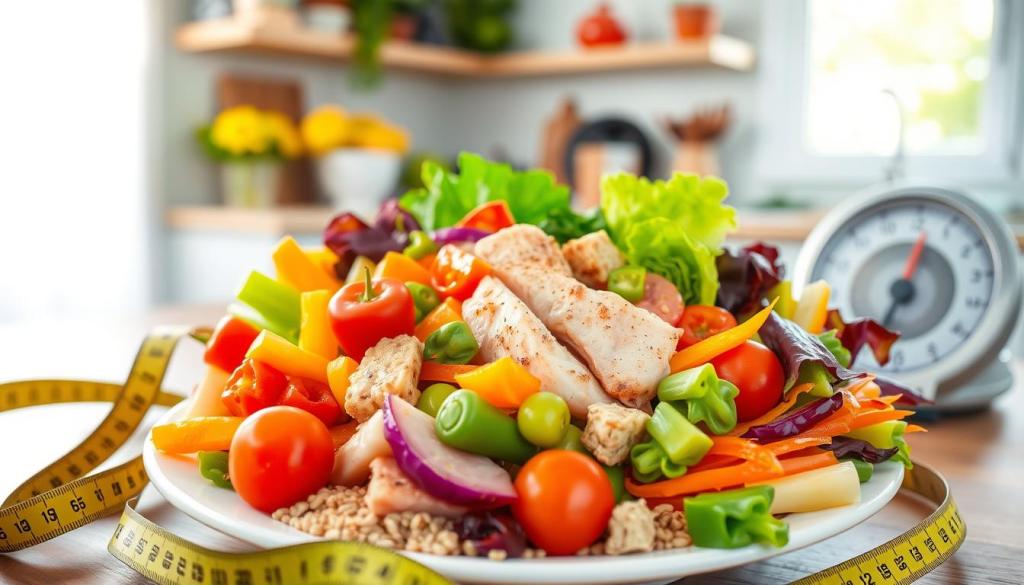
A bad diet can make belly fat worse. What you eat can help or hurt your belly fat. It’s key to know which foods to cut out and which to keep in your diet.
High-calorie foods are packed with calories but not much nutrition. They can make you gain weight. Foods high in sugar and unhealthy fats can also increase belly fat, which is bad for your health.
High-Calorie Foods That Contribute to Belly Fat
Be careful with foods that are high in calories. These include fried, sugary, or processed foods. Some examples are:
- Cookies and pastries
- Fried items such as french fries and fried chicken
- Refined carbohydrates like white bread and pasta
These foods make it hard to keep a healthy weight. Cutting them out can help fight belly fat.
The Impact of Sugar and Processed Foods
Sugar and processed foods are big challenges for losing belly fat. Added sugars can cause insulin spikes, leading to fat storage in the belly. Processed foods often have unhealthy fats that slow down your metabolism. Try to limit:
- Sodas and sugary drinks
- Processed snacks like chips and candy
- Ready-made meals and fast food
Eating more whole, unprocessed foods can help. Include fruits, vegetables, lean proteins, and whole grains. Aim for a calorie deficit by eating mindfully and balancing your nutrition to reduce belly fat.
| High-Calorie Foods | Health Risks |
|---|---|
| Cookies | Weight gain, increased insulin resistance |
| Fried Foods | Heart disease, elevated cholesterol levels |
| Refined Carbs | Type 2 diabetes, increased belly fat |
| Sugary Beverages | High blood pressure, obesity |
| Processed Snacks | Metabolic syndrome, inflammation |
Physical Inactivity and Its Contribution to Belly Fat

Being inactive is a big reason for belly fat. Sitting a lot and not moving much can make your belly fat grow. This fat is not just about looks; it’s also bad for your health.
Studies show that sitting too much can lead to serious health problems. Watching TV a lot can make your belly fat grow. For every extra 1.5 hours of TV, your belly fat increases.
But, moving more can help. Doing aerobic exercises and strength training can fight belly fat. People who worked out hard lost 8.1 percent of their belly fat. Those who didn’t exercise didn’t see any change.
To understand the difference, look at this table:
| Activity Level | Visceral Fat Change | Health Risks |
|---|---|---|
| Sedentary Lifestyle | +8.6% | Increased risk of insulin resistance, cardiovascular disease |
| Low to Moderate Exercise | No Significant Change | Reduced risk of chronic diseases |
| High Exercise Intensity | -8.1% | Lower risk of metabolic syndrome |
In short, fighting physical inactivity is key to losing belly fat and staying healthy. Being active can lower health risks and make you feel better overall.
Stress and Hormones: The Link to Belly Fat

Stress and hormones are closely linked to belly fat. Stress causes the release of cortisol, a hormone that affects fat storage. It especially targets the belly area. High cortisol levels can make you crave unhealthy foods, leading to weight gain.
The Role of Cortisol in Fat Storage
Cortisol is key in fat storage and affects belly fat, especially the dangerous visceral fat. Studies show that long-term high cortisol levels are linked to more belly fat. This can lead to health issues like diabetes and heart problems.
People react differently to stress. Girls, especially Hispanic ones, are more likely to face health risks due to stress. This is because of their genetic makeup and stress response.
To fight cortisol’s impact on belly fat, try these stress-reducing methods:
- Mindfulness and meditation practices
- Regular physical exercise
- Maintaining a supportive social network
Using these strategies can help control cortisol levels. This can aid in reducing belly fat. Remember, slow and steady changes are best for lasting results.
| Factor | Impact on Cortisol | Effect on Belly Fat |
|---|---|---|
| Stress | Increases cortisol release | Promotes fat storage, especially in the abdomen |
| Lack of Sleep | Elevates cortisol levels | Contributes to weight gain, particularly visceral fat |
| Physical Activity | Reduces cortisol levels | Aids in reducing belly fat |
| Poor Diet | May exacerbate stress responses | Leads to increased cravings and belly fat accumulation |
Impact of Sleep Deprivation on Belly Fat

Understanding how sleep affects belly fat is key to better health. Not enough sleep messes with your metabolism and hunger control. This can lead to more belly fat.
When you don’t sleep well, your body’s hormones get out of balance. This makes you hungrier and crave unhealthy, high-calorie foods.
How Lack of Sleep Affects Metabolism
Studies show sleep loss can slow down your metabolism. This makes it harder to lose belly fat. A study found that people under 40 who slept less than five hours had more body fat.
Those who slept more than eight hours also gained fat. This shows that too little or too much sleep can harm your body.
Chronic sleep loss raises hunger hormones and lowers fullness hormones. This leads to eating more calories. It shows that sleep affects your weight and fat distribution.
Belly fat can lead to heart problems. This highlights the need to tackle sleep issues.
Aim for seven hours of quality sleep each night. This helps keep your metabolism healthy and prevents belly fat. Prioritizing sleep is crucial for managing weight and avoiding obesity-related health risks.
Genetics and its Influence on Belly Fat Distribution
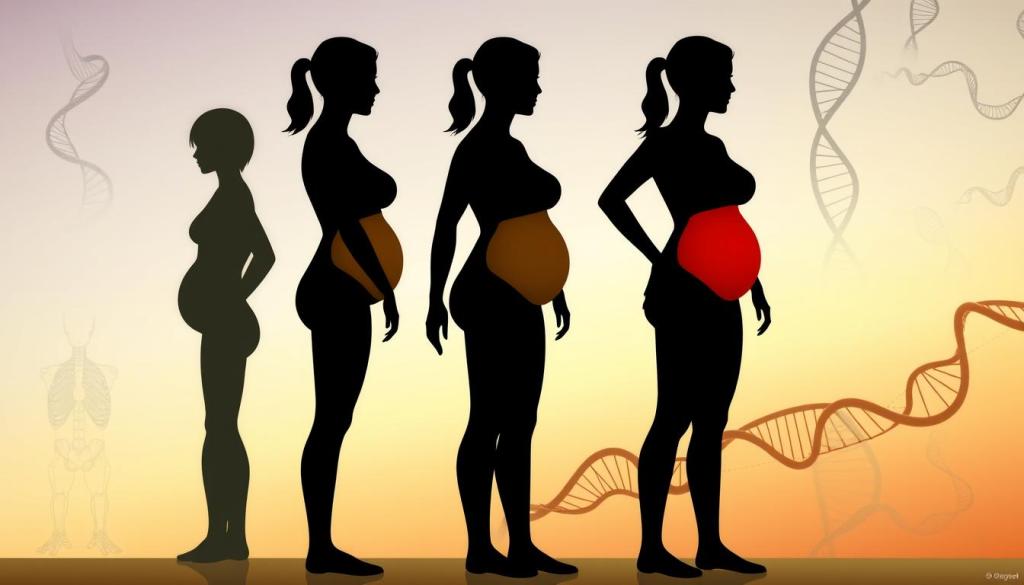
Genetics plays a big role in where your body stores fat. Research shows that genetics can affect where fat goes, especially in the belly. For example, a UK Biobank study found certain genes linked to different types of fat.
If your family has a history of obesity, you might be more likely to gain belly fat. Studies suggest that some genes are more common in women, leading to different fat patterns in men and women. Knowing your genetic background is key to managing your health and weight.
Genetics also affects how your body reacts to diet and exercise. Even with a healthy lifestyle, some people struggle with belly fat due to their genes. Finding out your genetic patterns can help you choose the right strategies for your body.
Even with genetic tendencies, you can still make changes. Eating well and staying active can help fight belly fat. Knowing about fat distribution and your family history helps you make better choices for a healthy weight.
| Genetic Influence | Fat Type | Impact on Health |
|---|---|---|
| Common Variants | Visceral Fat (VAT) | Higher risk of type 2 diabetes and cardiometabolic factors |
| Depot-specific Differences | Abdominal Subcutaneous Fat (ASAT) | Linked to metabolic health influences |
| Sex Differences | Gluteofemoral Fat (GFAT) | Varied distribution, impacting cardiovascular health |
Genetic studies help us understand belly fat distribution better. Using this knowledge in your lifestyle can improve your health and body balance.
Understanding Subcutaneous vs. Visceral Fat
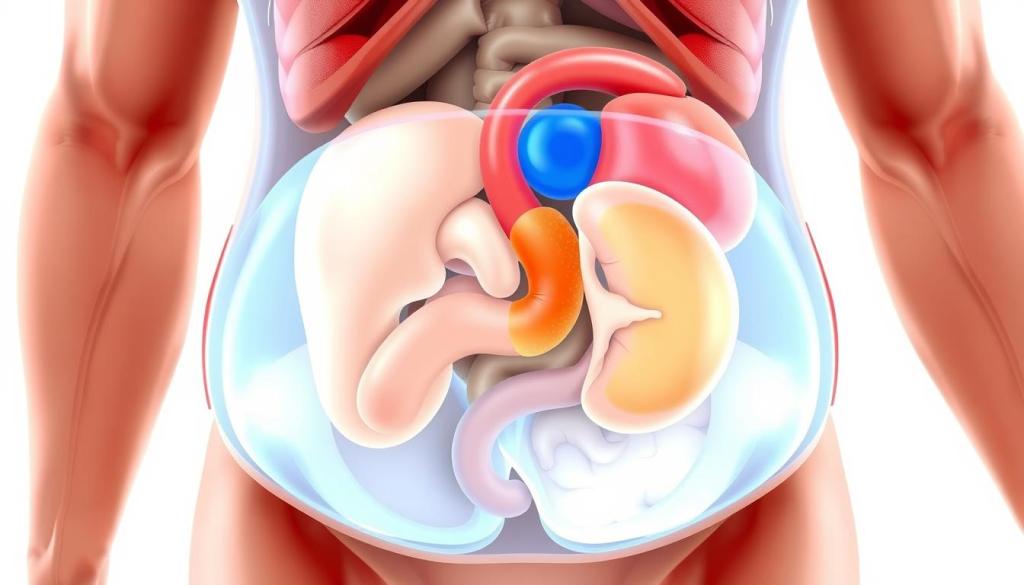
It’s important to know the difference between visceral and subcutaneous fat to manage belly fat well. These fats have different roles in our bodies but can both lead to health problems. Knowing the difference helps you make better choices for your health and lifestyle.
Health Risks Associated with Excess Visceral Fat
Visceral fat is a bigger health risk than subcutaneous fat. It’s deeper in the belly and wraps around important organs. It releases harmful substances that can cause serious health issues, including:
- Heart Disease: Too much visceral fat can lead to heart problems.
- Type 2 Diabetes: It can cause insulin resistance and metabolic disorders.
- Obesity-related Cancers: It’s linked to cancers like colon, breast, and kidney cancer.
- Dementia: More belly fat means a higher risk of dementia.
- Higher Mortality Rates: It’s linked to a higher risk of death, especially in men.
On the other hand, subcutaneous fat is under the skin in places like the thighs and buttocks. It doesn’t have the same health risks as visceral fat. Knowing this can help you make better choices, like eating better and exercising more to reduce visceral fat.
Alcohol Consumption: A Hidden Cause of Belly Fat
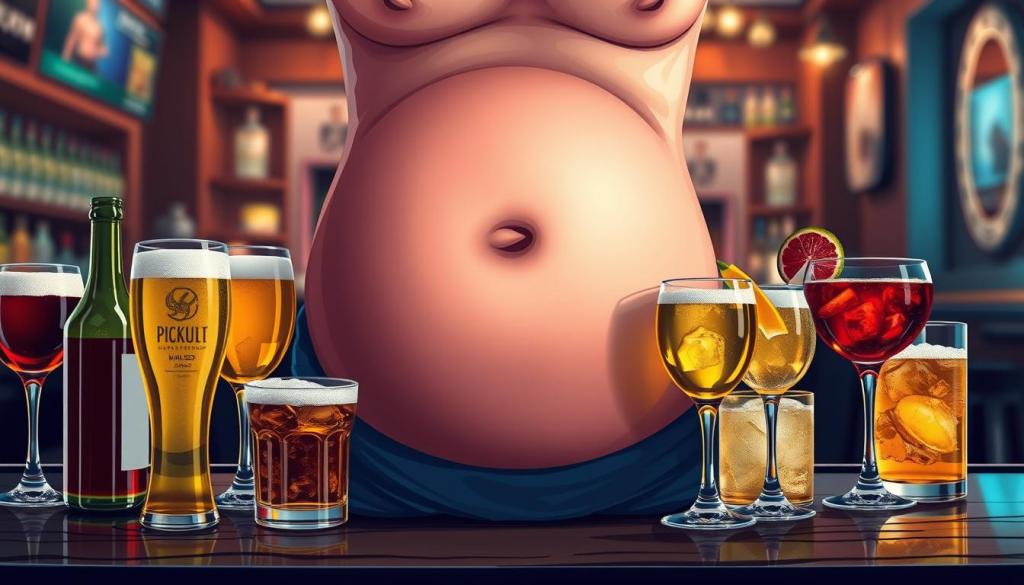
Many people don’t realize how alcohol can add to belly fat. Social drinks often have a lot of calories. This can lead to weight gain, especially around the belly.
The Effects of Alcohol on Caloric Intake
Wine has about 123 calories per serving. But other drinks can have even more. For example, a pint of lager has 180 calories, like a slice of pizza.
Popular stouts and ales have about 250 calories, similar to a whole bagel. This shows how drinks can add calories without any nutritional value.
Drinking alcohol can make you hungry and less full. This can lead to bad food choices and weight gain. Also, the yeast in drinks can cause bloating, affecting your body’s balance.
Men drink alcohol more than women, which might explain why men have more belly fat. Visceral fat, a type of belly fat, is linked to health problems like metabolic disorders.
To reduce belly fat from alcohol, you need to change your lifestyle. Eating well and exercising more are key. Programs like Juniper’s Weight Reset Program help with this, focusing on healthy eating and managing alcohol use.
| Alcoholic Beverage | Calories per Serving | Equivalent Food |
|---|---|---|
| Standard Wine | 123 | 1 Chocolate Chip Cookie |
| Pint of Lager | 180 | 1 Slice of Pizza |
| Popular Stouts and Ales | 250 | 1 Whole Bagel |
| Pint of Cider | 216 | 1 Sugary Donut |
Choosing wisely about alcohol can help control calories and reduce belly fat. Being aware of drink calories and eating well can help manage your weight and health.
Finding Solutions: How to Reduce Belly Fat

To reduce belly fat, focus on diet and exercise. Making smart food choices and staying active can greatly improve your health.
Effective Dietary Changes to Combat Belly Fat
Start by eating whole, nutrient-rich foods. Adding more fiber to your diet can help a lot. Just 10 grams more daily can cut belly fat by 3.7% in five years.
Foods high in soluble fiber include:
- Oats
- Beans
- Fruits like apples and citrus
- Vegetables such as carrots and broccoli
Stay away from sugary and processed foods. They can make your belly fat worse. Also, watch your fat intake, especially trans fats. Switch to healthy fats like those in avocados, nuts, and olive oil.
Incorporating Physical Activity into Your Life
Physical activity is just as important as diet. Cardio exercises like running or cycling help reduce belly fat. Aim for 150 to 300 minutes of aerobic activity weekly.
Strength training is also key. It not only builds muscle but also helps lose belly fat. Set achievable fitness goals and stay consistent for better health.
| Food Type | Effect on Belly Fat |
|---|---|
| High-Fiber Foods | Helps reduce gain |
| Processed Sugars | Increases abdominal fat |
| Healthy Fats | Promotes health, reduces fat |
| Aerobic Exercises | Effective in fat reduction |
| Resistance Training | Supports muscle strength and fat loss |
By focusing on diet and exercise, you can improve your health and reduce belly fat. Making these changes can lead to a healthier, happier life.
Additional Lifestyle Factors Influencing Belly Fat
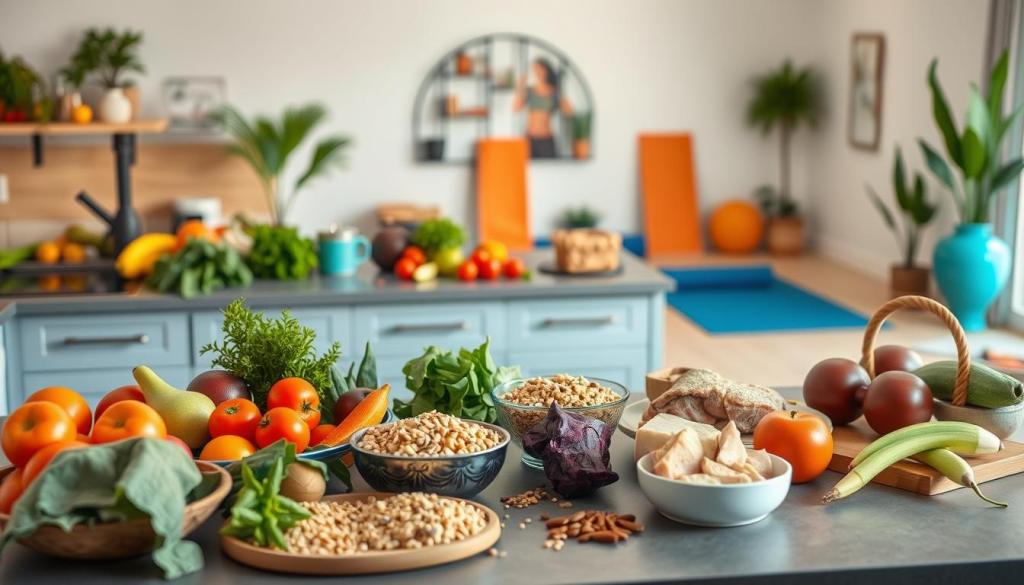
Many lifestyle choices can affect how much belly fat you have. For example, smoking can lead to more belly fat, especially in middle-aged people. This is because smoking often goes hand in hand with poor diet and not enough exercise. Knowing how these choices impact your weight is key to managing it well.
What’s around you also matters. Eating like people in the Mediterranean can help reduce belly fat. Eating more fiber can also help lose belly fat and improve health. Research shows that more fiber in your diet can help fight belly fat.
Hormonal changes, like those during menopause, also play a role. Women might start storing more fat in their bellies during this time. This can increase the risk of diseases like diabetes and heart problems.
The following table summarizes key lifestyle factors and their effects on belly fat:
| Lifestyle Factor | Impact on Belly Fat | Health Risks |
|---|---|---|
| Smoking | Increases abdominal adiposity | Greater risk of chronic diseases |
| Dietary Fiber | Reduces visceral adiposity | Lower risk of obesity-related diseases |
| Physical Activity | Helps decrease abdominal fat | Reduces risk of diabetes and heart issues |
| Menopause | Shifts fat distribution to the abdomen | Increases cardiovascular risks |
| Sleep Duration | Affects abdominal fat accumulation | Linked to diabetes and metabolic syndrome |
Being aware of these lifestyle factors can help you manage belly fat better. By understanding and changing these habits, you can lower health risks. This leads to a healthier lifestyle overall.
Conclusion
Understanding belly fat is key to losing it. We need to look at diet, lack of exercise, stress, and alcohol. These factors add to belly fat. By knowing these causes, we can make changes to our lifestyle, diet, and exercise.
Visceral fat is linked to health risks like metabolic disorders. It’s important to tackle both subcutaneous and visceral fat. This means we need a full health plan.
Making a few changes can help a lot. Eating more protein and less high-calorie foods, plus regular exercise, can help lose weight. Even a little more exercise can cut down belly fat. Managing stress is also important for your health journey.
Focus on these lifestyle changes for your health, not just looks. Every small step can lead to a healthier body and mind. Commit to these strategies to fight belly fat and improve your life.
FAQ
What are the two types of belly fat?
Belly fat comes in two types. Subcutaneous fat is just under the skin. Visceral fat wraps around vital organs and is riskier.
What causes belly fat accumulation?
Belly fat builds up for many reasons. A bad diet and not moving enough are big ones. Stress, not sleeping well, genetics, and drinking too much also play a part.
How can I reduce belly fat effectively?
To cut down belly fat, eat right and move more. Aim for seven hours of sleep. Drink water, manage stress, and drink less alcohol.
Why is visceral fat more concerning than subcutaneous fat?
Visceral fat is worrisome because it’s around vital organs. It raises the risk of heart disease, diabetes, and some cancers.
What dietary changes can help in reducing belly fat?
Eat whole, nutritious foods and watch your calorie intake. Avoid high-calorie, sugary, and processed foods to lose belly fat.
How does physical inactivity relate to belly fat?
Sitting too much can make you fatter. Exercise keeps you lean and reduces belly fat.
What is the impact of stress on belly fat accumulation?
Stress makes you crave unhealthy foods. This can lead to more fat, especially around your belly.
How does sleep deprivation affect belly fat?
Not sleeping well messes with your hunger hormones. This can make you eat more, leading to more belly fat.
Can genetics influence belly fat distribution?
Yes, your genes can affect where you store fat. A family history of obesity might make you more prone to belly fat.
How does alcohol contribute to belly fat levels?
Drinking alcohol adds a lot of calories. This can lead to more belly fat, even if you’re active.
What other lifestyle factors can influence belly fat?
Smoking, environmental factors, and hormonal changes can also increase belly fat. This includes changes during menopause.
Source Links
- What causes belly fat and 7 ways to lose it – https://www.medicalnewstoday.com/articles/323309
- 4 doctor-approved ways women can fight belly fat – https://www.mayoclinic.org/healthy-lifestyle/womens-health/in-depth/belly-fat/art-20045809
- Belly Fat: What It Is and How to Lose It – https://www.webmd.com/diet/features/the-truth-about-belly-fat
- Types of Belly Fat: What They Are and How to Lose Them – https://www.healthline.com/nutrition/types-of-belly-fat
- What Is Visceral Fat? – https://www.webmd.com/diet/what-is-visceral-fat
- Fat around the belly: Why it happens and how to lose it – https://www.medicalnewstoday.com/articles/body-fat-distributing-around-belly
- How to reduce visceral body fat (hidden fat) – https://www.healthdirect.gov.au/how-to-reduce-visceral-body-fat-hidden-fat
- Why Do Men Accumulate Abdominal Visceral Fat? – https://www.ncbi.nlm.nih.gov/pmc/articles/PMC6906176/
- Effect of exercise training intensity on abdominal visceral fat and body composition – https://www.ncbi.nlm.nih.gov/pmc/articles/PMC2730190/
- Sedentary Behavior, Physical Activity, and Abdominal Adipose Tissue Deposition – https://www.ncbi.nlm.nih.gov/pmc/articles/PMC5315590/
- Physical Inactivity Rapidly Increases Visceral Fat; Exercise Can Reverse Accumulation – https://www.sciencedaily.com/releases/2003/05/030529081315.htm
- Stress and abdominal Fat: Preliminary Evidence of Moderation by the Cortisol awakening Response in Hispanic Peripubertal Girls – https://www.ncbi.nlm.nih.gov/pmc/articles/PMC3107005/
- Stressed Out Belly: Causes, Risks, Treatment, and Prevention – https://www.healthline.com/health/stressed-out-belly
- Hormonal belly: Causes and treatment – https://www.medicalnewstoday.com/articles/hormonal-belly
- Sleep Duration and Five-Year Abdominal Fat Accumulation in a Minority Cohort:The IRAS Family Study – https://www.ncbi.nlm.nih.gov/pmc/articles/PMC2831422/
- Sleep Quality is Differentially Related to Adiposity in Adults – https://www.ncbi.nlm.nih.gov/pmc/articles/PMC6204309/
- Sleep deprivation sends fat to the belly | MDedge – https://www.mdedge.com/cardiology/article/253208/obesity/sleep-deprivation-sends-fat-belly
- Inherited basis of visceral, abdominal subcutaneous and gluteofemoral fat depots – Nature Communications – https://www.nature.com/articles/s41467-022-30931-2
- Genetics of Body Fat Distribution: Comparative Analyses in Populations with European, Asian and African Ancestries – https://www.ncbi.nlm.nih.gov/pmc/articles/PMC8228180/
- Subcutaneous adipose tissue & visceral adipose tissue – https://www.ncbi.nlm.nih.gov/pmc/articles/PMC6702693/
- Visceral vs. subcutaneous fat: How to tell the difference and which is more unhealthy – https://www.businessinsider.com/guides/health/conditions-symptoms/visceral-fat-vs-subcutaneous-fat
- What You Need to Know About Alcohol Intake and Weight Gain | Juniper – https://www.myjuniper.com/blog/alcohol-belly-woman?srsltid=AfmBOopqKnyMUb3FuYH1llnp26hP9hktRZA3QWOaU-nSqwtYA92a1Dgm
- Alcohol Belly – Illinois Recovery Center – https://www.illinoisrecoverycenter.com/alcohol-belly/
- Losing Belly Fat – https://www.rush.edu/news/losing-belly-fat
- 18 Effective Tips to Lose Belly Fat (Backed by Science) – https://www.healthline.com/nutrition/20-tips-to-lose-belly-fat
- How to Get Rid of Visceral Fat – https://www.healthline.com/nutrition/lose-visceral-fat
- Lifestyle Factors and 5-Year Abdominal Fat Accumulation in a Minority Cohort: The IRAS Family Study – https://www.ncbi.nlm.nih.gov/pmc/articles/PMC3856431/
- Lifestyle factors and visceral adipose tissue: Results from the PREDIMED-PLUS study – https://www.ncbi.nlm.nih.gov/pmc/articles/PMC6347417/
- The clinical importance of visceral adiposity: a critical review of methods for visceral adipose tissue analysis – https://www.ncbi.nlm.nih.gov/pmc/articles/PMC3473928/
- Subcutaneous fat: What to know and how to lose it – https://www.medicalnewstoday.com/articles/319236
- The Demographic Specific Abdominal Fat Composition and Distribution Trends in US Adults from 2011 to 2018 – https://www.ncbi.nlm.nih.gov/pmc/articles/PMC9565041/



 trim down and shape up
Leave a comment