


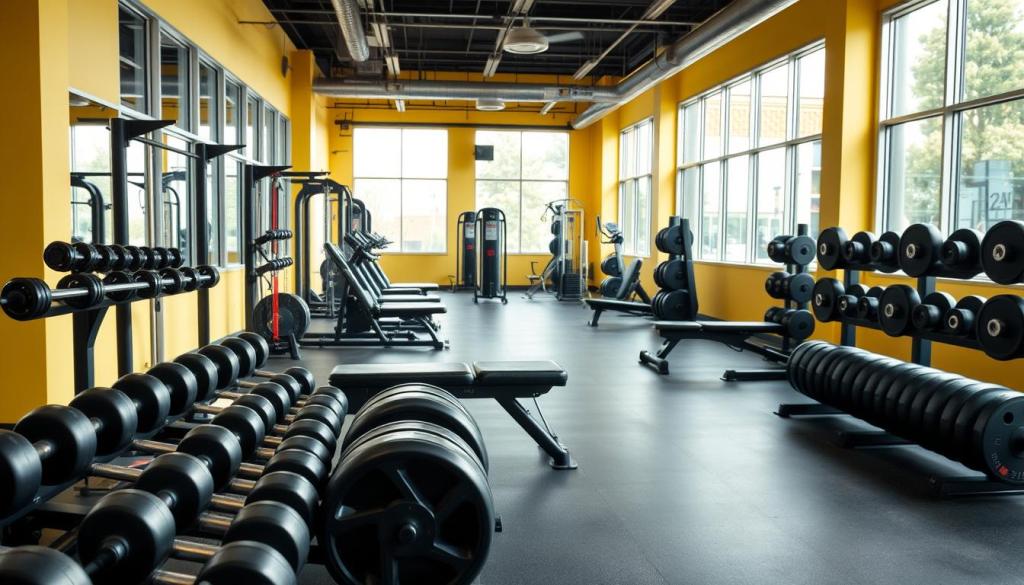
If you’re trying to change your body but worry about getting bulky from lifting weights, don’t worry. Experts say weight training is a key tool for physical change. It helps build muscle and makes you stronger. Plus, it can help you lose weight if that’s your goal.
Strength training improves your body’s composition by reducing fat and keeping or growing muscle. A six-week strength training program can cut down body fat and enhance body composition. Using free weights and circuit training helps with fat loss. It’s easier on your body than cardio workouts, which can raise cortisol levels.
Weight training makes muscles work better. This can lead to noticeable changes in your body, even if the scale doesn’t show it right away.
Key Takeaways
- Weight training is an effective tool for physical change and weight loss.
- Strength training improves body composition by reducing body fat while maintaining or increasing lean muscle mass.
- A six-week strength training program can help reduce body fat and improve body composition.
- Weight training assists with fat loss, especially when using free weights and engaging in circuit training.
- Weight training makes muscles more efficient and can lead to noticeable changes in body composition.
Understanding Weight Training for Weight Loss
Weight training, also known as strength or resistance training, is a great way to lose weight. It uses weights or your body to build muscle and strength. This helps you burn more calories, even when you’re not moving.
Defining Weight Training and Its Components
Weight training includes exercises that use resistance, like dumbbells or your body. It targets different muscle groups, such as arms, legs, and back. This helps you get stronger and more toned.
The Science Behind Strength Training
Weight training doesn’t make you bulky unless you want to. It actually helps you lose weight by increasing your resting metabolic rate. This means you burn more calories all day long.
Common Misconceptions About Weight Training
Some think cardio is the only way to lose weight. But weight training is also key for fat loss. Others worry about getting big muscles, but it’s rare unless you’re trying hard to.
It’s important to understand how weight training works and clear up these myths. This way, you can use it to help you lose weight effectively.
Why Weight Training Is Essential for Fat Loss

Weight training is key for losing weight. It helps keep muscle mass when you’re eating fewer calories. This is important because muscle burns more calories than fat, even when you’re resting.
Weight training also boosts your heart health. It raises your heart rate and improves blood flow. This is similar to the benefits of cardio exercises like running or cycling.
- Healthy adults who did full-body resistance training for four weeks lost 1.4% of their body fat. Those who didn’t exercise didn’t lose as much.
- Strength training can lower the risk of death from all causes by 10 to 17%, a study found.
- The Centers for Disease Control and Prevention suggest 150 minutes of moderate-intensity cardio a week. They also recommend exercises that strengthen all major muscle groups at least two days a week.
Weight training also fights chronic diseases like heart disease, type 2 diabetes, and some cancers. It helps you lose weight and stay healthy for the long term.
“Starting with just 10 minutes of strength training two to three times a week can be effective when beginning weight training for weight loss.”
Adding weight training to your workout plan is a smart move for losing weight. It helps you burn fat, increase your metabolism, and get healthier.
The Connection Between Muscle Mass and Metabolism

Muscle mass plays a huge role in weight loss. Muscles burn more energy than fat, even when you’re not moving. This means the more muscle you have, the more calories you burn at rest.
This increased calorie burn helps with long-term weight control and better physical health.
How Muscles Burn Calories
Muscle tissue is always working, even when you’re not. It needs energy to stay strong and help you move. The more muscle you have, the more calories your body burns.
The Role of Resting Metabolic Rate
Your resting metabolic rate (RMR) is how many calories you burn when you’re not moving. Building muscle through weight training can increase your RMR. This leads to burning more calories all day, helping with weight loss and better health.
Long-term Metabolic Benefits
Weight training not only boosts your metabolism short-term but also long-term. As you get older, keeping muscle helps your metabolism stay healthy. This is key for keeping a healthy weight and overall well-being.
To help muscles grow and repair, you need to eat plenty of protein. Active people should eat 0.35 to 0.73 grams of protein per pound of body weight each day. This depends on how active you are and your goals.
“Muscle cells release tiny bubbles of genetic material after resistance exercise that can flow to fat cells and initiate fat burning processes.”
The link between muscle and metabolism is key for lasting weight loss. Adding weight training to your routine and eating enough protein can unlock benefits that help you lose weight over time.
Debunking the “Bulking Up” Myth

Many people worry about “bulking up” when they start weight training for weight loss. But this fear is mostly not true. To really bulk up, you need a lot of intense workouts, lots of calories, and the right mix of nutrients. This is not something you get from just doing weight training a few times a week.
Actually, weight training helps you build lean muscle and lose fat. The secret is to master the basics of weight training. Focus on weight training for weight loss tips, not trying to look like a bodybuilder.
Studies show it takes 4-6 weeks of regular weight training to see muscle and fat changes. Bodybuilders, however, spend years lifting to gain a lot of muscle.
Women also have much less testosterone than men, making it hard for them to bulk up like bodybuilders. But weightlifting can help burn calories during and after your workout. This helps with lasting fat loss.
“Proper nutrition supports muscle development, aids recovery, and ensures optimal performance without unnecessary bulk.”
To get the body you want, mix cardio and strength training with a balanced diet. Personalized workouts and nutrition plans can help women reach their fitness goals without gaining too much muscle.
Don’t let the fear of “bulking up” stop you from trying weight training. By mastering the basics and using weight training for weight loss tips, you can achieve a lean, toned, and healthy body.
Getting Started: Basic Equipment and Exercises

Starting weight training for weight loss needs the right gear and knowing how to do exercises right. This part will show you the basic equipment and how to move properly. It’s key to master the basics and use different types of weights well.
Essential Weight Training Equipment
Beginners need adjustable dumbbells. Having a variety of weights helps you get stronger. Resistance bands are also good, offering different levels of resistance for various muscles.
Fundamental Movement Patterns
- Squats: Work your lower body with squats, targeting your legs, glutes, and core.
- Push-ups: Strengthen your chest, shoulders, and triceps with push-ups.
- Deadlifts: Deadlifts engage your back, hamstrings, and grip, done by bending at the hips.
- Rows: Rows work your back, biceps, and shoulders, great for balance with pushing exercises.
Form and Technique Basics
Good form and technique are key to avoid injuries and get the most from your workouts. Start with light weights and focus on your form. Working with a certified trainer can help you learn and do exercises safely.
| Equipment | Price Range |
|---|---|
| Adjustable Dumbbells | $50 – Varies |
| Resistance Bands | $10 – $60 |
“Proper form and technique are crucial to prevent injuries and maximize the results of your weight training.”
Building Your Weight Training Program

Creating a good weight training program is crucial for losing weight. It should include exercises for all major muscle groups. This helps build and keep lean muscle. Start with 2-3 weight training sessions a week. Increase as you get fitter.
A sample routine might look like this:
- Monday – Workout 1
- Tuesday – Cardio
- Wednesday – Workout 2
- Thursday – Cardio or Yoga
- Friday – Cardio or Yoga
- Saturday – Workout 3
- Sunday – Rest
Each workout should have 4-5 sets of exercises. Do 8-12 reps for each set. Rest for 60-120 seconds between sets, based on your fitness and the exercise’s intensity.
Compound Exercises for Optimal Results
To make a good weight training plan, focus on compound exercises. These exercises, like squats, deadlifts, and bench presses, work many muscles. They burn calories and help build muscle.
| Exercise | Muscles Targeted | Sets x Reps |
|---|---|---|
| Barbell Squats | Quadriceps, Glutes, Hamstrings | 4 x 10 |
| Deadlifts | Back, Hamstrings, Glutes | 4 x 8 |
| Bench Press | Chest, Shoulders, Triceps | 4 x 12 |
| Lat Pulldowns | Back, Biceps | 4 x 10 |
Follow this sample routine and stick to your workouts. Remember, progress is slow. Celebrate every small win.
Combining Cardio and Weight Training for Optimal Results

For weight loss, mixing weight training and cardio is key. Cardio is great for burning fat, but adding strength training makes your fitness plan better. This mix helps you stay fit for longer.
Finding the Right Balance
Begin with one day of strength training and one day of cardio each week. As you get fitter, add more days. Aim for 3 days of weight training and 2-3 days of cardio. This balance helps your body recover and avoid getting too tired.
Choose from jogging, walking, rowing, cycling, or HIIT for cardio. HIIT is especially good for losing fat because it’s short and intense.
Scheduling Your Workouts
Plan your workouts to fit your life. Some like to alternate strength and cardio days. Others do both in one session. Try different ways to see what works for you.
Always listen to your body. If you’re too tired or sore, it’s okay to take a break. Rest is important to avoid injuries and burnout.
By doing both weight training and cardio, you’ll burn more calories and lose fat. You’ll also build muscle, boost your heart health, and get fitter overall.
Nutrition Guidelines for Weight Loss and Weight Training
Eating right is key when you’re trying to lose weight and do weight training. You need lots of protein to grow muscles and lose fat. Athletes should eat 1.2 to 2 grams of protein for every kilogram of their body weight each day.
A good diet also includes complex carbs and healthy fats. Athletes should aim for 5 to 12 grams of carbs for every kilogram of body weight daily. Those training a lot need more calories, about 43 calories per kilogram of body weight each day. Men usually need a bit more than women.
It’s important to eat the right foods at the right time. Eat a meal with 30 to 45 grams of carbs and protein 60 to 90 minutes before working out. After training, eat 10-20 grams of protein with carbs to help muscles heal.
| Nutrient | Recommended Daily Intake |
|---|---|
| Protein | 1.2 to 2 grams per kilogram of body weight |
| Carbohydrates | 5 to 12 grams per kilogram of body weight |
| Calories | 43 calories per kilogram of body weight |
After working out, refuel with protein and carbs. Eating a snack or light meal 60-90 minutes before can boost energy and burn more calories. Try to avoid heavy, fatty, or fibrous foods close to workouts to avoid discomfort.
Remember, your diet should match your workout intensity and frequency. By following these nutrition tips, you can help with weight loss and keep your muscles strong.
Recovery and Rest: Key Components of Success

Rest and recovery are as important as workouts when trying to lose weight through weight training. Your muscles need time to fix and grow stronger. This helps them burn calories more efficiently. It’s key to rest well and know when you’re overdoing it.
Understanding Rest Periods
Take 60-120 seconds of rest between sets. This lets your muscles recharge for the next set. Too little rest can make you tired too soon, while too much might make your workout less intense.
Signs of Overtraining
It’s good to challenge yourself, but don’t ignore your body’s signals. Look out for signs like constant tiredness, lower performance, mood swings, and getting sick easily. If you see these, it’s time to rest more.
Make sure you sleep well, manage stress, and give your muscles time to heal. Remember, rest and recovery are as vital as the workouts for weight training for weight loss.
By listening to your body and balancing workouts with rest, you’ll reach your weight training for weight loss goals.
Tracking Progress and Adjusting Your Program

It’s important to check your progress often to keep your weight training program working well. Don’t just look at the scale, as muscle gain can hide fat loss. Instead, watch for changes in body composition, strength, and fitness.
Take measurements, progress photos, or use body fat percentage to see how you’re doing. A workout log is also helpful. It lets you track training volume, intensity, rest, and energy levels.
As you get better, you’ll need to change your program. Increase weights or switch exercises to keep challenging yourself and avoid getting stuck. This constant change is key to improving in weight training for weight loss and fitness.
Assess Your Mobility
Remember to check your mobility too. Better range of motion can make your workouts better and lower injury risk. Add stretching and foam rolling to your routine.
By watching your progress and making changes, you’ll stay motivated and reach your goals. This way, you can overcome plateaus and see real results from your weight training.
| Metric | Frequency | Purpose |
|---|---|---|
| Body Composition | Every 4-8 weeks | Assess changes in fat, muscle, and overall body composition |
| Strength Gains | Every 4-8 weeks | Track improvements in key lifts and exercises |
| Fitness Assessments | Every 4-8 weeks | Evaluate overall physical fitness and performance |
| Workout Log | Each Workout | Monitor training volume, intensity, and progress over time |
| Mobility | Weekly | Identify and address any mobility limitations |
“Tracking progress is essential for ensuring your weight training program remains effective and helps you overcome plateaus.”
Health Benefits Beyond Weight Loss

Weight training is more than just a way to lose weight. It brings many health benefits that can make your life better. These benefits can improve your overall health and quality of life. Knowing about these perks can motivate you to keep up with weight training.
One big advantage of weight training is that it helps make your bones stronger. This can lower the chance of getting osteoporosis later in life. By working out your muscles, you also strengthen your bones, which helps prevent fractures and keeps you moving well as you get older.
It also makes your joints more stable and improves your balance. This means you’re less likely to fall or get hurt. With stronger muscles and better coordination, you’ll feel more stable and confident, helping you stay active for longer.
But weight training does more than just help your body. It can also fight off chronic diseases like heart disease, type 2 diabetes, and some cancers. Exercise can reverse muscle insulin resistance, a key factor in these diseases. So, weight training is a key part of a healthy lifestyle.
Moreover, weight training is good for your mind too. It boosts your confidence and energy levels. By pushing yourself physically, you’ll feel a sense of achievement and personal growth. This can really improve your emotional health.
In short, weight training is great for losing weight, but it has many more benefits. Adding this powerful exercise to your routine can bring many health advantages that will make your life richer in many ways.
“Exercise and combination groups exhibited increased CRF, important for reducing risk of CVD and all-cause mortality.”
| Health Benefit | Description |
|---|---|
| Improved Bone Density | Weight training strengthens the underlying bone structure, reducing the risk of osteoporosis. |
| Enhanced Joint Stability and Balance | Stronger muscles and improved coordination decrease the risk of falls and injuries. |
| Reduced Chronic Disease Risk | Weight training can help combat cardiovascular disease, type 2 diabetes, and certain cancers. |
| Mental Health Improvements | Increased confidence and energy levels positively impact emotional well-being. |
Conclusion
Weight training is a great way to lose weight and get healthier. It helps build muscle, boosts your metabolism, and keeps your body lean. When you add good nutrition and cardio, you can lose weight for good and look better.
Start slow and focus on doing things right. Keep pushing yourself to get the best results. With time and effort, weight training can change your body and health for the better. It’s not just about losing weight; it’s about gaining muscle, speeding up your metabolism, and feeling better overall.
Weight training is key to a good weight loss plan. Knowing how it works and using the right methods can help you reach your goals. It’s a powerful tool for a healthier, happier you.
FAQ
What is the connection between weight training and weight loss?
Weight training helps you lose weight by changing your body. It reduces fat while keeping or growing muscle. This means you burn more calories, even when you’re not moving.
How does weight training help preserve muscle mass during weight loss?
Weight training is key for losing fat without losing muscle. It builds muscle, which burns more calories than fat. It also boosts your heart rate and blood flow, adding to your health benefits.
Is it true that weight training will make me “bulk up”?
The fear of getting too big from weight training is mostly wrong. You need special training, lots of calories, and the right diet to bulk up. Normal weight training won’t make you too big. It helps you lose fat and build lean muscle.
What type of equipment and exercises are recommended for beginners?
Beginners should start with dumbbells in different weights. Bodyweight exercises are also good. Focus on squats, push-ups, deadlifts, and rows. Learning the right form is key to avoid injuries and get the best results.
How should I structure my weight training program for weight loss?
A good program targets all major muscles. Start with 2-3 sessions a week and add more as you get stronger. A sample plan could be: Monday – Workout 1, Tuesday – Cardio, Wednesday – Workout 2, Thursday – Cardio or Yoga, Friday – Cardio or Yoga, Saturday – Workout 3, Sunday – Rest.
How should I combine weight training and cardio for optimal weight loss results?
Mix weight training and cardio for the best results. Start with one day of each, then add more as you get fitter. Switch between strength and cardio days to recover and avoid overtraining.
What are the nutrition guidelines for weight loss and weight training?
Eating right is key for losing weight and keeping muscle. Aim for 0.35 to 0.73 grams of protein per pound of body weight daily. Eat balanced meals with lean proteins, complex carbs, and healthy fats. Make sure you’re not cutting calories too much to lose muscle.
How important is recovery and rest for weight training and weight loss?
Rest and recovery are vital for muscle growth and avoiding overtraining. Rest for 60-120 seconds between sets. Listen to your body and rest when needed. Proper sleep and stress management are also important for recovery.
How do I track progress and adjust my weight training program?
Check your progress regularly to keep your program effective. Look at body composition, strength, and fitness improvements. Don’t just look at the scale. Use measurements, photos, or body fat percentage to track changes. Adjust your program as needed to keep challenging yourself and avoid plateaus.
Source Links
- Trainers Explain Exactly How To Start Weightlifting For Weight Loss – https://www.womenshealthmag.com/weight-loss/a39359535/weight-training-for-weight-loss/
- How to Start Weight Training for Weight Loss, According to Trainers – https://www.prevention.com/weight-loss/a43122348/weight-training-for-weight-loss/
- Here’s What You Need to Know About Weight Training for Weight Loss – https://www.menshealth.com/weight-loss/a43760101/weight-training-for-weight-loss/
- How To Lose Fat With Strength Training – https://www.health.com/fitness/how-to-shed-fat-with-strength-training
- Weight-training do’s and don’ts – https://www.mayoclinic.org/healthy-lifestyle/fitness/in-depth/weight-training/art-20045842
- Strength Training for Weight Loss: Gaining Muscle and Losing Fat – https://health.umms.org/2023/07/31/strength-training-for-weight-loss/
- Weight Loss: Cardio or Weight Training? – https://www.healthline.com/nutrition/cardio-vs-weights-for-weight-loss
- Effects of Weight Loss on Lean Mass, Strength, Bone, and Aerobic Capacity – https://pmc.ncbi.nlm.nih.gov/articles/PMC5161655/
- Effects of aerobic and/or resistance training on body mass and fat mass in overweight or obese adults – https://pmc.ncbi.nlm.nih.gov/articles/PMC3544497/
- The New York Times, “Lifting Weights? Your Fat Cells Would Like to Have a Word.” – https://medicine.uky.edu/news/new-york-times-lifting-weights-your-fat-cells-2021-07-22t13-00-34
- Debunking the Myth of Bulking Up – Studio 1-on-1 Fitness – https://studio1on1.com/2018/08/27/debunking-the-myth-of-bulking-up/
- Tone up vs Bulk up – Exposing the Truth – https://sportswestathleticclub.com/blogs/myth-toning-vs-bulking/
- Embrace The Iron: Debunking The Myth That Women Get Bulky From Lifting Weights – HEALTH3 – https://health3wellness.com/embrace-the-iron-debunking-the-myth-that-women-get-bulky-from-lifting-weights/
- How to Start Lifting Weights: A Beginner’s Guide – https://www.healthline.com/health/how-to-start-lifting-weights
- The Beginner Weight Loss Workout Plan for You – https://www.verywellfit.com/beginners-weight-loss-weight-training-3498343
- Weight Training Exercises and Workout Basics – https://www.verywellfit.com/strength-4157137
- Can You Actually Burn Fat and Gain Muscle at the Same Time? – https://www.menshealth.com/fitness/a44639317/lose-fat-and-gain-muscle/
- Weight Lifting for Weight Loss – https://www.acefitness.org/resources/everyone/blog/5353/weight-lifting-for-weight-loss/?srsltid=AfmBOoptNbmERpgV0CowORIXD-agvuNKobE3BxefTslGh_WreQHmMG33
- Pairing Cardio and Strength Training for Maximum Fat Loss – https://www.verywellfit.com/cardio-and-weight-training-and-fat-loss-3498325
- The Advantages of Combining Cardio and Strength Training for Optimal Weight Loss Results – https://healthiapp.com/blog/the-advantages-of-combining-cardio-and-strength-training-for-optimal-weight-loss-results
- What and When to Eat for Weight Training – https://www.verywellfit.com/meal-timing-for-weight-training-3498426
- How to Change Your Diet When You Start Lifting Weights – https://www.ymcamidtn.org/health-and-fitness/articles/how-change-your-diet-when-you-start-lifting-weights
- Exercise Rest Day: Benefits, Importance, Tips, and More – https://www.healthline.com/health/exercise-fitness/rest-day
- Important Elements of Rest & Recovery – Invictus Fitness – https://www.crossfitinvictus.com/blog/rest-recovery/
- Rest and recovery are critical for an athlete’s physiological and psychological well-being – https://www.uchealth.org/today/rest-and-recovery-for-athletes-physiological-psychological-well-being/
- How to Track Strength Training Progress for Better Results | ISSA – https://www.issaonline.com/blog/post/how-to-track-strength-training-progress-for-better-results
- Hacking the Workout Journal: How to Track Your Workouts in the Simplest, Most Effective Way Possible – https://jamesclear.com/workout-journal
- What to Measure and Track — MovementLink Gym – https://movementlink.fit/the-movementlink-method/what-to-track
- Beyond Weight Loss: Five Yale Experts on the Benefits of Exercise – https://medicine.yale.edu/news-article/yale-experts-benefits-of-exercise/
- Exercise in the maintenance of weight loss: health benefits beyond lost weight on the scale – https://bjsm.bmj.com/content/56/13/771
- Effect of exercise training on weight loss, body composition changes, and weight maintenance in adults with overweight or obesity: An overview of 12 systematic reviews and 149 studies – https://pmc.ncbi.nlm.nih.gov/articles/PMC8365736/
- Role of Physical Activity for Weight Loss and Weight Maintenance – https://pmc.ncbi.nlm.nih.gov/articles/PMC5556592/
- Weight Training: A Key To Achieving Overall Health And Wellness – https://mcboh.com/blog/weight-training-a-key-to-achieving-overall-health-and-wellness



 trim down and shape up
Leave a comment