


Did you know that about 47% of American adults have high blood pressure? Yet, only about 24% keep their condition under control. This shows how vital it is to manage your heart health naturally, like through exercise.
If you have high blood pressure, there are eight simple exercises to help. These can lower your blood pressure without needing medication. You can manage your heart health with specific physical activities that greatly improve your overall well-being.
Your path to better heart health begins with knowing how certain exercises can naturally lower blood pressure. Each workout offers unique benefits. These benefits work together to support your heart, improve blood flow, and reduce heart stress.
Key Takeaways
- Exercise is a powerful tool for managing blood pressure naturally
- Consistent physical activity can improve cardiovascular health
- Multiple exercise types can contribute to blood pressure reduction
- Consulting with healthcare providers is crucial before starting new fitness routines
- A holistic approach combines exercise with lifestyle modifications
Understanding High Blood Pressure and the Power of Exercise
Your heart health is key to feeling good overall. Knowing about high blood pressure is a big step in avoiding big health problems. High blood pressure puts a lot of stress on your body, affecting many parts of you.
High blood pressure is tough on your heart and blood vessels. Your heart has to work harder to pump blood when the pressure is up. This can lead to serious health issues down the line.
What Happens to Your Body When Blood Pressure Is Elevated
When blood pressure goes up, your body changes in important ways:
- Arteries get stiffer and less flexible
- The heart muscle works harder
- The risk of damage to blood vessel walls goes up
- The chance of getting chronic health problems increases
How Physical Activity Influences Your Cardiovascular System
Regular exercise is a strong tool against high blood pressure. It makes your heart stronger, improves blood vessel flexibility, and boosts oxygen use.
By staying active, you can:
- Lower your resting heart rate
- Reduce stress hormones
- Help blood vessels open up with nitric oxide
- Lessen strain on your heart
Knowing how exercise helps your heart is powerful. It lets you take charge of your heart health with the right exercise plan.
Brisk Walking: Your First Step Toward Better Heart Health

Brisk walking is a powerful, easy exercise that boosts your heart health. It’s a simple way to lower blood pressure and get fitter. It’s a great starting point for better heart health.
Knowing what brisk walking is important. It’s walking at 3 to 4 miles per hour. You can talk but not sing. Your breathing gets faster, and your heart beats faster.
- Start with 10-15 minute sessions
- Gradually increase to 30-45 minutes most days
- Aim for a consistent, moderate-intensity pace
Brisk walking does more than just move you. Your heart and blood vessels get a great workout. This strengthens your heart and improves blood flow.
| Walking Intensity | Heart Health Impact |
|---|---|
| Slow Walk | Minimal cardiovascular benefit |
| Brisk Walk | Significant blood pressure reduction |
| Power Walk | Maximum cardiovascular improvement |
To get the most from walking, walk right. Keep your back straight, use your core, and swing your arms naturally. Use the talk test to check your pace. You should be out of breath but still able to talk.
Your heart doesn’t care if you’re walking in a park or around your neighborhood—it only cares that you’re moving!
Make walking fun by trying new places, walking with friends, or listening to podcasts. The most important thing is to keep it up and enjoy it. This way, walking becomes a lasting part of your life.
Cycling for Cardiovascular Strength and Blood Pressure Control

Cycling is a great way to boost your heart health and control blood pressure. It’s a low-impact activity that offers many health benefits. These benefits can change your fitness journey and help your heart stay healthy.
Regular cycling makes your body stronger. The steady pedaling strengthens your heart, improves blood flow, and lowers blood pressure. Unlike high-impact exercises, cycling is easy on your body and works for all fitness levels.
Indoor vs. Outdoor Cycling: Choosing Your Approach
There are two main ways to cycle, each with its own benefits:
- Indoor Cycling: Offers consistent resistance and a controlled environment
- Outdoor Cycling: Provides fresh air and varied terrain challenges
Indoor cycling lets you stick to a routine no matter the weather. Stationary bikes help you track your progress in heart health and blood pressure. Outdoor cycling, on the other hand, offers natural changes and mental health benefits from being outdoors.
Building a Sustainable Cycling Routine
To create a good cycling routine, plan carefully:
- Start with 15-20 minute sessions
- Gradually increase duration and intensity
- Monitor heart rate during workouts
- Ensure proper bike fit and posture
Being consistent is more important than how hard you cycle for blood pressure control. Aim to make cycling a regular part of your life. This way, exercise becomes something you enjoy that boosts your health.
Swimming: A Low-Impact Exercise That Delivers High Results

Swimming is a top-notch low-impact exercise that boosts your heart health. It’s a water-based workout that’s great for managing blood pressure. Plus, it works out your whole body.
Water acts as natural resistance, making swimming a full-body exercise. It works many muscles at once. The water also eases joint stress, perfect for those with mobility issues or looking for a soft yet effective workout.
- Reduces cardiovascular strain
- Improves overall circulation
- Minimizes impact on joints
- Provides full-body conditioning
Different strokes offer different levels of intensity. Freestyle and breaststroke are great for your heart. If swimming isn’t your thing, try water walking or aqua aerobics for similar benefits.
| Swimming Style | Cardiovascular Intensity | Muscle Groups Engaged |
|---|---|---|
| Freestyle | High | Arms, Core, Legs |
| Breaststroke | Moderate | Chest, Arms, Legs |
| Water Walking | Low | Legs, Core |
Shoot for 30-45 minute swims, three to five times a week. Begin with short sessions and slowly add more time and effort. Always swim in a pool with a lifeguard. It’s also smart to swim with a friend if you have heart concerns.
Swimming turns your workout into a refreshing, health-boosting experience.
Stay hydrated and listen to your body. Swimming is a low-impact exercise that really pays off for blood pressure and heart health.
Yoga: Combining Movement, Breath, and Mindfulness

Yoga is a powerful way to manage blood pressure. It combines physical movement, breath control, and mindfulness. This holistic method reduces stress and supports heart health. Your body can transform through gentle, intentional practice.
The link between yoga and blood pressure is strong. By focusing on breath and movement, you can relax your body. This helps lower stress levels that can raise blood pressure.
Best Yoga Poses for Lowering Blood Pressure
Some yoga poses can help lower blood pressure. Here are a few:
- Child’s Pose: Promotes deep relaxation and reduces stress
- Legs-Up-the-Wall Pose: Supports circulation and calms the nervous system
- Seated Forward Bend: Encourages gentle stretching and mental calmness
- Corpse Pose: Enables complete body and mind relaxation
How Yoga Reduces Stress and Supports Heart Health
Yoga does more than just move your body. Mindfulness practices help control your stress response. This lowers cortisol levels and improves heart rate variability. Regular yoga can help your body manage stress better, affecting blood pressure.
Begin with gentle yoga sessions, aiming for 20-30 minutes, several times a week. Your body will appreciate this holistic approach to heart health.
Resistance Training: Building Muscle to Support Healthy Blood Pressure

Resistance training is a great way to manage your blood pressure naturally. Many people only do cardio, but strength training is also key. It helps a lot with your heart health.
Resistance training brings many benefits that help keep your blood pressure healthy. It:
- Improves how your body uses energy
- Makes your body better at using insulin
- Helps you lose body fat
- Strengthens your muscles
Begin with lighter weights and do more reps. It’s all about being consistent and doing it right. You don’t need to lift heavy to see results. Light weights, resistance bands, and bodyweight exercises work well too.
Experts say to do resistance training two to three times a week. Focus on controlled movements and proper breathing to avoid sudden blood pressure increases.
Remember: Resistance training is not about lifting maximum weights, but about creating a sustainable muscle-building routine that supports your overall health.
If you’re new to resistance training, get help from a fitness pro. They can teach you safe and effective ways to do it. Your journey to better blood pressure can be fun and life-changing.
Step-Ups: A Simple Exercise With Powerful Benefits
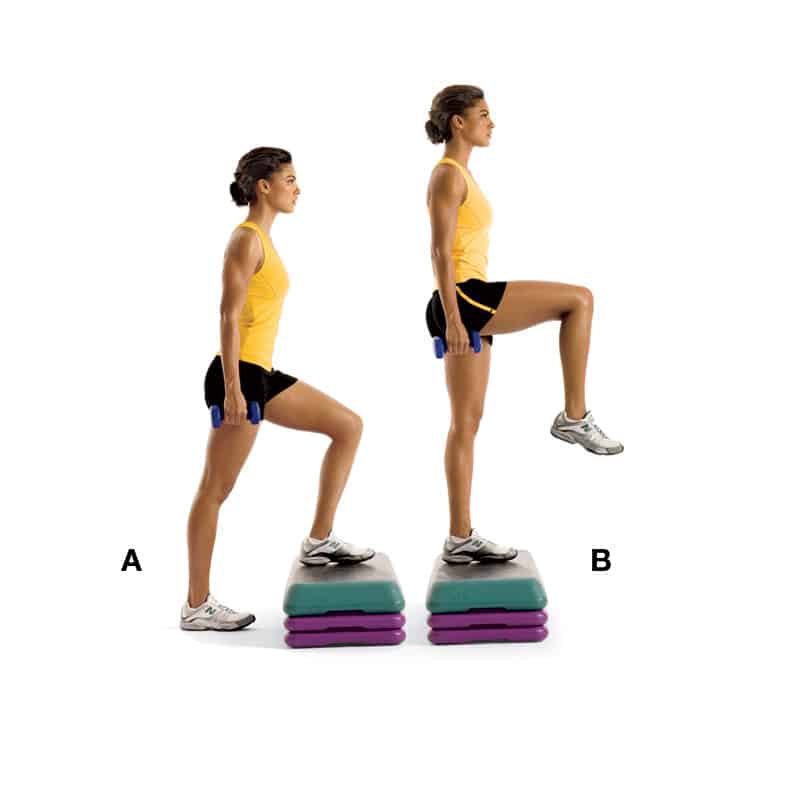
Step-ups are a great way to manage blood pressure. They are easy to do and don’t need much equipment. This makes them perfect for keeping your heart healthy.
Step-ups work like climbing stairs, which we do every day. They work many muscles and give a great workout for your heart. This can help lower your blood pressure.
Mastering the Perfect Step-Up Technique
To do step-ups right, follow these tips:
- Start with a platform 6-8 inches high
- Stand in front of the step with your feet apart
- Put your whole foot on the step
- Push through your heel to go up
- Keep your back straight and your core tight
Start with 1-2 sets of 10-12 reps per leg if you’re new. As you get better, try:
- Higher steps
- Light dumbbells
- More reps
“Step-ups turn a simple move into a strong heart workout,” says fitness expert Dr. Emily Roberts.
Step-ups are great because you can do them anywhere. They’re perfect for home, the gym, or even at work. They’re a great way to help manage your blood pressure.
Intervals: Alternating Intensity for Maximum Cardiovascular Impact

Interval training is a great way to manage blood pressure through exercise. It involves switching between high and low intensity. This makes your heart work harder, improving your heart health.
Here are some simple interval training techniques to start with:
- Alternate one minute of faster effort (like marching in place)
- Follow with two minutes of slower recovery
- Repeat this interval five to six times
Intervals are flexible and can be used in many activities:
- Walking
- Cycling
- Swimming
- Bodyweight exercises
Interval training boosts heart efficiency, blood vessel function, and calorie burn. Start with shorter periods and more repetitions, increasing as you get fitter.
Pro Tip: Monitor your intensity by ensuring you can speak in short phrases during high-intensity moments but not hold a full conversation.
Always warm up for 5-10 minutes before intervals and cool down afterwards. Aim for 1-3 interval workouts a week. This is part of a balanced exercise routine for better blood pressure.
The 4-7-8 Breathing Exercise: Your Body’s Natural Tranquilizer

Imagine having a tool to reduce stress that’s small and easy to use. The 4-7-8 breathing exercise is just that. It’s a simple method to help control your blood pressure and lower stress naturally.
This breathing technique works by activating the vagus nerve. This nerve releases acetylcholine, called the body’s “natural tranquilizer”. By using the 4-7-8 breathing, you can calm your nervous system and feel more relaxed.
How the 4-7-8 Technique Stimulates the Vagus Nerve
Your vagus nerve is key in controlling your heart rate and blood pressure. The 4-7-8 breathing exercise activates this nerve. This leads to relaxation and better heart health. Here’s how it works:
- Stimulates the parasympathetic nervous system
- Reduces stress hormone production
- Helps lower heart rate and blood pressure
- Promotes overall mental and physical relaxation
Step-by-Step Guide to Practicing 4-7-8 Breathing
Here are the steps to do the 4-7-8 breathing exercise:
- Exhale completely through your mouth
- Inhale through your nose to a count of four
- Hold your breath for a count of seven
- Exhale completely through your mouth with pursed lips to a count of eight
Do the 4-7-8 breathing exercise at least twice a day. For the first month, repeat it four times. After a month, you can increase to eight cycles.
Consistency is important. Practice in a quiet, comfortable place. Be patient as you learn this skill to manage stress.
8 Exercises to Help Lower Your Blood Pressure Naturally

Managing blood pressure needs a full plan. The eight simple exercises we’ve looked at are a great start. They help keep your heart healthy in many ways.
Let’s go over the 8 Exercises to Help Lower Your Blood Pressure Naturally. They can really improve your heart health:
- Brisk Walking: Cardiovascular Foundation
- Cycling: Strength and endurance builder
- Swimming: Low-impact full-body workout
- Yoga: Stress reduction and flexibility
- Resistance Training: Muscle and metabolic support
- Step-Ups: Functional movement training
- Interval Training: Metabolic conditioning
- 4-7-8 Breathing: Stress management technique
You don’t need to do all eight exercises every day. Focus on consistency and variety. A good weekly plan might be:
| Day | Recommended Exercises |
|---|---|
| Monday | Brisk Walking + Yoga |
| Wednesday | Cycling + Resistance Training |
| Friday | Swimming + Step-Ups |
| Daily | 4-7-8 Breathing |
Always listen to your body and talk to doctors. These eight simple exercises work best as part of a bigger health plan. This includes medical care and changes in your lifestyle.
Beyond Exercise: Lifestyle Changes That Support Healthy Blood Pressure
Managing blood pressure isn’t just about physical activity. Your overall lifestyle plays a crucial role in maintaining cardiovascular health. By integrating comprehensive wellness strategies, you can create a powerful approach to supporting healthy blood pressure levels.
Successful blood pressure management requires a holistic view of your health. While exercise remains fundamental, several key lifestyle factors can significantly impact your cardiovascular well-being.
The Impact of Quality Sleep
Besides exercise, you should be getting seven to eight hours of quality sleep each night. Adequate rest is critical for maintaining optimal blood pressure. Poor sleep disrupts hormonal balance and increases stress responses that can elevate blood pressure.
- Maintain consistent sleep schedules
- Create a cool, dark sleeping environment
- Limit screen time before bedtime
- Avoid caffeine in evening hours
Nutrition and Stress Management Strategies
Eating a heart-healthy diet rich in fruits, vegetables, whole grains, and lean proteins helps lower blood pressure. Limiting salt and processed foods supports cardiovascular health. The DASH eating pattern provides an excellent nutritional framework for managing blood pressure naturally.
Managing stress with relaxation techniques like deep breathing or meditation can also lower blood pressure. By reducing chronic stress responses, you protect your cardiovascular system and promote overall wellness.
- Practice daily mindfulness meditation
- Engage in progressive muscle relaxation
- Spend time in nature
- Pursue enjoyable hobbies
Remember, sustainable blood pressure management is a comprehensive lifestyle approach, not just a single intervention.
Conclusion
Managing your blood pressure naturally is more than a health goal. It’s a journey to a vibrant, energetic life. The eight exercises we’ve explored help lower blood pressure and improve heart health. Each activity has its own benefits, from brisk walking to yoga and interval training.
Your journey to heart health starts with small, consistent efforts. It’s important to find exercises you enjoy and can keep up with. Whether it’s cycling, swimming, or step-ups, the best workout is one you’ll do regularly.
Start slowly and listen to your body. Always talk to a healthcare professional before starting new exercises, especially if you have heart concerns. Your path to better blood pressure is personal and full of potential for wellness.
By combining exercise, healthy eating, stress management, and medical advice, you can control your heart health. Every step you take gets you closer to a stronger heart.



 trim down and shape up
Leave a comment