

Many think green tea is the top antioxidant drink. But matcha has up to 945 mg of antioxidants per cup. Regular green tea only has 50-100 mg. This means you could be missing out on sources that deliver nearly 10 times as much power per serving.
Green tea is known for its health benefits. Your body needs antioxidants to fight free radicals. These harmful molecules damage your cells and cause oxidative stress. Antioxidants neutralize these molecules and protect your health at the cellular level.
The good news is that many foods contain antioxidants beyond what you’ll find in your teacup. You can enjoy berries, dark chocolate, spices, and other beverages. These options offer significant antioxidant benefits, and some even have higher antioxidant capacity than green tea.
This guide explores 7 foods and drinks high in antioxidants that aren’t green tea. You’ll find delicious alternatives that fit your taste preferences and lifestyle. Expanding your sources of antioxidants makes protecting your health easier and more enjoyable.

Key Takeaways
- Matcha contains up to 945 mg of antioxidants per cup, far exceeding regular green tea
- Many foods contain antioxidants with equal or greater potency than traditional green tea
- Berries, dark chocolate, and spices offer concentrated antioxidant sources
- Antioxidants protect your cells from free radical damage and oxidative stress
- Varying your antioxidant sources provides better nutrition and dietary enjoyment
- Some with even higher antioxidant capacity than green tea are accessible and affordable
- You can maximize health benefits while enjoying diverse flavors and foods
Understanding Antioxidants and Their Role in Your Health
Your body is always fighting off harmful molecules called free radicals. These unstable particles come from inside and outside your body. The good news is that antioxidants can protect your cells from damage.
Green tea is full of antioxidants. These compounds help protect your cells and may lower disease risk. Antioxidants do more than just fight free radicals; they play a big role in keeping your body healthy.
Knowing how antioxidants work helps you make better food choices. When free radicals outnumber antioxidants, your cells face oxidative stress. This can lead to inflammation and health problems. You can boost your antioxidant levels by choosing the right foods.

How Antioxidants Protect Your Cells from Damage
Antioxidants neutralize free radicals by giving them an electron. This stabilizes the harmful molecules. Think of free radicals as troublemakers that damage your cells. Antioxidants prevent this damage from worsening.
Several factors increase oxidative stress in your body:
- Poor dietary choices lack nutrition
- Smoking and secondhand smoke exposure
- Pollution and environmental toxins
- Excessive alcohol consumption
- Intense physical exercise without recovery
- Radiation exposure
Your body naturally makes some antioxidants. But you also need external sources. Eating foods rich in antioxidants boosts your body’s defense against damage.
The Link Between Antioxidants and Disease Prevention
Studies show that people with higher antioxidant levels have a lower risk of disease. Antioxidants protect your cells and reduce inflammation. This lowers your risk for many serious conditions.
Regularly eating foods high in antioxidants helps protect against:
- Heart disease and stroke
- Type 2 diabetes
- Certain cancers
- Brain disorders like Alzheimer’s disease
- Premature aging
Your body works best with a diet rich in antioxidants. Building these eating habits is key to long-term health and wellness.
Why Look Beyond Green Tea for Antioxidants
Green tea is loved for its antioxidants. It has 50-100 mg per cup, depending on how it’s made. It has catechins like EGCG that help your health.
But relying on just green tea limits your intake. Antioxidants do different things. Some protect your heart, while others help your brain or skin. More choices mean more benefits for your body.

Many foods and drinks have as many or more antioxidants than green tea. Berries, dark chocolate, and spices are examples. This variety is key to your health.
Think about what you need. Some people don’t like green tea’s caffeine. Others want to mix things up to stay healthy. Eating a variety of foods keeps meals interesting and your body nourished.
Building Your Antioxidant Strategy
Focus on whole foods, not supplements. Studies show real foods are better. Too much of any supplement can be bad. Whole foods are easier for your body to use.
Antioxidants are like tools. You need different ones for different jobs. Exploring other sources helps protect your cells and tissues.
- Different antioxidants target different health concerns
- Whole food sources work better than supplements
- Dietary variety keeps your nutrition balanced
- Personal preferences matter for long-term success
Science is still learning. More studies are needed to understand the benefits of each food. But we know spreading antioxidants across many foods is better than just green tea.
Berries: Nature’s Antioxidant Champions
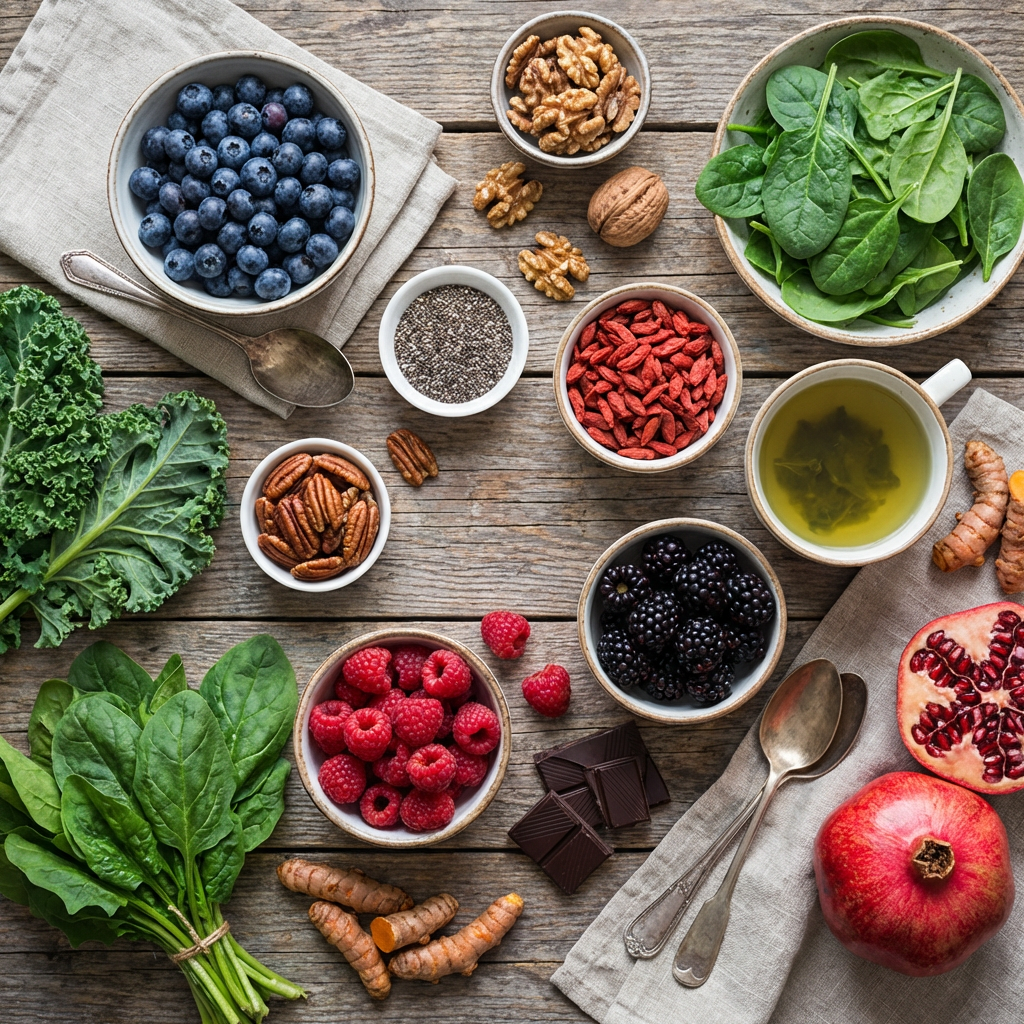
Berries are some of the most powerful sources of protective compounds in nature. They include aronia berries, blackcurrants, blackberries, black raspberries, cranberries, blueberries, strawberries, and red raspberries. Each berry offers unique benefits for your diet. These small fruits are packed with nutrients, making them great for your daily meals.
Berries are special because of their anthocyanins. These compounds give berries their deep colors. Anthocyanins protect your body from free radicals. Eating berries regularly helps keep your cells healthy and fights aging and disease.

Aronia Berries and Blackcurrants Lead the Pack
Aronia berries and blackcurrants are top choices for antioxidants. They have more antioxidants than many common fruits. Aronia berries are tart and great in juices and smoothies. Blackcurrants are also high in antioxidants and taste good with yogurt or oatmeal.
You can find these berries in several forms:
- Fresh or frozen options at specialty grocery stores
- Dried berries for snacking
- Pure juices without added sugar
- Concentrated supplements for convenience
Blueberries, Strawberries, and Raspberries for Daily Health
These everyday berries are easy to add to your diet. Blueberries are low in calories but full of nutrients. They may slow brain aging, reduce inflammation, and protect your heart.
Strawberries get their red color from anthocyanins, supporting heart health. Red raspberry and black raspberry varieties offer dietary fiber, vitamin C, and manganese. Raspberries’ anthocyanins reduce inflammation and oxidative stress.
Use these berries in practical ways:
- Mix into yogurt for breakfast
- Blend into smoothies with milk or juice
- Sprinkle over oatmeal or cereal
- Enjoy as convenient snacks
- Add to salads for color and nutrition
Since these berries are low in calories but high in antioxidants, you can eat a lot without worrying. Adding berries to your diet gives you delicious, naturally sweet foods that support your health.
Dark Chocolate and Cocoa: Delicious Antioxidant Sources
Chocolate lovers, rejoice! Dark chocolate and cocoa are packed with antioxidants. They’re great for your diet without the guilt. Unlike regular chocolate, dark chocolate has more cocoa, minerals, and antioxidants that support your health.
The cocoa flavonoids in dark chocolate act as anti-inflammatory foods. They help reduce inflammation and lower the risk of heart disease. Studies show they improve blood flow, lower blood pressure, and improve cholesterol levels. So, the antioxidants in dark chocolate are good for your heart when consumed in the right amounts.

To get the most from dark chocolate antioxidants, pick varieties with at least 70% cocoa. Higher cocoa means more antioxidants and less sugar. Quality chocolate with more cocoa is better for you.
Be mindful of portion sizes when adding dark chocolate to your diet. Aim for one to two ounces daily because it’s calorie-rich. You can also add unsweetened cocoa powder to smoothies, oatmeal, or coffee for antioxidants without extra calories.
Ways to Use Cocoa in Your Daily Routine
- Stir unsweetened cocoa powder into morning smoothies
- Sprinkle cocoa powder over Greek yogurt for a protein boost
- Mix cocoa into your coffee for an antioxidant upgrade
- Add cocoa powder to oatmeal with cinnamon
- Enjoy one to two ounces of 70% dark chocolate as an afternoon snack
| Chocolate Type | Cocoa Content | Antioxidant Level | Recommended Serving |
|---|---|---|---|
| Dark Chocolate | 70% or higher | High | 1-2 ounces daily |
| Milk Chocolate | 30-50% | Moderate | Limited amounts |
| Unsweetened Cocoa Powder | 100% | Very High | 1-2 tablespoons daily |
| Raw Cacao | 100% | Very High | 1-2 tablespoons daily |
Raw cacao is different from cocoa powder. It keeps more nutrients because it’s not heat-treated. Both are great, so pick what you like best.
Remember, dark chocolate is a treat, not a main food. Eat vegetables and fruits for most of your antioxidants. Dark chocolate is a tasty way to add to a healthy diet, showing you can enjoy good food without sacrificing health.
7 Foods and Drinks High in Antioxidants That Aren’t Green Tea
You don’t need to stick with green tea to get powerful antioxidant benefits. Many delicious foods and beverages pack even more antioxidant power than traditional green tea. Let’s explore some excellent alternatives that can boost your health and protect your cells from damage.

Matcha: The Antioxidant Powerhouse with Up to 945mg Per Cup
Matcha stands out as an exceptional source of antioxidants. This vibrant green powder delivers up to 945 milligrams of antioxidants per cup, far more than you get from regular steeped green tea. The reason is simple: you consume the entire powdered tea leaf rather than just steeping and discarding it.
Your body benefits significantly from matcha’s antioxidant content. This drink can help reduce inflammation in your body, support healthy cholesterol levels, and give you a natural boost in focus. You’ll experience sustained energy without the jittery feeling that coffee sometimes brings.
- Mix matcha powder with hot water for traditional preparation
- Blend matcha into smoothies for added nutrition
- Whisk matcha with milk for a creamy latte
Black Tea and Oolong Tea for Heart Health
Black tea and oolong tea deserve your attention for heart health. Black tea contains 62 to 100 milligrams of antioxidants per cup and offers impressive cardioprotective benefits. These black tea benefits include helping lower blood pressure and supporting your immune system.
Oolong tea sits between green and black tea in oxidation level, delivering 86 to 150 milligrams of antioxidants per cup. Oolong tea has been linked to improved cardiovascular health, better cognitive function, and reduced inflammation. This tea may also help balance blood sugar levels and protect your bones from deterioration.
| Tea Type | Antioxidant Content | Key Benefits |
|---|---|---|
| Black Tea | 62-100 mg per cup | Heart health, blood pressure support, and immune function |
| Oolong Tea | 86-150 mg per cup | Cardiovascular health, cognitive enhancement, and bone protection |
| Matcha | Up to 945 mg per cup | Inflammation reduction, cholesterol support, focus enhancement |
Kale and Leafy Greens for Maximum Nutrition
Kale ranks among the most nutrient-dense vegetables you can eat. This powerful green is rich in calcium and vitamins A, K, and C. Red varieties of kale contain even more anthocyanin antioxidants, making them valuable for your health.
Beyond kale, explore other vegetables with high antioxidant capacity. Artichokes are rich in chlorogenic acid, a powerful antioxidant compound. Red chili peppers and green chili peppers both deliver significant antioxidant power along with vitamin C. Red cabbage offers high levels of anthocyanins and vitamin C. Spinach provides lutein and zeaxanthin, which protect your eyes.
Maximize leafy greens’ nutrition by eating them raw in salads or lightly steaming them to preserve their beneficial compounds. Your body will absorb antioxidants more effectively when you include healthy fats, such as olive oil, with these vegetables.
- Add kale to smoothies or soups
- Roast red chili peppers for snacks
- Steam artichokes for a nutritious side dish
- Mix spinach into pasta dishes
- Create colorful salads with red cabbage and leafy greens
Spices, Seeds, and Nuts: Concentrated Antioxidant Sources
Your spice rack is full of hidden treasures. Spices are packed with antioxidants that can boost your nutrition. They contain polyphenols and essential oils that fight inflammation and support health.
Clove has the highest antioxidant capacity, followed by peppermint and others. This means you have many tasty options to choose from.

Adding these spices to your meals is easy. Sprinkle cinnamon on oatmeal or coffee. Use oregano and thyme in soups and roasted veggies. These small additions offer big antioxidant benefits without extra calories.
Seeds are also a great source of antioxidants. Sunflower seeds lead, followed by flaxseeds and others. Each seed variety offers unique benefits, such as healthy fats and minerals. Sprinkle them on salads or mix them into yogurt for a nutritional boost.
Nuts are also rich in antioxidants and beneficial compounds. Almonds, pecans, and walnuts are top choices. Pecans can raise antioxidant levels and lower cholesterol naturally. A small handful makes a perfect snack.
| Antioxidant Source | Top Varieties | Best Uses | Serving Size |
|---|---|---|---|
| Spices | Clove, cinnamon, oregano, thyme | Cooking, beverages, baking | 1/4 to 1/2 teaspoon |
| Seeds | Sunflower, flaxseeds, sesame, hemp | Salads, yogurt, baked goods | 2-3 tablespoons |
| Nuts | Pecans, almonds, walnuts, chestnuts | Snacks, salads, desserts | 1 ounce (small handful) |
These shelf-stable ingredients make it simple and convenient to boost your antioxidant intake. You don’t need special equipment or expensive supplements. Your pantry already has what you need to protect your cells and support long-term wellness through everyday eating.
Conclusion
You now know seven great alternatives to green tea for a diet rich in antioxidants. Berries, dark chocolate, matcha, black tea, oolong tea, leafy greens, and spices are all packed with antioxidants. Coffee-black is also a good choice if you like it. Each of these foods offers unique benefits and protects your cells.
Choosing whole foods over supplements is key. Real foods give you antioxidants in the best form. They also offer fiber, vitamins, and minerals that supplements can’t match. Eating a variety of antioxidant-rich foods helps protect you from many diseases.
Start with small changes and build lasting habits. Add berries to your breakfast or use turmeric in cooking. Enjoy dark chocolate or try matcha in the afternoon. These small steps can make a big difference over time.
Make your diet enjoyable and easy to stick to. Find foods you love. This way, eating for health becomes a natural part of your life. Your cells will thank you every day.
You have the power to shape your health with the foods you choose. Small, steady changes can lead to big results. Try one or two new foods this week. Find what you like and make healthy eating a breeze. Your future self will thank you for today’s choices.


 trim down and shape up
Leave a reply to OlRedHair Cancel reply