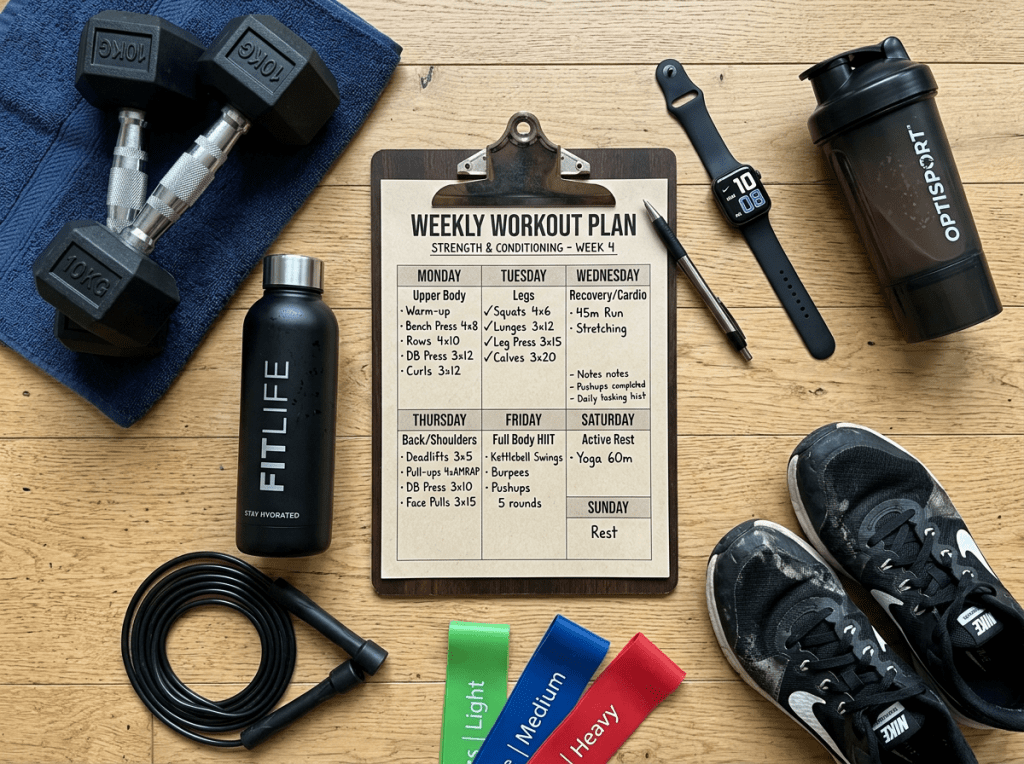


Question: Is swapping workouts every few weeks slowing your progress more than helping it?

Many people chase new moves to speed up fitness gains, but that habit can waste time and stall progress. A clear routine helps the body adapt, and steady workouts often beat random variety for lasting results.
Think about this: cardio and strength sessions respond to consistent stress. Switching plans every few weeks may prevent muscles and systems from learning and improving.
The right balance blends repetition with planned change. Keep a core routine long enough to track progress, then tweak variables in a structured way. That method protects health and helps reach goals without needless trial and error.
Key Takeaways
- Sticking with a solid routine lets the body adapt and make measurable progress.
- Frequent, random changes can waste time and stall progress toward fitness goals.
- Plan thoughtful tweaks rather than swapping workouts every few weeks.
- Combine consistent strength work with varied cardio for balanced health.
- Track results so changes target real plateaus rather than feelings of boredom.
- Structured schedules help both beginners and athletes reach long-term goals.
The Science Behind Muscle Adaptation and Growth
The body needs steady challenge and time to adapt before major gains appear.

Progressive overload is the engine of muscle and strength gains. Increase weight, add reps, or raise intensity across workouts to force adaptation. Neural gains help early progress, but a 2025 paper in Frontiers in Physiology found that those neural adaptations level off as you become more advanced.
The Role of Progressive Overload
Apply small, measurable increases in weight or reps each week. That keeps the muscle stimulus fresh and supports long-term progress in a training program.
Understanding General Adaptation Syndrome
GAS explains how stress leads to gains, then plateaus, then fatigue. The alarm phase lasts 1–3 weeks, adaptation spans 4–16 weeks, and exhaustion can appear around 12–16 weeks.
| Phase | Duration (weeks) | Focus |
|---|---|---|
| Alarm | 1–3 | Initial neural and metabolic response |
| Adaptation | 4–16 | Strength and muscle growth with structured overload |
| Exhaustion | 12–16 | Risk of stagnation or overtraining without changes |
- Research from 2019 shows mesocycles, about a month long, help muscle groups more than daily sameness.
- By six weeks, structured cycles improved strength by ~9.4%, compared with 1.5% with no variation.
Are You Changing Exercises Too Often?
Frequent program changes can break the chain of progress that consistent training builds. When the body repeats movements, skill and strength improve. Random changes stop that learning process.

Research from a 2022 review favors structured variation over constant, random change. That means planned tweaks beat impulsive swaps. If progress stalls, a targeted update to the program works better than flipping things every few weeks.
- Master movements: let the body learn each exercise before switching to the next.
- Adjust with purpose: change load, reps, or rest to push strength and fitness.
- Avoid myths: muscle confusion is not a reliable way to reach goals.
Keep a solid workout routine for several weeks, then make small, clear changes. This way, the body adapts, injuries drop, and long-term progress becomes real.
Recognizing the Signs That Your Routine Needs an Update
When progress stalls, subtle cues in daily workouts point to the need for an update.
Stalled Progress and Plateaus
Stalled Progress and Plateaus
If lifts stall for 4 to 6 weeks, adjust the weight or check form.
Track strength and weight each week. Small gains mean the program still works. No gains mean the body has adapted, and a change in training is needed.

Persistent Boredom and Lack of Motivation
Boredom often shows that the routine no longer challenges the body.
Add new cardio or swap movements to spark interest. A total-body circuit saves time while maintaining high intensity.
Overuse Injuries and Lingering Pain
Repeated strain signals the need to rotate muscle groups and add more rest days.
Monitor health closely; lingering pain means the program is causing strain. Consider changing your workout routine and reducing repetitive movements.
| Sign | Likely Cause | Immediate Action | Follow-up |
|---|---|---|---|
| No strength gains in 4–6 weeks | Adaptation or poor form | Check form, increase weight, or change reps | Plan a structured time change in the program |
| Boredom in workouts | Low variety, low challenge | Add cardio, new movements, circuit day | Rotate muscle groups weekly |
| Lingering joint or muscle pain | Overuse, inadequate rest | Reduce volume, add rest, see a clinician | Modify movements and prioritize recovery |
“Small, targeted changes beat random swaps when plateaus appear.”
- Track progress and rest to spot when to change workout.
- Use measured time change workout plans rather than impulsive swaps.
Strategic Ways to Evolve Your Training Plan
Smart progression blends familiar movements with occasional new angles to challenge the body.
Keep core moves. Hold main lifts for several weeks and increase weight or reps to build muscle. That method boosts strength while preserving skill on key movements.
Split training across days to avoid overuse. Let one muscle group rest while another works. This helps recovery and keeps workouts frequent without extra wear.

- Add targeted variety, such as chest flies or single-arm dumbbell rows, to hit muscles from new angles.
- Use 4–6-week blocks that focus on power, strength, or hypertrophy to achieve clear training goals.
- Adjust intensity and rest to vary the stimulus rather than swapping the entire routine.
| Strategy | Duration | Benefit |
|---|---|---|
| Core lifts + progressive load | 4–8 weeks | Steady strength and build muscle |
| Split training by muscle group | Ongoing | Reduces overuse, improves recovery |
| Accessory variation | 2–6 weeks | New movement angles, limits, plateaus |
| Intensity/rest manipulation | 1–3 weeks | Boosts fitness and training stimulus |
“Small, planned changes keep progress steady while protecting recovery.”
Use these approaches to change workouts smartly. They help the body adapt, sustain fitness gains, and allow progress to continue without throwing out a solid routine.
Tailoring Your Approach Based on Fitness Level
Different fitness stages demand distinct timing for tweaks to a workout plan.
Guidelines for Beginners Versus Advanced Athletes
Beginners should focus on a steady program to learn safe movements and build a base of health. Lori Diamos recommends a consistent program for 6–12 weeks to master form and habits.
Intermediate to advanced athletes may need faster shifts. Sam Yo and program designers often use 4–6 week cycles so the body keeps adapting. Advanced lifters sometimes change a workout every 3–4 weeks because muscles adapt faster.

- Follow a 4–6 week block for most training goals to preserve progress.
- Beginners: hold a routine for 6–12 weeks to learn movements and build strength.
- Advanced: rotate the stimulus every 3–4 weeks to challenge muscles and increase reps in new ways.
- Prioritize rest and clear goals; a single day of recovery helps long-term fitness.
Plan changes with purpose. Use time blocks, track progress, and only change workouts when data and goals indicate a need. That approach saves time and helps the body move forward without needless swaps.
Incorporating Seasonal Changes for Long-Term Success
Plan seasonal shifts around 13-week blocks so a core workout routine gets time to work while fresh goals reset each quarter.

Winter favors heavier strength training and higher weights to build muscle and strength. Focus on controlled lifts, increase weight cautiously, and watch form each session.
In spring, raise reps and lower rest to improve definition and cardio capacity. That switch uses progressive overload differently, keeping the body adapting.
Fall is ideal for bodyweight work or TRX sessions to allow active recovery. These lower-impact movements aid recovery, protect joints, and preserve fitness between intense blocks.
| Season | Focus (13 weeks) | Practical Tip |
|---|---|---|
| Winter | Strength & heavy weights | Prioritize compound lifts; increase weight safely |
| Spring | Hypertrophy & higher reps | Boost reps and reduce rest for muscle tone |
| Fall | Recovery & mobility | Use bodyweight or TRX; add extra rest days |
Cardio can rotate too—change route, distance, or intensity each season to avoid boredom and meet race or health goals. Use time blocks so the program matches level and recovery needs.
“Seasonal planning keeps progress steady while protecting recovery.”
Small, planned changes throughout the year allow the body to adapt, build muscle, and maintain form without uprooting a solid routine. Treat each block as a clear phase and track results week by week.
Conclusion
Progress comes from steady effort paired with well-timed adjustments to stimulus. Hold a core workout long enough to track gains, then plan small shifts to keep forward motion. This balance preserves skill and builds strength without wasting time.
Keep a clear routine and log results each day. Use data to guide training tweaks, and watch for boredom, stalled strength, or lingering pain as signs to act. A short rest or a slight change in intensity often restores momentum.
Minor tweaks beat full overhauls. Change workout elements with purpose, keep main lifts, and repeat blocks long enough to measure results. That approach makes steady progress sustainable and enjoyable.




Leave a Reply