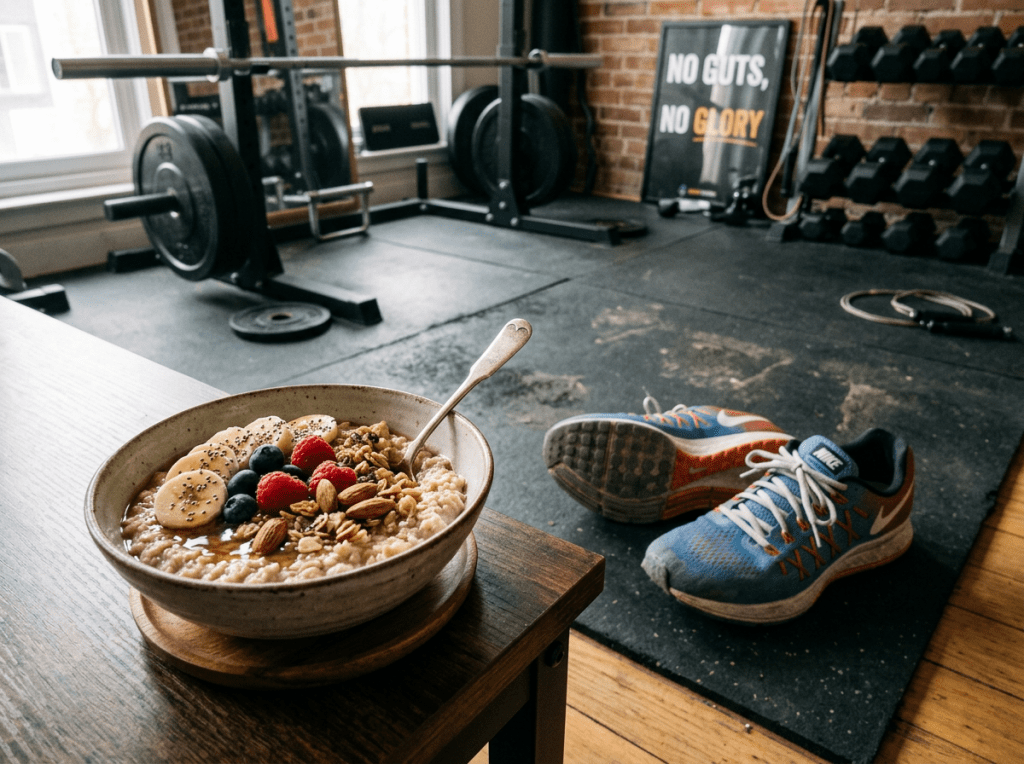


What if the time you eat oatmeal matters just as much as eating it at all?
Oatmeal is packed with nutrients that support weight management, blood sugar, and more. Many think it’s okay to eat oats at any time. But the timing can affect how your body uses them.
You can have oatmeal at any time, but the best time depends on your goal. Your body handles food differently at different times. Morning and evening oats work in unique ways, as do pre- and post-workout oats.

Oatmeal is full of complex carbs, fiber, protein, and vitamins. The fiber in oats slows down carb absorption. This leads to steady blood sugar and longer fullness. Studies show it can also lower bad cholesterol.
Knowing when to eat oatmeal can help you achieve your health goals faster. Whether it’s for weight loss, better digestion, or stable blood sugar, timing is key. This guide will help you optimize your oatmeal routine for better health.
Key Takeaways
- Oatmeal is a nutritious, versatile food that supports multiple health benefits when eaten at the right time
- The soluble fiber in oats slows carbohydrate absorption and helps control blood sugar levels
- You can enjoy oatmeal any time of day, but there may be an ideal time to eat it depending on your health goals
- Morning oatmeal, pre-workout oatmeal, and post-workout oatmeal each offer different benefits for your body
- Timing your oatmeal consumption can help with weight management, digestion, and cholesterol reduction
- People with diabetes and digestive sensitivities may need different oatmeal timing strategies
- The right timing amplifies oatmeal’s ability to promote healthy digestion and boost immunity
Why Oatmeal Timing Matters for Your Health Goals
Eating oatmeal at the right time is key to your body’s health. Your digestive system, energy levels, and metabolism change throughout the day. Knowing these changes helps you pick the best time to eat oats.
The timing of oatmeal affects digestion, weight, and blood sugar. Learning how your body processes oats at different times lets you align meals with health goals.

Understanding Oatmeal’s Nutritional Profile
Oatmeal is full of nutrients that support health. It has about 70% carbs, 18% fats, and 12% protein. Its high fiber and special compounds are what make it stand out.
Beta-glucan, a soluble fiber, makes a gel in your stomach. This gel slows digestion, keeping you full longer. It also helps keep blood sugar stable all day.
Your oatmeal bowl also gives you important nutrients:
- B vitamins for energy
- Vitamin E for cell protection
- Magnesium for muscles
- Potassium for heart health
- Zinc for immune support
- Phosphorus for bones
Oats’ complex carbs give steady energy without quick sugar spikes. This keeps your blood sugar stable, unlike refined grains.
How Your Body Processes Oats at Different Times
Your metabolism changes throughout the day, affecting how your body handles food. Knowing these changes helps you pick the best time for oatmeal.
| Time of Day | Metabolic State | Insulin Sensitivity | Oat Processing |
|---|---|---|---|
| Morning | Active metabolism with elevated cortisol | Peak insulin sensitivity | Carbohydrates are used efficiently as fuel |
| Afternoon | Moderate metabolic activity | Good insulin sensitivity | Steady nutrient absorption |
| Evening | Slowing metabolic processes | Reduced insulin sensitivity | Slower carbohydrate processing |
In the morning, your body is ready to go, with high cortisol levels. This hormone boosts metabolism and energy. Your cells are most responsive to glucose from oats, which they use efficiently.
Oats have a glycemic index of 55-60 for rolled oats and lower for steel-cut. This means they raise blood sugar slowly. Eating oats in the morning helps your body manage this gentle rise well.
By evening, your metabolism slows down. Your insulin sensitivity drops, and carb processing is less efficient. This timing affects digestion, weight, and blood sugar control.
Morning Oatmeal: The Classic Breakfast Choice
Starting your day with oatmeal is a great way to help with weight loss. Your body is most ready to work in the morning. Eating oatmeal then boosts your metabolism, helping you burn calories more efficiently.
Oatmeal in the morning is also good for maintaining stable blood sugar levels. This is because your body is most sensitive to insulin early in the day. The fiber in oats helps you feel full for longer, giving you energy for hours without a crash.

This fullness helps you avoid snacking on unhealthy foods later. You end up eating fewer calories without feeling hungry. Your body naturally eats less throughout the day because you’re full longer.
Overnight oats are a great option for busy mornings. Just soak oats in milk or yogurt the night before. You’ll have a healthy breakfast ready to go in the morning, keeping all its nutritional benefits.
- Optimal portion size: 40-60 grams of dry oats
- Pair oats with protein for better satiety
- Avoid added sugars and sweetened toppings
- Choose steel-cut or rolled oats over instant varieties
“A morning bowl of oatmeal gives you the sustained energy you need to power through your day without reaching for unhealthy snacks.”
Choosing oatmeal for breakfast sets a positive tone for your day. It helps with weight loss, keeps blood sugar stable, and gives you energy until lunch. The morning is the best time to eat oatmeal because it aligns with your body’s natural rhythms.
The Best Time to Eat Oatmeal for Digestion, Weight Loss, and Blood Sugar Control
When you eat oatmeal can affect how your body uses it. Your goals, such as better digestion or weight loss, help determine the best time. Eating oatmeal at any time of day supports digestion. But timing it right can boost weight loss and blood sugar control.
A good serving size is 40-60 grams of dry oats. This equals about 150-220 grams of cooked porridge. It offers great nutrition without overwhelming your stomach.

Optimal Timing for Better Digestion
The best time for digestion isn’t set in stone. You can eat oatmeal at any time to help your gut. The fiber in oats feeds good bacteria in your intestines, helping digestion all day.
But people with IBS might feel differently. Some with diarrhea symptoms might feel worse. If oatmeal upsets your stomach, try smaller amounts or different times to see what works for you.
- Eat oatmeal with enough water for better digestion
- Start with small portions if your stomach is sensitive
- Wait 2-3 hours after eating oatmeal before intense exercise
- Combine oats with fruits for extra digestive benefits
When to Eat Oats for Maximum Weight Loss Benefits
Eating oatmeal in the morning is best for weight loss. It keeps you full all day, helping you avoid extra snacks. This helps you eat less at lunch and dinner.
Don’t forget about eating oatmeal in the afternoon. Between 2-3 PM, it stops cravings for sweets and caffeine. This helps avoid the energy drop that often happens in the late afternoon.
| Timing Window | Weight Loss Benefit | Best Use Case |
|---|---|---|
| Early Morning (6-8 AM) | Controls appetite all day | Busy professionals, frequent snackers |
| Midday (2-3 PM) | Crushes afternoon cravings | Office workers, sweet-tooth individuals |
| Post-Workout | Supports muscle recovery and metabolism | Active individuals, fitness enthusiasts |
Ideal Times for Blood Sugar Management
Eating oatmeal in the morning is best for blood sugar control. Your body is most sensitive to insulin when you wake up. This is great for managing blood sugar, whether you have prediabetes or diabetes.
Morning oatmeal keeps your blood sugar stable for hours. The fiber in oats slows down how quickly your body absorbs glucose. This helps your pancreas work better, protecting your metabolic health all day.
“Eating oatmeal in the morning aligns with your body’s natural insulin sensitivity, providing the best protection for blood sugar stability.”
Find the best timing for you by listening to your body. Pay attention to how you feel at different times. This helps you choose the best time for your health needs.
Pre-Workout Oatmeal for Sustained Energy
Eating oatmeal 1-2 hours before your workout is key. It gives your body the fuel to perform better. Oats are complex carbs that release energy slowly, keeping you strong.
Complex carbs break down slowly, giving your muscles steady glucose. This avoids the energy crashes from simple sugars. You stay energized throughout your workout.

A 40-50g oatmeal serving has about 25-30g carbs. This fuels you for 45-90 minutes of exercise. You can run, cycle, or swim harder without feeling tired.
Short on time? Eat a smaller portion of oatmeal 30-45 minutes beforehand. Or, make overnight oats the night before. These options are easy to digest and won’t make you feel heavy.
- Eat 40-50g of oats 1-2 hours before exercise
- Enjoy a smaller portion 30-45 minutes before workouts
- Try overnight oats for quick, easy digestion
- Combine oats with protein for better results
- Avoid simple sugars that cause energy crashes
Your pre-workout meal is crucial. Oatmeal provides the complex carbs your muscles need. It ensures sustained energy for your workout.
Post-Workout Oatmeal for Recovery and Muscle Repair
After a tough workout, your body needs to recover fast. Your muscles are tired, and your energy is low. That’s why eating oatmeal after exercise is key. It helps refill your energy stores and aids in muscle repair.
Your glycogen stores are empty after training. Oatmeal quickly replenishes them with complex carbs. Adding protein to your oatmeal makes it even better for muscle recovery and building.

Combining Oats with Protein for Better Results
Protein is the secret to good post-workout nutrition. Oats give you carbs, but adding protein makes them even better. This combo helps your muscles repair and grow faster.
Here are some great protein pairings:
- Greek yogurt with oatmeal and berries
- Oatmeal mixed with whey protein powder
- Oat porridge topped with scrambled egg whites
- Steel-cut oats with cottage cheese and fruit
For most, a 3:1 or 4:1 carb-to-protein ratio works best after cardio. After strength training, more protein helps your muscles heal.
Timing Your Post-Exercise Oatmeal
Eat your oatmeal within 30 to 60 minutes after your workout. Your muscles absorb nutrients most effectively during this time. It’s important for muscle recovery.
Make things easy by preparing ahead:
- Overnight oats with protein powder prepared the night before
- Instant oatmeal packets paired with Greek yogurt cups
- Pre-cooked oatmeal portions you can quickly reheat
- Blended oat smoothies with protein powder and fruit
Your post-workout oatmeal helps you reach your fitness goals. It combines the right timing of nutrition with delicious, whole foods.
Afternoon and Evening Oatmeal: What You Need to Know
Many people feel tired around 2 to 3 PM. They often crave sugar and caffeine. A small bowl of oatmeal can help a lot. It gives your brain the energy it needs without reaching for unhealthy snacks.

Eating oats in the afternoon helps fight cravings with real food. You get steady energy instead of a crash. This is because oats digest slowly, keeping you full until dinner.
Evening oatmeal is a topic of debate. But it’s not forbidden. What’s important is portion control and timing. If you’re hungry in the evening, a small bowl of porridge is better than junk food or sweets.
Oats have tryptophan and melatonin, which help with sleep. Some people find it helps them relax before bed. But eating too much in the evening can lead to weight gain because your metabolism slows down.
| Timing | Portion Size | Best For | What to Avoid |
|---|---|---|---|
| Afternoon (2-3 PM) | 1 cup cooked oats | Fighting energy slump and cravings | Adding sugary toppings |
| Evening (2-3 hours before bed) | 30-40g dry oats | Hunger management and sleep support | Large servings close to bedtime |
For evening oatmeal to be effective, eat it 2 to 3 hours before bed. Keep your portion small. Avoid honey, banana, and dried fruit. Instead, try cinnamon, unsweetened almond milk, or nuts for flavor without extra sugar.
- Afternoon oats stop cravings mid-shift
- Evening oatmeal supports sleep quality when portioned right
- Portion control makes the difference between benefit and weight gain
- Timing your nighttime eating prevents metabolism slowdown issues
The secret to enjoying oatmeal all day is being mindful. Eat when you’re hungry, not out of habit. Choose small portions of plain oats with light toppings. This way, you can enjoy oatmeal while keeping your sleep and weight goals in check.
Oatmeal Timing for Different Health Conditions
People with certain health conditions need to consider when and how they eat oatmeal. Your body’s needs change based on your health, including conditions like diabetes, digestive health, or food sensitivities. Knowing how timing affects your situation helps you enjoy oatmeal’s benefits without symptoms.

Best Timing for People with Diabetes
If you have diabetes, eating oatmeal is key to stable blood sugar. Eating oatmeal at breakfast or mid-morning is best. This is when your body’s insulin sensitivity is highest.
Rolled oats and steel-cut oats have a glycemic index of 55-60. This means they won’t raise your blood sugar as quickly as refined foods do. Instant oatmeal, on the other hand, can raise blood sugar quickly. So, it’s best to avoid it if you have diabetes.
Here’s how to make your oatmeal diabetes-friendly:
- Choose wholegrain or minimally processed oats
- Skip sugar, honey, and sweet toppings
- Add protein like Greek yogurt or nuts
- Include healthy fats such as nut butter or seeds
- Talk with your doctor about portion sizes right for you
The soluble fiber in oats, called beta-glucan, helps manage blood sugar. Adding protein and fats slows digestion. This makes blood glucose levels rise more gently.
When to Eat Oats with Digestive Sensitivities
Oatmeal can affect people differently, depending on their digestive systems. While beta-glucan is good for most gut microbiomes, some with IBS might find it hard to digest. If you have diarrhea-predominant IBS, oatmeal could worsen symptoms.
Start small if you have IBS or other digestive issues:
- Begin with a quarter cup of well-cooked, soft oats
- Monitor your body’s response for bloating or discomfort
- Eat oatmeal when you can observe how it affects you
- Gradually increase your portion only if you tolerate it well
- Contact your gastroenterologist if symptoms worsen
Many with IBS can handle small amounts of gentle, cooked oats without issues. Listen to your body’s response to oatmeal.
If you have celiac disease or non-celiac gluten sensitivity, regular oats are not safe. While oats are naturally gluten-free, commercial processing often mixes them with gluten-containing grains. Look for certified gluten-free oats processed on dedicated lines.
| Health Condition | Best Oat Type | Ideal Portion | Best Timing | Key Consideration |
|---|---|---|---|---|
| Diabetes | Steel-cut or rolled oats | As directed by your doctor | Breakfast or mid-morning | Pair with protein and healthy fats for glycemic control |
| IBS (diarrhea-predominant) | Well-cooked, soft oats | Start with 1/4 cup | When you can monitor your response | Increase slowly or avoid if symptoms worsen |
| Celiac Disease | Certified gluten-free oats | 50-70g maximum daily | Any time that suits you | Must verify dedicated processing lines |
| Non-Celiac Gluten Sensitivity | Certified gluten-free oats | As tolerated | Any time that suits you | Avoid cross-contaminated products |
People with celiac disease should limit oatmeal to 50-70 grams daily, even with gluten-free varieties. Your digestive system needs time to heal. Your healthcare provider can suggest safe amounts for you.
Work closely with your doctor, registered dietitian, or gastroenterologist to find the right timing and portions for your body. Your health condition deserves personalized guidance, not general rules.
Common Mistakes When Timing Your Oatmeal Consumption
Many people think oatmeal is a quick way to lose weight and get healthy. But, this isn’t true. Oatmeal can help control hunger as part of a balanced diet, but it does not magically burn fat. Adding honey, nuts, dried fruit, and a banana can make your oatmeal too high in calories. This can undermine your weight-loss goals.
Choosing between instant oats and steel-cut oats is important. Instant oats are processed and have finer flakes that digest quickly. They also have added sugars, salt, and artificial flavors. Steel-cut oats, on the other hand, take longer to cook but are better for your health because they have more fiber.

Eating too much oatmeal before bed is a common mistake. A big bowl of oatmeal with sweet toppings close to bedtime can make you feel heavy. This is bad for people with insulin issues. Eat smaller portions of oatmeal in the evening and wait at least two hours before bed.
Athletes should also be careful with their oatmeal timing. Eating high-fiber oats before big events can cause stomach problems. Plan your oatmeal intake around your training, not against it.
| Common Mistake | What Happens | Better Approach |
|---|---|---|
| Adding excessive toppings | Turns 150-calorie oats into a 600-700-calorie meal | Use 1-2 toppings maximum with measured portions |
| Choosing instant oats with added sugars | Blood sugar spikes and quick energy crashes | Select steel-cut or rolled oats without added sugars |
| Eating large portions before bed | Elevated overnight blood glucose levels | Eat 2+ hours before sleep with modest portions |
| Consuming oats before competitions | Digestive problems during your event | Eat oats 3+ days before endurance activities |
How you prepare your oatmeal is just as important as when you eat it. Check your oatmeal labels for added sugars and unwanted ingredients. Cooking steel-cut oats correctly can unlock their health benefits. Pair oatmeal with a source of protein, such as Greek yogurt or eggs, to help keep your blood sugar stable. Don’t rely on oatmeal alone for weight loss. Use it as part of a balanced diet.
Conclusion
The timing of oatmeal really affects how you benefit from it. Eating oatmeal at the right time helps your body absorb its nutrients and fiber more effectively. Eating it in the morning or before working out is best for most people.
These times help you stay energized, control your appetite, and keep your gut healthy. Your own schedule and health goals guide when you should eat oatmeal.
There’s no perfect time to eat oatmeal for lowering cholesterol. What’s key is eating it regularly. The beta-glucan in oats works best when it’s a regular part of your diet.
Eating oatmeal in the evening is okay if you have a small, unsweetened portion a few hours before bed. If you’re new to oatmeal, try soaking 40 grams of wholegrain oats in plain yogurt overnight. Add berries in the morning. This simple method makes a great breakfast in just two minutes the night before.
Your health conditions affect the best way to eat oatmeal. If you have diabetes, celiac disease, or digestive issues, talk to a doctor or dietitian. They can help you find the right form and amount of oats for your needs.
Getting the timing right is a small change that can make a big difference. Start with what works for you and adjust as you learn what’s best for your body.




Leave a comment