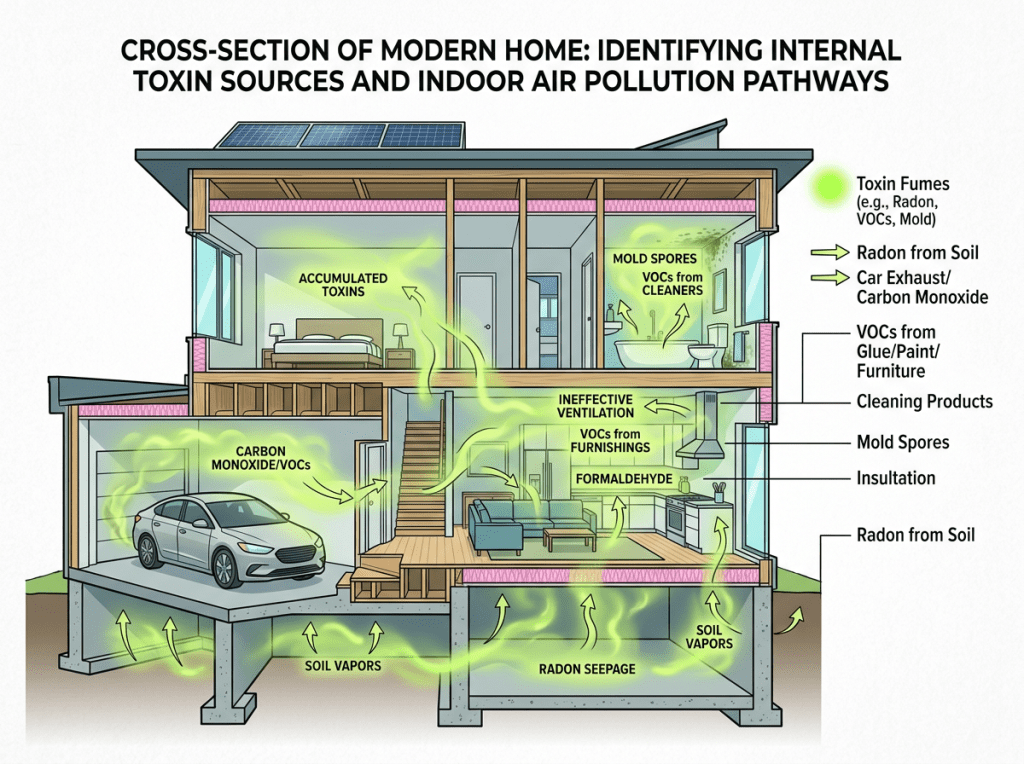


Have you ever thought about the dangers in your home? It’s a scary idea, but could you be using, or even consuming, cancer-causing chemicals?
Dr. Andrew Salner stresses the importance of awareness against environmental threats. Many everyday items contain synthetic compounds that can harm your health.

Knowing about these hidden dangers lets you take steps to improve your home’s air. Making small changes can greatly reduce your exposure to harmful substances.
Key Takeaways
- Awareness serves as the first line of defense against environmental toxins.
- Common household items often contain hidden synthetic compounds.
- Improving indoor air quality significantly reduces long-term health risks.
- Small, proactive lifestyle changes lead to a safer living environment.
- Understanding product labels helps avoid exposure to dangerous substances.
Understanding Environmental Carcinogens in Your Living Space
Knowing the hidden dangers in your daily life is key to a healthier you. Environmental carcinogens are substances that can raise your cancer risk through prolonged exposure at home. Even though they’re often unseen, spotting them is crucial for your health.
Many consumer health groups have looked into household items. They found that some contain carcinogens, or cancer-causing ingredients. Remember, it’s not the occasional use that’s the problem. It’s the cumulative exposure over the years that’s the real worry.

By spotting these risks, you can make better choices for your home. Taking action now helps create a safer sanctuary for you and your family. This knowledge will help you check the safety of your surroundings every day.
7 Things You Didn’t Know In Your Home That Can Cause Cancer
Common household items might be harming your health. Knowing these hidden dangers is key to a safer home. Here are the prime products to send packing, along with safer replacements to substitute:

Many everyday items have chemicals that could be risky. Making small changes can greatly reduce harm. Awareness is your most powerful tool in finding toxins in your home.
The table below lists common dangers in many American homes. Use it to check your kitchen, bedroom, and storage areas.
| Category | Potential Hazard | Safer Alternative |
|---|---|---|
| Cookware | Nonstick (PFOA) | Cast Iron or Stainless Steel |
| Mattresses | Chemical Flame Retardants | Organic Wool or Natural Latex |
| Cosmetics | Phthalates and Parabens | Certified Organic Beauty Brands |
| Food Storage | Bisphenol A (BPA) Plastics | Glass or Stainless Steel Containers |
| Wall Paint | High VOC Finishes | Low-VOC or Zero-VOC Paints |
Changing to a healthier home is doable. Start by replacing one thing at a time. This way, your family stays safe without feeling stressed. Remember, here are the prime products to send packing, along with safer replacements to substitute, to keep your home clean and safe.
Nonstick Cookware and Perfluorooctanoic Acid
Your kitchen might be hiding a secret danger in your favorite nonstick cookware. These tools are convenient, but pots, pans, and other cookware made with a nonstick coating (Teflon) have been controversial for many years. The main chemical in nonstick coatings is perfluorooctanoic acid, which is known to cause cancer.

The Risks of Teflon Coatings
The main worry with traditional nonstick surfaces is PFOA. This substance is called a “forever chemical” because it doesn’t break down. It can build up over time, causing health problems that many people don’t know about.
“The greatest wealth is health, and the choices we make in our daily lives, including the tools we use to prepare our food, are the foundation of our well-being.”
When these pans get too hot, the coating can start to break down. This can release toxic fumes into your air. It’s important to handle nonstick cookware carefully to avoid these harmful substances.
Safer Alternatives for Your Kitchen
Switching to a healthier kitchen doesn’t mean you have to give up performance. There are many safe options that don’t use synthetic coatings. If you’re looking for a safer substitute, glass, cast iron, copper, and ceramic or porcelain-coated pans are all safe.
These materials cook well and last long without the risk of chemicals leaking. By choosing them, you make your kitchen safer for your family. It’s a simple way to make your home healthier.
Flame Retardants in Modern Mattresses
Your bedroom should be a safe haven, but hidden chemicals in your furniture might harm your health. While you focus on comfort and support, 2. mattresses often contain synthetic additives for safety. These additives are added to slow down fires, coating mattresses with chemicals we breathe in at night.

How Chemicals Migrate from Furniture to Air
These flame-retardant substances don’t stay locked inside forever. Over time, they break down and release into the air, a process called off-gassing. As these particles become airborne, they settle into household dust or remain suspended in the air you breathe every night.
“Indoor air quality is a critical component of public health, yet we often overlook the chemical footprint of the very items we use to rest and recover.”
— Environmental Health Expert
Prolonged exposure to these chemicals can be concerning for your respiratory system. Since you spend roughly one-third of your life in bed, minimizing your contact with these additives is a proactive step toward a healthier home.
Selecting Healthier Bedding Options
You can take control of your sleep environment by choosing products made from natural, non-toxic materials. Look for certifications such as GOTS (Global Organic Textile Standard) or OEKO-TEX, which ensure materials are free from harmful substances. Investing in high-quality, natural 2. mattresses is an effective way to reduce your chemical exposure.
| Material Type | Common Additives | Health Consideration |
|---|---|---|
| Synthetic Foam | Chemical Flame Retardants | High off-gassing potential |
| Organic Cotton | None | Breathable and natural |
| Natural Latex | None | Naturally fire-resistant |
| Wool | None | Inherently flame-resistant |
By prioritizing natural fibers like wool, organic cotton, and natural latex, you create a safer space for rest. These materials offer comfort without the need for synthetic chemical coatings. Making the switch is a simple yet powerful change for your long-term well-being.
Hidden Carcinogens in Your Cosmetics Bag
The products you use every day might harm your health over time. 3. Cosmetics often have hidden ingredients that need your attention. Your makeup and medicine could be toxic, with chemicals that cause cancer.

Identifying Phthalates and Heavy Metals
Many beauty products use synthetic additives for texture, scent, and lasting power. Phthalates help fragrances stay on your skin longer. But they can disrupt hormones and cause health problems.
Heavy metals like lead, arsenic, and mercury can also be in products. They can enter your bloodstream through your skin. Awareness is your first line of defense against these invisible threats.
“The skin is the largest organ of the body, and what we put on it matters just as much as what we put in it.”
— Anonymous Health Advocate
Transitioning to Natural and Organic Beauty Products
Switching to safer products is a step towards a healthier life. Now, many natural beauty companies offer products without harmful chemicals. Their ingredients are clearly listed, and they don’t contain phthalates, heavy metals, or other toxins.
When buying, look for third-party certifications that show the ingredients are pure. You don’t have to change everything at once. Just replace items as they finish. Choosing clean beauty helps your daily habits support your health rather than harm it.
| Ingredient Type | Common Use | Potential Risk |
|---|---|---|
| Phthalates | Fragrance fixative | Endocrine disruption |
| Lead | Color pigment | Neurotoxicity |
| Parabens | Preservative | Hormonal imbalance |
The Dangers of Bisphenol A in Plastics
Bisphenol A, or BPA, is a term you’ve probably heard a lot about. It’s made many families feel confused and worried. But knowing the truth is the first step to a safer home. You should understand how these materials affect your daily life.

This chemical is a synthetic estrogen that acts like natural hormones in your body. It can mess with your body’s chemical balance. That’s why experts warn about its presence in everyday items.
Understanding the Link to Reproductive Health
Studies show that long-term exposure to BPA can harm your health. It’s linked to reproductive problems, heart disease, and some cancers. These chemicals can disrupt your hormones, affecting your health in ways you might not see right away.
These chemicals can get into your body through food and drinks in low-quality containers. Heating these items can make the chemicals leak out more. It’s crucial to limit your contact with these materials for a healthy home.
Practical Tips for a Plastic-Free Home
Reducing 4. Plastic use starts in your kitchen. Look for “BPA-free” labels on new items. This simple step helps you avoid harmful additives.
Here are some ways to make your home safer:
- Switch to stainless steel or glass water bottles.
- Use a filtered water pitcher or faucet attachment instead of bottled water.
- Heat food in glass or ceramic containers, not plastic.
- Replace old plastic containers with tempered glass sets.
| Material Type | Safety Level | Best Use Case |
|---|---|---|
| Glass | High | Microwaving and long-term storage |
| Stainless Steel | High | Portable water bottles and lunchboxes |
| Ceramic | High | Serving hot meals and reheating food |
| Standard Plastic | Low | Avoid for food contact or heating |
Garden and Lawn Chemicals and Their Long-Term Effects
Did you know that the chemicals used in your garden can harm your health? A well-kept lawn is something many people are proud of. But, 5. Garden & lawn chemicals often contain harmful substances. These chemicals can stay in your soil and air for a long time.
They are meant to kill pests, but they can also harm human cells. This is a serious concern for anyone who loves gardening.

Pesticides and the Risk of Neurological Issues
It’s important to know that several common ingredients in pesticides and weed killers have been linked with cancer and parkinson’s. These chemicals can affect your nervous system over time. They can get into your home on shoes or pet paws.
A study from 2009 showed a link between brain cancer and these toxins. Whether you use herbicides and fungicides, either at home or at work, the risks add up. This can harm your health in the long run.
“The environment is where we all meet; where all have a mutual interest; it is the one thing all of us share.”
— Lady Bird Johnson
Organic Gardening and Natural Pest Control
Changing to a healthier lifestyle starts with your garden. Try gardening organically and pulling weeds by hand to avoid harmful sprays. This way, you can create a healthy soil ecosystem. It naturally keeps weeds and pests away.
If pests show up, use natural repellents like vinegar, essential oils, or diatomaceous earth. These methods are safe for your family and keep your home free from harmful chemicals. Here’s how these methods compare.
| Feature | Conventional Care | Organic Care |
|---|---|---|
| Chemical Residue | High | None |
| Soil Health | Degraded | Improved |
| Health Risk | High | Low |
| Maintenance | Fast/Easy | Manual/Consistent |
Volatile Organic Compounds in Household Paints
Choosing the right paint for your walls can affect your indoor air quality. Many people focus on color and finish, ignoring the chemicals in the paint. Making smart choices is key to a healthy home.

Why VOCs Are Hazardous to Indoor Air Quality
Paints, varnishes, waxes, and some cleaning supplies contain volatile organic compounds (VOCs), which are known to cause cancer. These chemicals are not just a problem when you apply them. The EPA says they can stay in the air long after drying.
These compounds can make your air worse by off-gassing into your home. Good ventilation is crucial during and after painting. Even if the smell goes away, tiny particles can still be around.
Choosing Low-VOC and Eco-Friendly Finishes
You don’t have to give up quality to be safe. Look for paints that are safe without losing durability or coverage. A safer choice: paints labeled “low-VOC” are safer than regular paints.
Choosing 6. voc paint alternatives is a smart move to cut down on toxins. These paints are made to release fewer chemicals. By picking these finishes, you make your home a cleaner and safer place for your family.
The Silent Threat of Radon Gas
Did you know a silent, invisible danger might be hiding under your floor? This threat is radon, an odorless, radioactive gas produced by the decay of soil and rock. Since it has no color or smell, you can’t find it without special tools.
Why Radon Is the Leading Cause of Lung Cancer After Smoking
Radon is the top lung cancer cause in the U.S. after smoking. The Environmental Protection Agency has studied this issue a lot. They found that many homes have high radon levels.
Almost one in three homes in seven states have radon levels over 4 pCi/L. This is the EPA’s safe level for radon.
“Radon gas is a serious public health concern that requires proactive testing in every home,”
health safety experts warn.
Professional Mitigation and Detection Strategies
There’s no safe alternative to radon; you don’t want it in your home. If your test shows high levels, act fast to keep your air clean.
Removing it needs professional radon mitigation. Experts use specialized systems to remove the gas beneath your home. This keeps your family’s air safe and healthy.
Creating a Non-Toxic Sanctuary for Your Family
You can make your home a safe space by making wise choices every day. It might seem hard, but start with small steps. Listening to a sickle cell fireside chat can give you ideas for keeping your home safe.
Watching educational videos lets you share what you learn with your family. If you need to think about something, just pause the video. You can also skip forward 5 seconds to get to the next helpful tip.
By focusing on your family’s health, you make your home safer for the future. Here are some easy ways to keep your sanctuary clean:
- Read labels before buying cleaners or furniture.
- Improve ventilation by opening windows to let out stale air.
- Choose natural materials like cotton, wool, or wood for your home.
- Dust surfaces often to keep chemicals away.
Every choice you make helps create a healthier home. Stay consistent and informed to make your home a safe haven.
Conclusion
Your journey to a healthier home begins with simple choices. You don’t need to throw away everything. It’s about changing how you see your space.
Making small changes can add up over time. Knowing what’s in your cleaning and beauty products is key. This knowledge helps you make your home safer for your family.
Start by picking one area of your home to check. Maybe it’s your beauty products or the air inside. Every change you make helps lower risks. You can make your future healthier with these small, consistent steps.



Leave a Reply