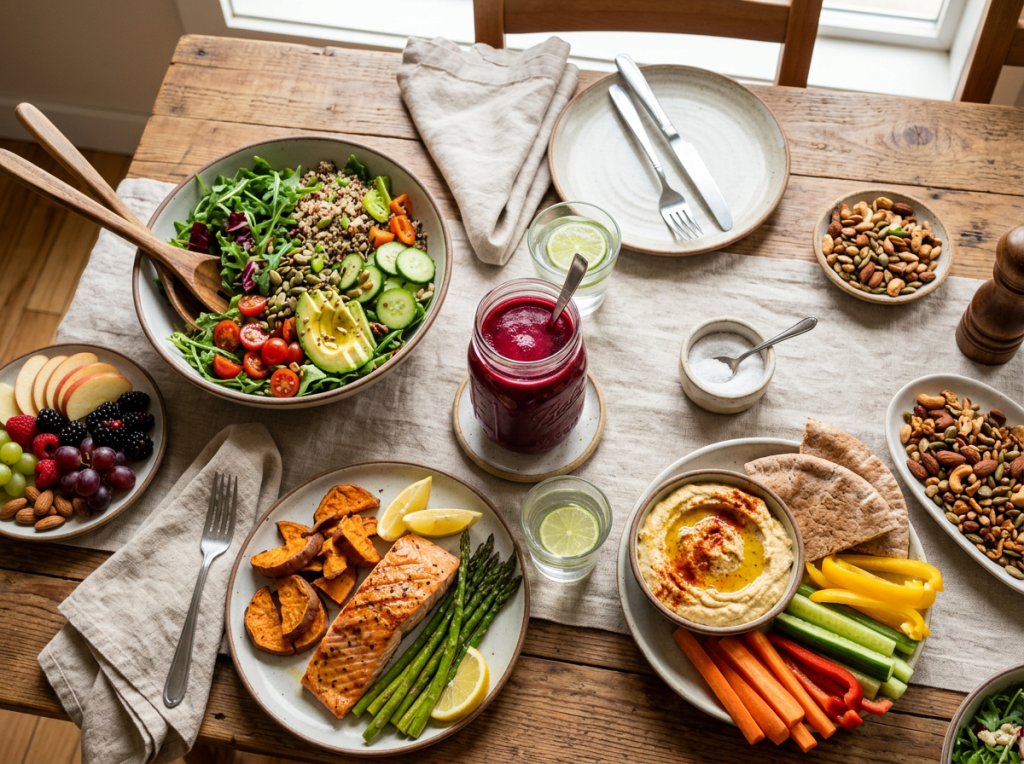


Ever thought about managing blood pressure through food instead of pills? A natural approach can be more effective. This article highlights 8 foods and drinks that are better than supplements for lowering blood pressure. These foods are rich in nutrients like potassium, magnesium, and omega-3 fatty acids.
Discover how these foods can improve your health. They also contain dietary nitrates and polyphenols. These nutrients can make a big difference in your well-being.
By reading on, you’ll see why eating patterns and lifestyle changes matter. Adding these foods to your diet can help keep your blood pressure healthy. It also supports your heart’s health. Get ready to make your diet more delicious and beneficial!

Key Takeaways
- Whole foods can effectively lower blood pressure compared to supplements.
- Potassium and magnesium play crucial roles in blood pressure management.
- Consistent eating patterns are essential for long-term health.
- Incorporating omega-3 fatty acids can improve blood vessel function.
- Dietary nitrates found in certain foods can help relax blood vessels.
The Best Natural Approach to Supporting Healthy Blood Pressure
Managing blood pressure starts with the right foods. The best way is to eat whole foods rather than supplements. Whole foods give you nutrients, fiber, and plant compounds that help your heart. They balance sodium, relax blood vessels, and fight inflammation.
It’s important to eat regularly. Eating healthy foods only sometimes won’t help much. Adding exercise, reducing sodium intake, and losing weight also help maintain healthy blood pressure.
Why Whole Foods Outperform Dietary Supplements
Whole foods have many benefits that supplements don’t. Here’s why they’re better:
- They have essential nutrients that work well together.
- They’re full of fiber, which is good for your digestion.
- They’re natural sources of antioxidants that fight inflammation.
- They help your blood vessels stay healthy.
Importance of Consistent Eating Patterns Coupled with Lifestyle Changes
Eating the same way every day is key for managing blood pressure. Here’s what to do:
- Eat a variety of whole foods every day.
- Stay active with regular exercise.
- Watch and cut down on sodium.
- Work on losing weight if you need to.
By using these methods, you can manage blood pressure naturally. Eating whole foods and making lifestyle changes can greatly improve your heart health.
Leafy Greens: Potassium and Magnesium Powerhouses
Leafy greens are key for keeping blood pressure healthy. They are full of potassium and magnesium. These nutrients help balance sodium in your body. This balance makes blood vessels relax, improving circulation and heart health.
How Leafy Greens Balance Sodium and Relax Blood Vessels
Potassium and magnesium fight sodium’s effects. Potassium helps remove excess sodium, lowering blood pressure. Magnesium relaxes blood vessels, improving blood flow and reducing the risk of hypertension.
Popular Leafy Greens to Include in Your Diet
Adding a variety of leafy greens to your meals is good for your health. Here are some favorites:
- Spinach: Full of potassium and magnesium, spinach is great in salads, smoothies, or cooked dishes.
- Swiss Chard: Nutrient-rich, Swiss chard is tasty sautéed or in soups.
- Collard Greens: Rich in vitamins, collard greens are perfect steamed or in wraps.
- Beet Greens: Often ignored, beet greens are nutritious and can be used like spinach.
- Arugula: This peppery green adds flavor to salads and sandwiches, providing essential nutrients.
To get the most benefits, eat at least 1 cup of cooked leafy greens or 2 cups of raw leafy greens every day. You can enjoy them in many ways, such as:
- Sautéing with garlic and olive oil.
- Tossing into fresh salads.
- Blending into smoothies for a nutrient boost.
- Baking as crispy kale chips.

Beans and Legumes: Fiber-Rich Foods That Lower LDL and Inflammation
Beans and legumes are packed with soluble fiber. This fiber is key in lowering “bad” LDL cholesterol and reducing inflammation. Both are crucial for managing blood pressure well. Adding these fiber-rich foods to your diet helps your heart and keeps blood vessels healthy.
These foods also prevent blood sugar spikes. This is important for keeping blood vessels flexible and healthy. Eating beans and legumes regularly can greatly improve your health.

Here are some popular types of beans and legumes you can add to your meals:
- Black beans
- Chickpeas
- Edamame
- Kidney beans
- Lentils
You can easily add these foods to your diet. Try them in salads, soups, or as spreads. This variety will improve your meals and provide health benefits from soluble fiber.
In summary, beans and legumes are great for lowering LDL cholesterol and reducing inflammation. Including them in your diet supports your heart health and keeps blood sugar levels steady.
Berries: Anthocyanin-Rich Superfoods for Blood Vessel Health
Berries are vibrant superfoods that greatly benefit your blood vessel health. They are rich in anthocyanins, which are key to managing blood pressure. These colorful fruits have a special type of polyphenol called anthocyanins. They give berries their red, purple, or blue color.
Anthocyanins help increase nitric oxide in your blood. This causes blood vessels to relax and dilate. This natural process helps keep your blood pressure healthy.
Role of Polyphenols in Blood Pressure Management
Polyphenols, like anthocyanins, are vital for heart health. They improve blood flow and lower blood pressure. Eating berries regularly can offer these benefits.
Adding them to your diet is a simple way to support your heart.
Most Effective Berry Choices to Add to Your Meals
Adding different berries to your meals can boost their health benefits. Here are some top picks:
- Blackberries
- Blueberries
- Cranberries
- Raspberries
- Strawberries
You can enjoy these berries fresh, add them to oatmeal, or blend them into smoothies. Their taste and health benefits make them a great addition to any meal.
| Berry | Key Benefits | Best Ways to Enjoy |
|---|---|---|
| Blackberries | High in vitamin C and fiber | In smoothies or as a snack |
| Blueberries | Rich in antioxidants | In yogurt or salads |
| Cranberries | Supports urinary health | In juices or dried |
| Raspberries | High in fiber and vitamins | In desserts or smoothies |
| Strawberries | Boosts immune system | In salads or as a snack |

Low-Fat Yogurt and Milk: Calcium, Potassium, and Magnesium Benefits
Low-fat yogurt and milk are rich in important minerals such as calcium, potassium, and magnesium. These minerals help control blood pressure. Calcium keeps sodium levels in check and reduces water retention. Potassium helps relax blood vessels, which lowers blood pressure. Magnesium helps the heart beat right and improves blood flow.
Adding these dairy items to your diet can boost your mineral intake and heart health. Here are some ways to enjoy low-fat yogurt and milk:
- Mix low-fat yogurt with fresh herbs to create a flavorful dip.
- Add yogurt to stews or curries for creaminess and nutrition.
- Enjoy low-fat milk in smoothies with fruits and vegetables.
- Top yogurt with nuts and berries for a nutritious breakfast.

Regularly eating low-fat yogurt can lower your systolic blood pressure. Including these dairy products in your meals supports a heart-healthy diet. Enjoy the benefits of calcium, potassium, and magnesium to balance sodium and improve your heart health.
Oats and Whole Grains: Fiber and Polyphenols for Healthier Arteries
Oats and whole grains are key for heart health. They are full of fiber, magnesium, and potassium. These nutrients help keep arteries healthy and control blood sugar.
Whole grains also contain polyphenols such as ferulic acid. These help relax blood vessels and boost heart function.
Adding various whole grains to your diet is beneficial. They are rich in fiber, which lowers cholesterol and stabilizes blood sugar. Here’s how whole grains benefit your health:
How Whole Grains Support Blood Vessel Relaxation and Blood Sugar Control
- Fiber lowers LDL cholesterol, helping keep arteries healthy.
- Magnesium and potassium help control blood pressure.
- Polyphenols, like ferulic acid, relax blood vessels.
Examples of Heart-Healthy Whole Grains to Incorporate
Try these whole grains in your meals:
- Oats
- Barley
- Brown rice
- Buckwheat
- Quinoa
- Whole rye
- Whole wheat
Begin with oatmeal for breakfast, use whole-grain bread for sandwiches, or add quinoa as a side. These whole grains can improve your heart health and help control blood sugar.

Fatty Fish: Omega-3 Rich Sources That Improve Blood Vessel Function
Fatty fish are rich in omega-3 fatty acids, a healthy type of fat. These fats are great for your blood vessels and help make nitric oxide. Nitric oxide causes blood vessels to relax, which can lower blood pressure and improve heart health.
Eating fatty fish regularly is a smart move. Try to have at least two servings a week, about 3.5 ounces each. Here are some top picks:
- Anchovies
- Herring
- Mackerel
- Salmon
- Sardines
These fish are not just good for your heart. They also taste great. Grill or bake them with herbs and olive oil. This way, you keep their nutrients and make your meals tasty.

Adding fatty fish to your diet is a natural way to improve your health. It’s a simple change that can make a big difference for your heart.
Nuts and Seeds: Compact Nutrient-Dense Foods for Blood Pressure Control
Nuts and seeds are small but mighty for healthy blood pressure. They are full of healthy fats, fiber, and antioxidants. These nutrients help relax blood vessels, which can lower blood pressure.
Why Healthy Fats and Antioxidants Are Essential
Healthy fats are key for heart health. They reduce inflammation and support the heart. Antioxidants protect cells from damage. Together, they help keep blood pressure healthy.
Best Unsalted Nuts and Seeds to Choose
Choosing unsalted nuts is important to avoid too much sodium. Here are some top picks:
- Almonds
- Chia seeds
- Flaxseed
- Pistachios
- Pumpkin seeds
- Walnuts
It’s easy to add these nuts and seeds to your meals. Enjoy them as a snack, on salads or yogurt, or in sauces and pestos. They add flavor and heart-healthy nutrients to your diet.

Beet Juice: Dietary Nitrates That Convert to Nitric Oxide
Beet juice is a natural drink full of dietary nitrates. Your body turns these nitrates into nitric oxide. This gas is key for relaxing and widening blood vessels.
Drinking fresh raw beet juice is the best way to get these benefits. Cooking beets can reduce their nitrate levels. So, fresh juice is better. Just one glass a day can help relax blood vessels and boost blood flow.
Here are some benefits of incorporating beet juice into your diet:
- Promotes blood vessel relaxation
- Lowers systolic blood pressure
- Supports cardiovascular health
- Rich in antioxidants
Adding beet juice to your daily routine is easy. You can drink it straight or mix it into smoothies and salads. It’s a tasty way to boost your health.

| Benefit | Description |
|---|---|
| Blood Vessel Relaxation | Nitric oxide helps widen blood vessels, improving circulation. |
| Lower Blood Pressure | Regular consumption can lead to a decrease in systolic blood pressure. |
| Rich in Nutrients | Beet juice contains vitamins and minerals essential for health. |
Discover the benefits of beet juice. Its nitrate content can significantly affect your blood pressure and overall health. Make fresh raw beet juice a daily part of your diet for better heart health.
Incorporating the 8 Foods and Drinks That Help Lower Blood Pressure Better Than Taking Supplements
Adding leafy greens, beans, legumes, berries, low-fat yogurt, oats, fatty fish, nuts, seeds, and beet juice to your meals can help manage blood pressure. These foods are key to a heart-healthy diet. Here are some easy ways to include them in your daily meals:
- Start your day with a bowl of oats topped with fresh berries and a dollop of low-fat yogurt.
- Add leafy greens like spinach or kale to your salads and smoothies.
- Snack on a handful of unsalted nuts and seeds for a healthy afternoon boost.
- Include beans or lentils in soups, stews, or as a side dish to increase fiber intake.
- Plan to eat fatty fish such as salmon or mackerel at least twice a week.
- Enjoy a glass of beet juice or add roasted beets to your meals a few times a week.
Being consistent is key. Combine these foods with regular exercise and less sodium for the best results. You can create a meal plan focused on these eight foods and still enjoy your meals.
| Food | Benefits | Serving Suggestions |
|---|---|---|
| Leafy Greens | Rich in potassium and magnesium | Add to salads or smoothies |
| Beans and Legumes | High in fiber, lowers LDL | Include in soups or stews |
| Berries | Rich in anthocyanins | Snack or top on yogurt |
| Low-Fat Yogurt | Provides calcium and potassium | Use in smoothies or as a snack |
| Oats | High in fiber, supports heart health | Make oatmeal or overnight oats |
| Fatty Fish | Omega-3 fatty acids | Grill or bake for meals |
| Nuts and Seeds | Rich in healthy fats | Snack or add to salads |
| Beet Juice | Dietary nitrates improve blood flow | Drink or add to smoothies |

Conclusion
Supporting your blood pressure naturally starts with eating whole foods regularly. Relying only on supplements might not be enough. The eight foods and drinks we discussed are rich in nutrients that support your heart.
Adding these foods to your diet can really help with blood pressure. Pairing them with exercise and less sodium makes a strong plan for a healthy heart. This way, you can take charge of your heart health.
Choosing whole foods over supplements is a smart health move. By eating right and making consistent choices, you can manage or prevent high blood pressure. Your path to a healthy heart begins with what you eat.





Leave a Reply