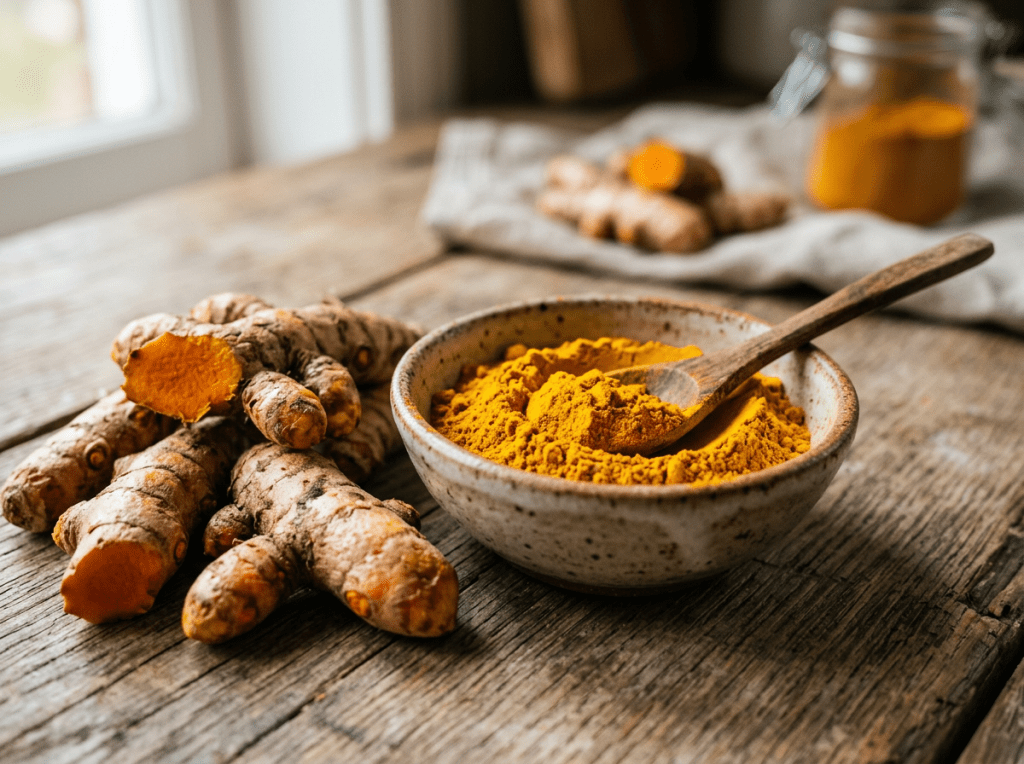


Have you ever thought a simple spice could change your health? Turmeric, a bright yellow spice from the Curcuma longa plant, has been valued for centuries. It’s known for its health benefits, thanks to curcumin, which fights off free radicals and reduces inflammation. This article will look into how curcumin in turmeric can boost your health and uncover its secrets.

Turmeric is more than just a tasty spice; it’s packed with health benefits. By learning about curcumin, you’ll see how it helps keep you healthy. Let’s explore the amazing world of turmeric and its health benefits together.
Key Takeaways
- Turmeric is derived from the Curcuma longa plant.
- Curcumin is the active compound in turmeric.
- Curcumin has strong antioxidant properties.
- It also exhibits anti-inflammatory effects.
- Turmeric has been used in traditional medicine for centuries.
- Understanding curcumin can enhance your health journey.
Understanding Turmeric and Its Active Compound Curcumin
Turmeric is a bright yellow spice from the Curcuma longa plant, part of the ginger family. It has been used for thousands of years in cooking and medicine. Its unique taste and color make it popular worldwide.
Curcumin is a key part of turmeric. It’s the reason turmeric is good for your health. Knowing about curcumin helps us see why turmeric supports overall health.
What is Turmeric?
Turmeric is famous for its bright yellow color. It’s often used in curries and other dishes. Its long history includes:
- Used in traditional Indian medicine (Ayurveda)
- Commonly found in Southeast Asian cuisine
- Valued for its potential health benefits
The Role of Curcumin in Turmeric’s Health Effects
Curcumin fights off harmful molecules called free radicals. These can damage cells and lead to chronic diseases. Its antioxidant properties are key to staying healthy. Some benefits of curcumin include:
- Reducing inflammation in the body
- Supporting heart health
- Enhancing brain function
Understanding these benefits shows how curcumin helps us stay well. As research continues, curcumin’s health benefits keep attracting attention.

The Antioxidant and Anti-Inflammatory Properties of Curcumin
Curcumin, found in turmeric, is known for its health benefits. It fights oxidative stress and inflammation, which are key for staying healthy. Knowing how curcumin works helps us see its role in preventing diseases.
How Curcumin Neutralizes Free Radicals
Curcumin fights off harmful molecules called free radicals. These can damage cells and lead to chronic diseases. Its antioxidant powers help by:
- Scavenging free radicals and reducing their harm.
- Boosting the body’s antioxidant enzymes.
- Protecting against oxidative damage from various diseases.
Curcumin’s Impact on Inflammatory Pathways
Chronic inflammation causes many health problems, like arthritis and heart disease. Curcumin blocks pathways that start inflammation in the body. This can lower inflammation and improve health. Its effects include:
- Stopping inflammatory markers like cytokines.
- Reducing inflammation in joints.
- Helping heart health by lowering inflammation.

Adding curcumin to your diet can use its antioxidant and anti-inflammatory powers. This may improve your health and lower the risk of chronic diseases.
| Property | Effect |
|---|---|
| Antioxidant | Neutralizes free radicals, protecting cells |
| Anti-inflammatory | Blocks pathways triggering inflammation |
| Chronic Disease Prevention | Reduces risk of conditions like arthritis and heart disease |
Could turmeric be one of the most powerful natural health boosters?
Turmeric is getting a lot of attention for its health benefits. Its active compound, curcumin, is the main reason. This bright yellow spice is more than just a flavor enhancer; it’s a key player in boosting overall health.
Research shows why curcumin in turmeric is good for your body:
- Curcumin fights off harmful molecules called free radicals.
- It has strong antioxidant properties that protect cells.
- Curcumin helps control inflammation, which can lead to chronic diseases.
Studies point to turmeric’s wide range of benefits. These come from curcumin’s fight against oxidative stress and inflammation. This might help prevent many diseases, making turmeric a strong ally in your health journey.
Even with promising results, more research is needed to fully grasp turmeric’s benefits. As you explore its potential, remember it’s best when part of a balanced diet and healthy lifestyle.
| Health Benefits of Curcumin | Mechanism of Action |
|---|---|
| Antioxidant | Neutralizes free radicals |
| Anti-inflammatory | Regulates inflammatory pathways |
| Cell Protection | Prevents oxidative stress |

Traditional and Modern Uses of Turmeric in Health
In South Asia, turmeric is used as a natural antiseptic for small cuts, burns, and bruises. Its bright yellow color comes from curcumin, a compound with health benefits. For centuries, people have used turmeric to heal and lower infection risks.

Today, turmeric’s uses have grown. It’s used in complementary medicine to address health issues like joint problems. Many take curcumin supplements to manage arthritis. Curcumin helps regulate the immune system and reduce joint inflammation, which can help relieve pain and swelling.
Here are some common uses of turmeric in health:
- Topical treatment for minor wounds and skin irritations
- Dietary supplements for arthritis and joint pain
- Natural remedy for digestive issues
- Ingredient in health drinks and smoothies
Exploring turmeric’s benefits shows its long history and current importance. This spice connects ancient wisdom with modern health practices. It offers a complete approach to wellness.
Enhancing Curcumin’s Effectiveness: Bioavailability and Delivery Systems
Curcumin, found in turmeric, offers many health benefits. It fights off harmful free radicals and blocks inflammatory pathways. Yet, its effectiveness is often limited by poor absorption. This section examines how to improve curcumin absorption and its benefits.
Challenges of Curcumin Absorption and Metabolism
Curcumin’s absorption is hindered by its hydrophobic nature. It doesn’t dissolve well in water. This results in:
- Low absorption in the gastrointestinal tract
- Rapid metabolism and elimination from the body
These issues reduce the amount of curcumin that reaches the bloodstream. This limits its health benefits. Curcumin may also support heart and metabolic health, but only if it’s absorbed well.
Innovative Formulations to Boost Bioavailability
Researchers have created advanced delivery systems to tackle these challenges. Some of the most promising methods include:
- Nanoformulations: Tiny particles that enhance absorption.
- Liposomes: Small vesicles that carry curcumin into cells.
- Phospholipid complexes: Formulations like Longvida® and Meriva® that improve bio-efficacy.
- Piperine: A compound from black pepper that enhances curcumin absorption.
These innovative approaches can greatly boost curcumin’s effectiveness. This allows you to enjoy its full health benefits.

Potential Cardiovascular and Metabolic Health Benefits of Curcumin
Curcumin may also support cardiovascular and metabolic health. This powerful compound found in turmeric shows promise in enhancing heart function. Research indicates it could improve blood vessel function, which is essential for maintaining a healthy heart. Understanding how curcumin works can help you make informed decisions about your health.
Here are some key benefits of curcumin for cardiovascular health:
- Improves blood vessel function
- Supports healthy blood flow
- Reduces inflammation and oxidation
- Influences proteins involved in heart protection
Curcumin’s anti-inflammatory properties play a crucial role in protecting against heart disease, a leading cause of death worldwide. By reducing inflammation, curcumin helps maintain the health of your blood vessels and overall cardiovascular system.
Emerging research suggests curcumin may also aid in metabolic regulation. This can be beneficial for conditions like diabetes, where managing blood sugar levels is vital. Some potential metabolic benefits include:
- Improved insulin sensitivity
- Better regulation of blood sugar levels
- Support for weight management
Incorporating curcumin into your diet could lead to significant health improvements. Whether through turmeric in meals or supplements, the potential benefits for your heart and metabolism are worth considering.
The Role of Turmeric in Brain Health and Cognitive Function
Turmeric, with its active compound curcumin, is getting more attention for its brain health benefits. Studies show curcumin might boost cognitive function. It affects brain-derived neurotrophic factor (BDNF), a key protein for brain health.
Curcumin’s Influence on Brain-Derived Neurotrophic Factor (BDNF)
BDNF helps grow and keep brain cells alive. Curcumin boosts BDNF levels, leading to:
- New brain cell growth
- Improved connections between neurons
- Enhanced memory and learning abilities
Curcumin supports BDNF levels, which may help protect against cognitive decline. This is crucial as we age. It also fights off harmful free radicals and blocks inflammatory pathways in the body.
Implications for Alzheimer’s and Mood Disorders
Curcumin’s anti-inflammatory effects could help those with Alzheimer’s and depression. Inflammation and oxidative stress are major issues in these conditions. Curcumin might:
- Slow Alzheimer’s progression
- Reduce depression symptoms
Curcumin is also being studied to slow aging. The link between brain health and overall well-being is clear. Adding turmeric to your diet could be beneficial.
Turmeric’s Support in Joint Health and Arthritis Relief
Turmeric is getting more attention for its benefits in joint health, mainly for arthritis sufferers. The key compound, curcumin, is crucial here. Studies indicate that curcumin can manage immune responses and lessen joint inflammation.
This happens because curcumin fights off harmful free radicals. These molecules can cause joint pain and swelling.
Regulating Immune Response and Reducing Inflammation in Joints
Curcumin’s impact on the immune system can greatly improve joint health. Here are some key points about its benefits:
- Curcumin reduces swelling and pain in arthritis.
- It offers relief similar to NSAIDs.
- Curcumin has fewer side effects than traditional drugs.
Research shows curcumin can cut down inflammation and boost mobility in arthritis patients. While the results are encouraging, more studies are needed. Always talk to a doctor before changing your treatment.
Adding turmeric to your diet might help your joints. You could try adding it to meals or taking curcumin supplements. Make sure to use top-quality products for the best results.
Conclusion
Turmeric is a standout natural health booster thanks to its curcumin content. This spice is packed with health benefits, like antioxidants and anti-inflammatory effects. It’s also being studied for more, like slowing aging and preventing some cancers.
Research shows turmeric’s wide range of health benefits. It’s safe for most people, making it a favorite choice. But always talk to a doctor before trying new supplements, like if you’re pregnant or taking meds.
As more studies come in, turmeric might help even more. Keeping up with new research helps you make smart health choices. Adding turmeric to your daily routine could bring many benefits while keeping you safe.




Leave a Reply