

Nearly 80% of adults experience back pain at some point in their lives. This fact shows why strength matters beyond appearance or gym performance. Functional strength helps you lift groceries, climb stairs, or pick up a child from the floor.
Many people think strength means lifting the most weight. True strength includes daily tasks, such as rising from a chair without your hands or carrying a heavy bag with one arm. This article explores eight practical movements that build strength, coordination, and stability.
These movements suit different fitness levels, so you do not need heavy weights to benefit. Use safe techniques to build strength, coordination, stability, control, confidence, and efficiency. Let’s explore 8 functional moves that make you feel stronger and more confident in daily life.

Key Takeaways
- Functional strength supports everyday activities.
- True strength is about movement, not just appearance.
- Adaptable exercises cater to various fitness levels.
- Improved strength leads to greater confidence and mobility.
- Focus on safe techniques for effective training.
What Functional Strength Really Means in Everyday Life
Every movement you make can show your functional strength. Functional strength means more than lifting weights or doing isolated exercises. It helps you handle everyday tasks safely and efficiently.
Functional strength involves multiple muscles and joints in real-world activities. Think of every time you sit down or stand up from a chair. That’s a squat, and it shows how functional exercises support daily life.
Here are some everyday movements that show the value of functional strength:
- Sitting and standing from a chair
- Carrying groceries
- Climbing stairs
- Lifting a child
- Opening a heavy door
- Reaching for an object
- Stepping over obstacles
- Moving furniture
These activities require strength, balance, and coordination. Functional training improves these skills, so daily tasks become easier and safer.
Functional strength differs from person to person. The best movements depend on your goals and daily demands. A parent may practice lifting and carrying, while an office worker may improve posture and mobility.
Functional strength is a key part of overall fitness. It helps you handle daily activities and can build confidence and independence.

Why Functional Movement Builds Real Confidence
True strength manifests through functional movement, showing up in your daily life rather than just in the gym. This strength means more than lifting weights or doing endless bicep curls. You can scoop your kid off the floor without bracing yourself.
Functional movement trains your body for daily activities. Controlled squats, carries, and balance exercises make lifting laundry and climbing stairs feel easier. These manageable challenges build physical strength and mental resilience.
Better balance and coordination can reduce hesitation on uneven sidewalks or curbs. Feeling stable and secure in your movements fosters a sense of confidence that extends beyond physical tasks. When your body can meet daily demands, you feel ready for physical challenges.
Confidence does not come from ignoring limits or pushing through pain. It grows through better movement control and improved core stability. Each small win teaches you to trust your body outside the gym.
With functional training, intimidating tasks can become manageable. It supports independence and quality of life, especially when stairs do not leave your knees aching for an hour. It is a specific kind of strong that doesn’t show up in a mirror.

The 8 Functional Moves That Make You Feel Stronger and More Confident
Discover how eight essential functional moves can build strength and boost your confidence. These exercises mimic everyday activities and help you handle daily tasks with greater ease. Adding them to your routine can improve your functional strength.
Here’s a breakdown of each move:
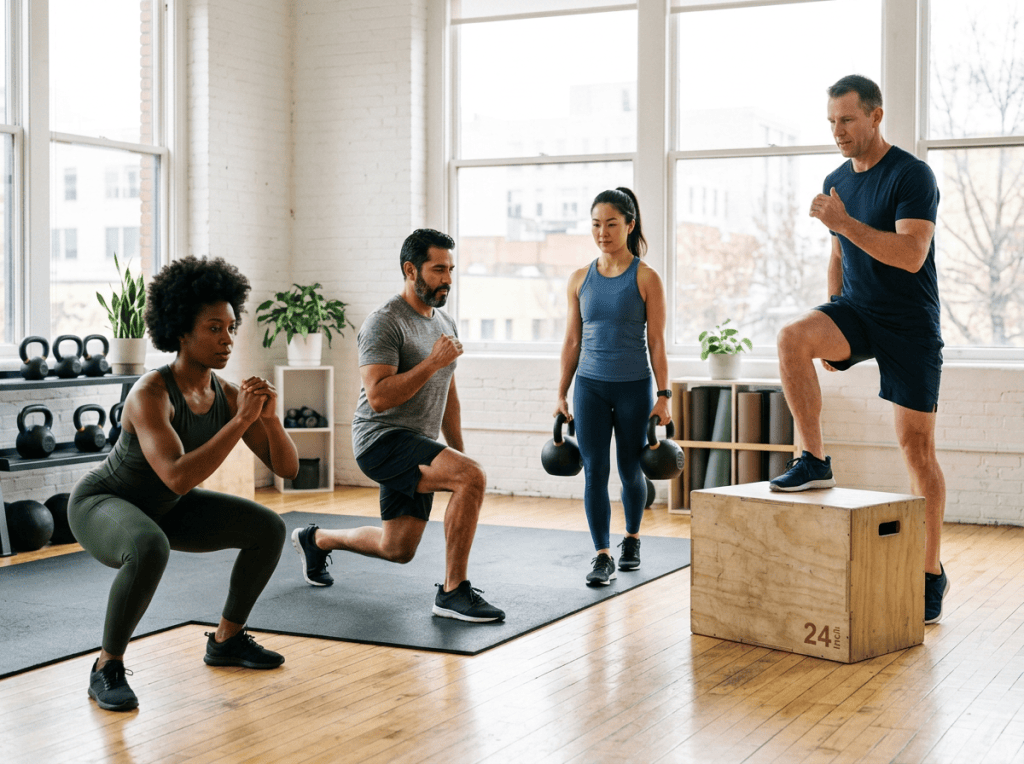
- Squats: This foundational movement strengthens your legs and core. It mimics the action of sitting and standing, making it essential for everyday activities.
- Deadlifts: Utilizing a hinge pattern, deadlifts improve your ability to lift objects off the ground safely. This move enhances your posterior chain strength.
- Lunges: Lunges challenge your balance and single-leg strength, essential for activities like climbing stairs or walking on uneven surfaces.
- Push-ups: A classic upper body exercise, push-ups build strength in your chest, shoulders, and triceps, promoting better posture.
- Pull-ups: This movement strengthens the upper body and is crucial for tasks that require pulling, such as lifting heavy doors.
- Planks: Core stability is vital for overall strength. Planks help you maintain balance and support your spine during various activities.
- Farmer’s Carry: This exercise challenges your grip and core stability, essential for carrying groceries or heavy objects.
- Step-ups: Step-ups enhance leg strength and coordination, mimicking the action of climbing stairs.
These functional strength exercises can be tailored to your ability. Use a controlled technique and focus on movement patterns rather than speed or load. Good form matters most for safe, effective practice.
These movements improve strength and confidence in your physical abilities. Choose options that match your current strength, mobility, and available equipment. Functional movement builds your everyday strength and helps you feel empowered each day.

How to Get Started Safely With These Moves
Follow safety guidelines to protect your health during functional training. Always check with a healthcare provider before starting if you have heart concerns, joint pain, or a history of falls. This helps you practice safe functional training while reducing the risk of injury.
Clear a practice area before you begin. A clutter-free space improves focus and reduces the risk of accidents. Warm up with gentle walking or joint movements to prepare your body and improve performance.
Use proper form and support during balance-based exercises. A sturdy chair, wall, or countertop can provide the balance support needed for stability. Move slowly and with control so your body can adjust to each movement.
Learn the difference between normal effort and warning signs. Muscle challenge is normal, but stop immediately if you experience sharp pain, chest discomfort, dizziness, or unusual shortness of breath. Seek appropriate guidance if any of these symptoms occur.
Start with one or two sets of exercises, using a light load and a range of motion you can control. If you are recovering from an injury or have osteoporosis, consult a healthcare provider or qualified fitness professional. They can provide personalized exercise modifications for your needs.

By prioritizing safety and following these guidelines, you can confidently begin your journey into functional training. These steps support injury prevention while you build strength and confidence.
How Often to Train Functional Movements Each Week
A steady schedule for functional movements helps you reach your fitness goals. The National Academy of Sports Medicine (NASM) says many people benefit from two to three workouts per week. This frequency of functional strength training allows for recovery and supports strength gains.
If you are new, start with two full-body functional strength sessions each week. This plan leaves enough recovery time between demanding workouts. If recovery, schedule, and technique allow, add a third session.
Balance practice can help with strength training for older adults and fit into short, frequent sessions. Moderate aerobic activities, such as walking, can complement strength training and improve overall fitness.

- Session 1: Squats and push movements
- Session 2: Hinge and carry movements
- Session 3: Lunges, planks, and balance work (if included)
If consistency is hard, shorter workouts are fine. Regular practice matters most. A steady weekly movement routine helps more than chasing perfect intensity or duration.
Progressions to Keep Building Strength Over Time
To build strength, understand progressive overload. It means slowly raising your body’s demands to support strength progression. These methods include increased resistance, exercise variations, and better movement quality.
- Increase Resistance: Add a small amount of weight to your exercises.
- Increase Volume: Complete additional repetitions or sets.
- Enhance Complexity: Progress to more challenging variations of the exercise.
- Extend Range of Motion: Aim for a greater range during movements.
- Improve Movement Quality: Focus on maintaining good form and controlled tempo.
As you build strength, remember that progress does not always mean heavier weights. First, perform each movement with steady posture and a comfortable range of motion. Build this foundation before making changes.
When ready, change one training variable at a time. For instance, you can:
- Transition from a chair squat to a bodyweight squat.
- Move from a wall push-up to an incline push-up.
- Advance from a supported lunge to a walking lunge.
- Shift from a bilateral farmer’s carry to a suitcase carry.
Each progression challenges your body and supports strength. Stay careful: if your technique breaks down, slow down and focus on form.
The best progression matches your goals, experience, recovery, and readiness. Listen to your body and adjust as needed. This approach builds strength safely over time.

Common Mistakes That Hold Back Your Progress
Functional training involves common mistakes that can slow your progress. These errors can weaken strength and confidence without you noticing. Knowing them helps you train with greater purpose.
One major mistake is progressing too quickly. Rushing repetitions or adding weight before mastering the basics can lead to poor exercise technique. This can limit gains and increase the risk of injury.
Another mistake is treating unstable surfaces as your main training ground. Unstable surfaces can improve balance, but they should not control your program. Rather than chasing difficult variations, master foundational movements like squatting, hinging, pushing, carrying, and balancing.

Inconsistent training can block progress; skipping sessions or lacking a routine can stall results. Exercise consistency helps your body adapt and grow stronger over time. Prioritize rest days because inadequate recovery can hurt performance; muscles need time to repair and strengthen.
Do not compare your journey with others. Everyone progresses at a different pace, and another person’s approach may not suit you. Focus on your improvements, even when they seem small.
“A simple movement performed regularly with good form can produce more useful results than an advanced exercise performed poorly.”
Avoiding these common functional training mistakes can improve your strength and confidence. Emphasize technique, maintain consistency, and master the basics to build success.
Pairing These Moves With Everyday Habits
Turn daily habits into functional movement to improve your overall fitness. You do not need formal workouts alone to gain the benefits of everyday functional fitness. Add short activity bursts throughout your day, often called movement snacks.
Try sit-to-stands while watching your favorite television show. This move can strengthen your legs and improve your balance. You can also do wall push-ups while waiting for coffee to brew, fitting movement into your routine.
An active lifestyle means finding chances to move during daily tasks. When carrying groceries, distribute bags evenly and use good posture while lifting. Choose stairs instead of elevators when possible; this builds practical strength habits for real-life activities.
Use controlled hip-hinge mechanics when picking up household objects. This protects your back and builds strength in your core and legs. A deliberate walk after breakfast can improve your daily mobility while you enjoy fresh air.
These habits should support, not replace, structured strength training. More frequent movement helps your new strength support everyday tasks, so you feel more confident and capable.
Tracking Your Strength Beyond the Mirror
Your functional fitness progress shows in how you feel and move. Strength tracking goes beyond body composition or appearance. It shows your daily activity performance.
Notice how easily you can stand up from a lower chair. Carry groceries with fewer breaks or climb stairs with less fatigue. These small changes show measurable strength gains and support overall fitness.
See whether you can hold a plank with better alignment. Notice whether you can walk on uneven ground with greater confidence. These signs indicate improved balance and greater movement confidence.
Keep a simple training log to track progress. Record repetitions, load, carry time, balance duration, and range of motion. Note your perceived effort during exercises; these measures show how far you have come.
Qualitative signs matter too. Watch for less hesitation, better posture, and smoother movement transitions. Using furniture less for support also shows growing strength.
Remember that gradual changes matter. Functional strength often first appears as better control and confidence, before major visual changes. Celebrate these milestones as signs of progress toward greater functional fitness.
Conclusion
Building usable strength can make daily life easier. These eight functional movements help you handle everyday tasks, from rising from a chair to lifting heavy objects. Squats help you rise, while deadlifts help you lift, building confidence in movement.
Add these movements to a sustainable exercise routine to improve balance and mobility. Better balance and mobility support independent living and help you enjoy meaningful activities. Do two or more strength sessions each week, plus balance practice, to gain the full functional movement benefits.
You do not need an elaborate workout plan to begin. Start with one or two movements, then slowly increase the challenge as you gain strength. Practice with control to notice significant improvements over time, support well-being, and build a more active lifestyle.
Take the first step today. Add these functional movements to your weekly routine and watch how they support daily activities. Enjoy the journey toward a stronger, more confident you.




Leave a Reply