

Did you know that nearly 80% of people who start a fitness routine quit within the first year? This statistic shows why exercise should fit your lifestyle and support lasting progress.
Body-weight exercises are often touted as being a beginner-friendly way to start strength training. They have a low barrier to entry because they require little or no equipment. This makes Body-weight training accessible to everyone.
These exercises can build strength and improve confidence in movement. Yet accessible does not mean every variation suits every person. Use proper technique, because poor movement patterns can slow progress and raise injury risk.
This article covers three body-weight training mistakes: trying exercises too soon, using poor form, and treating planks as passive holds. Learning the correct form is vital before you increase an exercise’s difficulty.
Remember, modifications are not failures. Meet yourself where you are to make safe, practical progress. If you have medical concerns, pain, or a history of injury, consult a qualified health care professional before increasing your activity level.

Key Takeaways
- Body-weight training is accessible and requires minimal equipment.
- Proper technique is essential to avoid injuries.
- Learning the correct form is crucial before progressing.
- Modifications are a practical way to ensure safety.
- Consult a healthcare professional if you have health concerns.
Why body-weight exercises are popular (and the risks of doing them wrong)
Body-weight exercises are popular because they are accessible and effective. Moves like pushups, squats, and planks work anywhere and fit many fitness levels. You can add them to short workouts or longer training sessions.
However, “no equipment” does not mean “no demand.” Even simple moves like pushups, squats, and planks can put extra stress on your joints and muscles. They can increase your risk of aches or injury.
Body-weight training loads your muscles, tendons, joints, and connective tissues. The load grows with a long range of motion, high repetitions, or hard variations. Fatigue, limited mobility, and rushing can change how you move.
When this happens, proper muscle engagement may fail, and other areas take too much stress.
Listen to your body. Pain signals that you should stop and check your technique, not push through.
A gradual warm-up, controlled tempo, and professional instruction can protect beginners. These practices improve performance and reduce injury risk.

The 3 mistakes people make with body-weight exercises—and how to correct them
Understanding common body-weight exercise mistakes is essential for success. Many people rush into routines, which can slow progress. Spotting these errors can improve training and prevent frustration.
One key error is choosing exercises you’re not yet ready for. Mistake #1: doing exercises you’re not ready for yet can block progress and cause frustration. If you jump straight into performing full pushups, pull-ups, or deep squats, your movement may break down. First master the fundamental movement pattern, then build the strength, mobility, and body awareness required to move safely.
Another common mistake is performing moves with improper form. Poor technique can cause your body to use the wrong muscles, leading to inefficiency and potential injury. Prioritize quality over quantity, learn correct movement patterns, and slow down when needed.
Lastly, many people make the mistake of performing passive planks. Planks may look easy, but they require active engagement. Brace your trunk, squeeze your glutes, and engage your upper body to make the exercise more effective.
Comparing yourself to others can lead to ego-driven choices that harm long-term progress. Focus on your own journey instead. Use quality, consistency, and body awareness as your main measures of success.

Mistake 1: Doing exercises you’re not ready for yet
Many people try hard body-weight exercises before they are ready. This rush can lead to poor form and potential injuries. Advanced moves may reveal gaps in strength, mobility, and body awareness.
For example, full pushups or deep squats can cause sagging hips, collapsed knees, or excessive use of momentum. Positioning and meeting yourself where you’re at are key for body-weight exercises. The first step is choosing a version of the exercise that allows you to maintain good form from beginning to end.
Why jumping ahead can break down your form
A challenge that is too hard causes compensations. You may hold your breath or lose alignment. These problems can reduce workout results and increase the risk of injury.
Check whether you can complete every repetition with steady breathing, controlled tempo, and consistent alignment.
How to choose the right starting variation
Choose a variation that matches your current strength and skill level. If you can use proper form and control, you are on the right track. Remember, the best version is the hardest variation you can perform safely, not the most advanced one you can attempt.
Regressions for common exercises
Here are effective regressions to help you build strength safely:
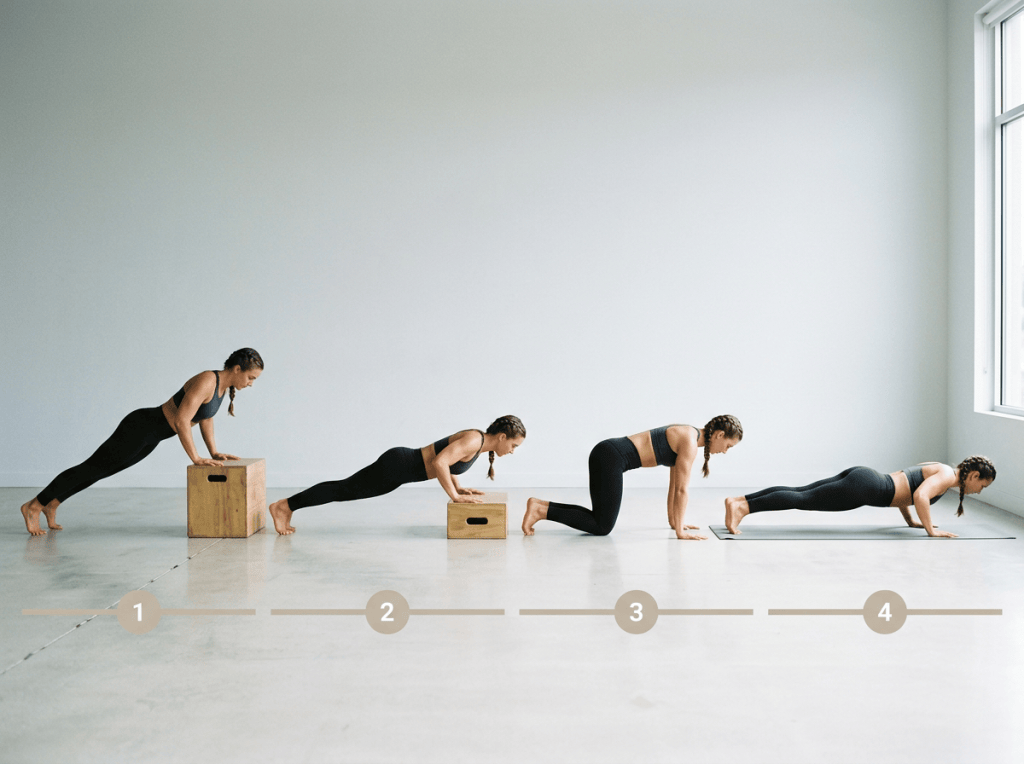
- Wall or incline pushups before floor pushups
- Box or chair squats before deep free squats
- Assisted split squats before unassisted versions
- Dead bugs or elevated planks before more demanding core exercises
A regression should build capacity while allowing good form from beginning to end. Progress only when the current variation feels repeatable and controlled.

Mistake 2: Performing moves with improper form
With body-weight exercises, performing moves with improper form can cause serious problems. As with any exercise, performing bodyweight moves with improper form increases the risk of injury. This common mistake is easy to correct with a few key tips.
The danger of recruiting the wrong muscles
Improper form can reduce workout results and place extra stress on your joints and muscles. Without a stable core, you might overwork your shoulders, wrists, or lower back. Learn each movement to protect yourself and improve results.
How to nail pushup form
Body-weight exercises are no different: form matters. When you’re ready for traditional pushups, watch your core and arm position. Signore says to avoid letting your hips sag toward the floor or rise too high.
- Place your hands about shoulder-width apart.
- Angle your elbows naturally rather than letting them flare excessively.
- Engage your core and glutes, maintaining a straight line from head to heels.
- Lower your body under control, avoiding sagging hips or a piking position.
How to nail squat form
Squats also require careful form. Follow these steps to use proper technique:
- Start with a stable stance, feet shoulder-width apart.
- Keep your knees tracking in the same direction as your toes.
- Descend in a controlled manner, maintaining a neutral torso.
- Distribute pressure evenly through your feet, and ensure your depth matches your mobility.
Form cues to remember
Use these cues to maintain proper form during your workouts:
- Perform slow repetitions.
- Focus on steady breathing; avoid holding your breath.
- Use a controlled range of motion without momentum.
- Stop if you experience any pain.
Use a mirror, record a set, or ask a qualified professional for feedback. If your plank is not solid, your pushups will not be either. Strong trunk control supports both exercises and is vital for overall performance.

Mistake 3: Passive planks
Planks need strength and control, despite their simple appearance. Mistake #3: Passive planks happen when people hold still without engaging their muscles.
Why planks look easy but aren’t
The plank is a foundational core-strengthening exercise that looks simple on the surface. You’re not moving or lifting anything; you’re just holding still. However, assuming it is easy can lead to a sagging back, raised hips, relaxed glutes, ineffective workouts, and potential injuries.
How to position your arms correctly
Start by correctly positioning your arms. For a forearm plank, elbows should be stacked directly under the shoulders; place hands beneath shoulders for a high plank. Exercises like planks often have people placing their hands or elbows too far forward, which stresses the shoulders and neck.
How to make your plank active
A real plank is an active exercise; done correctly, 30 seconds should feel like a lot. Squeeze your glutes and brace your core like you’re about to take a hit. Drive your elbows down into the floor to engage your lats and abs.
Signs your plank is working
When done correctly, these signs show your plank is working:
- Strong but controlled tension throughout your body
- Steady breathing without strain
- A relatively straight line from head to toe
- Fatigue that develops without sharp pain
End your set when alignment or breathing worsens, rather than chasing a longer hold. If your plank isn’t solid, your pushups won’t be either!

How to progress your body-weight training safely
To enhance your body-weight training, focus on learning the correct form before progressing the difficulty of the exercise. This builds a strong base for safer, more effective workouts. Body-weight exercises are highly versatile and accessible to most people. They suit all fitness levels.
Start by building strength before trying harder variations. Master your current exercise, whether it is a pushup or a squat, and use correct form in repeatable sets. Once confident, change one variable at a time: repetitions, hold duration, or range of motion.
For instance, progress from wall pushups to incline pushups, then knee pushups, and finally full pushups. Prioritize alignment and control during every transition.
Next, meet yourself where you’re at. Bodies differ because of age, training history, and daily energy levels. Listen to your body and adjust your workouts as needed.
If you feel tired, allow recovery and avoid training the same muscle groups on consecutive days. A warm-up lasting five to ten minutes prepares your body and reduces the risk of injury.
Lastly, gradual increases in difficulty are key. Avoid an all-or-nothing mindset; use a controlled approach that values quality over quantity. If unsure which progression is appropriate, seek professional guidance to keep training safe and effective.
The health benefits of consistent strength training
The health benefits of strength training can improve daily life. They include more than improved appearance or calorie burning. Stronger muscles improve physical function, making everyday tasks easier and safer.
Strength training helps with balance and injury prevention. These benefits support injury prevention and better balance by improving body control and stability. Falls can cause serious injuries with age; exercise cannot remove every risk, so use proper form and increase intensity gradually.
Strength training improves coordination and muscle tone, helping you climb stairs or lift objects more easily. A well-structured routine that focuses on quality movement maximizes these benefits.
Balance and injury prevention
As muscles grow stronger, balance and stability can improve. This support can help prevent falls and related injuries. Train with caution: warm up, maintain proper form, and listen to your body.
Healthy aging support
Strength training supports healthy aging by helping you maintain strength and mobility. This support can protect independence and improve physical function as you age. Regular training helps you handle daily challenges with confidence.
A consistent strength training routine offers major benefits, but it should support a broader lifestyle. Quality movement and sustainable practices produce the best results. Safety and gradual progress help you gain the health benefits of strength training effectively.
Tips for building a sustainable body-weight routine
Build a body-weight routine you can follow for long-term success. Manageable, enjoyable workouts make it easier to stay committed. Use these tips to create a routine that lasts.
Frequency and Consistency
To gain benefits from body-weight exercises, aim for at least two full-body workouts each week. This schedule gives your muscles time to recover while building strength. As you improve, add sessions only when your body feels ready.
Consistency matters, but not every workout needs to be intense. Short sessions for technique or mobility can still work and help maintain your habit. Plan workouts around your routine and preferences, not someone else’s schedule.
Listening to Your Body
Notice how your body feels during and after workouts. Learn the difference between normal muscle fatigue and pain that signals a problem. Stop and reassess if you feel sharp pain, joint discomfort, or dizziness.
Include recovery basics, such as enough sleep, hydration, and rest days. Alternate muscle groups to help prevent overuse injuries. Listening to your body helps keep workouts safe and effective.
When done consistently and with proper form, body-weight exercises can provide benefits for balance, healthy aging, and injury prevention. Follow these tips to make body-weight training a lasting part of your life.
Conclusion
Body-weight exercises can build strength and improve fitness. To gain these benefits, avoid common mistakes. Choose exercises that match your current ability.
This helps you maintain control and prevent injury. Use proper form to engage the right muscles; poor form can cause imbalances and strain.
Pay special attention to planks, making them active rather than passive to maximize their effectiveness. Progress means more than trying harder variations. It also means mastering control, consistency, and confidence in your movements.
Select one body-weight exercise that feels accessible, and practice it slowly with proper technique. Gradually increase difficulty as you become more comfortable, and always listen to your body. Stop immediately if you feel pain, and consult a healthcare provider or qualified fitness professional about training concerns.
These guidelines can make body-weight training safe and rewarding. Use proper technique, progress gradually, and prioritize your health. This approach can produce lasting results and help you become stronger and healthier.




Leave a Reply