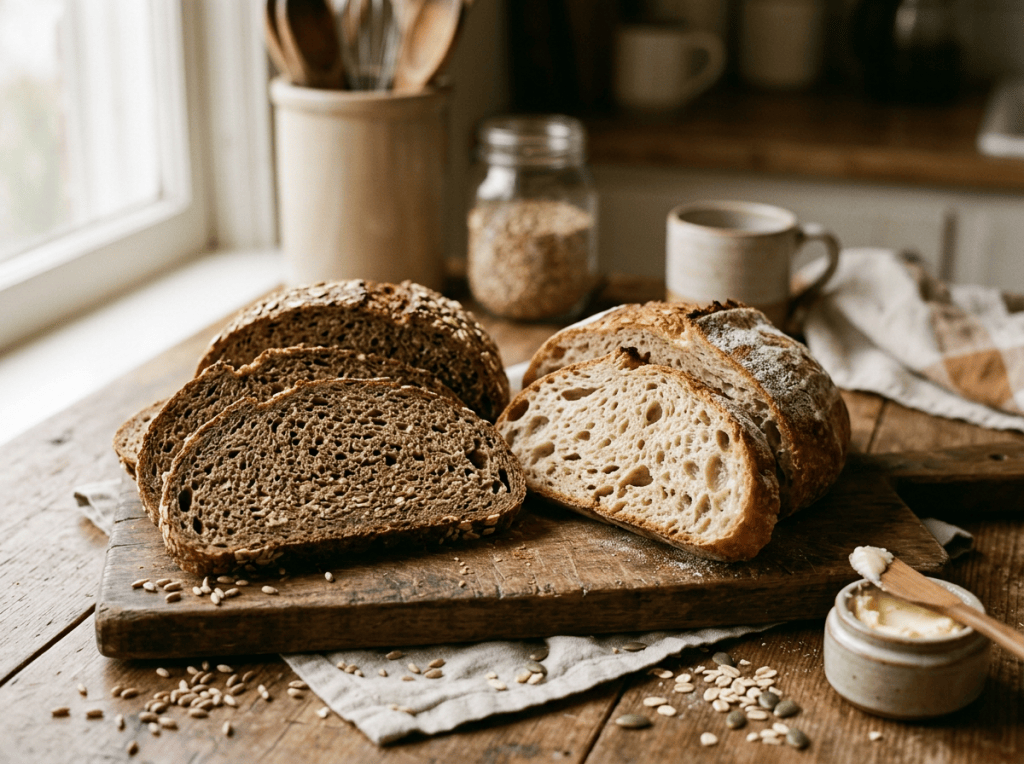


Have you wondered which bread wins in rye vs sourdough comparisons? Both rye and sourdough are popular, but their nutrients can affect your well-being differently.
The best rye vs sourdough choice depends on flour type, fiber, fermentation, and ingredient quality. Whole-grain versions of both breads usually offer more nutrients than refined versions. Still, neither bread is always healthier.
This article examines blood sugar, heart health, and digestion. Traditional rye can be rich in fiber and nutrients, while true sourdough fermentation may aid digestion and improve blood sugar responses. Yet not all breads labeled sourdough use traditional fermentation, and some rye breads contain a high amount of refined wheat flour.
Evaluate labels carefully, and do not rely only on marketing claims. If you have diabetes or celiac disease, consult a healthcare professional. Choose advice medically reviewed by Elizabeth Barnes, RDN, when possible.

Key Takeaways
- Both rye and sourdough offer unique health benefits.
- Whole-grain options are generally more nutritious.
- Fermentation methods impact digestibility and blood sugar response.
- Not all sourdough breads are made with traditional methods.
- Label evaluation is crucial for making informed choices.
1. Why rye vs sourdough matters for your health
Rye bread and sourdough are popular breads, but they have different nutritional profiles. Choose rye if you want the most heart-healthy bread option, though either type can support blood sugar and digestion.
To make the best choice for your health, consider the following:
What you can do today
- Choose rye: If you’re looking for the most heart-healthy bread option, rye is often the better choice.
- Look for whole grains: Opt for breads labeled “100% whole grain” or “whole-grain rye” to maximize fiber and nutrient intake.
- Check fiber content: Aim for at least 6 grams of fiber per 100 grams of bread to ensure you’re getting a beneficial amount.
- Select authentic sourdough: Choose traditionally fermented options to enhance its health benefits.
The payoff for your long-term health
Eating whole-grain versions of rye and sourdough can provide more fiber and nutrients for long-term health. Whole grains retain the bran, germ, and endosperm. These parts provide vitamins, minerals, and prebiotics, whereas refined white bread loses much of its nutritional value during processing.
Regularly eating these higher-quality breads can gradually improve:
- Digestive function
- Mineral intake
- Overall diet quality
- Feelings of fullness
Making informed bread choices lets you enjoy delicious flavors and important health benefits.

2. Which bread slice is best for blood sugar?
Which bread slice is best for blood sugar? Rye and sourdough are popular choices. Though the two have similar GI scores, they affect blood sugar for different reasons. Knowing these differences can help you choose bread for your health.
How rye bread affects blood sugar
Rye bread is high in fiber, which helps regulate blood sugar. Rye fiber slows digestion and glucose absorption, leading to a more gradual rise in blood sugar. This may help people who want steadier blood sugar levels.
The role of fiber in rye bread
Rye bread and fiber: Rye bread is a good source of fiber. This nutrient has been associated with healthier blood sugar levels. Natural grain fiber differs from isolated fiber in packaged bread, and whole-grain rye usually provides more fiber.
How sourdough affects blood sugar
Sourdough and fermentation: The special yeast and bacteria used to ferment sourdough may affect its impact on blood sugar. These microbes produce organic acids that may slow starch digestion and glucose release. Compared with standard white bread, sourdough may create a steadier glycemic response.
The role of fermentation in sourdough
Not all sourdough affects blood sugar in the same way. Whole-grain sourdough usually has more fiber than white sourdough, making it a better choice. White sourdough may beat conventional white bread, but whole-grain rye and sourdough offer more benefits.
Tips for managing blood sugar with bread
If you are managing blood sugar, pair bread with lean protein or healthy fats. This can reduce rapid increases in blood sugar.
- Choose smaller portions of bread to control carbohydrate intake.
- Check the fiber content to ensure you are getting the benefits of whole grains.
- Avoid heavily sweetened loaves that can spike blood sugar levels.
- Pair bread with lean protein or healthy fats, such as eggs, fish, or avocado, to reduce rapid increases in blood sugar.
These strategies let you enjoy bread while keeping blood sugar in check. Monitor your response, and ask your healthcare provider for personalized advice.

3. Is rye bread or sourdough better for heart health?
When choosing bread for heart health, you may ask: is rye bread or sourdough better for heart health? Both can support a heart-healthy diet, but their benefits differ.
Rye bread has a slight nutritional edge for heart health—it contains more fiber than sourdough. A slice of rye bread (32 grams) provides about 1.86 grams of fiber. A slice of sourdough (28 grams) contains only 1 gram of fiber. This extra fiber may keep you full longer and support healthier eating patterns.
Here are some reasons why rye bread may be a better option for heart health:
- Higher Fiber Content: More fiber can aid in digestion and help manage cholesterol levels.
- Rich in Nutrients: Whole-grain rye bread contains essential minerals and antioxidants.
- Satiety: Fiber-rich foods promote a feeling of fullness, which can prevent overeating.
However, sourdough may support heart health in other ways. It may improve mineral bioavailability, helping your body absorb key nutrients. Its fermentation process may also improve digestion for some people.
Both breads can fit into a heart-supportive eating pattern. When choosing, look for breads made with whole-grain flour and seeds. Choose options with minimal added sugars. Avoid highly processed loaves with excessive sodium, preservatives, or refined oils.

4. How rye and sourdough support digestion
Understanding digestion can help you make informed food choices. Both types of bread can support healthy digestion, but their effects depend on personal tolerances and dietary needs.
Rye bread and digestive health
Rye bread is rich in fiber, which supports regularity and overall gut health. Fiber can help you feel full longer and feed beneficial gut bacteria. Introduce high-fiber foods slowly, because a sudden increase may cause gas or bloating.
Sourdough and digestive health
Authentic fermented sourdough offers unique digestive benefits. Fermentation partly breaks down carbohydrates, such as fructans, which may make it easier to tolerate. This may help some people with IBS. Fermentation also reduces phytic acid, improving the body’s use of iron, zinc, magnesium, and calcium.
Not all sourdough is made the same. Authentic, long-fermented sourdough differs from products with only sourdough flavor or fermented wheat flour. Sourdough is not automatically low-FODMAP or gluten-free, and it may not suit people with celiac disease.
When choosing between rye and sourdough, consider your personal tolerance levels. Add high-fiber bread slowly and drink enough fluids to reduce possible digestive discomfort. Rye bread and sourdough can both support digestive health, but which is best depends on your dietary needs and tolerances.

5. Rye vs sourdough: nutritional breakdown
A closer look at rye and sourdough bread reveals key nutritional differences. Both offer health benefits, but their profiles vary with the type of flour used. This raises a useful question: which one is best for you?
Fiber content comparison
When comparing fiber content, rye bread has a slight edge over sourdough. Dark rye and whole-grain rye usually contain more fiber and nutrients than lighter, refined-flour versions. White sourdough has less fiber because processing removes the bran and germ.
Whole-grain sourdough combines whole grains with fermentation, which may improve fiber absorption. This makes it a strong choice for people seeking more fiber.
Vitamins and minerals
In terms of vitamins and minerals, rye bread has a slight edge over sourdough in vitamin and mineral density. It also has more fiber. Rye is rich in B vitamins, iron, magnesium, and zinc, which support health.
Whole grains provide antioxidants and other beneficial plant compounds that support your well-being.
Bread quality matters, but it’s important to remember that bread’s nutritional quality largely depends on the type of flour used. Whole-grain choices offer more nutrients than white flour counterparts.
The role of flour quality
Flour quality strongly affects the nutrition of both rye and sourdough bread. Nutrient levels drop in white flour versions. Both breads contain fewer nutrients when made with white flour, even when labeled “sourdough” or “rye.”
For the healthiest choice, look for “whole rye flour” or “whole-wheat flour” near the ingredient list’s beginning. The same goes for rye bread: “multigrain” does not always mean whole grain. Added isolated fiber or protein does not guarantee a nutritionally better loaf.

6. Which one is best for you?
Your health goals can guide your choice between rye and sourdough. Both breads offer benefits that may fit your diet.
When rye bread is the better choice
Choose rye bread if you want more fiber and a denser texture. Rye bread has a slight edge over sourdough in vitamin and mineral density, and it has more fiber. This can help you feel full and choose a nutrient-rich everyday bread.
Choose whole-grain or dark rye for a hearty loaf that keeps you full longer. These types offer more nutrients than white flour versions. Refined rye varieties may offer fewer benefits.
But it’s important to remember that bread’s nutritional quality largely depends on the type of flour used.
When sourdough is the better choice
Sourdough may suit people who value traditional fermentation methods. It may also support a steadier blood sugar response for people monitoring glucose levels.
If fermented bread feels easier to digest, authentic whole-grain sourdough may suit you. It combines fermentation with whole-grain nutrition for a satisfying, health-supporting choice.
However, not all sourdough is equal. White flour versions can have less fiber and fewer nutrients. The same goes for rye bread, which mainly uses refined wheat flour.
Your choice should also consider taste, budget, availability, sodium content, and food allergies or intolerances. The best bread is the one you can enjoy comfortably and regularly as part of a balanced diet.

7. How to choose the healthiest bread at the store
Choosing healthy bread can improve your diet. With wide varieties available, focus on the ingredients and nutrition facts. This simple checklist can guide you through the bread aisle.
Reading the ingredient list
Start by checking the ingredient list. Look for “100% whole grain,” “whole wheat,” or “whole meal” as the first ingredient. These terms show that bread uses whole grains, which provide more fiber and nutrients.
Aim for products with at least 6 grams of fiber per 100 grams. Fiber supports digestive health and helps you feel full longer. Avoid long ingredient lists with preservatives, added sugars, and refined oils.
Remember, “multigrain” and “sourdough” do not guarantee whole grains or traditional fermentation.
Spotting whole-grain options
Check the ingredients for intact grains, oats, barley, or seeds. These additions improve the bread’s nutrition. Do not judge by appearance; confirm the whole-grain content on the label.
Be cautious with commercial sourdough, which may contain baker’s yeast, flavorings, and other additives. Good sourdough usually has a short list: whole-grain flour, water, salt, and a sourdough starter.
Finally, compare sodium and added sugars among brands; watching these components can help you choose healthier bread. Watch portion sizes: a typical serving for rye and sourdough is technically one slice of bread. Pair bread with other nutritious foods: eat bread alongside protein, healthy fats, or vegetables for a balanced meal or snack.

8. Smart ways to enjoy rye and sourdough
Rye and sourdough bread can be delicious and healthy when you choose portions and pairings with care. These choices create satisfying, nutritious meals.
Watch your portion sizes.
A typical serving for rye and sourdough is technically one slice of bread. Yet artisan loaves can have much larger slices, so serving sizes vary. Pay attention to each slice.
Use a food scale or measuring tools to check your portions. This helps you enjoy bread without overeating. Although one slice is standard, a larger slice can greatly increase your calorie intake.
Pair bread with nutritious foods
Pair bread with other nutritious foods to improve your meal’s nutrition. Eat bread alongside protein, healthy fats, or vegetables to create a balanced meal or snack. Try rye bread with smoked salmon and cucumber, or sourdough with eggs and avocado.
Other choices include whole-grain toast with hummus and assorted vegetables. You can also serve bread with soup, beans, salad, or lean poultry. These pairings add flavor and may slow digestion, helping you feel full.
Watch spreads and toppings that add calories, sodium, or saturated fats. Choose minimally processed options to keep meals healthy. Enjoy bread as part of a balanced diet that meets your health needs.

9. Conclusion
Choosing between rye vs sourdough can be challenging because both offer unique health benefits. Rye bread has slightly more fiber and may better support heart health, making it a strong everyday choice for many. Authentic sourdough offers benefits in fermentation and digestibility.
Consider this question: which one is best for you? Rye bread and sourdough can both support digestive health, but which is best depends on your dietary needs and tolerances. Whole-grain quality also matters: whole-grain rye tends to be less processed and more nutrient-dense than white bread.
Authentic sourdough, especially whole-grain varieties, can be an excellent alternative for people seeking a steady blood sugar response. No single bread suits everyone. Choose loaves made mainly with whole-grain flour, seek high fiber, and avoid unnecessary additives or added sugars.
As you choose bread, consider your personal preferences, budget, and medical needs. Informed choices let you enjoy both rye and sourdough while supporting your overall health.




Leave a Reply