


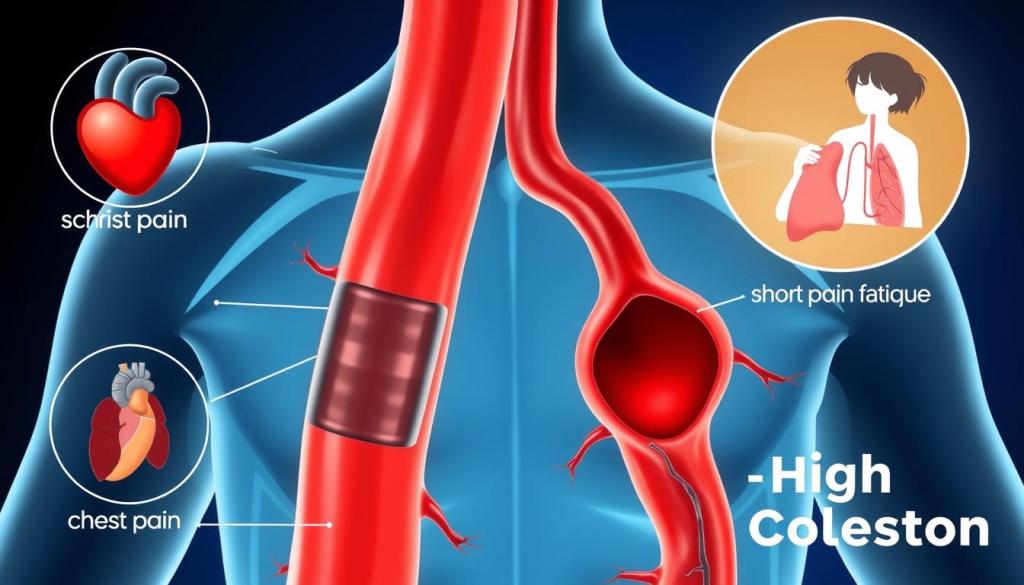
Clogged arteries can cause serious health problems like high blood pressure and heart attacks. These can be deadly if not treated quickly. It’s important to know the signs of clogged arteries to get help fast.
You might feel nausea or chest pain, which could mean something serious is wrong.
The American Heart Association says coronary artery disease (CAD) is a big problem in the U.S. It affects about 6.5 million adults. High cholesterol, smoking, and not being active are big risks for clogged arteries. Knowing these risks and taking steps to prevent them is key.
Spotting early signs of clogged arteries can save lives. Look out for chest pain, shortness of breath, and nausea. If you notice these, get medical help right away.
Key Takeaways
- Clogged arteries can lead to serious health issues, including high blood pressure and heart attacks.
- Recognizing the warning signs of clogged arteries is crucial to seeking medical attention before it’s too late.
- High cholesterol, smoking, and a sedentary lifestyle are significant risk factors for developing clogged arteries.
- Lifestyle modifications can reduce the risk of developing clogged arteries by up to 60%.
- Chest pain, shortness of breath, and nausea are common symptoms of clogged arteries.
- Seeking medical attention promptly is essential if you’re experiencing any symptoms of clogged arteries.
- Coronary artery disease (CAD) is the most common form of heart disease in the United States, affecting approximately 6.5 million adults.
Understanding Arterial Health and Why It Matters
Arterial health is key for our overall health. It helps blood flow to all parts of our body. If arteries get clogged, it can cause shortness of breath and weakness or numbness in one side of your body. These signs might mean a serious problem like atherosclerosis or coronary artery disease.
About 8 million Americans over 40 have Peripheral Arterial Disease (PAD). This condition often goes unnoticed until it’s severe. High blood pressure, high cholesterol, diabetes, and not exercising can raise your risk of atherosclerosis.
Knowing the signs of clogged arteries is important. Symptoms like dizziness, fatigue, and shortness of breath need quick medical attention. Regular check-ups with a cardiologist can help manage heart health and lower risks.
Getting older, high blood pressure, high cholesterol, and diabetes increase your risk of coronary artery disease. Lifestyle choices like not moving enough, stress, and bad diet also play a part. Making smart choices and taking steps to prevent can lower your risk of clogged arteries and related health problems.
Chest Pain: The Most Common Sign of Clogged Arteries
Chest pain is a key early sign of a blocked artery. It’s important to know the difference between angina and a heart attack. Angina happens during hard work or strong feelings and goes away with rest. A heart attack doesn’t go away with rest and might also cause slurring of words or vision loss.
Chest pain is a common sign of clogged arteries. If you feel it, you should see a doctor right away. Atherosclerosis is the main cause of coronary artery disease. Early detection is key to treating it.
Some people with coronary artery disease don’t notice symptoms at first. But, heart attack symptoms like chest pain are common. In 50-70% of cases, chest pain is the main symptom. If you’re feeling chest pain, get help fast.
When it comes to clogged arteries, consider these factors:
- Age: People over 35 with two or more risk factors should think about heart scans.
- Family history: A family history of heart disease raises your risk.
- Lifestyle: Eating well and exercising regularly can lower your risk.
When Breathing Becomes a Challenge: Shortness of Breath
Shortness of breath can signal clogged arteries. It’s key to know the types of breathing issues and when to get emergency help. You might also feel leg pain or cold feet, signs of poor circulation.
The American Heart Association says coronary artery disease often leads to heart failure. Shortness of breath is a common symptom. If you’re having trouble breathing, getting medical help is crucial to find out why.
Types of Breathing Difficulties
There are various breathing problems, including:
- Chronic obstructive pulmonary disease (COPD)
- Heart failure
- Valvular heart disease
- Pericarditis
When to Seek Emergency Care
If you have severe shortness of breath, leg pain, or cold feet, go to the emergency room right away. Also, if you have these symptoms, get medical help:
| Symptom | Description |
|---|---|
| Chest pain | Persistent pain or discomfort in the chest |
| Dizziness | Feeling lightheaded or disoriented |
| Confusion | Difficulty thinking or understanding |
Neurological Warning Signs: Weakness and Numbness
When you notice weakness and numbness, it’s time to see a doctor right away. These signs might mean your arteries are clogged. This could lead to serious issues like heart palpitations and delayed healing for foot injuries.
Every year, at least 240,000 people in the U.S. have a Transient Ischemic Attack (TIA). TIAs cause symptoms that last from a few minutes to hours. It’s important to act fast to avoid more harm.
When looking at neurological warning signs, remember:
- Being over 40 increases your risk for TIA
- High blood pressure is a big risk for stroke
- Severe blockages in arteries cause most TIAs
Managing diabetes and high blood pressure can protect your arteries. This helps lower your stroke risk. By knowing these warning signs and acting early, you can avoid serious problems like heart palpitations and delayed healing for foot injuries.
| Condition | Description | Risk Factors |
|---|---|---|
| Transient Ischemic Attack (TIA) | A temporary shortage of blood flow to the brain | Age, high blood pressure, diabetes |
| Stroke | A leading cause of death and disability in the U.S. | High blood pressure, smoking, obesity |
Communication Changes: Speech and Cognitive Issues
Clogged arteries can cut off blood to the brain, leading to speech and thinking problems. These issues can be mild or severe, depending on the situation. You might struggle with slurred speech, memory loss, or trouble thinking clearly.
Some common signs include:
- Difficulty finding the right words or following conversations
- Slurred speech or stuttering
- Memory loss or forgetfulness
- Confusion or disorientation
If you notice these symptoms, especially after a stroke or heart attack, get help right away. Also, if you havenauseaorchest pain, seek medical help. These symptoms could point to heart problems.
Communication issues might signal a bigger problem, like vascular dementia. It’s key to work with your doctor to figure out what’s causing these problems. This way, you can manage them and avoid more serious issues.
| Symptom | Description |
|---|---|
| Slurred Speech | Difficulty articulating words or speaking clearly |
| Memory Loss | Forgetting recent events, conversations, or tasks |
| Confusion | Disorientation or difficulty understanding surroundings |
Vision Problems as Indicators of Clogged Arteries
Vision issues can signal clogged arteries. If you notice sudden blurring or loss of vision in one eye, it might be a sign. This could be due to blood clots or fat deposits from atherosclerosis in the eye.
Clots can come from the heart or carotid artery. Conditions like carotid artery disease, diabetes, and high blood pressure can cause it. If you feel shortness of breath or weakness or numbness in one side of your body, get help right away.
Here are some potential complications of retinal artery occlusion:
- Glaucoma associated with central retinal artery occlusion (CRAO)
- Possible partial or complete loss of vision in the affected eye
- Increased risk of stroke
To lower the risk of retinal artery occlusion, live a healthy lifestyle. Eat a low-fat diet, exercise regularly, quit smoking, and manage your weight. These steps can help prevent clogged arteries and vision problems.
| Condition | Risk Factor |
|---|---|
| Carotid artery disease | Narrowing or blockage of the carotid artery |
| Diabetes | High blood sugar levels |
| Atrial fibrillation | Heart rhythm problem |
Lower Body Symptoms: Leg Pain and Cold Feet
When your arteries get clogged, you might feel pain in your legs and have cold feet. These signs can point to peripheral artery disease (PAD). PAD happens when the arteries in your legs get narrow or blocked. It’s not usually linked to slurring of words, but vision loss can be a sign of the problems that lead to PAD.
It’s important to understand how temperature and blood flow are connected. If your arteries are blocked, your legs might not get enough blood. This can make your feet cold and hurt your legs. Walking or exercising can make this pain worse. It might even cause intermittent claudication, where you feel pain in your legs when you walk.
To deal with these symptoms, making lifestyle changes is key. Quitting smoking and exercising regularly are good starts. You might also want to:
- Keep an eye on your blood pressure and cholesterol levels
- Manage diabetes and other health issues
- Stay warm in cold weather
- Exercise often to boost blood flow
By making these changes, you can lower your risk of PAD and ease symptoms like leg pain and cold feet. Early detection and treatment are crucial. They help prevent serious problems and improve your health.
Heart Palpitations and Irregular Rhythms
When you feel leg pain or cold feet, watch out for other signs too. Heart palpitations and irregular rhythms are important to notice. Coronary artery disease, or CAD, is a big heart problem in the U.S., hitting about 6.7% of adults.
Heart palpitations might seem minor, but they can mean trouble if you have other symptoms. If you feel your heart racing or pounding, get help fast. This is especially true if you also have leg pain or cold feet, signs of poor blood flow.
Heart palpitations can feel like your heart is racing or fluttering. Sometimes, this is a sign of a bigger issue, like atrial fibrillation. This affects 2.7 to 6.1 million people in the U.S. If you notice unusual heart beats or leg pain and cold feet, see a doctor right away.
Slow Healing and Wound Recovery in Extremities
When you notice wounds on your feet take longer to heal, it might be a sign of clogged arteries. This slow healing can be a sign of peripheral artery disease (PAD). PAD can make leg wounds heal slowly or not at all.
Age, health, and medical conditions like diabetes can affect healing. Heart palpitations can also be a sign of heart problems. It’s important to watch your foot health and see a doctor if wounds don’t get better.
Some common risk factors for PAD include:
- Age: Older age increases risk
- High blood pressure: Associated with 33% of PAD cases
- High cholesterol: Present in approximately 47% of those with PAD
- Smoking: Smokers are four times more likely to develop PAD
- Diabetes: Diabetics have a 2 to 4 times higher risk of developing PAD
Proper wound care is key. This includes cleaning wounds and using antibiotics for infections. Eating well and exercising regularly can help wounds heal faster. Treatments like angioplasty can also improve blood flow and healing.
| Risk Factor | Description |
|---|---|
| Age | Older age increases risk |
| High Blood Pressure | Associated with 33% of PAD cases |
| High Cholesterol | Present in approximately 47% of those with PAD |
Unexplained Nausea and Digestive Issues
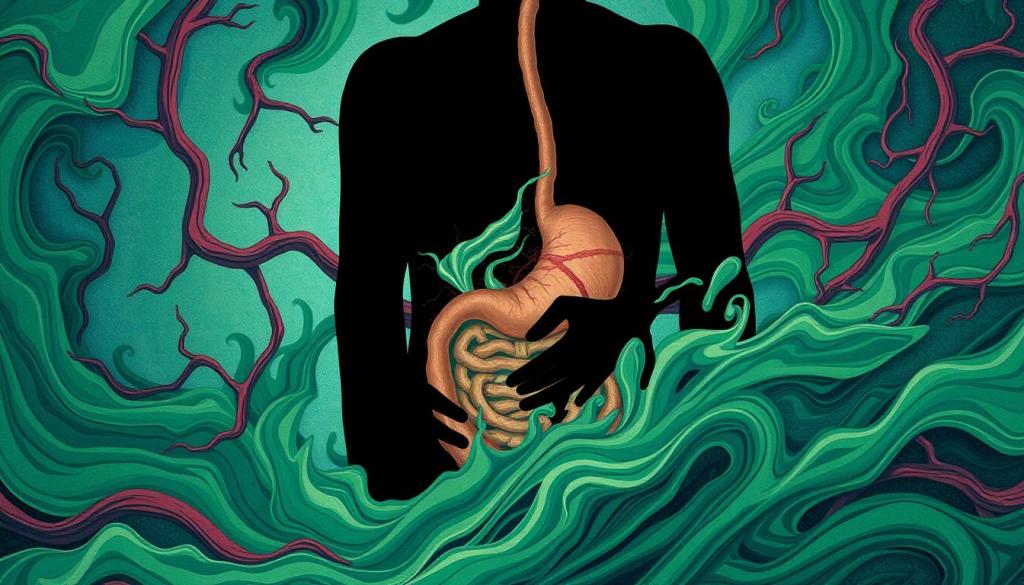
Feeling unexplained nausea and digestive problems? It might be linked to your heart health. Nausea can signal many issues, including heart problems. Chest pain often goes hand in hand with nausea, a sign of heart trouble.
Studies show that reduced blood flow to the intestines can cause nausea and pain. This is called intestinal ischemia. It can be sudden or long-term and linked to clogged arteries. People over 50 and those with heart diseases are at higher risk.
Several factors can lead to intestinal ischemia:
- Smoking
- High blood pressure
- High cholesterol
- Diabetes
- Family history of heart disease
If you have ongoing or severe nausea, especially with chest pain or breathing trouble, see a doctor. They can diagnose and treat the issue to ease symptoms and prevent worse problems.
In summary, unexplained nausea and digestive issues might point to heart problems. If you’re experiencing these symptoms, it’s vital to talk to a healthcare expert. They can find the cause and help you get better.
| Condition | Symptoms | Risk Factors |
|---|---|---|
| Intestinal Ischemia | Nausea, vomiting, abdominal pain | Age, smoking, high blood pressure, high cholesterol, diabetes |
| Clogged Arteries | Chest pain, shortness of breath, fatigue | Family history, high blood pressure, high cholesterol, smoking |
Preventing and Managing Clogged Arteries

It’s key to take steps to prevent and manage clogged arteries for your health. This can help with shortness of breath and weakness or numbness in one side of your body. Making smart lifestyle choices and getting medical help when needed can lower your risk.
Healthy eating, regular exercise, and stress management are good ways to prevent clogged arteries. Quitting smoking and drinking less alcohol also helps. If you’re showing symptoms, seeing a doctor is important to talk about treatment like statins or beta blockers.
In some cases, you might need procedures like cardiac catheterization or CABG surgery. Your doctor will decide the best treatment for you. By being proactive and getting medical help when needed, you can manage clogged arteries. This reduces health risks and improves your well-being.
Conclusion: Taking Action for Your Arterial Health
Learning about clogged arteries can be eye-opening. Signs like slurring of words and vision loss are warning signs. To keep your arteries healthy, start by making lifestyle changes.
Regular health checks, eating right, and exercising daily are crucial. Also, keep an eye on your cholesterol and blood pressure. If you notice any odd symptoms, see a doctor right away. Taking care of your arteries can greatly lower your risk of heart disease.
FAQ
What are the warning signs of clogged arteries?
Warning signs of clogged arteries include chest pain and shortness of breath. You might also feel weakness or numbness on one side of your body. Slurred speech, vision loss, and leg pain are other signs.
Delayed healing of foot injuries, heart palpitations, and nausea are also indicators. These symptoms suggest a problem with your arteries.
How do clogged arteries affect my overall health?
Clogged arteries, or atherosclerosis, can harm your health. They restrict blood flow and oxygen to vital organs. This can lead to heart attacks, strokes, and peripheral artery disease.
What are the risk factors for developing clogged arteries?
High cholesterol and high blood pressure are major risks. Diabetes, obesity, and smoking also increase your risk. Lack of physical activity and a family history of heart disease are other factors.
How can I tell if my chest pain is a sign of clogged arteries?
Chest pain can mean clogged arteries. It feels like tightness or pressure. Angina is chest pain from reduced blood flow, while a heart attack is more severe.
If you have chest pain, get medical help right away. It’s crucial to find out why.
What should I do if I’m experiencing shortness of breath?
Shortness of breath can signal clogged arteries. It means your heart might not be pumping well. If it’s sudden or severe, especially when resting, call 911.
Watch for changes in breathing, like trouble when active or lying down. These are important signs.
How can I tell if my weakness or numbness is a sign of clogged arteries?
Sudden weakness or numbness, especially on one side, can be a sign. It might mean your brain isn’t getting enough blood. This could lead to a stroke.
If you notice these symptoms, get medical help fast. Quick action can prevent serious damage.
What should I do if I notice changes in my speech or cognitive function?
Slurred speech or memory problems can be signs of clogged arteries. Difficulty thinking or concentrating is also a warning. If you or someone you know has these symptoms, call 911.
Quick treatment is key to protecting brain function.
Can vision problems be a sign of clogged arteries?
Yes, vision issues can be a sign. Sudden vision loss or blurriness might mean reduced blood flow to the eyes. If your vision changes, see a doctor right away.
They can find the cause and treat it.
What should I know about leg pain and cold feet as signs of clogged arteries?
Leg pain, especially when walking, and cold feet can be signs. They suggest narrowed or blocked arteries. This restricts blood flow to your lower legs.
If you have these symptoms, see a doctor. They can check your circulation and treat it.
Can heart palpitations and irregular rhythms be signs of clogged arteries?
Yes, heart palpitations and irregular rhythms can be signs. They mean your heart is working hard to pump blood. If you have persistent or concerning palpitations, get medical advice.
They can find the cause and treat it.
How can I tell if slow healing and wound recovery in my extremities are related to clogged arteries?
Slow healing of wounds, especially in your feet or lower extremities, can be a sign. Reduced blood flow and circulation slow healing. If your wounds heal slowly, watch your foot health.
See a healthcare professional to check for circulatory issues.
Can unexplained nausea and digestive issues be linked to clogged arteries?
Yes, unexplained nausea and digestive issues can be linked to clogged arteries. The heart and gut are connected. Disruptions in blood flow can affect digestion.
If you have persistent nausea or digestive symptoms, talk to your healthcare provider. They can check if it’s related to your heart health.
Source Links
- Warning Signs and Symptoms of a Clogged Artery – https://www.healthline.com/health/heart-health/what-are-the-warning-signs-of-clogged-arteries
- Clogged Arteries (Arterial Plaque) – https://www.webmd.com/heart-disease/clogged-arteries-arterial-plaque
- Clogged Arteries: What Causes Them & Why They Are Dangerous – https://www.cardio.com/blog/clogged-arteries-what-causes-them-and-why-they-are-dangerous/
- Heart disease – Symptoms and causes – https://www.mayoclinic.org/diseases-conditions/heart-disease/symptoms-causes/syc-20353118
- Blocked Artery Symptoms | Advocate Health Care – https://www.advocatehealth.com/health-services/advocate-heart-institute/programs-and-treatments/coronary-artery-disease-program/blocked-artery-symptoms
- Coronary artery disease symptoms | Aurora Health Care – https://www.aurorahealthcare.org/services/heart-vascular/conditions/coronary-artery-disease/symptoms
- Coronary artery disease – Symptoms and causes – https://www.mayoclinic.org/diseases-conditions/coronary-artery-disease/symptoms-causes/syc-20350613
- Heart failure – Symptoms and causes – https://www.mayoclinic.org/diseases-conditions/heart-failure/symptoms-causes/syc-20373142
- When shortness of breath signals heart problems : Ayim Djamson, M.D.: Cardiology – https://www.metrocardiovascular.com/blog/when-shortness-of-breath-signals-heart-problems
- Patient education: Transient ischemic attack (Beyond the Basics) – https://www.uptodate.com/contents/transient-ischemic-attack-beyond-the-basics/print
- Stroke: Signs, Causes, and Treatment – https://www.nia.nih.gov/health/stroke/stroke-signs-causes-and-treatment
- Carotid artery disease – Symptoms and causes – https://www.mayoclinic.org/diseases-conditions/carotid-artery-disease/symptoms-causes/syc-20360519
- Vascular dementia: Prevention may be possible-Vascular dementia – Symptoms & causes – Mayo Clinic – https://www.mayoclinic.org/diseases-conditions/vascular-dementia/symptoms-causes/syc-20378793
- Vascular Dementia – https://www.hopkinsmedicine.org/health/conditions-and-diseases/dementia/vascular-dementia
- Retinal artery occlusion: MedlinePlus Medical Encyclopedia – https://medlineplus.gov/ency/article/001028.htm
- What can your eyes tell you about heart disease? – UChicago Medicine – https://www.uchicagomedicine.org/forefront/heart-and-vascular-articles/2022/february/what-can-your-eyes-tell-you-about-heart-disease
- Peripheral artery disease – legs – https://www.mountsinai.org/health-library/diseases-conditions/peripheral-artery-disease-legs
- Peripheral artery disease (PAD) – Symptoms and causes – https://www.mayoclinic.org/diseases-conditions/peripheral-artery-disease/symptoms-causes/syc-20350557
- Coronary Artery Disease Symptoms | Advocate Health Care – https://www.advocatehealth.com/health-services/advocate-heart-institute/programs-and-treatments/coronary-artery-disease-program/symptoms
- Heart Disease Symptoms – https://www.webmd.com/heart-disease/heart_disease_symptoms
- Atrial fibrillation – Symptoms and causes – https://www.mayoclinic.org/diseases-conditions/atrial-fibrillation/symptoms-causes/syc-20350624
- What Causes Slow Healing Wounds on Legs? | AE – https://americanendovascular.com/blog/what-causes-slow-healing-wounds-on-legs/
- Peripheral Vascular Disease – https://www.hopkinsmedicine.org/health/conditions-and-diseases/peripheral-vascular-disease
- Peripheral Artery Disease and Chronic Wounds Information – https://www.trioshealth.org/news/what-you-should-know-about-peripheral-artery-disease-and-chronic-wounds
- Intestinal ischemia – Symptoms and causes – https://www.mayoclinic.org/diseases-conditions/intestinal-ischemia/symptoms-causes/syc-20373946
- 11 Possible Heart Symptoms You Shouldn’t Ignore – https://www.webmd.com/heart-disease/features/never-ignore-symptoms
- Blocked artery symptoms | Aurora Health Care – https://www.aurorahealthcare.org/services/heart-vascular/conditions/coronary-artery-disease/blocked-artery-symptoms
- Coronary artery disease – Diagnosis and treatment – https://www.mayoclinic.org/diseases-conditions/coronary-artery-disease/diagnosis-treatment/drc-20350619
- Preventing Coronary Artery Disease – https://nyulangone.org/conditions/coronary-artery-disease/prevention
- What’s Draggin’ Your Heart Down? – https://my.clevelandclinic.org/health/diseases/16898-coronary-artery-disease
- Coronary Artery Disease: Prevention, Treatment and Research – https://www.hopkinsmedicine.org/health/conditions-and-diseases/coronary-artery-disease-prevention-treatment-and-research






Leave a comment