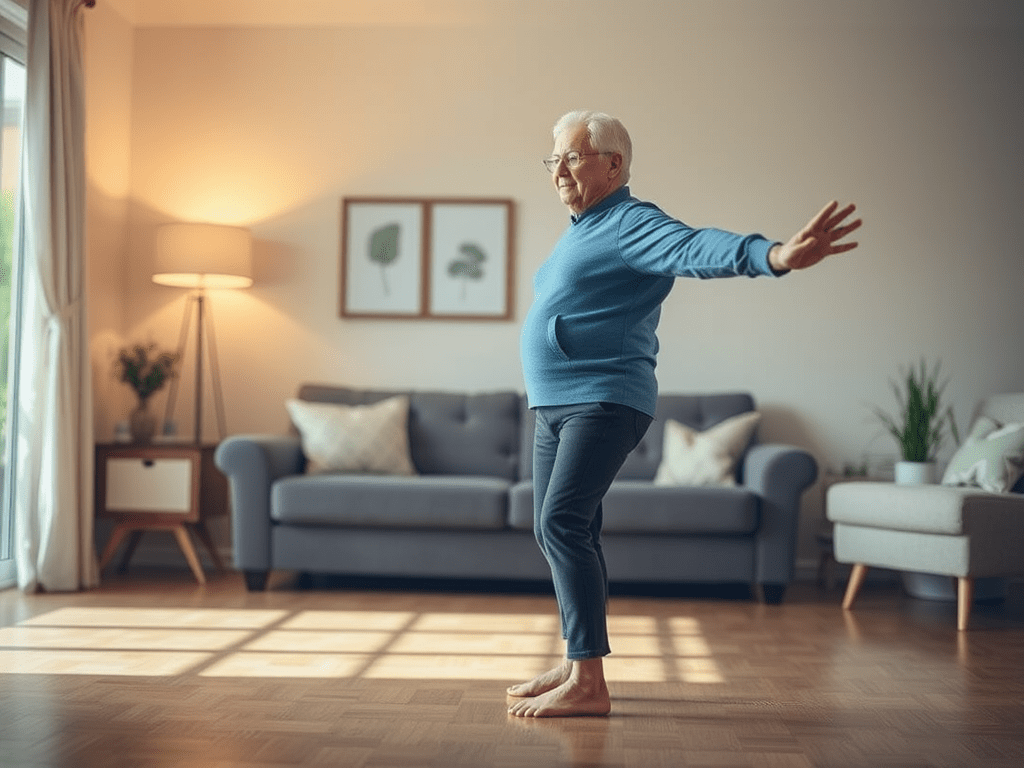


Every 11 seconds, an older adult visits an emergency room due to a fall. With the CDC reporting falls as the #1 cause of injury among people over 65, maintaining stability isn’t just about comfort—it’s a matter of safety. But here’s the good news: your body can rebuild its equilibrium at any age through targeted routines.
This isn’t about complicated gym equipment or marathon sessions. Simple, research-backed movements done consistently can sharpen reflexes and strengthen core muscles. Think of it as rewiring your natural safety net—one deliberate step at a time.
We’ve designed these stability-building activities specifically for aging adults. Whether you’re recovering from a previous incident or aiming to stay ahead of risks, each exercise adapts to your current ability level. The key? Start small, focus on form, and celebrate progress—even if it’s just holding a pose two seconds longer.
Key Takeaways
- Falls cause 3 million emergency visits yearly for older Americans
- Balance improvement requires only 10-15 minutes daily
- Exercises progress from seated to standing challenges
- Focus areas include ankle strength and spatial awareness
- Always consult your doctor before starting new routines
11 Balance Exercises for Seniors to Help Prevent Falls: Why They Matter
Falls aren’t just minor accidents for older adults—they’re the leading cause of injury-related hospitalizations in the U.S. The CDC reports that 1 in 4 seniors experience a fall annually, often leading to fractures, reduced mobility, or long-term health complications. Age-related muscle loss and slower reflexes make quick recoveries harder, turning simple missteps into life-changing events.
Balance training for older adults tackles these risks head-on. A 2019 study found that seniors who practiced stability exercises reduced fall rates by 23% while improving coordination and confidence. Consistent practice strengthens leg muscles, sharpens reaction times, and helps maintain the core stability needed for daily tasks like climbing stairs or reaching for objects.
“Improving balance isn’t just about avoiding falls—it’s about preserving independence and quality of life as we age.”
2019 Journal of Aging & Physical Activity
Preventing falls in older adults also lowers hospitalization risks. Hip fractures alone account for over 300,000 senior admissions yearly, with recovery often requiring prolonged rehabilitation. Balance exercises build a safety net by:
- Enhancing joint flexibility
- Boosting spatial awareness
- Strengthening posture-control muscles
These benefits let you keep doing what you love—gardening, traveling, or playing with grandkids—without fear of instability. By dedicating 10-15 minutes daily to balance training, you’re investing in long-term mobility and peace of mind.
Safety First: Essential Precautions Before Starting

Before trying any elderly fall prevention exercises, taking smart safety steps ensures you get the most from your senior citizen balance workouts. Let’s explore three non-negotiable precautions to protect your well-being while building stability.
Consult Your Healthcare Provider
Always start with a doctor’s approval, especially if you experience dizziness or have osteoporosis. Medical clearance helps:
- Identify hidden risks like blood pressure changes
- Adjust moves for joint limitations
- Prevent overexertion during workouts
One study shows 40% of exercise-related injuries in older adults could be avoided with proper medical guidance.
Creating a Safe Exercise Environment
Transform your space into a balance-training sanctuary using these tips:
- Use non-slip yoga mats on hard floors
- Keep walkways clear of electrical cords/pets
- Position sturdy chairs within arm’s reach
“Remove throw rugs completely – they account for 27% of home fall hazards.”
Using Proper Footwear
Your shoes make or break stability. Look for these features:
- Rubber soles with textured grips
- Firm arch support
- Secure velcro or lace closures
The CDC reports that 1 in 9 falls stems from inappropriate footwear. Avoid loose slippers or worn-out sneakers during senior citizen balance workouts.
Remember: These precautions take just minutes to implement but provide years of safer movement. Pair them with our upcoming elderly fall prevention exercises for maximum protection and progress.
Standing Balance Exercises (4 Fundamental Moves)

Building confidence in your movements starts with mastering these four standing exercises for seniors. These carefully selected drills target stability muscles while teaching your body to maintain alignment during daily activities. Let’s break down each move with clear instructions and smart adaptations.
1. Heel-to-Toe Walk
How to Perform
Walk slowly in a straight line, placing your front foot’s heel directly against your back foot’s toes. Keep your arms out for balance like a tightrope walker. First Source recommends doing 10 steps initially, using a hallway wall for support if needed.
Modifications
- Use parallel kitchen counters as “training rails.”
- Try seated heel-toe taps before progressing to standing
- Third Source suggests using a full-length mirror to check posture
2. Single-Leg Stand
Proper Form
Hold a sturdy chair with both hands. Lift one foot 6 inches off the floor, keeping your standing knee slightly bent. Start with 5-second holds per leg, working up to 30 seconds. Pro tip: Focus on a fixed spot ahead to maintain balance.
Common Mistakes
- Locking the supporting knee (increases fall risk)
- Holding breath (breathe normally)
- Rushing progressions (build time gradually)
3. Clock Reach
Movement Pattern
Imagine standing at a clock’s center. Slowly point your right foot toward the 12, 3, 6, and 9 o’clock positions while maintaining balance. Keep movements controlled – quality matters more than range.
Safety Variations
- Use a walker for upper body support
- Reduce to 4 positions instead of 12
- Perform the seated version using ankle movements
4. Side Leg Raises
Muscles Targeted
This exercise strengthens your glutes and outer thighs, crucial muscles for preventing sideways falls. Third Source emphasizes keeping toes pointed forward to avoid hip strain.
Progression Tips
- Add ankle weights (start with 1 lb)
- Combine with arm movements for dual-task training
- Practice while waiting at counters or sinks
“Always maintain a microbend in your knees during leg raises – hyperextension removes muscle engagement and stresses joints.”
Seated Stability Builders (3 Chair-Based Exercises)

Chair-based exercises offer a safe yet effective way to improve stability for older adults. These seated routines strengthen core muscles, enhance coordination, and reduce fall risks while accommodating limited mobility. Let’s explore three foundational movements that combine practicality with proven results.
5. Seated Marching
Sit upright with feet flat on the floor. Lift one knee toward your chest, then lower it smoothly. Alternate legs like you’re marching in place. Aim for 10–15 repetitions per side, focusing on controlled movements rather than speed.
Coordination Benefits
This exercise trains your brain and body to work together. By alternating legs rhythmically, you’ll sharpen reaction times and spatial awareness, skills crucial for preventing trips.
Intensity Boosters
Add challenges as you progress:
- Pump arms opposite to lifted knees
- Hold light weights (1–2 lbs)
- Pause for 3 seconds at the highest point
6. Foot Taps
Keep heels grounded while tapping toes upward. Alternate feet in a steady pattern, imagining you’re pressing piano pedals. This low-impact motion works wonders for joint flexibility.
Ankle Mobility Focus
Consistent foot taps loosen stiff ankles, making stairs and uneven surfaces easier to navigate. For best results, keep movements small but precise—overextending can strain muscles.
Rhythm Techniques
Sync taps with music beats or a metronome app. Start at 60 BPM (beats per minute), gradually increasing tempo as your coordination improves. This auditory cue helps maintain consistent pacing.
7. Seated Tai Chi Arms
Extend arms forward at shoulder height, palms facing down. Circle them outward in slow, fluid motions like pushing through water. Complete 8–10 rotations clockwise, then reverse direction.
Flow Patterns
Tai Chi’s circular movements enhance proprioception—your body’s ability to sense its position. Focus on creating smooth arcs rather than angular gestures to maximize joint lubrication.
Breathing Coordination
Inhale deeply as arms rise, exhale fully as they lower. This synchronized breathing reduces stress hormones while oxygenating muscles. Bonus: Practice this technique during TV commercials for easy daily repetition.
Strength-Building Foundation (2 Key Exercises)

Building lower-body strength is critical for maintaining stability as you age. These two exercises target muscles that support posture and coordination while improving bone density, a key factor in fall prevention according to recent studies.
8. Mini Squats
This low-impact movement strengthens the quadriceps and glutes without straining joints. Start with a 2-inch knee bend while holding a walker or sturdy chair.
Depth Guidelines
Only lower yourself halfway down—imagine sitting on a tall stool. Stop immediately if you feel knee discomfort.
Support Options
| Support Type | Best For | Safety Benefit |
|---|---|---|
| Walker | Beginners | Full upper-body stability |
| Countertop | Intermediate | Single-hand balance practice |
| Wall | Advanced | Minimal assistance |
9. Calf Raises
Strengthen your ankles and improve push-off power for walking. Recent research shows this exercise increases bone-forming cell activity by 23% in seniors who practice it regularly.
Phase Breakdown
Lift your heels slowly, hold for 2 seconds, then lower over 4 seconds. This controlled motion activates the soleus muscles along your shins.
“Weight-bearing exercises like calf raises stimulate bone remodeling, reducing fracture risks in older adults.”
Third Source Osteoporosis Study
Weight Shifting
Start with both feet flat. Gradually shift more weight to one leg as you gain confidence. Use a wall for support if needed.
Tai Chi Fundamentals for Daily Practice

Tai Chi blends gentle movements with mindful breathing to create a natural defense against instability. Unlike traditional workouts, this 2,000-year-old practice focuses on fluid weight shifts and body awareness—key tools to prevent falls in older adults. A 2020 meta-analysis found that seniors who practice Tai Chi three times weekly reduce fall risk by 23% compared to non-practitioners.
10. Weight Shifting Flow
Start with feet hip-width apart, knees slightly bent. Visualize pouring water from one hip to the other as you shift your weight. Move slowly, spending 3-5 seconds per shift to engage core muscles and improve reaction time.
Posture Alignment
Keep your spine straight like a suspended string from head to tailbone. Distribute weight evenly between both feet, and avoid locking your knees. Proper alignment trains your body to recover quickly from stumbles.
Mental Focus
Sync each movement with deep belly breathing. Concentrate on the sensation of your feet connecting to the floor—this mindfulness sharpens proprioception, your body’s internal “GPS” for balance.
| Tai Chi Element | How It Helps | Daily Practice Tip |
|---|---|---|
| Weight Transfers | Strengthens ankle stabilizers | Practice near a wall for safety |
| Upright Posture | Reduces forward-head tilt risks | Check alignment in a mirror |
| Breath Awareness | Lowers stress-induced imbalance | Hum during movements |
Assistive Device Integration

Using mobility aids effectively can boost confidence while performing elderly fall prevention exercises. Walkers provide stable support for practicing weight shifts and lateral movements—critical skills for maintaining independence. Let’s explore how to integrate these tools safely into your routine.
11. Walker-Assisted Side Steps
This exercise strengthens hip muscles and improves sideways stability. Position your walker on a flat surface, ensuring all legs touch the ground evenly. Stand upright with shoulders relaxed, keeping a slight bend in your knees.
Grip Techniques
Hold the walker handles at elbow height—your arms should form 15-degree angles when gripping. Avoid white-knuckling the bars; gentle pressure with open palms enhances control. For added safety, use walker grips with non-slip textures.
Tempo Control
Move sideways in slow, deliberate steps:
- Shift weight to your left leg
- Slide the walker 6-8 inches to the right
- Step the right foot toward the walker
- Pause for 2 seconds before repeating
“Rushing increases trip risks,” explains physical therapist Mara Simmons. “The pause phase builds muscle memory for recovery steps if you lose balance.” Track your progress by counting how many controlled steps you complete in 90 seconds.
Tracking Progress Effectively

Turning your balance routine into a measurable journey helps you spot trends, celebrate wins, and stay committed. Studies show seniors who track their stability workouts see 23% more consistency than those who don’t. Let’s break down two simple strategies to make progress visible.
Balance Journal Basics
Start with a notebook or digital app to record daily efforts. Focus on three key details:
- Exercise duration: Note how long you spend on activities like heel-to-toe walks or seated marches
- Perceived stability: Rate your confidence from 1 (wobbly) to 5 (rock-solid) during each session
- Near-fall incidents: Jot down any close calls and what caused them (e.g., loose rug, tired legs)
This approach helps identify patterns. Maybe calf raises feel easier on Tuesdays after rest days, or side leg raises cause more shaking post-lunch. Share these insights with your doctor during checkups.
Milestone Celebrations
Mark progress with meaningful rewards that fuel your motivation. After completing 30 consecutive days of senior citizen balance workouts, consider:
- Upgrading exercise gear (non-slip yoga mats count!)
- Scheduling a therapeutic massage
- Hosting a “balance party” with friends doing chair-based exercises together
Pro tip: Place your journal where you’ll see it daily – next to medications or TV remotes work great. Visible tracking tools create gentle accountability without feeling like a chore.
When to Seek Professional Guidance

Knowing when to ask for help can make your balance training for older adults safer and more effective. While many exercises are safe to try at home, certain red flags mean it’s time to consult a healthcare professional.
Watch for these warning signs:
- Frequent dizziness during daily activities or workouts
- Struggling to stand on one leg for 10 seconds (based on a 2022 balance study)
- Recent falls or near-falls without clear causes
Physical therapists create personalized plans for those recovering from surgeries like hip replacements. They assess your movement patterns and adjust exercises to match your unique needs. “Early intervention prevents complications and builds confidence,” advises a leading rehabilitation specialist.
Don’t wait until a fall happens. If you notice balance issues affecting daily tasks like climbing stairs or reaching for objects, schedule a consultation. Many clinics offer free balance screenings through Medicare Advantage plans.
Combining home exercises with professional balance training for older adults delivers the best results. Therapists can also recommend assistive devices or home modifications to reduce fall risks further.
Conclusion
Improving balance requires steady effort, not sudden bursts of activity. The 11 balance exercises for seniors to help prevent falls work best when practiced regularly. Focus on simple daily habits – like the heel-to-toe walk during TV commercials or seated Tai Chi arm movements while waiting for coffee – to build strength gradually.
Key moves like single-leg stands and weight-shifting flows train your body to handle real-life situations. Pair these with safety strategies discussed earlier: keep exercise areas clutter-free, wear supportive shoes like Brooks Addiction Walkers, and consult your doctor before increasing intensity. Small adjustments create big differences over time.
Track improvements using a balance journal or smartphone app. Notice standing taller during calf raises? Celebrate that win. Struggling with side leg raises? Adjust your grip on the chair. Every step counts toward maintaining independence.
Balance remains a learnable skill at any age. Whether using a walker for assisted side steps or practicing mini squats at the kitchen counter, your efforts matter. Stick with these 11 balance exercises for seniors to help prevent falls, and you’ll build confidence alongside physical stability. Today’s practice shapes tomorrow’s mobility.




Leave a comment