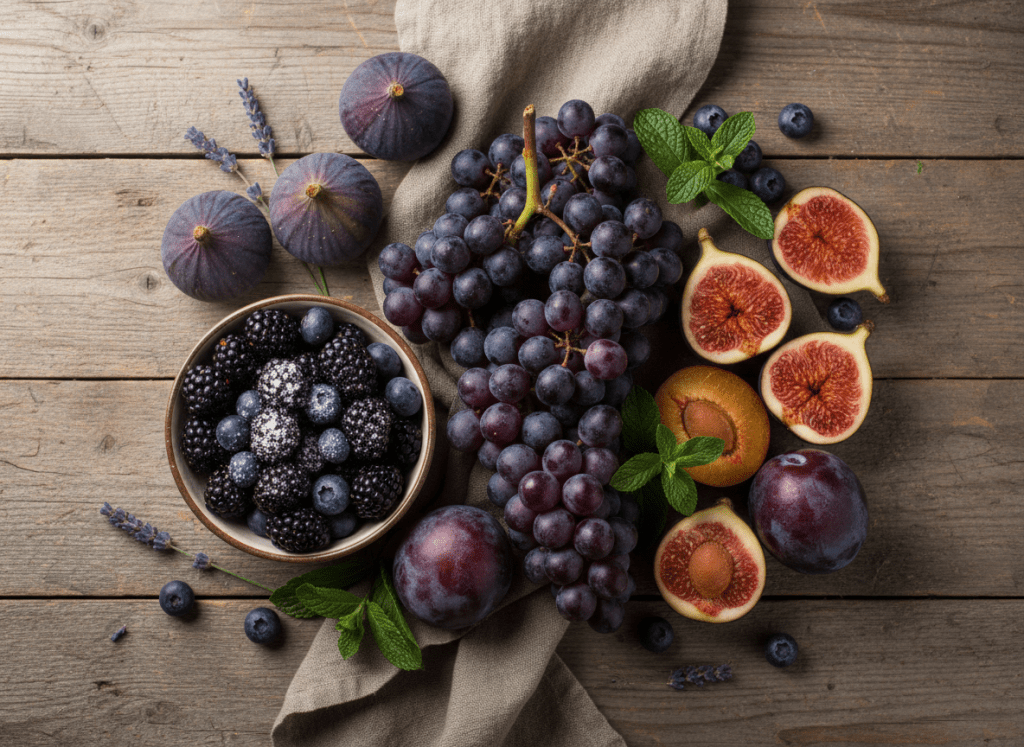


Studies show that eating purple fruits and veggies can lower the risk of heart disease by 32%. This is a big deal for your health.
Don’t think purple foods are just a diet trend. They’re packed with anthocyanins, powerful nutrients. These fight damage and boost your health.
The purple color in foods like blueberries and eggplants is key. It means they’re full of good stuff for your heart, brain, and immune system.
Adding purple foods to your diet is easy. Experts worldwide say they’re essential for a healthy diet. Discover why these foods are so important.

This article dives into the health perks of purple foods. You’ll learn how they help your heart, brain, and digestion. Start your health journey by understanding these five key benefits.
Key Takeaways
- Purple foods contain anthocyanins, powerful antioxidants that protect your cells.
- Eating healthy purple produce reduces heart disease risk by up to 32%
- The 5 reasons to add more purple foods to your plate include cancer prevention and brain support
- Purple foods boost your immune system and fight inflammation naturally
- Blueberries, acai, and purple cabbage are top choices for maximum health benefits
- Regular consumption supports liver health and urinary tract function
- Purple foods’ benefits extend to memory improvement and disease prevention
Understanding the Power of Anthocyanins in Purple Foods
Purple foods owe their vibrant color to anthocyanins, special plant pigments. These compounds do more than add color to your plate. They act as shields for plants and your body, protecting against cell damage.
The science behind purple foods is truly interesting. Darker foods, like berries and eggplants, have more antioxidants. This is because the darker the food, the higher the antioxidant level. Your body needs these antioxidants to stay healthy and young.

What Makes Purple Foods Different from Other Colored Produce
All colorful fruits and veggies have protective pigments. But purple foods stand out because of their unique structure and how your body uses them. Eating foods rich in anthocyanins helps your gut bacteria in special ways.
Purple foods range from red to blue. Some purple potato peels contain up to 20 times as many antioxidants as the inside. This makes purple foods much more beneficial than lighter ones.
- Purple grapes contain powerful anthocyanins.
- Blueberries deliver dense antioxidant protection.
- Purple cabbage offers exceptional nutrient density
- Blackberries provide multiple health compounds
- Eggplant skins contain concentrated pigments
How Anthocyanins Protect Your Body from Oxidative Stress
Your cells are constantly attacked by harmful molecules called free radicals. These attacks can lead to aging and disease. Anthocyanins in purple foods fight these molecules, protecting your cells.
Antioxidants neutralize free radicals, helping you look younger. They prevent the damage that causes wrinkles and age spots. Regularly eating foods rich in anthocyanins builds a defense against aging and disease.
| Purple Food Source | Anthocyanin Content Level | Primary Health Benefit |
|---|---|---|
| Blueberries | Very High | Brain function and memory |
| Purple Grapes | High | Heart and circulatory health |
| Blackberries | Very High | Anti-inflammatory protection |
| Purple Cabbage | High | Digestive system support |
| Purple Sweet Potatoes | Medium-High | Blood sugar regulation |
Your large intestine plays a key role in the use of anthocyanins. These compounds are absorbed and transformed into new health benefits. This shows why purple foods are essential to your daily diet.
5 Reasons To Add More Purple Foods To Your Plate
Discover why nutrient-dense purple foods are a must-have in your kitchen. These foods are packed with vitamins, minerals, and plant compounds. They support your health in many ways.
Adding purple foods to your meals is easy. You don’t need fancy recipes or hard-to-find ingredients. Here’s a list of purple foods you’ll love, from everyday choices to new finds.

- Blackberries and blueberries for easy snacking
- Purple grapes for sweet treats
- Purple sweet potatoes for hearty side dishes
- Purple cabbage for colorful salads
- Eggplant for roasting and grilling
- Purple carrots for fresh, crunchy bites
- Purple kale for nutrient-packed smoothies
- Pomegranates for antioxidant-rich seeds
Purple foods boost your health in five key areas. Your heart gets stronger, your brain works better, and your body fights off illness. Your liver and urinary system also get a boost.
These foods are rich in vitamin C for immunity, vitamin K for bone health, manganese for metabolism, and potassium for heart health. They also have fiber for digestion and compounds like resveratrol and anthocyanins that protect cells.
“The darker the color, the more powerful the nutrition inside.”
Start your health journey with purple foods. Choose your favorite and add it to your meals this week.
Purple Foods Fight Cancer and Support Liver Health
Your body fights off harmful molecules called free radicals every day. These unstable atoms can damage your cells and lead to serious diseases. Purple foods have powerful compounds that fight this damage.
Research shows purple foods kill cancer by stopping oxidative stress. Your liver works hard to filter toxins from your blood. It needs extra support, and purple foods provide the antioxidants it needs.

The color of purple produce is linked to its health benefits. Dark purple berries and vegetables have more anthocyanins than lighter ones. Scientists have proven this through study and observation.
The Darker the Berry, the Sweeter the Juice: A Scientific Truth
The saying “the darker the berry, the sweeter the juice” is true. Dark berries like blackberries, blueberries, and dark purple grapes have the most anthocyanins.
These compounds work at the cellular level to prevent cancer. They neutralize oxidative damage, helping your body recognize abnormal cells before they become cancerous.
- Blackberries contain up to 7 times more anthocyanins than red raspberries
- Purple cabbage has glucosinolates that work together with anthocyanins
- Blueberries support your body’s natural defense against cellular damage
- Purple sweet potatoes provide sustained antioxidant protection
In Okinawa, Japan, purple sweet potatoes are a dietary staple. This island has lower cancer rates, and elderly citizens stay sharper longer. Their dementia rates are 50% lower than in the US.
How Purple Foods Help Mitigate Alcohol-Related Liver Stress
Your liver processes everything you consume. Drinking alcohol makes it work harder, creating free radicals that damage liver cells over time.
Purple foods help because they contain antioxidants that neutralize free radicals. The anthocyanins in purple berries protect liver tissue from oxidative damage.
| Purple Food | Key Liver-Supporting Compound | Protective Benefit |
|---|---|---|
| Blueberries | Anthocyanins | Reduces fatty liver disease risk |
| Red Cabbage | Glucosinolates + Anthocyanins | Supports detoxification pathways |
| Purple Grapes | Resveratrol + Anthocyanins | Protects liver cells from damage |
| Blackberries | High-concentration Anthocyanins | Neutralizes alcohol-generated free radicals |
Adding a bowl of fresh berries after drinking can help your liver. This simple choice gives your liver the support it needs to recover. Your body will thank you for providing these protective compounds when it needs them most.
“The antioxidants in purple foods work like a shield, protecting your liver from the damage that comes from processing toxins and alcohol.”
Eating purple foods regularly builds your body’s defense system. Choosing darker varieties gives you maximum protection. Your liver stays stronger, your cells stay healthier, and your body’s natural cancer-fighting abilities get the boost they deserve.
Heart Health and Anti-Inflammatory Benefits of Purple Vegetables
Your heart works hard every day. It’s crucial to keep it healthy. Purple foods are great for your heart because they have compounds that protect it. These foods and fruits offer benefits that help you live longer and feel better.
Heart disease is the top cause of death in the US, but eating anti-inflammatory purple foods can lower your risk. Regularly eating these foods gives your body natural protection against heart damage.

- They keep your blood pressure at healthy levels
- They lower LDL cholesterol, which clogs the arteries
- They reduce inflammation in your blood vessels
- They help your blood vessels stay flexible and relaxed
Beetroot is great for blood pressure. Studies show it can quickly lower systolic blood pressure. Cherries have anthocyanins that strengthen blood vessels and keep them healthy.
| Purple Food | Key Heart Benefit | Best Frequency |
|---|---|---|
| Blueberries | Reduces cholesterol levels | 3-4 times per week |
| Beetroot | Lowers blood pressure | 2-3 times per week |
| Purple Kohlrabi | Fights inflammation | 2-3 times per week |
| Red Cabbage | Supports cholesterol health | 3-4 times per week |
Chronic inflammation harms your heart over time. Anti-inflammatory purple foods fight this inflammation. Purple kohlrabi is very effective at reducing inflammation in your body.
Inflammation is linked to many diseases. High levels of inflammation can lead to arthritis, diabetes, and autoimmune diseases. Eating purple diet foods helps your immune system stay balanced and prevents these diseases.
Start by adding one serving of purple vegetables to your meals twice a week. Gradually increase to three or four servings weekly for the best benefits. Your heart will thank you for this simple change.
Purple Superfoods for Brain Function and Urinary Tract Health
Purple foods are great for your brain and urinary system. They have compounds that protect sensitive areas in your body. Eating purple berries and vegetables helps fight infections and keeps your mind sharp.

Memory Enhancement and Alzheimer’s Prevention
Your brain needs protection from damage. Blueberries and blackberries have anthocyanins that reach your brain cells. Eating these berries can improve your memory and focus.
Research shows that blueberries boost brainpower and mood in both kids and adults. Anthocyanins help brain cells talk better. This makes your attention and memory better with purple foods.
Purple sweet potatoes are also good for your brain. People in Okinawa live long and have low dementia rates. They eat a lot of purple sweet potatoes. This suggests that purple foods may slow brain aging and help fight Alzheimer’s.
Natural Protection Against Urinary Tract Infections
Your urinary system is vulnerable to harmful bacteria. Purple foods fight urinary tract infections in several ways. Anthocyanins in cranberries and other berries act as natural antibacterial agents.
Here’s how purple foods protect you:
- Prevent harmful bacteria from sticking to the urinary tract walls
- Support your immune system’s ability to fight off pathogens
- Promote beneficial bacteria growth in your gut
- Reduce inflammation in your urinary system
Purple foods are also good for preventing ulcers. The antibacterial qualities of anthocyanins help your digestive tract. Your gut bacteria turn these compounds into chemicals that boost your immune system. This helps your body heal and fight infections better.
The natural compounds in purple foods offer your body defenses against common infections without medication.
If you often get urinary tract infections, try adding purple berries and vegetables to your diet. These foods help your gut’s good bacteria grow. This can prevent infections naturally.
Conclusion
You now know how purple foods boost your health. They help prevent cancer, support your liver, and keep your heart and brain healthy. These foods protect your cells, reduce inflammation, and keep your urinary tract healthy.
The anthocyanins in blueberries, blackberries, purple cabbage, and potatoes are like a shield for your body. They help fight off diseases.
Eating a variety of colorful fruits and vegetables is key. Aim for at least five portions a day. This ensures you get all the nutrients your body needs.
Pairing purple foods with other colors, such as orange, green, red, and yellow, is best. This way, you get a complete mix of nutrients. Dark purple, red, and blue fruits and veggies are safe and healthy for most people.
Getting started is easy and doesn’t require big changes. Just add blueberries to your oatmeal, use purple cabbage in salads, or snack on grapes. Roasting purple potatoes is also a great idea.
These small steps can make a big difference. They support your heart, brain, and body’s fight against inflammation and disease. Choose a purple food you like and add it to your meals regularly.




 trim down and shape up
Leave a reply to OlRedHair Cancel reply