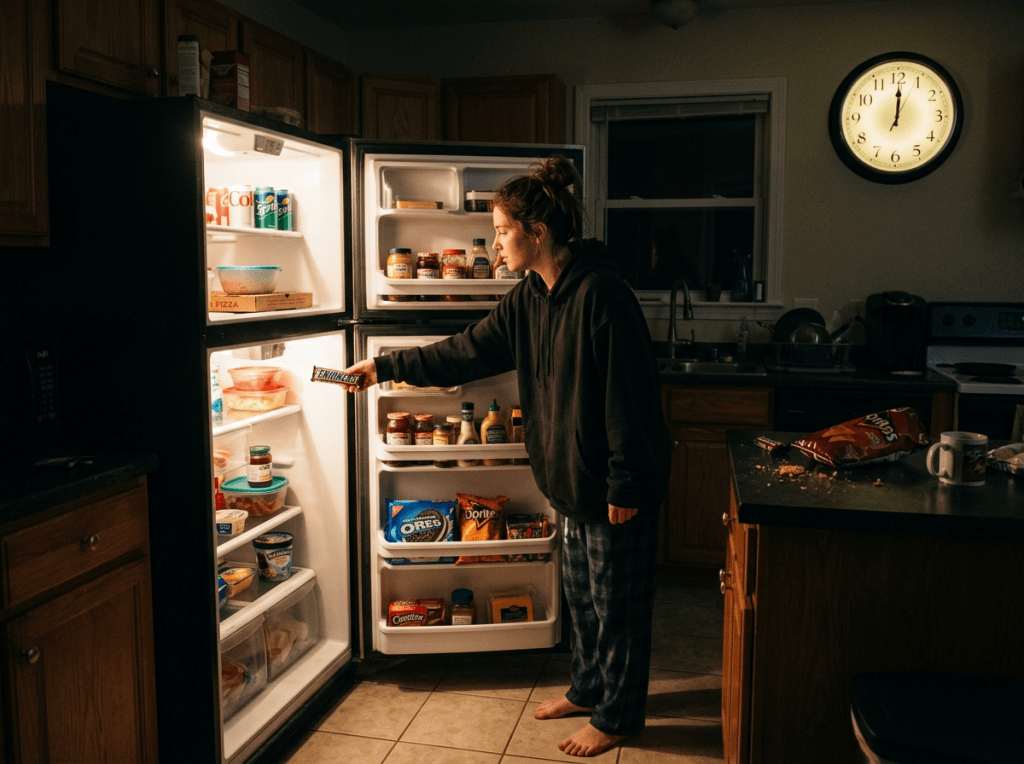


Ever thought that when you eat is as important as what you eat? Many think eating late at night is no big deal. They believe a snack before bed won’t hurt their health. But science says it does.
Your body has a natural schedule, called your circadian rhythm. Eating late goes against this clock. It messes with your digestive system, metabolism, and hormone levels.
Eating late at night can lead to big health problems. These include weight gain, diabetes, heart disease, and digestive issues. Knowing these risks helps you make better eating choices.

This article explores five major health issues linked to eating late at night. You’ll see why timing is key for your health. Learn how changing your eating schedule can boost your well-being.
Key Takeaways
- Your body has a natural eating window that works best for your health and digestion.
- Late-night eating slows your metabolism and increases your risk of weight gain.
- Eating before bed raises your blood sugar levels and increases type 2 diabetes risk.
- Night eating raises triglyceride levels and puts stress on your heart
- Eating close to bedtime triggers acid reflux and GERD symptoms
- Your circadian rhythm controls how your body processes food and energy
- Changing your eating schedule can prevent serious long-term health problems
Why Eating Late at Night Can Cause Major Health Complications
Your body has a built-in schedule that has evolved over thousands of years. It controls when you should eat, sleep, and stay active. Ignoring these signals and eating late at night can cause problems in your body. Understanding how your eating timing affects your health is key to better wellness.
The timing of your meals is as important as what you eat. Your digestive system, hormone levels, and metabolism all depend on a natural rhythm. Eating at the wrong time can disrupt these processes.
Your Body Has Its Own Clock
Your body operates on a natural light cycle rhythm that guides your eating patterns. This internal clock, called your circadian rhythm, tells you when to feel hungry and digest food efficiently. Your body expects to receive food during daylight hours, roughly from 8:00 am to 7:00 pm, which is when you’re at your peak activity.
A 2017 study at the National Autonomous University of Mexico found that eating against our natural daytime habits can raise triglyceride levels. Your body isn’t built to process large meals late in the evening.
The dangers become even clearer when looking at specific eating windows. Research shows that eating late at night is linked to higher risks of all-cause and diabetes mortality. The highest risk is during 10:00 pm- 4:00 am.
- Your metabolism slows down at night.
- Digestive enzymes decrease after sunset.
- Insulin sensitivity drops in the evening hours
- Sleep quality suffers after late meals

The Optimal Eating Window for Your Health
Eating during daylight hours aligns with your body’s natural design. Your digestive system works best when you consume meals between early morning and early evening. This timing aligns with your circadian rhythm and helps keep your hormones balanced.
The ideal eating window starts in the morning and should wrap up by early evening. Avoid eating late at night, when your body prepares for rest. Your metabolic rate drops, and your body cannot process food as efficiently.
| Time Period | Body Function | Best for Eating? |
|---|---|---|
| Early Morning (6:00-9:00) | High metabolism, strong digestion | Yes – Ideal |
| Midday (12:00-14:00) | Peak digestive capacity | Yes – Optimal |
| Late Afternoon (16:00-18:00) | Still good digestion, metabolism active | Yes – Good |
| Evening (20:00-23:00) | Digestion slowing down | Light meals only |
| Late Night (23:00-1:00) | Minimal digestion, poor metabolism | No – Avoid |
Eating during your body’s natural daytime hours supports better health outcomes. Your triglyceride levels stay more stable, your weight management improves, and your risk of serious conditions drops significantly. Respecting your circadian rhythm is one of the simplest ways to protect your long-term health.
Did You Know? Late Night Eating is Causing These 5 Major Problems
Eating late at night does more than just satisfy a snack craving. It starts a chain reaction in your body that can lead to serious health issues. These problems are not minor and affect millions of Americans, putting their lives at risk.
Your body isn’t made to digest food at midnight. Late-night eating messes with your natural rhythms, causing problems in many areas of your body. Knowing about these five major health risks is the first step to making changes.

- Obesity and weight gain from extra calories consumed when your metabolism slows down
- Type 2 diabetes and blood sugar issues triggered by irregular eating patterns and insulin resistance.
- Heart disease risk that climbs when you gain weight and develop other complications
- Acid reflux and GERD from lying down too soon after eating
- Increased risk of metabolic syndrome, a cluster of dangerous conditions working together
These health issues are closely linked. Obesity raises your risk of type 2 diabetes and heart disease. Metabolic syndrome combines several risk factors at once. When you see how late-night eating affects your body, you understand why it’s so important to stop. Taking action now can protect your health for the future.
Obesity and Weight Gain from Nighttime Eating
Many people don’t know how nighttime eating affects their weight. Eating late changes how your body uses food and stores energy. Knowing this helps explain why when you eat is as important as what you eat.
Eating at night changes how your body uses calories. This timing affects whether calories are used for energy or stored as fat. The science behind this shows how important metabolism, hormones, and timing are for your weight.
How Late Night Eating Disrupts Your Metabolism
Your metabolism slows down in the evening as you get ready for sleep. Eating late means your body stores more calories as fat. This makes it hard to avoid weight gain.
At night, your body can’t process carbs well. This makes it easier to turn carbs into fat. This problem is more than just one hormone.

Late eating messes with your hunger hormones. This makes you hungrier the next day and more likely to overeat. You also miss out on growth hormone, which helps keep muscle and burn fat.
- Slower metabolic rate at night promotes fat storage
- Reduced insulin sensitivity increases carbohydrate conversion to fat
- Disrupted hunger hormones lead to next-day overeating
- Lost growth hormone production reduces muscle maintenance
The Connection Between Eating Time and Body Mass Index
Research shows that consuming most of your calories at night is associated with higher BMIs. When you eat affects whether calories are stored as fat or used for energy.
Studies show eating between 11 pm and 5 am leads to more weight gain. People who eat during these hours consume 12% more calories than those who don’t. It’s not just about calories—when you eat matters for your weight.
| Eating Pattern | Average BMI | Weight Gain (6 months) | Total Daily Calories |
|---|---|---|---|
| Nighttime eating (11 pm–5 am) | 28.5 | 15 lbs | 2,680 calories |
| Daytime eating (7 am–7 pm) | 24.2 | 4 lbs | 2,395 calories |
Your eating schedule is key to controlling weight gain. Eating earlier helps your body process food better and store less fat. This simple change can help manage your weight without extreme dieting.
The key insight is simple: when you eat matters just as much as what you eat. Understanding how nighttime eating affects your metabolism and BMI gives you control over your weight and health.
Type 2 Diabetes and Blood Sugar Issues
Eating late at night can harm your blood sugar control. Your body has a natural rhythm for handling glucose. When you eat late, your pancreas works hard to make insulin when your cells are less ready to use it. This keeps your blood sugar high for longer.
Studies show that eating between 11 pm and midnight can double your risk of diabetes problems. This is compared to those who eat earlier. Eating right before bed nearly doubles your risk.

Eating outside of planned times can cause blood sugar spikes and drops. This can disrupt your sleep and change your hunger the next day, says Jill Chodak from the University of Rochester Medical Center. These changes make your body work harder and can exhaust your pancreatic cells over time.
How Night Eating Damages Your Glucose Metabolism
Research has found that night eating is associated with higher glycated hemoglobin, fasting glucose, and oral glucose tolerance test results. These markers show how well your body manages blood sugar. Higher numbers mean a higher risk of type 2 diabetes.
Late-night eating harms your metabolism by:
- Forcing your pancreas to produce extra insulin when your body resists it most
- Creating insulin resistance that builds up over weeks and months
- Raising your fasting glucose levels each morning
- Increasing your glycated hemoglobin levels, which reflect your three-month average blood sugar
- Making oral glucose tolerance test results worse
Even if you don’t have diabetes now, this pattern moves you closer to a diagnosis. Your body’s ability to manage glucose declines with each late meal you consume.
Managing Blood Sugar When You Already Have Diabetes
If you already struggle with diabetes, changing your eating schedule is crucial. Eating outside of planned meals or snacks can lead to blood sugar spikes and drops. This disrupts your sleep and changes your hunger the next day. This unpredictable cycle makes managing your condition much harder.
Stop eating at least three hours before bed. This simple change helps your body:
- Stabilize your blood sugar overnight
- Improve your sleep quality
- Reset your hunger signals for the next day
- Reduce stress on your pancreas
- Lower your risk of diabetes complications
Your eating schedule isn’t just about weight management. It’s a critical tool for preventing type 2 diabetes and controlling blood sugar if you already have the condition.
Heart Disease and Increased Risk of Metabolic Syndrome
Your heart health is linked to when you eat, not just what you eat. Eating late at night can lead to serious heart disease risks. People who eat between 12:00 and 4:00 am have higher heart disease markers.
Your body processes food differently at night. This can harm your heart over time. It’s important to eat when your body is ready, not when it’s resting.
Eating late makes your metabolism work too hard during sleep. This can cause problems for your heart and blood vessels. Your arteries and heart face stress from eating at night.

Understanding the Link Between Night Eating and Cardiovascular Health
Your heart needs a regular eating schedule to stay healthy. Eating late at night makes it hard for your liver to process nutrients. This puts extra stress on your heart and blood vessels.
Night eating messes with your blood pressure. Your body is meant to rest, not digest food, at night. This can cause inflammation and weaken your heart.
How Late Eating Affects Your Triglyceride Levels
Triglycerides are fats in your blood that can harm your heart. Eating late can cause your liver to produce more triglycerides. These fats can build up plaque in your arteries.
- High triglycerides increase your risk of heart attack
- Plaque buildup in arteries develops faster with night eating
- Stroke risk rises significantly for 12:00 and 4:00 am among late-night eaters
- Blood vessel damage becomes permanent over time
Your triglyceride levels stay dangerously high the entire next day after eating late. This means one night of eating at 3:00 am affects your heart for 24 hours or longer. Protecting your heart means aligning your eating schedule with your body’s natural rhythms and avoiding late-night meals.
Acid Reflux and GERD from Late Night Eating
Eating late at night can lead to digestive issues. When you eat close to bedtime, your stomach keeps producing acid. This is because gravity, which helps keep acid down, is no longer working when you’re lying down.
Acid reflux happens when stomach acid flows back into your esophagus, causing heartburn. This can turn into GERD, a chronic condition that damages your esophagus. Many people who eat late at night suffer from this.

Eating too close to bedtime increases acid production. This is bad because it happens when you’re about to lie down. Foods high in animal protein, like meat and cheese, are worse because they need more acid to digest.
Understanding Your Nighttime Reflux Risk
Your eating schedule affects your risk for acid reflux and GERD. Late-night eating is a big problem because of how your body works. The more acid your stomach makes, the higher your risk when lying down.
- Stomach acid production peaks during digestion
- Lying down removes gravity’s protective effect
- Horizontal position favors upward acid movement
- Sleep reduces your body’s natural defenses
- Nighttime swallowing decreases by 90 percent
Best Practices to Prevent Nighttime Reflux
If you have heartburn, changing when you eat might help more than what you eat. Try to eat at least three hours before bed. This can help reduce or stop heartburn symptoms.
| Food Type | Digestion Time | Reflux Risk | Better Alternative |
|---|---|---|---|
| Red Meat | 3-4 hours | Very High | Fish or Poultry |
| Cheese | 2-3 hours | High | Low-fat Dairy |
| Eggs | 2-3 hours | High | Plant-based Protein |
| Vegetables | 30-45 minutes | Low | All Types Welcome |
| Whole Grains | 1-2 hours | Low | All Types Welcome |
Your digestive system needs time to process food before sleep. Eating right before bed makes your stomach work hard. It also increases the risk of acid reflux. People who eat late at night often have chronic heartburn.
Controlling when you eat is possible. Avoid eating in the bedroom by finishing meals three hours before bed. This can help reduce acid reflux symptoms.
Conclusion
Eating late at night can harm your health. It can lead to obesity, type 2 diabetes, and heart disease. Acid reflux and metabolic syndrome are also risks. But you can change these habits to keep yourself healthy.
Be mindful of when you eat. Stop eating three hours before bed to digest food properly. If you’re hungry at night, think about whether it’s real hunger or emotional hunger. A balanced snack with protein, fiber, and healthy fats can help.
Use smart strategies to avoid late-night eating. Eat filling, healthy meals during the day. Remove tempting snacks from your home. Brush your teeth or drink herbal tea when cravings strike. These steps help you eat better and stay healthy.



 trim down and shape up
Leave a comment