


Ever thought a simple move could show your health secret? Most ignore basic tasks, yet your lower-body strength is important to your health.

The 30-second sit-to-stand test is a health predictor. It checks your movement skill. Knowing how many times you should be able to sit and stand in 30 seconds for your age shows your physical health level.
Mastering this move lowers fall risk and boosts daily quality of life. We’ll show how to do the test right and understand your results. This helps you stay strong and mobile for years.
Key Takeaways
- The sit-to-stand test is a proven method to evaluate lower-body strength.
- Your performance on this test correlates with your long-term physical health.
- Regular assessment helps identify possible mobility issues early.
- Improving your score boosts balance and lowers fall risks.
- You can use these results to make a fitness plan for better aging.
Understanding the 30-Second Sit-to-Stand Chair Test
The 30-second sit-to-stand test is a key way to check your lower-body strength. It’s part of the Fullerton Functional Fitness Test Battery, which is well known to health experts. This test helps measure older adults’ leg strength, endurance, and fitness.

What is the chair stand test?
So, what’s the sit-to-stand chair test? It’s simple. It counts how many times you can stand up and sit down in 30 seconds without help. It shows your physical state without needing fancy gym gear.
You can do this test anywhere because it uses a regular chair. It works your leg muscles, key for moving around. Tracking your results helps you understand your health better.
The importance of functional fitness in aging
Functional fitness means doing daily tasks easily and safely. As you get older, keeping this fitness is vital to staying independent. Strong legs help with stairs, getting out of cars, and standing up from couches.
Functional exercises have many benefits for your life:
- Improved balance to avoid falls.
- Increased confidence in doing household tasks.
- Better stamina for walking and socializing.
- Enhanced joint health from regular motion.
By focusing on these movements, you stay active and able. Knowing your starting point helps you keep your body strong and flexible for the future.
How to Perform the Chair Stand Test Accurately
To get accurate results, you need to prepare well and pay attention to details. By following the standard steps, your score will show your true strength. It’s important to complete the test accurately to understand your lower-body strength well.
Setting up your testing environment
First, sit and stand from a chair that’s 17 inches (43.2 cm) high. This chair should have a straight back and no armrests. Place the chair against a wall to keep it steady while you move.

Step-by-step instructions for the movement
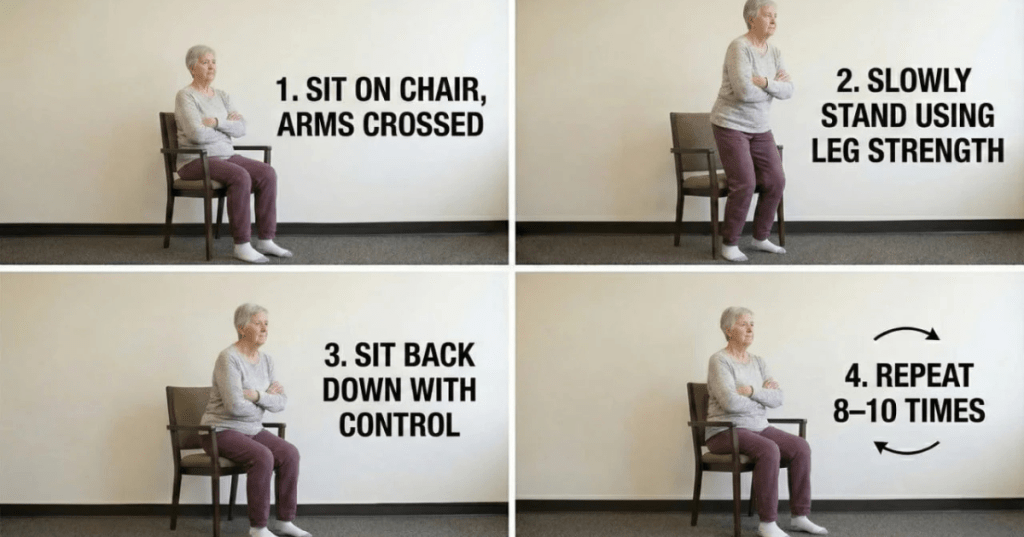
When seated, sit with your feet shoulder-width apart. Make sure your feet are flat on the floor the whole time. This helps you use your leg muscles better without help.
Then, cross your arms over your chest and hold them tight. Start the timer and stand up to your full height. Then, sit back down. Keep doing this until the 30-second timer goes off.
Common mistakes to avoid during the test
Don’t use your arms to push off your legs or the chair. This makes your results not count because it hides your real muscle strength. Always keep your arms folded against your chest to test your legs alone.
Another mistake is not standing fully or not sitting down fully between tries. Make sure to extend your hips and knees fully at the top of each move. Consistency is key to track your progress over time.
How many times should you be able to sit and stand in 30 seconds for your age?
Many people wonder, “How many sit-to-stand reps should you be able to do?” It’s key to remember that expected scores for the chair stand test vary by age and sex.
In the original 1999 study, most moderately active participants could do a certain number of sit-to-stand reps in 30 seconds. These figures are a good starting point for your fitness journey.

Benchmarks for ages 60 to 69
For younger seniors, the physical demands are high. Women aged 60 to 64 should aim for 12–17 reps. Men in this age group typically do 14–19 reps.
As you get older, the targets change slightly. Women aged 65 to 69 should do 11–16 reps. Men usually complete 12–18 reps in this age range.
Benchmarks for ages 70 to 79
Maintaining strength is key in your seventies. Women aged 70 to 74 should aim for 10–15 reps. Men usually do 12–17 reps in this age group.
For those aged 75 to 79, women should aim for 10–15 reps. Men typically complete between 11–17 reps.
Benchmarks for ages 80 and older
Strength training is beneficial well into your eighties and nineties. Women aged 80 to 84 should aim for 9–14 reps. Men should target 10–15 reps.
For the 85 to 89 age group, women should aim for 8–13 reps. Men should aim for 8–14 reps. For those aged 90 and older, women typically complete 4–11 reps. Men reach 7–12 reps.
Why the Chair Stand Test Matters for Your Health
Knowing why the chair stand test matters for your health is key to keeping your independence. This simple test shows how well you can move and stay active. It helps you feel confident in your ability to handle everyday tasks.

Assessing leg strength and balance capabilities
The main goal of the 30-second sit-to-stand chair test is to check your leg strength and balance. It shows how many times you can stand up from sitting. This tells you if your legs are strong enough for daily activities.
These activities, like climbing stairs or getting out of your car, use the same muscles. Stronger legs mean better balance, which is important for staying healthy as you age. Knowing your current strength helps you decide how active to be.
The link between muscle weakness and mobility
Finding muscle weakness early is vital to avoiding mobility problems later. When leg muscles weaken, your body finds ways to compensate. This can lead to tiredness or poor posture.
By watching your test results, you have an opportunity to fix any weaknesses before they affect your life. Starting strength training early helps keep your muscles strong. This way, you can stay active and independent for a long time.
The Connection Between Leg Strength and Fall Prevention
Many people don’t see the big deal about leg strength and preventing falls. Your legs are key to staying balanced and moving around. When your leg muscles weaken, so does your balance and confidence.
Understanding the risks of falls in older adults
Falls are a big problem for people over 65. They can lead to serious injuries like broken bones or head trauma. This can really change your life. Doctors know that balance and strength are key to staying healthy as you get older.
“Strength is the foundation of independence; it is the difference between living life on your own terms and relying on others for basic mobility.”
Studies show that if you have trouble getting up from a chair, you might be at risk for falls. If you’re struggling, it’s a sign your body needs more stability. Starting to work on your strength now can really help.
How functional strength protects your independence
Keeping your strength up is important for staying active and independent. Weak legs can make it hard to walk and increase your fall risk. By improving your sit-to-stand ability, you’ll be able to move around more easily.
Looking after your physical health is key to keeping your independence. Remember, falls are a big risk for older adults. By focusing on strengthening your legs, you’re investing in your freedom. This is a smart move for your future.
Interpreting Your Results
Your chair stand test score shows how well you’re doing physically. The numbers give a quick look at your fitness level. But remember, they’re just a starting point, not the end of the story.
Think of this data as a valuable tool for tracking your progress over time.

What your score says about your current fitness level
Scores range from zero for those who can’t stand up to over 20 for the very fit. By comparing your score to others your age, you can identify if you’re at a greater risk of dangerous falls or other mobility issues. This helps you see how you compare to your peers.
“Movement is the song of the body, and strength is the rhythm that keeps us dancing through the years.”
If your score is on the lower side, it doesn’t mean you’re stuck. It just means your lower body strength might need some work. With regular, focused exercise, you can see big improvements in how well you move.
When to seek professional medical advice
If your score is way below what’s normal for your age, talk to a doctor. They can figure out if you need structured strength training or if there’s a health issue to address.
If you feel off balance or hurt while doing the test, get help. A physical therapist or doctor can create a plan just for you. This is a smart investment in keeping you independent for years to come.
Strategies to Improve Your Chair Stand Score
If you’re scoring below average for your age group, it’s time to work on balance and lower-body strength. Learning how to improve your chair stand score is key to keeping your independence. By focusing on specific muscles, you can boost your performance and mobility.
Here are some tips to increase muscle strength and endurance for better chair test scores: consistency is key. Small daily changes can lead to big improvements over time.

Practicing the sit-to-stand movement at home:
To practice the sit-to-stand movement at home: start with a sturdy chair against a wall for safety. Focus on your form, not speed, in the beginning. Keep your feet flat and chest up during the whole motion. You can use your hands to assist you in the beginning.
Do three sets of ten reps a day. As you get better, try to stand up without using your hands. This progressive approach helps your body get used to the movement.
Targeting quads, glutes, and hamstrings:
To strengthen your quads, glutes, and hamstrings, add compound exercises to your routine. Squats and lunges are great for leg strength. They help you get up from a chair naturally.
Work on controlled movements to engage muscles better. If you feel off balance, hold onto something for support. Regular training of these muscles will improve your functional fitness.
Incorporating Core and Balance Training
A strong body needs a good balance between your core and balance. Your midsection is key for every move you make. Without a stable center, it’s hard to keep your body straight when standing up.

Why core stability is essential for standing
Your core muscles, like your abs and lower back, support your spine when you stand up. When you work on your core, you build a strong base. This base lets your legs push down better. It keeps your body straight, avoiding bad form and joint pain.
“Balance and core strength are the silent partners of longevity, ensuring that every step you take is supported by a foundation of stability.”
Adding balance work to your daily routine
To get better, add balance and stability work to your day. These exercises help your body react fast, which is key for staying independent as you get older. They also help your legs get stronger and improve your test scores.
Try these easy exercises every day:
- Single-leg stands: Hold onto a chair and lift one foot for 15 seconds.
- Heel-to-toe walking: Walk in a straight line, with one heel right in front of the other’s toes.
- Balance board training: Use a special board to make your ankles stronger and improve balance.
- Static holds: Stand on one leg while doing simple tasks like brushing your teeth.
Being consistent is the secret to better stability. Spend just a few minutes each day on these exercises. You’ll see big improvements in your confidence and control.
Consistency and Long-Term Fitness Goals
Building lasting strength is a journey that rewards those who stay consistent. It’s tempting to do intense workouts now and then. But your body does better with a steady routine.
This routine lets your muscles and joints adapt, recover, and get stronger over time.
“Success is the sum of small efforts, repeated day in and day out.”
— Robert Collier
Building a sustainable exercise habit
To make a routine that lasts, make movement a part of your daily life. Start with small, easy goals that fit your schedule. When you stay consistent with these habits, you’re ready for bigger challenges later.
Consistency is key to reaching your health goals. Regular activity keeps your body strong and able to handle daily tasks. Even on tough days, showing up for a short workout is better than skipping it.
Tracking your progress over time
Measuring your success keeps you motivated. We suggest testing your sit-to-stand score every 4 to 6 weeks. This shows the progress you’ve made and keeps you consistent.
Use these results to celebrate your achievements and adjust your workout plan as needed. Keeping a log of your scores helps you see your progress. It keeps you focused on a stronger, more independent future.
When to Consult a Healthcare Professional
Knowing when to ask for help is important in your fitness journey. Staying active is important for healthy aging, but you must watch your limits. If walking becomes difficult, if you fall frequently, or if you notice your balance worsening, it’s time to talk to your doctor.
Identifying warning signs of worsening balance
Your body sends clear signals when something’s off. Ignoring these can cause injuries or reduce your independence. Seek help right away if you notice:
- Acute or persistent pain in your back, hips, or knees during movement.
- Frequent episodes of dizziness or lightheadedness when standing up.
- A noticeable change in your gait or a feeling of instability while walking.
- Any sudden loss of confidence in your ability to perform daily tasks.
“The goal of medical intervention is not to stop you from moving, but to ensure you move safely and effectively for as long as possible.”
Exploring physical therapy and medical interventions
When you contact a healthcare provider, they can help. They’ll suggest exercises, physical therapy, or medication changes to prevent falls. They’ll check if your current routine fits your medical history.
Physical therapists create tailored exercise programs for you. They focus on your specific weaknesses. This way, you can improve your strength and coordination safely and sustainably.
Conclusion
Your health depends on the choices you make every day. The 30-second sit-to-stand test is a crucial tool for checking your fitness. It helps you see how you’re doing and stay independent as you get older.
Compare your results to known standards to understand your strength and balance. This information lets you tailor your workouts to fit your needs. It’s a way to make sure you’re getting better.
Being consistent is vital to lasting success. Regular practice helps build muscle and boosts coordination. Keep track of your progress in a journal or app to see how you’re improving.
Always put your safety first when exercising. Stop if you’re in pain or too tired. If you notice big changes in how you move, talk to a doctor or physical therapist.
Staying active keeps you living well. Keep exploring your limits and enjoy a stronger body. Your future self will thank you for the effort you put in now.






Leave a comment