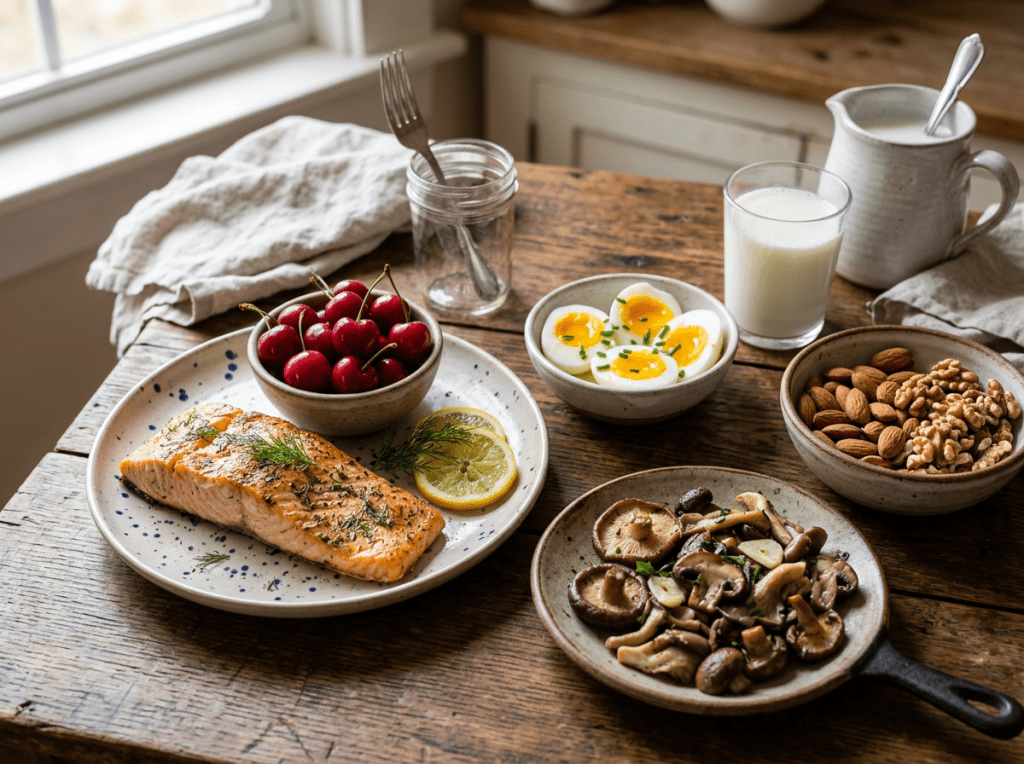


Did you know nearly one-third of adults have trouble sleeping? Many turn to supplements, but there’s a simpler way. Melatonin, found in some foods, helps regulate sleep.
This hormone, made by the pineal gland, tells your body it’s time to sleep. Eating certain foods can boost this natural signal. This makes it easier to fall asleep without pills.
We’ll look at foods like tart cherries, salmon, and nuts that are rich in melatonin. These can be part of your daily meals and help you sleep better. No more sleepless nights!

Key Takeaways
- Melatonin is naturally produced by your body and can also be found in certain foods.
- Foods like tart cherries and salmon can enhance your natural melatonin levels.
- Improving your diet may support better sleep without the need for supplements.
- Incorporating melatonin-rich options into your meals can help regulate your sleep-wake cycle.
- Simple dietary changes can lead to more restful nights.
What Is Melatonin and How Does It Regulate Your Sleep?
Melatonin is a hormone that helps control your sleep. It’s made by the pineal gland in your brain. As night falls, melatonin levels rise, signaling your body it’s time to sleep.
This hormone is key for keeping your sleep-wake cycle in check. It doesn’t make you sleepy like a drug. Instead, it helps your body follow its natural sleep pattern. Eating foods with melatonin can also help your sleep.
Understanding the Sleep-Wake Cycle
Your sleep cycle is influenced by light and hormones. Melatonin levels increase in the evening, making you feel tired. In the morning, they decrease, helping you wake up.
Eating foods with melatonin can support your sleep cycle. But remember, the amount in food is much less than in supplements. Dr. Neubauer says food melatonin is “hundreds to thousands of times lower” than in supplements.
The Difference Between Food-Based and Supplemental Melatonin
Melatonin supplements can help with jet lag or shift work. But they might not be good for long-term use. They can cause side effects such as drowsiness and headaches, especially at high doses.
Food melatonin, on the other hand, comes with other good stuff like antioxidants. These nutrients help improve sleep quality naturally. Eating foods rich in melatonin can support sleep without the risks associated with high-dose supplements.

In summary, understanding melatonin and its role in sleep can guide your dietary choices. Eating foods with melatonin can help you sleep better and enjoy more restful nights.
Foods Rich in Melatonin That May Promote Better Sleep
Exploring foods that naturally boost melatonin can help you sleep better. Diet and sleep are complex. There’s no single food that guarantees a perfect night’s rest. But some foods have nutrients that affect sleep hormones and brain activity.
Research shows that these foods’ sleep benefits stem from melatonin, tryptophan, magnesium, and other compounds. For instance, tart cherries have polyphenols that fight inflammation. Salmon, rich in omega-3 fatty acids, helps regulate serotonin levels.

Overview of Melatonin Content in Common Foods
We’ll look at common foods rich in melatonin. From tart cherries and nuts to eggs and mushrooms, we’ll compare their melatonin levels. You’ll see why eating them as part of a balanced diet is important.
How This Guide Can Help You Improve Your Sleep Tonight
This guide is practical. By the end, you’ll have ideas for dinner or a bedtime snack to help you sleep. It’s your guide to better sleep through food, backed by science.
Tart Cherries: One of the Most Researched Natural Sources
Tart cherries are not just tasty; they’re also packed with melatonin. The Montmorency variety is known for its sleep benefits. They contain about 13.5 nanograms (ng) of melatonin per gram (g), helping your body sleep better.
They’re also full of antioxidants. Tart cherries have polyphenols, which fight inflammation and free radicals. This can help you sleep better.
Melatonin Content in Tart Cherries
Tart cherries have a lot of melatonin. Studies show they can make you sleep longer and better. In one study, older adults with insomnia slept more after drinking tart cherry juice.
Polyphenols and Antioxidant Benefits
But there’s more. Tart cherries also contain polyphenols that support sleep. They reduce inflammation and stress, making it easier to sleep.
Montmorency Cherries and Sleep Research
Montmorency cherries are key in sleep studies. They improve sleep quality. Drinking tart cherry juice can improve sleep, helping those with insomnia.
Best Ways to Incorporate Tart Cherries Into Your Diet
Here are some easy ways to add tart cherries to your diet:
- Drink a small glass of unsweetened tart cherry juice before bed.
- Add frozen tart cherries to your morning smoothie.
- Put whole tart cherries in yogurt or oatmeal for breakfast.
Remember, tart cherry juice is sweet. Choose unsweetened or whole cherries for better health.

Salmon: Combining Melatonin With Omega-3s and Vitamin D
Salmon is a great food for better sleep. It has melatonin, omega-3s, and vitamin D. These nutrients help you sleep well.
Melatonin Content in Salmon
Salmon has 3.7 ng of melatonin per gram. A 3-ounce serving gives you about 314 ng of melatonin. But it does more than just help with sleep.
Omega-3 Fatty Acids for Improved Sleep Quality
Salmon is rich in omega-3s, such as EPA and DHA. These fats help regulate serotonin levels, which affect your sleep. Eating salmon three times a week can lead to better sleep and more energy during the day, studies show.
Vitamin D and Its Role in Restful Sleep
Vitamin D is important for sleep too. Low vitamin D levels can impair sleep. Eating salmon in winter helps maintain good sleep quality.
Recommended Serving Sizes and Preparation Methods
For the best sleep benefits, eat 3-ounce servings of wild-caught salmon two to three times a week. Bake, grill, or poach it with herbs for a light dinner. Add complex carbs like quinoa or sweet potatoes to help with sleep.

Eggs: A Simple Sleep-Boosting Breakfast or Dinner Option
Eggs are more than just a breakfast food; they can also help you sleep better. They have a small amount of melatonin, about 3.1 ng per two eggs. But eggs offer more than just melatonin.
Melatonin Content in Eggs
Eggs have less melatonin than some plants. Yet, they are full of nutrients that help you sleep. Tryptophan and vitamin D in eggs are key for better sleep.
Tryptophan and Its Sleep-Supporting Properties
Tryptophan is an amino acid your body turns into serotonin and melatonin. This process helps control your sleep. Eating eggs can boost your tryptophan levels, leading to better sleep.
Combining Eggs With Other Sleep-Healthy Foods
To get the most sleep benefits from eggs, pair them with complex carbs. Try a veggie-packed frittata or hard-boiled eggs with whole-grain toast. This combo helps your brain use tryptophan for serotonin and melatonin.
“Don’t underestimate the humble egg when it comes to sleep support.”
Adding eggs to your meals can improve your sleep. They’re good for breakfast or dinner, making your diet sleep-friendly.

Mushrooms: Surprisingly High in Natural Melatonin
Looking for a natural melatonin source? Mushrooms are a great choice. Standard white button mushrooms (Agaricus bisporus) have 4,300 to 6,400 ng of melatonin per gram. They are among the top foods for melatonin.
Mushrooms grow in dark places, which helps them make more melatonin. They also have tryptophan, antioxidants, and fiber. These nutrients help support sleep.
Melatonin Content in White Button Mushrooms
White button mushrooms are more than just a tasty ingredient. They are packed with melatonin. This makes them a great choice for better sleep.
Why Mushrooms Are Among the Richest Plant-Based Sources
- High Melatonin Levels: Mushrooms have more melatonin than many foods.
- Rich in Tryptophan: Tryptophan helps the body produce melatonin.
- Antioxidant Properties: Mushrooms help reduce inflammation, which can disrupt sleep.
Cooking Methods That Preserve Melatonin Levels
To keep mushrooms’ melatonin, use gentle cooking. High heat can reduce it. Here are some good ways to cook:
- Light Sautéing: Cook them quickly in olive oil to keep nutrients.
- Steaming: This method preserves melatonin and softens them.
- Adding to Soups: Put them in soups for extra flavor and health.
For a tasty way to improve sleep, add sliced mushrooms to your evening meals. Mushrooms are not only delicious but also support sleep with their melatonin and other nutrients.

Nuts: Pistachios and Walnuts for Sleep Support
Nuts like pistachios and walnuts are great for sleep. They are tasty and full of nutrients that help you sleep better.
Melatonin Content in Pistachios and Walnuts
Pistachios have 2.6 ng of melatonin per gram. Walnuts have about 2.5 ng per gram. This melatonin helps regulate your sleep cycle, making it a good bedtime snack.
Magnesium and Other Sleep-Aiding Nutrients
Both pistachios and walnuts are also full of magnesium. This mineral is key for muscle relaxation and helps make melatonin. They also have:
- Zinc, which boosts immune function
- Vitamin B6, important for making melatonin
- Omega-3 fatty acids, which help serotonin function
A study showed that melatonin, magnesium, and zinc helped older adults sleep better. This makes nuts a great part of your evening routine.
Recommended Daily Portions for Sleep Benefits
Because nuts are high in calories, a small handful (about 1 ounce) is best in the evening. You can eat them on their own or add them to oatmeal or yogurt. But watch out for salted nuts, as too much salt can mess with your sleep.

Cow’s Milk: A Traditional Sleep Aid With Important Considerations
Cow’s milk has been a favorite bedtime drink for many years. But the amount of melatonin in milk can vary a lot. It depends on when the cow was milked. Studies show that “night milk” has almost 10 times more melatonin than milk from the day. This means it’s hard to know exactly how much melatonin you’re getting in your glass of milk.
Even with this uncertainty, cow’s milk has other sleep-supporting nutrients. Tryptophan is a key one. It helps produce serotonin and melatonin, which are important for sleep. Calcium in milk also helps the brain use tryptophan better. Calcium also helps relax muscles, making you more comfortable at night.
To get the most sleep benefits from cow’s milk, try warming it up first. A warm glass can make it feel more soothing. Here are some tips to enjoy your milk more:
- Choose whole milk for better nutrient absorption.
- Warm the milk gently to make it more calming.
- Add a pinch of nutmeg or a drizzle of honey for extra flavor and sleep help.
If you’re lactose intolerant, don’t worry! You can try lactose-free milk or plant-based alternatives with tryptophan. Just remember, their melatonin levels might be different.

Conclusion
Eating foods high in melatonin can help you sleep better. Foods like tart cherries and salmon offer nutrients that support sleep. But remember, no single food can solve sleep problems on its own.
Good sleep habits are key. Go to bed at the same time every night and get morning sunlight. Also, make your bedroom dark and cool. Experts say that behavioral strategies like cognitive behavioral therapy for insomnia (CBT-I) can work better than melatonin for long-term sleep issues.
Begin by adding one or two melatonin-rich foods to your evening routine. See how your body reacts. Diet is important, but it should work with your lifestyle for the best results. Let’s aim for better sleep and more morning energy naturally.






Leave a comment