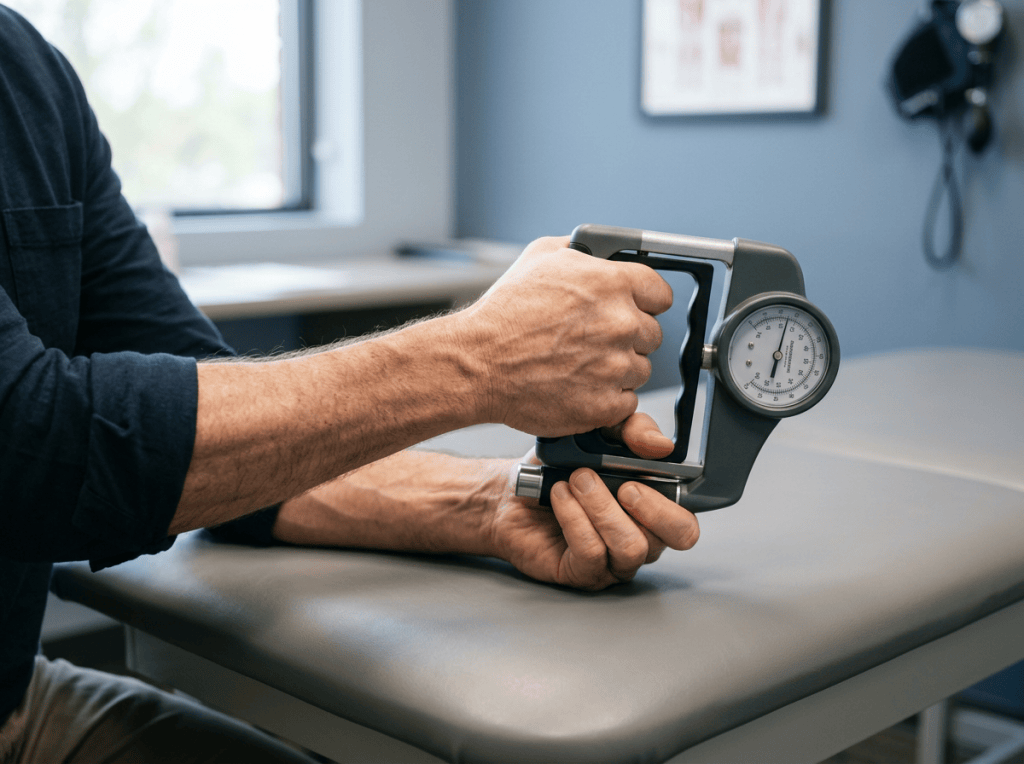


Studies link lower hand strength to a higher risk of heart disease and early mortality. This finding shows why physical ability, including grip strength, can reflect overall well-being. Many people measure strength by bench presses or squats, but grip strength refers to the force produced when squeezing an object.
A handheld dynamometer typically measures grip strength, making it a practical test of muscle function. Recent research identifies it as a potential health biomarker, especially as you age. It may signal sarcopenia, frailty, or morbidity and offer clues about healthy aging, but it cannot replace full health evaluations.
This article examines what grip strength reveals about physical function, cardiovascular health, longevity, and men’s health. It also covers how age and inactivity affect it, as well as ways to measure and train it responsibly for overall well-being.

Key Takeaways
- Grip strength can indicate overall muscular function.
- Lower grip strength is linked to cardiovascular risks.
- This measure is practical for assessing health, especially in aging populations.
- It should complement, not replace, regular health evaluations.
- Training grip strength can enhance your physical capabilities.
Why Grip Strength Is Becoming a More Important Health Marker
Grip strength is becoming a key health marker, especially for men tracking physical ability and healthy aging. It can show what your grip strength reveals about your health, beyond its usefulness in the gym.
Its noninvasive nature makes it useful for health checks. A hand-held dynamometer is the only equipment needed, and testing takes just a few seconds. Researchers and clinicians can track results over time without complex procedures.

Why a simple hand-strength measure is getting attention
Researchers link grip strength to cardiovascular health and physical function. This simple measure is gaining attention for several reasons:
- Accessibility: Grip strength can be easily assessed, making it a practical choice for regular health evaluations.
- Trend Monitoring: Tracking grip strength over time can reveal changes in your physical health, offering insights into muscle function and overall fitness.
- Broad Relevance: This measure is not just for athletes; it also applies to everyday activities like lifting, carrying, and even opening jars, making it relevant to everyone.
What makes grip strength useful to track
One reading cannot show your full health picture, but it becomes useful when viewed in context. Age, sex, body size, and health status can affect results, so watch trends instead of single readings.
Regular tracking shows how your grip strength changes over time, especially as you age. These changes can guide steps to maintain or improve strength and support overall health.
Grip strength is a simple but powerful tool for checking health. It can show what your grip strength could reveal about your health beyond the gym as you age.
What Your Grip Strength Could Reveal About Your Health
Grip strength goes beyond the forearms. It offers clues about your physical abilities and overall health. It can also reflect wider changes in muscle function.
A powerful squeeze requires several muscle groups to work together. These include:
- Hand and wrist muscles
- Forearm muscles
- Nervous system coordination
- Joint stability
- Core and lower body support
Lower grip strength may make daily activities more difficult, including:
- Climbing stairs
- Rising from a chair
- Walking efficiently
- Carrying groceries
- Completing household tasks
Grip strength helps measure physical function, but it cannot identify the exact cause of a limitation. Your testing position also matters. A seated test may focus on local strength, while a standing test uses balance and core muscles more fully.
Grip strength is more than an isolated number; it offers useful clues about health and physical function. However, it cannot fully assess muscle mass, fitness, or possible health problems.

Grip Strength Men’s Health: The Connection to Whole-Body Fitness
Your grip strength shows part of your broader physical ability. It reflects muscle size and how well your brain and nerves activate the right muscles. Your wrist and elbow send force together, while your shoulder and trunk provide stability.
Disuse, pain, nerve entrapment, and tendon irritation can weaken your grip. Carpal tunnel syndrome, for example, can compress nerves and reduce grip strength. Past injuries or lost muscle function can also reduce grip performance.
Warning signs deserve attention. Seek medical care after a sudden one-sided drop in grip strength, numbness, or tingling. Frequently dropping objects or feeling weak after an injury may signal problems needing care.

Grip strength can help show your overall fitness. Deadlifts, rows, pull-ups, and carries require a strong grip to transfer force well. Gym performance and health relate, but they are not the same.
A strong grip may show good physical function, but it does not guarantee better health.
Grip strength has been associated with cardiovascular health, physical function, and longevity. Understanding this connection can help you maintain a healthy lifestyle.
What Research Says About Cardiovascular Health and Physical Function
Understanding the link between grip strength and overall health can be eye-opening. Recent studies show strong links between lower grip strength and several cardiovascular health problems. These findings suggest grip strength may reveal important details about your physical well-being.
Research shows that people with lower grip strength often have less favorable cardiovascular outcomes. This connection raises questions about why these problems occur together. Lower physical activity, poor muscle quality, and chronic inflammation may raise both grip weakness and cardiovascular risk.

Associations between lower grip strength and cardiovascular health
Several studies link lower grip strength with a higher risk of cardiovascular diseases. Lower handgrip strength has been linked with stroke, type 2 diabetes, and chronic kidney disease. This suggests grip strength may help assess cardiometabolic health.
These associations do not prove that lower grip strength directly causes cardiovascular disease. Metabolic diseases and poor nutrition may affect both grip strength and cardiovascular health. Therefore, grip strength alone may not accurately show heart disease risk.
Links with mobility, disability, and everyday tasks
Grip strength affects more than weight lifting; it also supports daily activities. Lower grip strength can limit mobility and raise the risk of disability. Carrying groceries, climbing stairs, or standing from a chair can become difficult.
Maintaining grip strength helps preserve independence as you age. It also helps assess how well you can perform daily tasks. When grip strength declines, it may signal wider problems with mobility and physical function.
No single grip strength measurement works as a universal cardiovascular health threshold. Age, sex, body size, and testing protocols can change these measurements. Rather than focusing on a single number, treat an unexpected decline as a reason to check your overall health.
Grip strength is a useful sign of cardiovascular health and physical function. Watching changes in your grip strength can reveal health concerns and encourage steps toward better well-being.
What Research Says About Grip Strength and Longevity
Research on longevity suggests that grip strength may help predict lifespan. Researchers have found associations between lower grip strength and an increased risk of cardiovascular disease, physical disability, and all-cause mortality. Grip strength is better understood as one potential indicator of overall physical health, not a direct cause.
Researchers measure grip strength in groups with standard tools, such as hand dynamometers. They classify participants by strength level and track changes over time. By comparing groups, they study later outcomes, including hospitalization rates, disability, cardiovascular events, and mortality.
These studies show patterns across large groups, but they cannot predict one person’s lifespan. Many factors may affect both grip strength and health outcomes, including:
- Age
- Smoking habits
- Physical activity levels
- Chronic diseases
- Socioeconomic status
- Nutritional status
- Body composition
Understanding these variables matters. Declining grip strength may signal a need to review your exercise, nutrition, and overall health. However, it cannot provide a definitive diagnosis or predict a specific health event.

How Aging, Inactivity, Nutrition, and Health Conditions Affect Grip
Aging naturally changes muscle strength. Strength usually peaks in early adulthood and then declines gradually. Remember, muscle loss is a natural part of aging, but the rate at which it occurs varies considerably.
Physical inactivity, inadequate nutrition, and certain health conditions can accelerate declines in muscular strength.
- Physical Inactivity: A sedentary lifestyle can accelerate muscle loss. Regular movement and exercise are crucial for maintaining strength.
- Inadequate Nutrition: A diet lacking in essential nutrients, particularly protein, can hinder muscle maintenance and growth.
- Health Conditions: Chronic illnesses such as diabetes, cardiovascular disease, and obesity can negatively impact muscle quality and strength.
To preserve grip strength and overall function, consider these steps:
- Engage in Resistance Training: Incorporating strength training into your routine can combat age-related muscle loss.
- Prioritize Nutrition: Ensure you consume enough protein and nutrients to support muscle health.
- Manage Chronic Conditions: Work with healthcare professionals to control any existing health issues that may affect your strength.
Population reference values for grip strength can differ across countries and demographic groups. A grip considered low in one population may not be low in another. Focus on personal trends, functional ability, and symptoms, and seek a professional assessment for valuable insights into your grip strength and overall health.
How to Measure and Track Your Grip Strength
Accurate grip strength measurement helps you track your health. A hand dynamometer provides reliable, repeatable results for this grip strength test. Use a proper method to track grip strength over time.
Using a hand dynamometer for a consistent measurement
Start with a calibrated hand dynamometer, and check its setup before each test. Sit with feet flat, shoulders relaxed, elbows bent at 90 degrees, and wrist between 0 and 30 degrees of dorsiflexion.
When ready, squeeze with maximum effort for 3 to 5 seconds without jerking. Rest for about 1 minute between trials, and complete 3 alternating trials for each hand. Record your dominant and nondominant hand separately.
Keeping your testing conditions consistent
Consistency matters when you measure grip strength. Use the same device, check its calibration, and adjust its handle for comfort. Keep your shoulder and wrist in the same position during every trial for accurate comparisons.
Along with grip strength results, record the date, body position, device settings, and time of day. Also note recent exercise, pain, or fatigue. This information can explain changes in your results over time.
Interpreting changes without overreading a single result
Study grip strength measurements across several sessions rather than a single reading. Fatigue, discomfort, or poor technique may cause a sudden drop in grip strength. Look for steady patterns over time.
“The key to understanding your grip strength is not just the number you see, but the journey of improvement over time.”
Regularly tracking grip strength gives insight into your overall physical condition and supports informed fitness decisions.
How to Build Better Grip Strength and Use the Measure Wisely
Learning how to build better grip strength supports overall health and fitness. It can improve performance during weightlifting and everyday tasks. Specific exercises can help you build better grip strength.
Exercises that Train Your Hands and Forearms
To develop grip strength, add these exercises to your workouts. Exercises such as deadlifts, pull-ups, farmer’s carries, and heavy rows already place considerable demands on the hands and forearms.
- Deadlifts: This compound movement engages multiple muscle groups, including your hands and forearms.
- Pull-ups: A great way to build upper body strength while challenging your grip.
- Farmers carries: Walking while holding weights improves grip endurance and engages your core and lower body.
- Heavy rows: These also place considerable demands on your hands and forearms.
- Dead hangs: Hanging from a bar increases grip endurance.
- Plate pinches: Holding weight plates between your fingers specifically strengthens your grip.
How Farmer’s Carries, Dead Hangs, and Plate Pinches Fit In
Farmer’s carries are particularly effective because they challenge grip endurance while also engaging the shoulders, core, and lower body. Start with lighter weights, then increase them as your strength improves. Dead hangs and plate pinches can provide additional grip-specific training.
Begin dead hangs for short periods, then increase the duration as you become more comfortable. Plate pinches target thumb and finger strength. Start with lighter plates to help avoid injury.
When to Seek Guidance and Why Grip Testing Is Only One Health Indicator
Grip strength is not a replacement for cardiovascular testing, blood work, or other important health assessments. Still, it offers a simple way to evaluate an aspect of muscular function that can become increasingly relevant with age. If you experience pain, sudden weakness, or other concerning symptoms, consult a physician or physical therapist.
Remember to focus on gradual progression. Use proper technique and allow recovery between sessions. This approach will help you build strength safely and effectively.
Conclusion
Grip strength helps assess overall health, including men’s health. This simple measure offers clues about muscle function, mobility, and healthy aging. Research links lower grip strength with cardiovascular disease and disability, so monitor it as part of your broader health plan.
Grip strength is useful, but it cannot replace complete health assessments. Regular check-ups, blood work, and other evaluations give a fuller picture of your health. Build grip strength with targeted strength training, such as farmer’s carries and dead hangs, plus good nutrition, activity, and recovery.
Grip strength is one part of the puzzle. It matters most alongside other health signs, daily functions, physical function, and preventive care. Tracking it can reveal changes in your physical function and overall well-being, helping you live a healthier life.



Leave a Reply